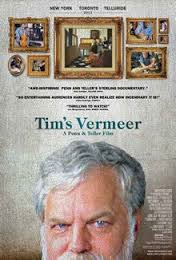
I’ve just posted my fourth article on James Curnow’s great film site Curnblog, an article on art world-related documentaries centered around the recently released Penn & Teller film, “Tim’s Vermeer.” You can click on the link below if you’re interested. While you’re there you can also check out some of the many entertaining and enlightening pieces on this Australian-based site.
Up above in the header, we end National Poetry Month with another dice roll half-haiku from words picked pin-the-tail-on-the-donkey style from a poetry-magnet website. May is right around the corner and hopefully springtime is as well…
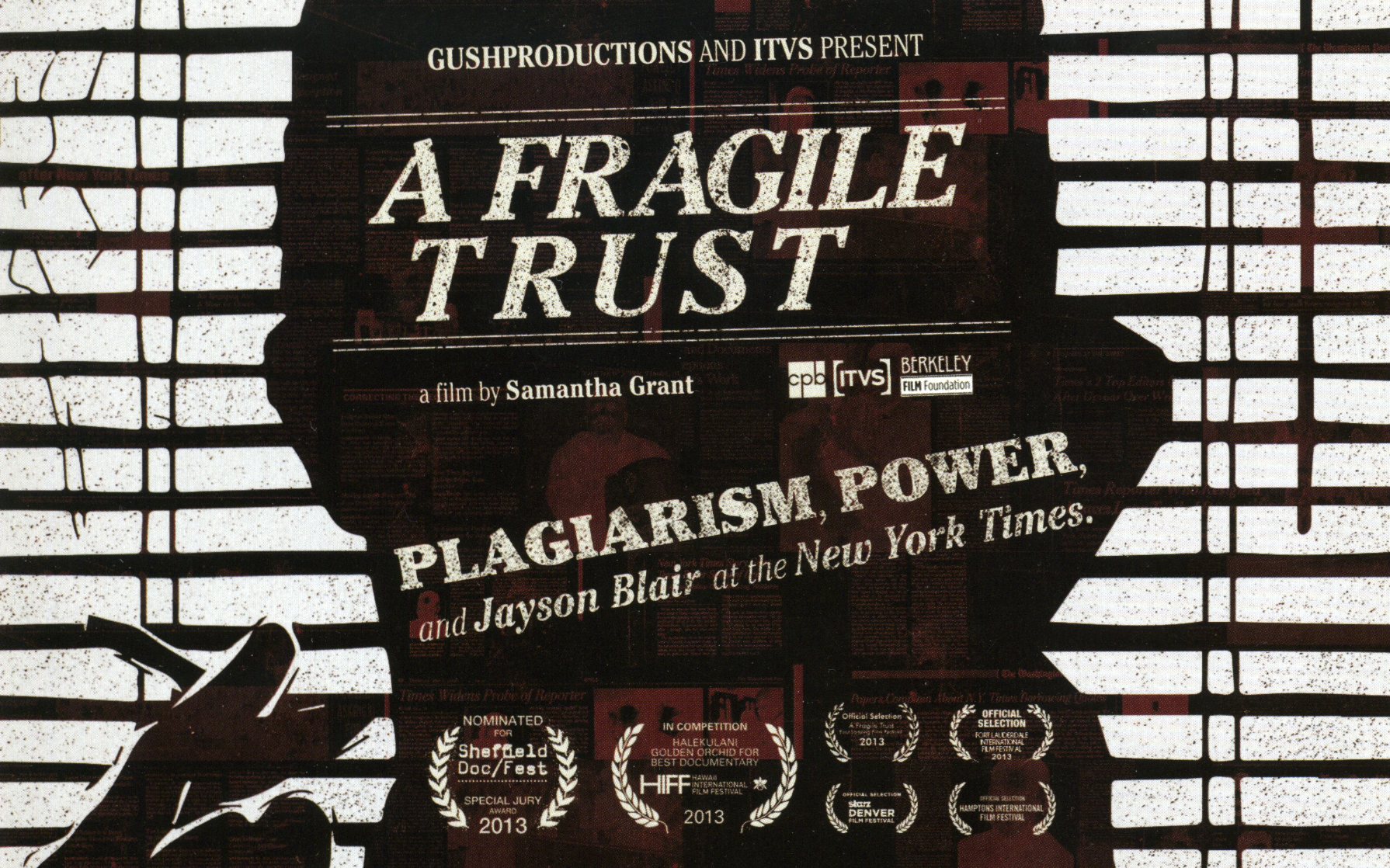
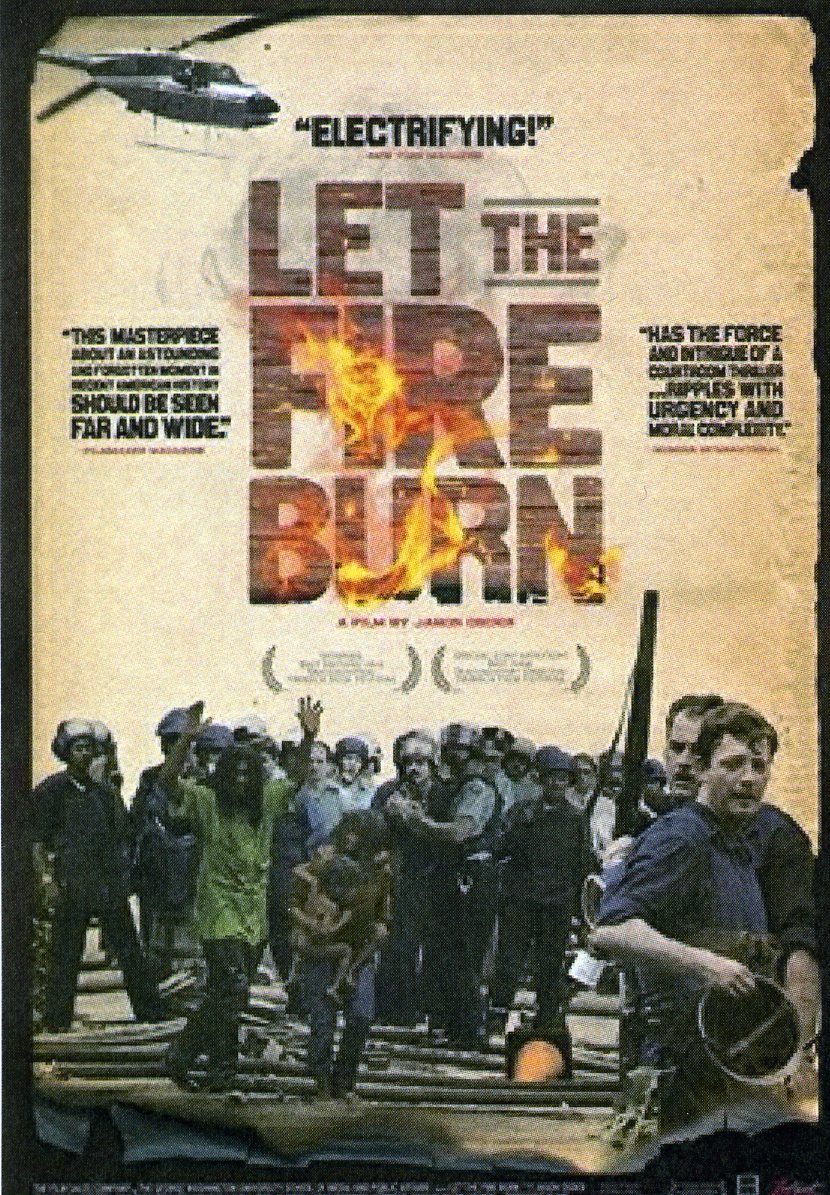
The excellent PBS documentary series “Independent Lens” continues with two more notable selections the next two Mondays at 10:00 PM. On May 5th, they’re showing “A Fragile Trust” about the New York Times plagiarism scandal centered around Jayson Blair. Definitely worth watching. Back in March (when it was warm, go figure), I saw it at the Salem Film Fest here in Massachusetts. On May 12th, I greatly anticipate seeing “Let the Fire Burn” which has received a lot of praise on the festival circuit. It examines the still hard-to-believe 1985 Philadelphia Police Dept. bombing of the compound occupied by the black liberation group MOVE, killing all but two of its members and obliterating 60 nearby houses in the process.
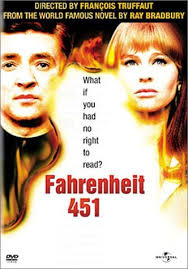
While puttering around in the library a couple of weeks ago, I looked down at the cart where they put the recently-returned DVDs and caught the soulful gaze of Julie Christie on the cover of the recently re-issued 1966 film version of “Fahrenheit 451” directed by Francois Truffaut. So of course I had to check it out. The French auteur’s first English-language movie has always had a mixed reputation at best: the acting and dialogue was deemed too starchy and the themes of Ray Bradbury’s classic speculative novel too flattened out.
But it had been so long since I last watched it (probably on a 13-inch TV) that I figured a new viewing would be like a re-discovery. And how. In this age of restored content and hi-def screens, Truffaut’s “451” looks fantastic with its autocratic iconography, bold primary colors and the retro futurism of its deftly chosen locations. Also, in view of broad societal shifts since it was made 48 years ago, the film seems more prophetic than ever.
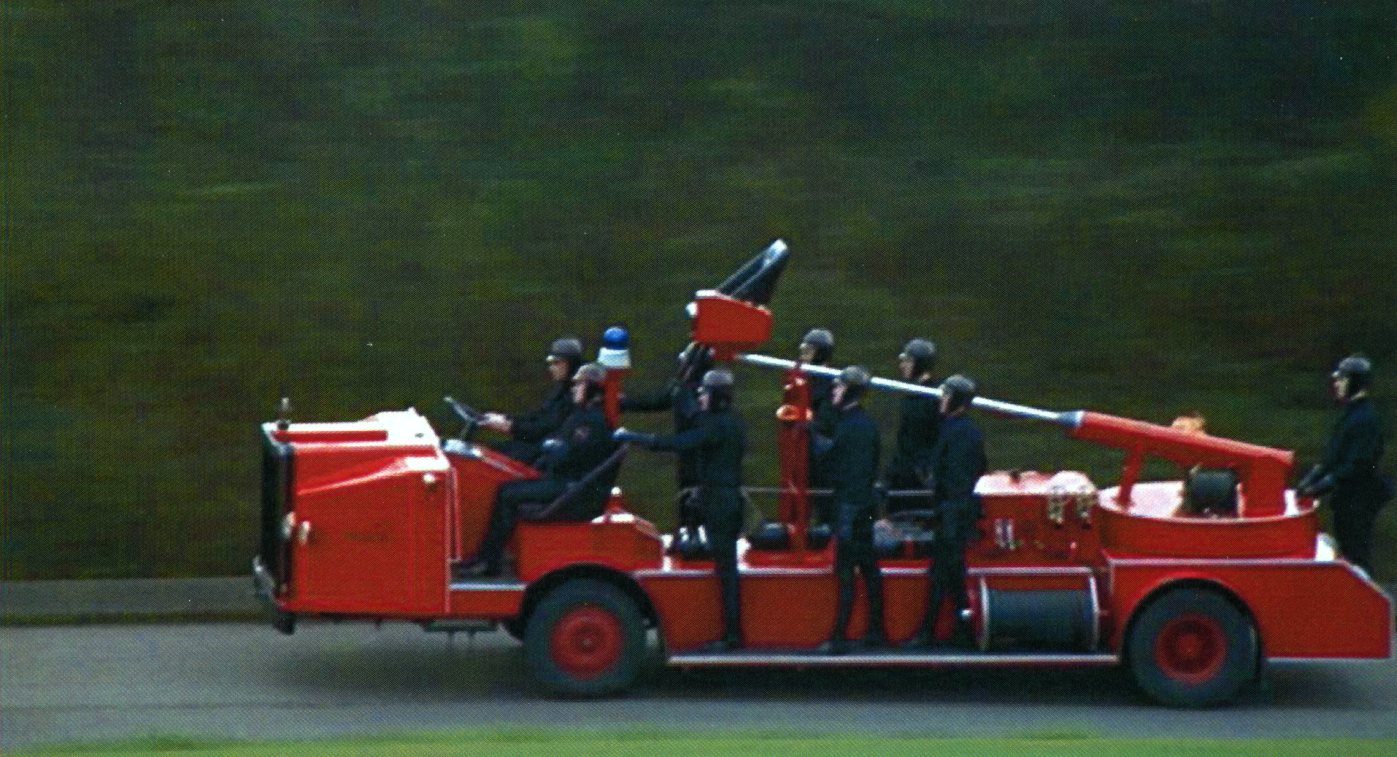
The flamethrowing fanatics of “Fahrenheit 451”
Coming soon to a Barnes & Noble near you!
Of course, the central premise of Bradbury’s cautionary tale may seem silly in retrospect. In a world where all literature is banned, the protagonist, Guy Montag (Oskar Werner), is part of a team “firemen” who rely on informants (usually neighbors) to swoop down on the homes of violators and publicly burn their hidden stashes of books. The plot centers on Montag’s crisis of conscience as he starts to read books that he has slipped into his kit bag during raids. Matters are complicated by his budding friendship with the non-conformist Clarisse. Both Clarisse (a student in the novel but a young teacher here) and Linda (Montag’s media-overloaded, pill-popping wife) are played by Christie.
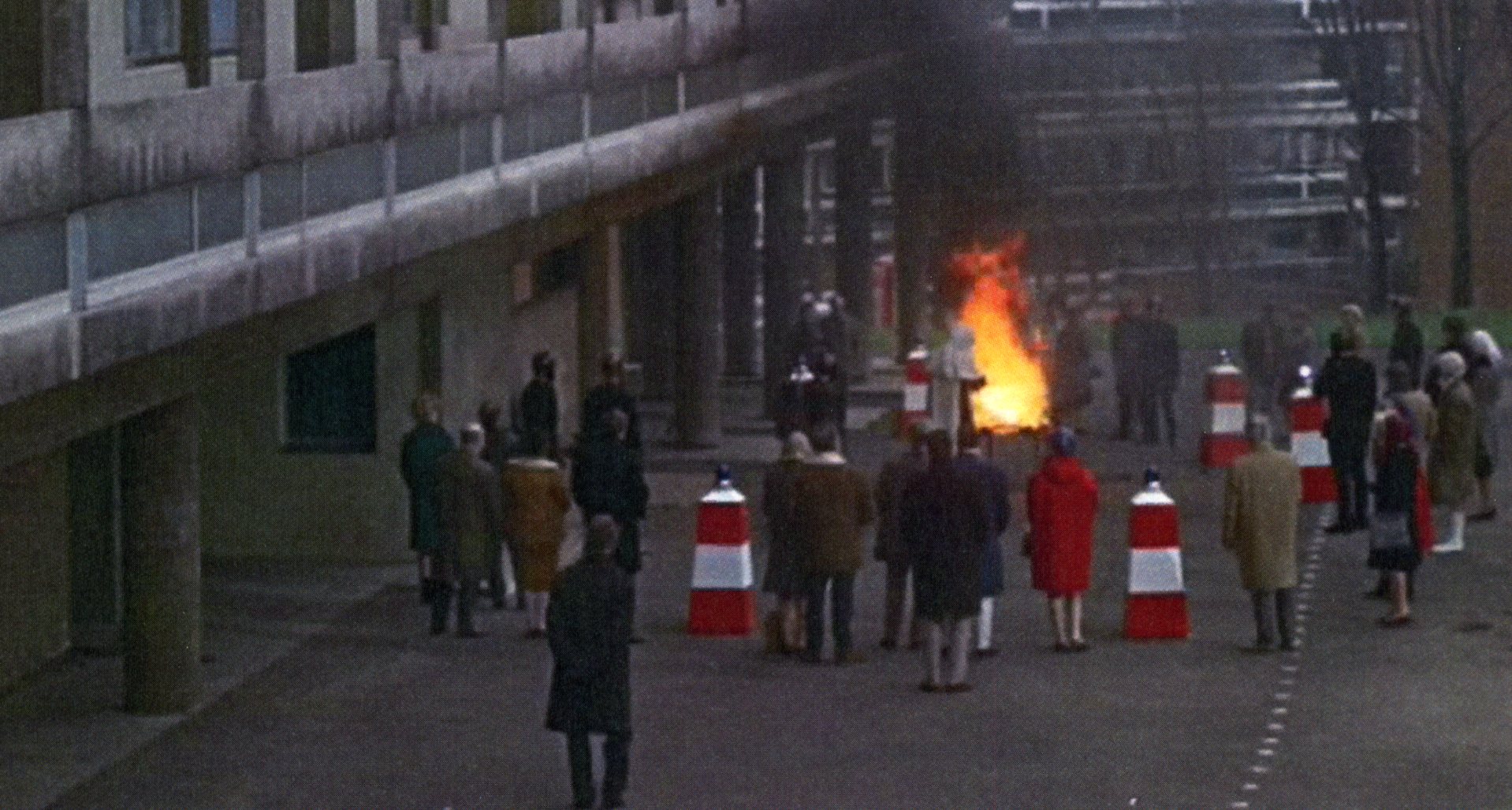
The institutionalized conflagrations of this story can appear far-fetched. Yet when Bradbury wrote this in 1953 the Nazi book burnings were in recent memory and the dirty dealings of the House Un-American Committee were in full swing. The state-sanctioned pyromaniacs of “Fahrenheit 451” were more broadly symbolic of the casting off of all independent knowledge and self-determination.
Behind the visual hyperbole of the black-shirted firemen with their brass kerosene squirters and fascist salutes, Truffaut tweaks some of the book’s subtler messages to great effect. Although this is supposed to be a totalitarian society, there is no overarching Big Brother; the local fire department zipping around in their pyromobile is about the only representation we really see. Instead, the tiresome tirades of some blowhard dictator has been effectively supplanted by ingratiating TV hosts making every one of their “cousins” feel as if they are Special just by tuning in.
This personal neediness, so well evoked by Christie’s nuanced performance as the wife, is all too indicative of an attention-starved 21st century Western population. Instead of Orwell’s 1984-style eternal-boot-in-the-face, the people are kept in place by being incessantly flattered. Instead of widespread state censorship, we get instead access to everything in a completely commodified environment. (The child-less Linda remarks that “when you have a second wall screen put in, it’s like having your family grow around you.”)
But access is a long way from enlightenment. In our own age, ads endlessly hawk Internet speeds “ten times faster” than speeds that are already all but instantaneous, an age of aggressive techno-snobbery where people wait in overnight lines to trade in their “old” I-phones that were state of the art six months before. Relatively recent analog technologies are dismissed and even disdained while we barely bother to shrug at the widespread loss of personal privacy and make no distinction between reasonable progress and a runaway train. Meanwhile, deep-seated problems like income inequality and a ticking environmental time bomb, while not exactly ignored, fight for attention in a 24/7 overflow of content where melting Arctic pack ice and the latest celebrity baby bump are two equal drops of information and bookstores close left and right.
The brutalist architecture of Alton Estate in the London suburbs frames the firemen’s handiwork
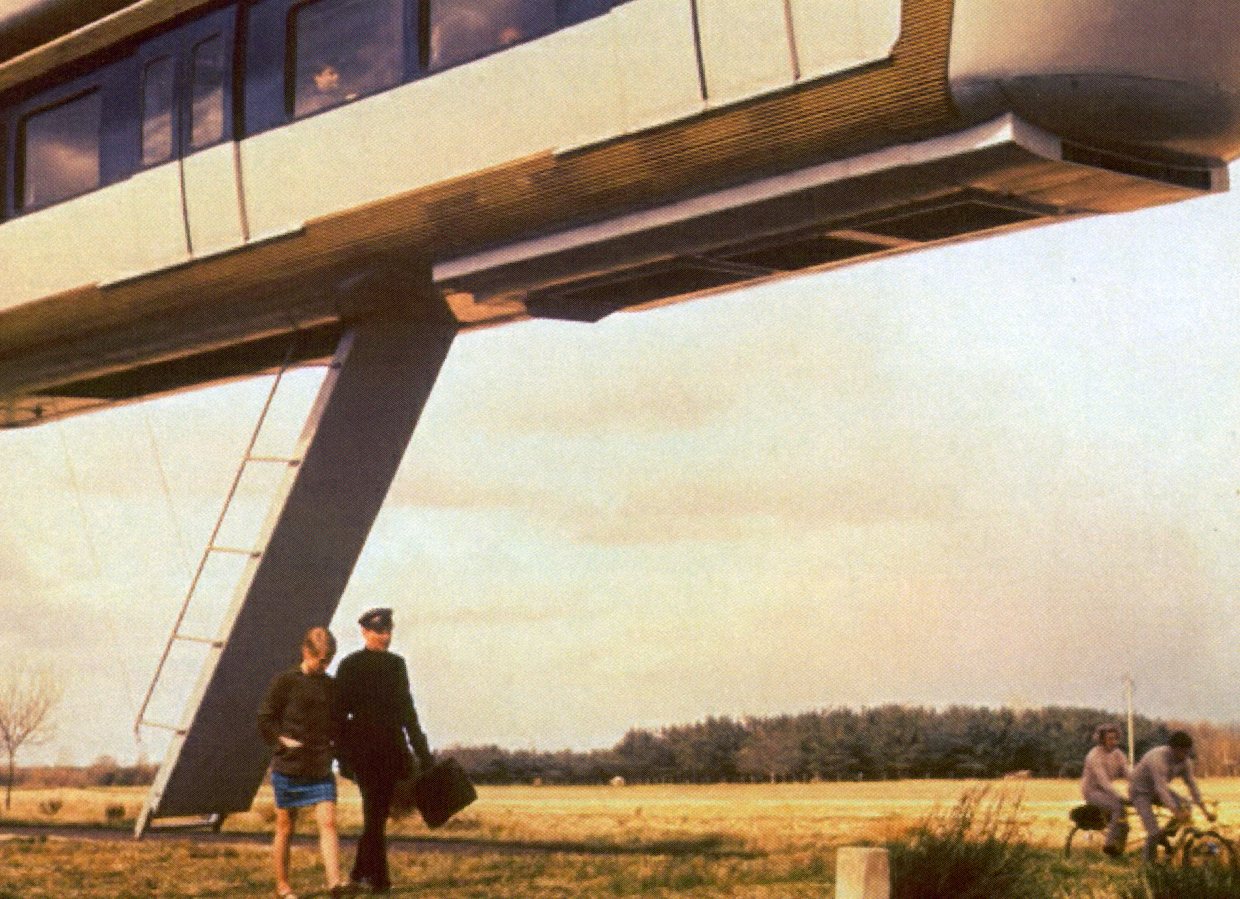
Truffaut’s film is an uncanny time-indefinite fable, where such technology, as far as it could be imagined back then, has rendered a population inured to any causes but their hedonism. In the world of “Fahrenheit 451” there are few options left, which make’s Christie’s housewife Linda more sympathetic than her counterpart in the book, who was named the less-appealing Mildred. But Bradbury made clear in the book that the totalitarian state came about in part because the over-abundance of pleasure-delivering technologies sapped the populace of their willpower to challenge authority, and the jackbooted thugs just stepped in to finish the job with flamethrowers. We still have something of a choice left, but it doesn’t appear to stretch out indefinitely. If our own era is the start of an invisible dystopia, then give me the film’s version, where at least you can ride home from work in an awesome monorail (that lets you off in a meadow!) and walk back to your house chatting with a mini-skirted bookworm subversive.
Oskar Werner (who was best known for his role in Truffaut’s “Jules and Jim”) is quietly impressive as the conflicted Montag. The Austrian actor (who was a pacifist) had fled the Nazis in the latter stages of World War II and with his young child and half-Jewish wife, waited out a battle by hiding in the Vienna Woods. This scenario is echoed in the film’s final scenes when Montag, who is found out and forced to take part in a raid on his own house, takes drastic action before fleeing. (Even the clunky process shot of jetpacking policemen in pursuit–the film’s one big visual miscue—-seems endearing in retrospect). He follows an old railroad line to a forest populated by the Book People, each committing one volume to memory so as to carry forth the world’s knowledge while staying within the law. Of course, too-hip critics gagged at the achingly sincere tableau of societal holdouts introducing themselves to Montag as their title. Ray Bradbury may have liked many things about the adaptation, including the decision to not kill off Clarisse and to have one of the Book People introduce himself as “The Martian Chronicles” (a surprise tribute from the director). But the official consensus was that the film was a Disappointment and the monolingual Truffaut would not make another English-language film nor would he attempt another genre movie—although an admirer of the novel he was not a big science fiction fan. Too bad, “Fahrenheit 451” is a great embodiment of the old saying that “if you don’t stand for something, you’ll fall for anything” and this worthy cinematic complement to the book drives home that ever-salient point even further. Check it out and see if you agree, cousins.
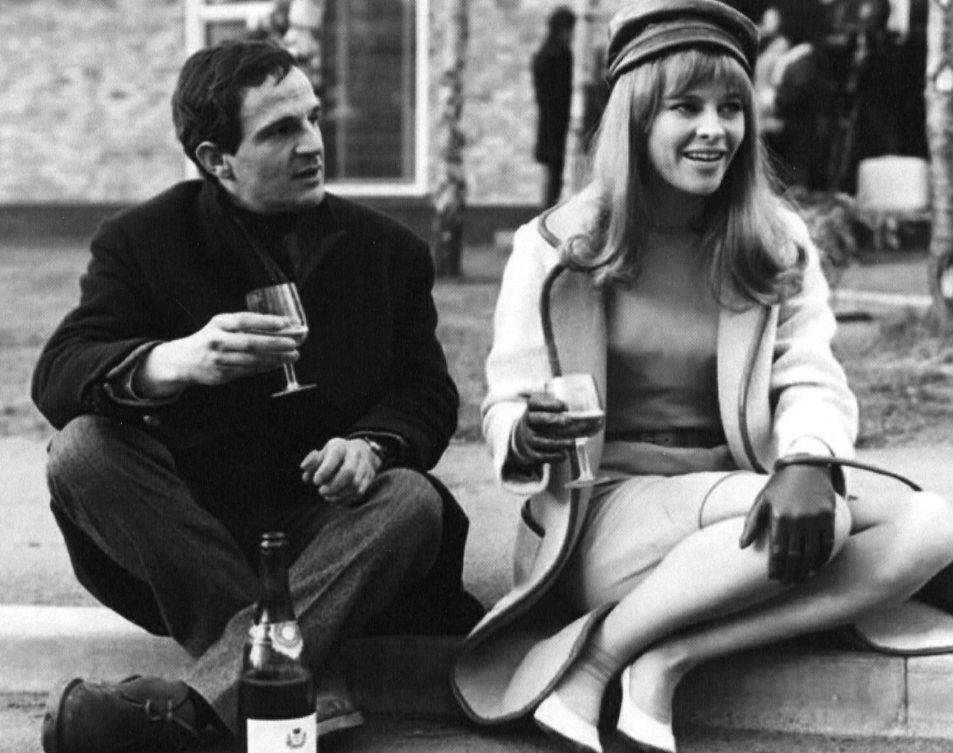
Truffaut and Christie after a day’s shooting in Roehampton, England 1966
Lucky for the director, Julie speaks French
My psychic antenna doesn’t always pick up on National Poetry Month when April rolls around. Early April is more like the time that we in New England are kept busy searching the weather reports for any viable sign of real springtime. Typical of this seasonal limbo is my current disinclination to put pen to paper even though, as Bobby Dylan once put it, “I have a head full of ideas that are driving me insane.”
I did spend some quality procrastination time this week going over old notes and clippings and perusing photos I took long ago with my first camera, a brown-and-cream colored instamatic that used 126 cartridge film (see above). I also found a torn-out notebook page that I knew would come in handy some day. Back in the late 90s, while living in Cambridge, Mass. the city put up several magnetic poetry boards in Central Square. You know the kind, with hundreds of individual little magnets made up of one word each. I was quite enamored at the beguiling and beautiful poetic snippets that arose from scrambled word combinations and wrote down my favorites. So I’m marking NPM with a celebration of the inner poet that apparently resides in us all. I also got into the spirit yesterday by going to a site that tells you how to make your own magnetic poetry kit. I printed out a page of random words, closed my eyes, and put a pencil down on several words then fashioned them into a half-haiku that uncannily seemed to be saying something to me that I ordinarily wouldn’t have found a voice for (see the header above). I’m sure many of the people that came up with these little gems below felt the same way at the time.
Start to end winter inside; you are born in our desire
Elaborate green garden remember
Some swim like rain forest picture
Listen: all yesterday my fever and fire like moose did sail in liquid star
Every marble which must always shine
Lie like a cat this game this game may die
By sky look at I am joy
Magic perfume went blindly into the night
A girl once flew to get together and out
For the castle the moon, a bare angel
Soft like no boy of sweet summer
Forgive live as magic it may wake up or go
Love grow fast and free girl
Did owl have feline heart?
Round and wet blue, song-fed dinosaur
Stop once in peace
Dad that cried do not get sad
Slowly happy together grow
We were green and are
My bath may smoke up and have sun on the breeze
One silly day you were bleeding and went into my box
Born on yellow farm, summer night glow
Homeless child of night cried “friend!”
Yesterday went away like a slow song of woman’s desire
Joy ran from a friend, she went round slowly
A blue sky whispering yes
Smart rain round my night, moon turn out poison
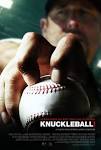
Knuckleball!
Directed by Ricki Stern and Anne Sundberg—2012—85 minutes
It’s nearly a lost calling, like a shoe repair shop or a pen-and-stationery store hanging on in a world otherwise dominated by Apple and Wal-Mart. A patient craft that is difficult to master in an age of instant gratification and performance-enhancing drugs. The confounding knuckler, like the hidden ball trick or stealing home, is almost gone from baseball. This pitch, delivered at a velocity some 20-30 miles per hour slower than standard-setting fastball, flutters and floats in on the batter. If swung on and missed, he’ll look ridiculous, if he connects he could hit it into the next time zone.
America’s oldest professional team sport may be losing this eccentric part of its legacy, but not many players and managers are mourning the near demise of the knuckleball. The pitch infuriates many habit-obsessed hitters and knuckleball throwers usually require special coaches and catchers. So in celebration of baseball’s opening week, let’s take a look at the recent DVD release of Ricki Stern and Anne Sundberg’s winsome 2012 documentary on the small and misunderstood cult of the knuckleball, referred to by non-believers as “fraudulent” or “a freak pitch.” It’s a celebration of non-conformity and persistent humility now fleshed out with almost two hours of featurettes.
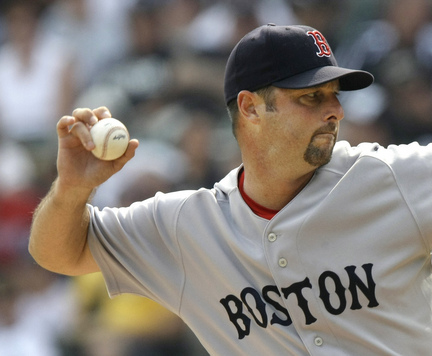
As a fan of my hometown Boston Red Sox, I got to see one of the filmmakers’ two primary subjects up close. Tim Wakefield started out as a first baseman in the Pittsburgh Pirates organization but developed the knuckleball pitch after being told he would likely never make the Major Leagues as a position player. After a sensational first season with the Pirates, the knuckleball magic abandoned him (walking ten men in a game at one point) and he was cut loose, surfacing next year in Boston for a 17-year career where fans would become intimately familiar with fickle fortunes of one who depends on such an unusual skill.
Tim Wakefield and the unorthodox fingernail grip
Wakefield was 45 years old and already a member of two World Series champion Red Sox teams when seen here playing in his last year; much of the focus here is on his protracted efforts to secure his 200th career win before the season ends. The only other current knuckleballer, the much younger R.A. Dickey of the New York Mets, is also profiled and the usual slings and arrows of outrageous fortune that come with his craft are compounded with a health issue that threatens his livelihood. The filmmakers cut back and forth between these parallel tracks during the 2011 season, often blending in the players’ personal stories and putting the lie to the easy notion that all pro players are spoiled and overpaid. Dickey, for instance, bounced around the minors for a long time making $1800 a month (summers only) and sometimes moving his young family two or three times a year, trying to keep the faith that his big-league dream would pay off in the end. On the verge of making it to “The Show”, a medical review found a congenital anomaly in Dickey’s pitching elbow, but in a gutsy move he took a drastically reduced contract offer instead of cashing in a million-dollar insurance policy.
Battle Cry of the Knuckler: R.A. Dickey in action
Elsewhere, Stern and Sundberg review of a bit of the knuckleball’s mystery history (no one’s sure who started it and it’s only had 70 or 80 true practitioners in the last century plus) and emphasizing its true outsider status: Wakefield unpretentiously declares that a knuckler is “on a little island by yourself.” Never has that been truer than in the 2003 American League playoffs. Wakefield had dominated the Red Sox’ age-old rivals, the New York Yankees, in two of the series’ previous games and would have been the hero had the Sox won and gone on to the World Series with a good chance to win it for the first time since World War I. But he was called in from the bullpen late in the deciding seventh game because the Sox manager had left their starting pitcher in too long, allowing the Yankees to tie the game. When Wake gave up a game-winning home run, it was one of the most ignominious defeats in the team’s history and the film makes the viewer live the pain of an athlete (and a person) who has quietly done all that’s been asked of him, including being put into an untenable position. When the Red Sox went on to win a championship the next year they had to beat the Yankees in another epic 7-game series (winning four in a row after losing the first three)along the way. Wakefield played a crucial role in the second of those victories, the winning pitcher in a six-hour game that helped pave the way for Boston’s first World Series win in 86 years (you’re welcome!). Tim’s redemption was almost biblical in it’s serendipity, though the directors curiously underplay it (unlike me).
Tim Wakefield has the Yankees “turning Japanese” as they try in vain to fathom the elliptical flight path of an in-form knuckleball during the 2003 playoffs while the Boston fans eat it up.
The knuckleball pitch, being both unpredictable and easy on the arm, destines these pitchers to be used either too often or too seldom or treated unfairly: being shuttled between a starting role and the bullpen, being brought into games when the score is lopsided, dropped from playoff rosters. Little wonder that one of the more enjoyable parts of “Knuckleball!” is the get together of Wakefield and Dickey with two old-timer practitioners, Charlie Hough and the incomparable Phil Niekro. Hall of Famer Niekro won an amazing 318 games as a knuckleballer and pitched in the pros until the age of 48. The self-deprecating camaraderie of knuckleballers and the way this fraternity helps each other (Niekro tutored Wakfield who in turn offered advice to Dickey) will appeal to viewers jaded by the media over-hype that so often dominates sports coverage.
Maybe it’s not surprising, given their built-in status as sporting underdogs, that many of these guys would be doing good works outside of their profession. Yankee knuckleballer Jim Bouton, best known for his classic expose bestseller “Ball Four”, was also a liberal activist who protested the South Africa’s apartheid government way back at the 1968 Summer Olympics. Both Wakefield and Phil Niekro are past winners of the Roberto Clemente Award, named after the Pirates’ superstar who lost his life in a plane crash on the way to delivering supplies to victims of the 1973 Nicaraguan earthquake. R.A. Dickey is involved in the Bombay Teen Challenge, which aids victims of overseas human trafficking. The good karma seems to be paying off for Dickey the way it did for Wakefield in 2004: the season after this doc was filmed R.A. won twenty games and became the first knuckleballer to win the Cy Young award as his league’s best pitcher.


 Reel and Rock