Month: January 2015

We’ve All Gone Solo #2 (Rick Danko)

Danko

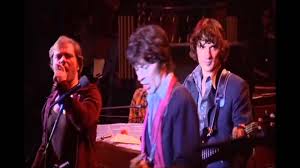
In a scene from “The Last Waltz” film, the Band’s bassist-vocalist Rick Danko sits at a studio mixing board with director Martin Scorsese and plays back a track he’s been working on for his upcoming solo album. These interviews were filmed in 1977, after the original group’s guest-star-studded farewell concert on Thanksgiving Day in 1976. In response to the filmmaker’s question as to what’s next for him, Danko’s chipper reply of “just trying to keep busy” is tempered when he lowers his head while listening to the playback. Re-watching the film recently for a piece I’m writing, it all just seems so sad.
danko last waltz
Van Morrison, Robbie Robertson and Rick Danko at The Last Waltz

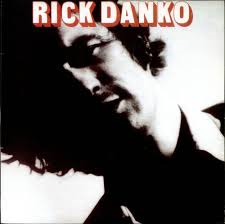
While drummer-singer Levon Helm made no secret his vehement disapproval of the idea of ending the Band as a touring unit (they were ostensibly supposed to continue as a recording unit but this lasted for only one album) he and the others went ahead and did their thing until reforming in the early Eighties without guitarist-songwriter (and “Last Waltz” producer) Robbie Robertson—accused by Helm of splitting up the Band to make a grandiose film statement about the end of rock’s classic era. Danko’s self-titled solo album was released in later 1977 and was a greatly appealing rootsy rock offering, with heart-aching ballads, cheeky roadhouse rumbles and a little social commentary sprinkled in for good measure. Danko as a songwriter didn’t have Robertson’s uncanny ability to tap a rich vein mythic Americana but then again neither did Robbie after ’77 and at least Rick was still in there mixing it up. His famously tender voice was especially well used on the ballads like “Sweet Romance.”

The thing is, once the Band was gone you had five potential solo artists instead of one beloved group and in the crowded rock marketplace that can be a tough sell. It was much easier to see the Rick Danko album as Band-lite and it was lightly regarded by the press, didn’t sell well, eventually went out of print and has had a patchy history at best on CD. Luckily, all tracks are available on YouTube if you want a listen.

Speaking of “The Last Waltz”, you can have your “I Shall Be Released” all-star sing-a-long but for my money the film’s theme-defining moment comes half-way through. In a remarkable vocal performance that is both fierce and vulnerable (and pushed along by Garth Hudson’s mad-scientist organ), Danko delivers “Stage Fright” as an all-encompassing cri de Coeur for all those star-crossed performers who “got caught in the spotlight” only to want to “start all over again” at the perceived finish line. Danko, both in re-formed versions of the Band and as a solo artist, carried on until his death by heart attack in 1999.
We’ve All Gone Solo #1 (Matthew Fisher)

(A series of occasional posts hearing out the solo excursions of rock history’s supporting players whose breakaway efforts never amounted to a high-profile solo career.)

mfisher

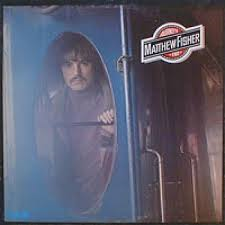
Founding Procol Harum member Matthew Fisher was one of the early masters of the Hammond organ, the cabinet-encased keyboard whose full-bodied sound could go toe-to-toe with rock music’s dominant electric guitars. Procol’s 1967 mega-hit “A Whiter Shade of Pale” was constructed around Fisher’s magisterial organ but the fact that he received no songwriting credit (and hence no royalties) was a stick in his craw—and later a lawsuit. Departing P.H. after three albums, Fisher’s first solo record was 1973’s “Journey’s End”, a worthy progressive-pop affair that was nonetheless filled with depressive lyrics that at times directed ill-will at his former musical colleagues, presumably the P.H. songwriting team of Gary Brooker and Keith Reid. These songs (“Going for a Song” and “Play the Game” especially) reveal a comprehensive bitterness at a divide-and-conquer music business that elevates talented and canny individuals and leaves by the side of the road other talented people less prepared to deal with its unsentimental ways. It’s not all gloom and doom, though, as Fisher’s deft melodic and instrumental skills serve as an uplifting counterweight and the would-be hit song “Suzanne” is a real winner.

Fisher would go on to make a few more solo albums and find work as a producer—he even joined up with the re-formed Procol Harum in the early 90s. But soon after he left again in 2004 he brought a suit for a share of future royalties on “Whiter Shade”, noting his undeniable contribution to its success. A fascinating case to be sure and one found in Fisher’s favor in a decision ratified by the House of Lords in 2009. For more on that see below.

Dubious Documentaries #10

Unknown_white_male_ver2

Unknown White Male
Directed by Rupert Murray—2005—88 minutes

(Unknown White Male? No, it’s not about my status as an indie author but the concluding entry in this series and one that shows that as the documentary field continues to expand and thrive, filmmakers need to be careful that the enhanced aesthetics employed in non-fiction movies don’t confuse people as to the ultimate veracity of your project. This review was adapted from my book “Documentary 101: A Viewer’s Guide to Non-Fiction Film.”)

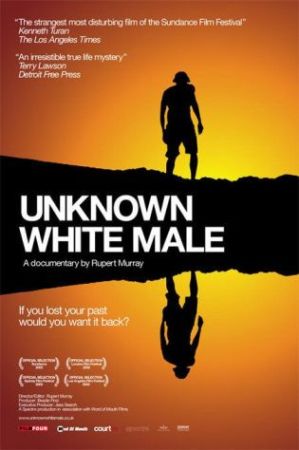
From Alfred Hitchcock’s “Spellbound” in 1945 to 2000’s “Memento”, the complications arising from comprehensive memory loss has proved a top-drawer cinematic plot device. More novel is the idea of a documentary in which a real amnesia victim is filmed during the tricky process of reacquainting himself with a past life of which he has no recollection. “Unknown White Male” would appear to be just such a film. British-born New York resident Doug Bruce got checked into a hospital in July 2003 after alighting from a subway train in Coney Island not knowing where or who he was. For the next year or so, Bruce’s lifelong friend Rupert Murray constructed this artful film of his rehabilitation. Since its release, many critics and viewers have doubted the reliability of what’s on offer here. With its seeming inconsistencies and claims of a rare retrograde amnesia that is hard to both establish and refute, these nagging reservations will likely persist.

It’s not so much that you don’t want to believe Doug Bruce and his story, it’s just that everything is a little too clean cut—-life goes on pretty well for him with a supportive family, new girlfriend etc. There is far too little expert witness material here, as if you were supposed to accept the amnesia at face value even though what type of trauma may have caused it is unclear. That way we can get right to the human-interest angle, which is admittedly interesting. Perhaps this all would have worked better as a based-on-a-true-story film, maybe fashion it into some sort of thriller… Oh, wait never mind.

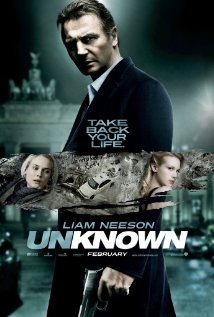
unknown poster

In some markets, this 2011 amnesia caper was also titled “Unknown White Male.” In other places it was known as “Taken 2.5”

Any readers out there have some Dubious Documentaries they’d like to share? Let us know!

Dubious Documentaries #9

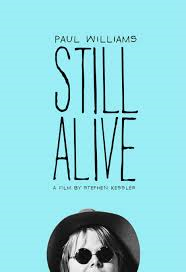
Still alive

Paul Williams: Still Alive
Stephen Kessler—2011—86 minutes

In the Seventies, Paul Williams was a fabulously successful pop songwriter and, with his famously diminutive stature and impish sense of humor, was a staple of TV talk shows and guest sitcom appearances. His songs were recorded by 3 Dog Night (“Old Fashioned Love Song”, “Out in the Country), the Carpenters (“We’ve Only Just Begun”, “Rainy Days and Mondays”), David Bowie (“Fill Your Heart”) and many others, including the Oscar-winning prom buzzkill “Evergreen.” It is not Mr. Williams who is dubious. It’s just that, as with all but the shiniest stars in the celebrity firmament, he saw his time come and go. One glance at the title of Stephen Kessler’s film will let you in on the premise. The director’s first misstep is riding the I-thought-he-was-dead conceit for the first ten minutes of the movie instead of admitting to just checking Paul’s Wikipedia entry.

stillpaul
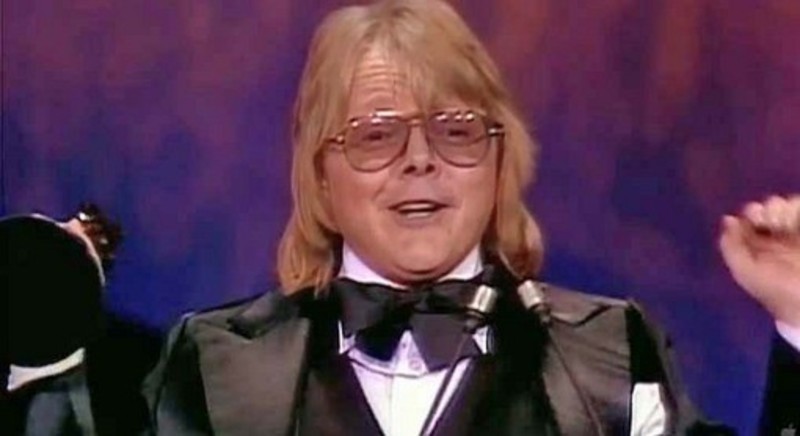
“I was going to thank all the little people but then I remembered I am the little people.” Williams wins an Oscar, 1977

Kessler professes his great admiration for Williams and his work, yet stumbles over several different doc-making strategies and mostly calls attention to himself. First, he stalks the tunesmith, then makes dubious claims about how he was granted access (“Paul and I bonded over squid”), before getting to tag along to the autograph sessions and Vegas nightclub dates that keep things going for an icon of an aging demographic. Kessler’s method seems either clueless (When Williams is in the middle of an poignant boyhood anecdote about his troubled and heavy-drinking father, the director cuts in to ask him about his first talent show) or just tacky (“Paul gave me what I always wanted.. a sleepover”). Williams is a likeable enough subject, if a bit guarded, and he’s more astute than his filmic biographer—at one juncture he even explains Kessler the relative merits of either playing to the camera or keeping it cinema verite. Although Williams’ story does get out in the end, a less kitschy approach would have yielded far more interesting subtexts than a celebrity sleepover—like a look at how fans’ persistent adoration this far down the rock ‘n’ roll road is perhaps colored by their own looming mortality. Still worth a look for fans of Williams (natch) as well as for pop-culture trainspotters of a certain vintage.

My new book, Rock Docs: A 50-Year Cinematic Journey will be released later in 2015.