Month: March 2015

We’ve All Gone Solo #5 (Sylvain Sylvain)

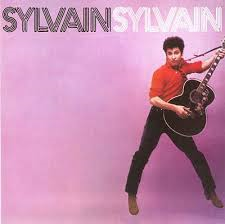
Sylvain LP

(A series of occasional posts hearing out the solo excursions of rock history’s supporting players whose breakaway efforts never amounted to a high-profile solo career.)

Someone like Syl Sylvain is an ideal embodiment of this series. This plucky rock ‘n’ roll survivor was a founder and second guitarist of the New York Dolls, the seminal urban-rock band who, in the time-honored tradition of pop pioneers, went under-recognized in their own time only to become beloved cult icons later. It was in lower Manhattan in the pre-gentrified early Seventies, that Sylvain met his eventual bandmates. The Dolls did a lot of the groundwork for the punk and alt-rock paradigm that followed with their swaggering rhythms, streetwise lyrics and outrageous fashion sense. Sylvain, however, was destined to be overshadowed by junkie figurehead Johnny Thunders on lead guitar and by flamboyant singer David Johansen. This despite being the group’s reliable riffmeister and, with his earlier background in fashion, a likely influence on their famously glam, drag-influenced image.

Syl was born Sylvain Mizrahi in Egypt in 1951, but anti-Semitism led his family to emigrate when he was still a boy, eventually settling in Queens. He kept his shit together through the Doll’s tempestuous tenure, while the hard-drug scourge claimed original drummer Billy Murcia in 1972 and eventually Thunders, who died in sordid circumstances in 1991. When the original incarnation of the New York Dolls flamed out in 1977, Sylvain said he felt like “the Dolls left him” and that eventually there would be a more stable second act. He had enough cache to be able to record a solo album for RCA, released in 1979.

Like a lot of would-be breakout solo efforts in this series, his self-titled album was a likable work that deserved a better break. Non-frontmen have a steeper hill to climb, and even though Sylvain is very adept at mining the Dolls’ key influences (50s rock, tender Brill Bldg. balladry, street poetry), he still can’t overcome his core value as a role player. This three-song sampler does show what fans were missing and makes the case of Sylvain Sylvain as a cool party record for those hipsters in the know.

In the Eighties and beyond there were the expected various projects that never quite panned out (the Ciminal$, the Teardrops) until the long-awaited Dolls re-union came about in 2004 when Sylvain rejoined Johansen (and for a brief time before his death from leukemia, original bassist Arthur Kane) for a festival appearance and then as an ongoing concern. They have released three pretty good albums since 2006 and toured all around, delighting the old-timers and younger fans who didn’t have a chance to see them first time around.
sylvain-sylvain-color
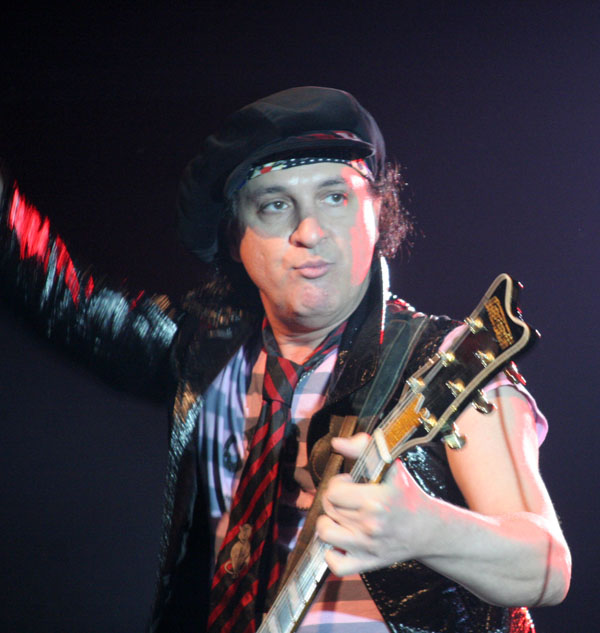
Dressed to impress and still rockin’
“The Case of the 3-Sided Dream” and a Musical Life Well-Lived

img216

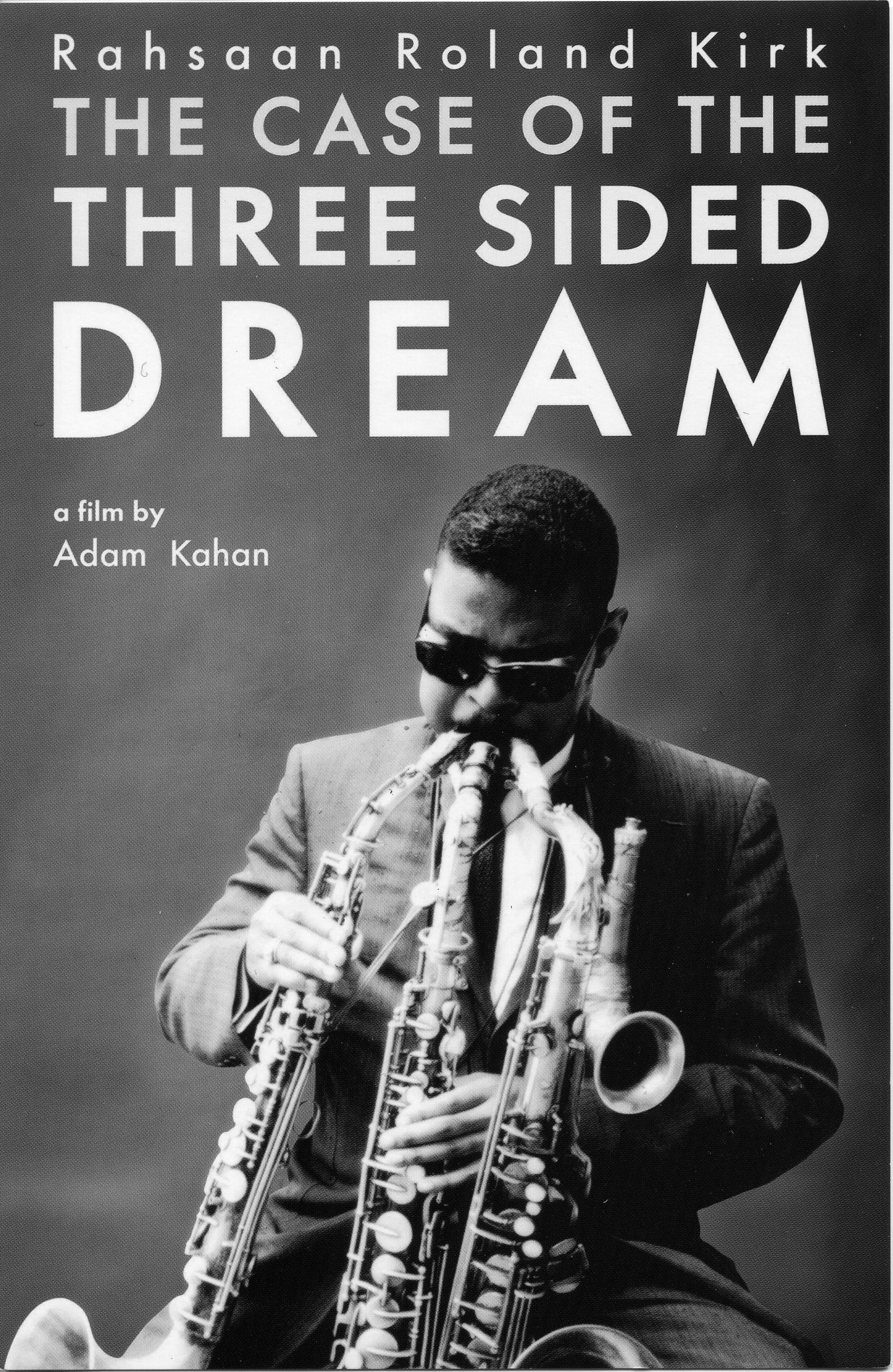
The Case of the Three-Sided Dream
Directed by Adam Kahan–2014–88 minutes

I’m not exactly sure when jazz became such an object of penny-ante scorn. Most recently, there was the witless “satire” of Sonny Rollins that made news after appearing on the blog of New Yorker magazine. It was a fake first-person confession of a man once touted as the “Saxophone Colossus” who admits that “I hate music. I wasted my life” and concedes that the Library of Congress should be burned to the ground because it contains a few of his records. Written by Django Gold, it is so devoid of authorial effort that it could not possibly have taken more time to write than it does to read. More generally, the name itself has become a by-word for a passé genre best ignored, even to the point where Jay Leno’s “who buys jazz?” tagline was accentuated by his showing cutout-bin CD covers of his own band leader, Kevin Eubanks.

So it is at least a bit heartening to see “America’s native art form” (per Dizzy Gillespie) enjoying a bit of a renaissance on film. This includes the highly-touted 2014 documentary “Keep on Keepin’ On” where Clark Terry, the much-honored trumpet player whose career dates back to Count Basie, helps a blind 23 year-old piano protégé prepare for an international competition while he himself is pushing 90. (Terry died last month). Also, John Coltrane’s masterpiece ballad “Naima” played a key part in this year’s foreign-film Oscar winner, “Ida.” Now add to that “The Case of the Three-Sided Dream”, Adam Kahan’s dazzling documentary about Rahsaan Roland Kirk that I saw in its Massachusetts premier this week at the great all-doc Salem Film Fest.

Kirk, who died way back in 1977, was certainly one of his era’s wildest innovators. The blind saxophonist built on the great leap forward of bebop pioneers like Coltrane and Charlie Parker, referring to himself as a “journey agent” exploring any and all avenues of sound with no “self-imposed barriers.” Rahsaan, as he wanted to be known, would show up on stage with several saxophones (some of his own invention) strapped on, as well as flutes, piccolos, whistles and who knows what all. Blowing on several reed instruments at one time was his trademark (some said “gimmick”) a sign of restless creativity that could hardly be contained.

Especially in the 70s footage, by which time he was dressing in African clothes and incorporating everything from gongs to smashed furniture into his performance, Kirk was a natural as a musician that benefited from being seen as well as heard and Kahan includes much live (and largely uninterrupted) footage. The viewer is treated to him doing his signature “Serenade to a Cuckoo” on the BBC in 1964, a titanic rendition of “Volunteered Slavery” at the 1972 Montreux Jazz Festival and a spot on the Ed Sullivan Show that came about after he and some colleagues creatively protested the lack of “black classical music” on the airwaves. Kirk assembled an all-star ten-piece outfit (including Archie Shepp, Charles Mingus and Roy Haynes) and did a bang-up job on “Haitian Fight Song” even though the producers requested they do “My Cherie Amour.”

Kahan includes some playful pop-art animation sequences to play along with Kirk’s recorded spoken-word pieces, which show his advocacy of populist self-realization and his puckish sense of humor as well. The affecting interview segments are with family, friends and musical collaborators—academic talking heads and celebrities are absent. Since most everything Rahsaan did seemed geared towards “connection to community” this all seems to the good.

During the Q&A time with Kahan that followed, many older viewers (several of whom had seen Kirk in concert back in the day) seemed impressed that a young guy like himself would be drawn to a subject that died around the same time period he was born. The director’s answer was interesting and one I could relate to. He reached a certain age in young adulthood and decided he would buy some jazz records because he felt it was something he should know. That this curiosity and openness to join into the larger cultural heritage would lead to something special—a national treasure like Rahsaan Roland Kirk getting his documentary day in the sun—is not surprising. Some 15 years after being captivated by a Kirk album he found at a yard sale, Kahan has paid it forward with a great film but for so many others I’m afraid this won’t be the case. Perhaps at the root of this easy-way-out dismissal of music genres like jazz is the fear of commitment to work for (or even bothering to understand) an aesthetic greater good. If you’re into music today why bother to master an instrument when you may be able to take the short-cut to the top by over-vocalizing a boilerplate pop song on “The Voice.” That mindset has largely replaced virtuosic and collaborative musical forms with a quest for personal celebrity that is hollow at its core. Now we can start talking about “a wasted life.”

We’ve All Gone Solo #4 (Ken Hensley)

weed

One of my favorite real-life Spinal Tap moments is when Uriah Heep vocalist David Byron announces on their 1973 live album that the next song features keyboardist Ken Hensley on the “Moog Simplifier.” This was eleven years before the film so you know it’s legit, not like some band today cheerfully calling out “Hello Cleveland!” when they know perfectly well they are in Pittsburgh. The Heep were a solid second-tier English hard rock outfit of that era, never quite achieving the full thunderdome aura of Zeppelin, Sabbath or Deep Purple. But they seemed like decent blokes and were quite capable of slugging it out night after night in the mid-sized venues of those halycon days. They could serve up the straight-ahead stompers like their hit “Easy Livin’”, break out the Simplifier for grandiose proto-power ballads like “Circle of Hands” or get the crowd shaking with a then-trendy 50s rock medley.

hensley in 1973
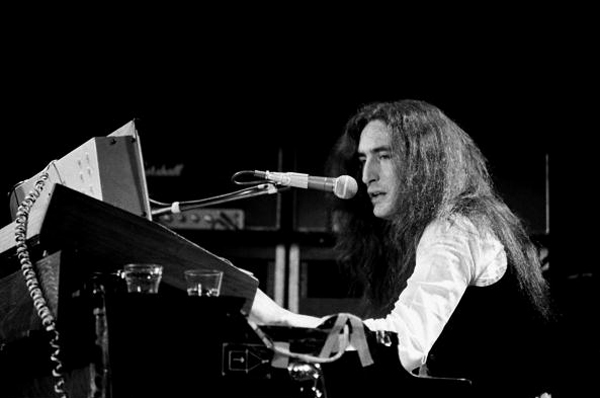
Ken Hensley in 1973

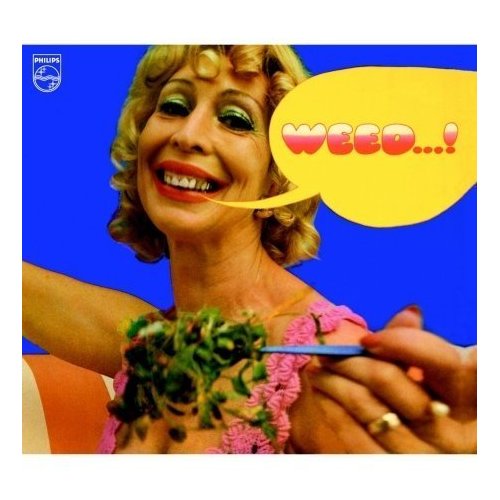
Ken Hensley, seated stage left at his Hammond organ piggybacked with a Mini-Moog, was maybe overshadowed a bit by lead guitarist Mick Box and the dramatic singing of Byron. Yet in a way, he was the band’s MVP. The Hammond was a big part of their sound but he could also play a mean guitar when called for or take the occasional lead vocal; above all he was Heep’s principal songwriter. So it’s little surprise that he tested the solo waters early. In 1971, a year when U.H. released two studio albums, Hensley found time to repair to Germany for a one-off project called Weed, recorded with a local band there called Virus. But it’s a Hensley solo LP in all but name with Ken doing all guitars, keys and vocals.

Leading off is a great spring-has-sprung number called “Sweet Morning Light.” Since at least the time of Beethoven’s “Pastoral” symphony, this theme has almost always been a cue to employ a light touch. Here we get a cobweb-clearing blast of noise before the Teutonic central riff kicks in. Winter is over by decree of the metal gods!

All in all, “Weed” is a pretty dope album, if you will. Though he doesn’t stray very far from the Heep template, Hensley is a confident performer who lays it all out 70s style. There are rockers, a brooding acoustic guitar number (“Lonely Ship”), a piece that starts with a hushed piano solo before the band barges into the room (“My Dream”), the Procol Harum-ish “Before I Die” and the title cut, a vigorous jam-band instrumental.

Yet in 1971, Uriah Heep’s most successful phase lay just ahead of them, so the heels were cooled a bit on the solo work (though 73’s “Proud Words on a Dusty Shelf” is also recommended). At the end of the 1970s, with the group’s classic line-up splintered, Hensley left U.H. and entered into various bands and did further solo records. But after David Byron’s death in 1985, Hensley went into semi-retirement, eventually re-emerging and collaborating with a long line of British rockers with whom he came up with in the day: the guy would even go on to write a my-life-in-music rock opera called “Blood on the Highway.” Heep were always an item on the Continent (a Cold War-era Bulgarian hippie movement was named after their 11-minute warhorse “July Morning”) and Hensley has found recent success summer gigging in places like Norway where genres like progressive metal flourish. Apparently, being Big in Scandinavia has replaced the old Big in Japan fallback once enjoyed by the likes of the Runaways, the New York Dolls and, for that matter, Spinal Tap.

“Lady in Black” is one of Hensley’s most notable turns as lead singer with Uriah Heep.