Month: August 2015

We’ve All Gone Solo #10 (Jerry Harrison)

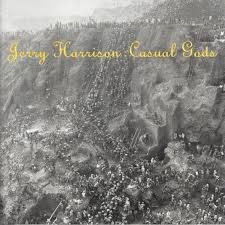
jerry casual gods

There must be plenty of people out there who dig the Talking Heads who couldn’t tell you the first thing about Jerry Harrison, except that he was the handsome, curly-haired guy who switched off between guitar and keyboards. But that’s OK. Harrison is the music equivalent of a versatile utility baseball player who could play any infield position and maybe even fill in at catcher. He comes off the bench to hit a 2-run double during a World Series that his team wins, and is forever fondly recalled by hometown fans. And so it is sometimes with rock ‘n’ roll.

Jerry Harrison was born in Milwaukee in 1949 and moved to the Boston area to study architecture at Harvard. There he met Danny Fields and the journalist and future punk impresario introduced him to Jonathan Richman. He joined Richman’s group the Modern Lovers in 1971 and played keys on their seminal debut album (recorded the next year but not released until ’76). After Jonathan turned to a quieter and more naïve performing style, Jerry left but the legacy of that first record—with its streetwise but brainy aesthetic—was not lost on the groups in the emerging New York scene centered around CBGBs. When the Talking Heads, then a trio with singer-guitarist David Byrne and the husband-wife rhythm section of Tina Weymouth and Chris Frantz, were looking for a fourth member to fill out their sound, Harrison was recommended to them by mutual acquaintance Andy Paley.
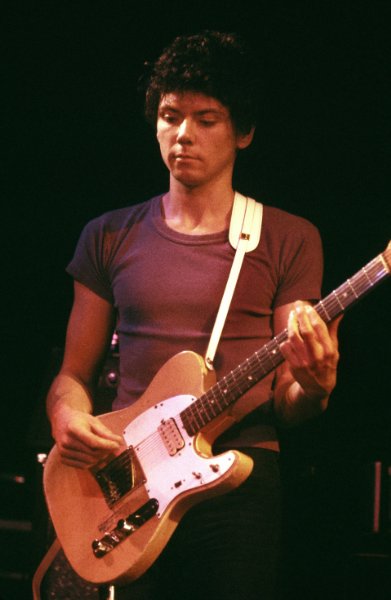
jerry-harrison-talking

He went to New York to meet the band and audition and they were impressed with his versatility. Harrison, in a move sure to be appreciated by parents everywhere, agreed to join the group so long as he could finish his last semester at Harvard. The Heads’ success, with Harrison as the group’s valuable middle man, is well known. But when tensions between dominant frontman Byrne and the Weymouth-Frantz axis came to a head in the late 80s, the group went on a long-term hiatus, before officially breaking up in 1991. Harrison didn’t waste much time getting in the solo game, releasing “Casual Gods” in 1988, the same year as the Heads’ last studio album. Jerry had also put out a solo disc in 1981 (“The Red and the Black”) but with the band’s future in doubt, this perhaps was made with more of a sense of urgency to it.
From the opener “Rev it Up” you get the sense of a consummate pro at work. Led by Harrison’s signature trebly, funky rhythm guitar, the song is a suave booty-shaker that is not dissimilar to his old band in the “Stop Making Sense” period.

Certainly, the overall sound, with the glossy production values and world-music overlay, is of its time but in a good way. Harrison has a nice mid-range voice even if he is not the most expressive of vocalists. And while as a lyricist he is not as willfully eccentric as David Byrne (few are) he can be just as striking upon closer inspection (“I feel there’s a time coming when we are all angels… a time when nothing will be new”). The standout track of “Casual Gods” has got to be “Man With a Gun” an ineffably touching tune about the mysteries of love that also comes with a stylish video.

“Casual Gods” was an impressive album (even if it did get a little samey towards the end of side two) and seemed to promise that there would be more to come. There was a follow-up album a couple of years later (“Walk on Water”) but that was his last solo effort to date. As is the case with many of the musicians profiled in this series, some people are just born to supporting roles. While watching the “Stop Making Sense” concert film, for instance, it’s a little hard to imagine a low-key dude like Jerry Harrison climbing into that giant white suit to claim the spotlight like David Byrne does so memorably. We all have our roles to play and for Jerry it would mostly be as producer or in-house player, working with the Violent Femmes, General Public, Crash Test Dummies, the BoDeans, Black 47 and many others. And say what you will about the Rock & Roll Hall of Fame, at least it gets warring bands back together one more time and for the Talking Heads it happened in 2002, with Jerry looking just as boyish as ever.

(The anecdote about Harrison joining the Talking Heads was taken from Will Hermes’ great book “Love Goes to Buildings on Fire” which takes its title from the Heads’ first single (before J.H. was in the group). More on that tome in my upcoming post “Books That Rock, Part 2.” Coming soon!)

A Reel and Rock Summer Break

Lord of the Ry's

It’s blog break time. When I return, I’ll have Part 2 of my “Books That Rock” article, a re-consideration of Stanley Kubrick’s “Barry Lyndon” on its 40th anniversary and more of my “We’ve All Gone Solo” series, among other items. For those readers interested in music documentaries, a pretty hashed-over subject on this blog, feel free to visit my Facebook group called “Rock Docs” and join up if so inclined. Here is the link:

https://www.facebook.com/groups/rockdocumentary/

Currently, I have posted a clip from Penny Woolcock’s 2012 documentary “From the Sea to the Land Beyond” not a rock doc per se, but with a excellent soundtrack by the band British Sea Power. This compilation of early English documentary footage with that music makes a beautiful tribute to late summer. Until then… happy viewing and listening from Reel and Rock.

Rick Ouellette

We’ve All Gone Solo #9 (Mick Ronson)

ronson

The curious case of Mick Ronson is a great example of why I like doing this series so much. Rock fans can be a sentimental lot and Ronson, who came to prominence as David Bowie’s right-hand man in the heady days of Ziggy Stardust, is still greatly admired long after his untimely death in 1993 at age 46. A classically-trained musician from the craggy port city of Hull, England, Ronson did not find much success in London with his late 60s rock outfit called The Rats. He eventually left the capital, not knowing he had recently attracted the attention of Bowie. Although he had had a hit with “Space Oddity” (considered a bit of a novelty record at the time), Bowie harbored plans to achieve pop immortality via some transformative concept.

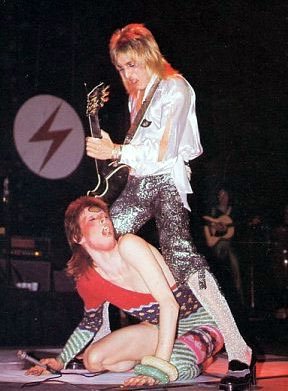
As the story goes, one of Mick’s ex-drummers found the guitarist back up in Hull, marking out the end lines on a rugby field, part of his job in the city’s parks dept. Convinced to give London another try, Ronson got the gig as Bowie’s guitarist on the two albums (The Man Who Sold the World and Hunky Dory) leading up to the world-beating The Rise and Fall of Ziggy Stardust and the Spiders from Mars. By the time of Bowie’s alter-ego masterstroke, Ronson was more than just the flashy lead guitarist in the singer’s gender-bender, sci-fi alternate universe. Ronno, as he was now known, was a principal player in the album’s cinematic sweep, as arranger and keyboardist in addition to his incandescent guitar work—not to mention his role as Bowie’s onstage foil when the Ziggy show went on the road.

ronson bowie2

Obliged to dress in the glittery style of the leader, as did drummer Woody Woodmansey and bassist Trevor Bolder, those were special times for Ronson as the top Spider. But as revolutionary as the look and sound was, pointing the way to both the punk era and the image-conscious 80s pop, Bowie was not a guy to stay in one bag for very long. Though Ronson was still an integral part of the Ziggy follow-up Aladdin Sane and the covers album Pinups, he was soon out of the silver suit and would only play with David on a couple of occasions after that.

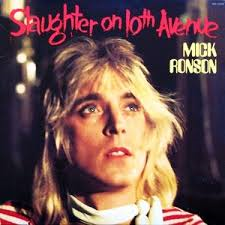
His first solo LP, Slaughter on Tenth Avenue, arrived soon after in Feb. of 1974 and made #9 on the UK charts. This is an album that still gets a lot of love, sometimes to a strange degree. On the extreme fringe, one online true believer, states that Tenth Avenue is the greatest rock music ever produced, with the exception of Jimi Hendrix. Really, even better than Ziggy Stardust? This is obviously the work of a very talented musician but it also gives every indication of being a toe-dipper in the solo-artist waters. Mick makes a very debatable decision opening the record with a version of “Love Me Tender.” Starting off with a soft-serve Elvis cover does not exactly indicate a forward charge up to the rock ‘n’ roll Acropolis. Elsewhere, there are three tunes that David Bowie had a hand in writing, all well sung and played by Ronson in the moonage-daydream style of recent vintage. (The best of the three, “Growing Up and I’m Fine,” is heard above). Most intriguing is the title cut as Ronno delivers a sterling rockist rendition of a Richard Rogers dance piece he loved since the days of his youthful music lessons—the cabaret-style piano and the long line of dramatic sustained guitar notes does justify the hype of the man’s eager-beaver followers.

Like a lot of the folks featured in the series, Ronson found his greatest market value in a support role or behind the scenes. In between this album and his solo follow-up (Play Don’t Worry, #29 UK) he was in the final line-up of Mott the Hoople. Ronson would go on to form a partnership with Mott frontman Ian Hunter that would last for several albums and tours. Later he would appear with Bob Dylan’s Rolling Thunder Revue while producing and/or playing on records from a diverse list of artists that included Lou Reed, Van Morrison, Ellen Foley, the Rich Kids, T-Bone Burnett, Morrissey and even David Cassidy. In 1992, shortly after being diagnosed with cancer, he appeared at the Freddie Mercury Tribute Concert where he was re-united with both Bowie and Hunter. Despite never being as famous as those he helped support (or partly because of it), the secondary spotlight shining on Ronson still burns plenty bright.


Today, “Top of the Pops,” Tomorrow the World!