Month: February 2018

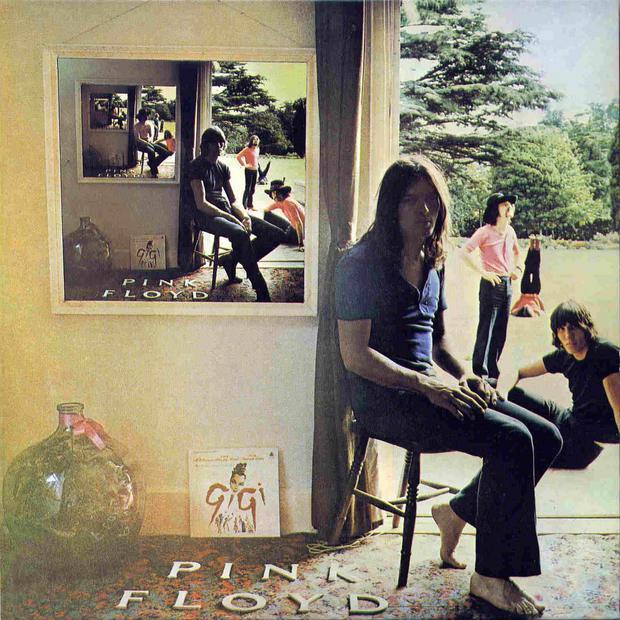
Make Mine A Double #3: Pink Floyd’s “Ummagumma” (1969)

The third entry in my series on the wild and wondrous world of rock’s double albums.
by Rick Ouellette

Pink Floyd at the end of the Sixties was very much the band in flux. In 1968, singer-guitarist and founding visionary Syd Barrett left the band and after an abbreviated solo career was hardly seen in public before his death in 2006. Barrett’s fanciful compositions had dominated their classic ’67 debut, The Piper at the Gates of Dawn, but he barely appeared on the follow-up (A Saucerful of Secrets) and soon retreated from London to the group’s original home base of Cambridge. Beset by mental health problems complicated by prodigious LSD use and unwilling/unable to play the rock-star card for more than a few hands, the secluded Barrett would become one of music’s most fabled figureheads. Few at the time would have doubted the talents of his bandmates: bassist Roger Waters, keyboardist Rick Wright, drummer Nick Mason or guitarist David Gilmour, a boyhood friend of Barrett who joined the band shortly before Syd exited. But absent the primary writer of one of rock’s psychedelic masterworks, Pink Floyd struggled for a revised identity. After producing the soundtrack for the French hippie film More, Floyd ended the decade with the double LP Ummagumma, the type of project that would defy release today. Exploiting the era’s trend towards heavy acid jams (on its live disc) and openness to experimentation (in the studio half), Ummagumma was popular enough (#5 in the UK) to keep the band’s profile high before they hit their stride and became rock music titans with their all-world headphone classic, 1973’s Dark Side of the Moon.

On Piper, Barrett’s delectable mix of childlike whimsy and foreboding fairytales had been balanced out by two seminal excursions into what would be called space rock. One of youth music’s first extended pieces, the nine-minute “Interstellar Overdrive” was well-explained by it’s title. The other, “Astronomy Domine”, starts the live disc in an expanded version that ably states the new line-up’s mode of attack. The increased amplification of the instrumental excursions and Roger Waters’ eerie replication of Syd’s planetary roll call emanating from “icy waters underground” upped the ante of the original for the tuned-in provincial punters in the audience. “Careful With The Axe, Eugene” is transformed into a real horror show of tension-and-release, with its stalking build-up yielding to Waters’ ungodly screaming and Gilmour’s slasher guitar work. The live disc is rounded out by “Set the Controls for the Heart of the Sun” and the title track from Saucerful, now a 13-minute ramble through a psychedelic funhouse led by Nick Mason’s propulsive drumming.

Giving each band member a half-side to go freeform in the studio was an early example of the self-important tendencies of ambitious acts, or maybe it was just lack of new material. The underrated keyboardist Richard Wright contributes “Sysyphus Parts 1-4” an effectively doomy piece of program music that depicts the hapless mythological character, usually spelled Sisyphus. He, of course, is fated to forever push the same boulder up a hill—probably the exact feeling Floyd roadies got during the mammoth tours in the decades to follow (the album’s back cover shows two of them with the band’s gear spread out on an airport runway).
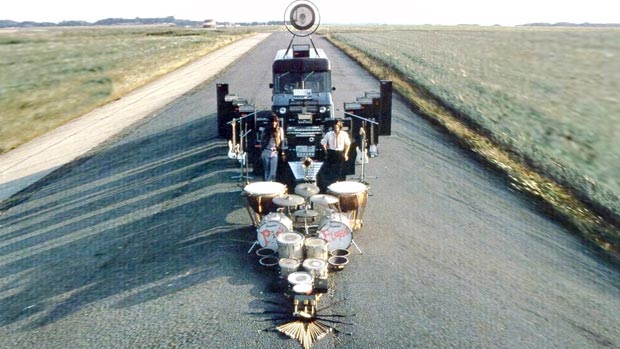

Abandon ye all hope, the road crew that enters here.

David Gilmour’s folksy acoustic guitar on “The Narrow Way” prefigures what Jimmy Page soon was getting at on Led Zeppelin III and the vocal part that follows presages the musical heights later attained on “Comfortably Numb”. Nick Mason never had a songwriting credit before Ummagumma and after hearing his aimless percussion workout, one could be forgiven for wondering where the writing was in this case. The only track that sinks lower is “Several Species of Small Furry Animals Gathered Together in a Cave and Grooving with a Pict,” a Roger Waters’ toss-off that sounds just like its title, which should be warning enough.
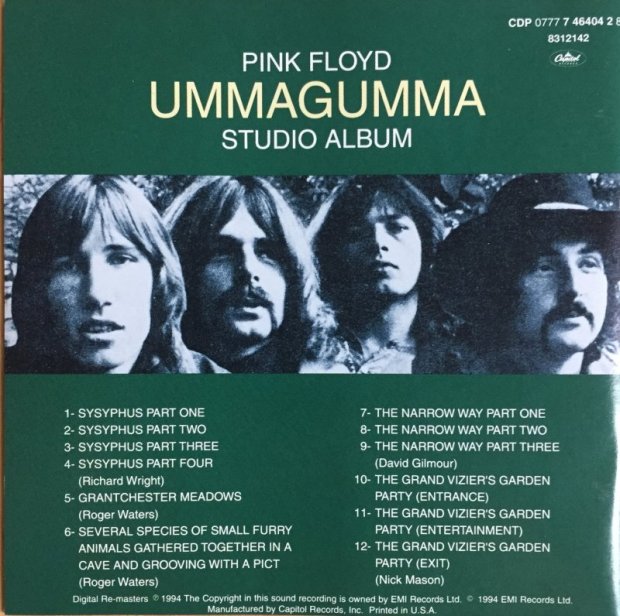

Less than the sum of its “parts”?: The back of the CD 2 breaks down the multi-sectional nature of the studio disc.

Luckily, he also offers up “Grantchester Meadows,” a lovely pastoral number named after a real greensward in the band’s hometown. One of the greatest of Floyd’s lesser-known numbers, simple acoustic guitar and looped sound effects of bird tweets cushion Waters’ softly sung boyhood idyll that’s tempered by the realization that this a memory recalled from the confinement of his “city room.” The profound disatisfaction with the vicissitudes of a cold modern society, merely hinted at here, would become the primary aspect of Pink Floyd’s art in the decade to come, culminating in their other double album, 1979’s The Wall, where the confined character is not just shut off in a solitary flat, but in an enormous brick prison of his own making.

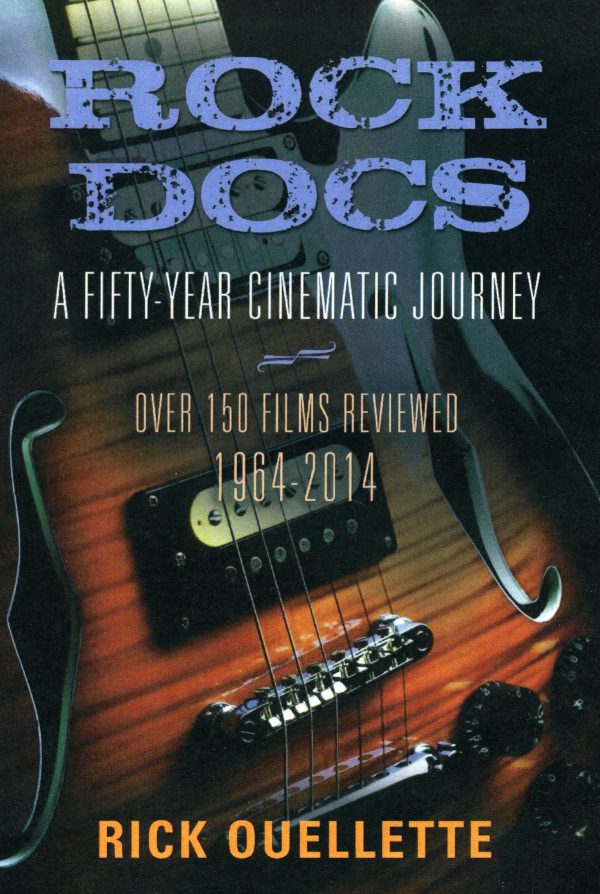
If you like the in-depth writing of rock music, both on record and on celluloid, please check out my book Rock Docs: A Fifty-Year Cinematic Journey now available. You can sample a 30-page excerpt by clicking on the book cover image at the top right of this page.
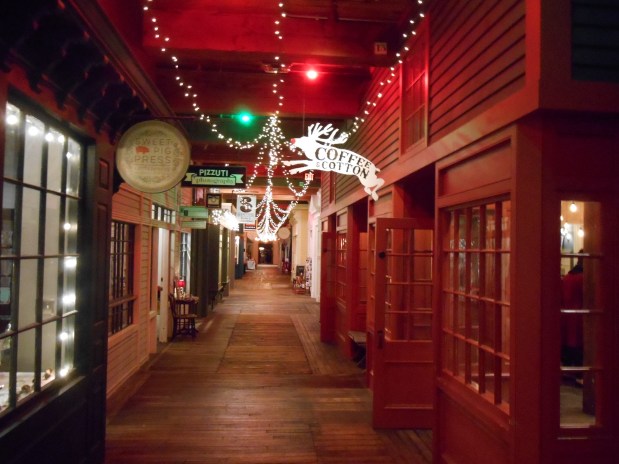

Which way to the secret hipster street in the sky?

The shops at Mill No. 5 at closing time. (Photos by author unless indicated otherwise)

by Rick Ouellette

Jack Kerouac is fixed in the public imagination, or at least in what remains of it, with the broad vistas of cross-the-country America and of a declarative personal freedom. But the Beat icon, who was born and raised in the Massachusetts mill town of Lowell, often chafed against that image, preferring to think of himself as a “Catholic mystic” instead. He set six of his novels in his hometown, creating a microcosmic society that in its exacting detail felt as universal as James Joyce’s Dublin and, for me at least, is more impressive than the hedonistic “road books.”

Of course, Jack’s Lowell has changed pretty significantly since the era he was writing about, namely his childhood and adolescence in the Twenties and Thirties. His family was part and parcel of a large French-Canadian migration of mill workers from Quebec to New England, of which Lowell once had a large concentration. Traces of this remain today: the Jeanne d’Arc Credit Union even has a new building and how could I not mention the Ouelette Bridge? But old cities like this are known for their successive waves of immigrants and in recent decades this has meant that Cambodian-Americans have replaced the old “Canucks.” It has also been the scene of a couple of other modern trends: college expansionism (the ever-growing UMass Lowell) and the influx of hipsters and artists from bigger and more expensive cities. For this latter group, the town—bisected by the Merrimac River rapids which powered the mills where so many toiled—is now for many a destination instead of a place to escape.


The Moody Street Bridge may not be called that anymore–the road is now called University Avenue—but the old name fit so much better. It took on such a mysterious aura in Kerouac’s Lowell books that it may as well have spanned the River Styx instead of the Merrimac. In the right background is another oft-mentioned location: the yellow-brick Textile Institute trade college which has been subsumed by the local UMass campus.

Kerouac’s Lowell was an acutely-recalled place of murky canals, forbidding factories, lunch wagons, pool halls and late-night taxi stands. After a grueling day working the roaring textile machinery, men in fedora hats might stop for “another cup of coffee and another piece of pie” in the face of their Depression-era blues.(“The tenemental cold north night of desolation,” as J.K. once put it). While the mills may now be typically converted to condos with an art gallery on the first floor, and the textiles replaced by tech and those tiny diners superseded by health-food cafes, a question remains: where does one go to find that solace that Kerouac always seemed to be grasping at, but was too often just out of reach?

For Jack, it could take temporary form as a meditation in the mountains of the Pacific Northwest or, more prosaically, that self-described moment where he has one arm around a girl and the other raising a tall glass of beer while listening to a transcendent saxophone solo. Nowadays we refer to an important “third place,” neither home nor work, which can be a refuge from both, with all their related concerns and burdens. I recently stumbled upon a very noveau version of this on the 4th floor of 250 Jackson Street, one of those converted red brick mill buildings which are numerous in Lowell. I was looking for a used record store and found not only that but a whole tucked-away hipster shopping arcade in the sky. The way in was curious: into a musty archway then an outdoor wait for a single extremely slow elevator. There seems to be nothing on the 2nd or 3rd floor or at least nobody has pressed those buttons in any of my subsequent visits (there are apartments in a different part of this typically vast mill complex but that place has its own lift). This unpromising approach is in direct opposition to the trendy and popular gathering place called Mill No. 5, an elevated oasis pitched above the streets of a downtown that often seems as rough-hewn as it must have been in Kerouac’s day.


One of the more impressive aspects of Mill No. 5 is the adaptive re-use style of the developer who used salvaged building materials to make a crazy-quilt indoor street where one place may be a Tudor half-timber and the next may be Victorian parlor or a retro movie palace.

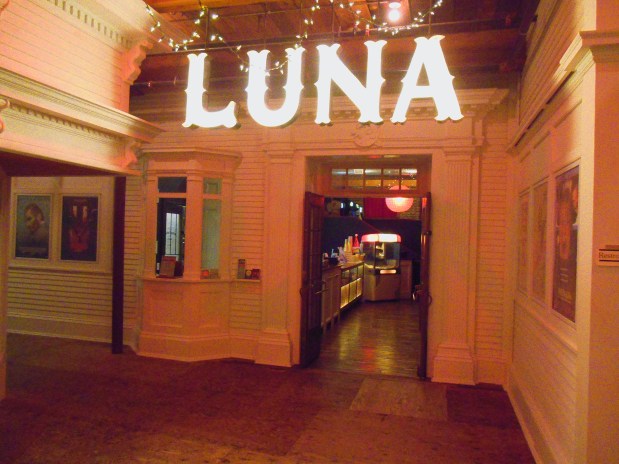
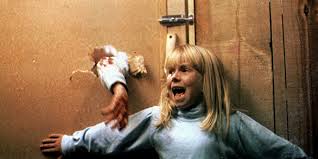
There’s a coffee shop, an eccentric bookstore the size of a walk-in closet, a photography studio with old-timey cameras on display, a vintage clothing shop, a farm-to-table café and various artsy boutiques. Best of all is the comfy Luna Theater with its eclectic movie programming and occasional live events. They have a free movie night called Weirdo Wednesdays; the catch is you don’t know what the feature presentation is going to be. So of course I took the bait. I have sworn off hardcore horror in recent years (too many nightmares in the real world and all that) so I kind of braced myself a bit when the opening credits revealed “The Brood,” David Cronenberg’s 1979 envelope-pushing cult horror classic.


“You think RICK is scared? How do you figure I’m feeling right about now!!!”(Still from “The Brood”)

Funny, I had never seen it but made a mental note recently that I should check it out someday, but probably wouldn’t have if the issue wasn’t forced on me. Naturally, I loved it. Even if I got too scared I could have retreated to the upper lobby, where there is a clutch of vintage video arcade games set to free play. Have I finally found my Happy Place? Admittedly, this neighborhood refugee is a bit more low-key than the type of comparable place that Kerouac wrote about. (“The Pawtucketville Social Club, an organization intended to be some kind of meeting place for speeches about Franco-American matters, was just a huge roaring saloon and bowling alley and pool table with a meeting room always locked”).

My first time at the Coffee and Cotton café, I settled into a quiet corner with a cup of single-sourced java and opened my book of E.M. Forster short stories, keeping one observant eye on my surroundings. Predictably, most of the young patrons (average age about 25 tops) were gazing into smart phones and laptops, even in company. These young ‘uns are well-traveled in the four corners of the cyber-universe. As I picked the bookmark out of my Forster volume, I convinced myself that “They may have the youth, but I have the wisdom.” I was pushing 60 and will have succeeded in pushing it over the line by the time this is posted. Lately I feel like I’m doing more “reeling” than “rocking” but then consider that I’ve already lived 13 more years than poor Jack (1922-1969).


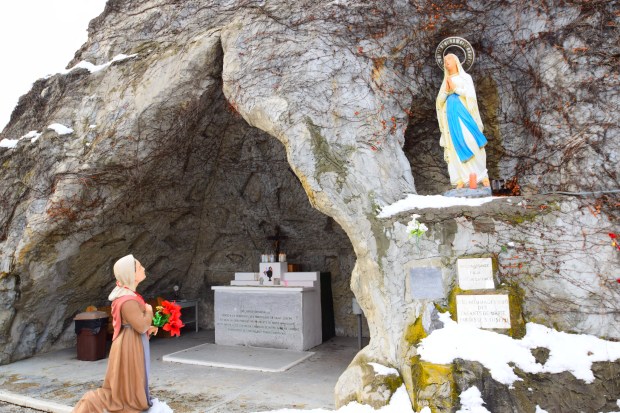
The Lady of Lourdes Grotto, behind the old Franco-American School in Lowell, figured prominently in the novel “Dr. Sax.” It was here that the nefarious title character stalked Jack’s boyhood self and his mother, lurking behind the praying stations near the elevated Northern Canal.

I was reading Forster’s amazingly predictive 1909 story “The Machine Stops,” where the world’s population lives underground, each one in an individual chamber, where an all-encompassing technological entity provides each (isolated) individual with all material needs a source for instant “communication.” In an American age where the socio-political discourse is so frightening and vicious that it makes “The Brood” look like a Halloween prank, it’s understandable to want to sail away forever on the wings of our unlimited access and convenience. But when “the machine stops,” as it does in the story… well, you can guess the rest. As for me, well I may pause long enough for another cup of fair-trade coffee and another piece of vegan pie, but then I am walking away, intent to never stop investigating the solid realm of what makes it our world in the first place, in all its empirical pain and pleasure. As Kerouac might say: “Step softly, ghost.”

Find out more at millno5.com
Recommended Lowell novels by Jack Kerouac: Visions of Gerard, Dr. Sax, Maggie Cassidy.

Wait, there’s more: Purchase “Rock Docs” and get free comic!

The T.A.M.I. Show. Don’t Look Back. Monterey Pop. Woodstock. Gimme Shelter. Let it Be.
The Last Waltz. The Kids Are Alright. Stop Making Sense. Standing in the Shadows of Motown.
The Filth and the Fury. Searching for Sugar Man. Twenty Feet From Stardom

Over the last half century, music documentaries like these have provided us with a priceless moving-image history of rock ‘n’ roll. My book “Rock Docs: A Fifty-Year Cinematic Journey” is a first-of-its-kind anthology of the rockumentary genre, viewing pop music’s timeline through the prism of non-fiction film. Since its earliest days, the look of rock ‘n’ roll has been integral to its overall appeal.

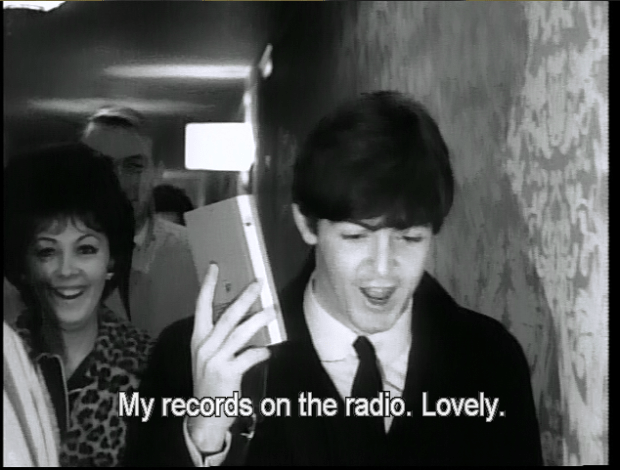
This book reviews over 150 films from 1964 to 2014 in anthology form. It starts with a ground level look at the Beatles’ world-changing first visit to America and comes full circle fifty years later with “Good Ol’ Freda,” where the Fab Four’s secretary looks back through the years as both a fan and an insider. In between, readers will find many films to re-experience or discover for the first time.

From Craig Breaden, contributing writer for the Progarchy site:
Rick Ouellette’s “Rock Docs” is right at home in my rock reference collection, sitting next to my old Trouser Press Record Guide and my Rolling Stone Interview books. It’s the kind of read you can dip into piecemeal, as the mood strikes, and Ouellette’s amiable style will keep you coming back. Nicely done, and a really fun read!

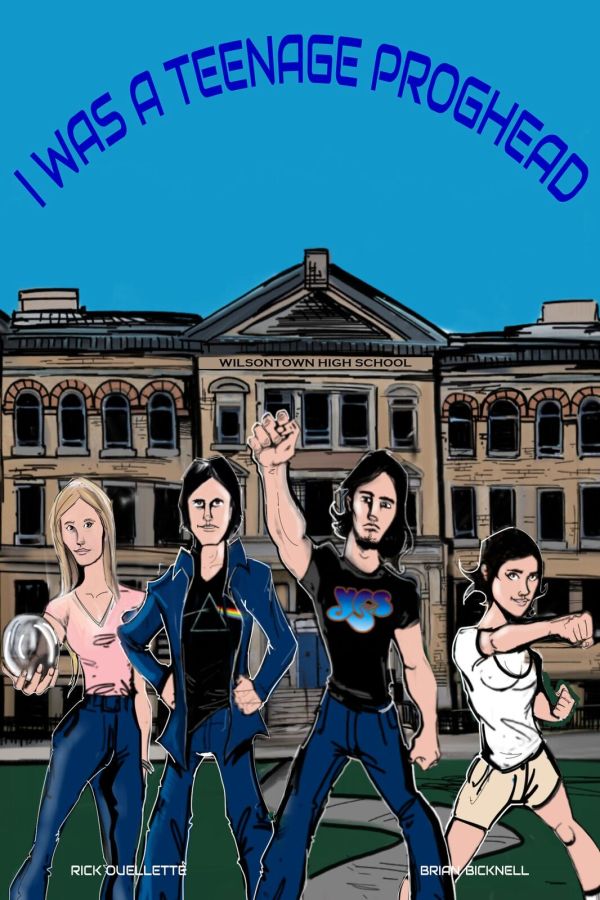
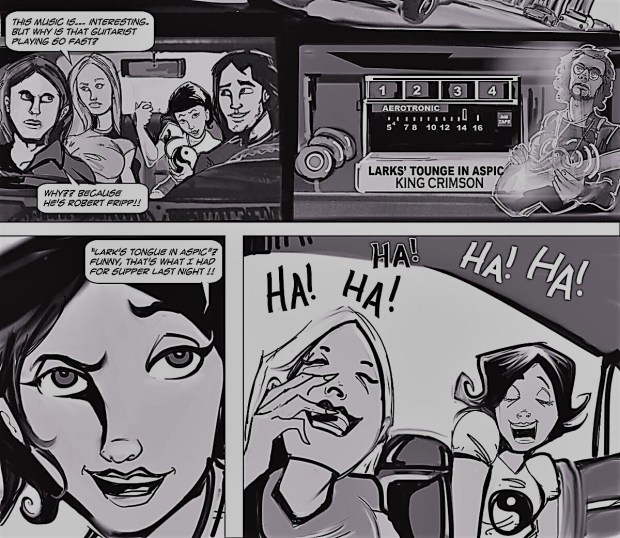
And speaking of Prog, order “Rock Docs” between now and the end of February and I’ll throw in a free copy of my new (and first) comic book, “I Was a Teenage Proghead” with illustrations by Brian Bicknell.

Wilsontown High School, 1974
Travel back to a time when the hair was long and so were the musical attention spans. That fall the mellow vibe of Wilsontown High gets disrupted by a mysterious rich-kid bully. But he makes a “sad” miscalculation when he focuses his grievances on Sean and Paul—two know-it-all aspiring rock critics—and their two new friends: clairvoyant Jane Klancy and kung-fu enthusiast April Underwood. Things are going to get personal in a hurry…

If you are interested in purchasing “Rock Docs” and getting the comic book in the bargain, please leave a message below as I now sell the book directly for these promotions. You can also click on the link below for my author page at BookLocker.com. The link also has a click-through where you can view a 30-page excerpt.
Thanks, Rick

http://booklocker.com/books/8905.html