Month: January 2020

R&R Hall of Fame Goes Glam: T. Rex and the Twilight of the Guitar Epoch

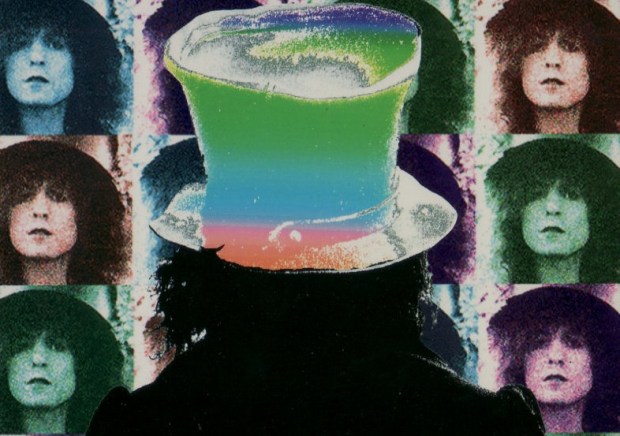
I like to say that the real Rock and Roll Hall of Fame is the one in each fan’s heart. Still, it’s kind of fun to moan and groan each year around this time about who didn’t get in vis a vis who did etc. It’s also nice to celebrate “one of ours” when they do get voted in. And for me and many others, this year it’s T. Rex that will be hailed. Marc Bolan’s iconic glam-rock band had a string of eleven Top Ten U.K. hits in the early Seventies (including four chart-toppers), achieving near-Beatlemania stardom in their native land. In the U.S. they cracked the Top 40 only once (“Bang a Gong” at #10) but their delayed-effect influence was widespread. Bolan’s androgynous sex appeal, catchy guitar riffs and surreal wordplay were inspirational to scores of New Wave bands and other artists ranging from Prince to Guns ‘n’ Roses.

Oh sure, Marc could seem a bit twee, use too many sports-car metaphors and be a little too enamored of his own stardom. But in an age of prog-rock indulgences and long guitar solos by scraggly hippies, his style and his concise and catchy 3-minute glam-rock gems pointed a way forward. Tragically, he died in a car crash in 1977, just as he was connecting with the oncoming punk/new wave movement to which he would a considerable inspiration. One of my T. Rex favorites “Ballrooms of Mars.” This glossy but haunted ballad with its Alan Freed call-out and reference to that darkest of nightimes when “monsters call out the names of men.” Bolan’s lyrics could be chock full of bizzare non sequiturs, but he was often more astute than given credit for.

Here, the studio version of “Ballrooms of Mars” is set to a slideshow of the group in their heyday.

The Rock ‘n’ Roll hall of Fame’s opaque process of nominating and inducting artists is the bane of rock fans the world over. (There is fan voting but it only counts as one ballot). The HOF museum itself may be located in the heartland city of Cleveland where legendary DJ Mr. Freed first coined the term rock & roll, but the people running the show are the coastal elites of Big Media, headed by Rolling Stone founder Jann Wenner. Though Wenner is said to be stepping down from that role this year, the induction process is bound to stay largely intact.

In my circles, where the pioneers of a harder rock style are held in high esteem, the failure of nominees Motorhead and the MC5 to get in this year is the cause of righteous grumbling. And not without reason. Future metal warlord Lemmy Kilmister hitchhiked to Liverpool to see the Beatles at the Cavern club and roadied for Jimi Hendrix before himself becoming an icon for future decibel-crunchers. The guys in MC5, indignant about police and National Guard misconduct during the late Sixties unrest in their hometown of Detroit, started a rock & roll riot of their own. These are stories that are intrinsic to rock’s legacy of rebellion and dogged individualism. I have nothing against new inductee Whitney Houston, who was a helluva singer, but the gradual expansion to other genres like soul-pop and rap—while admirable for its inclusivity—is diluting the core mission.

This stripped-down version of “Metal Guru” appeared on the second CD of the deluxe version of ‘The Slider.’

Bolan was a self-made superstar in an age when ingenious self-invention still stood a chance. He springboarded from the elfin folk duo Tyrannosaurus Rex, added a reliable rhythm section of bassist Steve Currie and drummer Bill Legend while retaining the services of percussionist/sidekick Mickey Finn. Atop it all, Bolan rode high with his charismatic vocals, earworm riffs and stabbing guitar leads. It was a combo that, under their leader’s single-minded determination, decisively grabbed one of the brass rings on the mad merry-go-round of the pop music industry. Whether he was dancing ‘neath the “Mambo Sun,” being a “Jeepster” for his baby’s love, hanging with his main man “Telegram Sam” or affirming that “Life’s a Gas” (while prophetically wondering if it was going to last), Marc Bolann did it with an elan that hasn’t faded in the forty-plus years since his passing.

As a sidenote, one article about this year’s HOF class pointed out that, among the new inductees, only T. Rex and the Doobie Bros. had drummers as core members. The current predominance of programmed beats, AutoTune vocals and closed-shop cabal of songwriters seems to indicate that rock music’s guitar-bass-drums DNA may soon be a thing of the past. But a Hall of Fame is a thing of the past by its very nature. There are tons of worthy artists out there who have been left out so far, starting with the two bands I mentioned above and Thin Lizzy to boot. Maybe it’s time for the bigwigs to hit the brakes on this trend and dance awhile with those that brung ’em.
From the Mountains of Madness to the Subways of Sedition: More Adventures in Alt-Tourism

(With apologies to Mr. Lovecraft)
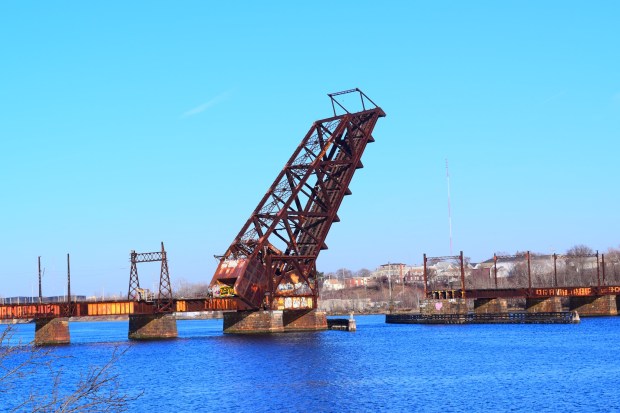
If you ever cross the span where the Old Ones Memorial Highway crosses the Pissatonic River, you will notice out the car window a parallel railroad drawbridge. It once served the now Shunned branch line of the M&B. No train has run there for many a year and the bridge now stands forlorn, it’s central span forever locked in the up position at an Abnormal angle.
Whatever good townsfolk that remain in this Accursed burg have a Spontaneous Aversion to this rail bridge and warn their children away. But the main populace, long known to be Decadent if not straight-up Half-Caste, have been known to creep out from the Depraved city’s Intangible Shadows and approach the Antiquarian bridge as if from a collective Pseudo-Memory of Vestigial self-destruction.

To put it more plainly (if I must) this Baleful structure is not nicknamed Suicide Bridge without good reason. So if you do spy this place from your automobile, be not tempted to take the first exit after the river. Instead, continue your original mission, that idea you have that you can steal the local library’s copy of the dreaded Necronomicon without suffering any ill consequences.

Oh, how I love to kid Howard. His unabashed use of exclamatory adjectives and phrases is ripe for affectionate parody. I’m glad I got that out of my system. But what I wouldn’t make fun of is Lovecraft’s abiding belief in self-directed touring.

(Stock photo)

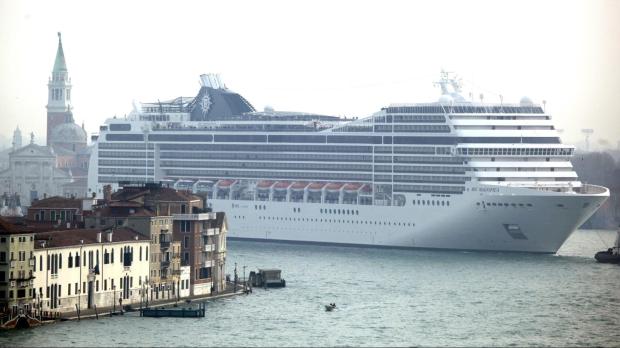
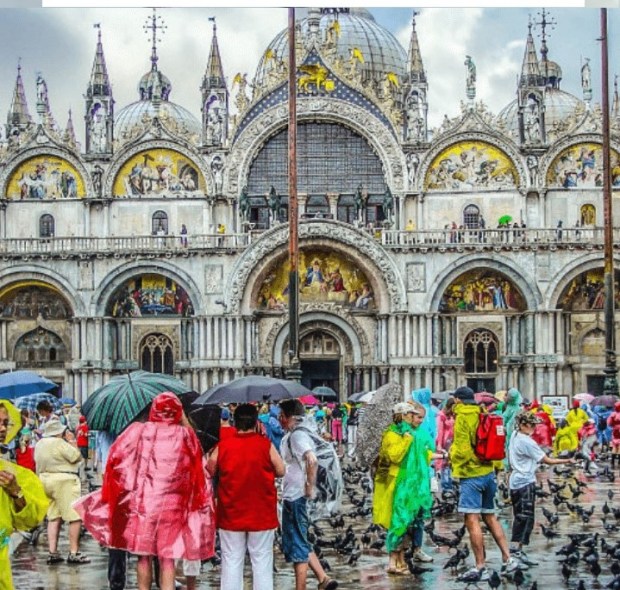
Like I’ve written about before, the world is being overrun by tourists. New York City had no less than 65 million visitors last year and places like the Statue of Liberty, Ellis Island and Times Square may be permanent no-go zones for people who are crowd-phobic. Venice is overrun with foot traffic, many of those feet having walk off the brutalist skyscraper cruise liners that dwarf the city’s Renaissance monuments. Getting thru the Louvre or up the Eiffel Tower takes the patience of a saint. When the overpopulation of travelers combines with the effects of global warming, the results can be appalling as we have recently seen in Venice.

(Stock Photo)

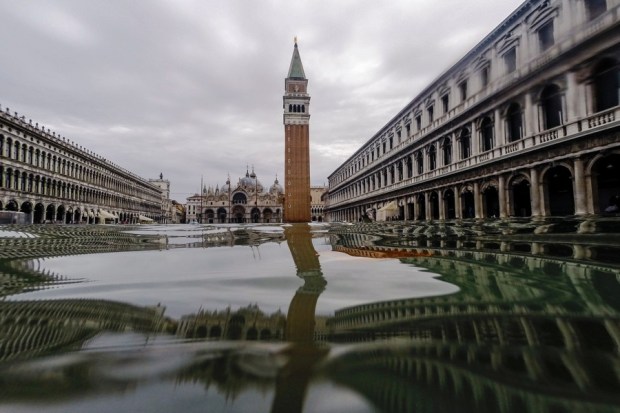
In a grimly fiendish scene, that would be funny if it only wasn’t, members of the Veneto regional council, whose building is located on the Grand Canal,saw their chambers flooded with lagoon water not two minutes after voting down measures to combat climate change. Outside in St. Mark’s Square (and even inside churches) tourists continued with selfies in water that sometimes was waist high. Of course, has always been a negative feature of this great city, built precariously on the edge of a lagoon on the Adriatic Sea. They have tried (literally) to stem the tide with barrier islands and modified building codes. But the digging of a deep-water channel for tankers several decades ago—and the later expansion of that channel to accommodation those monstrous cruise ships have helped create the storm surges (not to mention the humanity surges) that has made the town of Titian the poster child of global overtourism.


We had to do destroy Venice in order to see it: Even the Great Deep Ones wouldn’t mess with this Leviathan. (Stock photo)

The curse of overtourism is not limited to famous cities easily accessible by air travel. Take for instance a June 2019 article in the Boston Sunday Globe called “The Fatal Mt. Everest Obsession.” It was penned by Backpack magazine editor Casey Lyons and describes the grim trophy destination that the world’s tallest peak has become. Eleven climbers had died near the summit the month before as the policy of Nepal officials to give permits to all comers had reached critical mass.


“At the Mountains of Madness”? You ain’t kidding. (AP photo)

The predictable results of this open-door policy: garbage-strewn base camps, corpses as tripping obstacles and long lines on the approach to the oxygen-deprived summit where ill-tempered scrums have broken out. In the selfie stick age, it seems there is only insanity where there should be reform—both in regulations and in our own outlook. Trophy tourism in a place like Everest, where (according to Lyons) people have “bank accounts bigger than their climbing resumes, and egos bigger than both” is a cul de sac of both experience and reason.

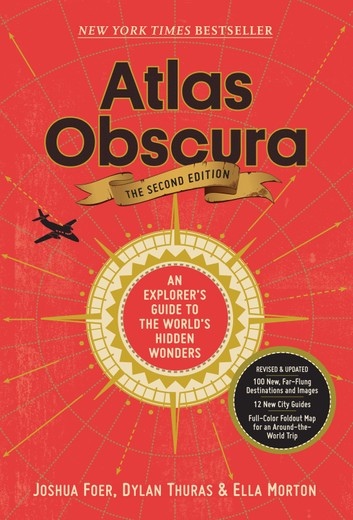
But alternatives are widely available, both for local investigation and for interesting options when traveling more widely. The second edition of the popular “Atlas Obscura” guide was recently released offering some 500 pages of easily-referenced travel alternatives, indexed by attraction type as well as by country, region and city. (It’s well illustrated too, perfect for armchair expeditions!). The guide has turned me on to free attractions in my hometown like the historic (and vaguely unsettling) Ether Dome operating theater at Massachusetts General Hospital and to little-known dioramas in both the North End and Back Bay. It also helped me create a rather unusual bucket list that includes places like the Cold War-era Teufelsberg Spy Station in Berlin, the Child Eater of Bern, Naples’ Secret Cabinet of Erotica, and The Nutshell Studies of Unexplained Deaths in Baltimore.


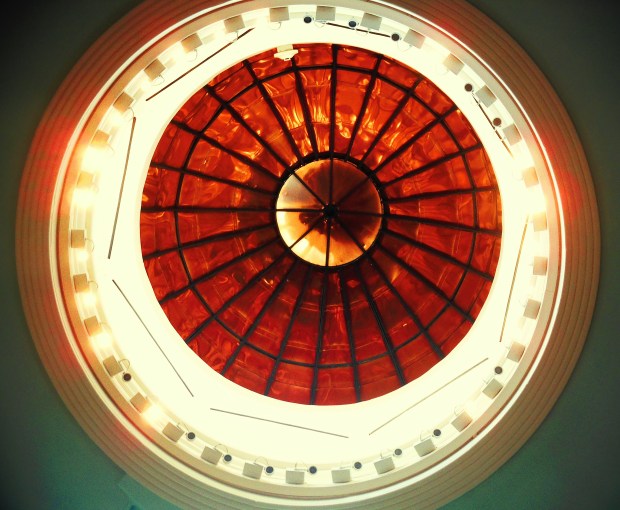
Boston’s Ether Dome (1821). Underneath its eerie glow, early experiments in anesthesia still had a tinge of the medieval.

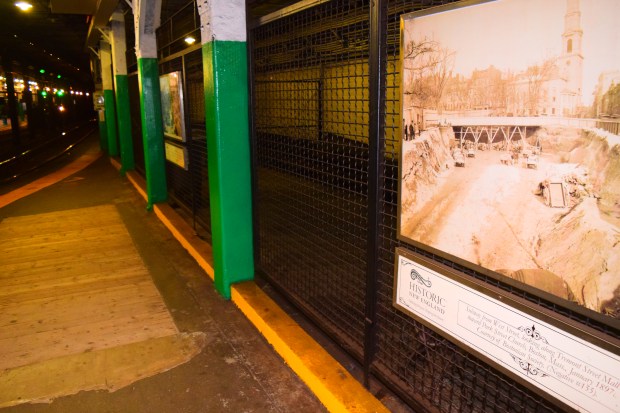
But the most fun of all, is to create your own alt-itineraries. H.P. Lovecraft for one was notorious for extending dark meanings to otherwise ordinary locales. Near the top of the list would be the Boston subway system. As the first in the nation, there were people who were apprehensive of going underground, with the sense of being just that much closer to the infernal regions of Lucifer. Soon after, even if subconsciously, Lovecraft exploited such fears in “Pickman’s Model” where a psychologically-unstable painter who gets kicked out of the Boston Art Club because of his horror-themed canvasses. But what we don’t find until it’s too late for the human race, is that the monster uprising he’s painting is really what it seems to be, they plot their attacks from within a network of tunnels under the city (several of which really exist). Lovecraft was uncanny in his eye for actual architectural or geographical detail that could be drop-kicked into a fantastical realm. For instance, one of Pickman’s paintings shows people on the Boylston subway platform being attacked by subterranean nasties emerging from an opening in the floor. That opening is actually there (a former way to cross to the outbound side) but is boarded up… for now!!!


Boston Green Line riders, don’t say you weren’t warned!

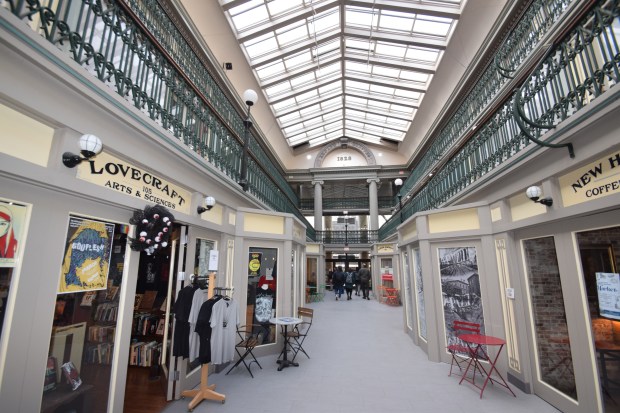
As discussed in part one of this series, most Lovecraft story locations are in and around his hometown of Providence. To give fans an even better reason to head to Rhode Island’s capitol, the store Lovecraft Arts and Science sells all sorts of books, artwork, t-shirts and knick-knacks related to H.P., his precursor Poe and others. They also run the biennial NecronomiCon (next one in 2021) and have handy walking guides to Lovecraft-related sites. Best of all, the store is located in the beautifully-restored Providence Arcade from 1828.

Text and photos (except as indicated) by Rick Ouellette