Few rock and roll Christmas stories are as heartwarming as the Sex Pistols’ tale of how they spent December 25th, 1977. You may well ask, huh? But look at the situation facing the England’s most notorious punk band at the end of that epochal year. Queen Elizabeth’s Silver Jubilee was celebrated that summer, with the one notable exception of the band’s blistering protest song, which took its title from the royal anthem. The Pistols’ “God Save the Queen” lambasted a “fascist regime” and an outdated monarchy that lorded over a population that needed a serious wake-up call. They had connected with a significant portion of the nation’s youth and the single is widely believed to have denied the #1 spot in the UK by industry chart-rigging at the very height of the festivities in June. Johnny Rotten and the crew had also spent the better part of a year earning their reputation as cultural enemy #1 in the eyes of Britain’s establishment.
The year wound down with a planned Sex Pistols tour, but local authorities saw to it that 27 gigs were cancelled, leaving the group in a bus that had a destination sign accurately reading “Nowhere.” That’s where we are at the start of Julien Temple’s thoroughly engaging 2013 documentary look-back. The one-hour film actually kicks off with an extended montage of hokey holiday B-roll of British holiday miscellany that shades into the darker side of that particular season: the country’s economic woes and desultory labor strikes.
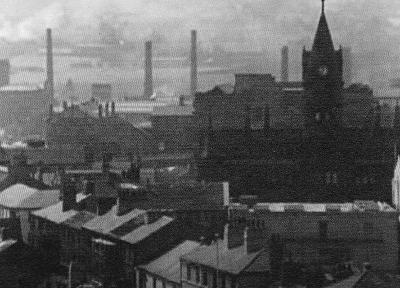
Huddersfield from the hill.
It was then that the “Christmas miracle” mentioned in that montage’s ironic narration happens. The Pistols, disillusioned and all but destined to spend December 25th tooling around the rainy motorways in their Nowhere coach, got a call from the firemen’s union in the hardscrabble West Yorkshire town of Huddersfield. The firemen, who were stuck on wages of 170 pounds a week, had been on the picket line for nine weeks. They asked the band if they would be interested in doing a charity gig for the worker’s children on Christmas Day. Would they?
Here’s the complete film. Enjoy!
“Christmas With the Sex Pistols” (aka “Never Mind the Baubles”) is an object lesson in the random acts of kindness that can make our world a little better when tolerance and understanding win the day. The band’s anarchic outrageousness may have been necessary to shake up the country’s moribund state of mind, a process that would go on to reenergize Britain’s culture for the better. But it came at a price, esp. at the hands of the country’s tabloid press, led by the likes of Rupert Murdoch and his ilk. “Anything we did was transferred into a lie,” John Lydon (then Johnny Rotten) says in the film’s contemporary band interviews. “They just wanted to smear us,” he continues, “but you can’t beat the truth.” And the truth of that Christmas afternoon was that the Sex Pistols were accepted as (and presented themselves as) nothing more than good-natured benefactors, throwing an unpretentious Yuletide party for the kids (most of them grade-schoolers) with gifts and band memorabilia for all, a luncheon and a huge cake (more of that later).
Temple smartly compliments this angle by having the three surviving Pistols from this line-up (Lydon, Steve Jones and Paul Cook) relate their own childhood recollections of the Yuletide. The relatively stable home environments of Lydon and Cook contrast sharply with the backstory of Jones, whose sour holiday memories and it’s “fucking ‘orrible” TV specials are related to his abusive “shit family” (refer to his memoir Lonely Boy for details), only partially relieved by escaping to the house of his childhood friend, Cook. Of course, John Simon Ritchie (aka Sid Vicious) is not here to tell his tale but Lydon recalls that Sid, keen on coming across as a punk tough guy, needed a “serious talking to” before the party. He reminded Sid that that kind of posturing wouldn’t work with children. Jez Scott, who was about 15 and is the only kid there interviewed here as an adult, remembers that “Sid was brilliant.” He had ended up with two Sex Pistols soccer-style scarves and Mr. Vicious politely asked Jez if he could have one as the memorabilia were not meant for band members.
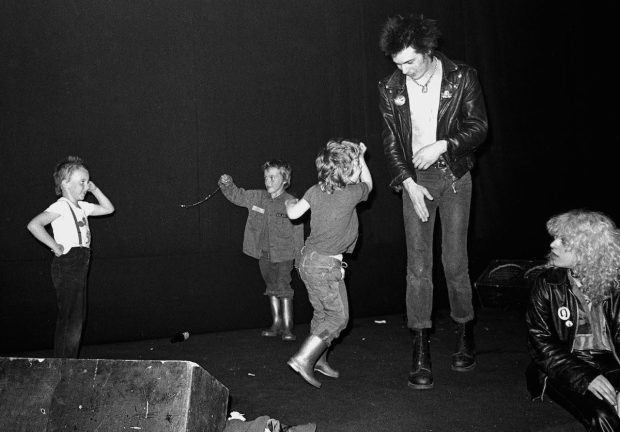
Sid and kids, with girlfriend Nancy Spungen, his partner in doom, looking on.
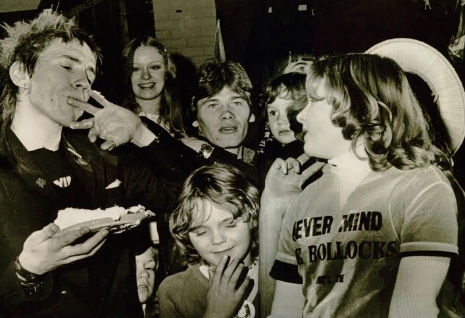
Jez also remembered that the Pistols delivered their usual furious set, even including their anti-abortion tirade “Bodies.” But the children, being “natural anarchists,” loved them and enthusiastically started a cake fight with the ample leftovers of the featured dessert. Johnny Rotten, as the lead singer, was apt to lean over the front of the bandstand or wander into the audience. So he soon had his head covered in frosting, much to his own delight. “It had all gotten a little too serious” by then, he recalls of the atmosphere surrounding the group. Both band members and a couple of greying guys who walked nine miles to see the night show, talk of the fleeting days of “punk unity” and the good vibes that permeated this gig. Near the end of this piece, Temple treats the true-blue Pistols fan to a chunk of great footage from the evening “adult” show. These performance clips are of particular interest as it was the band’s last UK show in their original run. Their chaotic U.S. tour soon followed and ended with the group’s bitter break-up a mere three weeks later.
That story could (and has) filled many a magazine article and book chapter. What Temple’s shrewdly charming film does is sprinkle a little holiday magic on the band’s inglorious ending. There were many factors that contributed to that; the group’s youthful inexperience, the tabloid nonsense and an older generation’s stark intolerance, not to mention the cynical machinations of the Pistols’ manager Malcolm McLaren. It’s a loving holiday card sent to the town of Huddersfield and a fine record of a notable moment of grace for a beleaguered rock legend in the making. With all the hype scraped away, it’s simply a tale of people doing a good deed where needed, when only a lump of coal was expected.
If you like my music documentary posts, feel free to click on the book cover above right to check out a 30-page excerpt of my Rock Docs: A 50-Year Cinemtaic Journey and/or join my Facebook group simply called Rock Docs. Thanks, Rick Ouellette
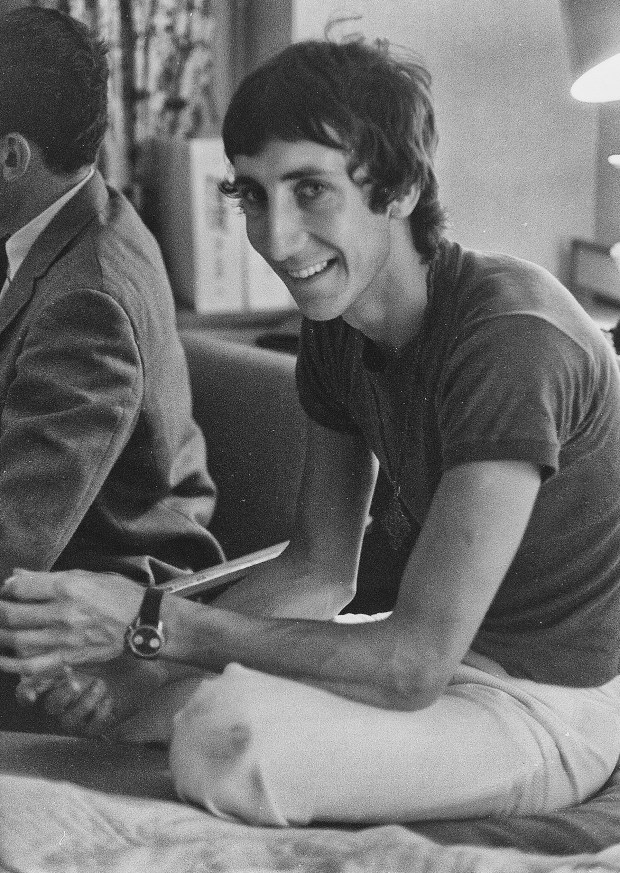 Pete Townshend in a D.C. hotel room, 1967 (Photo by Michael Klavans)
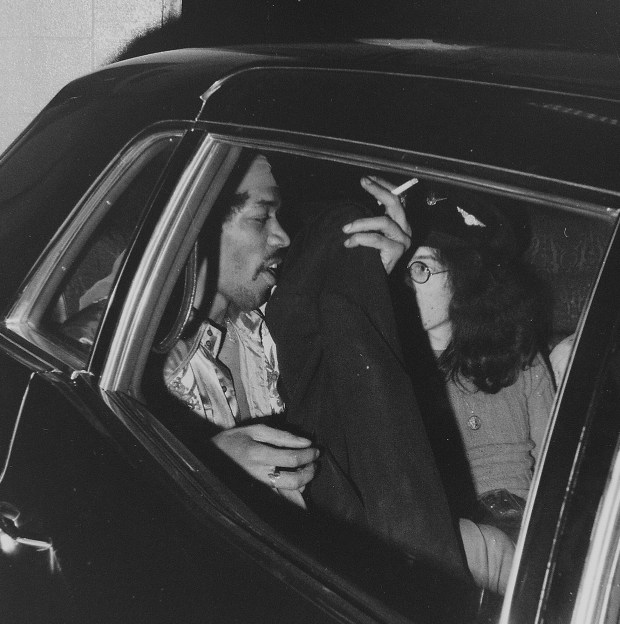 Jimi Hendrix outside the Baltimore Civic Center (Photo by Michael Klavans)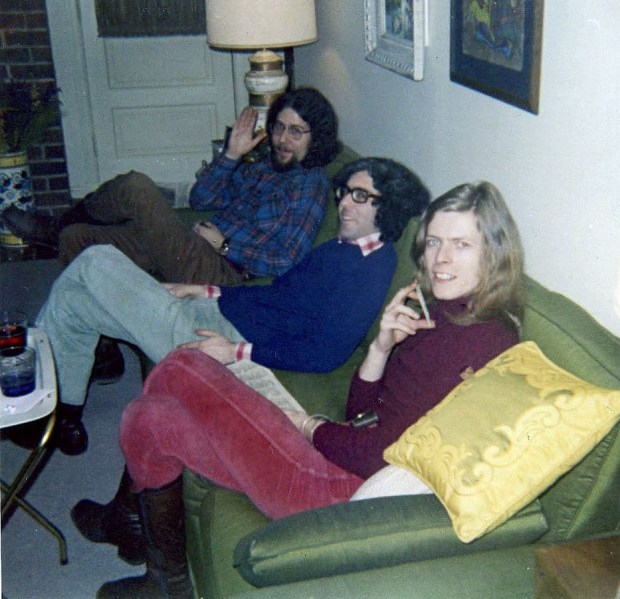
 Reel and Rock