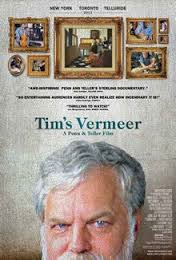
I’ve just posted my fourth article on James Curnow’s great film site Curnblog, an article on art world-related documentaries centered around the recently released Penn & Teller film, “Tim’s Vermeer.” You can click on the link below if you’re interested. While you’re there you can also check out some of the many entertaining and enlightening pieces on this Australian-based site.
Up above in the header, we end National Poetry Month with another dice roll half-haiku from words picked pin-the-tail-on-the-donkey style from a poetry-magnet website. May is right around the corner and hopefully springtime is as well…
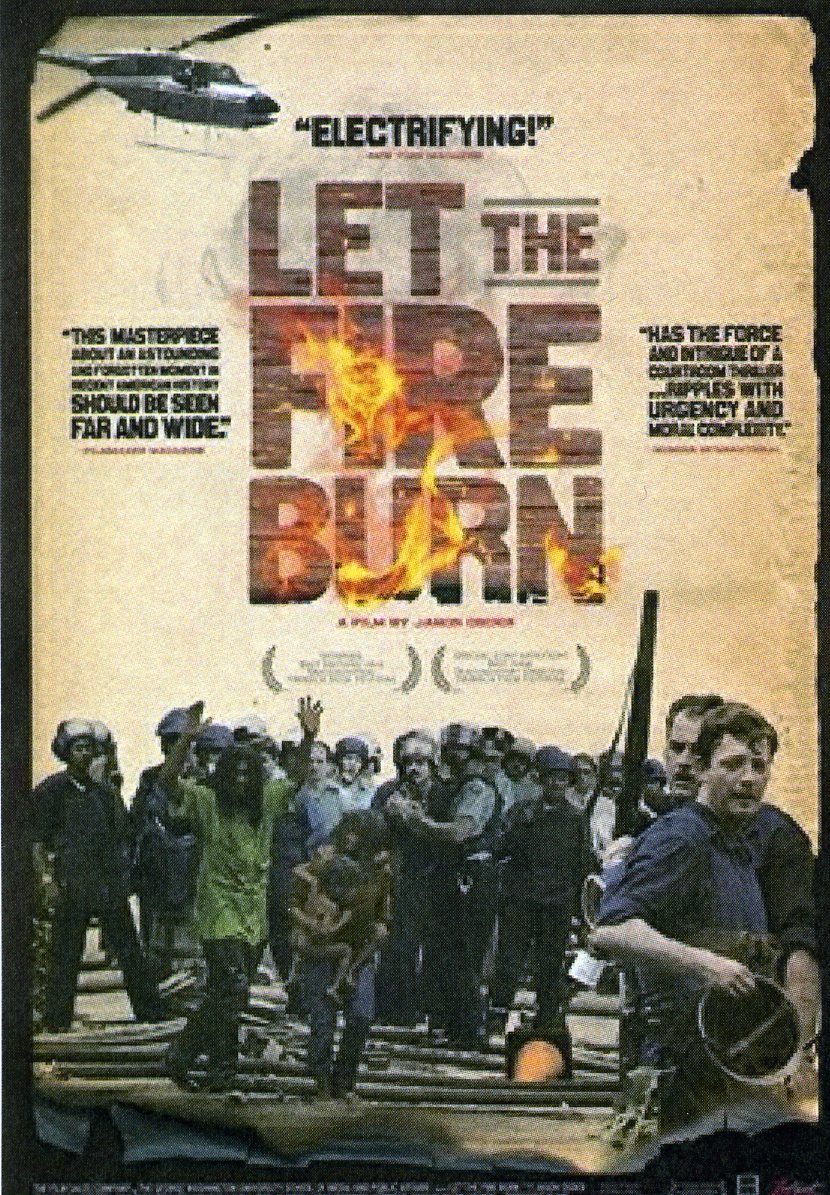
The excellent PBS documentary series “Independent Lens” continues with two more notable selections the next two Mondays at 10:00 PM. On May 5th, they’re showing “A Fragile Trust” about the New York Times plagiarism scandal centered around Jayson Blair. Definitely worth watching. Back in March (when it was warm, go figure), I saw it at the Salem Film Fest here in Massachusetts. On May 12th, I greatly anticipate seeing “Let the Fire Burn” which has received a lot of praise on the festival circuit. It examines the still hard-to-believe 1985 Philadelphia Police Dept. bombing of the compound occupied by the black liberation group MOVE, killing all but two of its members and obliterating 60 nearby houses in the process.
Knuckleball!
Directed by Ricki Stern and Anne Sundberg—2012—85 minutes
It’s nearly a lost calling, like a shoe repair shop or a pen-and-stationery store hanging on in a world otherwise dominated by Apple and Wal-Mart. A patient craft that is difficult to master in an age of instant gratification and performance-enhancing drugs. The confounding knuckler, like the hidden ball trick or stealing home, is almost gone from baseball. This pitch, delivered at a velocity some 20-30 miles per hour slower than standard-setting fastball, flutters and floats in on the batter. If swung on and missed, he’ll look ridiculous, if he connects he could hit it into the next time zone.
America’s oldest professional team sport may be losing this eccentric part of its legacy, but not many players and managers are mourning the near demise of the knuckleball. The pitch infuriates many habit-obsessed hitters and knuckleball throwers usually require special coaches and catchers. So in celebration of baseball’s opening week, let’s take a look at the recent DVD release of Ricki Stern and Anne Sundberg’s winsome 2012 documentary on the small and misunderstood cult of the knuckleball, referred to by non-believers as “fraudulent” or “a freak pitch.” It’s a celebration of non-conformity and persistent humility now fleshed out with almost two hours of featurettes.
As a fan of my hometown Boston Red Sox, I got to see one of the filmmakers’ two primary subjects up close. Tim Wakefield started out as a first baseman in the Pittsburgh Pirates organization but developed the knuckleball pitch after being told he would likely never make the Major Leagues as a position player. After a sensational first season with the Pirates, the knuckleball magic abandoned him (walking ten men in a game at one point) and he was cut loose, surfacing next year in Boston for a 17-year career where fans would become intimately familiar with fickle fortunes of one who depends on such an unusual skill.
Tim Wakefield and the unorthodox fingernail grip
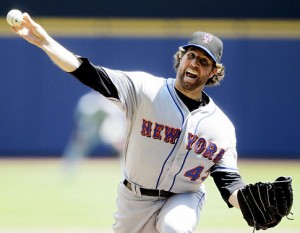
Wakefield was 45 years old and already a member of two World Series champion Red Sox teams when seen here playing in his last year; much of the focus here is on his protracted efforts to secure his 200th career win before the season ends. The only other current knuckleballer, the much younger R.A. Dickey of the New York Mets, is also profiled and the usual slings and arrows of outrageous fortune that come with his craft are compounded with a health issue that threatens his livelihood. The filmmakers cut back and forth between these parallel tracks during the 2011 season, often blending in the players’ personal stories and putting the lie to the easy notion that all pro players are spoiled and overpaid. Dickey, for instance, bounced around the minors for a long time making $1800 a month (summers only) and sometimes moving his young family two or three times a year, trying to keep the faith that his big-league dream would pay off in the end. On the verge of making it to “The Show”, a medical review found a congenital anomaly in Dickey’s pitching elbow, but in a gutsy move he took a drastically reduced contract offer instead of cashing in a million-dollar insurance policy.
Battle Cry of the Knuckler: R.A. Dickey in action
Elsewhere, Stern and Sundberg review of a bit of the knuckleball’s mystery history (no one’s sure who started it and it’s only had 70 or 80 true practitioners in the last century plus) and emphasizing its true outsider status: Wakefield unpretentiously declares that a knuckler is “on a little island by yourself.” Never has that been truer than in the 2003 American League playoffs. Wakefield had dominated the Red Sox’ age-old rivals, the New York Yankees, in two of the series’ previous games and would have been the hero had the Sox won and gone on to the World Series with a good chance to win it for the first time since World War I. But he was called in from the bullpen late in the deciding seventh game because the Sox manager had left their starting pitcher in too long, allowing the Yankees to tie the game. When Wake gave up a game-winning home run, it was one of the most ignominious defeats in the team’s history and the film makes the viewer live the pain of an athlete (and a person) who has quietly done all that’s been asked of him, including being put into an untenable position. When the Red Sox went on to win a championship the next year they had to beat the Yankees in another epic 7-game series (winning four in a row after losing the first three)along the way. Wakefield played a crucial role in the second of those victories, the winning pitcher in a six-hour game that helped pave the way for Boston’s first World Series win in 86 years (you’re welcome!). Tim’s redemption was almost biblical in it’s serendipity, though the directors curiously underplay it (unlike me).
Tim Wakefield has the Yankees “turning Japanese” as they try in vain to fathom the elliptical flight path of an in-form knuckleball during the 2003 playoffs while the Boston fans eat it up.
The knuckleball pitch, being both unpredictable and easy on the arm, destines these pitchers to be used either too often or too seldom or treated unfairly: being shuttled between a starting role and the bullpen, being brought into games when the score is lopsided, dropped from playoff rosters. Little wonder that one of the more enjoyable parts of “Knuckleball!” is the get together of Wakefield and Dickey with two old-timer practitioners, Charlie Hough and the incomparable Phil Niekro. Hall of Famer Niekro won an amazing 318 games as a knuckleballer and pitched in the pros until the age of 48. The self-deprecating camaraderie of knuckleballers and the way this fraternity helps each other (Niekro tutored Wakfield who in turn offered advice to Dickey) will appeal to viewers jaded by the media over-hype that so often dominates sports coverage.
Maybe it’s not surprising, given their built-in status as sporting underdogs, that many of these guys would be doing good works outside of their profession. Yankee knuckleballer Jim Bouton, best known for his classic expose bestseller “Ball Four”, was also a liberal activist who protested the South Africa’s apartheid government way back at the 1968 Summer Olympics. Both Wakefield and Phil Niekro are past winners of the Roberto Clemente Award, named after the Pirates’ superstar who lost his life in a plane crash on the way to delivering supplies to victims of the 1973 Nicaraguan earthquake. R.A. Dickey is involved in the Bombay Teen Challenge, which aids victims of overseas human trafficking. The good karma seems to be paying off for Dickey the way it did for Wakefield in 2004: the season after this doc was filmed R.A. won twenty games and became the first knuckleballer to win the Cy Young award as his league’s best pitcher.
The weeklong all-documentary Salem Film Fest, running from March 6-13, has a great and remarkably diverse line-up of films, with 37 features and almost as many short subjects. I was able to see several of them last week and even if I can’t get back there in its last two days, will have a sizable checklist for future viewing choices.
I feel a little silly that before this year I was largely unaware of this supercool event that takes place in my hometown of Salem, Mass. and that is barely a half-hour’s drive from where I live now. It’s been gong on for seven years and during that whole time I was writing a book called “Documentary 101.” Actually, considering the 420-page ordeal, maybe it’s not that surprising. In conjunction with the festival I took a “Discovering Documentary” class taught by Erin Trahan, co-editor and publisher of the online film magazine, The Independent. An all-day class (at the Montserrat College of Art in neighboring Beverly) the week before was followed by an inclusive SFF full day pass on a Saturday accompanied by panel discussions etc. Any non-fiction film buffs in my neck of the woods take notice for next year, it was great! And as for the Salem Film Fest, what a first rate program, accompanied by a welcoming vibe, all centered on the town’s historic Essex St. pedestrian mall. Looks like March may be the new October for the Witch City when it comes to attracting attention…
Of the film’s I did see, the opening night presentation of “A Fragile Trust,” profiling the plagiarizing New York Times reporter Jayson Blair, was a treat. Filmmaker Samantha Grant was in attendance (as were most directors of the selected films, it seemed) and during the Q&A, one person compared it to Errol Moris’ Oscar-winning “The Fog of War” as a mea culpa coup of sorts. Robert McNamara’s defensive testimony in “Fog” of his dubious high-level role in escalating the Vietnam War may have more gravity. But Blair’s high-profile case, which caused an erosion of confidence in journalism at a time when traditional news could least afford it, is no small potatoes. Blair’s rampant ego, blended in with lingering mental health issues and substance abuse, led to a prominent scandal and his presence in the film as a less-than-reliable interviewee was fascinating stuff. (“Where does the illness stop and the gaming begin?” wondered one of the talking heads). A show of hands at the Q&A revealed about half thought the film made them at least somewhat sympathetic of Blair, while the other half were left with disdain. Another example of the engaging power of the documentary form, although I have to agree with my sister Pam, who I watched it with it with, Grant should tone down that cue-happy soundtrack music. If you get a chance, check out “A Fragile Trust” when it airs on PBS on May 5th.
On Saturday, I saw the charming “Tokyo Waka” by John Haptas and Kristine Samuelson, about the 20,000+ jungle crows that inhabit one of the world’s biggest cities. The poetic flow of this work reflected both the natural world’s interaction with the built environment and the Japanese people’s philosophy of everyday life as seen in relation to this enigmatic, iconic bird. Also got to check out the vibrant “Everybody Street” (directed by photojournalist-filmmaker Cheryl Dunn) about notable photographers who have worked the streets of New York City through the decades. Tellingly, most of the folks behind the camera (like Joel Meyerowitz, Jill Freedman, Bruce Davidson and the Serbian-born Boogie) are as least as fascinating as the diverse multitudes they take pictures of, and that’s saying something. Like “Waka” this is a sidelong portrait of a great city as a whole.
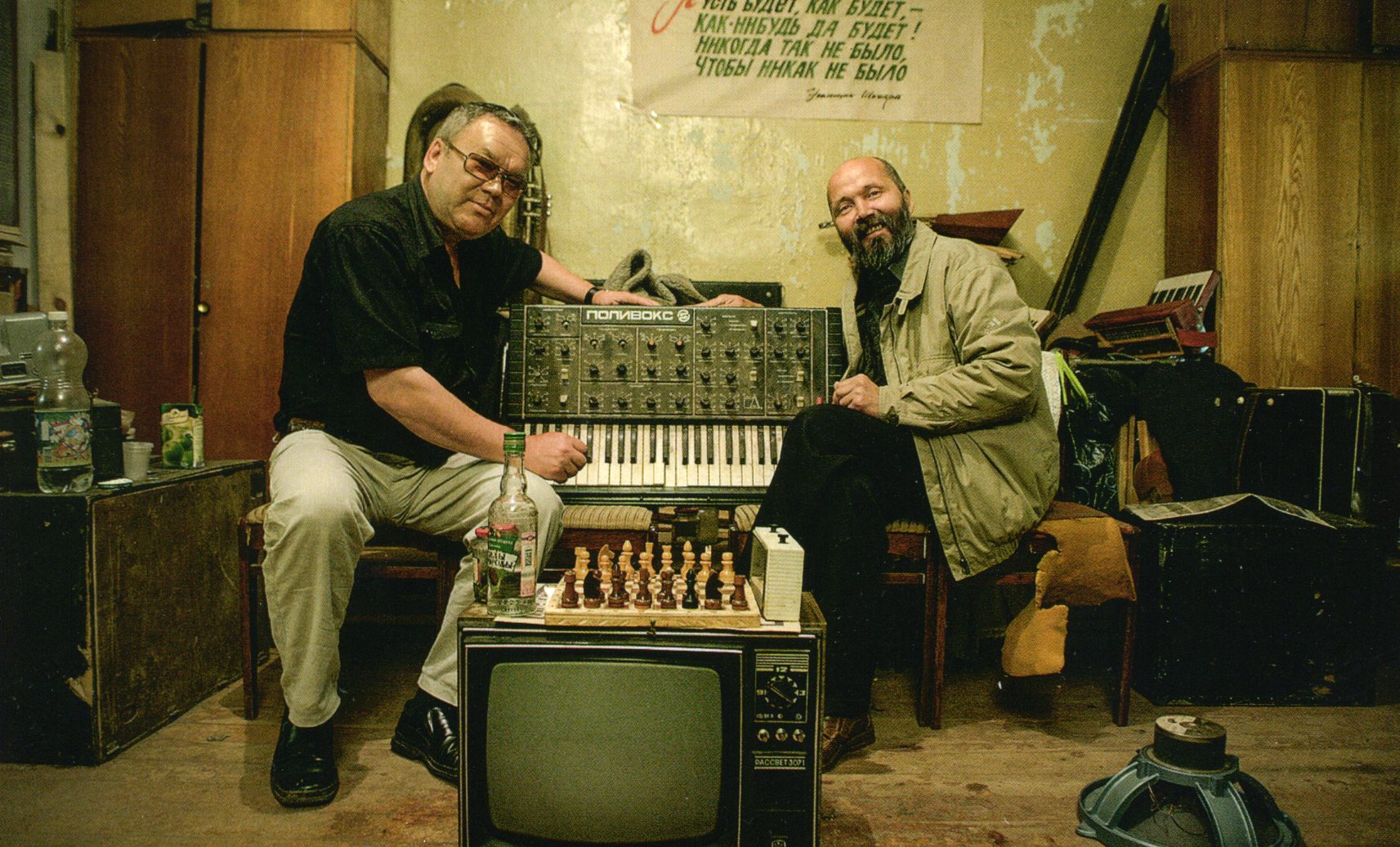
Among the entries I circled in the program for future viewing: “Dear Mr. Watterson” about the creator of the beloved Calvin and Hobbes comic strip; “Rich Hill”, a look at the de-population of large swatches of heartland America thru the example of one Missouri town; and relatedly, “The Human Scale”, Andreas Dalsgaard’s new film on the urban challenges facing a world where 80% of the population will be living in large cities by 2050. And as a fan of music docs, I hope to soon be seeing “Elektro Moskava” (pictured above) and it’s tale of Russia’s vital historical role in the development of electronic music. Sounds like it would make a great double feature with 1995’s “Theremin: An Electronic Odyssey” about Russian-born Leon Theremin who invented the self-named first electronic instrument. Theremin, who was the toast of Manhattan in the pre-war years, mysteriously disappeared (and rumored to be a kidnap victim of the KGB) before turning up a half-century later in Moscow, making a trip to NYC in his last years to be re-united with his protégé Clara Rockwell. I always sensed there were other stories where that came from.
You can still see the entire festival line-up at salemfilmfest.com. Happy viewing!
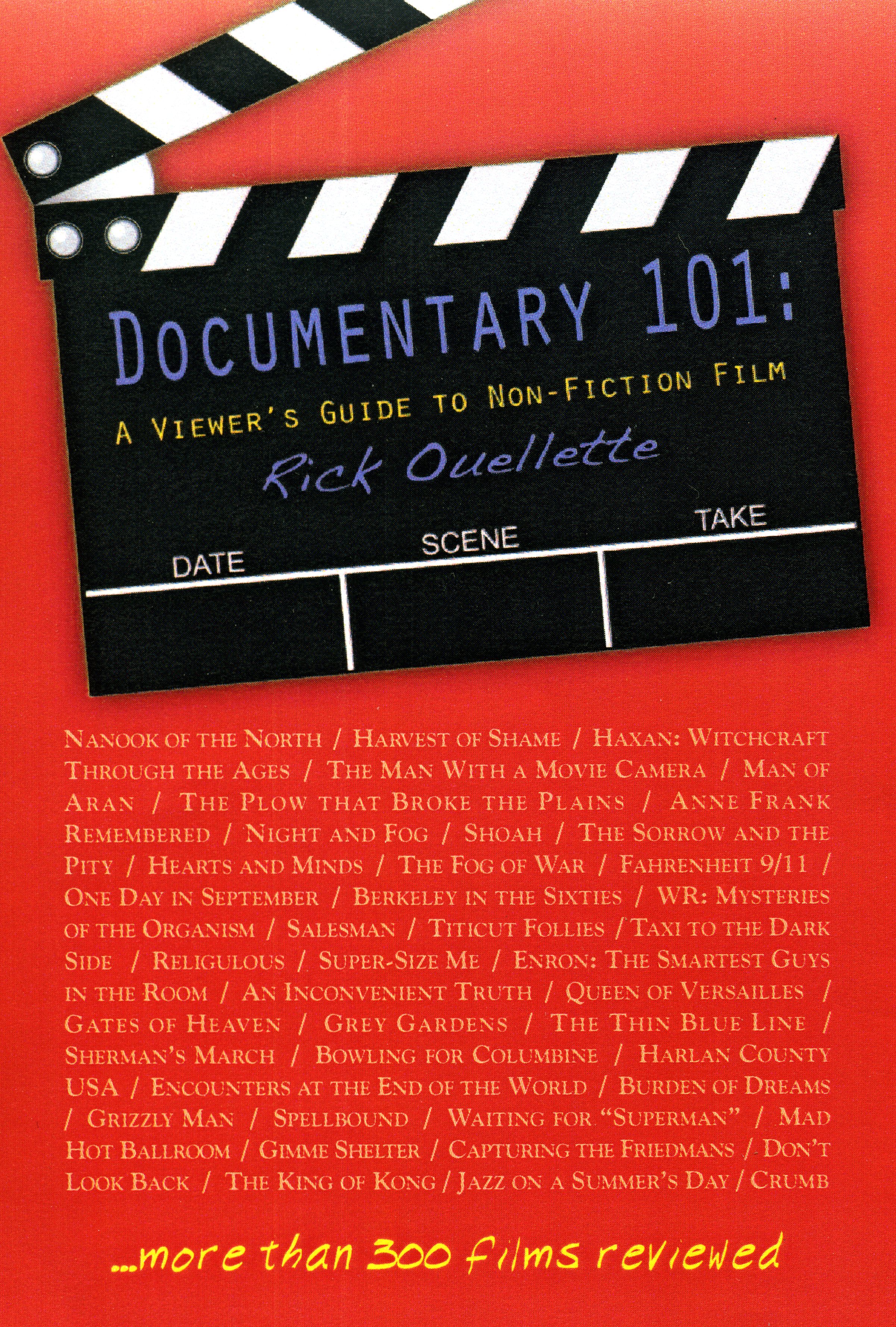
“Documentary 101: A Viewer’s Guide to Non-Fiction Film” is now available as an e-book in all formats for only $4.99, more details in next post.
Just in case your office Oscar pool doesn’t include the documentary category, Vote Here for what you think will (and/or should be) the winner for Feature Documentary. This could end up being the smallest poll sample in history but why not. Although it hardly rates next to races like Cate Blanchett vs. Amy Adams for best actress, for instance, the fact is that new breeds of non-fiction film have creeped into the public consciousness, esp. when it comes to home viewing and film festivals. Mark your virtual ballot below (by commenting)for one of five nominees:
The Act of Killing
Cutie and the Boxer
The Square
Dirty Wars
20 Feet From Stardom
I’ve seen 3 of 5 so far. Of the ones I haven’t seen, “Cutie and the Boxer” from all I hear is a vibrant bio of painter Ushio Shinohara and his illustrator wife, Noriko. It joins a growing list of fascinating art-related docs in recent years. “Who the @#$% is Jackson Pollock?” “The Art of the Steal”, “Exit through the Gift Shop” and “My Kid Could Paint That” are other recommendations in this mini-genre and the just-released “Tim’s Vermeer” sounds like a must-see as well. Some will favor “Dirty Wars” by Richard Rowley and investigative journalist Jeremy Scahill. But after finally putting out my book “Documentary 101” last year, and writing about the numerous great but sobering films ranging down from the Holocaust to Vietnam to the Iran/Afghan wars, I wasn’t rushing pell mell to see another just to confirm my worst fears. But Scahill is an experienced war correspondent and a stand-up guy not afraid to stir the pot. He has an advocate in Bill Maher, who threw in his vote for “Dirty Wars” on the Feb. 14th edition of his HBO show. He thanked panelist Scahill for all his work, “while we still have you”, joking that there may be a drone out there with the reporter’s name on it.
The real crowd-pleaser of this quintet is “20 Feet From Stardom”, one of the better entries in what could constitute another mini-genre: the belated-recognition rock doc. It gives some of pop and soul’s best back-up singers their day in the sun, while also looking back on backstories of music-biz exploitation and cold-shouldered solo careers. But considering that last year’s winner (“Searching for Sugar Man”), about the long-delayed recognition of forgotten 70s singer-songwriter Sixto Rodriguez, was in a similar vein, it may be that Academy voters will be looking elsewhere. That is, if it can be said that voters in the Documentary Feature category, long known for their arcane methodology, even think like that.
At any rate, the real buzz in the non-fiction form this year has been about “The Act of Killing.” This is as brilliantly conceived and daring a film that came out last year in any category. First time director Joshua Oppenheimer had set out to film surviving relatives of the approximately 500,000 Indonesian Communists and other perceived enemies killed in a 1965 purge that established long-term authoritarian rule in that country. But anti-leftist sentiment there is still so strong that this concept became unworkable and, reportedly on the suggestion of one of the survivors, hatched the idea of turning his cameras on the aging members of the killing squads, eventually encouraging them to cinematically re-create their ghastly deeds of a half-century ago.
(Below is an interview clip with Oppenheimer that also includes the film’s trailer)
It turns out that this gambit, designed to affect a sort of negative catharsis for sanctioned mass murderers who are still revered as heroes, leads to some fascinating filmic moments. Main subject Anwar Congo and his associates come from a “gangster” culture, a word that has a positive ring for many in the political culture. It also has a lot to do with movie culture as Anwar and his fellow ex-war criminals, as slick and as full of references as Tarantino stock players, readily acquit themselves as filmmakers with results both grisly (a reenactment of a beheading) or downright campy (a musical number by a waterfall featuring Anwar’s stocky male friend (also from the notorious Pemuda Pancasila paramilitaries) in drag. Oppenheimer’s “documentary of the imagination” records this process almost as a beguiling dream/nightmare state that is stylistically brilliant.
The complimentary “gangster” is, to them, the linguistic equivalent of “free man.” Shaking down humble merchants and pining for the good old days before the pesky concept of “human rights”, you wonder why these guys don’t get recruited by Wall St. wolves or the North Korean government. Since Oppenheimer was unable to be openly critical of his subjects (many folks in the end credits are listed as “Anonymous”) don’t expect any to have any conventional sense of justice satisfied. The guilt and remorse is buried so deep it can barely be excavated from Anwar Congo himself in the film’s climatic scene, even though he has taken part in Oppenheimer’s provocative premise. But there is some hope as officials in Indonesia have had to acknowledge the film and even to let it slip that these were war crimes being referred to and not some heroic deed from the past.
Still, in the end my vote has to go to “The Square”, an absolutely riveting and literally street-level look at the mass protests in Cairo’s Tahrir Square in 2011 that led to the ouster of Egyptian President Hosni Mubarak. After the unceremonial departure of their autocratic leader, Epypt—an immemorial country with little or no background in democracy—was convulsed by a series of demonstrations, counter-demonstrations, civil resistance, occupations and riots to try and determine what came next. Director Jehane Noujaim (who also made the excellent “Control Room” and “Startup.com”) was there with her camera for as much of the so-called Lotus Revolution and it’s still-unresolved aftermath as she could and still have a release date. Originally released by its producer Netflix in Jan. 2013, she has updated it in later releases throughout the past year. Seldom has a documentary felt this immediate in its impact.
(Below interview clip with Noujaim also includes trailer)
Noujaim had followed the revolution’s affect by focusing in on the participation of several people. In the final film, there are mainly three story arcs: that of the young secular idealist Ahmed; Magdy, a thoughtful member of the Muslim Brotherhood who becomes friends with Ahmed; and actor-activist Khalid Abdalla (star of “The Kite Runner”) who returns to his homeland to help man the barricades. With what’s going on in the world today, most notably in the Ukraine and Thailand, “The Square” is a bracing reminder that for so many the only way to affect change against forces of oppression is to enter into a mortal struggle with forces more powerful than yourself. As in so many places, in Egypt the buck stops with the army and a decision on whether or not to use fatal firepower. (In this case, you also have the organizational power of the Brotherhood who elected the ill-fated Mohamed Morsi in 2012). At present, it looks like the military holds the winning hand but the people power unleashed in Tahrir Square in January of 2011 cannot be held back forever, or at least that’s the hope you take away from Noujaim’s extraordinary film.
*********************
A Forty-Year Oscar Flashback in the Best Documentary Category
The scathing anti-Vietnam War film “Hearts and Minds” won the Academy Award for top Documentary Feature of 1974, and the acceptance speeches by director Peter Davis and producer Bert Schneider touched off one of the more interesting backstage brouhahas in an awards show that has been no stranger to controversy over the years. Schneider got the crowd especially riled up, speaking of Vietnam’s impending “liberation” and reading a telegram from the Viet Cong delegation at the Paris peace talks that recognized the efforts of American anti-war protestors. Offstage, Bob Hope was furious and proceeded to make a big scene. The unctuous comedian had looked bad in a brief scene in “Hearts and Minds” where he spoke appreciatively of his “captive audience”: a roomful of ex-POWS at a White House dinner. Hope got Frank Sinatra, cohosting the show that year with fellow Rat Packers, to read a disavowal, getting the same mixture of boos and cheers that Davis and Schneider earned only minutes earlier, reflecting the polarizing effects of the war. The documentary category would remain a fairly quiet one on the Big Night until 2003 and Michael Moore’s notorious “shame on you!” harangue aimed at President George W. Bush over the recently launched Iraq war.
The review below taken From “Documentary 101: A Viewer’s Guide to Non-Fiction Film”
Now on sale: http://booklocker.com/books/6965.html (This author page has an extended book excerpt. Also available from Amazon and barnesandnoble.com)
The Beatles: The First U.S. Visit
Albert and David Maysles—1964/1991—83 minutes
It was only ten weeks after the assassination of President John Kennedy. With the pall of national tragedy still in the air that winter, the filmmaking team of Albert and David Maysles got a call from Granada Television in England saying a musical group named the Beatles were arriving in New York in a couple of hours and would they mind heading down and maybe getting some footage? Albert was a bit nonplussed but younger brother David was more hip to the current pop scene and sensed the opportunity. After negotiating a deal right there on the phone, the light-traveling duo were on their way to recently renamed John F. Kennedy Airport, getting there just in time for the famous moment when John, Paul, George, and Ringo hesitated a moment at the top of the steps while leaving the plane, realizing that the hordes of people lining the balcony of the terminal were there for them and not some head of state as they first thought. And just like that the Maysles brothers found themselves in the middle of one of the twentieth century’s defining cultural moments. The First U.S. Visit is a 1991 re-edit of the original ’64 film (called “What’s Happening: The Beatles in the U.S.A.”) that adds more music and excises some interview material. But both versions pull the viewer right into the middle of the tumultuous birth of 1960s youth culture. It also features the Beatles performing thirteen unedited songs, from both a Washington, D.C., concert and the epochal Ed Sullivan Show TV appearances.
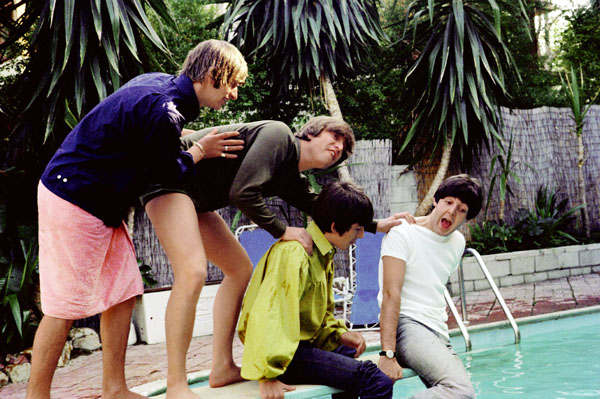
Twisting by the pool in Miami Beach, 1964
The Beatles were poised for big things and “I Want to Hold Your Hand” (their first widely distributed single in the U.S.) had hit #1 two weeks previous. Early segments show famed DJ Murray the K in his studio hyping them up but establishment media were often belittling in their opinions and their long-term prospects in America were uncertain. At the airport press conference they quickly charm the jaded New York press corps with their contagious high spirits and sharp wit, then are whisked off to Manhattan and to a rock ’n’ roll superstardom never to be equaled. Although a few hours before they had hardly heard of the Fab Four, the filmmakers found themselves squished into the back of a limo with the confident but still nonplussed band members. Arriving at the Plaza Hotel, we get the first dose of Beatlemania up close with fans pounding on the window, the boys dashing from the car to the lobby door, and the scenes of police struggling to keep back the hordes, all soon to become iconic images of the decade. Two nights later, on February 9, 1964, the band would make television history with 73 million people tuning in to Sullivan’s Sunday-night showcase. The Maysles brothers would tag along for the next five days with unfettered access and whether it’s the boys goofing around in hotel rooms, dancing at the Peppermint Lounge, or getting photographed in Central Park, the camera never seems more than a few feet away from the action.
When it’s time to head south for the D.C. concert, the whole entourage takes the train like it is no big deal and the band jovially mingles with the other passengers. The group here is shown at a giddy apex of fame just before becoming imprisoned by their own celebrity. And although the performances on Sullivan’s show seem as fresh and buoyant as ever, the gig at the old Washington Coliseum may be the musical highlight here. Playing from a makeshift stage in the middle of the arena, the group is surrounded by the deafening din of screaming girls but cut through the pandemonium with a manic energy unseen on the tube. “I Saw Her Standing There” rocks with an almost punkish jolt and Ringo gets a rare concert lead vocal during a likewise frenetic “I Wanna Be Your Man.” The sight of the four of them having to turn around their own amps and rotate the drum riser to play to a different part of the house couldn’t be quainter—roadies weren’t even invented yet!
The Beatles raise the roof on the Washington Coliseum, Feb. 11th, 1964
Ed Sullivan is waiting down in Miami Beach, ready to introduce these “fine youngsters” for the second of the three consecutive weeks on his show. Although the Maysles brothers’ time with the Beatles ended down there, also included is their return appearance (taped earlier) at the regular New York location for week three on Sullivan (with a farewell rave-up of “Twist and Shout” and “I Want to Hold Your Hand”) and a bit of their departure and triumphal airport reception back in London.
The filmmakers’ methods seem to point the way to one of rock’s most celebrated films, “A Hard Day’s Night”, which started filming a month after the group’s return. That movie’s director, Richard Lester, carefully crafted a pseudo-documentary feel and a few notable scenes, like the mob-besieged Beatles running to their catch their train before being eaten alive, were not staged but done spontaneously, a bit of cinematic verisimilitude not appreciated by the band. “What’s Happening!” (as it was still known) was a great feather in the cap for the Maysles brothers. With an eerie symmetry, these Johnny-on-the-spot filmmakers would close out the 1960s with “Gimme Shelter”, unwittingly filming the dark flip side of the scene the Beatles created while following a late 1969 tour by the Rolling Stones.
Sweetgrass
Ilisa Barbash and Lucien Castaing-Taylor—2010—100 minutes
In 2003, married filmmakers Barbash and Castaing-Taylor recorded the last traditional sheep run in the American West. This 150-mile round-trip trek in Montana’s Beartooth mountain range, by turns idyllic and treacherous, was conducted by the Allesteds, an old-school ranching family that time is about to pass by. And time is a central issue here.
“Sweetgrass” is a patient, immersive and exceptionally handsome film about 21st century people plying an ancient trade in communion with animals and the natural world. Without the distractions of narration or musical soundtrack, the sight of stoical cowboys and their sheepdogs striving to keep their immense flock in line on their way to summer pasture feels like a much-needed re-calibration of a frantic and over-technologized world. The directors (who also hold positions at Harvard University in anthropology-related departments) have fashioned a work that can stand with 1925’s seminal Merian Cooper/Ernest Schoedsack documentary “Grass”, as well as with the observational classics of Frederick Wiseman.
Did you ever wonder what it’s like to slosh around in bilge water on the killing floor of a large trawler, eyeball to eyeball with dead and dying fish? Then, man, do I have a motion picture for you. It turns out that Castaing-Taylor’s next film (and the first under the auspices of his Sensory Ethnography Lab at Harvard) was a narrative-free trip on an unnamed commercial fishing boat released earlier this year to generally admiring reviews.
“Leviathan”, like “Sweetgrass” before it, is an immersive experience but one that is a little more difficult to appreciate (the rhetorical question above will give you some idea why). Outside of the fact that the viewer will realize that he or she is watching the operation of a commercial fishing vessel, there is little context to the film. This is the general idea, of course. According to the SEL’s website, the lab’s purpose is to promote “innovative combinations of aesthetics and ethnography that deploy original media practices to explore the bodily praxis and affective fabric of human and animal existence.” Well, fair enough I suppose. I appreciate the rigorous aesthetic employed here and in interviews Castaing-Taylor and co-director Verena Paravel are earnest and deserving of admiration for their keen understanding of their subject matter. (Their implicit sympathies with the ship’s crew recalls 1929’s “The Drifters” by pioneering documentarian John Grierson, whose deep respect for his working-class subjects—also fishermen—was novel at the time). But context counts for a lot in the mind of an average viewer; without it a film like “Leviathan” can be misconstrued as merely a technical exercise.
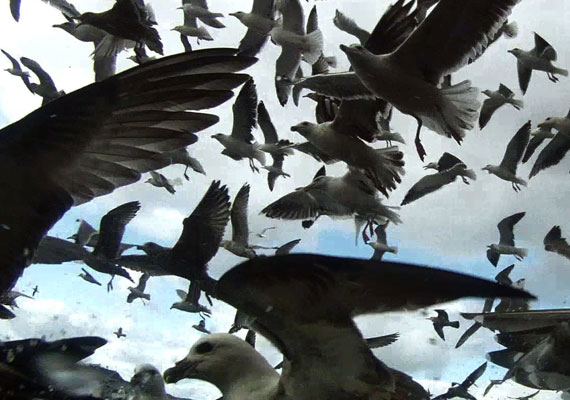
One can only gape in amazement at some of the photographic techniques on display here. The best bits involve some sort of bobbing camera (likely a small consumer model) that is often dunked under the ocean waves, occasionally getting pulled back up to reveal frantic flocks of gulls or the wedge of the ship’s bow plowing straight at you. But the first twenty minutes of the film are naturalistic to the point of distraction. OK, you can tell by the grainy unlit footage that the ship’s enormous net is being rung up, about to disgorge (any minute now!) a huge tally of luckless sea life onto the floor and the gutting and cutting will commence. But what of it? Art, like nature, abhors a vacuum and many a viewer’s mind will fill with questions about overfishing, government regulations, environmental concerns, etc. But that’s for another documentary—2009’s “The End of the Line”, perhaps. I do look forward to Castaing-Taylor’s future projects and hope he steers away from the academic echo-chamber impulses that prompted him to try and transcend (in the SEL’s words) the “purely verbal sign systems” that people seem to rely on. If not, their next film make not make it past the hallowed halls of you-know-where.
Oceangoing themes popped up again recently when I checked out a Blu-ray of Stanley Kubrick’s quickly withdrawn first film “Fear and Desire”, now finally seeing a home video release. As an extra, it contains his 1954 doc “The Seafarers.” It’s a boilerplate industrial film where the sponsoring Seafarer’s International Union is presented as a magnificently generous benefactor for its seamen members, who are happy enough to live in human-scale houses and only ask for a fair shake in the workplace. This makes it almost painfully nostalgic in our tough-luck economy of six decades later. On the other hand, it’s not hard to see why Kubrick suppressed “Fear and Desire.” Though it has many early inklings of his masterful visual style, it is hopelessly hamstrung by Howard O. Sackler’s overboiled script and stilted dialogue.
The Now and Then Documentary Spotlight
Samsara
Directed by Ron Fricke—2011—98 minutes
When I decided to replace my Doc of the Week feature with a less time-pressured spotlight series that considers newer non-fiction films with their cinematic antecedents, I chose to kick it off with Ron Fricke’s 2011 piece, “Samsara”, now available in a glorious Blu-ray edition. There was a reason for this: documentary escapism. After completing my book “Documentary 101” I was a bit war-weary in the wake of seeing and writing about so many films that grappled with some of the world’s toughest issues. A sampling of the current news cycle—focused on the Syria crisis, America’s ever-widening income inequality (a new report says it’s the worst since the introduction of progressive taxation a century ago supposedly ended the Gilded Age) and the latest depressingly predictable mass shooting (just down the road a piece from the NRA boot-lickers on Capitol Hill)—only reinforced this feeling. I felt like Bob Dylan in the last verse of “Mr. Tambourine Man”, asking to be delivered to a place “far from the twisted reach of crazy sorrow.”
So let’s forget about today until tomorrow and go for a ride with Ron Fricke. He first made his name as the cinematographer for “Koyaanisqatsi”, Godfrey Reggio’s trippy, non-narrative blend of travelogue, implied social critique and cool special effects that was a bona fide arthouse hit in the Eighties. Soon after, he employed the same style of eye-popping 70mm photography when he directed the 40-minute “Chronos”, an early favorite in the newly popular IMAX theaters. He followed in 1992 with the feature-length “Baraka” of which “Samsara” is a sort of belated sequel. Mind you, these types of films (“guided meditations”, Fricke calls them) you just don’t churn out. It apparently took him five years to assemble these just-so visual gems, using painstaking large-format equipment and traveling the four corners of the earth. From the exotic Balinese dancers and mandala-constructing Tibetan monks that ease us in, to the various sites of exquisite historical antiquity, the viewer is lifted into the heavens of visual revelation. Shots of the vast complex of Buddhist temples and pagodas on the Bagan plains of Mandalay look like they could stand in for the Red Planet in a hi-def remake of “The Martian Chronicles.” To extend the “Tambourine Man” gambit one last time, Fricke is certainly enamored with the “foggy ruins of time” and the images of man-made monuments and ageless natural wonders are impressive and transportative. But even in the midst of this Panavision paradise, I knew there would be a catch.
There always is with this genre. Subsequent viewings of “Koyaanisqatsi” left a slightly sour aftertaste with the feeling that Reggio only seemed to approve of nature and Hopi mysticism; the modern world is depicted as a time-lapse whirl of frantic chaos or slowed down to a death crawl. In scenes of assembly lines and rush hours, regular people are made to look like either sardines in a can or rats in a maze. This is unfair to productive, workaday citizens when the powers-that-be behind the problems that the director seemingly cares about (environmental degradation, say) are sure to be out of the sight and unacknowledged. In the end, that’s the problem with the kind of non-verbal film—the camera is the only context.
See if you agree. Thanks to science (and the YouTube poster)you can now watch the full “Koyaanisqatsi” in 5 minutes at 16x speed.)
That has been less of a sticking point with Fricke’s work: he appreciates man’s built environment and largely avoids the whiff of elitism that hovered around Reggio’s “Qatsi” trilogy amid all the jaw-dropping imagery. Still, during “Samsara” there are the usual disconcerting segues. We go from the devastated aftermath of Hurricane Katrina to the Hall of Mirrors at Versailles, from African tribesmen to a kaleidoscopic flyover of L.A. at night. At about 45 minutes in, the joy ride ends and we’re left with the killjoy images of folks toiling to fill the ungracious demands of a mass consumerist world; gun culture and the international sex trade also come under a critical gaze, if only in passing. As a subject for further study, you could also check out 2011’s “Surviving Progress.” It combines the impressive visual scale of the guided meditation films with actual talking heads discussing man’s dysfunctional relationship with his home planet.
In the end, Fricke brings the viewer back around, closing with an absolutely lovely record of a Chinese 1000 Hands Goddess Dance, leaving the viewer with warm feelings as to the better side of our nature. That doesn’t erase any of the intractable problems of an overstressed globe but, for a couple of hours anyway, you can let the bad news wait.
The Rolling Stones: Charlie is My Darling—Ireland 1965
Directed by Peter Whitehead—1966—64 minutes
The Rolling Stones certainly are no strangers to celluloid, at least from the late Sixties on. In roughly chronological order, we got their headlining appearance in “Rock and Roll Circus”; a Jean-Luc Goddard agitprop period piece framed around their recording of “Sympathy for the Devil”; the Maysles Brothers’ hippie-dystopia classic “Gimme Shelter”, and various concert films from the 1970s on, culminating in Martin Scorcese’s 2008 “Shine a Light.” This spirited record of a showcase gig at New York’s Beacon Theater established the Stones as leaders of a movement that can only be called geriatric rock, carrying the flag of a genius era into the Social Security age bracket.
Good footage of the early Stones has been harder to come by. Their ascent to fame in the days before mass media overkill has yielded little more than their “T.A.M.I. Show” set and some old Ed Sullivan clips. Until now. Produced by their manager Andrew Loog Oldham reportedly to get his rising stars used to the idea of film, “Charlie is My Darling” was the first documentary about the band. The director was Peter Whitehead who would go on to make 1967’s “Tonight Let’s All Make Love in London” when the music-driven youth movement was in full “swing.”
After a brief theatrical release, however, all prints of “Charlie” were reportedly stolen and the film receded from memory, only getting a proper re-release in conjunction with the band’s 50th anniversary tour. Now you can wind the clock back almost as many years to the screaming-teenager epoch of the mid-1960s, as the boys are whisked off to Ireland for a quickie tour hastily arranged to capitalize on the recent smash hit “Satisfaction.” It’s a bit of a revelation here to see the Stones in the first flush of their youthful success. The Beatles have “A Hard Day’s Night” and Bob Dylan the warts-and-all “Don’t Look Back.” Here the five Stones likewise struggle with whirlwind fame, each of them ambivalent and thoughtful when Whitehead interviews each in turn.
A brilliant montage set to “Heart of Stone” shows the band arriving in Dublin where the establishing street scenes recall the age of James Joyce a half-century previous. But even if the country was still largely in the parochial grip of the Catholic hierarchy, the kids quickly shake free of that once the Stones hit the stage. The clarity and immediacy of this restored footage is electrifying, the lean-and-mean band whip their fans into a frenzy straight out of the gate with “The Last Time”, not that the crowd needs much whipping up. The Stones were already well known for the riotous audiences they attracted and by the end of third number, the stage invasion is in full stride, easily captured by Whitehead’s in-the-wings camera.
A bit of this footage recently turned up in the recent “Crossfire Hurricane” doc but it’s good to get the full flavor of those days here. The interviews reveal five guys to whom fame is still new and a little intimidating. Mick Jagger, an exciting young performer but hardly the indomitable peacock of later years, admits “I don’t know who I am on stage.” Keith is already the sly one, Bill is practical and Charlie misses his wife. Most poignantly, Brian Jones frets about the Stones’ chances for sustained success and—four years before his death—says, “I’ve always been a little apprehensive about the future.”
Elsewhere, you get the expected shots of the band being chased in public places, vox populi with the teenybopper lasses and hotel scenes of the guys goofing around and (more interestingly) writing a new song, “Sitting on a Fence.” Back onstage in Belfast, the joyful abandon in their version of Chuck Berry’s “Around and Around” is visceral and the cathartic discontent of “Satisfaction” would probably never sound so real again—worldwide success was just around the bend. The druggy excesses and jet setting and artistic peaks were all to come and this guileless snapshot from a distant monochromatic past is the perfect antidote to today’s over-hyped media landscape.
(Currently only showing in Boston, LA and D.C., make a note to maybe check this out when it gets a wider release or is made available on DVD or to stream. A fine work by a couple of guys wo got started at Scout Productions, a place where I worked at in 2000-01)
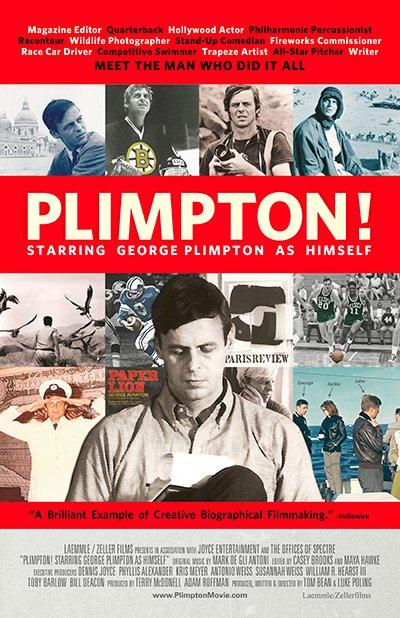
Plimpton! Starring George Plimpton as Himself
Directed by Tom Bean & Luke Polling—2013—86 minutes
Lately I’ve been thinking it is time to tweak that old saying by Andy Warhol. In the future, everyone and everything will be the subject of a documentary. This week it’s George Plimpton’s turn to shine in the non-fiction film firmament. In this appealing film bio, Bean and Polling uncover extra layers of documentary riches while focusing on the life of the lanky New Yorker who was the good-natured pioneer in the field of participatory journalism as well as co-founder and editor of the Paris Review.
From the 1950s through to his death in 2003, George Plimpton held his spot as a bon vivant of literary life and high-end celebrity culture, the latter nearly a forgotten art form. He will always be most remembered for his everyman-style excursions into pro sports, risking life and limb (or at least embarrassment) by boxing Archie Moore and Sugar Ray Robinson, playing exhibition games as a Detroit Lions quarterback and Boston Bruins goalie, pitching to Major League all-stars and other such misadventures. These experiences would be the raw material for articles in Sports Illustrated as well as full-length books, including the best-selling “Paper Lion” about his footballing follies.
Polling and Bean first met while working at Scout Productions around 2001, around the time the company was becoming known for releasing such singular middle-period Errol Morris films as “Fast, Cheap and Out of Control” and “Mr. Death.” Some of that resident quirkiness can be seen here in the succession of recovered film foibles (Plimpton also tried his hand at being a circus trapeze artist and symphony percussionist) and the bemused recollections of friends and family. Though the general tone is one of admiration, it is tempered with a dash of retroactive regret. “Serious” writers, like novelist James Salter, bemoan the fact that Plimpton was more of a dabbler and could not or would not raise his game to the level of the many authors who he published in the Paris Review and who regularly attended his famous cocktail parties. We see Arthur Miller, Norman Mailer, James Baldwin, Kurt Vonnegut, Philip Roth and the like, sometimes all in the same room together. Once taken under the wing of Hemingway, Plimpton seemed just as content to hang out with the Kennedys or appear in TV commercials for video games and garage door openers.
In the end, though, Plimpton’s knack for straddling both highbrow and pop culture, and making it seem all of a piece, is admirable and endearing. It is all part of our wider American culture and should be appreciated as such. But today a new George Plimpton would almost have to split himself in two trying to straddle the widening gap between mistrusted cultural “elites” and the easy-to-despise lowbrow media content that has puked up Kim Kardashian and Honey Boo-Boo. Another subject for another day, but like I said in the future someone will likely make a doc about that as well.
Chronicle of a Summer
Directed by Jean Rouch & Edgar Morin—1961—90 minutes
At the dawn of the 1960s, the development of more lightweight movie cameras with sync sound allowed for the intimate feeling of real life subjects with minimal intrusion. This would lead to the personalized and spontaneous documentary style that is more the norm nowadays. In America, a resulting style called Direct Cinema launched the careers of DA Pennebaker, Richard Leacock, the Maysle brothers and Robert Drew, whose 1960 film “Primary” was an unprecedented you-are-there look at a Wisconsin primary campaign between Senators Hubert Humphrey and John F. Kennedy. In France in the middle of that same year, ethnographic filmmaker Jean Rouch and sociologist Edgar Morin made the influential “Chronicle of a Summer”, recently restored and given the grand Criterion Collection treatment, with a booklet and a bevy of extras, including a 73-minute look-back piece that includes recent interviews with people involved in the original film, now a half-century older.
Unlike the practitioners of Direct Cinema, who were more strictly observational, Rouch and Morin’s style newly coined “cinema verite” used proactive strategies to get closer to the kind of “film-truth” they were striving for. Rouch, who previously made films on African subjects, developed this new form (dubbed by one scholar as “hometown anthropology”) by starting with the novel but now-familiar technique of ask-the-man-in-the-street. Using a shoulder-mounted 16mm camera and handheld microphone, he and Morin employ two personable female collaborators (Marceline and Nadine) to accost Parisian pedestrians with the simple (but loaded) question “are you happy?” Comical brush-offs soon yield to some touching responses from aged or struggling citizens, pointing up the fertile ground the filmmakers have broken. Soon, Rouch and Morin settle on a group of people for a more in-depth investigation into the human condition at that precise point in time.
Francophiles and film history buffs will certainly have a head start in appreciating the charms of a film like “Chronicle of a Summer.” The monochromatic allure of mid-century Paris, viewed through a persistent screen of Gitanes smoke, is the background for these earnest interviews, informal roundtable debates and day-in-the life vignettes. Issues like the ongoing Algerian War, which caused a divisive debate akin to what Americans would soon be experiencing over Vietnam, sharpen the edges of what at its core is an inward-looking concept.
So we get a thoughtful discussion between a Renault factory worker and an African exchange student, the earnest musings of an activist couple easing (perhaps uneasily) towards a middle-class lifestyle and the artsy, garret-dwelling couple who scoff at the nebulous idea of happiness (an “empty word”) or that gross material gain would bring it about (memorably noting that their rich friends “don’t have the books and records we do”). The on-camera near meltdown of a young Italian woman hints at the more voyeuristic bent that such film and TV techniques could slip towards in the future. The general self-consciousness of “Chronicle of a Summer” may not always agree with all viewers all the time. But the general impression, that you can pick someone off the street and, giving them a space in which to express themselves, use that testimony to illuminate our life and times better than any talking-head expert, comes through loud and clear.



 Reel and Rock