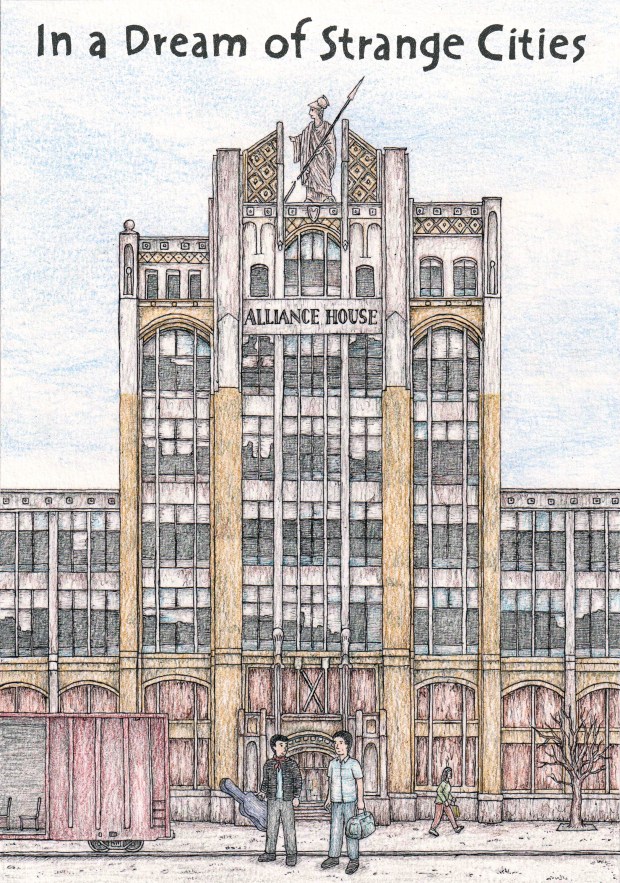
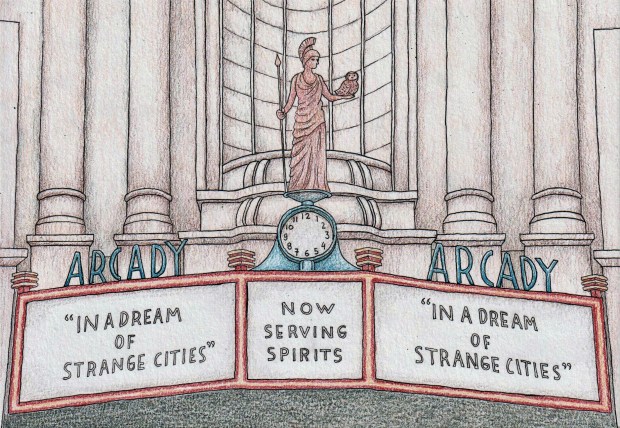
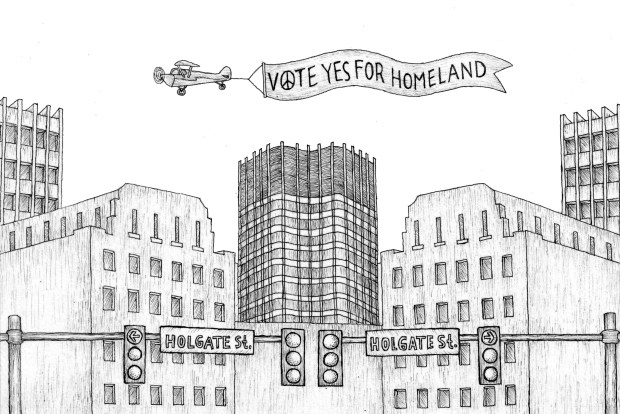
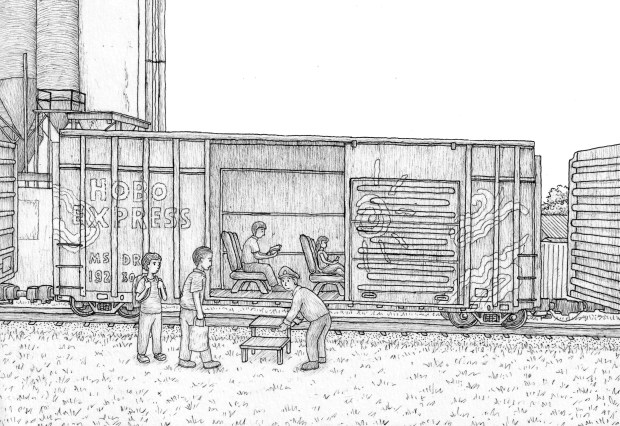
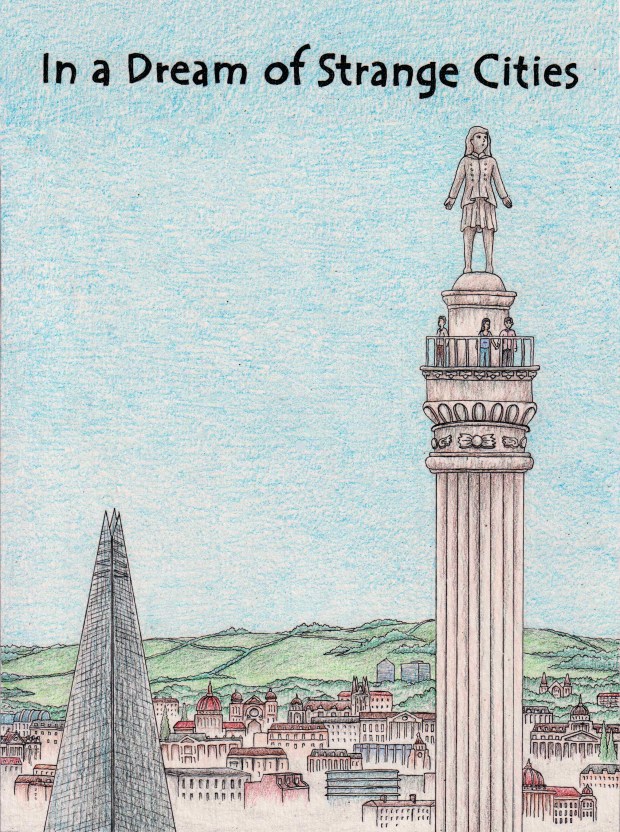
In a Dream of Strange Cities

“In a Dream of Strange Cities” Part 3

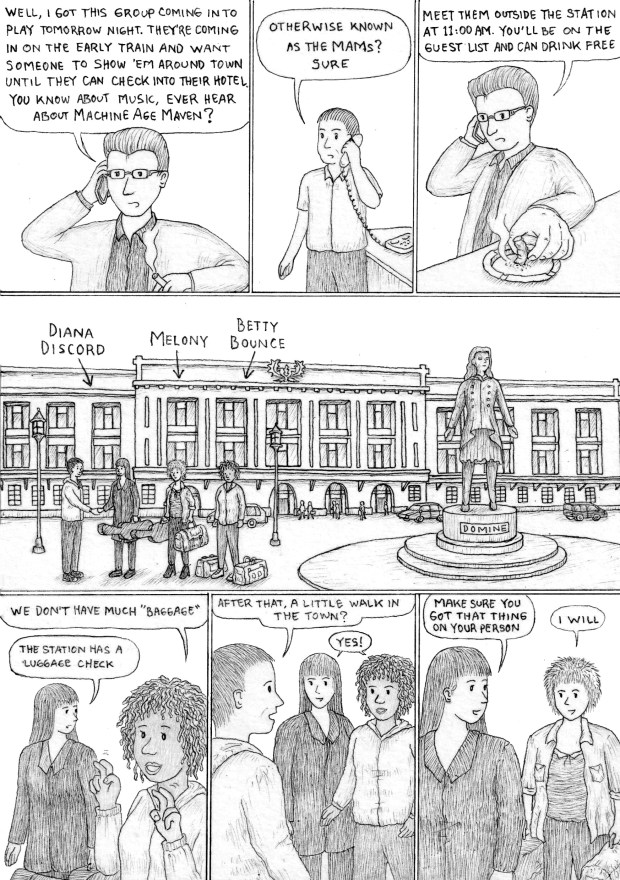
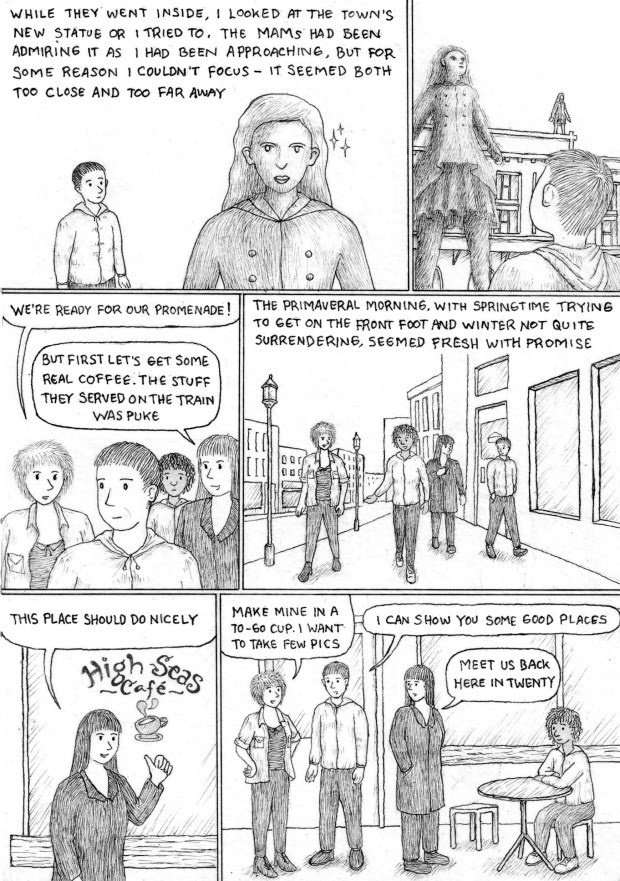
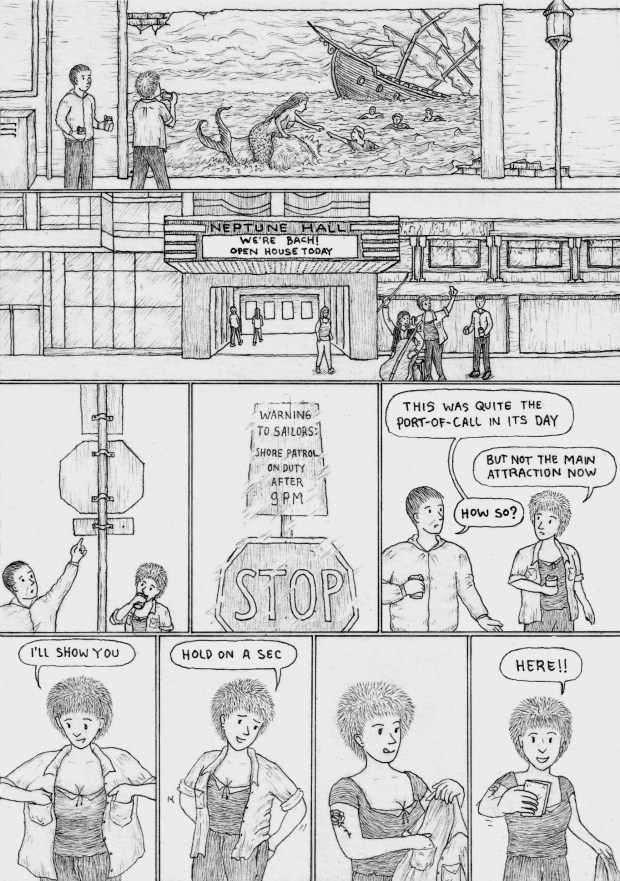
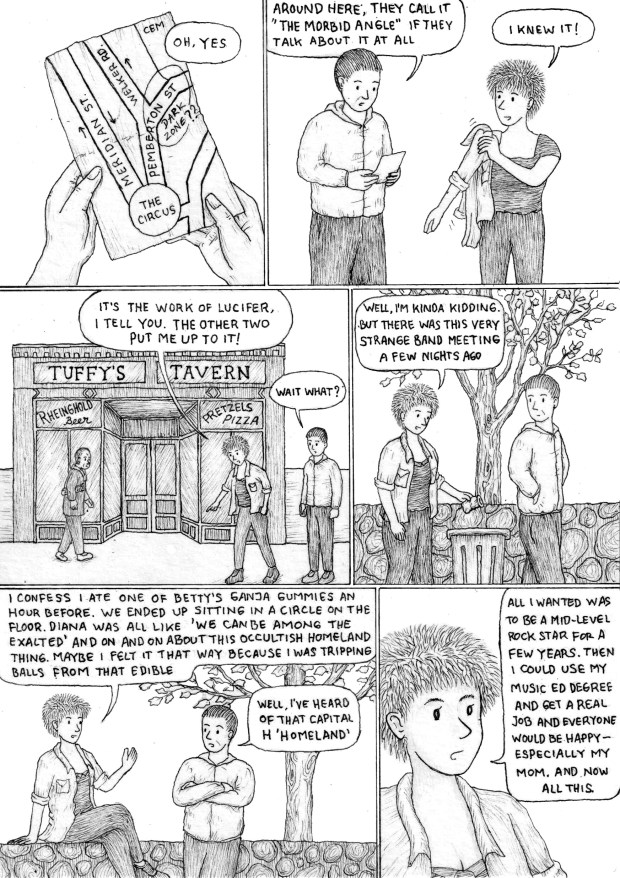
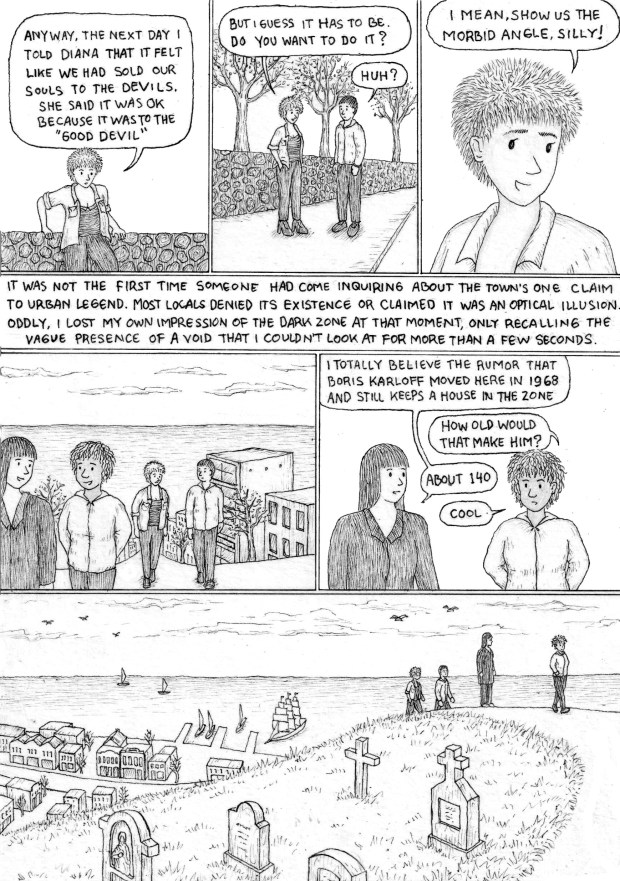
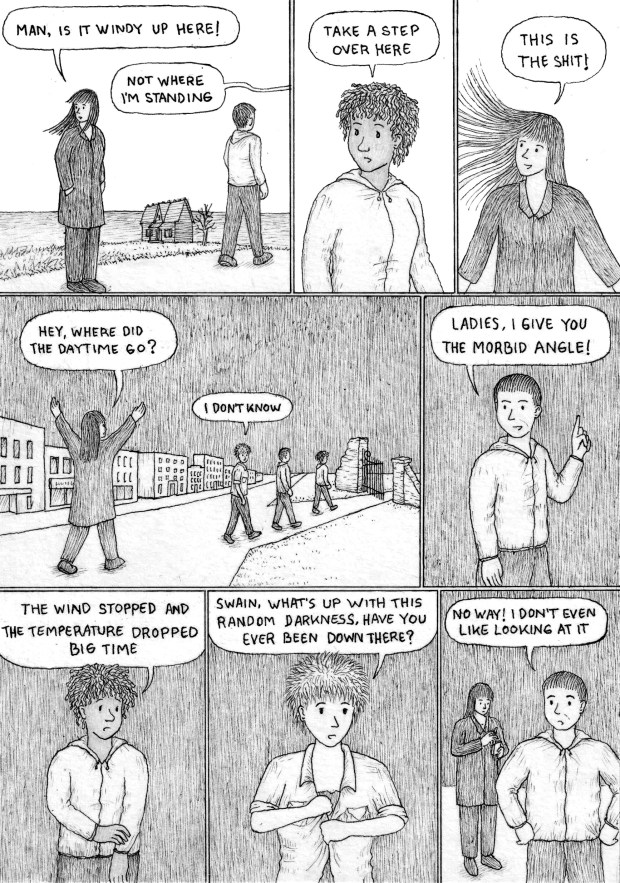
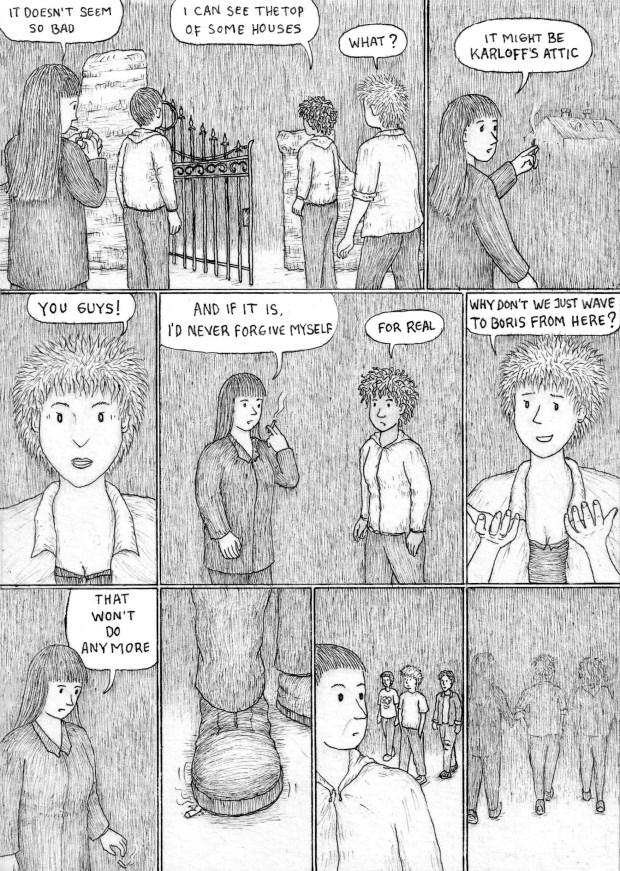
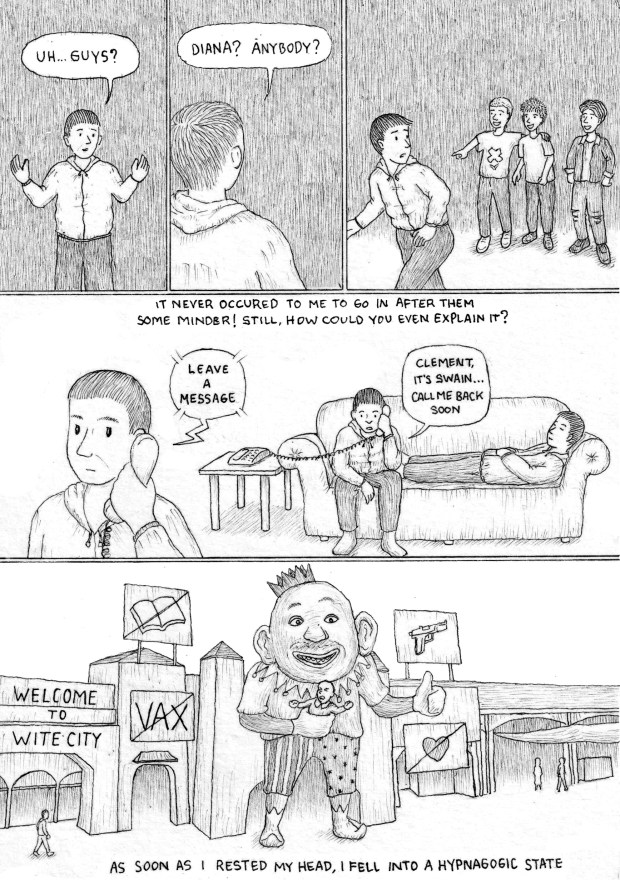
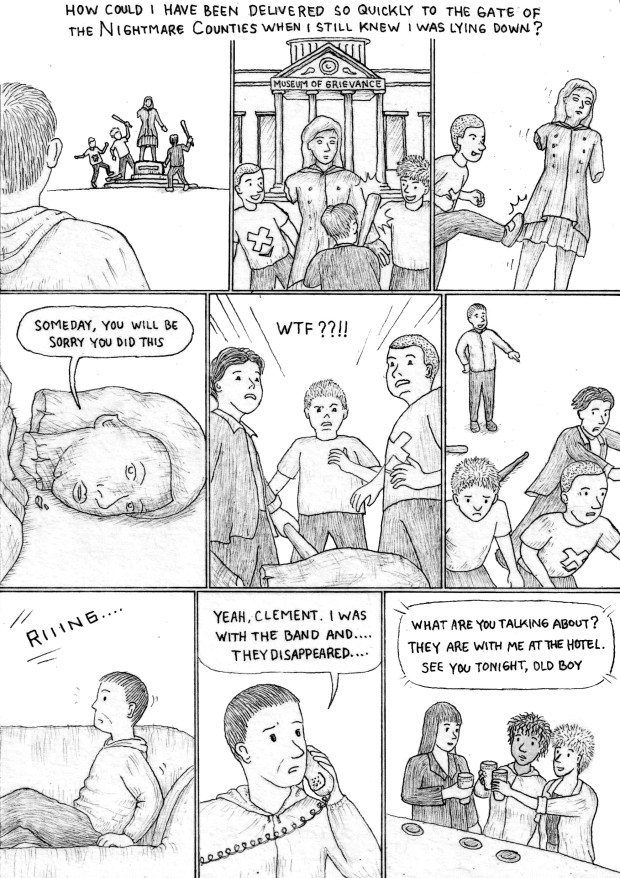
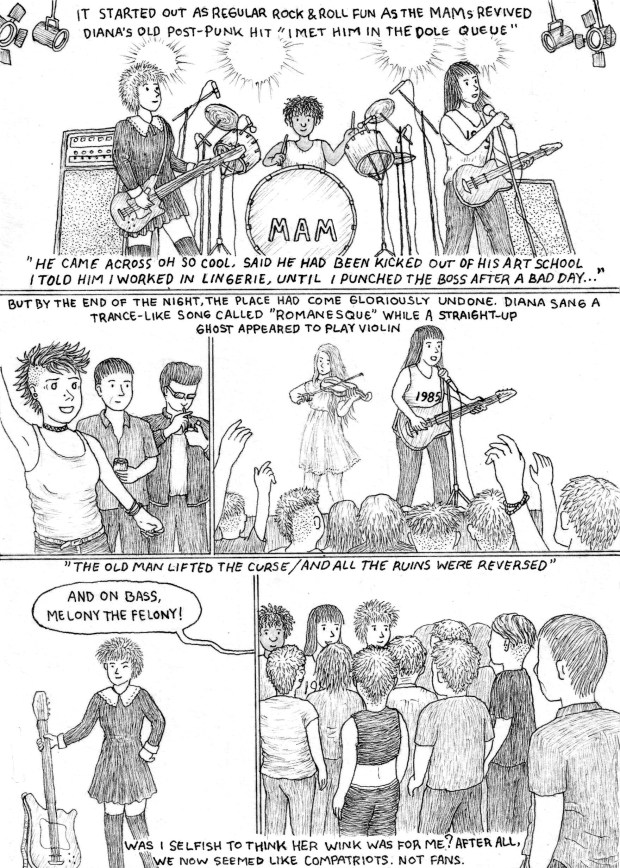
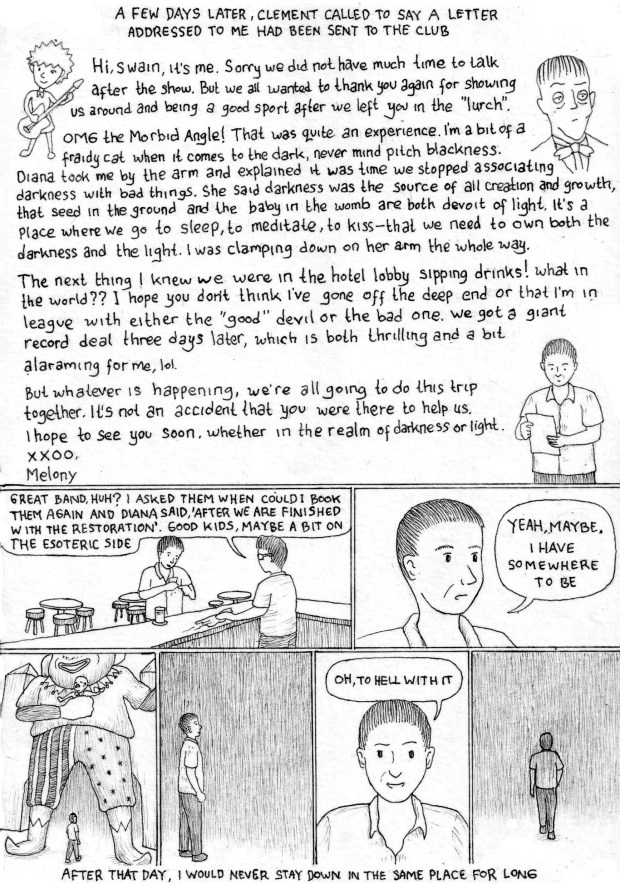
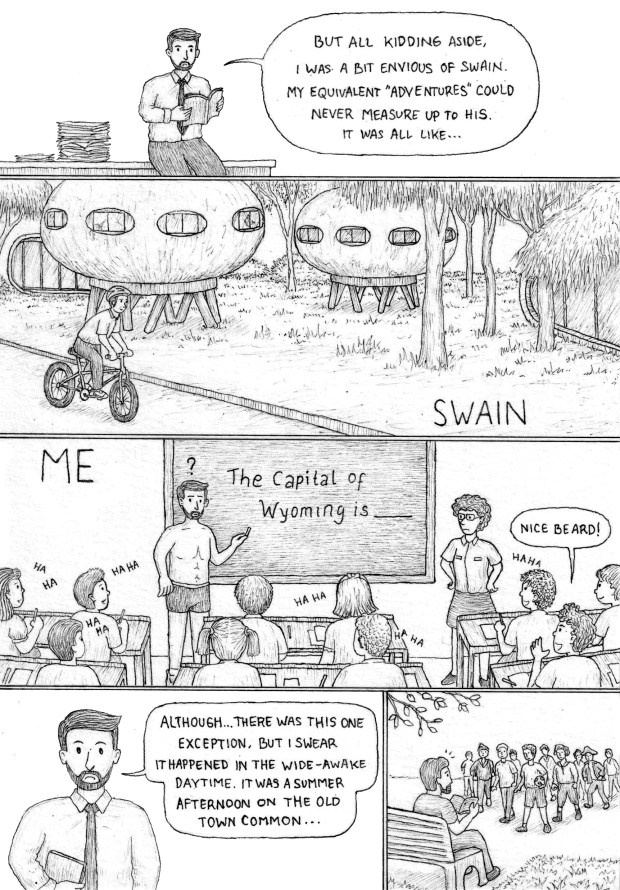
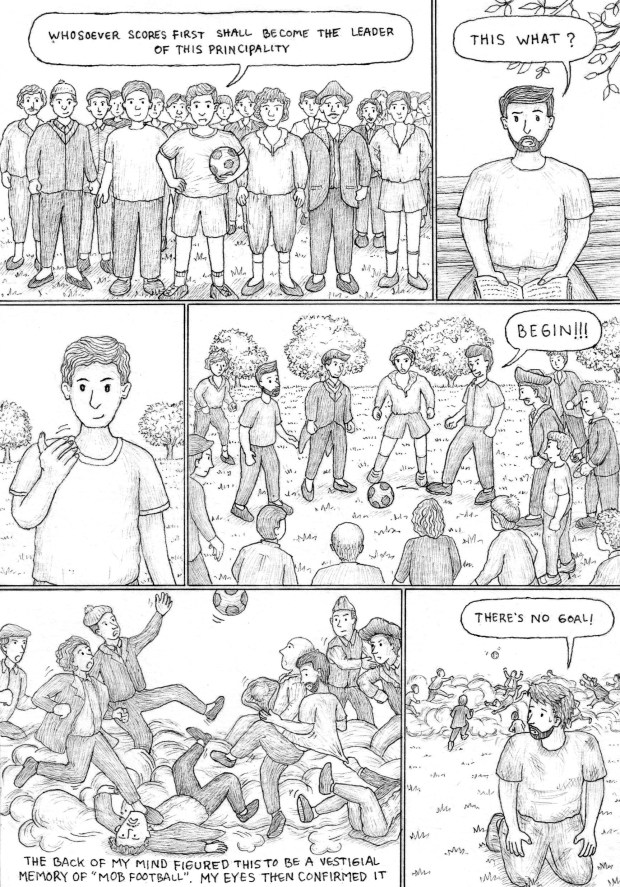
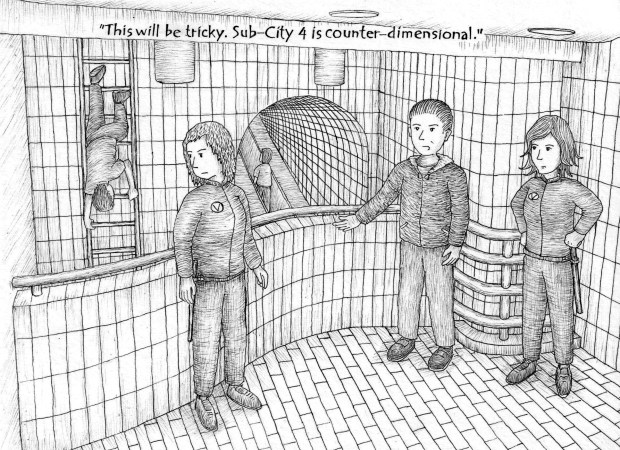
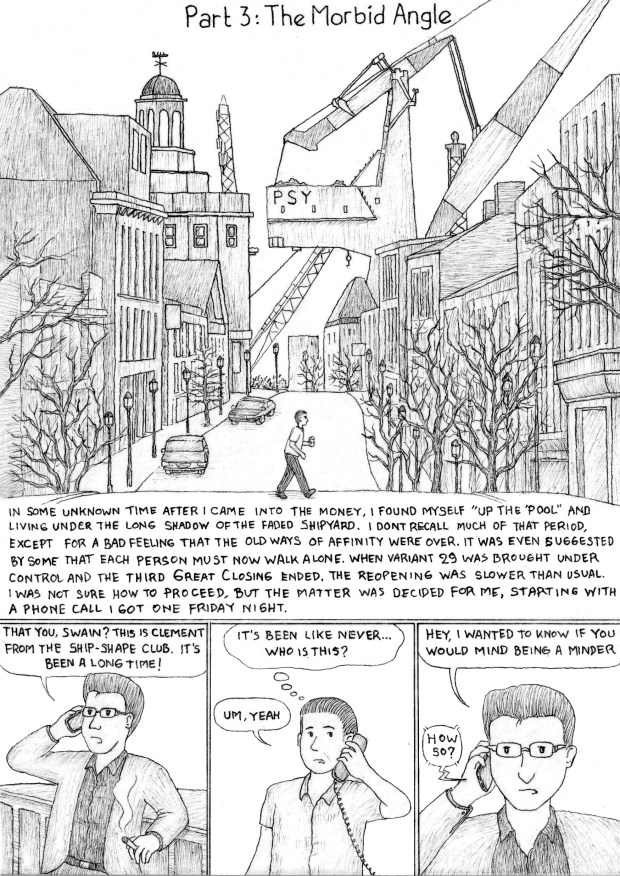
The third installment of my comic “In a Dream of Strange Cities” is below. Written and conceived by myself (Rick Ouellette), illustrations by Ipan. Here, our protagonist Swain, now well into his extended visit to the “Second World,” begins to perceive that he may be called into the service of the protopian leader, Lady Domine, helped along by the members of the charismatic band Machine Age Maven. If interested in the previously published IAD edition (“Chthonic Days,” a self-contained story) click on the to-buy link on the right column of this blog, thanks!)

On sale now: “In a Dream of Strange Cities” comic!

The familiar turns fantastical as “sleep voyager” Swain roams through fractured cities and societies, falling in with a group of utopian separatists.

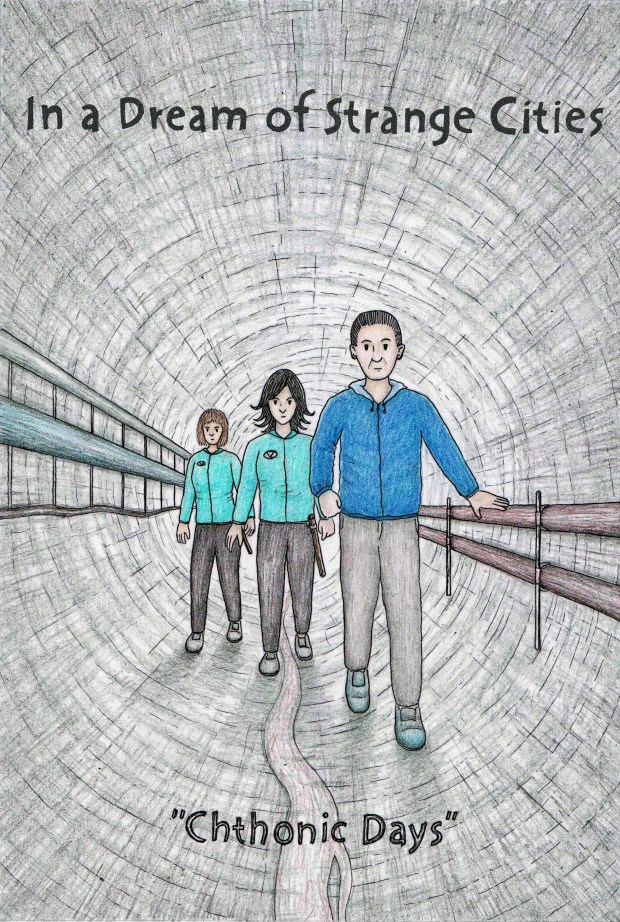
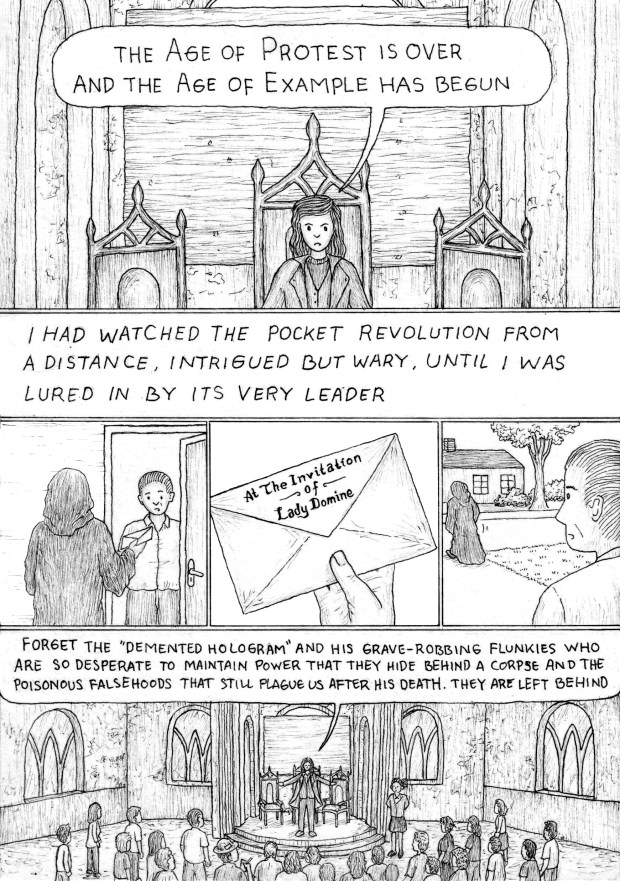
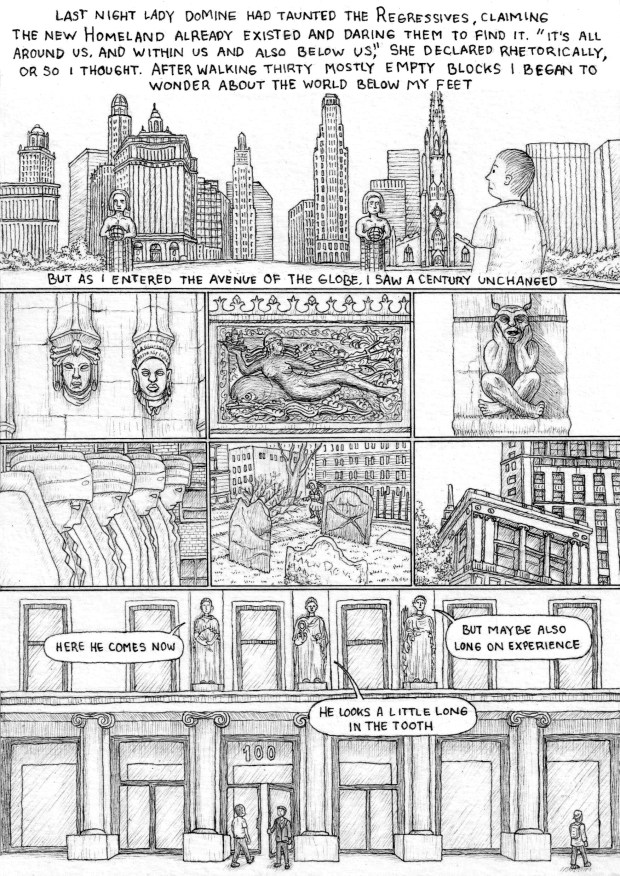
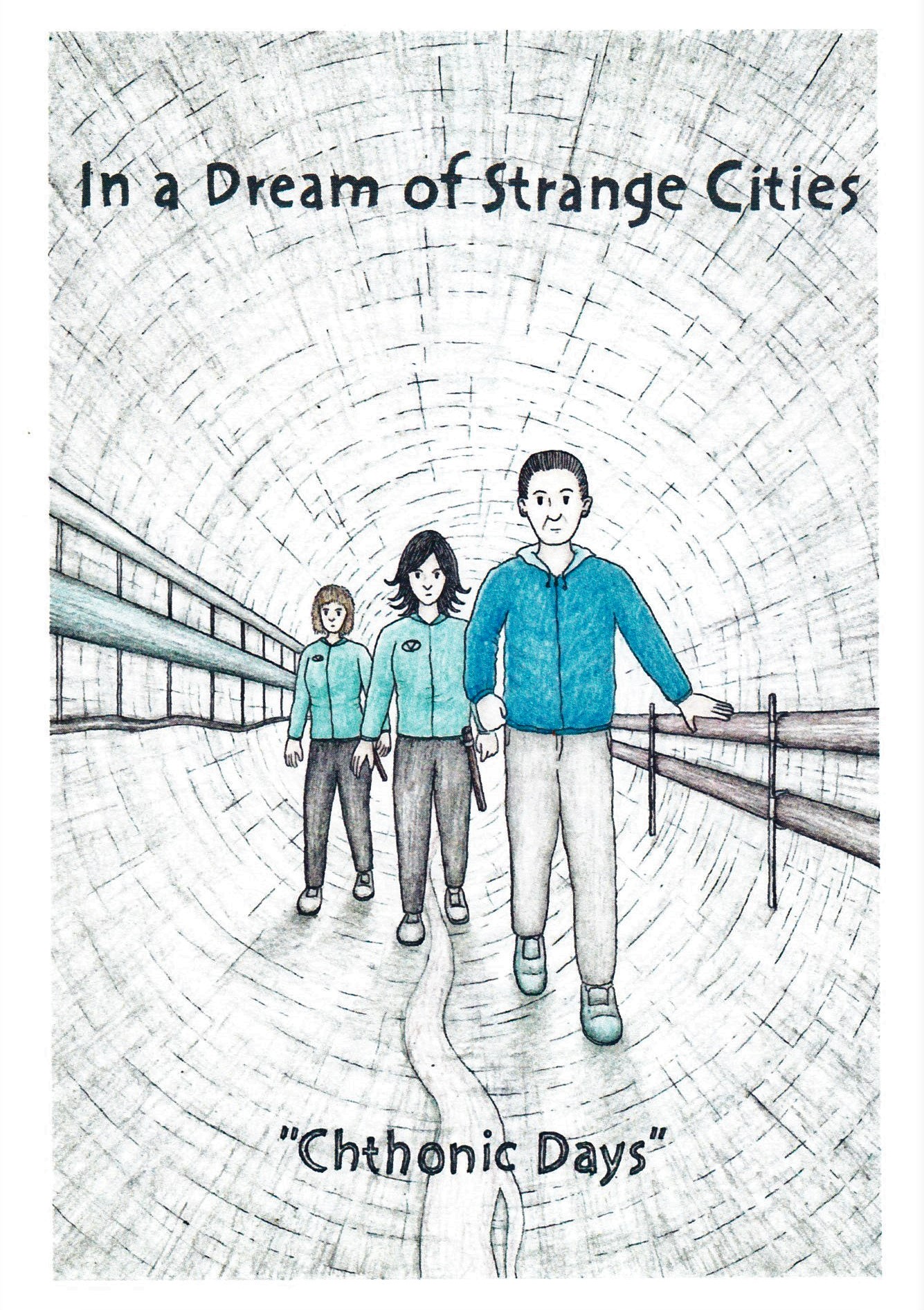
“Chthonic Days” is a 20-page, magazine-size short story comic that is culled from two pivotal chapters of the graphic-novel-in-progress “In a Dream of Strange Cities”. The title of the story indicates the underground quest to find a space large enough to construct a prototype independent sub-city, envisioned by an idealistic group called the Homelanders. Lady Domine, their charismatic and overstanding leader, lays out their vision in the speech that opens the story.

At first, Swain has no idea about how and why he has been drawn into this “Second World” or that it is even a different plane of existence. But his flair for urban exploring and psychogeographic observation make him an ideal recruit for Domine and the forces of “love, logic and learning” at existential odds with a late autocratic leader. Kept alive by a haranguing electronic video-audio loop, he encourages his followers to continue to follow his lead and meet every act of social empathy with scorn and even violence, with no end in sight.

Swain, at the conscripted call-up from the now autonomous “World Subconscious” will find out if there is “a way forward in peace” against the abusive cult of personality that pervades half the citizens of the story’s city-state.

The price of $5 includes mailing within the U.S. and will be so helpful and artist Ipan and I continue work of the first volume of a proposed trilogy. And you can keep up with our progress by Liking the In a Dream of Strange Cities Facebook page. Thanks! –Rick Ouellette

“Chthonic Days”

A short-story comic taken from the upcoming series “In a Dream of Strang Cities.”

$5.00

Happy Free Comic Book Day! Get one Here

May 6th is Free Comic Book Day and I have a bunch of introductory 20-page mini-comics of my graphic novel-in-progress “In a Dream of Strange Cities” to give away. Here are some sample pages, if you are interested, please leave a message below and/or Like my Facebook page In a Dream of Strange Cities. Thanks! Rick Ouellette (writer) and Ipan (artist).

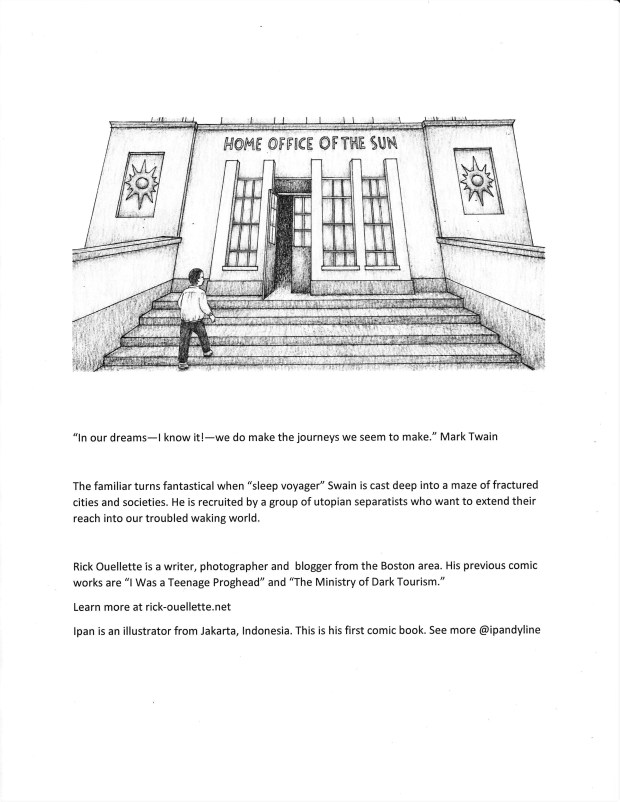
Front cover above, Back cover below.

“In a Dream of Strange Cities” teaser

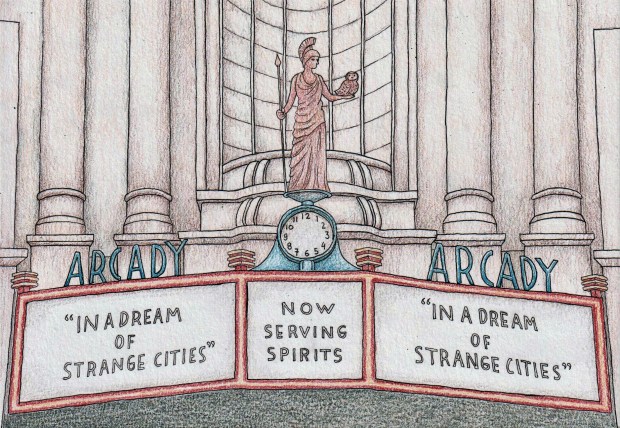
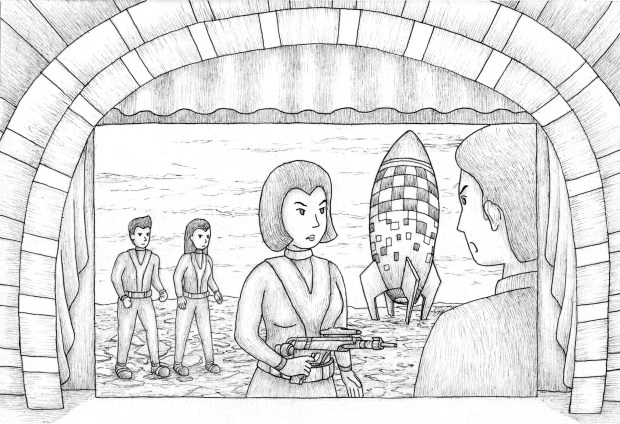
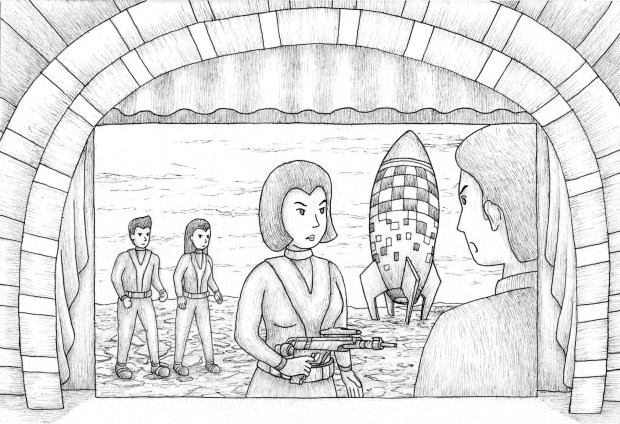
A little sneak-a-peek from my graphic novel work-in-progress, “In a Dream of Strange Cities.” It’s an odd filmgoing experience from the chapter “The Last Days of Odeon Circle.” Text by me (Rick Ouellette), drawing by Ipan.

Odeon Circle was a faded entertainment district that backed up to a still-desirable neighborhood but fronted a less-than-desirable one. I was nearly late for the film, so I hurried into the cinema and took a place in the steep overhang balcony, just like in the old days.

“Objective: Venus” played in fits and starts. The stolid monochrome actors planned their space trip, unaware that their new navigator planned to horde the mined gold and leave the others stranded on the Evening Star. The movie stopped and a bit of a World War II newsreel played backwards, effectively reversing the Allied victory in Berlin. Just as quickly, the film started up again. The un-helmeted crew were already standing on Venus and the lovely heroine was revealing the bad guy. The screen flared; the crew were either melted by the sun or there was some burning celluloid in the projection booth.

I gave up the ghost and headed down to the lobby. Outside in the Circle, there seemed to be trouble afoot.

Watch this space for a sample chapter, coming soon! Or better yet, like the “In a Dream of Strange Cities” Facebook page.

“In a Dream of Strange Cities” sneak peek

Much progress has been made on my graphic novel: more great artwork by Ipan (including some finished comic pages), the completion of my story in text form and the steady progress in formatting it as a script.

Although stylistically, I have kept the story light on its feet, thematically it often reflects our divided times. And being a dream narrative, this theme can pop up in unexpected places. When our protagonist Swain goes to see a retro sci-fi flick at a revival cinema, it is suddenly interrupted by an old newsreel which seems to portend that the World War Two victory over fascism is being reversed. (Consult your local news for more details).

“Objective: Venus” played in fits and starts. The stolid monochrome actors planned their space trip, unaware that their new navigator planned to horde the mined gold and leave the others stranded on the Evening Star. The movie stopped and a bit of a World War II newsreel played backwards, effectively reversing the Allied victory in Berlin and vacating the victory over fascism.

Just as quickly, the film started up again. The un-helmeted crew were already standing on Venus and the lovely heroine was revealing the bad guy. The screen flared; the crew were either melted by the sun or there was some burning celluloid up in the projection booth. I gave up the ghost and headed down to the lobby, checking out a museum-like display on an upcoming “Classics of Horror Cinema” series.

More samplings:

Swain with ninja girls Kee and April

All aboard!!

If you’re interested in this project, you can follow this blog and/or Like the “In a Dream of Strange Cities” Facebook page. Thanks, Rick Ouellette

“In a Dream of Strange Cities” sneak peak

The familiar turns fantastical as “sleep voyager” Swain roams through fractured cities and societies, while meeting people bent on creating an enlightened breakaway state.

That’s my one-sentence blurb. What do you think?

From the chapter “Cthonic Days”

“In a Dream of Strange Cities” is an in-progress illustrated novel composed of several actual dream-state narratives, overlaid with a fictional framework. These loosely connected stories probe personal life transitions and societal shifts that arise from an autonomous subconscious. The text and illustrations will draw from themes of contemporary folklore, urban exploration and psychogeography.

I have just completed the draft text and have a nice handful of concept illustrations by Indonesian artist Ipan. A sample chapter will be posted soon. For more info, follow this blog or leave a message below.

Thanks, Rick Ouellette

Machine Age Masterpiece: Bethlehem Steel’s Singular Second Act

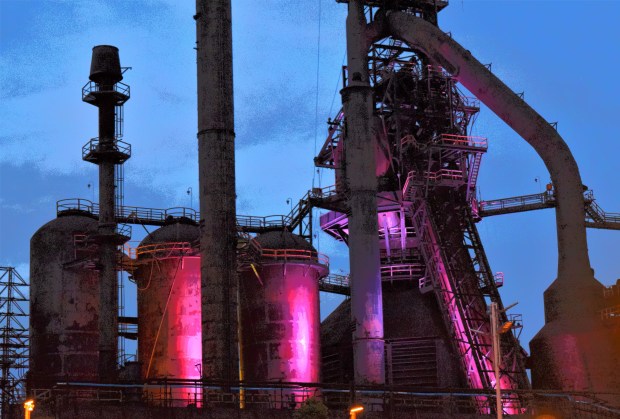
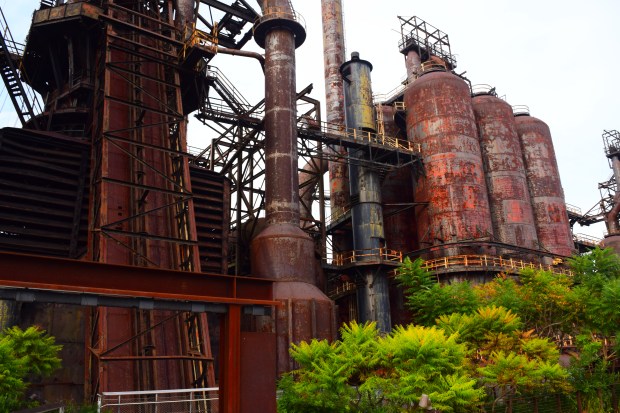
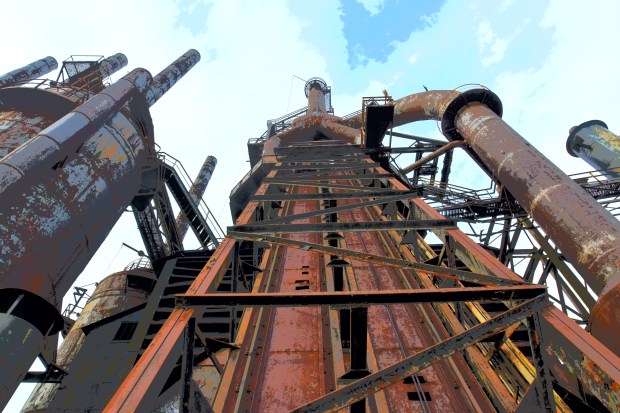
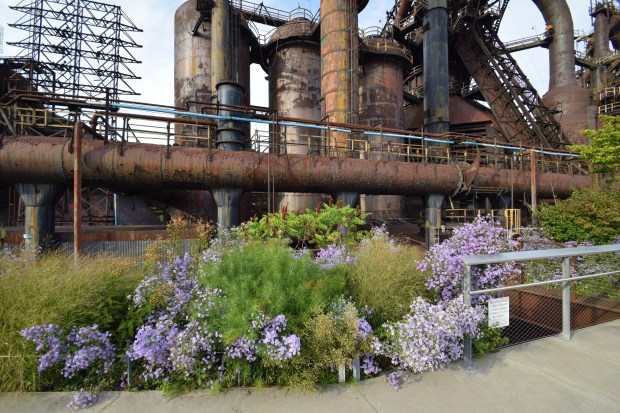
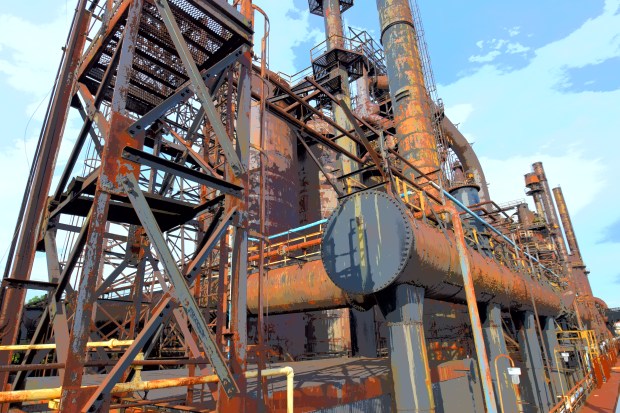
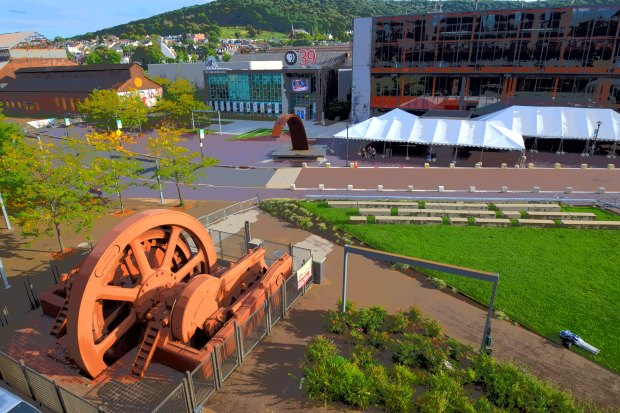
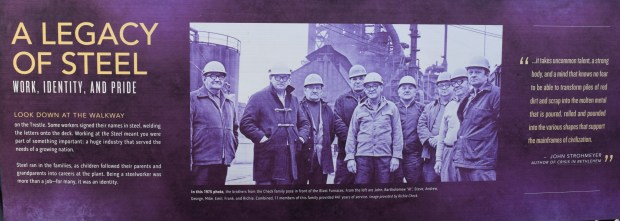
The gargantuan Bethlehem Steel plant towers over the Lehigh River in its namesake city in eastern Pennsylvania. It closed in 1995 amid sweeping changes in the global economy and laid dormant after the three-year site cleanup that followed. Since 2011, the facility has been renamed Steel Stacks and forms a dramatic backdrop to a complex that includes an arts center, a cinema, a PBS station, a museum of industry, and an outdoor concert venue among other things. Some sort of adaptive re-use was almost a given: the facility is so mammoth that it defies demolition. The city has constructed a three story-high walkway, stretching out probably close to 2000 feet, where visitors can get up close and personal to this facility. Walking this trestle, dotted with wildflower plantings and well-considered historical markers, tells a useful tale of a changing America.

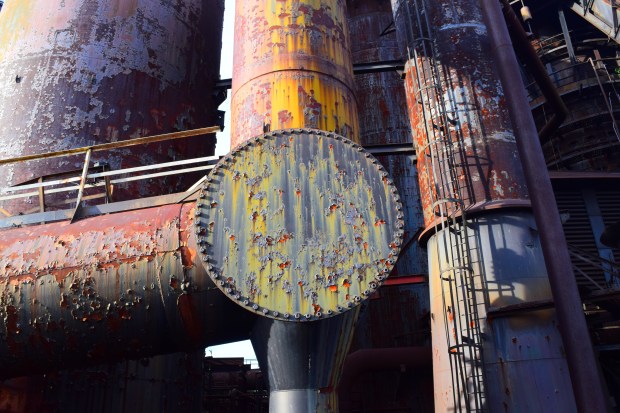
The term “adaptive re-use” is a little different in this case. Unlike textile manufacturing from the early Industrial Revolution, which took place in orderly brick buildings which are perfect for gutting and rehabbing, Bethlehem Steel is a monumental jumble of blast furnaces, pipelines, vents, catwalks, conveyor lifts, and smokestacks. It wasn’t constructed so much as it was necessitated. The plant’s profile changed continually from its beginnings in the 1860s, as technology evolved. Eventually, the four mammoth blast furnaces completed the plant’s final silhouette and are now illuminated with colored spotlights at night. That’s a far cry from when the noisy and smoky furnaces were going 24/7 for decades at a time. Now relegated to its status as perhaps America’s largest art object, “The Steel” (as the complex was locally called) must be remembered reverently.

Starting in the last quarter of the 19th century, steel production was the master industry of the nation and was powered by untold thousands of mostly immigrant workers. From the rails needed for America’s train-led westward expansion, to the beams that provided the frame for numerous great bridges and skyscrapers to the armaments that saw the Allies victorious in two world wars, the industry’s contribution to national greatness was huge.

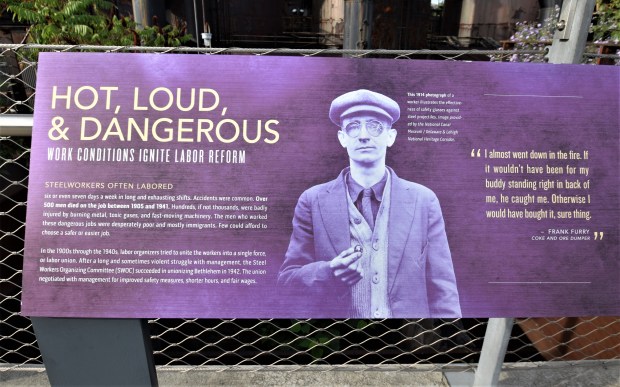
But as often is the case in heavy industry, worker conditions were abysmal, esp. in the earlier years. Brutally long shifts for six or seven days a week (with only two unpaid holidays mixed in) and numerous safety hazards (500 workers died from various mishaps between 1905 and 1941) led to the turbulent union organizing efforts that is a national historic epoch in itself. While even a peacetime two-year military veteran will get a fawning “thank you for your service” nowadays, very little lip service comes the way of laborers who toiled for decades in such places as Bethlehem. As Pulitzer Prize winning journalist John Strohmeyer wrote in his book “Bethlehem in Crisis”: “it takes uncommon talent, a strong body, and a mind that knows no fear to transform piles of (raw materials) into the molten metal that is poured, rolled and pounded into the various shapes that support the mainframe of civilization.”

Bethlehem Steel workers were fully unionized by the early Forties, but the end of World War II was also the swan song of the Machine Age. It was succeeded by the Atomic Age and the Information Age, overlaid with several iterations of the Consumer Society. Although I’m not one to deny the march of time, it seems that now we are best at manufacturing clickbait, data-mining and misinformation. Still, Bethlehem presently has it better than many Rust Belt locations, with a stabilized population based on a more varied economy. Many monolithic company towns have lost half of their citizens along with most of their tax base. For instance, U.S. Steel built the city of Gary, Indiana from scratch in the early 1900s. It is dominated by the monstrous Gary Works mill which blocks out Lake Michigan. It was once the world’s largest steel plant and is still the biggest in North America, but automation and foreign competition has reduced its workforce to 3000. The company controlled the town but never cared much for building a sustainable housing stock or providing public amenities, leading to a hollowed shell of a city.

(A telling anecdote from Hardy Green’s excellent 2010 book “The Company Town” notes that during Gary’s “heyday” the city’s largest green space was the front lawn of the factory superintendent’s mansion).

South Bethlehem, where Steel Stacks is located is not without its issues: it depends partly on a large casino (which I guess is OK if you don’t gamble) and well-heeled students from the hillside campus of Lehigh University can mix uncomfortably with lingering pockets of Forgotten America. But Steel Stacks is a promising development and if you ever go there to see a concert or a movie, have a close-up look at the plant and take heed of its story, and give a thought to those who built yesterday what we take for granted today.

Photos and text by Rick Ouellette

So Long, John Nash (Part One)

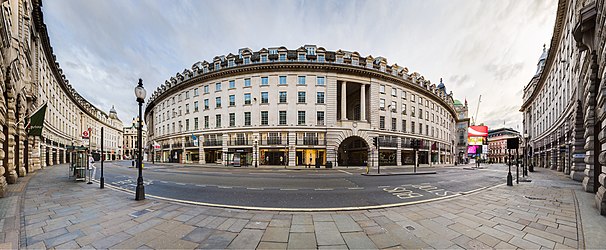
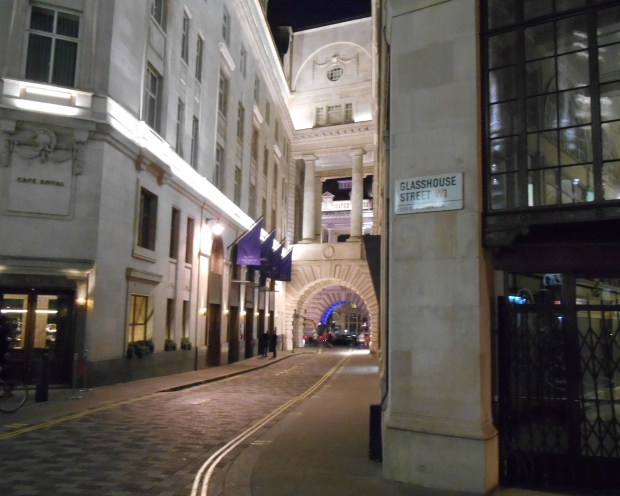
A view from behind a John Nash-designed Regent Street archway, 2016 (All photos by author unless otherwise noted)

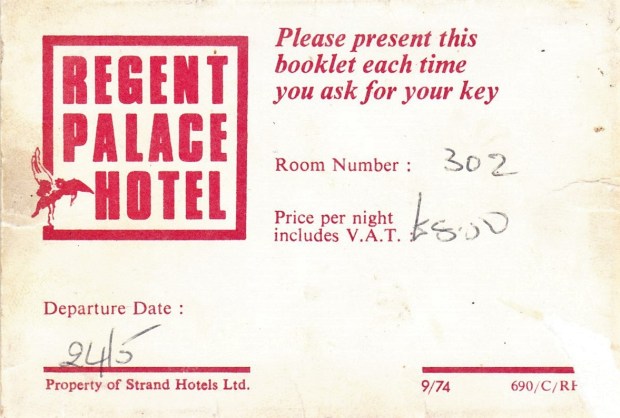
I have come here tonight to praise the former Regent Palace Hotel, just off Piccadilly Circus in London. At 1028 rooms, it was the world’s biggest hotel on completion in 1915. I did not know this tidy little fact when I stayed there for a week in May of 1976. This would have surprised me back then. The hotel had a rounded, impressive Edwardian façade but it didn’t seem especially large. That’s maybe because many of the rooms (like mine) were small and communal bathrooms were in the hall, which was the case until the place finally closed in 2006.


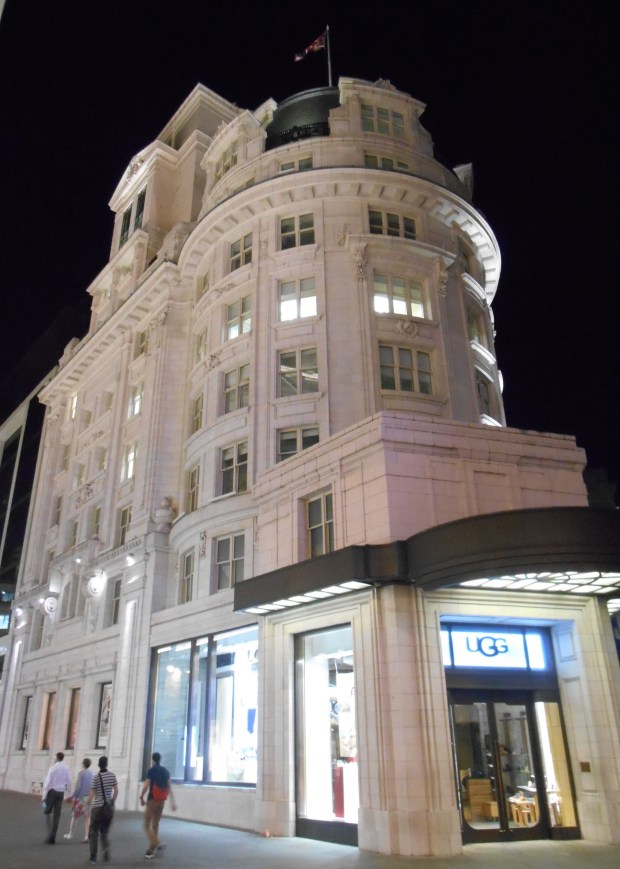
The white-washed ghost of the Regent Palace Hotel in 2016. Seemingly empty save for an Ugg store. Ugh.

So the Regent Palace was not much of a palace, but it did back up to rear of the Regent Street quadrant. That famously curved shopping street was laid out by John Nash, the master architect of Regency/Georgian England. His work also includes Buckingham Palace, the Brighton Royal Pavilion, and Marble Arch. The elegant sweep of Lower Regent Street led into Piccadilly Circus, anchoring London’s West End entertainment district, before taking a sharp turn and proceeding thru a stately institutional area to the The Mall, which of course leads to the Queen’s pad.


For 8 pounds a night, the Regent Palace Hotel was a place where “You enjoy all the amenities of a modern hotel, including telephone, radio and razor point.” (!!)

I’ve always had a thing about architecture and John Nash (1752-1835) is my favorite practitioner, except maybe for American Samuel McIntire, the Federalist architect/carver who’s greatest works were also done in the early 19th century. Sam’s not only a fellow countryman but lived and worked primarily in my hometown of Salem, Mass. Anyway, I cribbed the title for this post from the Simon & Garfunkel song “So Long, Frank Lloyd Wright.” After all, there just aren’t enough tribute songs to famous architects, I mean how much can you say in that format? Even S&G are pretty much reduced to saying how they and ol’ Frank would “harmonize ‘til dawn.” Sounds funny, but city-building can have its own musical richness and John Nash was a symphony-level composer. He found his fame as a patron of the Prince Regent (later King George IV) and his master plan started with a design for Regent’s Park (ringed by his terraces and great-houses) and proceeded south in a grand avenue procession down to Regent Street and the Circus. So very royal, yes, but it also gave London some of its greatest public spaces. But more on all that in a bit.

Ray Davies makes the rounds of Swinging London in this satirical Kinks Klassic from 1966.

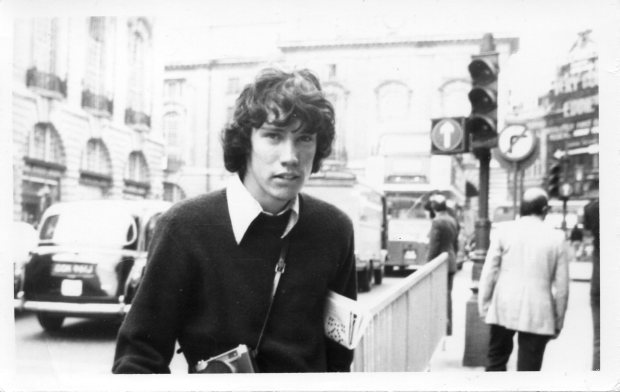
I was 18 at the time of my first visit to the city that had so captured my boyhood imagination, mainly stirred by my steady diet of Kinks albums and Chares Dickens novels. This trip to England I had planned for some time, funded by my high-school job as a busboy and by a nice little fund put aside from my godfather that he gave me when I had turned the big 1-8. I had gone with my mom to a local travel agent (remember them?) and the guy, seeing that I was a bright young lad off on his own for the first time, suggested that the Regent Palace Hotel, a literal stone’s throw away from London’s version of Times Square, would be a good base camp. My mom was already nervous about me going but it was quickly a done deal.


Your humble blogger at age 18, captured by a street photographer near my hotel.

Piccadilly Circus in the post-war years became world-famous for its neon-lit nightlife and its giant advertising signs for films, shows and a bewildering array of consumer goods. But ten paces away from these bright lights and rushing traffic, and thru the corner entrance of the Regent Palace it was a different story. The hotel had a certain frumpy charm, it was like a character in a Graham Greene novel, with a certain faded elegance and a hint of intrigue. (I was certainly intrigued by the occasional hooker loitering at a staircase landing). The Circus came to be one of those great gathering places, both for Londoners and tourists, but ol’ John Nash was way ahead of the curve. Lower Regent Street (completed around 1825) featured a covered arcade that kept window shoppers out of the elements and maybe give a chance for sweethearts to have a tete-a-tete, reportedly a consideration in the planning.


Panorama of Nash’s Regent St. quadrant. (Photo by Benh Lieu Song via Wikipedia)

Rock ‘n’ Roll Circus

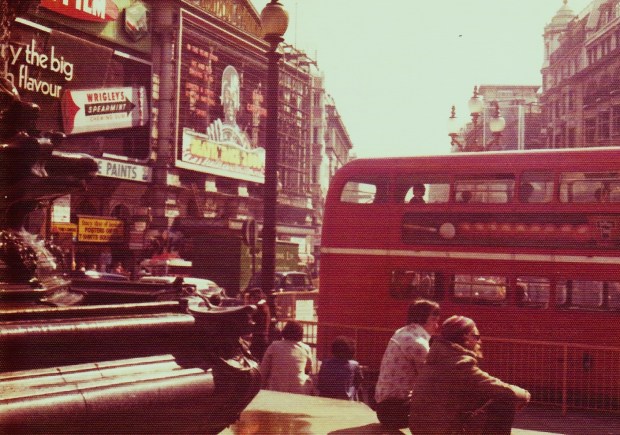
Society took over from their and certainly by the 1960’s it was (like Carnaby Street) a place to see and be seen. Many of the nightclubs of Swinging London, hosting future rock mega-bands like the Who and Pink Floyd, were in adjacent areas like Leicester Square and Soho. It was well past the prime of that golden era by the time I got there in ’76. The place was considered tawdry by many, with its illicit street dealings and dignified old buildings covered in advertising hoardings and movie marquees. But it was transformational for me, the spark that started a lifetime of sporadic European travel. So I went boldly where all men had gone before and sat myself on the steps of the Shaftsbury Memorial (see below) topped by the famous statue of Eros though it is actually his brother Anteros, the god of requited love. Either way, point well taken.


Piccadilly Circus, 1976

Across from the steps was the grand façade of the London Pavilion, where the Beatles’ Hard Day’s Night and Yellow Submarine had had their world premieres. Currently, the theater’s 3-story high sign was boosting it’s first-run showing of Death Race 2000, the pedestrians-as-points cult film; a die-cut image of David Carradine as the black-masked driver loomed over the square. Instead, I opted for a walk down Coventry Street to the now-demolished Odeon West End to see The Man Who Fell to Earth, the futuristic mind-bender starring David Bowie. The bottom of the Odeon marquee, for all of Leicester Square to see, read “Kinky Sex”—The Evening Standard. Well, your average perv may have been disappointed to buy a ticket based on that alone, but I took up my seat in the balcony (smoking allowed) not unlike the girl in Bowie’s song “Life on Mars?” who’s “hooked to the silver screen.” After having my mind suitably blown, I walked past a Piccadilly pub where an hour later, a few of the Rolling Stones stopped by a drink. I read that the next day in the (wait for it) Evening Standard.

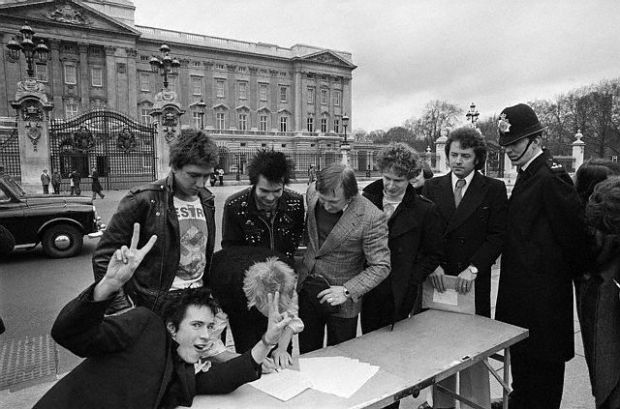
Jumping ahead nearly 45 years, I found out something that I had long suspected, a possible brush with rock and roll history that would have been more significant than catching a glimpse of a few Black and Blue-era Stones. The pre-Sid Vicious Sex Pistols were gigging in Central London the same month in the spring of ‘76 that I was first visited my fabled London. Mainly, they had a Tuesday night residency at the nearby 100 Club. Not that I necessarily would have known what to do with a Johnny Rotten back then (I was more of a Ray Davies and Ian Anderson kind of guy), but I did miss being present at the crossroads of rock history at a time when the band were not yet tabloid fodder. But ten months later the Pistols, now with Sid in tow, the group’s manager arranged a publicity-stunting signing of a contract with A&M Records, in front of the John Nash-designed Buckingham Palace. The competing symbolism was clear, even if the band didn’t release their groundbreaking, vitriolic anthem “God Save the Queen” until several weeks later. After that, they repaired to one of the lobby bars at the Regent Palace Hotel where they were over-served by the staff, according to (I believe) Jon Savage’s definitive book “England’s Dreaming.” Just think, only a gob’s throw away from where I sat in the RPH’s breakfast room, or the Carvery restaurant, whose sliced-roasts station, dessert cart and great big Imperial pints of lager were already legends in my own mind. The group’s drunken hijinks continued over at the A&M office, where their punkified misdemeanors had them booted off the label by week’s end. Twenty years would pass by the time I saw the re-formed Sex Pistols at an outdoor venue I the summer of 1996.

10 Mar 1977, London, England, UK — The punk rock group, The Sex Pistols, are about to be moved by a policeman as they sign a copy of their new recording contract with A & M Records outside Buckingham Palace. The next record to be released is called “God Save the Queen”. The band members (from far left to right) are John Lydon, Steve Jones, Paul Cook and Sid Vicious. — Image by © Bettmann/CORBIS

I would visit London alone again in 1994 and in 2016 with family. I was older and a bit wiser and able to take much better photographs, including those of John Nash’s greatest architectural hits (more in Part Two!). In ’94, I took a nostalgic stroll thru the Regent Palace lobby and out the side door. Also by then, the obstructing sign was down at the London Pavilion and it had been turned into a rock-themed wax museum; there were David Bowie and Mick Jagger effigies looking out imperiously from the revealed balconies. In 2016, the RPH was long-closed when I showed my son where I had stayed in another lifetime. The building, like many others in the Piccadilly/Regent Street area, had been scrubbed of their age-old London grime and white-washed to within an inch of their lives. The “people’s palace” hotel had only ghost of the memories of the lone travelers, wandering-eye businessmen and tour-group tag-a-longs that once issued forth the lobby into the whirlwind of London’s famous/infamous crossroads. But I’m still here to tell you my tale where the secret lives of buildings, people and pop culture intersect and will be back for more in Part Two.
—Rick Ouellette

In a Dream of Strange Cities, Part 3: “Parabolica”

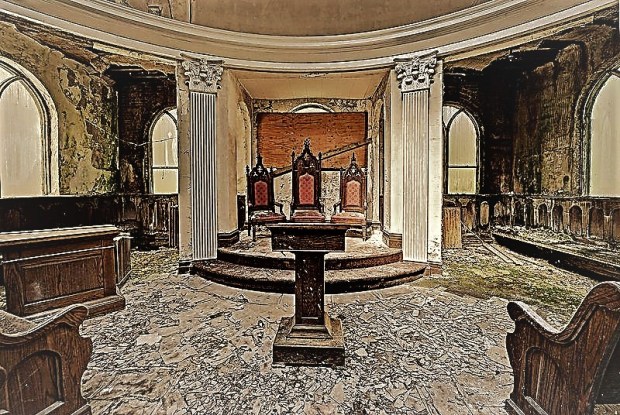
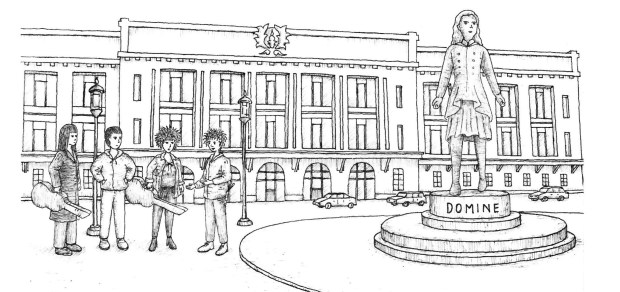
We all stood just inside the door of the long-closed sanctum. Lady Domine took a few steps forward from us. She wore a charcoal floral-print tunic, pale red leggings and stylish hiking shoes; she stood with a regally erect posture. But the way her hands cupped her sides with fingers spread, and the manner in which her right foot was set forward, suggested she was better prepared for a spirited game of hide-and-seek than the more serious matter at hand.

I remembered Crutch’s comment when he first told me about our company’s top benefactor. “She’s sort of stuck somewhere between a duchess and a tomboy.

“Well, one thing is for certain,” she said after a pause of a half-minute, “For this sort of undertaking, the old meeting room of a secret society really fits the bill.”

“Didn’t I tell you, it’s perfect!” Crutch spoke with an eagerness that was a bit out of character.

“Oh, don’t you worry, Charlie Crutchfield. At $90,000 we’re definitely going to buy it.”

I nudged Hannah with my left elbow and nodded. She replied with a discreet thumbs-up.

Domine turned to look at me. “Asbestos?”

“Well, there is some, mostly in the basement. But it’s not a very large building.”

Crutch piped in. “The Parabolic Society was never a large fraternity. More like a watering hole for utopian sky-watchers. Have you heard of them?”

She lifted a little crooked smile that lit up her still largely-unlined face. “Not at all. I always rely on you guys in the Ministry of Dark Tourism for my esoteric learning.”

“I doubt that, but thanks” Crutch said and they walked over towards the apse, with its formal arrangement of three chairs.

Hannah turned to me confidentially. “When she says ‘we’re’ going to buy it, should I take it literally to mean all of us? I don’t exactly have twenty-two grand lying around.”

“Don’t worry, that’s her way of being inclusive. She’ll probably take the $90,000 out of her petty cash drawer.”

Lady Domine approached the chairs and lightly patted the larger one in the middle. A light puff of dust rose up, but she took a seat anyway. Then it occurred to me: who would sit on either side, if anyone? The rough idea was a political rally under the guise of a MODT event featuring a re-creation of a 19th century mesmeric performance. I hoped that my late career switch didn’t turn out to be more than I had bargained for.

She leaned forward in the big chair. “Oh, Crutch, I don’t know. What are we supposed to be doing here? Advocating for the partition by having me do parlor tricks? This town is probably crawling with red-caps. It could even get dangerous.”

Crutch turned to look at us and nodded towards the back area. We stepped on bits of shattered tiles, past the apse and into a hallway. I peeked back and Domine had moved off the chair and was peering thru a cracked Palladian window down at the street. I paused with Hannah to look at some parabolic diagrams that remained on the wall. After a moment I suggested she should check out the old member’s lounge and kitchen. When she did, I lingered in the hall.
“the hopheads won’t bother us,” Crutch was saying. “We’ll put up a sign saying ‘Private Event’ and get Ike’s friend Jason to work the door. You remember Jason—about six-foot eight and two fifty, with fists like pile drivers?”

“That must be the gentleman who checked tickets at our ‘Satan’s Skyline’ fiasco last October,” Domine replied. “Let’s limit alcohol sales for this event.”

“Anyway, let’s have a soft opening. We’ll invite maybe 25 of our best customers for free and maybe a few college kids from the town. See how it goes.”

“Do you want to hear a bit of what I’ve been working on”

Hannah had just poked her head out of the kitchen, probably to show me the double dumbwaiter. Rookie enthusiasm. Instead, I motioned her towards me. Once Lady Domine sat back down in the big chair and started speaking, Crutch waved us back into the main room.

“Now let’s spin back down the years to the autumn of our discontent in 2016. When PFF came to power, it was like a little piece of me died. I’m sure many of you felt the same. And when he met his maker, that piece of me was not re-born, it stayed dead. I can only hope to replace it with a new inspirational spirit derived from a wholly new source…”

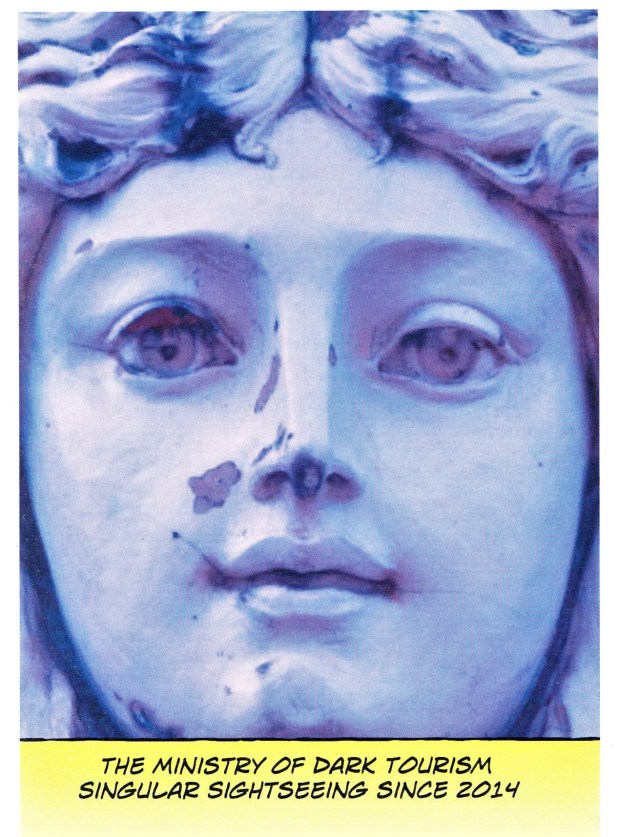
Her eyes were wide open and stared straight ahead as if into nothing and everything. The effect reminded of the “Glass-Eyed Goddess of Union Mills” whose visage had recently become the MODT emblem.
The good Lady continued. “There is a new righteous power that is forming behind the scenes of everyday life. Anyone with a good heart can tap into it. But we must be careful with it. The retrogressions of this century have been shocking—the vile and needless hatreds, the bloated ignorance, the flagrant racism and the emptiness of forfeited souls that have led to countless brutalities.

“I know the desire for retribution is great with some in this current political vacuum. But we should never resort to violence in any of its forms: physical, economic, mental or whatever else. Instead, we should smite our enemies with the three Ls: Logic, Learning and Love. And the smite shall feel like a kiss.”

Lady Domine leaned back in the chair and rolled her eyes as if to say “who me?” I realized I had just snapped out of a little trance of my own.

“Well, that’s sort of the end of it. I’ll build up to it.”

After a brief silence, Hannah practically slapped her cheek with her right hand. “Omigod, that was amazing! You’ve got to do it. I know I’m new and have no clout… but if we don’t do this event I’m going to die!”

Domine smiled at her, then turned back to Crutch. “I’m still not sure. Why wouldn’t I just start a pro-partition action fund?”

“Because that’s boring and would fizzle out quickly. We’ve already talked about this—sensational gambits and star power is the only thing that’s works now. We’ll hash out the details at the next staff meeting.”

“I’m not really a mesmerist, you know, but I could wing it and see what happens. Soft opening, yes. Or else I won’t do it. Don’t be putting me down for a definite “yes” just yet. No, I have to do it, just look at this country. Can we have drinks later?”

Hannah gave me a side look. “Huh?”
“Don’t worry. You get used to it after a while.”

Crutch took Lady Domine to see the other rooms, Hannah tagged along. I looked out the front window into the town center, where the light was failing. Down below was a stonework mass of once-proud mercantile buildings, their civic ideals mostly forgotten. Beyond that was the triangular common, with its’ patchy lawn and statue of a Union soldier, standing prematurely at ease. A few guys were gathered around a bench at its far side, next to an old pick-up truck with a flag mounted behind the cab. They had bagged drinks and a couple of them were shin-kicking a third, playfully at first but then not so much.

I exhaled uncomfortably. The place with the drinks was only three doors down so I kept quiet and let it pass. But I knew it couldn’t stay that way forever.

This is an excerpt from an in-progress illustrated or graphic novel called The Ministry of Dark Tourism. If interested, follow this blog to get updated or friend me in Facebook, Rick Ouellette.
In a Dream of Strange Cities #2: “Tannery Palace” prelude

As soon as we got over the shock of first seeing Tannery Palace, Crutch suggested I move the company van a few streets away. The factory/mansion complex was only a long stone’s throw from (redacted) Square and our local guide Hannah K— said she had seen a couple of army cops on patrol that morning.

Normally, I would have been miffed at having to do this while Crutch got to know our appealing new co-conspirator a little better. But the night before I let on that I had attended 4th and 5th grade at the St. Catherine Primary School around the way. I was curious to see this old haunt again, especially now after what I had just seen. How could it be that I had never, until today, seen or known about the outlandish Victorian owner’s residence that sat in the middle of the tannery—especially since my grandfather had worked there and I spent two years at a school that was only two blocks away?

The shuttered but otherwise well-preserved Tannery Palace was no place to park a van whose back-door logo promised adventures in “Dark Tourism.” I hopped in and drove over to the school and tucked it under an oak tree in a corner of the disused parking lot, close by the giant brick wall that formed the back of the Church of St. Catherine Laboure.
I wasn’t particularly old, just a man of a certain age, but it felt like an indiscernible black space separated those years from where I stood now. I looked over at the tall windows of my 4th grade classroom and got a blank stare in return. That did not stop some memories from leaking back. At recess, we used to throw an oversized Super Ball against this back wall. A pack of boys in white shirts and clip-on ties would scramble for the crazy bouncing rebound. A smaller number of girls in plaid skirts would work the perimeter away from the scrum, occasionally catching the more errant sideway bounces.
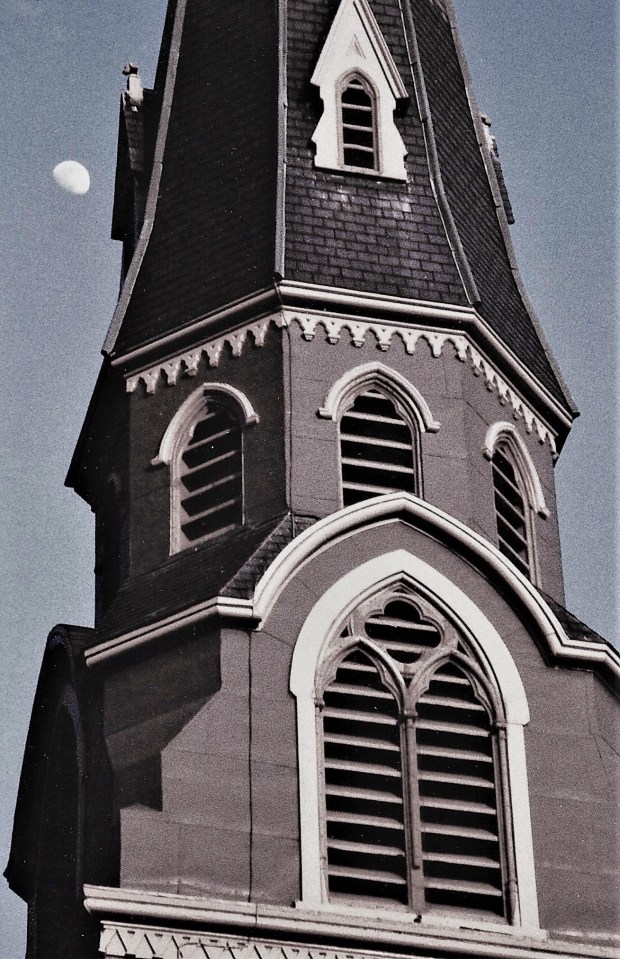
I started walking back, wondering how far along Hannah and Crutch were with prying away the weak-link plywood of the basement window that was to be our entry point to the mystery mansion. First though, I had to turn back to have a look at the church’s pointy steeple, an architectural detail that had popped up in my dreams at least a couple of times a year for decades. Many of the kids in my 5th grade class would compare the steeple to a witch’s hat, thus revealing the true nature of Catholicism. We were clever little buggers back then. For sport, we would discuss this theory just barely out of earshot of the nuns as they stood in groups of three or four in their white origami-type headgear.

Each sunny school day at the noon recess, at the signal which was the tannery’s blaring lunchtime horn, we would look up at the steeple to see “the witch’s eye.” This would be a glint of sunshine off the church bell seen through the slats of the tower. I stared one last time for a glimpse of this, but it was no use. It was late afternoon already; the moon was even rising. The church, the factory and a lot else around it was closed for good. There would be no supernatural eye to look down on this broken world that had cursed itself.

A prose sample from a work-in-progress, a (graphic?) novel called “The Ministry of Dark Tourism”