Rock on Film

End of the Indie Century: Revisiting “120 Minutes”

By the end of the 1980s, my best nightclubbing days were behind me. Sure, I’d still go out here and there, to clubs and concerts. But the Eighties was the decade where I experience so many greats of the post-’77 musical surge: seeing everyone from the Jam to Lene Lovich, from Husker Du to the B-52s, from the Ramones to Talking Heads, not to mention the Clash six times, including at their legendary residency at Bond’s in Times Square in 1981.

Oh, what a time it was. The punk-rock movement of the late 70s, at its core, was a crucial self-actualization for the second wave of baby-boomers tired of the over-inflated arena rock that had come to define the era. Enter urgent new sounds played in the elemental confines of clubs, while stark and distinctive fashion statements and fervid fanzines joined the battle against the bloated PR machines of corporatized supergroups. Even under the later umbrella terms of alternative or indie rock, this movement continued well into the grunge-friendly early 90s.
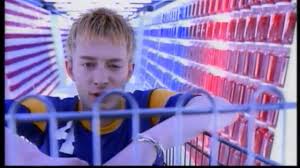
Hey, Thom–if you’re looking for the “Fake Plastic Trees,” they are in Aisle 5. (see below).

By then, I was getting a little older and more inclined to take it easier. One way I kept up with the alternative-rock scene was by watching the MTV show “120 Minutes” on Sunday at midnight. Giving the steady diet of putrid reality shows that dominate the once-great channel, it may be hard to imagine the inspired programming they once had on at the end of the week. “120 Minutes” was preceded by the near-anarchic animation show “Liquid Television” and the starkly beautiful sci-fi series “Aeon Flux.”

Along with videos from a great variety of artists that fell under the loose alt-rock definition, there were also numerous in-studio interviews and performances. Though MTV has long given up on most music programming, MTV2 now shows “120 Minutes” (videos only) on the weekends at its old midnight time slot. So I recently revisited this 90s show and see what it might tell me about this time when I was more or less retiring from the music-community front lines. I took the first twelve viddys that came on and jotted down my hot-take reactions, rating them on a 1-10 scale.

“Sonnet” by The Verve

Funny this came on first because I had just listened to their celebrated 1997 album “Urban Hymns” and came away duly impressed. “Sonnet” is the alluring second song, following their massive hit “Bittersweet Symphony.” It’s one I really like but the dark, static video doesn’t do much to enhance it. Grade: 7

“Sing Your Life” by Morrissey

Yup, it’s him. Morrissey has become quite a divisive figure in later years and I never much got him, outside of a few songs when he fronted the Smiths. This 1991 offering may have sought to lighten up his dour, sometimes embittered image, presenting him as a slick lounge singer with the implied positive image reflected in the song title. But I didn’t buy it for a second. Grade: 5

“Eighties” by Killing Joke

This is one of those bands I never got around to listening to. Maybe the group name (analogous to “destroying humor”) was a turnoff. For sure, it was (is?) a dark and aggressive sound. This ranter and raver was from 1985 is bludgeoning slab of industrial rock where KJ’s strident vocalist Jaz Coleman rails non-specifically about the ills of the decade.  Images of Reagan, Thatcher, Brezhnev and global strife flash on the screen. Coleman delivers this supposed message of resistance in full autocratic mode from a stage where both the U.S. and Soviet flags are present. Given recent events suggesting a new cozy relationship between a certain ex-KGB man ruling Russia and a certain dictator-loving American president, that element may now seem sadly prescient. Grade: 6

After the KJ video there was a commercial break. The first one was for baby diapers, probably not the kind of ad you saw during “120 Minutes” original run.

“Down to This” by Soul Coughing

This is the point where I felt rock culture slipping away from me. But only in retrospect; I missed this band first time around and so glad I did. The guys in this group had great indie cred, some of them cutting their musical teeth with composer John Zorn. So I can only guess why they settled for that poorly-aged cut-up style of 90s indie rock, complete with shuffling beats, fake rapping, low-rent samples and repeated nonsensical tag lines. It’s all too clever by half, and while people like Beck could infuse this sub-genre with whimsy, this is just annoying. Grade: 3

“Everyday Sunshine” by Fishbone

Just by the song title alone this came along as a breath of fresh air. After some of what came before, this L.A. group brought what others lacked: infectious energy, warmth, humor, a true social consciousness and killer grooves (they were also the only band of color of the 12 videos). Fishbone have been a wild card probably since the day they formed while junior high back in 1979. They’ve played punk and funk, ska and metal and all sorts of things in between. Here, they ride the best vibes of War and Sly Stone from the inner city to the concluding scene is a field of wildflowers. Grade: 9

“Shell Shock” by New Order

These post-punk stalwarts, formed in 1980 from the ashes of the legendary Joy Division after the suicide of singer Ian Curtis, cut their own distinctive path.  For a while, at least. Distinctive early highlights like “Age of Consent, “Temptation” and “Love Vigilantes” had by 1986 given way to a more homogenized synth-rock. “Shell Shock” is decent and danceable but a lot less gripping than earlier records. Through the blue-filtered haze of the video, I spied keyboardist Gillian Gilbert, the sole woman viewed in this sampling. Grade: 6

“Fake Plastic Trees” by Radiohead

Since I had a swipe at Soul Coughing and Killing Joke earlier, you can go ahead and snigger at me for giving this one a high mark. Even casual Radiohead fans may roll their eyes at this, one of those slow mournful tunes of theirs, voiced in falsetto by Thom Yorke—all the while being pushed around in a shopping cart up and down the aisle of a futuristic store. It’s not the best song from their great 1995 breakout album The Bends but the band’s uncanny ability to suss out the artificialities of modern life, and how it leads to lives of quiet despair, is clearly on display here, even if Yorke’s persona drives you batty. Grade: 8

“Hang Onto Your Ego” by Frank Black

This raucous and righteous cover of this Beach Boys deep cut from their classic Pet Sounds album (aka “I Know There’s an Answer”) is how you do someone else’s song and make it your own. (For how not to do it, read on). The cut-and-paste-and-distort method of video production fits the subject matter (LSD discombobulation) perfectly. Grade: 8

“Prisoner of Society” by the Living End

These Australian punk rockers don’t mess about, this classic genre complaint (reference the title) is about what you would expect. A loud-and-proud three-chord chainsaw, the obvious reference points are the Clash and Green Day, but the named themselves after a Stray Cats song and kind of look the part. Yeah, it’s retro but what’s good for the 1978 goose is also good for the 1998 gander. Grade: 7

“I Love to Hate You” by Erasure

OK, so we’re back to this again. I don’t know what it is, because I liked a lot of synth pop hits in the 80s. But this is as slick as it is unimpressive. A big budget video, complete with flamenco dancers and the singer walking on water, can’t save the song’s decided inconsequence. I guess this survey kind of shows you just like what you like. Grade: 5

“Ball of Confusion” by Love and Rockets

We lower the bar even more for this know-nothing cover version of the Temptations classic protest number. Everything about this group bugs me, from their smug presentation to the fact that they cribbed their name from Gilbert Hernandez’s celebrated comic-book series of the same name, which is centered around a band called (wait for it) Love and Rockets. What is particularly galling about this is the lack of effort, the expressionless vocal and rudimentary beat. Like Frank Black above (and hundreds of others) the goal is to apply your own stamp when covering another’s song. I don’t think these yobs have any stamp to give at all. Grade: 3

“Do You Remember Rock ‘n’ Roll Radio” by the Ramones

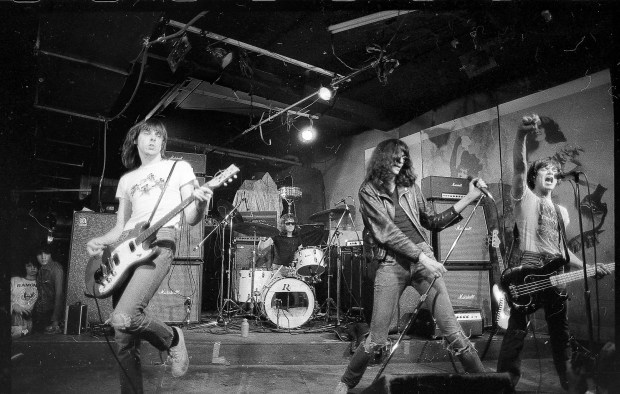
How appropriate that this video appeared as the last of the twelve watched at random. The Ramones’ first LP, released in April of 1976, was a clarion call for a new generation of rock and rollers. Despite the pummeling riffs and song titles like “Beat on the Brat” and “I Don’t Wanna Walk Around with You,” the group was all about community. This extended from their famous home base at CBGB in their native New York to London, where their first concert (in front of 2,000 at the Roundhouse) greatly inspired the nascent punk movement there.

In a perfect world, brilliantly conceived singles like “Sheena is a Punk Rocker” (#81) and “Rockaway Beach” (#66) would have topped the American charts. But by 1980 it was pretty evident that the band was destined for cult status only. It was decided that for their fourth album End of the Century the perfect producer to broaden their appeal would be the legendary Phil Spector. Not yet the frizzy-haired convicted murderer we would later come to know, the Spector of 1980 was still plenty crazy. Classicists at heart, the boys loved his famous girl-group sound of the early Sixties. Instead, what they got was the volatile producer allegedly waving a gun at them and locking them into his house while making obsessive demands.

The Ramones reinvent the wheel at CBGB in ’77

What came out of that was a good album but not the last-chance breakthrough they desperately wanted—though at #44 it would prove to be their highest charting LP.  The anthemic opening track, “Do You Remember Rock ‘n’ Roll Radio” seemed like a prideful last hurrah, even though the Ramones would not break up until 1996.  Name dropping everyone from Murray the K to T. Rex, the band (the lyrics are by singer Joey Ramone) embraces the whole of this great American invention—rock ‘n’ roll—and warns of its endangerment:

Do you remember lying in bed
With your covers pulled up over your head?
Radio playin’ so one can see
We need change, we need it fast
Before rock’s just part of the past
‘Cause lately it all sounds the same to me.

The fact that they’re maybe jumping the gun here is covered by the refrain: “It’s the end, the end of the 70s/It’s the end, the end of the century.” It’s everything that the music should be: energetic, passionate, purposeful and witty. The coming decades would see the rise of self-centered Instagram pop in the Katy Perry, Ke$ha et al., proving them painfully correct.

Sadly, the Ramones’ front line of Johnny, Joey and Dee Dee, all died between 2001 and 2004. “End of the Century, indeed.

Back in 1976 in Creem magazine Gene Sculatti, in a review of the Ramones first album concluded: “If their successors are as one-third as good as them, we’ll be fixed for life.” Once upon a time, we held that to be true. Grade: 10
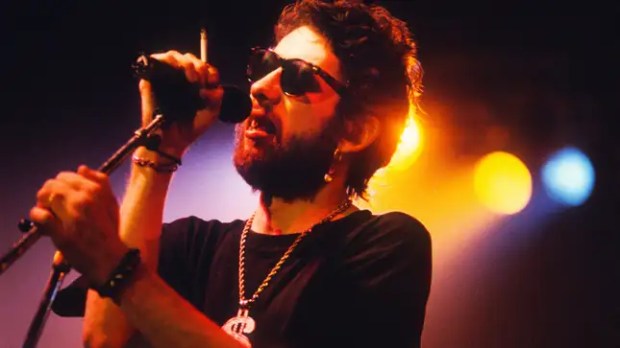
RIP Shane MacGowan: Sing Him a Song of Times Long Gone.

“He took the road to heaven in the morning.” RIP to Shane MacGowan, principal singer and songwriter for the Pogues, and the poet laureate for the modern Irish diaspora. Though he was born and (mostly) lived in and around London, his childhood experiences in Tipperary seemed to inhabit him as profoundly and completely as did Dublin to James Joyce, who left Ireland as a young man.

With a super-talented group of players behind him, Shane wrote dozens of beautiful and incorrigible booze-infused songs on themes of wanderlust, bittersweet romance, camaraderie, Irish social history, political indignation and London street life. His songwriting compromised a universe unto itself: this was a guy who could make the demolition of an old greyhound racetrack (“White City”) sound mythic (Oh, the torn-up ticket stubs of a hundred thousand mugs/Now washed away like dead dreams in the rain”).

The same goes for “Sally MacLennane” which covers an entire lifetime in 2:40. MacGowan sings the tale of Jimmy, who “played harmonica in the pub where I was born” (brilliant) and goes off to America to make his fortune while the narrator grows up to tend the same bar. Jimmy eventually returns to a very changed homeland and you come to realize that the fateful walk to the train station is in fact a funeral procession.

So let’s sing Shane “a song of times long gone” and remember him well, as he remembered the world around him in a way that touched so many so deeply.

—Rick Ouellette

“Rock Docs: A Fifty-Year Cinematic Journey” Available Now!

The Last Waltz. The Kids Are Alright. Stop Making Sense. Standing in the Shadows of Motown.
The Filth and the Fury. Searching for Sugar Man. Twenty Feet From Stardom.

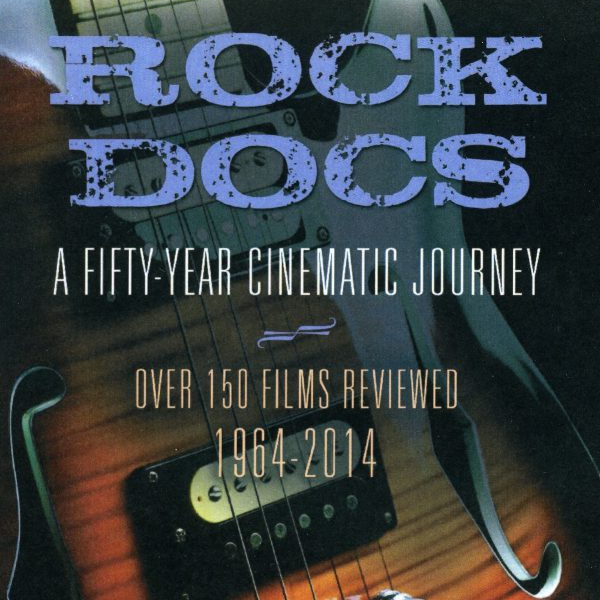
Over the last half century, music documentaries like these have provided us with a priceless moving-image history of rock ‘n’ roll. My just-released book “Rock Docs: A Fifty-Year Cinematic Journey” is a first-of-its-kind anthology of the rockumentary genre, viewing pop music’s timeline through the prism of non-fiction film. Since its earliest days, the look of rock ‘n’ roll has been integral to its overall appeal. Up and down the hallways of pop history there is always something interesting to see as well as to hear.

This book reviews over 150 films–actually closer to 170 but that number didn’t seem right on a book cover. It starts with a ground level look at the Beatles’ world-changing first visit to America and comes full circle fifty years later with “Good Ol’ Freda,” where the Fab Four’s secretary looks back through the years as both a fan and an insider. In between, readers will find many films to re-experience or discover for the first time.

The anthology format consists of 50 feature-length reviews and paragraph-length pieces on the remaining 100+ titles. In the coming weeks, I will be posting selected clips from the book. If you are interested in purchasing the book, please leave a message in the comments. The book is only $12 including mailing within the U.S.

Also, if interested join my “Rock Docs” Facebook group.

Click on the link below to see the first “Rock Docs” book sampler.

Rock Doc Spotlight: “Glastonbury Fayre” (1971)

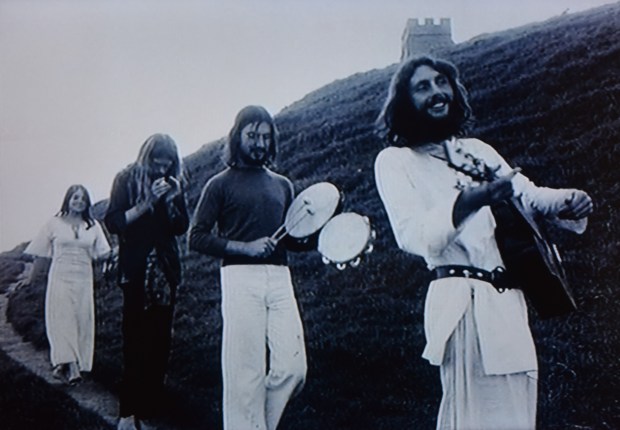
Director Nicolas Roeg was famous for his masterful and idiosyncratic films, often using subversive themes and cryptic imagery. In fact, he already had two of his better-known movies under his belt (“Performance” and “Walkabout”) when he directed the filming of the second ever Glastonbury music festival, an event that has gone on to become a beloved UK institution. Unlike some auteurs (like Martin Scorsese and Jonathan Demme) who would make several music films along with their features, Roeg was not known for his affinity with the rock culture, though he had worked with Mick Jagger in “Performance” and would later direct David Bowie in “The Man Who Fell to Earth.”

There was an unworldly aspect to this early edition of the festival that suited Roeg’s sensibility. Consider the esoteric interests of the approx. 15,000 in attendance (the modern Glastonbury has a cap on tickets of about 140,000), which largely consisted of the vanguard of Britain’s hippie/new-age population. Roeg (along with director of post-production Peter Neal) emphasize this “gathering of the tribes” as much as the music up on stage. We also get to see the construction of the first soon-to-be-famous Pyramid Stage. And consider the location, one those vast, tree-dotted English fields and in the immediate vicinity of Glastonbury Tor, the conical hill topped by the surviving tower of what was St. Michael’s abbey. It’s a place important in Christian, Celtic and pagan mythologies. There’s a lot to point a camera at and Roeg’s highly developed visual style is a strong selling point.

The musical selections are a bit of a mixed bag. It starts strong with a couple of numbers by blues-rocker Terry Reid (dueting with soul singer Linda Lewis on the second); great stuff from the guy who almost became the singer of Led Zeppelin a couple of years before. The 1971 edition of Fairport Convention was whittled down to a quartet, but their vivacious brand of homegrown folk-rock fits the occasion perfectly. Led by fiddler/singer Dave Swarbrick, they do “Angel Delight” and the high-wire instrumental “Dirty Linen,” which inspires a mass freeform jig in the crowd.

A lot of the rest will be take-it-or-leave-it for many viewers. Melanie, already a festival mainstay due to Woodstock, does one of her rooftop-shouting anthems. There’s rare live footage of Family, but one’s appreciation of this may depend on how well you can take Roger Chapman’s eccentric vocalizing. Gonzo acts of the day like Gong and Arthur Brown also figure prominently. Brown’s face-painted and (literally) fiery act, rich with occult craziness, extends well into the audience. There’s also a bit from folk-proggers Quintessence, but mostly as background to the antics of the yoga-crazy, mud-bath loving, tribal-drumming, twirly dancing and meadow-frolicking half-naked (sometimes all-naked) attendees. Roeg shows us a crazy patchwork of both hedonistic and religious/spiritual practices, and organized services by groups ranging from Hare Krishna to the Church of England.

But all these disparate elements come together in the rousing musical finale with Traffic performing that old party favorite “Gimme Some Loving.” This is the extended line-up of the group, with an extra drummer and a percussionist as well as co-founder Dave Mason who had briefly rejoined. Behind the urgent lead vocal of Steve Winwood, the band work the audience into a state of jubilation, many of them climbing onto the stage to dance. It’s a celebratory scene of the kind that would be hard to imagine in today’s over-scaled festival landscape of security and stage buffers. There seemed to be less distance between bands and fans back then and “Glastonbury Fayre” is a valuable window back on the beginnings of the festival sub-culture that plays a huge part of many people’s concertgoing lifestyle today. (Available on DVD and in whole or on YouTube)

–Rick Ouellette

I am the author of the 2016 book Rock Docs: A Fifty-Year Cinematic Journey. There are still several copies available (only $12), if interested, let me know in the comments section.

The

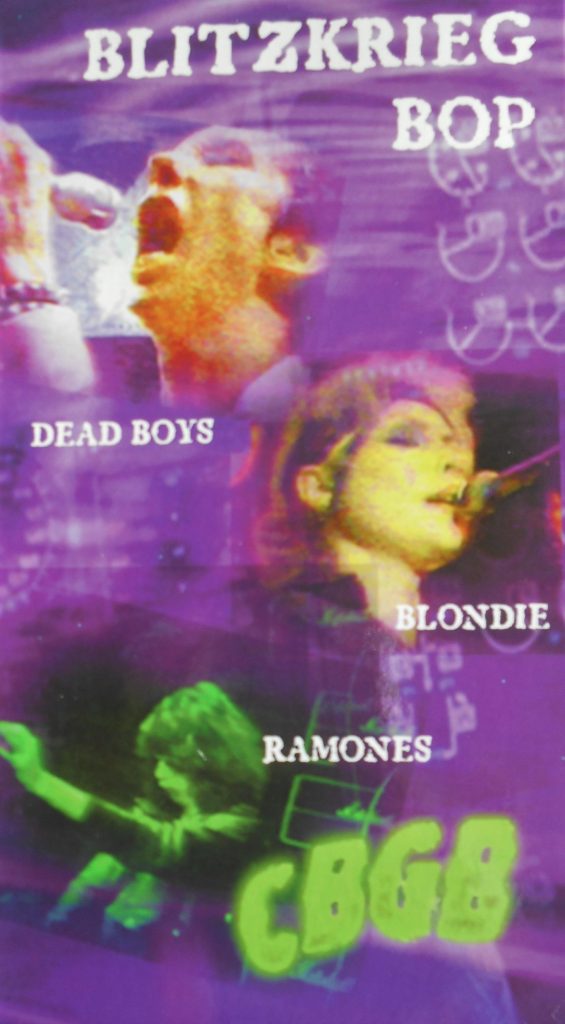
Rock Docs Spotlight: “Blitzkrieg Bop”

The “strong, hard and raw” sound of the early New York punk scene comes back in all its gritty glory on this shoestring VHS title that I recently plucked from Rock Doc obscurity for three dollars at a consignment/antique shop in Providence, RI. It’s times like these that make me glad I have kept a functional VCR around. “Blitzkrieg Bop” is an unfancy 52-minute field report from CBGB frontline that was likely produced for a local TV broadcast. That it even got to videotape seems remarkable: there are no production credits or even a copyright date (though I’m guessing 1978 or ’79).

What you do get is complete performances of eleven songs (five from the Ramones and three each from Blondie and the Dead Boys) interspersed with straight-man narration and interview snippets with band members and notable rock scribes like Charles M. Young, John Rockwell and Robert Christgau (CBGB owner Hilly Kristal also appears). Although the narrator gamely comes to grips with the whole “punk cult” thing, he edges into an unintentional Rod Serling tone at times and overall there is a bit too much emphasis on the genre’s “violent-oriented imagery.” There is much discussion of Ramone titles “Blitzkrieg Bop” and “Beat on the Brat” (“with a baseball bat”) while often missing the point of the group’s comic-book shock value and downplaying more celebratory numbers like “Rockaway Beach.”

Although material of the film is hard to find, there are some YT clips of its Ramones Oct. 1977 CBGB show highlights.

The five songs by the Ramones are great, often electrifying, seen at a career peak two weeks before the release of their classic “Rocket to Russia” LP. The other two groups are captured in fine form as well. Blondie, featuring a more animated Debbie Harry than her cool image may suggest, do the ever-popular “X Offender” (called “You Just Had to Laugh” on the label) as well as “Rifle Range” and the sultry “In the Flesh.” The “controversial” Dead Boys (originally from Cleveland) grind out their signature “Sonic Reducer” and two others, the surly stage antics of singer Stiv Bators and guitarist Cheetah Chrome are preserved for all to see.

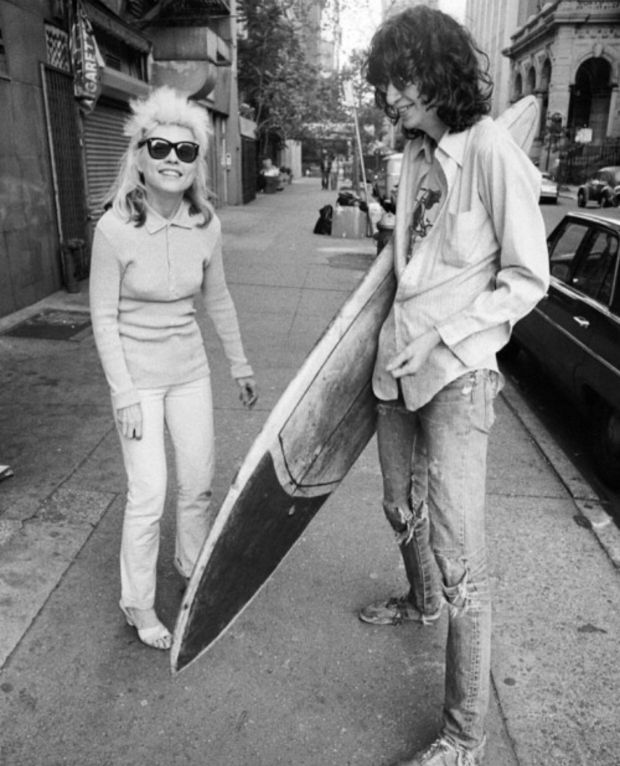
Debbie Harry and Joey Ramone contemplate a day trip to Rockaway Beach.

Sure it’s all a bit raucous, but fascistic? Unfortunately, the doc does go down that road courtesy of Mr. Christgau, who in a three-way discussion with other writers implies pretty vehemently that the Ramones’ messaging could one day lead to extensive right-wing violence. Wait, what? At first, I thought it was a put-on by the famous record-rater who gave “Rocket to Russia” an A. But it doesn’t appear to be unless he was indulging in some form of rock-critic performance art. Either way, I would have to give Christgau’s contribution to the film a D-.

Unsurprisingly, it is the band members who come across as the most level-headed. All agree in some way with the notion of punk’s affirmative value by way of rambunctious fun, subculture community-building, and the encouragement provided to find your own voice whether it be in music, art, fashion or whatever. The film ends with the Ramones’ tearing thru “Sheena is a Punk Rocker,” Billboard’s greatest ever #1 hit that only made #81.

In the song, Sheena has to break away from the boredom of her surroundings, discovering that “New York City really has it all.” Thing is, she made that discovery during the Big Apple’s troubled decade, when it was beset by crime, arson, bankruptcy and white-flight. A new insurgent creative class streamed into a desolate Lower East Side and made their own pop-culture history. That New York bears little resemblance to today’s hyper-gentrified city. Yet documents like “Blitzkrieg Bop” help preserve that spirit in spite of a few ill-informed digressions.

If you like this article and are interested in my book “Rock Docs: A Fifty-Year Cinematic Journey,” please leave a message below.

–Rick Ouellette

Rock Docs Spotlight: “The Terry Kath Experience”

Chicago: The Terry Kath Experience

Directed by Michelle Kath Sinclair–2016–80 minutes

A few weeks ago, I did a retrospective review of Chicago Transit Authority, the debut long player by Chicago, as part of my ongoing series of rock’s notable double albums. A good portion of that piece focused on their renowned guitarist Terry Kath, who died tragically in 1978. Kath is the Chicago member of choice for rock geeks, not just for his musical achievements but for the might-have-beens. Chicago started out as an adventurous jazz-rock ensemble that had softened its edges by the time of Terry’s passing and would soon become all but a MOR yacht-rock ensemble by the Eighties, whose soppy love ballads are easy objects of derision.

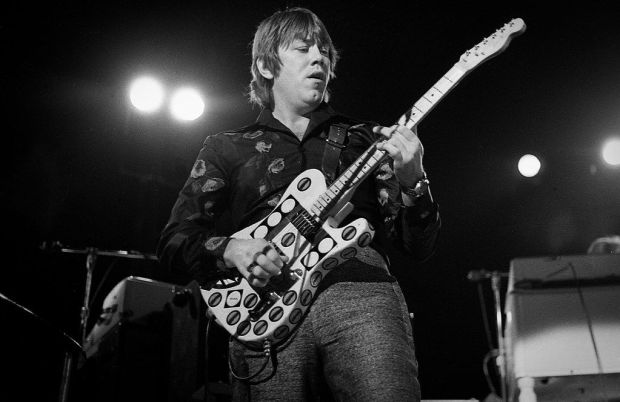
“The Terry Kath Experience” gets its title early on in a comment about how a power trio of that proposed name led by Jimi Hendrix’ favorite guitarist may have been quite the ticket had Kath left the chart-topping septet (he was in the process of forming such a “TKE” group just before he died). But this affecting documentary also give proper due to the man himself. Directed by none other than his daughter how could it not be? Michelle Kath Sinclair was but a toddler when her dad passed, and the film takes the form of a personal quest to know him better (and retrieve a cherished guitar of his) as well as exploring his career. She visits with all six of the others in the original band as well as their manager/producer James William Guercio and his widow Alicia Kath.

The quest to retrieve Kath’s many-stickered Telecaster becomes a subplot of the film.

Kath was a largely self-taught prodigy who would sit in with future Chicago bandmates at DePaul Univ. music school in the Windy City. Many local players like them were serving time in “show bands” at local night clubs. His former colleagues attest that it was “renegade” Terry who began pushing for the band to be more themselves after acts like Cream and the Yardbirds started blowing thru town. It was Kath who wrote the mission-statement song “Introduction” that kicked off their bold first album, released in 1969. A remarkable piece of writing that managed to be both accessible and complex, Kath had to describe it from his head for a bandmate to transcribe. Chicago were on to a winning combination with their punchy horn section, accomplished playing and the keen pop sense that went with it (esp. of keyboardist Robert Lamm) in the early days. Kath’s husky vocals and fierce but passionate guitar solos were the feature of many of their hits, with “25 or 6 to 4” and “Make Me Smile” being maybe the most notable.

His daughter is an appealing presence and a natural for putting his surviving bandmates at ease in front of the camera. Drummer Danny Seraphine is esp. notable in his mix of fondness and regret when looking back on Terry’s role in the band. Kath was set to try his own luck in Los Angeles before deciding to see the band thru to its early success. The whole outfit did move to L.A. in the wake of international success and Kath was the one leading the way to camaraderie, good times and fruitful recording at the Caribou Ranch, the Rocky Mountain studio and home-away-from home built by Guercio in 1972. It was here that Kath and his wife Alicia spent much time in the early years of their marriage.

In relaxed interviews with Terry’s brother Rodney and Alicia, the pair speak to their niece and daughter of a big, amiable bear of a man. He grew up with annual vacations in the country and thrived in the company of friends and bandmates at the wide-open Colorado ranch/studio. There is ample home-movie footage, and even excerpts from a television special filmed, to attest to this.

Spoiler alert: director Michelle Kath Sinclair finds her dad’s prized Telecaster at a relative’s house in Florida.

Eventually, a darker side reveals itself. (“The trappings of success trapped him,” Seraphine says). There are not-uncommon tales of drink and drug abuse and then there’s Kath’s obsession with firearms. For the life of me I’ll never understand this widespread American fixation, esp. with someone like Kath who appears to be an unviolent man. But his favorite movie was “Taxi Driver” and he often imitated Robert De Niro’s famous “You talkin’ to me?” scene.

The end came in January of 1978 when Kath repaired to his place with a member of the group’s road crew after a long night of substance intake. His companion became alarmed when the guitarist started fooling around with a handgun. Moments later, Kath accidentally shot himself in the head after removing the clip but forgetting the one bullet in the chamber.

But moving beyond this needless death, there is plenty of good stuff for fans and guitar geeks here. There are lots of great live clips (several from Chicago’s great gig at Tanglewood, Mass. in summer 1970), a discussion of his boundary-pushing “Free-Form Guitar” from the first album (recorded several months before Hendrix’ famous Woodstock finale), and the guitar quest thru several homes of friends and family that will delight fans and six-string collectors all over. (Streaming now for free “with ads” on YouTube).

—Rick Ouellette

I am the author of “Rock Docs: A Fifty-Year Cinematic Journey.” To look at a 30-page excerpt, please click on the book cover image above.

I Have Seen the Top of Rock Mountain: The Clash live in Boston, Sept. 1979

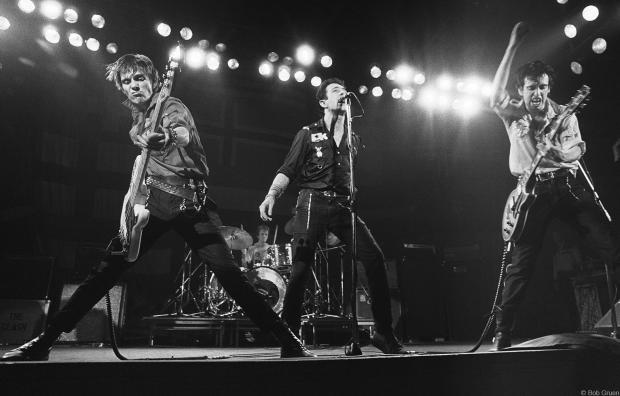
One of the great action shots in rock history, ace photographer Bob Gruen took this snap of the Clash at the Harvard Square Theater in Cambridge, Mass., at the Feb. 1979 show mentioned below.

If I was backed into a corner for an answer as to what was my favorite concert ever, I’d have to say the Clash at the Orpheum Theater in Boston, 42 years ago tonight, in September of 1979. Opening acts were the Undertones fresh out of Derry, N. Ireland and R&B legends Sam & Dave (both great). The Clash had made their area debut about seven months earlier at the old Harvard Square Theater, a legendary gig ‘round these parts. However, the band’s stand-offish attitude kinda dampened their appeal at that show.

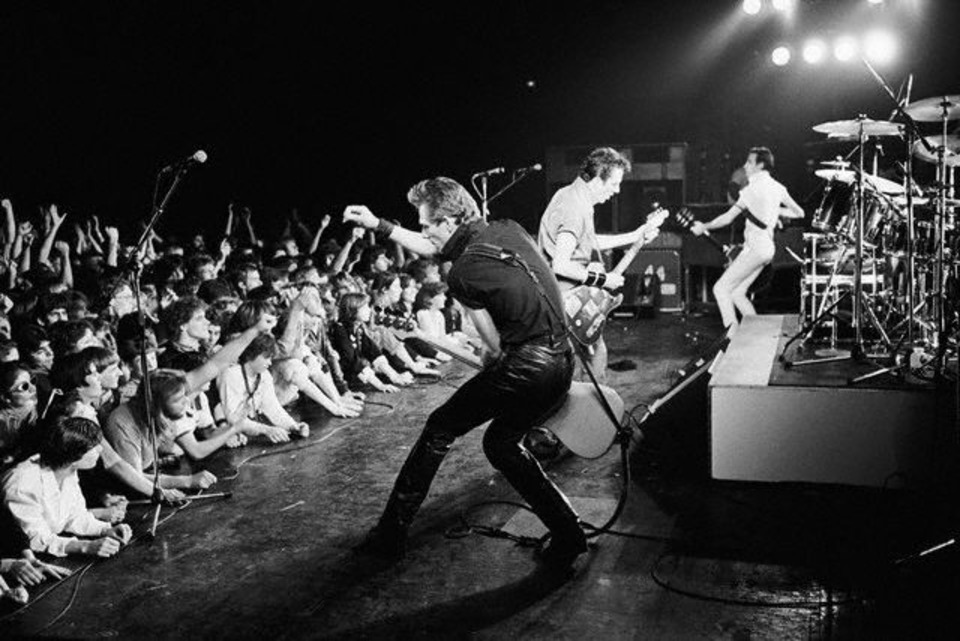
Not so on 9/19/79. By that time their first LP had been finally released in America (re-configured to include a fistful of their classic singles) broadening their fanbase while their collective surly demeanor had been replaced by more of a band-of-the-people image. That become clear three songs into the set during (appropriately enough) “Complete Control.” (My memory has since been aided by a bootleg cassette of the show that I purchased in the 90s). Near the end of the song, Joe Strummer’s ad-libbing to the “C-O-N Control” chant abruptly ends and there is a sudden roar from the crowd (at 9:55 of the above-mentioned recording, seen below). The brutish security guards employed in those days by monopolistic rock promoter Don Law were manhandling fans streaming down the aisles for a closer look. The guards were not used to being challenged, least of all by a relatively scrawny lead singer from England, who had just come ten rows deep (with his Fender in tow) to confront them.

After the commotion, Strummer went back to the stage and went all Popeye Doyle, demanding to know who’s-running-this-operation? When the name Don Law was called out it was a bit of a laugh: the Clash’s version of “I Fought the Law” was released as a single two months earlier. “Where’s Don Law?” Joe repeatedly bellowed. When the man didn’t show, he declared the area in front a stage open to all and the crowd went nuts. The goonish guards were obliged to stand down.

The Clash were spectacular that night, playing every song as if their lives depended on it, with a passion and ferocity seldom equaled. Guitarist Mick Jones further endeared the band to the fans by allowing, “This is a good crowd for us, don’t think we don’t appreciate it.” Mick got off another good one later, while introducing his song “Stay Free,” saying it was about a couple of friends who were sent to the nick. “That’s the penitentiary to you lot.”

The cassette ran out before the end of the show, but I do remember the first encore, a new reggae number where Strummer came out from the wings swinging a train-signal lantern. This was “Armagideon Time” which would soon be released as a b-side to the title track of the album that would break them in the U.S. From that same month (Dec. 1979) that “London Calling” was released, here’s them doing “Armagideon” at the benefit concerts for Kampuchea. RIP Joe, there will never be another.

The Times that Bond: The Clash on Broadway at 40

The Clash and their epic residency at Bond’s International Casino in Times Square, was that really 40 years ago this month? Yup, I was one of the lucky 30,000 or so who were there for one of the 17 nights. It would have been the same number of fans over only eight shows before the NY Fire Dept. reduced the capacity. Not the Clash’s fault it seems, they honored ticket holders by doubling the amount of shows when the overselling promoters were found out.

Oh, to be 23 years old again, am I right? Me and my two friends who had gotten tickets had the date changed because of this snafu. Our plans for a Saturday night gig and a neat New York City weekend were upended when the expanded schedule had our tickets transferred to the following Monday night. How we even found this out in the pre-Internet age is lost to history. All I recall now is scheming with my partner from work, tooling around in our van that we drove for the General Services dept. at Charlestown Savings Bank in Boston. He did me a solid by agreeing to speak to our manager on Monday morning and say that I was stuck in NY for some obscure reason and/or sick and would not be in until Tuesday.

The Clash at Bond’s, June 1981. From l to r: Paul Simonon, Joe Strumer, Mick Jones. Unseen: drummer Topper Headon

As usual, we had the van’s AM radio turned to WILD, the late lamented soul music station that broadcast out of Roxbury, the city’s predominant African-American neighborhood. Suddenly, the Clash’s “Magnificent Dance” came on, a rare record from a white act for that station. I excitedly told him that this was the group that was drawing me away for a punk-rock weekend in the Big Apple. I was a bit disappointed that this was the instrumental dance mix of ”The Magnificent Seven,” sans Joe Strummer’s witty white-guy rapping. But it struck a blow for the black-white-unite impulse that was floating around back then as musical elements of rock, funk, reggae and rap seemed to be in allegiance.

The weekend was a blast. Those who were there will remember the vital (and often tense) scene that held sway in front of Bond’s as lingering confusion over what tickets were for what day meant cops and crowds and media coverage almost every day. The famous Times Square NYPD sub-station was directly across the street. At one point, Mr. Strummer walked thru the crush to get to the venue’s front door, the closest I would come to meeting him.

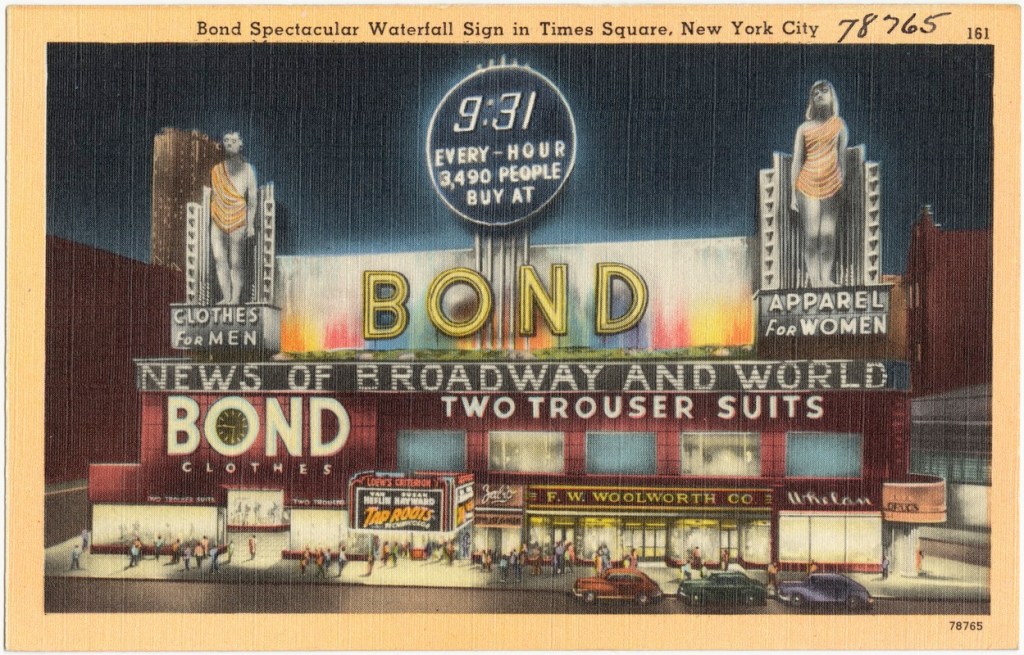
Bond’s Casino was an iconic place with an interesting backstory. In the !930’s and 40s it was a large supper-club type establishment. Under the same name it was later a clothing store with its gargantuan signage being a Times Square landmark, the O in the word Bond often sporting a clock to go along with the miles of neon, garish statuary and news ticker. By 1981, it had converted back to a nightclub but that wouldn’t last for much longer.

The Bond’s building was quite an attraction in and of itself back in the day.

Inside the club on Clash night, I remember mostly the winding, undulating ramp that led to the concert room. I also recall hat the 1750 peeps in attendance did a fair job of filling the place, I couldn’t imagine double that number as the unscrupulous promoters wanted. I enjoyed the opening act (the legendary Slits) but also remember being pretty disappointed with the Clash’s performance that night. It seems a bit like false-memory syndrome now. This was the fifth out of six times I saw them and maybe it was the law of diminishing returns. The second time (at the Orpheum Theater in Boston with no less than Sam & Dave and the Undertones opening) was maybe the best concert ever in my personal history. I thought the guys were sort of defaulting to the dub-wise sounds of that era’s edition of the band, but the typical setlist from then doesn’t really bear it out. They opened with the blazing 1-2 punch of “London Calling” and “Safe European Home” while the Mick Jones-sung hit “Train in Vain” and the current rave single “This is Radio Clash” soon followed. But songs from the current triple-album (the eclectic and meandering “Sandinista!”) seemed to dominate the middle of the set. But I like “Sandinista” a lot more nowadays and a time-travel loop back to that gig would surely find me deliriously entertained.

Live at Bond’s, June 13, 1981

The Bond’s residency would find the Clash not only at “The Crossroads of the World” but at a career crossroads as well. They were reaching a bigger audience and not always in a way that suited some of them. Joe Strummer, God bless his soul, was incensed when some of the group’s adventurous choices for opening slots (notably Grandmaster Flash) were mercilessly booed. The group’s radical roots could only take them so far and the attracting of a more mainstream fan base did not necessarily bring the enlightenment they sought.

But that’s a story for another day. As for me, I went straight from Bond’s to Penn Station ten blocks south and caught the red eye train back to Boston. It reached Boston just in time to stumble into work Tuesday morning where I got the expected comeuppance from the boss man. So I stood there and took it and lived to rock another day.

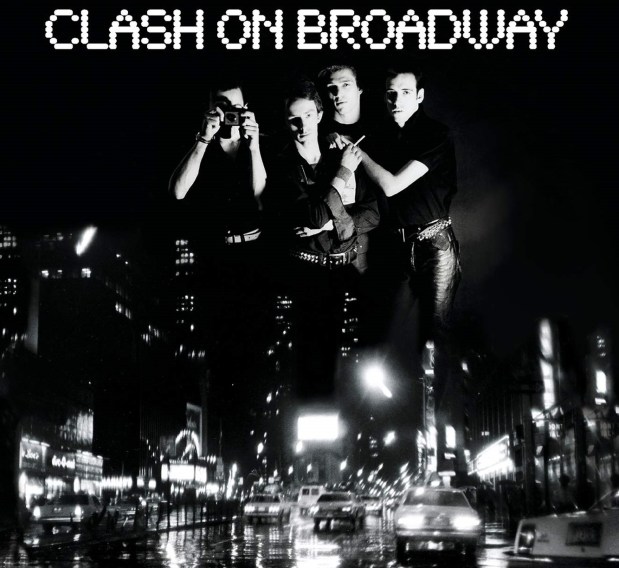
A four-minute snippet of Don Lett’s “Clash on Broadway” footage

The closest thing to a documentary record of this event is the 20 minutes of Don Lett’s unfinished “Clash on Broadway” project. This is available on YouTube in three parts or as a bonus feature on the DVD of Lett’s exemplary Clash doc “Westway to the World.”

Rick Ouellette is the author of Rock Docs: A Fifty-Year Cinematic Journey. Click on the book icon above to find out more!

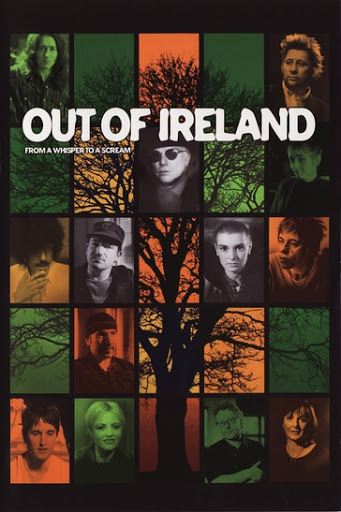
Rock Docs Spotlight: “Out of Ireland: From a Whisper to a Scream” (2000)

Irish musicians have had a broad, if rather diffuse, impact on the history of pop music. The relative social and geographical isolation of the Emerald Isle until well into the Sixties may have had a lot do with that. Since then there has been a smattering of superstars (Van Morison, U2, Phil Lynott of Thin Lizzy), notable genre artists (blues-rock master Rory Gallagher, indie-rock darlings the Cranberries) and iconoclastic greats like Sinead O’Connor and the Pogues’ Shane McGowan.

Originally released in 2000, the entertaining and encyclopedic “Out of Ireland” was a three-part program produced for Dublin-based RTE television and its 158 minutes should satisfy even the most ardent fan of Irish popular music. Director David Hefferman starts with an overview of the country’s lively but derivative show bands that dominated the music scene while rock ‘n’ roll came to the fore in the Fifties and early Sixties. But the influence of the Beatles and other British Invasion groups on the other side of the Irish Sea could not be denied, though the response at first came in fits and starts. Tellingly, it was from a wide range of emerging acts, from the gritty garage rock of Van Morrison and Them (whose “Gloria” would be a starter-kit tune for innumerable bands to follow) to the lightweight pop of Gilbert O’Sullivan and Dana, whose candy-coated “All Kinds of Everything” won the 1970 Eurovision song contest.

A ten-minute clip of “Out of Ireland,” covering the punk years.

There is a lot to get to here and Hefferman gets to a lot of it, even if things here feel a little puddle-deep at times. He does counterbalance this tendency by returning to major artists like Van and Rory and U2, at various points and stages of their careers. One interesting point that gets echoed at different junctures is that many Irish rockers reached back past the show bands to find inspiration (even if by osmosis) to the greater example of traditional Irish music, literature, and storytelling. Morrison’s observational/impressionistic lyrics on his landmark Astral Weeks LP echoed James Joyce’s ability to lend grandeur to the everyday. Thin Lizzy’s first hit was a rocked-up version of the traditional “Whiskey in the Jar.” The progressive folk band Horslips dressed up archetypal Celtic themes in glam-rock finery while the Pogues spoke (both wildly and poignantly) to the modern Irish diaspora. There’s a keen sense that Irish rock often finds that bittersweet, happy-sad symmetry so typical of Irish culture.

https://youtu.be/d2OcIqwmSaY
This video of Phil Lynott’s “Old Town” (featured and discussed in the film) shows both the charismatic and troubled side of the Thin Lizzy frontman, who died at age 36.

The film, aptly sub-titled “From a Whisper to a Scream”, does well to ground this thematic thread from the Erie as a lightly-populated backwater to dynamic player in the global pop scene with regularly placed commentary from creative consultant (and editor of Ireland’s music magazine, Hot Press) Niall Stokes. This is esp. advisable when you’ve got a rhetorical road race of musical personalities like the flinty Van the Man, the sharp but soft-spoken Sinead, and the road-hogging conceits of the notably self-regarding Bono and Bob Geldof, who continues to over-estimate the pre-Live Aid influence of his band the Boomtown Rats.

The Cranberries’ lovely “Ode to My Family,” another video steeped in rich Irish ambience

Speaking of screaming, “Out of Ireland” also provides a good overview of the country’s contributions to the punk revolution, with segments on Belfast bangers like Stiff Little Fingers, the Undertones and the Blades (bands that really had something to yell about in that town during The Troubles) and Dublin’s Radiators from Space, whose guitarist, the late Philip Chevron, later joined the Pogues. There are also sidebars on important Irish-English performers of the era (Johnny Rotten, Elvis Costello, Boy George) and 80s bands that never broke out bigtime but are still plugging away, like the Saw Doctors and Hothouse Flowers.

Of course, U2 are still plugging away as well, and their international popularity does not seem to be waning anytime soon. A section towards the end of “Out of Ireland” makes the odd connection that the group’s gargantuan “Pop” and “Zoo TV” tours may be a more modern version of those old show bands (the stage show “Riverdance” is also edged into that category). I agree with that to an extent, but don’t see it necessarily as a compliment. But that’s put aside for Hefferman’s final point that although the lightly-populated island has put itself on the world music map it is no time for complacency. I think all can agree on that, even if it means overthrowing the “show bands” all over again.

If you like my music documentary posts, feel free to click on the book cover above right to check out a 30-page excerpt of my Rock Docs: A 50-Year Cinemtaic Journey and/or join my Facebook group simply called Rock Docs. Thanks, Rick Ouellette

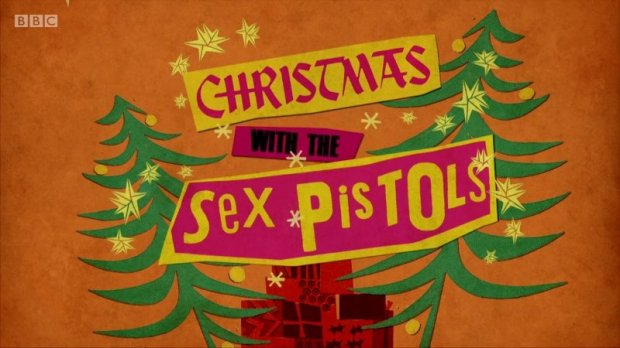
Rock Docs Spotlight: Christmas with the Sex Pistols (2013)

Few rock and roll Christmas stories are as heartwarming as the Sex Pistols’ tale of how they spent December 25th, 1977. You may well ask, huh? But look at the situation facing the England’s most notorious punk band at the end of that epochal year. Queen Elizabeth’s Silver Jubilee was celebrated that summer, with the one notable exception of the band’s blistering protest song, which took its title from the royal anthem. The Pistols’ “God Save the Queen” lambasted a “fascist regime” and an outdated monarchy that lorded over a population that needed a serious wake-up call. They had connected with a significant portion of the nation’s youth and the single is widely believed to have denied the #1 spot in the UK by industry chart-rigging at the very height of the festivities in June. Johnny Rotten and the crew had also spent the better part of a year earning their reputation as cultural enemy #1 in the eyes of Britain’s establishment.

The year wound down with a planned Sex Pistols tour, but local authorities saw to it that 27 gigs were cancelled, leaving the group in a bus that had a destination sign accurately reading “Nowhere.” That’s where we are at the start of Julien Temple’s thoroughly engaging 2013 documentary look-back. The one-hour film actually kicks off with an extended montage of hokey holiday B-roll of British holiday miscellany that shades into the darker side of that particular season: the country’s economic woes and desultory labor strikes.


Huddersfield from the hill.

It was then that the “Christmas miracle” mentioned in that montage’s ironic narration happens. The Pistols, disillusioned and all but destined to spend December 25th tooling around the rainy motorways in their Nowhere coach, got a call from the firemen’s union in the hardscrabble West Yorkshire town of Huddersfield. The firemen, who were stuck on wages of 170 pounds a week, had been on the picket line for nine weeks. They asked the band if they would be interested in doing a charity gig for the worker’s children on Christmas Day. Would they?

Here’s the complete film. Enjoy!

“Christmas With the Sex Pistols” (aka “Never Mind the Baubles”) is an object lesson in the random acts of kindness that can make our world a little better when tolerance and understanding win the day. The band’s anarchic outrageousness may have been necessary to shake up the country’s moribund state of mind, a process that would go on to reenergize Britain’s culture for the better. But it came at a price, esp. at the hands of the country’s tabloid press, led by the likes of Rupert Murdoch and his ilk. “Anything we did was transferred into a lie,” John Lydon (then Johnny Rotten) says in the film’s contemporary band interviews. “They just wanted to smear us,” he continues, “but you can’t beat the truth.” And the truth of that Christmas afternoon was that the Sex Pistols were accepted as (and presented themselves as) nothing more than good-natured benefactors, throwing an unpretentious Yuletide party for the kids (most of them grade-schoolers) with gifts and band memorabilia for all, a luncheon and a huge cake (more of that later).

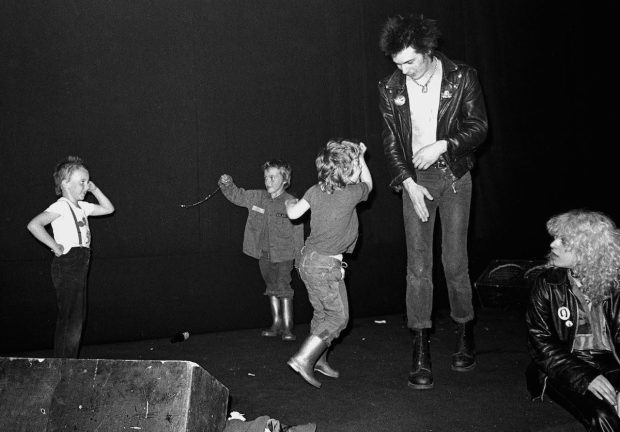
Temple smartly compliments this angle by having the three surviving Pistols from this line-up (Lydon, Steve Jones and Paul Cook) relate their own childhood recollections of the Yuletide. The relatively stable home environments of Lydon and Cook contrast sharply with the backstory of Jones, whose sour holiday memories and it’s “fucking ‘orrible” TV specials are related to his abusive “shit family” (refer to his memoir Lonely Boy for details), only partially relieved by escaping to the house of his childhood friend, Cook. Of course, John Simon Ritchie (aka Sid Vicious) is not here to tell his tale but Lydon recalls that Sid, keen on coming across as a punk tough guy, needed a “serious talking to” before the party. He reminded Sid that that kind of posturing wouldn’t work with children. Jez Scott, who was about 15 and is the only kid there interviewed here as an adult, remembers that “Sid was brilliant.” He had ended up with two Sex Pistols soccer-style scarves and Mr. Vicious politely asked Jez if he could have one as the memorabilia were not meant for band members.


Sid and kids, with girlfriend Nancy Spungen, his partner in doom, looking on.

Jez also remembered that the Pistols delivered their usual furious set, even including their anti-abortion tirade “Bodies.” But the children, being “natural anarchists,” loved them and enthusiastically started a cake fight with the ample leftovers of the featured dessert. Johnny Rotten, as the lead singer, was apt to lean over the front of the bandstand or wander into the audience. So he soon had his head covered in frosting, much to his own delight. “It had all gotten a little too serious” by then, he recalls of the atmosphere surrounding the group. Both band members and a couple of greying guys who walked nine miles to see the night show, talk of the fleeting days of “punk unity” and the good vibes that permeated this gig. Near the end of this piece, Temple treats the true-blue Pistols fan to a chunk of great footage from the evening “adult” show. These performance clips are of particular interest as it was the band’s last UK show in their original run. Their chaotic U.S. tour soon followed and ended with the group’s bitter break-up a mere three weeks later.

That story could (and has) filled many a magazine article and book chapter. What Temple’s shrewdly charming film does is sprinkle a little holiday magic on the band’s inglorious ending. There were many factors that contributed to that; the group’s youthful inexperience, the tabloid nonsense and an older generation’s stark intolerance, not to mention the cynical machinations of the Pistols’ manager Malcolm McLaren. It’s a loving holiday card sent to the town of Huddersfield and a fine record of a notable moment of grace for a beleaguered rock legend in the making. With all the hype scraped away, it’s simply a tale of people doing a good deed where needed, when only a lump of coal was expected.

If you like my music documentary posts, feel free to click on the book cover above right to check out a 30-page excerpt of my Rock Docs: A 50-Year Cinemtaic Journey and/or join my Facebook group simply called Rock Docs. Thanks, Rick Ouellette