I never really got into Amy Winehouse that much while she was alive and it wasn’t because I didn’t recognize her talent as a vocalist and songwriter. It was just that the aura surrounding her was already that of a tabloid train wreck by the time I caught on and I didn’t want to be party to the plan. I wasn’t exactly predicting that it would all end in tears, but it did give the appearance of being the latest variation on the all-too-familiar narrative of rock ‘n’ roll self-destruction. By 2011, Winehouse was dead of alcohol toxicity, joining the dreaded (and sometimes romanticized) “27 Club” along with Kurt Cobain, Jimi Hendrix, Janis Joplin, Jim Morrison and Brian Jones, to name just the most famous of those musicians who died at that age. Will this never end?
Only a year after her death, film director Asif Kapadia was approached by her father (Mitchell Winehouse) and her record company (Universal Music UK) to make a legacy documentary of the North London-bred retro soul singer whose “Back to Black” won five Grammys and sold in the millions. Kapadia was given use of Amy’s music and other materials but he was wary of being led into producing a “whitewash” film and asked for (and was granted) complete creative control. Kapadia went out and made a soul-searching film that looks way beyond the default image left behind of the soused, smoky-voiced singer with the beehive hairdo, tattoos and heavy mascara. He was helped by the participation of two of Winehouse’s best girlfriends from her youth and esp. by Nick Shymansky, her first manager but also a teenage companion of hers: it’s Shymansky’s many camcorder clips that show a young and astute singer-songwriter with sharp influences (Sarah Vaughan, Tony Bennett) and an ebullient personality. But she was also a girl troubled by her parents’ divorce, diagnosed with depression by age 13 and, crucially, admitted to being bulimic. Little was done about it, especially after success beckoned.
The soul-searching for this poor woman needed to arrive a lot sooner than this film. The problem of pop stars with too much fame too soon, combined with psychological issues, their own lack of impulse control and too many enablers crowding onto the gravy train is world famous. Where was the help? In an early video clip, Winehouse says “I don’t think I could handle it (fame), I’d go mad” and later sings “my destructive side has grown a mile wide.” Unsurprisingly, Mitchell Winehouse has disowned the film, specifically for saying of his daughter “She doesn’t need to go to rehab,” claiming the director cut out the last three words “at this time.” But it was precisely at that point (on the cusp of the big time, before she was stalked by a voracious media machine) that would have been the best chance for her. And bringing up her own refusal to go, in the famous “No, no, no” refrain of her mega-hit “Rehab” just doesn’t wash. All the song proves is her cleverness as a writer; it is a perfect balance between a brag and a cry for help (“I don’t ever wanna drink again/I just need a friend”).
Amy with her dubious dad
Winehouse’s popularity soon snowballed into obsessive fan and media attention, the kind of which less well-adjusted people have big problems with. Already a party girl, her substance abuse soared, especially after marrying the indefensible Blake Fielder, who had so thoughtfully introduced her to hard drugs. True, Amy was doing herself no favors but neither was there much selfless support. She is clearly heard in old recordings hoping for some guidance from her father. Even when she goes off to St. Lucia to get away from the cameras and the cocaine, her dad shows up with a TV crew, doing a reality show about HIMSELF.
Kapadia gradually and masterfully traces this sad story as the situation of everyone’s making spins out of control. That because someone is a good singer they can’t leave the house without being chased or assaulted with countless camera flashes going, speaks of an immature society that can’t help being bamboozled by fame and suffocate those who have achieved it. And sometimes the result of this unhealthy dynamic is what you see towards the end of this unflinching documentary: the horrific site of Amy Winehouse being carried out of her Camden Town house in a body bag, her frail frame, emaciated from an eating disorder, done in by alcohol poisoning. But the game goes on, even with the crushing finality of that scene. Leaving the theater I saw the tone-deaf blurb on an “Amy” lobby poster: “A star is born all over again!”
Will it never end?
My new book, “Rock Docs: A Fifty-Year Cinematic Journey” will be released later this year.
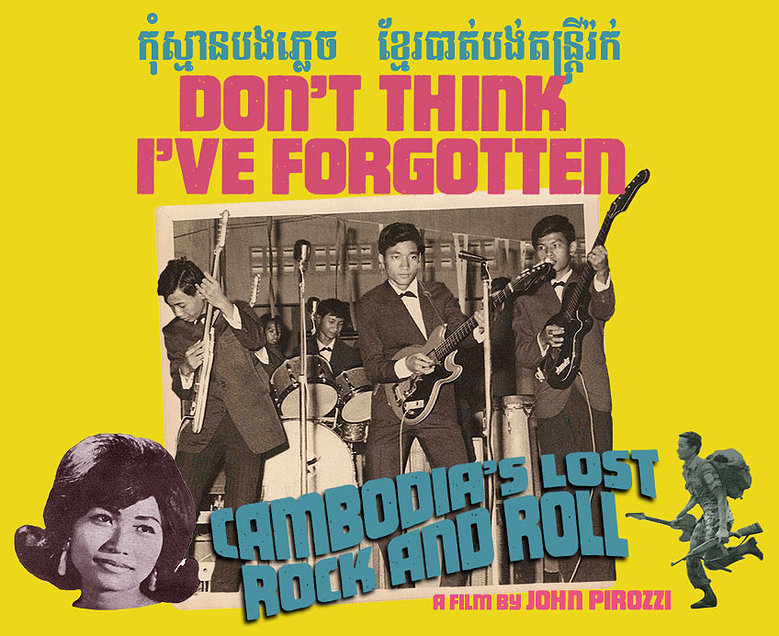
Don’t Think I’ve Forgotten: Cambodia’s Lost Rock & Roll
Directed by John Pirozzi—2015—105 minutes
The freedom to live out a rock ‘n’ roll lifestyle, taken for granted by several decades worth of young people in Western nations, may never be regarded so lightly again after viewing John Pirozzi’s mesmerizing documentary. Whether or not the viewer realizes beforehand that Cambodia had a vibrant pop music scene in the 60s and early 70s will hardly matter once he or she is drawn into the film’s orbit. What most will know going in is that this thriving youth movement was destined to be crushed, along with all else, when the homicidal Khmer Rouge forces took over the country in a terrible offshoot of the Vietnam War. Using interviews with survivors, evocative period footage and vintage vinyl, Pirozzi conjures up a regenerative tale despite the historical horrors. It’s a case of mankind’s better nature, here in the form of musical enrichment, persevering even in the face of the worst fanatical impulses this sorry world has to offer.
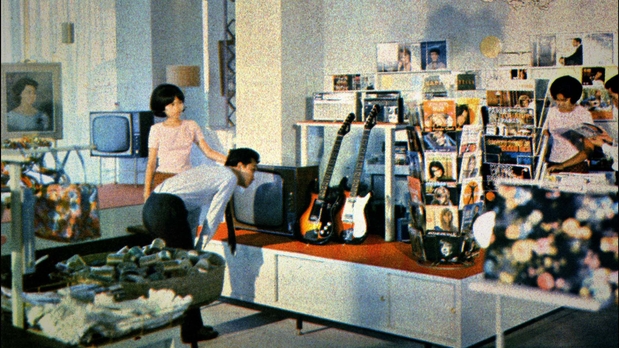
The story starts soon after Cambodia peacefully gains its independence from France in 1953. A period of relative economic success follows under the restored monarchy, led by Prince Norodom Sihanouk. The prince was a patron of the arts and a bit of a singer himself, and music and traditional culture thrived. Pop songs soon became all the rage, with vocalists both male (Sinn Sisamouth) and female (Ros Serey Sothea) becoming idols across all age groups. At first, the tunes are reminiscent of French and Afro-Cuban styles; as we get into the Sixties, the British and American rock influences seep in. There is a certain lulling appeal to this first part of the film. The capital Phnom Penh is a vision of blossoming trees and bright boulevards, towering temples and lively clubs. Especially when the soundtrack features the keening, ethereal tones of the woman singers, the sights and sounds float by like an exotic dream.
“When we were young, we loved to be modern,” one of the participants says right at the start. It is a simple as it is heartbreaking, knowing the nightmare that this dream will morph into. Still, it is fun to learn of the different musical artists and their evolution through the better part of twenty years. News that the war in neighboring Vietnam is spilling across their border comes at first in brief segments. Prince Sihanouk tries to remain neutral, even in the face of President Nixon’s bombing of his country to try and stymie the North Vietnamese communists. Still, the happy teens congregate and the music plays on into the late 60s and early 70s. Guitar bands like Baksey Cham Krong and mildly rebellious artists like troubadour Yol Aularong and sassy-girl singer Pen Ran are readily identifiable in the global pop canon.
It all starts coming apart in 1970 when the prince is deposed in a right-wing coup and naively allies himself with the Khmer Rogue. Far from being “modern,” the Khmer Rouge were pathological ideologues who, upon taking power in April of 1975, emptied Phnom Penh and other cities with the demented idea of creating a pre-industrial agrarian society—in effect turning the whole country into a big prison farm. A quarter of Cambodia’s population would not survive the regime’s four year rule, and as many as two million died from hunger, disease and summary execution in the world’s worst such event since the Holocaust. Pirozzi, as befits his subject, keys in on the Khmer Rouge’s particular contempt of artists, a group who are “close to the people” and thus deemed a dangerous challenge to their dogma. Singer Sieng Vanthy recalls how her life was saved because she convinced authorities that she had been a banana seller before the takeover.
At the end of “Don’t Think I’ve Forgotten” Pirozzi shows the present-day (and once again sparkling) Phnom Penh, with its easeful citizens, pop talent shows and stores with racks of CDs, some of them re-issues of those old albums we almost feel we know by now. Things aren’t perfect. Much like Prince Sihanouk (who was good on the arts but stymied political dissent with his secret police), Cambodia is today ruled by Hun Sen, a long-reigning strongman (and Khmer Rouge defector) who can make life very uncomfortable for his opponents. On the plus side… well, he has managed not to kill two million people.
The grace and dignity of the film’s subjects will make an even greater impression when held up against the depravity of the perpetrators. The inspiration and uplift of culture is one of the great counterweights we have against the dark impulses that lead to the violence, greed and exploitation that seems to have half the globe in a stranglehold at any one time. Like in this film, we always seem outnumbered but never give up.
My new book, Rock Docs: A Fifty-Year Cinematic Journey will be released in late 2015.
Copyright 2015, Rick Ouellette. All rights reserved.
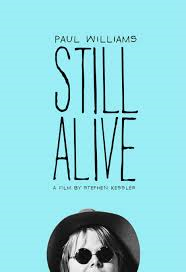
Paul Williams: Still Alive
Stephen Kessler—2011—86 minutes
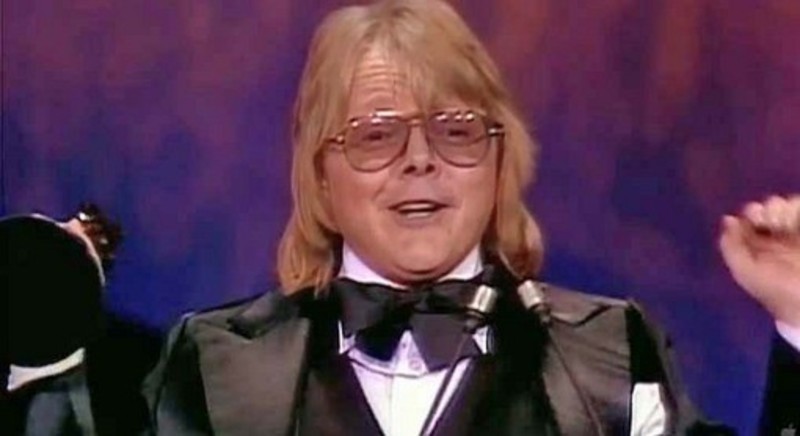
In the Seventies, Paul Williams was a fabulously successful pop songwriter and, with his famously diminutive stature and impish sense of humor, was a staple of TV talk shows and guest sitcom appearances. His songs were recorded by 3 Dog Night (“Old Fashioned Love Song”, “Out in the Country), the Carpenters (“We’ve Only Just Begun”, “Rainy Days and Mondays”), David Bowie (“Fill Your Heart”) and many others, including the Oscar-winning prom buzzkill “Evergreen.” It is not Mr. Williams who is dubious. It’s just that, as with all but the shiniest stars in the celebrity firmament, he saw his time come and go. One glance at the title of Stephen Kessler’s film will let you in on the premise. The director’s first misstep is riding the I-thought-he-was-dead conceit for the first ten minutes of the movie instead of admitting to just checking Paul’s Wikipedia entry.
“I was going to thank all the little people but then I remembered I am the little people.” Williams wins an Oscar, 1977
Kessler professes his great admiration for Williams and his work, yet stumbles over several different doc-making strategies and mostly calls attention to himself. First, he stalks the tunesmith, then makes dubious claims about how he was granted access (“Paul and I bonded over squid”), before getting to tag along to the autograph sessions and Vegas nightclub dates that keep things going for an icon of an aging demographic. Kessler’s method seems either clueless (When Williams is in the middle of an poignant boyhood anecdote about his troubled and heavy-drinking father, the director cuts in to ask him about his first talent show) or just tacky (“Paul gave me what I always wanted.. a sleepover”). Williams is a likeable enough subject, if a bit guarded, and he’s more astute than his filmic biographer—at one juncture he even explains Kessler the relative merits of either playing to the camera or keeping it cinema verite. Although Williams’ story does get out in the end, a less kitschy approach would have yielded far more interesting subtexts than a celebrity sleepover—like a look at how fans’ persistent adoration this far down the rock ‘n’ roll road is perhaps colored by their own looming mortality. Still worth a look for fans of Williams (natch) as well as for pop-culture trainspotters of a certain vintage.
My new book, Rock Docs: A 50-Year Cinematic Journey will be released later in 2015.
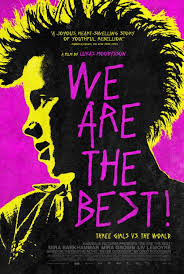
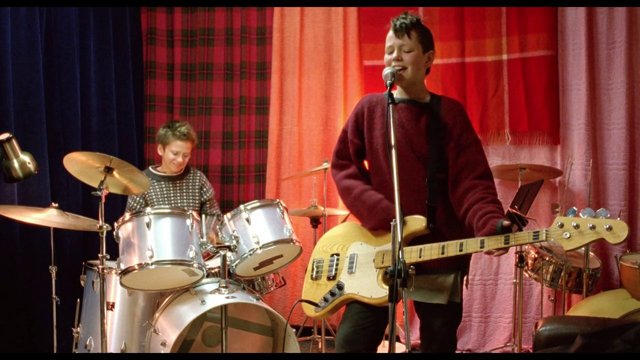
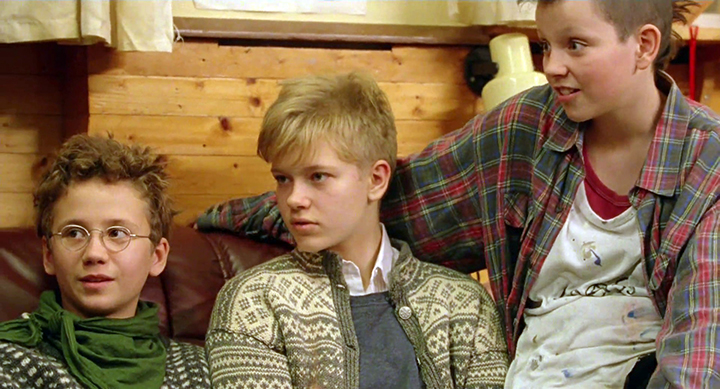
There’s nothing especially profound about this droll and sweetly rebellious indie crowd-pleaser from Swedish director Lukas Moodysson. But in its acute attention to the details of its adolescent outsiders reaching for their identity, “We are the Best” is a rock & roll coming-of-age fable of the first order. Two 13 year-old girls set out to prove that “punk is not dead” to the Olivia Newton-John wannabes in their Stockholm middle school, circa 1982. Best friends Bobo (Mira Barkhammar) and Klara (Mira Grosin) find their days alternating between boredom and the casual indignities passed down to teenage non-conformists. On a whim, they start a group, if only to take away practice time from Iron Fist, the doofus metal band of condescending older boys at the local youth center. Despite their unfamiliarity with the drum set and bass guitar left in the corner of the practice space, they start to bash out a song called “Hate the Sport” that rails against two of mankind’s greatest evils: the threat of nuclear annihilation and gym class. Sample lyric: “People die and scream/But all you care about is your soccer team”.
“The world is a morgue/But you’re too busy watching Bjorn Borg!!” Swedish punk comes of age.
Convinced of their impending greatness but aware of certain musical limitations, they shrewdly recruit Hedvig (Liv LeMoyne) an ignored girl from a Christian family who is a talented classical guitarist. In exchange for music tips, Bobo and Klara assure her that she’ll never have two better friends. The three lead characters are pitch-perfect in their roles if not always in their music. Between their first meet-up and the culminating trip with Iron Fist and two youth-center staffers to a “Santa Rock” event in a redneck provincial town (in time-honored punk fashion, the girls’ performance starts a riot within a minute), their acting captures early teenhood’s dizzying mix of insecurity and tenacity.
“We’re not a makeup band.” Bobo, Hedvig and Klara hold a practice-room confab.
Moodysson blends in all the elements without overselling a single one: the rigid delineation of musical tastes, the nervous phone calls to boys, the junk food binges, the early feeling-out of political principles. As the trailer suggests it is a film for 13 year-olds: past, present and future. That’s casting the net pretty wide but it is amazing how that age, which seems like such a trial at the time, always retains a romantic glow in retrospect. I saw it with my son Ryan (then 13 himself) during its brief U.S. theatrical run last summer. He gave it 4 out of 5 stars, despite noting that it’s no “Lord of the Rings.” Hopefully, this modest gem will find a much wider audience streaming and on DVD and take a deserved spot in the cannon of great fictional rock movies.
According to a self-imposed deadline, my next book “Rock Docs: A Fifty-Year Cinematic Journey” is due to be released in summer 2015.
Channel surfing one night, I chanced upon “Beyonce: Life is But a Dream”. My first inclination was to row row row my boat right past it, but since my latest project is a book on music documentaries I figured I must keep up on the very latest even if this is not my cup of tea. It’s not Beyonce’s brand of modern soul-pop that’s a problem for me—it’s entertaining enough even if the big-budget production and iron-grip image control makes me nostalgic for the comparable but more magnanimous talents of Evelyn Champagne King or Jody Watley in her Shalamar days. It’s not even that Ms. Knowles, as the producer, co-writer and co-director, is calling the shots here: the subject as vested partner in rock docs is nothing new and was the same for such films as “Don’t Look Back” and “The Song Remains the Same.”
But I couldn’t help but think that this movie was some sort of defining triumph for the entertainment-industrial complex. Yes, I understand how Beyonce had to overcome her childhood spent in a well-to-do neighborhood to claim her rightful place as a multi-million gazillion ultra-watt superstar. That takes a lot of hard work as well as natural talent. But she should learn to let her success take a day off once in a while. “Life is But a Dream” is stuffed to the gills with redundant and defensive declarations of self-esteem and empowerment, while the in-concert production numbers are choreographed to within an inch of their lives. The surrogate interviewer serves up cupcake questions like “When did you first realize that all you needed was yourself?” Some of her comments are more revealing than they at first appear. My antenna was full up on such observations as “I felt like I had been so commercially successful… it wasn’t enough” and “there’s something really stressful about having to keep up with it.” I guess that means if the public suddenly tired of the high-tech burlesque act she would have to return to the upper middle classes. The horror!
After Beyonce pointed out a couple of people who only “kinda” liked her show, security escorted them from the arena to protect them from fans who don’t like “haters”.
It all makes me feel a little like the guy in the SNL sketch who was roundly chastised by his friends because he only moderately liked Beyonce’s latest single. Although I don’t think it would jibe with her actual politics, her success is the show-biz equivalent of Republican Party worship of the 1% “job creators” with any opposition cheaply written off as “jealously” or the work of “haters.” The pop music business has been gutted of its middle class or at least it feels that way. All that’s left is the semi-required worship of designated A-listers like Beyonce because that’s the American way. Aspiring singers who want a piece of the action can enjoy toiling in obscurity or maybe getting an assumed big break on something like “American Idol” or “The Voice” and be handpicked by other celebrities sitting in judgment. Otherwise, there’s no more room at the top.
(Interestingly, the unquestioning veneration of musical artists can be just as rigid on the opposite end of the pop’s socio-economic ladder. More on that in the next installment of Dubious Docs).
My next book, “Rock Docs: A Fifty-Year Cinematic Journey” will be published in 2015
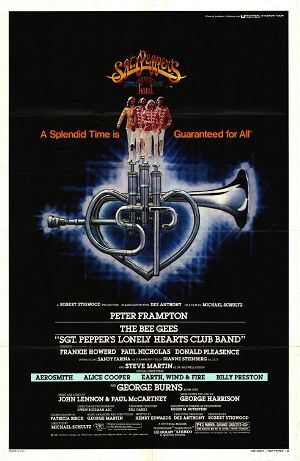
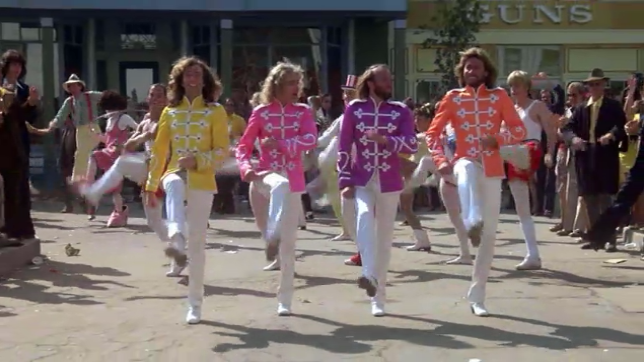
The $1 VHS Film Festival continues with 1978’s misbegotten Sgt. Pepper’s Lonely Hearts Club Band. I first got interested in the film (I had only seen bits of it on TV) after a lengthy and absorbing look-back piece by Clark Collis in a 2001 issue of Mojo magazine (discussed below). At the time it was unavailable on home video and down to its last couple of prints. So I figured if I ever came across a used tape it would be priced at either fitty cents or $30, depending if the seller knew what he had. So I when I spotted it for a buck at a used record store, I did not feel hard done by. It has since been issued on DVD and is available on Amazon for $6.66, a perfect price point for that company, if you catch my drift.
At this late date, it doesn’t seem that the status of Robert Stigwood’s white-elephant film musical of the Beatle’s most famous album will ever change much. Sgt. Pepper the movie seems forever suspended between being a forgotten fiasco and a potential cult classic, with little momentum left to nudge the needle either way. The Mojo article tracked the utter hubris of impresario Stigwood and his top-drawer clients who were recruited to star in the film and sing most of the numbers: Peter Frampton and the Bee Gees. In 1977 these were musical artists who were riding very high, the former with his blockbuster live LP Frampton Comes Alive and the latter with the Saturday Night Fever soundtrack.
All involved apparently believed that Beatles’ generational game-changer (all of ten years old at that point) was already forgotten by younger kids and that their film version would replace it in the minds of future generations. Moreover, Frampton said at the time that his role would likely lead to his becoming a movie star on the level of a Robert DeNiro. Along with this unearned arrogance, this work also comes across as a by-product of a sort of collective cocaine psychosis that gripped certain sectors of the movie and recording industries during that era. It didn’t seem like anyone was straight enough to have a coherent vision about the final product, instead they just rode the Beatles’ military-style coattails right down into a ditch.
If you think these clothes are painful to look at, just try prancing around in them!
With its candy-colored costumes, overstuffed production numbers and fructose-encrusted goodies-vs.-baddies storyline, Sgt. Pepper is so icky-sweet that I felt a tummy ache coming on before the end of the first act. But once your eyes adjust to the gaudiness and your brain dials down to the film’s bottom-scraping sensibility (Mean Mr. Mustard is stealing the original Sgt. Pepper heart-shaped flugelhorn that ended World War One!) it’s not all bad. After all, you have a bumper crop of stellar Beatles tunes (mostly from Pepper and Abbey Road), many sung by a trio of brothers who, before their disco phase, were bona fide purveyors of 60s progressive pop. And the wacky visual effects are a guilty pleasure, even if they look like they were conceived by someone who was dosed with some of that bad brown acid left over from Woodstock.
Problem is, aside from the ongoing narration of Heartland mayor Mr. Kite (an amiable George Burns) it’s all music. Somewhere, a decision was made that the Brit and Aussie accents of the four stars made dialogue a no-go. That leaves them to otherwise mug and mime between singing parts and Charlie Chaplin these guys are not. Without any speaking lines, what plot there is gets cobbled together by creating scenes to fit the lyrics of disparate songs, a tricky task that the hapless director Michael Schultz is not often up to.
Tonight you did not swing successfully.
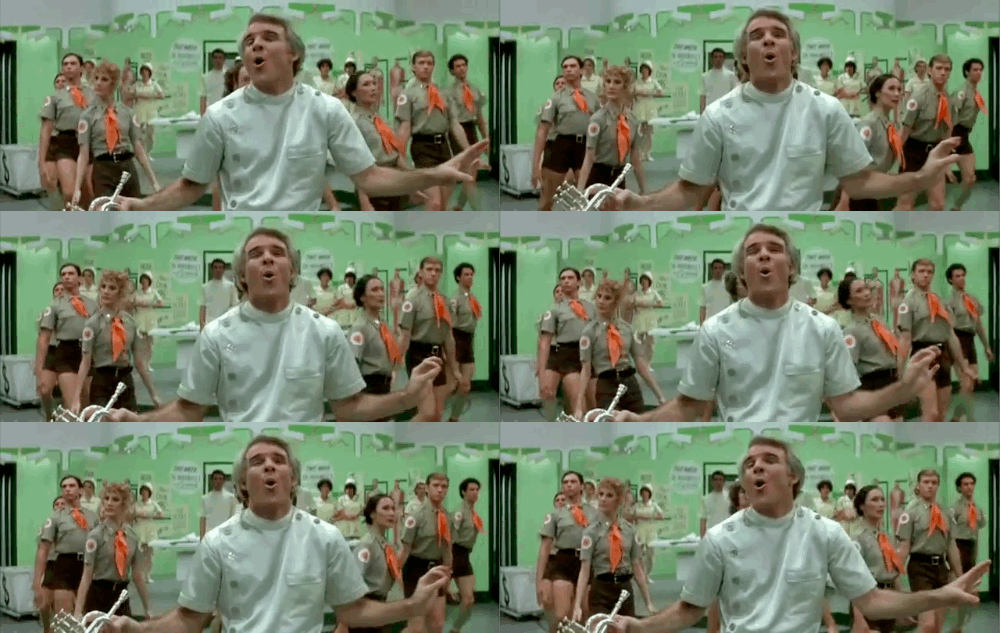
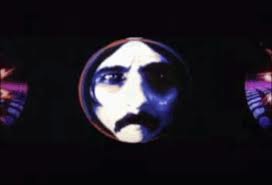
Watching Steve Martin applying his wild-crazy-guy shtick to “Maxwell’s Silver Hammer” or Alice Cooper over-enunciate “Because” from inside a God bubble are one-and-done experiences. Obscure R&B singer Diane Steinberg does fine with “Lucy in the Sky with Diamonds.” But various songs by squeaky-clean newcomer Sandy Farina as Strawberry Fields, the girlfriend of Billy Shears (Frampton) fall completely flat—she croons “Here Comes the Sun” and her namesake tune to little effect. (The utter lack of romantic chemistry between her and Peter doesn’t help matters).
As soon as they let him out of the bubble, Alice headed back to the golf course.
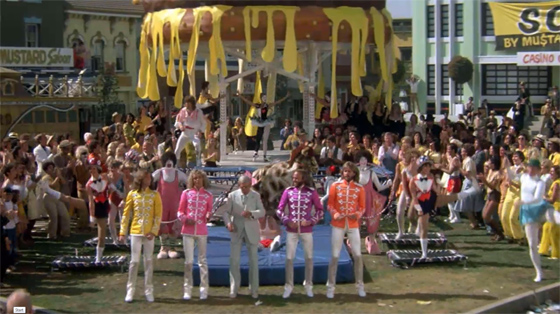
Nowadays, the only songs from the soundtrack you’ll hear on the radio are Aerosmith’s “Come Together” and Earth Wind and Fire’s slinky funkification of “Got to Get You into My Life.” George Martin, the film’s musical director and only real connection to the Fab Four (unless you count Billy Preston), regretted afterwards that they didn’t take more chances with the material. They had the Bee Gees play it too safe, though there are some occasional treats, like Robin Gibb’s pensive “Oh! Darling.” But after our heroes have dispensed with a succession of silly-ass villains (whose brainwashing motto “We Hate Love, We Hate Joy, We Love Money” was later purchased by a Wall St. consortium) and we get to a “Sgt. Pepper” reprise finale featuring dozens of movie and music stars brought onto the Hollywood backlot, many filmgoers must have been wondering why they didn’t just stay home and play a few Beatle records instead.
By this time, it was too late to call the whole thing off.
The movie opened to a withering volley of contemptuous reviews (Paul Nelson in Rolling Stone: “a film upon which every major decision is wrong”) but did make back it’s $18 million production budget and then some, largely thanks to foreign distribution and impulse purchases of the soundtrack album. While Robert Stigwood did end up making a profit, the film’s pariah status with the press and US/UK audiences set him back as a producer until 1996’s Evita. Sgt. Pepper also effectively ended the “acting careers” of Frampton and the Gibb brothers, while poor Sandy Farina never ate lunch in that town again. A similar cinematic exercise, Julie Taymoor’s 2007 Across the Universe, may have had a more talented director and a more plausible look, but also suffered from an awkward literalism and left behind a trail of mixed reviews and red ink. Consider this as an object lesson to “leave well enough alone,” a favorite old adage of mine that seems to have fallen out of favor in modern times. Fact is, the Beatles’ music is so vivid and timeless that it carries its own inner-eye visual legacy in the minds of both baby boomers and many others in generations that followed. Just “Let it Be” already.
Have you heard about my book “Rock Docs: A Fifty-Year Cinematic Journey”? It’s an alternative history of rock ‘n’ roll, seen through the prism of non-fiction film, with over 170 titles reviewed. You can check out a 30-page excerpt at http://booklocker.com/books/8905.html or by clicking on the book cover image above. If interested in purchasing, you can contact me directly for a special offer and free shipping! Thanks, Rick.
rick.ouellette@verizon.net
Sixteen year-old Diane Lane as Corrine “Third Degree” Burns
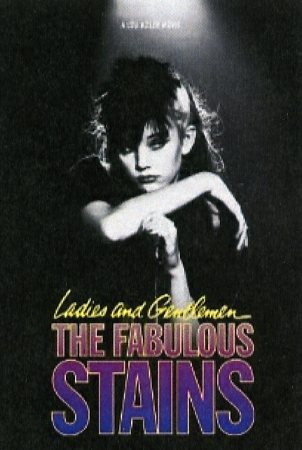
Sometimes there’s nothing quite so true as a good fiction. This saying came back to me while working on my forthcoming book on rock documentaries. Concert videos, festival films and artist biographies may preserve milestone moments and excavate the personal backstories beloved by fans. But sometimes a novelistic approach and fictional characters can allow a filmmaker to better plumb the aspirations and struggles of musicians without that overlay of hero worship that can mark a non-fiction treatment. (Some fictional bands find that cinematic notoriety may lead to success in “real” life, most notably with Spinal Tap but more fleetingly with acts like the Commitments). I recently came across a DVD of the long-obscure 1982 film “Ladies and Gentlemen, The Fabulous Stains” in the music documentary section of a library. So that’s one more “lost” rock film I can cross off my list. Be patient, “Slade in Flame”—you’re next!
Mislabeled it may have been, but “The Fabulous Stains” does hit on some timeless truths concerning the low end of the music industry food chain and youthful discontent in a troubled economic area. The director, music mogul Lou Adler, was known to dabble in film, having produced the perennial midnight movie favorite “Rocky Horror Picture Show.” Maybe he thought cult-classic lightning was going to strike twice. The story arc of the film even suggests as much: a trio of teenage girls, helped along by an ambitious female news anchor, become an overnite sensation, their confrontational brand of girl power immediately attracting hordes of copycat fans. Instead, “The Fabulous Stains” received only a brief theatrical release, afterwards being seen occasionally on basic cable or the odd VHS copy before its partial re-discovery as a seminal inspiration for the riot grrrl movement.
There’s a fair amount to like about this work, most notably an extremely young Diane Lane and her incisive performance as Corrine Burns, recently orphaned after the death of her mother. During a local news report on her and her sister Tracy (Marin Kanter), Corrine gets fired from her crap job while cameras are rolling. She and Tracy, along with their similarly disaffected cousin Jessica (a 15 year-old Laura Dern) find an escape route out of their dead-end town via the ramshackle tour bus of faded hard-rock act The Metal Corpses. The conceited frontman of this has-been group is played by the Tubes’ Fee Waybill—a bit too convincingly for his own good, it could be added. He doesn’t care much for the Looters, the upstart English punk band that’s been opening his shows (the feeling is more than mutual) and the Stains are invited on the bus as a hedge. But when disaster befalls the Corpses, the two bands left standing become tourmates and eventual rivals.
It should be noted that the Stains barely qualify as a band. They don’t have a drummer, have only rehearsed three times (“but they were long rehearsals,” one of them notes) and couldn’t be counted on to come up with a set list. What they do have is plenty of nerve and behind the steely resolve of Corrine (and Lane’s searing performance, which totally sells it) become an emblem of youthful self-determination in tough times. Her confrontational performance rant, while clad in skimpy underclothing and sporting a skunk hairdo and Ziggy Stardust make-up, is consciously promoted by the woman newscaster, making the Stains an instant phenomenon across the proverbial “tri-state area” (apparently West Virginia, Pennsylvania and another one TBD). But the real wild card here is the Looters, who come across like a great lost supergroup of the early 80s. I mean, blimey, they got half of the Sex Pistols (guitarist Steve Jones and drummer Paul Cook), the Clash’s Paul Simonon on bass and ace character actor Ray Winstone as the dynamic lead singer. In the clip below, Diane Lane’s Corrine sees her own aspirations reflected back to her in the Looters torrid performance of their signature “Join the Professionals.”
Rock film aficionados will recall Ray Winstone as Kevin in 1979’s “Quadrophenia”
In less than a week after this hometown scene the Stains have amassed legions of followers and Corrine becomes an imperious star ready to brush aside her love interest Winstone and steal his best song. But no matter, is there anybody out there who would want a movie like this to last longer than 90 minutes? Under Adler’s direction and Nancy Dowd’s generally sharp screenplay, “The Fabulous Stains” gets a lot of things right: the dullish deadweight of passed-over towns, the resentments and empty hours of musicians touring by bus, the need for outsiders to make their mark in the world. But in the minds of many potential admirers, the skunk hair and face paint probably identified the Stains with such terminally uncool MTV one-offs as Kajagoogoo. Yet fate is kind to many films seen retroactively as ahead of their time and if you live in the New York City area you have a chance to do what few others have—see “Ladies and Gentleman, The Fabulous Stains” in a theatrical screening. The BAM Rose Cinema at the Brooklyn Academy of Music is having a “Punk Rock Girls” film series until June 1st and it will be playing on May 31st. Full schedule here: http://www.bam.org/film/2014/punk-rock-girls
In Japanese director Nobuhiro Yamashita’s endearing 2005 film “Linda Linda Linda”, an all-girl band, scheduled to perform at their high school cultural festival in three days, have to start from scratch when two members drop out. Happenstance replaces ambition as they get the idea to perform three songs by Tokyo punk band Blue Hearts (including the 1987 hit “Linda Linda”) after hearing them on a mislabeled cassette and then recruit Son (Doona Bae), a half-comprehending Korean exchange student, after deciding that the next girl they see passing by will be asked to join as vocalist.
“Do you want to do a band?” The wonderful Doona Bae as Son, who suddenly finds herself a rock singer, along with (left to right) bassist Nozomi (Shiori Sekine), drummer Kyoto (Aki Maeda) and guitarist Kei (Yu Kashii)
This diffuse, amusingly minimalist movie is as much a nostalgic dream of the end of high school as it is a salute to the sisterhood of the electric guitar. “When we grow up, we won’t stop being kids,” promises the presenter of a school camcorder crew who pop up here and there to give context that the band is too busy practicing to provide, while both Son and Kyoko are also dealing with would-be boyfriends whose formal and awkward kokuhaku (confessions of love) are delivered at inopportune moments. Trying to squeeze in one last rehearsal at the pro studio of Kei’s older ex-flame, the girls finally succumb to exhaustion. Almost sleeping through their time slot, there’s a rain-soaked dash back to the school where the drenched but still adorable quartet have their victorious moment, made all the more effective by the underplayed reactions of the film’s other characters.
I couldn’t find a video clip with the subtitles, but the slow part at the start goes “Like a rat, I want to be beautiful/Because there’s a beauty that can’t be photographed” which probably sums up high school for a lot of folks.
Now that Doona Bae has crossed over into stardom on these shores (she was recently seen in “Cloud Atlas”) maybe there will be more recognition for this overlooked gem.
Far from the one-time triumph won on a high school gymnasium stage, these last two fictional bands have long histories to contend with as they embark on the inevitably fraught undertaking called the reunion tour. In “Hard Core Logo,” Bruce MacDonald’s gritty faux-documentary from 1996, a band of the same name agree to a five-city trip of western Canadian cities after getting back together for a benefit show for a fellow musician and mentor, seriously injured (or so it would seem) in a shooting. The thrash-happy HCL are led by mohawked Joe Dick (Hugh Dillon, leader of the real-life Vancouver group the Headstones) the volatile but charismatic type well known in punk rock circles. His rough-hewn integrity has often been at odds with his handsome lead guitarist Billy Tallent, who has returned north from L.A. where he is being considered for a spot in a mainstream act with a popular chick singer.
Hard Core Logo (l to r) Callum Keith Rennie (as Billy Tallent), Bernie Coulson (as Pipefitter), Hugh Dillon (as Joe Dick) and John Pyper-Ferguson (as John Oxenberger).
Off they go in their converted box van through the Canadian Rockies, hashing over the past and wondering if there’s one last shot at glory for a band with tunes like “Who the Hell Do You Think You Are” and “Rock and Roll is Fat and Ugly” and whose stage show features the front line happily spitting on each other. Ontario native McDonald (who had previously made “Roadkill” and “Highway 61”) brings a knowing north-of-the-border sensibility to the proceedings and is himself a character from behind the lens, often heard kibitzing with the band members. An honest appreciation of the Western provinces also gives the film an appealing regionalism, like when a band member comments on the receptive Calgary rock fans as compared to the snooty L.A. crowd or a “chain-smoking Quebec separatist” audience.
Although the film’s pointed realism makes you figure early on that things won’t end well, McDonald spices up the proceedings with stylistic touches like variable-speed editing and sound mix trickery (there’s even an LSD party scene) that keeps things skipping along. For a film that has been voted one of the best ever produced in Canada, “Hard Core Logo” spent a long time unavailable on home video, but is currently available online to see in full. Catch it while you can.
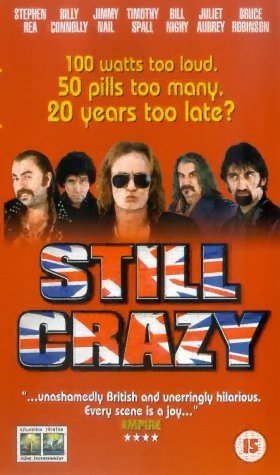
Finally, there’s “Still Crazy” from 1998, another very likable but less-noticed entry of this genre. Strange Fruit were a 70’s band from England whose in-fighting and substance abuse stymied their chances for superstardom. What are the chances?! By way of explanation, the film opens with the straw that broke the group’s back (festival gig meets ill-timed electrical storm) before fast-forwarding twenty years to the mid-Nineties where a chance meeting sets in motion plans for a reunion tour. A memorable meditation on rock’s mid-life crisis, and a cock-eyed tale of redemption, follows along with it.
Twenty years after that fateful festival, Tony Costello, the band’s keyboardist and center of gravity played by Stephen Rea, runs into the admiring son of the original promoter and learns of plans for re-booting the event. Willing to suspend his condom vending machine business to put to rights the Fruit’s unfinished business, Tony first meets up with the still-fetching Karen (Juliet Aubrey), the band’s former Girl Friday, who ditches her corporate job for a chance to be their manager. In witty sequence, they round up bassist and founding member Les (Jimmy Nail), the flamboyant but insecure lead singer Ray (Bill Nighy) and incorrigible, taxman-dodging drummer Beano (Timothy Spall). Inviting himself back in the fold is Hughie (Billy Connolly), the band’s wildman road manager and the film’s droll narrating voice.
Director Brian Gibson culled plenty of sly ensemble comedy from this crack line-up of Boomer-aged likely lads. Mainly valued as a supporting player, the great Bill Nighy is the nominal lead here as the aristocratic Ray, recovering alcoholic and middling solo act who’s trying to revive his career and hold onto his country estate. But just as big a presence in his absence is Brian, the founding guitarist who was the once the Fruit’s leading creative light but now is missing in action. True to the outsized influence of real life rockers who die young or flame out (like Pink Floyd’s Syd Barrett, who Brian resembles in flashbacks), Rays suggests to Les that the group can’t advance so long as the brooding bassist “worships the ground that Brian vomited on.”
But press on they do. Karen’s appeal to their old record company for a U.K. university tour and a catalog re-issue gets met with a counteroffer for a round of nightclub gigs in Holland and Belgium. Soon, Strange Fruit are off on their own logo-emblazoned coach, tooling down the highways and byways of the Low Countries—at first stumbling and bumbling but soon enough, with the help of their young new hotshot guitarist, getting their act together like in this prototypical hitting-their-stride sequence.
Jumping into action as Ray’s Ninja Rock Wife is actress Helena Bergstrom. Well played!
The film’s music was co-written by Chris Difford of Squeeze and Foreigner guitarist Mick Jones and the band songs are an uncanny amalgamation of 70s glam, prog and arena rock styles (Bill Nighy and Jimmy Nail do their own singing). That is crucial because, instead of filling in clichéd character slots, the film shows a rock band just as it is, with its variable tastes, mismatched ideals, awkward male camaraderie and personal imperfections, trying to reach a united peak where each member still gets individual fulfillment. It’s not easy to hold all this together, especially as the 20th anniversary festival draws closer but fate has a way of cutting both ways. Plus, Les has an ace in the hole: a long tucked away show-stopper song, an 8-minute flag waver called “The Flame Still Burns” that would be just perfect for a certain surprise guest…
Sadly, this would be director Brian Gibson’s last film as he died in 2004, aged 59. Gibson had a knack for music-related films. True, he did helm 1980’s rather regrettable “Breaking Glass” where the strident Brit singer Hazel O’Connor rises to unlikely messianic fame, although “Quadrophenia” star Phil Daniels was very good in the role of her manager. More successfully, he later made the Tina Turner biopic “What’s Love Got to Do With It” and “The Josephine Baker Story” for HBO.
In the end, it may have been that much-lauded “The Act of Killing” was just a wee bit too radical for the Academy voters (see previous post), so for the second year in a row the statuette for best feature documentary went to a music film. The vivacious and lovable “20 Feet from Stardom” was probably as deserving a winner in what is by its very nature an apples-and-oranges competition. And thanks to the unstoppable Darlene Love, the acceptance “speech” turned into one of the night’s most memorable moments:
Ms. Love was a subject of the film and not one of the actual award winners, but when director Morgan Neville and the producers let her do her thing it could only help the already raised profile of a feelgood film that has connected with over 500,000 people in its theatrical release, great numbers for a documentary.
Exactly one year ago today, I began this blog by mentioning the recent Oscar win of “Searching for Sugar Man”, the second rock doc to win the award, the other being “Woodstock” way back in 1970. Now there are two in a row and there may be more to follow. The redemptive or belated-recognition pop music documentary has really taken off in recent years and will probably only get more popular as rock and roll’s golden age recedes ever into the past.
Sixto “Sugar Man” Rodriguez, whose luckless career as a singer-songwriter was salvaged by the unlikely admiration bestowed upon him decades later by countless South Africans or Darlene Love, whose ace lead vocals went uncredited on a #1 single in 1963 and who (along with many other studio vocalists) had to fight against forced anonymity and industry ill treatment, are just two of the better known examples of this mini-genre. “New York Doll” was when it first came to me as a distinct subset (in 2005) and there’s been many since then, with “Big Star: Nothing Can Hurt Me” and “Gene Clark: The Byrd Who Flew Alone” next up in my docket.
“Now it’s time to leave the capsule, if you dare”
I’ll leave the discussion of Hollywood’s big night to the 173 million other media outlets that hash it over. However, I was a tad disappointed that the science fiction genre was once again passed up as a legit contender for Best Picture. It was nice to see the visionary Alfonso Cuaron win for Best Director and in my mind was due one about seven years ago for the masterful “Children of Men.” But in the end “12 Years as a Slave” had more gravitas than “Gravity” (sorry) and already tedious idiomatic arguments about whether his nominated film was even science fiction or just a disaster film shot in outer space have sworn me off the subject for some time to come. Meanwhile, we have in Steve McQueen the first African-American director of a winning picture and how cool is that?
Another good outcome was that “Wolf of Wall Street” came away empty-handed and so depraved felon Jordan Belfort, who somehow got his claws into Martin Scorcese, does not for the moment have any further reason to laugh in the faces of the American citizenry that he ripped off so unrepentantly. Here’s hoping that Marty can re-connect aesthetically with the human race in 2014 while documentarians the world over continue their quest for truth, justice and discovery.
(I found out my choice for best feature documentary Oscar–Jehane Noujaim’s “The Square”–did win that prize at the recent awards show of the International Documentary Association, so congrats. At the same event the great Alex Gibney, who made “Taxi to the Dark Side” and “The Armstrong Lie” among his over two dozen directorial eforts, won the IDA’s annual Lifetime Acheivement award).
Here’s a list of Academy Award-winning feature documentaries starting with Michael Wadleigh’s great Woodstock film 43 years ago:
1970—Woodstock
1971—The Hellstrom Chronicle
1972—Marjoe
1973—The Great American Cowboy
1974—Hearts and Minds
1975—The Man Who Skied Down Everest
1976—Harlan County, USA
1977—Who Are the DeBolts?
1978—Scared Straight
1979—Best Boy
1980—From Mao to Mozart
1981—Genocide
1982—Just Another Missing Kid
1983—He Makes Me Feel Like Dancin’
1984—The Times of Harvey Milk
1985—Broken Rainbow
1986—Artie Shaw: Time is All I Got and Down and Out in America (tie)
1987—The Ten Year Lunch
1988—Hotel Terminus
1989—Common Threads: Stories From the Quilt
1990—American Dream
1991—In the Shadow of the Stars
1992—The Panama Deception
1993—I Am a Promise
1994—Maya Lin: A Strong Clear Vision
1995—Anne Frank Rembered
1996—When We Were Kings
1997—The Long Way Home
1998—The Last Days
1999—One Day in September
2000—Into the Arms of Strangers
2001—Murder on a Sunday Morning
2002—Bowling for Columbine
2003—The Fog of War
2004—Born into Brothels
2005—March of the Penguins
2006—An Inconvenient Truth
2007—Taxi to the Dark Side
2008—Man on Wire
2009—The Cove
2010—Inside Job
2011—Undefeated
2012—Searching for Sugar Man
Good Ol’ Freda
Directed by Ryan White–2013–87 minutes
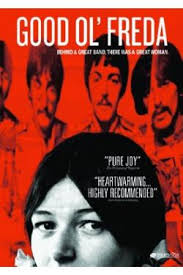
Now available on DVD and online, fans of the Beatles (or for that matter, fans of the human race) should definitely check out the wonderful documentary “Good Ol’ Freda” if missed during its brief festival/theatrical run last fall. Its opening moments take us back fifty Christmases ago and the first of the group’s annual holiday-greeting records. Amid the general jollity we hear the guys give a shout-out to their secretary and fan club president, prompting the titular exclamation. Freda Kelly, in the words of one who knew her when, was “a snip of a teenager”, employed as a typist in a Liverpool office when asked if she’d like to join some co-workers to see a lunchtime concert by a certain local combo at the nearby Cavern Club.
The 17 year-old Freda got to know the Beatles as only one can who was part of the band’s original fan base. She can tell you the best place in the Cavern to watch (second archway on the left), tell sweet anecdotes of Paul walking her to the bus stop and still calls Ringo “Ritchie.” In 1962, the Beatles new manager Brian Epstein asked the incredulous teen if she wanted to work for the band. It was a canny move. As both Brian and Freda realized, she was a fan but not a fanatic and could directly relate to the band’s famously ardent female supporters, which would grow into numbers unimaginable back then. A bit player in a worldwide cultural phenomenon, she held the job for a decade and still dutifully replied (on her own time) to the back log of letters even after the band broke up, a process that took some three years.
The personable and straightforward Kelly makes a winning documentary subject. “Loyalty” and “privacy” are the two keywords with her and instead of making her a spoilsport (think of all the dirt there is to dish!) it serves as a refreshing reminder to the special value of basic human decency in a crazy world. Did she profit from the surplus riches (in the form of autographs, ephemera, locks of hair and the like) that her position left her holding? Not a chance. She personally handed much of it over to Beatle fans and kept a few boxes for old time’s sake. Untouched for over thirty years, she heads up to the attic to retrieve them for the camera crew. Did her closeness to the group ever lead to an amorous tryst or two? Maybe, but as Freda sits on a sofa in her modest Liverpool home a half-century later, she coyly takes a pass. “I don’t want anyone’s hair falling out,” is her answer, which sounds sensible enough.
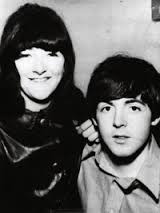
With her girlish smile and helmet of dark hair, the teenage Freda looks like she could have been too overwhelmed or awestruck to ever handle the job description that would come with working for the most popular rock band in history. Not a bit of it. Her unfussy dedication and the band’s ability to not lose themselves in all the mass adulation, speaks volumes for their unpretentious Liverpool roots. And Kelly was no pushover. After John Lennon made a move to unilaterally fire her after she whiled away an hour hanging out with the Moody Blues, he quickly found himself unsupported by the other three and Freda (only half-jokingly) made him get down on one knee to beg her back. With upper echelon pop stars now resembling corporate monoliths more than actual human beings, it would be hard to imagine something like that happening today—esp. if you’ve seen the documentaries of say, Madonna or Beyonce, where employees are subjected to boot camp discipline when they’re not being herded into prayer circles.
Freda Kelly, then (with a pre-Sir Paul) and today.
Approaching seventy years of age, Freda agreed to be the subject of Ryan White’s cameras only so her grandchildren will grow up knowing who she once was, a notion as simple, likeable and bittersweet as the film itself.
***************
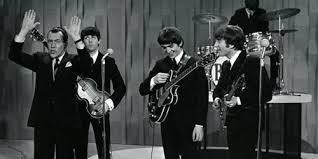
“Before I introduce these fine youngsters from Liverpool, can I just say to all the girls in the gallery… Shut the @#$% up!”
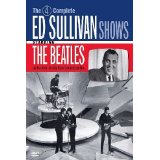
The 4 Complete Ed Sullivan Shows Starring The Beatles (2010)
At this late date and with the 50th anniversary coming this week, just about everything that could be said about the Beatles epoch-making appearances on Ed Sullivan’s weekly TV showcase has been said, and multiple times. The televised specials will be all over the place and we’ll all catch at least one. But this DVD, which has been circulating for years, gives the viewer the extra context of viewing the four entire E.S. shows (including commercials) that featured the Fab Four in all their Beatlemania glory, playing to delirious packs of girls in the theater as well as to a record-shattering 73 million viewers at home. Sullivan had been ready to put up a princely sum for one Beatles appearance but Brian Epstein, in an astute bit of managerial razzle dazzle, agreed to accept only a fraction of the offer (settling on $10,000) if the band could instead be on for three weeks, opening and closing each show.
Besides the three famous shows of Feb. 1964, the DVD also has the return appearance from August 1965.
The other material on these discs offers up the last death throes of a vaudeville business model about to be replaced by the Beatles-led youth-centric entertainment revolution. Ed Sullivan got his start as a newspaper columnist focused on Broadway and New York nightlife but his Sunday night variety show,which ran from 1948 to 1971, was a star-making juggernaut of the age when we watched four TV channels on a 9-inch screen. Week after week Sullivan, with his notoriously uncomfortable body language and awkward stabs at humor, would introduce the magicians, acrobat teams, comedy duos, dance troupes, pop singers, puppets and God knows what all. These shows are no exceptions and most look instantly dated next to the Beatles triumphant re-invention of rock and roll. Interspersed are the kinds of commercials that make one feel that 50 years is a really, really long time. Did you know, for instance, that Lipton tea is “friendlier than coffee”, or that Anacin brand aspirin cures depression?
There are a few exceptions: the great Cab Calloway, then 57, turns in a high-spirited performance and we get to see a pre-Monkees Davy Jones appearing with the original cast of “Oliver!” At the Feb 16th show, when Ed moved the show to it’s occasional Miami Beach location (allowing the boys a few days in a warm locale) the Fabs are almost upstaged by the irrepressible Mitzi Gaynor (of whom they were great fans) as she makes the most of her 13-minute turn in the spotlight as if to try and turn back the clock to the days to where superhuman (if slightly hokey) song-and-dance routines and expressive “jazz hands” were the last word in light entertainment. It didn’t quite work that way (the heavyosity of later Sixties culture soon followed), but it wasn’t for lack of effort on Mitzi’s part. So we end Beatles doc month with a little dose of the hotsy-totsy Ms. Gaynor and a great slide show of Beatlemaniacs set to “Twist and Shout.” Enjoy!
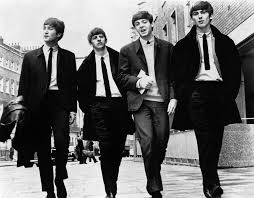
The coolest-looking quartet ever, at the height of world domination
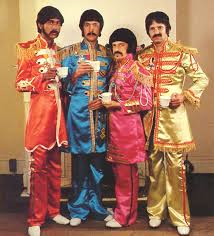
The Rutles, caught in the act of drinking tea, seen during their “Tragical History Tour”
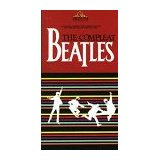
Considering the Beatles overarching prominence in rock history, it’s a little odd that there isn’t currently available a standard-length documentary that captures their glory in any definitive sense. Perhaps this is understandable; maybe the story is just too big to be captured in one sitting. I cherish my copied-from-the-library tape of 1982’s The Compleat Beatles, a straightforward two-hour clips-and-commentary doc narrated by Malcolm McDowell. This thoughtful, soup-to-nuts approach makes for an impressive, single-volume encapsulation of the band’s legendary success in both artistic and commercial terms. Unfortunately, after its theatrical run and a successful release on videocassette it sort of dropped from view, remaining unreleased on DVD and relegated to spotty-quality ten-minute chunks on YouTube.
It could be said that 1995’s Beatles Anthology, a 3-part television special, supplanted the need for the less in-depth “Compleat”. The Anthology series does have a lot going for it, especially extensive interviews with the then three surviving Fabs. It also had a serious case of the recently discovered Ken Burns Syndrome, clocking in at 683 minutes. That may have been heaven on earth for Beatlemaniac bingers, but for the lean and mean younger generations (millions of whom have an instinctive inclination to love the band as we boomers did) this is about 583 minutes too much. Maybe some sort of updated variation on “The Compleat Beatles” will eventually see the light of day. It is important. John, Paul, George and Ringo are a shining example of creative striving and inspired collaboration. It’s also a sublime lesson in how to affect societal change using a light touch, and that being rebellious does not have to mean being revolting (yes, we’re pointing fingers at you, Mr. Beiber and Ms. Cyrus).
The Compleat Beatles–Now available on VHS from Amazon for only $41.95
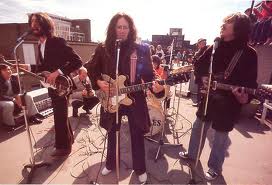
It may be that 1964’s A Hard Day’s Night will end up being the best real-life record of their initial career peak, seeing that director Richard Lester smartly chose a pseudo-doc style that mirrored the Maysles Brothers’ What’s Happening! The Beatles in the USA shot on the band’s epoch-making American visit just weeks before Lester’s cameras started rolling. (Almost exactly a half-century ago. See my previous post for details!) Of course, there were also documentary cameras running during the turmoil that pointed to the band’s break up in 1970. Yet if it weren’t for bootlegs and the InterWebs, little would be seen nowadays of Michael Lindsay-Hogg’s Let it Be. McCartney and Starr show little inclination at this late date to re-air the group’s dirty laundry, although a lot of the worst of it was left on the cutting room floor. Despite the uneasy vibe and Yoko Ono’s divisive presence in Lennon’s corner of the soundstage, there are gratifying moments from the Jan. 1969 filming—an electric studio performance of the bittersweet John/Paul valedictory “Two of Us” and of course the oft-imitated rooftop concert, as London pedestrians crane their necks trying to get a last look at the world’s most famous rock band playing live.
With Compleat Beatles out of print, maybe the current front-runner as the best one-sitting Beatles film bio is—wait for it—The Rutles: All You Need is Cash. This 1978 satire began a few years before as a skit on a UK television show by Monty Python alum Eric Idle. When he hosted Saturday Night Live in ’76, he brought the clip (the gag where Idle as onsite narrator finds the camera van pulling away from him) to air on the show. Idle teamed with SNL producer Lorne Michaels and director Gary Weis (whose short films were a staple of the show’s early days) to virtually invent the rock mockumentary with their wickedly funny film about Dirk, Nasty, Stig and Barry—the alternate-universe moptops whose “legend will last a lunchtime.”
With Idle playing the hapless presenter (as well as the Paul-like Dirk) All You Need is Cash is just as much a spoof of the documentary form as it is of the Beatles. Often showing up at the wrong locale or getting nowhere with certain interviewees, he still manages to tell the entire tale of the Pre-Fab Four. Completing the Liverpool chapter after catching up with his van, he takes us to Hamburg, where the Rutles learn the ropes playing dodgy, red-light district nightclubs on Hamburg’s Reeperbahn (“the naughtiest street in the world”). That’s followed by segments on their great success in America (including their record-breaking concert at “Che Stadium”), their experimentations with tea (endless pots of it) that led to such way-out records as “Sgt. Rutter’s Darts Club Band” (“a millstone in pop history”) and onto their final works, “Shabby Road” and “Let it Rot” which was “released in 1970 as an album, a film and a lawsuit.”
Fun fact: The Rutles rooftop performance was so bad they got arrested.
As you can tell, the Rutles saga is chock full of that dry Flying Circus wit, livened by the sharp performance of Python sidekick Neil Innes as the Lennon-like Nasty. Innes, ex of the Bonzo Dog Band, composed the many spot-on song parodies, doppelgangers like “Ouch!” (Help!), “Piggy in the Middle” (I Am the Walrus) and “Doubleback Alley” (Penny Lane). It’s remarkable how the slightest sardonic twist can transform real-life musical legends into a band of incompetents. This does lead to some lapses in logic—could these goof-offs really sell out Che Stadium? But it’s the conspiratorial allowance to have a bit of fun with our cultural icons, and recognize the tendency to place them a little too high on a pedestal, that in the end shoots their stock value even higher.
And what of the band’s reaction? John apparently loved the Rutles and refused to return the preview tape he was given. One can imagine his secret delight at the film’s scenario of having Nasty hook up with destructo-artist Chastity, “a simple German girl whose father invented World War II.” Ringo reportedly loved the scenes set in the salad days, but not so much the parts that skewered the band’s messy dissolution. Paul’s reaction was pretty frosty but he may have come around when wife Linda became a Rutles fan. George of course was a big Monty Python supporter and even appears in the movie, playing a silver-haired reporter who interviews Michael Palin as an executive of Rutle Corp. (i.e. Apple) who assures us that everything is A-OK with the group’s finances even as thieves empty out the offices in the background. People with fond memories of the first incarnation of SNL will also enjoy the cameos by John Belushi, Gilda Radner, Bill Murray and Dan Akroyd.
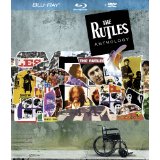
The recent Blu-ray release The Rutles Anthology includes the decent 2005 sequel Can’t Buy Me Lunch. This 56-minute follow-up fleshes out the Rutles Apocrypha with outtakes from the first film and includes some amusing new bits like the ongoing routine where Eric Idle’s presenter faces competition from a microphone-stealing Jimmy Fallon. But as where “All You Need is Cash” featured droll testimonials from Mick Jagger and Paul Simon playing themselves, here we get the likes of Gary Shandling, Russell Brand and Tom Hanks rambling on witlessly (and redundantly) about how much the Rutles meant to them. It only serves to emphasize what the project was originally poking fun at. This mockumentary thing can be a tricky business









 Reel and Rock