Rock on Film

The Beatles meet the Maysles, 7 Feb 1964

first US

The review below taken From “Documentary 101: A Viewer’s Guide to Non-Fiction Film”
Now on sale: http://booklocker.com/books/6965.html (This author page has an extended book excerpt. Also available from Amazon and barnesandnoble.com)
img363

The Beatles: The First U.S. Visit
Albert and David Maysles—1964/1991—83 minutes

It was only ten weeks after the assassination of President John Kennedy. With the pall of national tragedy still in the air that winter, the filmmaking team of Albert and David Maysles got a call from Granada Television in England saying a musical group named the Beatles were arriving in New York in a couple of hours and would they mind heading down and maybe getting some footage? Albert was a bit nonplussed but younger brother David was more hip to the current pop scene and sensed the opportunity. After negotiating a deal right there on the phone, the light-traveling duo were on their way to recently renamed John F. Kennedy Airport, getting there just in time for the famous moment when John, Paul, George, and Ringo hesitated a moment at the top of the steps while leaving the plane, realizing that the hordes of people lining the balcony of the terminal were there for them and not some head of state as they first thought. And just like that the Maysles brothers found themselves in the middle of one of the twentieth century’s defining cultural moments. The First U.S. Visit is a 1991 re-edit of the original ’64 film (called “What’s Happening: The Beatles in the U.S.A.”) that adds more music and excises some interview material. But both versions pull the viewer right into the middle of the tumultuous birth of 1960s youth culture. It also features the Beatles performing thirteen unedited songs, from both a Washington, D.C., concert and the epochal Ed Sullivan Show TV appearances.
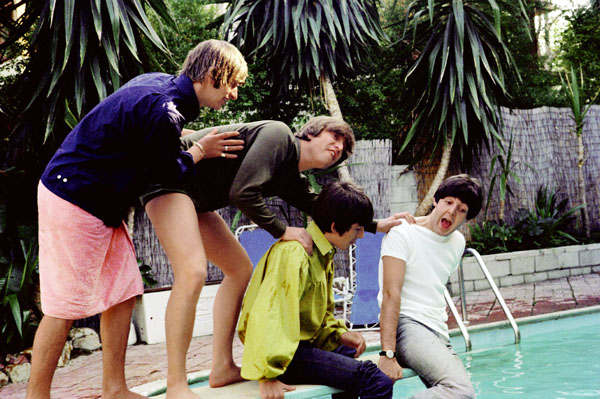
beatles in Miami
Twisting by the pool in Miami Beach, 1964

The Beatles were poised for big things and “I Want to Hold Your Hand” (their first widely distributed single in the U.S.) had hit #1 two weeks previous. Early segments show famed DJ Murray the K in his studio hyping them up but establishment media were often belittling in their opinions and their long-term prospects in America were uncertain. At the airport press conference they quickly charm the jaded New York press corps with their contagious high spirits and sharp wit, then are whisked off to Manhattan and to a rock ’n’ roll superstardom never to be equaled. Although a few hours before they had hardly heard of the Fab Four, the filmmakers found themselves squished into the back of a limo with the confident but still nonplussed band members. Arriving at the Plaza Hotel, we get the first dose of Beatlemania up close with fans pounding on the window, the boys dashing from the car to the lobby door, and the scenes of police struggling to keep back the hordes, all soon to become iconic images of the decade. Two nights later, on February 9, 1964, the band would make television history with 73 million people tuning in to Sullivan’s Sunday-night showcase. The Maysles brothers would tag along for the next five days with unfettered access and whether it’s the boys goofing around in hotel rooms, dancing at the Peppermint Lounge, or getting photographed in Central Park, the camera never seems more than a few feet away from the action.

When it’s time to head south for the D.C. concert, the whole entourage takes the train like it is no big deal and the band jovially mingles with the other passengers. The group here is shown at a giddy apex of fame just before becoming imprisoned by their own celebrity. And although the performances on Sullivan’s show seem as fresh and buoyant as ever, the gig at the old Washington Coliseum may be the musical highlight here. Playing from a makeshift stage in the middle of the arena, the group is surrounded by the deafening din of screaming girls but cut through the pandemonium with a manic energy unseen on the tube. “I Saw Her Standing There” rocks with an almost punkish jolt and Ringo gets a rare concert lead vocal during a likewise frenetic “I Wanna Be Your Man.” The sight of the four of them having to turn around their own amps and rotate the drum riser to play to a different part of the house couldn’t be quainter—roadies weren’t even invented yet!

The Beatles raise the roof on the Washington Coliseum, Feb. 11th, 1964

Ed Sullivan is waiting down in Miami Beach, ready to introduce these “fine youngsters” for the second of the three consecutive weeks on his show. Although the Maysles brothers’ time with the Beatles ended down there, also included is their return appearance (taped earlier) at the regular New York location for week three on Sullivan (with a farewell rave-up of “Twist and Shout” and “I Want to Hold Your Hand”) and a bit of their departure and triumphal airport reception back in London.

The filmmakers’ methods seem to point the way to one of rock’s most celebrated films, “A Hard Day’s Night”, which started filming a month after the group’s return. That movie’s director, Richard Lester, carefully crafted a pseudo-documentary feel and a few notable scenes, like the mob-besieged Beatles running to their catch their train before being eaten alive, were not staged but done spontaneously, a bit of cinematic verisimilitude not appreciated by the band. “What’s Happening!” (as it was still known) was a great feather in the cap for the Maysles brothers. With an eerie symmetry, these Johnny-on-the-spot filmmakers would close out the 1960s with “Gimme Shelter”, unwittingly filming the dark flip side of the scene the Beatles created while following a late 1969 tour by the Rolling Stones.
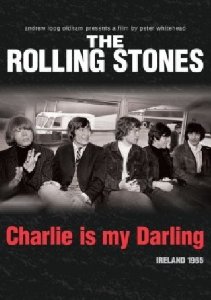
Charlie is My Darling (Doc of the Week #10)

Charlie

The Rolling Stones: Charlie is My Darling—Ireland 1965
Directed by Peter Whitehead—1966—64 minutes

The Rolling Stones certainly are no strangers to celluloid, at least from the late Sixties on. In roughly chronological order, we got their headlining appearance in “Rock and Roll Circus”; a Jean-Luc Goddard agitprop period piece framed around their recording of “Sympathy for the Devil”; the Maysles Brothers’ hippie-dystopia classic “Gimme Shelter”, and various concert films from the 1970s on, culminating in Martin Scorcese’s 2008 “Shine a Light.” This spirited record of a showcase gig at New York’s Beacon Theater established the Stones as leaders of a movement that can only be called geriatric rock, carrying the flag of a genius era into the Social Security age bracket.

Good footage of the early Stones has been harder to come by. Their ascent to fame in the days before mass media overkill has yielded little more than their “T.A.M.I. Show” set and some old Ed Sullivan clips. Until now. Produced by their manager Andrew Loog Oldham reportedly to get his rising stars used to the idea of film, “Charlie is My Darling” was the first documentary about the band. The director was Peter Whitehead who would go on to make 1967’s “Tonight Let’s All Make Love in London” when the music-driven youth movement was in full “swing.”

After a brief theatrical release, however, all prints of “Charlie” were reportedly stolen and the film receded from memory, only getting a proper re-release in conjunction with the band’s 50th anniversary tour. Now you can wind the clock back almost as many years to the screaming-teenager epoch of the mid-1960s, as the boys are whisked off to Ireland for a quickie tour hastily arranged to capitalize on the recent smash hit “Satisfaction.” It’s a bit of a revelation here to see the Stones in the first flush of their youthful success. The Beatles have “A Hard Day’s Night” and Bob Dylan the warts-and-all “Don’t Look Back.” Here the five Stones likewise struggle with whirlwind fame, each of them ambivalent and thoughtful when Whitehead interviews each in turn.

A brilliant montage set to “Heart of Stone” shows the band arriving in Dublin where the establishing street scenes recall the age of James Joyce a half-century previous. But even if the country was still largely in the parochial grip of the Catholic hierarchy, the kids quickly shake free of that once the Stones hit the stage. The clarity and immediacy of this restored footage is electrifying, the lean-and-mean band whip their fans into a frenzy straight out of the gate with “The Last Time”, not that the crowd needs much whipping up. The Stones were already well known for the riotous audiences they attracted and by the end of third number, the stage invasion is in full stride, easily captured by Whitehead’s in-the-wings camera.

A bit of this footage recently turned up in the recent “Crossfire Hurricane” doc but it’s good to get the full flavor of those days here. The interviews reveal five guys to whom fame is still new and a little intimidating. Mick Jagger, an exciting young performer but hardly the indomitable peacock of later years, admits “I don’t know who I am on stage.” Keith is already the sly one, Bill is practical and Charlie misses his wife. Most poignantly, Brian Jones frets about the Stones’ chances for sustained success and—four years before his death—says, “I’ve always been a little apprehensive about the future.”

Elsewhere, you get the expected shots of the band being chased in public places, vox populi with the teenybopper lasses and hotel scenes of the guys goofing around and (more interestingly) writing a new song, “Sitting on a Fence.” Back onstage in Belfast, the joyful abandon in their version of Chuck Berry’s “Around and Around” is visceral and the cathartic discontent of “Satisfaction” would probably never sound so real again—worldwide success was just around the bend. The druggy excesses and jet setting and artistic peaks were all to come and this guileless snapshot from a distant monochromatic past is the perfect antidote to today’s over-hyped media landscape.

“Big Time” Waits for no man (on store shelves)

While at Barnes and Noble the other night I caught Tom Waits’ careworn visage glaring at me from the cover of the latest issue of Uncut magazine. Thing is, that photo looks like it was from 1973, the year of his first album (the piece is called “Birth of a Boho Legend”). Talk about an old soul. I didn’t pick up a copy (at least not yet) as I am still happily absorbed in the same mag’s special all-Kinks issue that my sister surprised me with for my birthday. But it got me thinking on two points. First I have to finish my article on the celebration of 1973 in general, the greatest of all rock years not recognized as such and now forty years in the rear view mirror. I’ll have it out here soon.

Secondly, why hasn’t “Big Time”, the great Tom Waits concert film from 1988, ever made it out on DVD? The VHS-to-VHS copy I once made after checking it out from the library can’t last forever. Yeah, you can watch it on YouTube nowadays but it just isn’t the same. It demands, like any good film, a decent size screen and no other distractions. “Big Time” is a variation on the off-Broadway play “Frank’s Wild Years” (written by Waits and his wife Kathleen Brennan) and is similiar to the stage show on his 1987 tour supporting the LP of the same name. Songs like “Ol’55” and “Grapefruit Moon” made that ’73 debut (Closing Time) a worthy debut but Waits’ offbeat genius as a songwriter and conceptualist didn’t come into full flower until the Eighties and beyond. This is the best showcase for his famously expansive assortment of mid-century American character types: the homesick sailors, the farmboys off to the big city, the strippers and barflies, the beautiful losers and beatnik drifters that crowd into his songs like passengers on a rush-hour Tokyo subway.

“Big Time” was mainly filmed at the art-deco Wiltern Theater in Los Angeles, Waits’ hometown and a place he knows well (he describes the theater as being located on the corner of “Friendly and Snooty”). The 50-year antiquity of the venue is a suitably scenic platform for the Waits’ usher/ticket-seller/hustler character whose droll activities are interspersed with the onstage action. Here the noirish stage set and the musical palette of accordion, honking sax and upright bass complete the picture. The Frank of the title is a downwardly mobile Sinatra wannabe who tells the “beautiful” crowd that he “feels closer to(them)than his own family” and wheezes his way through a song that insists he’s headed “Straight to the Top” where the air is “fresh and pretty clean.” More as himself, Waits either goes to his upright piano for one of his vaunted melancholic ballads like “Johnsville, Illinois” or gets up to front his crack band on deliciously manic performances of “Down in the Hole” or “Telephone Call from Istanbul” (“never trust a man in a blue trench coat/never drive a car when you’re dead”).

Wait’s dry between-songs witticisms are a hoot but by the end, when it’s clear that Frank and his long-shot dream of redemptive stardom are destined to be kicked to the curb,the heartstrings get a pulling during numbers like “The Train Song” and “More than Rain”, the latter betraying the Brechtian influence that crept in during that time. But Waits’ sly nature never gets vanishes for long and he’s compelled to sing the climatic ballad, “Innocent When You Dream” while standing fully-clothed in a bubble bath.

Tom Waits was never big on touring and I was happy to have had the chance to see him on that tour in ’87 at Boston’s Orpheum Theater (not at the corner of anything, but pushed to the back of a cul-de-sac near Park Street Station). From the moment he charged out of the gate with “Hang on St. Christopher” (a driver “jacked-up on whiskey” exhorts the patron saint of travellers through a bullhorn, telling him that “tonight the Devil can ride”), to when he encored with a rip-roaring “Papa’s Got a Brand New Bag”, one of the best shows I saw in the Eighties. If the gig had been scheduled a few months earlier I probably would not have seen it: put off by his notoriously gravelly vocals, I had never giiven Waits a chance. But thanks to my new roommates heavy rotation of such LPs as “Rain Dogs” and “Swordfishtrombone” the light bulb went off just in time to ask him to be me up a ticket as well. An object lesson that musical discoveries are an ever-renewable resource for a better life. True, a guy as willfully eccentric as Waits will never siphon off many middle-of-the-roaders, but for his considerable cult audience and for those destined to discover, a proper home-video release of “Big Time” is long overdue.

The Strange, Forgotten Saga of the Medicine Ball Caravan

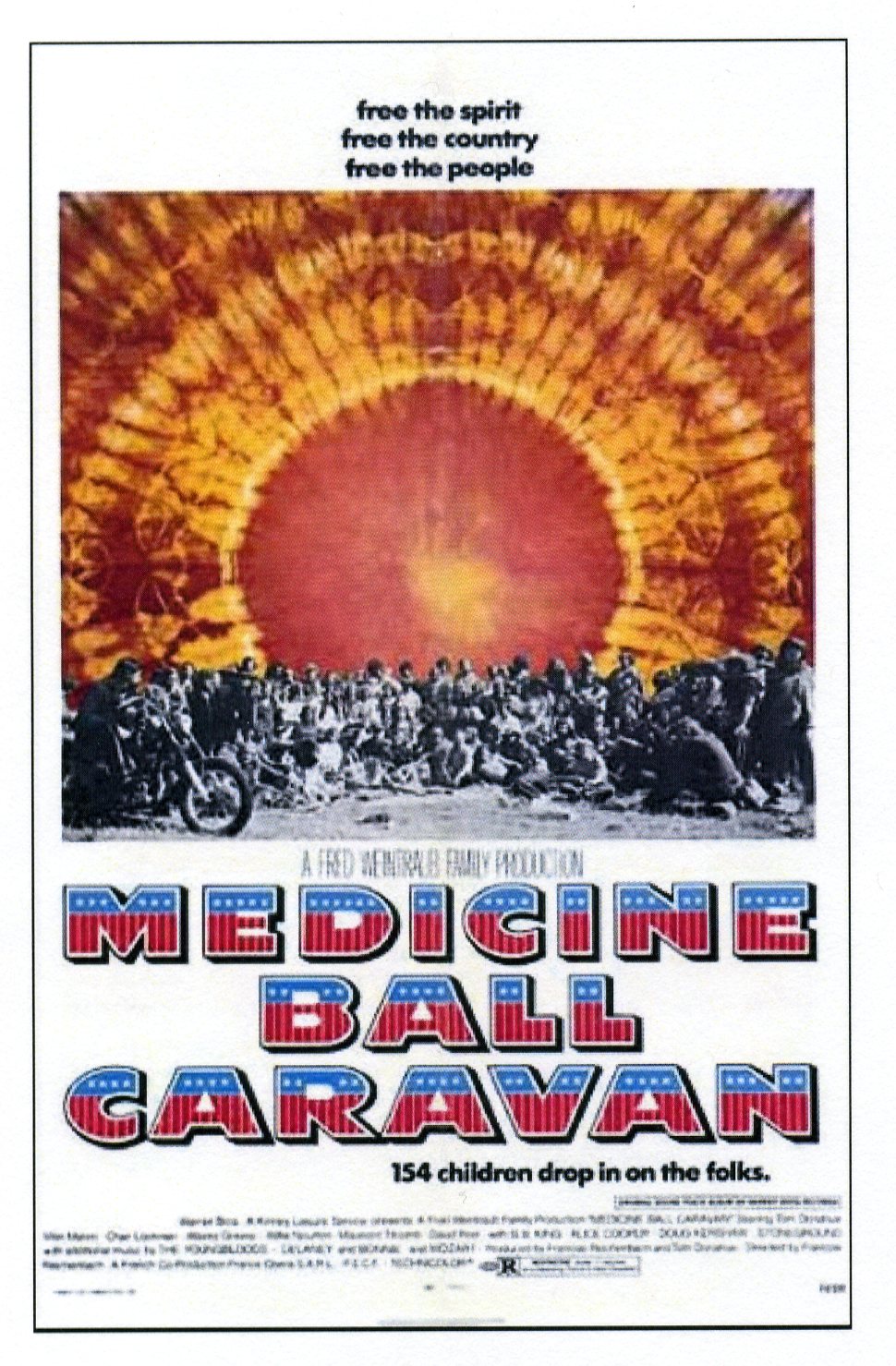
img818

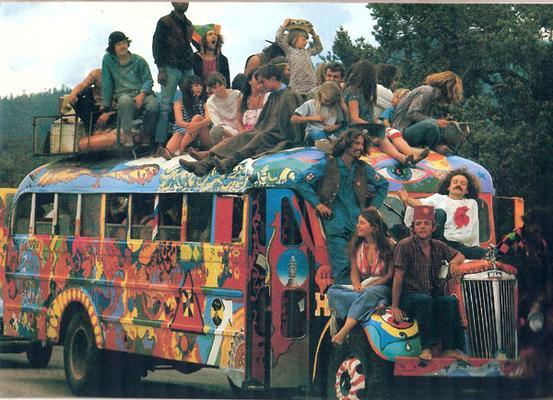
Some 43 years ago, a much-hyped “youth” film was produced with intentions to capitalize on the success of “Woodstock”, Michael Waldleigh’s immensely popular (and Oscar-winning) documentary of the epoch-making rock festival. In the summer of 1970, Warner Brothers spent nearly a million dollars putting together the Medicine Ball Caravan, as 150 recruited hippies, accompanied by a French film crew, undertook a cross-country tour from San Francisco to D.C., promulgating the Aquarian lifestyle and staging a series of free concerts along the way. But when it was released to theaters in August of 1971, the youths stayed away in record numbers and Rolling Stone named it one of the ten worst films of the year. Fred Weintraub, the savvy New Yorker who had owned the star-making Bottom Line nightclub, got the gig as head of Warner’s youth market after taking a gamble on filming some three-day music show upstate that then turned out to be a decade-defining event. WB was eager for a follow up and Weintraub tried to conjure an event that would be a sort of Woodstock on wheels. The story of why “Medicine Ball Caravan” still barely qualifies as an afterthought in the history of rock documentaries says a lot about shifting cultural attitudes at the start of the Seventies, as well as to the potential pitfalls of filming pre-conceived “reality” events.

At the start of the film, as the viewer watches a telephoto view of the long line of buses, vans and trucks motoring over the Golden Gate Bridge, a real sense of possibility is felt. Soon after, “MBC” devolves into a series of caravan vignettes presented with little context. It’s really too bad. Organized by pioneering FM disk jockey Tom Donahue, the caravan could have surfed that last great cresting wave of the hippie ethos, a subject that still had strong innate appeal. The film was directed by Francois Reichenbach, fresh from winning his own documentary Oscar for “Arthur Rubinstein: Love of Life”. Reichenbach had been piling up awards and festival prizes since his filmmaking days started in the early Sixties but his winning streak ended here. “The truth requires not a cold witness but what I call a love witness,” the directed is quoted in John Grissim Jr.’s appealing 1972 book about the caravan called “We Have Come for Your Daughters” (the phrase was painted on the lead vehicle). But Reichenbach’s open-mindedness about longhair culture eventually showed itself as a lack of vision as to what the final work might look like. By 1971, random film scenes of hippie nudity, bus painting, reefer smoking and peace-sign flashing had passed into cliché and all are in abundance here. Matters were not helped by the many interview clips of inarticulate freaks held in front of their tie-dyed teepees.

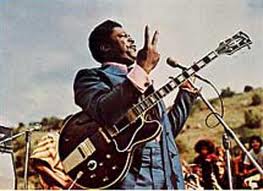
bb at mbc

B.B. King rocks the arroyo

There is a higher success rate with the musical sequences, what there are of them. The featured performers were literally airlifted to the makeshift concert sites. There’s twelve wonderful minutes of a top-form B.B. King, the nattily-attired blues great holding forth from a stage in a sun splashed arroyo somewhere north of Albuquerque. Cajun music icon Doug Kershaw crosses over to the festival crowd with his warp-speed fiddling and playful scat singing on “Battle of New Orleans”. Alice Cooper practically invents goth with a searing rendition of “Black Juju” which culminates in Mr. Furnier showering the front rows with chicken feathers. But that’s about it, not counting the rather undistinguished Stoneground, the traveling “house band” that would later be responsible for providing three-fourths of the lineup for Pablo Cruise. If the studio had snagged their first choice, a Warner-Reprise act called the Grateful Dead, “MBC” would likely not be so obscure.


Sal Valentino, formerly of Beau Brummels and then singer of Stoneground, does a solo number in this scene from MBC that also features some nice caravan footage.

It was generally believed that the studio execs, by sending this freak circus out into the land of the Silent Majority, were hoping for some sort of climatic cinematic confrontation. But most of the straights that Reichenbach shows are cordial if not supportive while any conflicts in the film emanate from within the caravan’s own demographic. There’s a tense run-in with the Manson-lite STP Family at the Boulder, Colorado show and chaotic confrontations on the campus of Ohio’s Antioch College before a proposed concert nearby. There had been grumblings all summer from the New Left that Medicine Ball was a Warner Brothers scam, a ploy to usurp the counterculture by getting naïve hedonists to play act a plastic version of it.

Despite the fact that caravaners were only being paid expenses and counted among their number such bona fides as Wavy Gravy, suspicions about this “sell out” were exploited by provocateurs-without-portfolio David Peel and Tom Forcade, the latter of whom had been nipping at the heels of Tom Donahue weeks before they reached Antioch. Humorless young campus radicals were whipped into hysteria over the notion that corporate suits (AKA “capitalist pigs”) would dare make a movie that may appeal to some in their age group. In the fracas that followed, these summer-program students (“kept in school by their parents to keep them away from home,” says one caravan wag) try to shut down the show, forcing the traveling troupe to stand up for themselves, and defend their efforts to work within the system to spread the peace-and-love message. Suddenly, “Medicine Ball Caravan” turns contentious and interesting, but by then it’s almost over.

The_hog_farm_bus

Your ride is here

At least there was a film at all as “MBC” barely averted a post-production cancellation. According to eyewitness Grissim, many of the young French crew members partook of the caravan’s ample LSD supply and the result was a lot of mislabeled or blank film cans that could never be matched up with the related soundtrack as well as a lot of out-of-focus shooting and missed opportunities. Moreover, Reichenbach entrusted the first cut of his film to a handpicked editor back in France who did not understand English and had a bias against hippies. Warner Brothers were aghast at the desultory results and almost nixed the film when, at the eleventh hour, a young Martin Scorcese (who had also worked on “Woodstock”) was brought in to fashion a more upbeat 92-minute final cut. Some of the caravan’s spirit survives in Scorcese’s optimistic coda and the clear-eyed Grissim allows that at its best Medicine Ball “kick(ed) a lot of life into a wilted flower fantasy.” Both the documentary and the equally arcane “We Have Come for Your Daughters” probably deserved a better fate even if, as Grissim smartly predicted, the whole adventure was likely to “end up as a historical footnote (and) a small reminder that the Sixties did, after all, end on schedule.”

(I don’t believe “Medicine Ball Caravan” ever saw the light of day during the VHS era, probably being relegated to the very occasional screening in a college film-series setting. It is currently available on DVD from videobeat.com, the grey-market website for music and pop culture miscellany. A search for “We Have Come for Your Daughters” offered up a rare copy that would set you back a C-note. Try the library, especially if like me you live in an area where they are networked with ones from surrounding communities. I found one with little problem.)

My new book Rock Docs: A Fifty-Year Cinematic Journey is now available on Amazon and through my author page at BookLocker.com Please click on the book-cover image (or the link below) to access the 30-page excerpt at BookLocker.
http://booklocker.com/books/8905.html