Rock on Record

For The Records: The Cover Albums, Part Two

Well, here’s the concluding entry in my survey of recordings in that most star-crossed category, the covers album. Star-crossed in an almost literal way: here are stars performing the songs of other stars.

After listening to so many of these albums I can only conclude that placing one or two well-chosen covers on an album of your own original tunes works a lot better. The reason is a whole collection of tributes usually tends to lack coherence and make even the best artists look like a bar band.

The best way around this is for your covers album to have some sort of concept. The highest-ranking record of Part One of this survey (David Bowie’s Pin-ups) worked so well because of its tight focus. Bowie was paying homage to British bands and key songs from the 1964-67 period, just before he broke thru himself. A similar concept guides the first record reviewed here, the only one other than Pin-ups to gain an A- rating.

Songs From a Haunted Ballroom—The Skids (2021)

While not a household name, most fans of early UK punk will recall this tenacious band who moved down to London from their native Dunfermline in the late 70s. The Skids gained notoriety not just for their tough-guy rep (legend has it that they picked fights in clubs to get their names in the English music press) but also for their aggressive-but-artistic musical approach. That included at least two Brit punk classics: “Into the Valley” and “The Saints are Coming,” both of which are featured here in re-recorded versions.

The rest of Songs From a Haunted Ballroom have an association with the Kinema Ballroom, a vital but volatile music venue in their hometown. The Skids, whose guitarist was future Big Country leader Stuart Adamson, got their start here, playing live sets opening for the likes of the Clash before the place changed over to a discotheque later at night.

Both aspects of the Kinema are celebrated here. Mainstay vocalist Richard Jobson is joined here by ex-Big Country second guitarist Bruce Watson and his guitarist son Jamie Watson. The lads come charging out of the gate with Ultravox’s “Young Savage,” one of many allusions to the club’s stormy history (“Anything goes where no one knows your name”). They tip their hat to the Clash with a nice take on “Complete Control.” In light of the father-son axe duo backing him up, Jobson is obliged to use the song’s proclamation “You’re my guitar hero!” not once but twice.

Elsewhere, there are enthusiastic, high-energy tributes to the Adverts, Sex Pistols, Iggy Pop, Mott the Hoople and Magazine. Just as welcome are some of the less obvious choices like Ace Frehley’s “New York Groove” and Garland Jeffrey’s “35mm Dreams.” The key track is probably their ominous take on David Essex’s glam hit “Rock On.” As an after-hours disco, the Kinema was a magnet for the region’s various violent gangs and apparently “Rock On” was the signal for the trouble to start. Jobson describes the scene in a mid-song monologue as the AV Toi (“the most mental gang in Scotland”) get ready to rumble. Grade: A-

Acid Eaters—The Ramones (1993)

As punk-rock pioneers, the Ramones need no introduction, but once you get past their mid-to-late 70s heyday, they become a lot less examined. By the late Eighties, original bassist and key songwriter Dee Dee Ramone had left, leaving CJ Ramone to man the front line with Joey and Johnny. CJ, who took some lead vocals, was an energizing figure but the band’s run was almost over.

On this, the Ramones’ penultimate studio album, the band matter-of-factly reposition themselves as acid-rock casualties: just look at the disconcerting covert art. Of course, it’s still them so don’t expect Dead-style noodling or Floydish space jams. Opener “Journey to the Center of the Mind” (sung by CJ) may be trippy but it also rocks.

The results here are entertaining if a bit predictable. The Ramones are in a comfort zone when covering their antecedents like the Animals, Seeds and Troggs. And it’s a blast to hear Joey’s long-loved voice singing the Who’s “Substitute” with no less than Pete Townsend guesting on guitar. The same goes when ol’ Bobby Dylan gets the Ramones’ patented faster-and-louder treatment. Their buzzsaw rendition of “My Back Pages” (check out Marky’s triple-time drumming and Joey’s rare lead guitar shredding) gives the Byrds’ celebrated version a run for its money

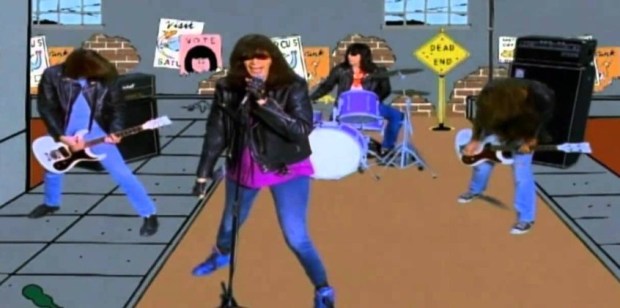
As usual, though, the results here vary. The Credence vibe (as in “Have You Ever Seen the Rain”) doesn’t seem to suit da brothers and their take on “Somebody to Love” (despite backing vocals by porn star Traci Lords) won’t make any baby boomer forget about Grace Slick. For my money, the Ramones’ best cover came on their next (and last) album Adios Amigos. Their version of “I Don’t Wanna Grow Up,” Tom Waits’ seriocomic take on the old Peter Pan trope, is made all the more affecting by being the final bittersweet salvo of the group’s perpetual teenage rebellion. (The video’s witty animation was done by famed comic artist Daniel “Ghost Story” Clowes). Grade: B (B+ if you add in the Tom Waits tune).

12—Patti Smith (2007)

Rising up from the same Lower East Side scene that birthed the Ramones, New York punk poetess Patti Smith showed a great knack for incorporating others’ work into her own on her revolutionary debut album in 1975. Horses kicked off with her radical recasting of the Van Morrison warhorse “Gloria” with her famous opening line, “Jesus died for somebody’s sins but not mine.” On side two her group seamlessly added “Land of a Thousand Dances” to the outré 9-minute “Land.”

It wouldn’t be until 2007 that the covers-album bug would give Patti a bite. Smith is famously expansive in her fandom, so it’s no surprise that 12 is a grab-bag of songs of different eras and genres. If you want to know how to get from Jimi Hendrix to Tears for Fears to Neil Young in three easy steps, here you are. If you’ve been yearning for a slow-paced version of “Smells Like Teen Spirit” complete with banjo and fiddle, your wait is over.

This will be a pleasurable listen for Patti Smith fans like me. But the fact that her take on “Everybody Wants to Rule the World” is my favorite thing here (despite not being even close to my favorite tune covered) goes to show just how random these records are. Grade: B-

Dylan—Bob Dylan (1973)

This long-derided album can’t be blamed on the artist. A record of traditional songs and covers, they are outtakes from 1970’s lowly-rated 2-LP set Self Portrait It was released against Dylan’s wishes by Columbia Records in “revenge” after Dylan had the audacity to jump ship to Asylum (he came back two albums later).

His largely indifferent takes of various non-originals made up about two-thirds of Self Portrait, and these are the leftovers. There are lackluster tributes to contemporaries (“Big Yellow Taxi” and “Mr. Bojangles”), a few deep oldies (“Spanish is the Loving Tongue” dates to 1907) and a three-hankie Elvis ballad (see below). Bob sings in his appealing “Nashville Skyline” voice but his delivery is lazy, and the record is marred by the overuse of a shrill female chorus too high in the mix. Some have suggested that the ever-cryptic Dylan was engaged in some perverse self-sabotage during this period. I tend to believe it. In his re-issue series, a collection from the same period, called Another Self Portrait, was released in 2013 and it’s freaking great. Grade: C-

Covers—Cat Power (2022)

Chan Marshall, the Atlanta-born singer/songwriter who goes by the stage name Cat Power, has been beguiling fans since she came on the scene in 1992. Her brand of subtle intensity may not be for everyone, but her unique musical stylings make her esp. suitable for doing other people’s material (this is her third, and most recent, covers album). Not everything here sticks the landing, but when it does it’s quietly captivating.

The best to my ears are her artful renditions of two poignant slow numbers. First is the Pogues’ “A Pair of Brown Eyes,” with Marshall accompanying herself on Mellotron (see below). Second is the Replacements’ barroom ballad “Here Comes a Regular.” There are other selections that show the depth of her musical appreciations: Nick Cave’s “I Had a Dream, Joe” and Kitty Wells’ proto-feminist anthem “God Didn’t Make Honky Tonk Angels,” the first C&W #1 hit by a solo woman. On the flip side, she does a song by lesser-chanteuse Lana Del Ray, Bob Seeger’s “Against the Wind” (barely recognizable) and a number from Ryan Gosling’s short-lived group. But with cover albums, variety is the spice of life. Grade: B

Kojak Variety—Elvis Costello (1995)

More “variety.’ First off, I’m glad that this album was named after a store near where it was recorded in Barbados, and not after the charmless TV detective played by Telly Savalas. Secondly, most know that Costello, a generational songwriting talent, has a keen ear for and encyclopedic knowledge of other great tunesmiths—he did a country covers LP (Almost Blue) only a few years into his career. This one also wisely sticks to a plan (the cover touts “Rhythm & Blues, Popular Ballads”) and said tunes are delivered in Elvis’ familiar self-assured style. You get them coming and going: songs by Willie Dixon, Mose Allison, Screamin’ Jay Hawkins, Little Richard, Jesse Winchester etc. Your favorite will depend on your preference for a particular tune. I love his emotive take on Dylan’s “I Threw It All Away” and esp. his elegiac take on Ray Davies’ bittersweet “Days.” This Kinks Klassic Kover was originally from the soundtrack of the Wim Wenders’ film “Until the End of the World,” where it was also a group sing-along during a campfire scene. Grade: B

Through the Looking Glass—Siouxsie and the Banshees (1987)

The distinctive, imperious voice of goth icon Siouxsie Sioux was well known by the time she and the Banshees decided to do this tribute album of early influences a la David Bowie’s Pin-Ups. And like Bowie, she was able to put a unique stamp on many of the well-chosen covers here. Dark and delectable tunes like John Cale’s “Gun,” the Doors’ “You’re Lost Little Girl,” and Kraftwerk’s “Hall of Mirrors” are naturals for her and delivered in excellent style.

Other tracks go next level: Iggy Pop loved Siouxsie’s version of his nocturnal road-tripping “The Passenger” (which added a neat brass section) so much that he asked to do a later duet version with her. Her goth take on the Billie Holiday nightmare classic “Strange Fruit” is not afraid to sit up right up there in the pantheon. And her eerie vocal on Television’s “Little Johnny Jewel” gives that early punk gem a second life, with guitarist John Valentine Carruthers ably reproducing the song’s infamous 8-note guitar motif while wisely avoiding a go at Tom Verlaine’s nervy, virtuoso solo. Grade B+

I didn’t have time to fully review Nick Cave and the Bad Seeds 1986 covers LP Kicking Against the Pricks but was taken by its closing number. It became a signature song (along with “Georgy Girl”) for fellow Australians the Seekers. Written by Tom Springfield, it seems an appropriate place to close. Like a carnival, cover albums have plenty of fleeting pleasure before they move on to another town, while you turn back to your favorite artists doing original material.
Place that Band: Battle of the Geo Groups

Rock and roll band names are always a fun subject and historically have fallen into specific categories. Early on, bug names were popular: Buddy Holly and the Crickets inspired the Silver Beetles (later the Beatles), and we went from Iron Butterfly to the Spiders from Mars; it all culminated in the legendary Mosquitoes, secretly rehearsing on Gilligan’s Island to escape their adoring fans.

In the psychedelic era, crazy food-related names abounded (Strawberry Alarm Clock, Chocolate Watch Band, Ultimate Spinach, Peanut Butter Conspiracy) but as we got into the 70s, the somewhat grandiose idea of naming your group after a (usually) large city, or even a country or continent, took hold. Sometimes (but certainly not always) it reflected where the group was from. This trend has continued somewhat crazily into the present, as we will find out at the bottom of the post.

But here we are mostly sticking with better-known groups from the 70s to the millennium. There is a subjective group rating and a ROBTL rating (Relation of Band to Location). Only straight-up geographic group names are considered (sorry, New York Dolls) and the locations are limited to our home planet. But in case you’re wondering, there IS a group called Uranus.

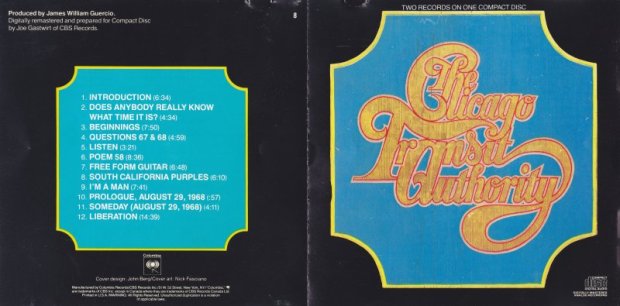
CHICAGO

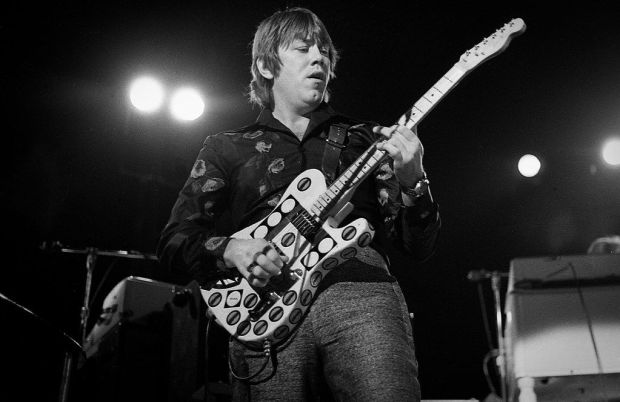
This is one of the most famous, even though they were originally called Chicago Transit Authority, until transportation officials from the Windy City objected.  Many of the members from the original septet met while in college in Chicago. They were originally an adventurous, even political, jazz-rock ensemble over the course of their first three albums (all two-record sets). They gradually lost their way in the woods of MOR pop pablum after the tragic death of guitarist/guiding force Terry Kath.

Group Rating: B+ for the first five albums, after that you’re on your own. ROBTL Rating: Good, considering their roots

This track from their debut features demonstrators’ chant from the Chicago Dem Convention in 1968.

AMERICA

An interesting one, as the three members were U.S. Air Force brats living in England at the time of their formation. But their sound, influenced by the CSN&Y type sound of the day, was very un-British. They went on to great success, of course, with songs like “Ventura Highway” (inspired by a stretch of road in California) and that one about a lonesome Western desert where for some reason you can’t remember your name.

Group rating: B ROBTL: Good I guess, since it was a bit of a mission statement.

BOSTON

This Tom Scholz-invented band is a tough one, since they were from the area but were not exactly road-tested locals, like Aerosmith or J. Geils Band. Mostly a studio creation, thanks to Scholz’s whiz-kid tech knowhow, that didn’t stop them from claiming they were “just another band out of Boston” on their debut album which sold 17 million copies. Then they started touring.

Group rating: B- ROBTL: Not great, even that line about playing in Hyannis was not about them but instead was inspired by the drummer’s previous experience of playing in bar bands down on Cape Cod.

BERLIN

Crossing over the Atlantic, kind of. Berlin, fronted by icy-sultry singer Terri Nunn, was from Los Angeles. Nunn, who posed for Playboy while underage, was (and would later be) an actress, and she once auditioned for the part of Princess Leia. She had the perfect look and voice for the band’s stylish 80s synth-pop sound, which would be fair to say, drew some influence from Krautrock pioneers like Kraftwerk.

Group rating: B ROBTL: Pretty good, considering.

LINDISFARNE

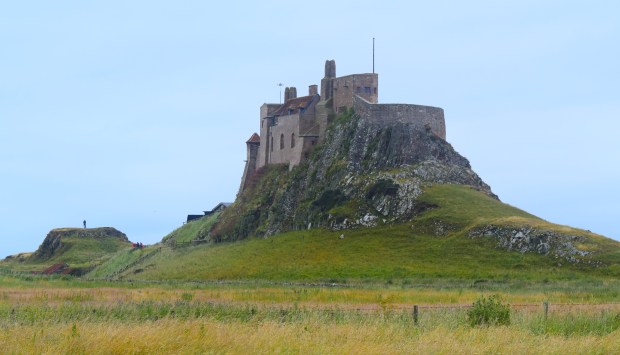
This accomplished British folk-rock outfit, once led by guitarist singer Alan Hull, were from Newcastle and named themselves after the nearby monastery castle that I had the pleasure of visiting last year (see my photo!).

Lindisfarne often drew from locales known to them and it would be easy to imagine the ghostly “Lady Eleanor” from their most famous song roaming the drafty corridors of that edifice.

Group rating: A- ROBTL: First in class.

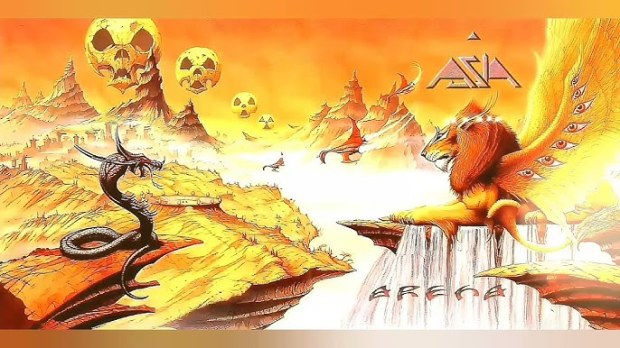
ASIA

Another very famous name and a progressive-rock supergroup made up of former (and in some cases future) members of Yes, King Crimson and ELP. I’m a huge prog fan but at the time of their big debut LP (1982) I was much more in thrall to the likes of the Replacements and the Psychedelic Furs than this machine-tooled AOR approach. Even guitarist Steve Howe, who would do much much better work in Yes) admitted that the production of said album was “Journeyesque,” not a good thing. But they fared well on middle-of-the-road rock stations and sold lots of plastic.

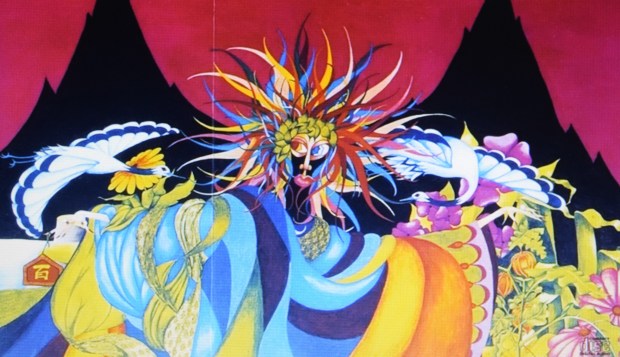
Group rating: C ROBTL: Nil, unless you count Roger Dean’s somewhat Oriental cover art. (see top image)

EUROPE

Staying on the continental theme, we doubt anyone ever looked to these lugs for a representation of European culture. The glam-metal Swedes did have their moment in the sun (not that I noticed) and got a recent ironic boost due to their famous Geico commercial featuring their biggest hit.

Group rating: C- ROBTL: Nothing doing.

ENGLAND

This prog-rock band was destined to be under-appreciated, seeing that their excellent debut album, “Garden Shed,” came out in 1977, the same year that the Sex Pistols and the Clash were shaking up things in their native land. England were led by keyboardist-singer Robert Webb and they hailed from Kent County, an area known as the Garden of England. Later reevaluations and rereleases of their work led to reunions (and some new work) first in 2006, including a nice 2-disc CD edition of “Garden Shed.”

Group rating: B+ ROBTL: Very high

JAPAN

This London-based group started out in 1974 as more of a glam act and evolved a synth-heavy, futuristic approach in the New Wave era. Not my cup of tea and initially their records flopped in the UK, but they found fame in the Land of the Rising Sun. Not sure how much that had to do with their name. They did release a single called “Life in Toyko” but it oddly featured the catch phrase “life can be cruel.”

Group rating: C+ ROBTL: Well, they sold out Budokan three nights running.

NEW ENGLAND

Getting back to my neck of the woods, this Boston-based group was managed by Queen impresario Don Aucion. They got a peek at the Top 40 with “Don’t Ever Wanna Lose Ya” (#40 in 1979) but their career soon stalled. Although stubbornly a product of their Asia-Journey age, New England did poke at the edges of several genres, including Art Rock. Seeking a sales lift, they came up with the multi-part “Explorer Suite.” Brimming with dramatic vocals and flashy keyboards, they were hoping the “Bohemian Rhapsody” lightning would strike twice, but to no avail.

Group Rating: B- ROBTL: Nothing you would notice.

NANTUCKET

Another New England locale, but these guys were from North Carolina and got their start as an oceanside bar band. They named themselves after the song “Nantucket Sleighride” by Mountain. There is some of that influence here, but also of arena-rock plodders like Foghat. Nothing special but I like their energy and the cheeky covert art of their first album is a 70s guilty pleasure.

Group Rating: B ROBTL: Very little.

KANSAS

I really don’t want to talk about these guys. You know them, you love them. Well, you know them anyway. Me, I always get them mixed up with Styx, another location-named band, though in this case a presumably fictional one. Anyway, I don’t dislike them, but I don’t regard them either. They did find a curious common denominator in pop history. “Carry On My Wayward Son,” is annually one of the most played song in classic-rock radio formats.

Group Rating: B- ROBTL: Well, they are from Topeka.

MANASSAS

I don’t much want to talk about Steve Stills either. He’s one of rock’s least likable characters. If you care for a taste, consult the interview of jazz drummer (and one-time Joni Mitchell squeeze) in the book “Girls Like Us” or check out Steve’s belligerent reaction to a little healthy criticism in the festival film “Celebration at Big Sur.” Having said that, Manassas (named after the Virginia town where the first great land battle of the civil war took place) were a good band for him, esp. in the case of second-billed Chris Hillman, the reliable wing man late of the Byrds and Flying Burrito Bros. Their first album was one of Stills’ stronger efforts (and a double LP no less) and I’ll be happy to post my favorite track.

Group rating: B ROBTL: Well, it is kinda country rock.

CHILIWACK

Chiliwack’s 1971 single “Lonesome Mary” was one of my favorite obscure near-hits of my early radio-listening days I remember the DJ telling listeners that the group was from Canada, and so far north there that there “drummer is a grizzly bear.” They were actually from Vancouver and named themselves after a cool-sounding town nearby. “Lonesome Mary” was one of those killer 3-minutes slabs of power rock, with Bill Henderson’s urgent vocals and blazing guitar.

Later, Chiliwack dabbled in progressive rock, which was still evident in their 1979 album “Breakdown in Paradise” which I picked up on cassette in a Quebec City shop last year. In the early Eighties, they got their commercial due with a few poppier U.S. Top 40 hits, most notably with “My Girl (Gone Gone Gone)”, and are still a going concern these days.

Grade: A (just because) ROBTL: Grizzly bear or no grizzly bear, they representing!

The geo band phenomenon continues to this day, although reading up on the subject can cause confusion. There’s an Indiana band called Brazil but formerly called themselves London. The group Spain are from California, and Jamacia are from France. That’s not even mentioning the ones named after planets and constellations, though I do want to check out Uranus, lol.

End of the Indie Century: Revisiting “120 Minutes”

By the end of the 1980s, my best nightclubbing days were behind me. Sure, I’d still go out here and there, to clubs and concerts. But the Eighties was the decade where I experience so many greats of the post-’77 musical surge: seeing everyone from the Jam to Lene Lovich, from Husker Du to the B-52s, from the Ramones to Talking Heads, not to mention the Clash six times, including at their legendary residency at Bond’s in Times Square in 1981.

Oh, what a time it was. The punk-rock movement of the late 70s, at its core, was a crucial self-actualization for the second wave of baby-boomers tired of the over-inflated arena rock that had come to define the era. Enter urgent new sounds played in the elemental confines of clubs, while stark and distinctive fashion statements and fervid fanzines joined the battle against the bloated PR machines of corporatized supergroups. Even under the later umbrella terms of alternative or indie rock, this movement continued well into the grunge-friendly early 90s.

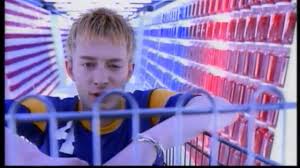
Hey, Thom–if you’re looking for the “Fake Plastic Trees,” they are in Aisle 5. (see below).

By then, I was getting a little older and more inclined to take it easier. One way I kept up with the alternative-rock scene was by watching the MTV show “120 Minutes” on Sunday at midnight. Giving the steady diet of putrid reality shows that dominate the once-great channel, it may be hard to imagine the inspired programming they once had on at the end of the week. “120 Minutes” was preceded by the near-anarchic animation show “Liquid Television” and the starkly beautiful sci-fi series “Aeon Flux.”

Along with videos from a great variety of artists that fell under the loose alt-rock definition, there were also numerous in-studio interviews and performances. Though MTV has long given up on most music programming, MTV2 now shows “120 Minutes” (videos only) on the weekends at its old midnight time slot. So I recently revisited this 90s show and see what it might tell me about this time when I was more or less retiring from the music-community front lines. I took the first twelve viddys that came on and jotted down my hot-take reactions, rating them on a 1-10 scale.

“Sonnet” by The Verve

Funny this came on first because I had just listened to their celebrated 1997 album “Urban Hymns” and came away duly impressed. “Sonnet” is the alluring second song, following their massive hit “Bittersweet Symphony.” It’s one I really like but the dark, static video doesn’t do much to enhance it. Grade: 7

“Sing Your Life” by Morrissey

Yup, it’s him. Morrissey has become quite a divisive figure in later years and I never much got him, outside of a few songs when he fronted the Smiths. This 1991 offering may have sought to lighten up his dour, sometimes embittered image, presenting him as a slick lounge singer with the implied positive image reflected in the song title. But I didn’t buy it for a second. Grade: 5

“Eighties” by Killing Joke

This is one of those bands I never got around to listening to. Maybe the group name (analogous to “destroying humor”) was a turnoff. For sure, it was (is?) a dark and aggressive sound. This ranter and raver was from 1985 is bludgeoning slab of industrial rock where KJ’s strident vocalist Jaz Coleman rails non-specifically about the ills of the decade.  Images of Reagan, Thatcher, Brezhnev and global strife flash on the screen. Coleman delivers this supposed message of resistance in full autocratic mode from a stage where both the U.S. and Soviet flags are present. Given recent events suggesting a new cozy relationship between a certain ex-KGB man ruling Russia and a certain dictator-loving American president, that element may now seem sadly prescient. Grade: 6

After the KJ video there was a commercial break. The first one was for baby diapers, probably not the kind of ad you saw during “120 Minutes” original run.

“Down to This” by Soul Coughing

This is the point where I felt rock culture slipping away from me. But only in retrospect; I missed this band first time around and so glad I did. The guys in this group had great indie cred, some of them cutting their musical teeth with composer John Zorn. So I can only guess why they settled for that poorly-aged cut-up style of 90s indie rock, complete with shuffling beats, fake rapping, low-rent samples and repeated nonsensical tag lines. It’s all too clever by half, and while people like Beck could infuse this sub-genre with whimsy, this is just annoying. Grade: 3

“Everyday Sunshine” by Fishbone

Just by the song title alone this came along as a breath of fresh air. After some of what came before, this L.A. group brought what others lacked: infectious energy, warmth, humor, a true social consciousness and killer grooves (they were also the only band of color of the 12 videos). Fishbone have been a wild card probably since the day they formed while junior high back in 1979. They’ve played punk and funk, ska and metal and all sorts of things in between. Here, they ride the best vibes of War and Sly Stone from the inner city to the concluding scene is a field of wildflowers. Grade: 9

“Shell Shock” by New Order

These post-punk stalwarts, formed in 1980 from the ashes of the legendary Joy Division after the suicide of singer Ian Curtis, cut their own distinctive path.  For a while, at least. Distinctive early highlights like “Age of Consent, “Temptation” and “Love Vigilantes” had by 1986 given way to a more homogenized synth-rock. “Shell Shock” is decent and danceable but a lot less gripping than earlier records. Through the blue-filtered haze of the video, I spied keyboardist Gillian Gilbert, the sole woman viewed in this sampling. Grade: 6

“Fake Plastic Trees” by Radiohead

Since I had a swipe at Soul Coughing and Killing Joke earlier, you can go ahead and snigger at me for giving this one a high mark. Even casual Radiohead fans may roll their eyes at this, one of those slow mournful tunes of theirs, voiced in falsetto by Thom Yorke—all the while being pushed around in a shopping cart up and down the aisle of a futuristic store. It’s not the best song from their great 1995 breakout album The Bends but the band’s uncanny ability to suss out the artificialities of modern life, and how it leads to lives of quiet despair, is clearly on display here, even if Yorke’s persona drives you batty. Grade: 8

“Hang Onto Your Ego” by Frank Black

This raucous and righteous cover of this Beach Boys deep cut from their classic Pet Sounds album (aka “I Know There’s an Answer”) is how you do someone else’s song and make it your own. (For how not to do it, read on). The cut-and-paste-and-distort method of video production fits the subject matter (LSD discombobulation) perfectly. Grade: 8

“Prisoner of Society” by the Living End

These Australian punk rockers don’t mess about, this classic genre complaint (reference the title) is about what you would expect. A loud-and-proud three-chord chainsaw, the obvious reference points are the Clash and Green Day, but the named themselves after a Stray Cats song and kind of look the part. Yeah, it’s retro but what’s good for the 1978 goose is also good for the 1998 gander. Grade: 7

“I Love to Hate You” by Erasure

OK, so we’re back to this again. I don’t know what it is, because I liked a lot of synth pop hits in the 80s. But this is as slick as it is unimpressive. A big budget video, complete with flamenco dancers and the singer walking on water, can’t save the song’s decided inconsequence. I guess this survey kind of shows you just like what you like. Grade: 5

“Ball of Confusion” by Love and Rockets

We lower the bar even more for this know-nothing cover version of the Temptations classic protest number. Everything about this group bugs me, from their smug presentation to the fact that they cribbed their name from Gilbert Hernandez’s celebrated comic-book series of the same name, which is centered around a band called (wait for it) Love and Rockets. What is particularly galling about this is the lack of effort, the expressionless vocal and rudimentary beat. Like Frank Black above (and hundreds of others) the goal is to apply your own stamp when covering another’s song. I don’t think these yobs have any stamp to give at all. Grade: 3

“Do You Remember Rock ‘n’ Roll Radio” by the Ramones

How appropriate that this video appeared as the last of the twelve watched at random. The Ramones’ first LP, released in April of 1976, was a clarion call for a new generation of rock and rollers. Despite the pummeling riffs and song titles like “Beat on the Brat” and “I Don’t Wanna Walk Around with You,” the group was all about community. This extended from their famous home base at CBGB in their native New York to London, where their first concert (in front of 2,000 at the Roundhouse) greatly inspired the nascent punk movement there.

In a perfect world, brilliantly conceived singles like “Sheena is a Punk Rocker” (#81) and “Rockaway Beach” (#66) would have topped the American charts. But by 1980 it was pretty evident that the band was destined for cult status only. It was decided that for their fourth album End of the Century the perfect producer to broaden their appeal would be the legendary Phil Spector. Not yet the frizzy-haired convicted murderer we would later come to know, the Spector of 1980 was still plenty crazy. Classicists at heart, the boys loved his famous girl-group sound of the early Sixties. Instead, what they got was the volatile producer allegedly waving a gun at them and locking them into his house while making obsessive demands.

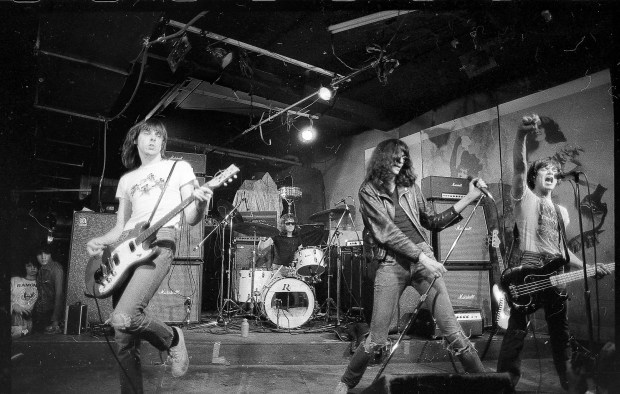
The Ramones reinvent the wheel at CBGB in ’77

What came out of that was a good album but not the last-chance breakthrough they desperately wanted—though at #44 it would prove to be their highest charting LP.  The anthemic opening track, “Do You Remember Rock ‘n’ Roll Radio” seemed like a prideful last hurrah, even though the Ramones would not break up until 1996.  Name dropping everyone from Murray the K to T. Rex, the band (the lyrics are by singer Joey Ramone) embraces the whole of this great American invention—rock ‘n’ roll—and warns of its endangerment:

Do you remember lying in bed
With your covers pulled up over your head?
Radio playin’ so one can see
We need change, we need it fast
Before rock’s just part of the past
‘Cause lately it all sounds the same to me.

The fact that they’re maybe jumping the gun here is covered by the refrain: “It’s the end, the end of the 70s/It’s the end, the end of the century.” It’s everything that the music should be: energetic, passionate, purposeful and witty. The coming decades would see the rise of self-centered Instagram pop in the Katy Perry, Ke$ha et al., proving them painfully correct.

Sadly, the Ramones’ front line of Johnny, Joey and Dee Dee, all died between 2001 and 2004. “End of the Century, indeed.

Back in 1976 in Creem magazine Gene Sculatti, in a review of the Ramones first album concluded: “If their successors are as one-third as good as them, we’ll be fixed for life.” Once upon a time, we held that to be true. Grade: 10

For the Records #6: Got Live if You Can Bear It

The live album holds a curious place in many discographies of rock bands and solo artists. It can be many things: a peak-career highlight for some (The Who’s Live at Leeds, the Stones’ Get Yer Ya-Yas Out, James Brown’s live-at-the-Apollo recording) and a career maker for others (Frampton Comes Alive). Many others are seen as placeholders between studio albums or as a de facto souvenir for fans who have seen their favorites in concert.

Sometimes though, an official live release can end up being a millstone in the canon of even the best musical artists, scoffed at by both critics and fans alike. It could be a case of shoddy production, sloppy performance, a group in career downturn or even an excess of success. Creem magazine was once so put off by the rank triumphalism Quenn’s Live Killers they compared it to the sound of “someone peeing on your grave.”

Over time I have gathered up a list these bad-rep concert documents and re-visited them, wondering if they really deserved all those one-star reviews. In some cases, time has been kinder, initial victims of a hot-take hostility in a tougher age of music criticism. Others are still big-time stinkers.

Who’s Last—The Who (1984)

I’ve always wondered about this one. Dismissed and derided at the time, Who’s Last was a document of the band’s at-the-time Farewell tour back in 1982. I mean it couldn’t be as bad as all that, right? Yes and no. On one hand it is the Who and there are gobs of great tunes that are played well enough. But on the other hand, don’t expect anything transformative. The galvanizing versions of “Magic Bus” and “My Generation” on the celebrated Live at Leeds put the ones here to shame, not to mention how poorly this “See Me, Feel Me/Listening to You” stacks up to victorious version on the Woodstock soundtrack. True, people thought it was a swan song back then and a release was justified (though it only hit #81 in America) but after Pete and the boys resumed touring in 1989 it seemed irrelevant, esp. after the sublime Leeds was expanded from 6 to 14 tracks in the CD era. Grade: C-

Take No Prisoners—Lou Reed (1978)

“What do I look like, Henny Youngman up here?” Yeah, kinda. This smart-ass double album was reportedly Lou’s answer to those who said he never talked on stage. True to Reed’s incorrigible nature he goes too far in the other direction, ad-libbing over opener “Sweet Jane” until the song is just an afterthought. True, he does get out a few good lines (“Give me an issue, I’ll give you a tissue”) and a sick burn on Patti Smith (“Fuck Radio Ethiopia, this is Radio Brooklyn!”) but it sets the tone for what is really a punk novelty record.

The music, such as it is, starts at 2:20

The crowd at the Bottom Line nightclub in NYC seem to be there as much for the cult of personality as for the music, and “Walk on the Wild Side” becomes a rambling 16-minute monologue a la Lenny Bruce. When Lou does manage to get thru a whole song without ragging on rock critics or his old Factory friends the results can be pretty good, as on “Coney Island Baby” and “Satellite of Love,” but they add up to a relatively small fraction of the album’s long 98-minute run time. Grade: C

Coast to Coast: Overture and Beginners—Rod Stewart/Faces (1974)

The Faces were on borrowed time when this concert record came out, maybe accounting for the poor press it got. Some saw it as a quick cash-out before Rod Stewart finally split to commit full-time to his burgeoning solo career. Key contributor Ronnie Lane had already left, replaced by Japanese bassist Tetsu Yamauchi. Coast to Coast is an enjoyable (if slapdash) mix of Rod solo numbers, a couple of Faces songs and clutch of covers. Most successful is a top-shelf take on the Motown lament “I Wish it Would Rain,” featuring an impassioned vocal by Rod and a great blues guitar solo from Ronnie Wood. Grade: B-

On the Road—Traffic (1973)

Traffic were another stalwart British group who were heading down the home stretch when this leisurely live double hit the shops. They released one more studio album before disbanding the following year. This was the end of their expanded-lineup era, with the core trio of Steve Winwood, Jim Capaldi and Chris Wood were joined by percussionist Rebop and three Muscle Shoals session men. This period was marked by a certain languid jam-band sound and most of the material here was drawn from the previous two studio sets, Low Spark of the High-Heeled Boys and Shoot Out at Fantasy Factory. The only nod to the “old” Traffic was a 21-minute medley of “Glad/Freedom Rider.” The band may have set themselves up for rock-mag ridicule by including the recent “(Sometimes I Feel So) Uninspired.” But that one turns out to be a highlight, with some electrifying lead guitar from Winwood, so go figure. Grade: B-

David Live—David Bowie (1974)

This is a textbook case of a concert album being recorded at precisely the wrong time. Bowie’s ’74 show started off as the “Diamond Dogs” tour and ended as the start of his “plastic soul” era. (His next album would be Young Americans). The album is unfocused and lacking in true energy, his vocals careless and strained. Hard drugs were an issue. It tends to sound better if you don’t know the studio version and have nothing to compare it against (I rather like his version of the Ohio Players “Here Today, Gone Tomorrow”). But the only one of his many famous songs here that maybe outdoes the original is a strong version of “Rock ‘n’ Roll Suicide,” that closes this misbegotten release. Grade: D+

T.V. Eye Live—Iggy Pop (1977)

Speaking of Mr. Bowie, the year 1977 brought him renewed recognition not only for two of his classic Berlin-era albums (Heroes and Low) but also reviving the career of a certain James Osterberg, who was at loose ends after the dissolution of his proto-punk band the Stooges. Iggy Pop, as he was better known, joined Bowie at his digs hard by the Berlin Wall, both trying to kick long-standing drug habits and get new inspiration in their bleak Cold War surroundings.

Iggy also released two great albums in ’77 (The Idiot and Lust for Life), both produced and largely co-written by his pal Dave. This single live album also got a release but was panned across the board (one meager star at AllMusic) but nowadays it’s hard to see why. It’s a pretty strong set, some of it from an American tour where Bowie supported him on keyboards and backing vocals. The sound quality is not so hot, probably because RCA gave him a $90,000 advance to produce the album (he owed them one more LP) but then spent five grand on it and pocketed the rest. That alone bumps it up half a grade. B+

Bob Dylan at Budokan—Bob Dylan (I think) 1978

Perhaps we will never know just what compelled Zimmy to release this album of his revolutionary repertoire performed as a vacuous Vegas lounge act (and presented as such). On the heels of his divorce and the epic flop that was his “Renaldo and Clara” movie, maybe he thought he could release a quicky double live album and recoup his losses before anyone noticed, it did hit #13 in America.

It did have a few critical defenders and of course if you go by the YouTube fanboys, Budokan ranks right up there with the Sistine Chapel at the apex of Western Civilization. But unless it’s enjoyed as a perverse form of performance art, I don’t know how anyone can like the Wayne Newton arrangements, the cloying back-up singers, the overwrought saxophone and Dylan singing his visionary back catalogue as if it were the collected works of Tony Orlando and Dawn. Just take this encore version of “The Times They are A-Changing” (please) and listen to the fake sincerity of the spoken intro and then Dylan actually telling the crowd “We’re here for four more nights” as if he really were at a casino cocktail lounge and not one of the world’s most revered concert halls. Wow. Grade: D

Still Life—The Rolling Stones (1982)

The era of the true mega concert tour, complete with corporate sponsorship, was under way in the early 80s and naturally the Stones were on the leading edge. That means fans packed in like 80,000 sardines at a place like Arizona’s Sun Devil Stadium and the band trying to fill it with sound and vision no matter how impersonal the setting. (You can see some of that scene in the Hal Ashby-directed tour film, “Let’s Spend the Night Together”). The stage is so big that Mick Jagger and Charlie Watts seem to be in different zip codes). This dynamic comes thru in the unfortunately- titled Still Life.

Like Who’s Last, there are lots of great songs here and the notes are all in the right place (mostly). Yet, it comes down to a business model that just doesn’t work—for me, anyway. I’ve never been to a football stadium concert, and this shows me why. Sure, it’s quite possible to have a good time at this kind of show (many have) but to me the possibility of a good aesthetic return on your monetary investment seems low. I can’t see the band and they can’t reach me; that dubious dynamic carries over to the album. Like David Live, this album sounds OK when you don’t have any previous recording to compare it to, so I chose their new cover of Smokey Robinson’s “Going to a Go-Go” as the best of the lot. Grade: C

Live ‘n’ Kicking—West, Bruce and Laing (1974)

Twin Peaks—Mountain (1974)

When you apply the contemporary phrase “Go big or go home” to the classic rock era, it’s hard not to think of Leslie West. He was a “mountain” of a man (his girth inspired the band’s name), his bellowing vocals and scorched-earth guitar solos known far and wide since the band made a big splash at Woodstock. By 1972, Mountain were on hiatus and West and Mountain drummer Corky Laing joined ex-Cream bassist/singer Jack Bruce to form a blooze-rock supergroup that released two studio albums and this single live set, released just after announcing their break-up in early ’74.

As a group, Mountain, as heavy as they were, also had a melodic sign, seen in deft compositions like “For Yasgur’s Farm” and “Nantucket Sleighride.” WBL cast away most of that. To start off Live ‘n’ Kicking, they turn the Stones’ refined and brooding ballad “Play With Fire” into a 13-minute marauding metal warhorse, complete with drum solo. The “96-decibel freaks” in the audience eat it up. Jack Bruce, replacing the more refined Felix Pappalardi as West’s frontline partner, was rougher-edged. He fills the space between songs with arena-rock bravado and his bass is turned up to overload levels nearly as loud as West’s guitar, if that’s even possible. True, there is some nimble trip interplay on the WBL original “The Doctor” but things go happily off the rails with closer “Powerhouse Sod” which turns into a Bruce showcase, because everyone knows the best way to end a 70s live album is with a bass solo!

Around the same time that West, Bruce and Laing were dissolving due to internal dissension and hard-drug abuse, West was and Pappalardi were re-uniting with a new lineup. Corky Laing, for whom the drug issues were hitting esp. hard, was replaced this time by Alan Schwartzberg. Original keyboardist Steve Knight was subbed off in favor of Bob Mann, who also doubled on second guitar for added sonic impact. My roommate at the time called the Japan-recorded Twin Peaks “the album with the biggest tits in the world” (riffing on Monty Python) and it did seem like the band was out to prove scale new heights of heavyosity.

Twin Peaks, with its confident air attractive artwork (see banner image at top of this post) did fare a little better in the critical arena than Live ‘n’ Kicking, which got an E+ (?) in the Village Voice. However, many scribes headed for the exits at the prospect of a 32-minute “Nantucket Sleighride.” Of course, fans, in this age of bong hits and good stereo systems, loved every long minute of it and didn’t mind having to get up and flip the record halfway thru. The glorious noise continues right through to side four, as the band run over the “Mississippi Queen” with a Mack truck and play “Roll Over Beethoven” at such volume that it would have made ol’ Ludwig van deaf all over again. Best of all is West’s signature “Guitar Solo,” where he gets free reign to indulge himself for five uninterrupted minutes, to the point where he injects a bit of “Jingle Bells” even though it’s August in Osaka. The Seventies, they were a thing, man.

Grades: Live ‘n’ Kicking: B-, Twin Peaks: A (fight me).

And speaking of “Jingle Bells,” Happy Holidays, everyone!

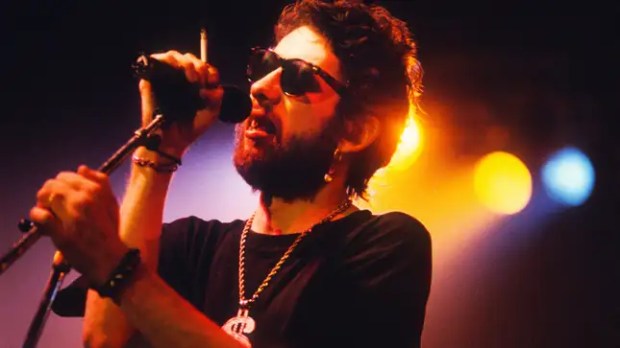
RIP Shane MacGowan: Sing Him a Song of Times Long Gone.

“He took the road to heaven in the morning.” RIP to Shane MacGowan, principal singer and songwriter for the Pogues, and the poet laureate for the modern Irish diaspora. Though he was born and (mostly) lived in and around London, his childhood experiences in Tipperary seemed to inhabit him as profoundly and completely as did Dublin to James Joyce, who left Ireland as a young man.

With a super-talented group of players behind him, Shane wrote dozens of beautiful and incorrigible booze-infused songs on themes of wanderlust, bittersweet romance, camaraderie, Irish social history, political indignation and London street life. His songwriting compromised a universe unto itself: this was a guy who could make the demolition of an old greyhound racetrack (“White City”) sound mythic (Oh, the torn-up ticket stubs of a hundred thousand mugs/Now washed away like dead dreams in the rain”).

The same goes for “Sally MacLennane” which covers an entire lifetime in 2:40. MacGowan sings the tale of Jimmy, who “played harmonica in the pub where I was born” (brilliant) and goes off to America to make his fortune while the narrator grows up to tend the same bar. Jimmy eventually returns to a very changed homeland and you come to realize that the fateful walk to the train station is in fact a funeral procession.

So let’s sing Shane “a song of times long gone” and remember him well, as he remembered the world around him in a way that touched so many so deeply.

—Rick Ouellette

For the Records #3: Bloodrock’s Forgotten Prog-Rock Album is Not D.O.A.

In the annals of rock history, many bands are liable to be remembered only for their biggest hit. And so it is with Bloodrock, the Fort Worth-based outfit that graced the American Top 40 but one time. That single, of course, was the infamous “D.O.A.,” an exceptionally graphic dirge that depicted the immediate aftermath of a plane crash—told from the point of view of one of its soon-to-expire victims!

Against a morbid musical backdrop of funeral organ and blaring sirens, Bloodrock vocalist Jim Rutledge spares us no detail, whether it’s his missing limbs or the blood-soaked sheets applied by a paramedic who is overheard saying, “There’s no chance for me.” The song ends with Rutledge’s over-the-top cry of “God in heaven, teach me how to die!” before the final chorus yields to the sound of multi-tracked sirens sounding off on route to the morgue.

Brilliant stuff, to be sure. Just enough of us twisted teenagers bought the 45 (the full LP version ran past 8 minutes) to enable “D.O.A.” to claw its way to #36 in early 1971. I still have my copy. The b-side (“Children’s Heritage”) was more typical of the band’s output, a righteous if plodding boogie typical of the era. While the band’s signature song may not have been intended as a novelty (their guitarist Lee Pickens had witnessed a small aircraft crash), Bloodrock were to be identified with “D.O.A.” as closely as the Baha Men will be stuck forevermore with “Who Let the Dogs Out.”

For their first three albums, Bloodrock were under the clientage of both John Nitzinger, the sketchy kingpin of Texas blooze-rock who penned many of their songs, and manager/producer Terry Knight, who was also the combative Machiavelli behind Grand Funk Railroad. But by 1972, Rutledge and Pickens had left the band and Bloodrock had a new frontman in the person of fresh-faced Warren Ham. Ham was the lead singer and quite handy with the flute, saxophone and harmonica.

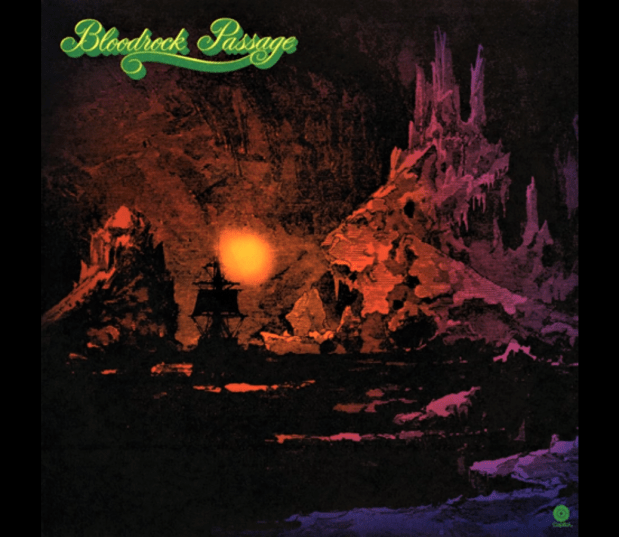
In late ’72, two years after recording “DOA,” came their fourth album, Passage. Gone was Terry Knight and his brainchild that their every LP sleeve design had to have dripping blood somewhere. Instead, the cover was a cryptical woodcut-like illustration of a clipper ship passing an underground cave, a nice touch. Similarly, the new Bloodrock sound was imaginative, and suggestive of the era’s preeminent progressive-rock sound.

The biggest and best surprise being the second track, “Scotsman,” an outright ringer and tribute to Jethro Tull leader Ian Anderson. With its scootering flute riff, weighty Hammond organ accompaniment (by key band holdover, Stevie Hill) and jaunty jig-rock arrangement, it could have been slotted into a Tull album like War Child or Songs from the Wood, if not for the singing accent.

While this edition of the band would never be mistaken for Yes or Peter Gabriel-era Genesis, other artful touches spice up this record. The buoyant opener “Help is on the Way” has a deft instrumental coda and “Life Blood” has some nimble dynamics and fresh splashes of synth that can stand up there with the best proggers of the day and contains some still-relevant lyrics (“I have seen a picture of hate, formed in a thousand ways/People say it’s all too late, talk of numbered days”).

The 8-minute semi-epic “Days and Nights” is a nice slab of organ-led heavyosity that should appeal to anyone who’s ever enjoyed a Uriah Heep album. There’s even a topical number, a nifty blues shuffle called “Thank you, Daniel Ellsberg,” giving props to the man behind the “Pentagon Papers” expose. Despite this new lease of life, Passage did not catch on and Bloodrock would only be around for one more studio album.

Since this “For the Records” series focuses on the obtaining of records as well as the listening to them, here are the somewhat odd circumstances of how I got my copy of Passage. After a night on the town, I pulled up in front of a used record store in North Cambridge, Mass. The owner of the Blue Bag Records store sometimes puts a pile of free discarded albums outside the door after hours. There was no pile this time, but the place was open despite the late hour (I think the guy was doing his accounts). Since I was likely going to be the only customer at that time, I had to be supportive and buy something. Nothing interested me until I saw this baby for eight bucks. I love the covert art (reminiscent of nautical mysteries like “Rime of the Ancient Mariner” or Poe’s novel “The Narrative of Arthur Gordon Pym of Nantucket”) and I had heard a few of its tunes online. So it came that I bought my second Bloodrock record, some 52 years after purchasing the “D.O.A.” single.

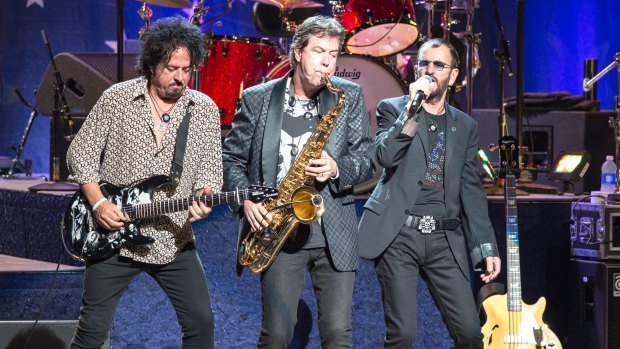
Although Bloodrock were not long for the world by the time that this album was released but Warren Ham went on to a long and successful career (still ongoing) as session and touring saxophonist for everyone from Kansas and Toto to Olivia Newton-John to Donna Summer. He has also been in several iterations of Ringo Starr’s All Starr Band (see above). In fact, I saw him on one of these tours and of course never made the connection then. Too bad. If I ever had the chance to meet him I would love to see his reaction when I told him: “Hey, I loved that “Scotsman” song you did way back when.”

—Rick Ouellette

For the Records #2: Newer Bands, Older Listeners

Born in 1958, I well remember the days of my early record-buying youth, looking up to my rock and roll heroes. The guys in the Beatles, Stones, Credence and the Who were all first wave baby-boomers, coming into this life during or just after World War II. The band members of the punk/New Wave groups I followed enthusiastically and so identified with were my contemporaries. Even though great music is timeless, the age factor is an important variable when it comes to musical appreciation.

So what happens to aging rock ‘n’ rollers when, like me, you are approaching Social security age? For many years, what I would call “Instagram Pop” has dominated mainstream charts, my main exposure to it being the endless parade of forgettable, dance-heavy one-hit wonders that tend to show up as the musical act each week on “Saturday Night Live.”

You can always dial into a classic-rock station or listen to the old favorites in your collection. But how does one satisfy a lifelong urge for new musical discoveries? Well, in this age of the Internet and streaming, access to newer acts that carry high the torch of Rock music is easier than ever. Here are several of my more recent finds. Keep in mind that the word “newer” is relative for an old geezer like me. The criteria I used is that the band in question had to have dropped their first album in 1990 or later.

Apricity—Syd Arthur (2016)

In the Seventies, the “Canterbury Scene” was a vital musical hotspot—this ancient English cathedral city was home to bands like the Soft Machine, Caravan, Gong and Matching Mole. In 2003, a talented young band named Syd Arthur (pronounced like the Herman Hesse novel but also a tribute to rock iconoclasts Syd Barrett and Arthur Lee) emerged from the same town. The pedigree was not unnoticed: Soft Machine co-founder Hugh Hopper offered the group advice (and one of his bass guitars) and Paul Weller was an early fan.

Syd Arthur fit loosely inside the wider neo-prog rock genre. On their albums their songs are propulsive and airy, with thoughtful lyrics and unfussy but expert musicianship. They are led by singer-guitarist Liam Magill and his bass-playing brother Joel, on keyboards and violin is Raven Bush (nephew of Kate). This is (was?) a great band, the only thing I would say is that their records leaned heavily on tightly arranged 4-minute songs that had a certain sameness of approach. That is why I prefer their fourth (and to date, last) album, Apricity. The formula is loosened up with various intros and outros and it’s a strong batch of songs. I especially like the closing title track (“Apricity” means the warmth of the sun that can still be felt on a cold day).

I saw Syd Arthur open for Yes in 2014 and was surprised and impressed how they delved into ambient psychedelic instrumental passages along with their more conventional songs. Although they have been inactive since 2017, here’s hoping for a reunion and maybe a willingness to explore this intriguing experimental side of their sound.

Let It All In—Arbouretum (2022)

The Baltimore-based group Arbouretum have been releasing excellent music since 2002 but have only attained a regional/cult following. Led by the enigmatic singer-writer-guitarist Dave Heumann, they have gotten some wider recognition, mainly for 2011’s The Gathering, which made the best-of-year lists of the UK’s two standard-bearing rock magazines, MOJO and Uncut. That album concludes with the brooding ten-minute-plus “Song of the Nile” which sprouts a glorious fuzz-drenched solo by Heumann, a not uncommon point of attack for him.

Arbouretum were more-or-less on my radar for years, via YouTube clips or the odd compilation track, but I finally ponied up and bought their latest (and tenth) album off their website. Let It All In is a strange beauty of an album. The heightened naturalism of Heumann’s cryptic song scenarios gives the whole album a hauntological vibe—he even name drops Telesphorus, the child-god of healing. Heumann’s voice seems to inhabit his own folklore, a few songs here sound like Gordon Lightfoot with Tom Verlaine on guitar. In their more hard-driving moments (the locomotive 12-minute title cut) their momentum is unstoppable, as is the saw-tooth lead guitar and the terse self-actualization that informs much of Heumann’s compelling lyrics: “Polestar don’t know where you are, only where you are drawn/Headwinds turn tail, hard to fail if you know where to begin.”

Alvvays (2014)

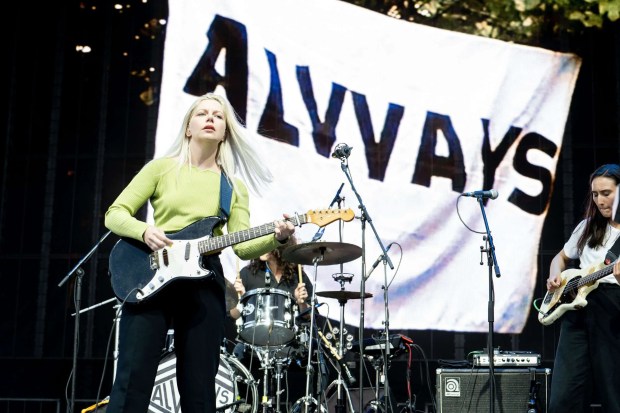
Alvvays (pronounced “always”) have put Canadian indie rock squarely on the map since releasing their self-titled debut in 2014. They hail from Atlantic Canada (formerly known as The Maritimes) but have re-located to Toronto. They are fronted by Molly Rankin, progeny of the Rankin Family, Nova Scotia’s first family of Cape Breton-style Celtic music.

That first album opened with a great one-two punch. The attention-grabbing opener “Adult Diversion” is followed by the ironic twee-pop plea “Archie, Marry Me” that, with its earworm chorus, became a cult hit. The aloof charms of the photogenic Rankin inform every song, her vocals are invariably both yearning and wised-up. Alvvays’ other two long-players, Antisocialites (from 2017) and Blue Rev (2022), are also excellent. Highlights include “Dreams Tonite” from the former and “Tom Verlaine” from the latter. The first is accompanied by a gratifying video that digitally inserts band members into the crowd at the Expo ’67 in Montreal (I was there as a 9 year-old but those guys hadn’t been born yet).

The second is not necessarily about the legendary Television frontman who passed away three months after the album’s release. Instead, Molly assures a Delphian boyfriend, “you’ll always be my Tom Verlaine.” Hipsters of the past and present will know exactly what she means.

England is a Garden—Cornershop (2020)

A big sunny musical highlight of the grim Covid year of 2020 was England is a Garden by the British indie-rockers Cornershop. The band, fronted by Tjinger Singh and Ben Ayres, was formed in Leicester in the mid-90s. In 1998 they had a #1 UK single with “Brimful of Asha,” a bouncy and delightful tribute to an Indian singer featuring the immortal tag line, “everybody needs a bosom for a pillow.”

However, Cornershop may be too quirky overall for sustained commercial success. It’s not the fault of the music: England is a Garden is a non-stop infectious mix of strumming guitars, flutes, tambouras and percussion, playing infectious rhythms under appealing melodies. But at times it is a bit hard to suss out what these lads are on about. (The CD comes with a fold-out poster that could have been better utilized as a lyric sheet). So while I may never understand “St. Marie Under Canon” or the tale of the “Uncareful Lady Owner,” they are still fun listens.

But when all their pistons are firing, this is some of the most enjoyable music I’ve heard in years. In time-tested form they celebrate their subculture and bemoan authority’s failure to appreciate it in “Everywhere the Wog Army Roam” (“policeman follow them”). In the chipper “Highly Amplified” they acknowledge that “hell is deep and the world is sinking” but refuse to give in to despair if there’s another rave to be had.

England is a Garden also features a pretty instrumental interlude (the title track), a radiant sing-along cover of a tune from a Seventies Hare Krishna pop album and two tracks that fall into the band’s long line of T. Rex/Sweet homages, one of which (“No Rock: Save in Roll”) pays clever tribute to the big role their native West Midlands area played in the development of hard rock.

Take Care, Take Care, Take Care—Explosions in the Sky (2011)

Explosions in the Sky are an all-instrumental “post-rock” band from Austin. They have released seven studio albums since 2000 and a few soundtracks as well, including one for the film version of “Friday Night Lights” about high-school football culture in their native Texas. Even their non-soundtrack work sounds like the compelling incidental music for the cinema of the mind. The music ebbs and flows and cascades, and often builds up to magnificent guitar crescendos.

The music of EITS can certainly be cathartic and their live shows come highly recommended though they’ve not been around my way that I know of. Like their other albums, 2011’s Take Care is great “listening listening” for those who have the time. Yet I can’t but help feel there’s a little something missing: yup, it’s the lack of vocals. The reflective folk-rock opening of a song like “Human Qualities” just cries out for an opening verse. While the group refer to their music as “mini-symphonies” there’s not enough variety in the arrangements to really make that stick. Still, at their evocative best (like in “Postcard from 1952” posted above), there’s something quite enchanting about EITS that made me glad I did get around to checking them out.

English Electric, Part Two—Big Big Train (2013)

Big Big Train are one of the more high profile bands of recent decades that inhabit the multi-variate world of neo-prog rock.. They formed in 1990 in the city of Bournemouth on England’s southern coast, and have released 14 studio albums and a clutch of EPs and live sets. Their overall sound falls somewhere between the late Peter Gabriel-era Genesis (Selling England by the Pound) and the early post-Gabriel Genesis (Trick of the Tail, The Wind and the Wuthering). Admittedly, that’s a narrow window so you can probably hear their sound in advance.

BBT have long resembled a collective more than a fixed group; on their records as many as seven or eight musicians are used per song, according to the sonics needed. These are some lush audio landscapes. The album I bought was English Electric Part Two (though Part One is also good) and the combination of the songwriting of founding member (and bassist/keyboardist) Greg Lawton with vocalist David Longdon was a creative peak (at the time, ex-XTC man Dave Gregory was on lead guitar. Longdon died in 2021, aged 56).

This music is unabashedly pastoral and nostalgic, with longish well-arranged  songs that extol the virtues of farmers and shipyard workers and railroad engineers etc. These multi-sectional pieces with their florid piano, flutes and guitar crescendos will be too precious for some. Titles like “Curator of Butterflies”  and “Swan Hunter” may even be a deal-breaker for some. But people like me who were weaned on the classic prog-rock sounds of Yes, Moody Blues and, yep, Genesis, will likely be intrigued. 

This is a partial list, and I didn’t included bands that I followed more closely (like the Decemberists or British Sea Power) or those that I want to find out more about, like last year’s indie darlings from the Isle of Wight, Wet Leg. Everyone remembers “Chaise Lounge,” their buttered-muffin breakout hit, but I like this best of the follow-up singles, with the girls cavorting on the headlands of their home island. Til next that next time…

Of Marquee Moons and dreaming spires: Tom Verlaine’s arcane legacy

Boy, was January a tough month in the increasingly busy field of pop-music obituary writing. It saw the passing of some folks with huge names (Jeff Beck, Lisa Marie Presley, David Crosby) and others less famous, but hitting just as hard for particular fan bases (Screaming Trees’ bassist Van Conner, original Yardbirds guitarist Top Topham). Social media has sort of made us all into amateur memorializers, and by the end of January I was getting a bad case of Obituary Fatigue Syndrome and mostly just clicking the sad-face icon when a friend would post about any of the names mentioned above.

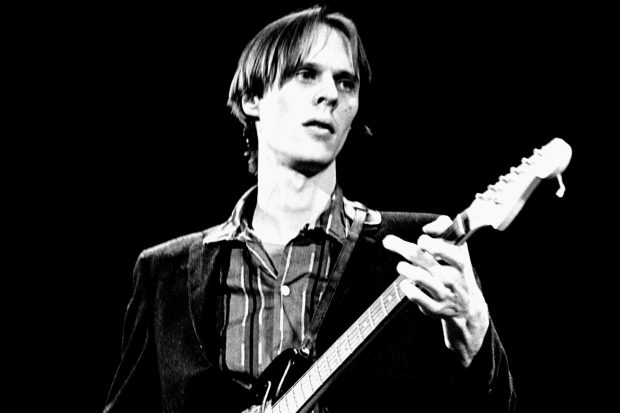
But on the 28th, another reported death, that of Tom Verlaine, prompted me to pick up the ol’ pen, for an alternative tribute. Verlaine, first with his band Television then as a solo artist, inspired me greatly in my development as a writer, in a curious field that in recent decades has got its own name: hauntology—the persistence of spirit that lives on in man-made environments.

Of course, Tom’s main influence will be musical, the enigmatic beauty of his songwriting and his otherworldly guitar skills. But in many a better written obit about Verlaine, a common theme persists: how he evoked a whole era and how his songs were almost literal surveyor marks in the changing New York City landscape of the late 70s. It was a time that Gotham was in the throes of financial crisis and social disruption but also giving creative birth to the epochal punk and hip-hop subcultures: both of which would soon have global reach.

Television, First Avenue NYC 1977

From L to R: Fred Smith, Verlaine, Richard Lloyd and Billy Ficca. They and countless other musicians and artists flooded into a (then) low-rent Lower East Side in the demographic upheaval of the white-flight 70’s Big Apple. The rediscovery and reutilization of neglected places is a key tenet of hauntology and urban exploring.

Verlaine became known to me ever since my end-of-1977 listening centered on Talking Heads ’77, Marquee Moon by Television (I bought MM on the strength of one great magazine review) and the Ramones Rocket to Russia, which a roommate had. Everything changed after that.

The inspiration for me was Verlaine’s lyrics. Marquee Moon’s mind-blowing 10-minute title epic is the key track, but my favorite Television song was “Venus.” It is a master class in urban psychedelia, the best song possible about tripping balls at night in Lower Manhattan with a couple of friends (and one of them is Richard Hell). “Broadway looked medieval/it seemed to flap like little pages,” Tom sings. This is the Broadway that extends down from the gothic majesty of the vertiginous Woolworth Building to its colonial terminus at Bowling Green. A lot of this stretch is basically unchanged in the last century. It was the site of many a famous ticker-tape parade and features two of New York City’s oldest churches.

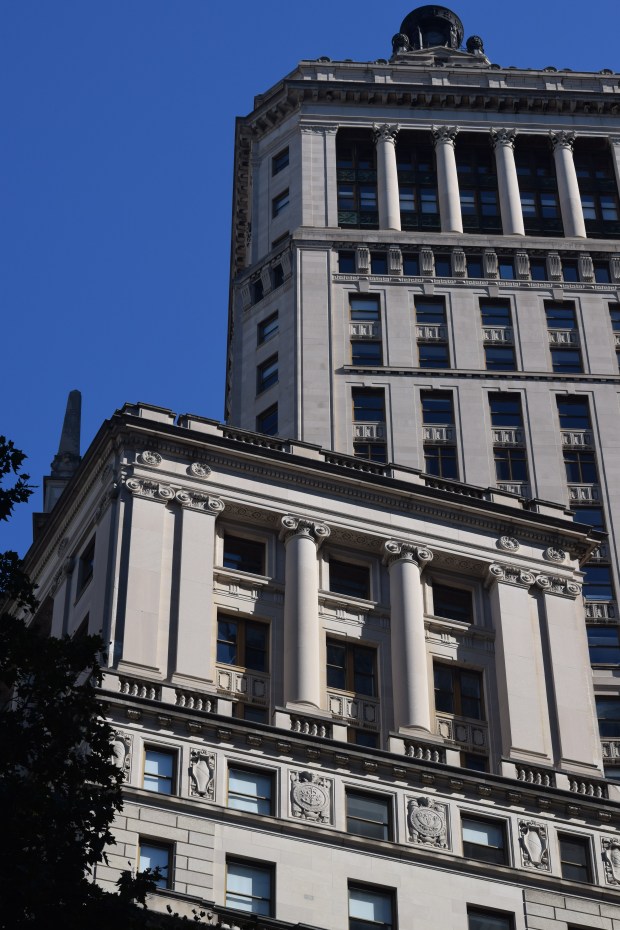
A couple of years back I spent a day-night-day in the Lower Broadway area, a block from the gargantuan old Custom House building, with its monumental sculptures representing the continents. I had my own sort of “Venus” moment when I stumbled on it for the first time on a misty night around 1980. I got some great photos of just the sort of thing that has inspired a passage in my graphic novel-in-progress “In a Dream of Strange Cities.” It was the page I was leading up to when I heard of Verlaine’s passing. My protagonist “sleep voyager” emerges in a Midtown NYC stripped of many of its buildings. He walks in the blazing sun until he reaches unchanged Lower Broadway, mythical home of O. Henry’s Transients in Arcadia, where’s it cool and shadowy and timeless. He’s on his way to a secret meeting with (wait for it, please) a utopian princess. (Free introductory comic of “In a Dream of Strange Cities” coming soon!)

Having a close look at lower Broadway in the spring of 2021. Photos by the author

Anyway, here’s a great quote from a more-or-less professional obit man/rock scribe about the quality of Mr. Verlaine’s hauntological aesthetic (from Matt Mitchell at Paste magazine).

He was walking art awash with the uncertainty of a midnight sky; a poet gleaning geographical imagery into his pastorals as if he was his city’s only architect.

Surely, Mr. Verlaine’s spirit and influence will live on indefinitely in every instance of someone falling under the spell of great cities and great possibilities. RIP Tom.

–Rick Ouellette

The Best of the Worst: A Sideways Appreciation of the Year in Music, 1972

Rock ‘n’ Roll has sure been celebrating a lot of golden anniversaries over the last several years. The Beatles’ conquest of America got a lot of attention in 2014. Then in 2017 it was 50 years ago today for Sgt. Pepper and the Summer of Love. A couple of years after that Woodstock and (bummer, man) Altamont hit the half-century mark.

As the march of time have brought these fifty-year markers into the early Seventies, the focus has shifted more to lists of great albums. If you’re a person of a certain vintage and spend a fair amount of time on the Internet, you were well aware of the embarrassment of riches that 1971 was in the annals of rock and pop music. As soon as we settled into 2022 the best of 1972 lists started showing up in my Facebook feed. That was also a great year: Ziggy Stardust, Exile on Main St., Transformer, Superfly, Eat a Peach, Thick as a Brick, Honky Chateau, Machine Head—I would hardly need to list the artists for anyone who was a music fan then. Also, there were records that became much celebrated in retrospect, like Nick Drake’s Pink Moon and Big Star’s debut #1 Record. When one of these lists was posted by a FB friend with a sense of humor, I went into wise-guy mood and said they forgot to include Portrait of Donny by you-know-who (Osmond).

After I had scored a couple of ha-ha emojis, I went back to the web page where I had pulled the title. I had Googled “Worst Albums of 1972” and found my way to rateyourmusic.com and their list based on the aggerate scores from hundreds or thousands of listener ratings using a 5-star system. As I scrolled down the list I realized: “Hey, there are some interesting records here!” There were some familiar names (John Lennon, Credence, the post-Jim Morrison Doors) as well as lots of cult bands, experimenters and acquired tastes.

So let’s dive in! You’ve heard T. Rex’s The Slider or Stevie Wonder’s Talking Book plenty of times: maybe there is something to learn about 1972 from looking down the wrong end of the telescope. So here are the titles I plucked from the list:

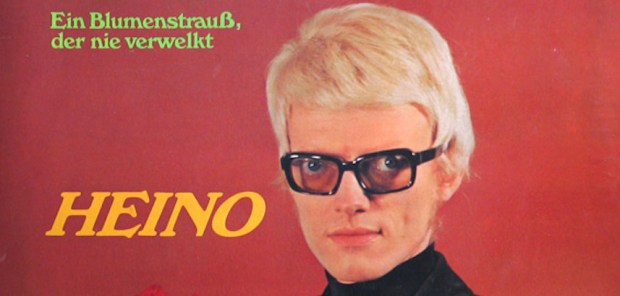
Everyone loves Heino, until they actually listen to him!

Die Schönsten Volkslieder der Welt—Heino

How interesting to see our friend Heino holding the top (that is, bottom) spot in this survey. The baritone champion of German “volksmusik” has been in the music biz since 1951 and sold 50 million records and in the social media age he’s gone viral far beyond his homeland. His distinctive look (whitish-blond hair and dark glasses), along with his unintentionally funny album covers, has made him the object of ironic appreciation. His 1972 album (translation: “The Most Beautiful Folk Songs in the World”) led the way with a 0.85 rating, less than one star! This probably happened when people who starting see his face taking over their friend’s profile picture went and actually listened to his tunes. This is unabashedly sentimental Alpine music and must be experienced at least once. Grade: C-

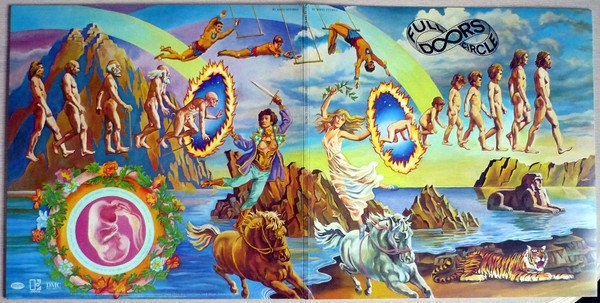
Full Circle—The Doors

It’s probably safe to say that as the second post-Jim Morrison Doors album, the odds were going to be stacked against an album like Full Circle (see album cover above). Rarely has a band been so completely identified by the charisma of its front man, who died in July of 1971. But Ray Manzarek, Robbie Krieger and John Densmore, Jimbo’s ever-reliable instrumental trio, were working on lots of material by the time of the singer’s inglorious demise, and Elektra Records encouraged them to continue. The Rate Your Music site has this record under the category tags of “Yacht Rock” and “Boogie Rock” which is a bit disheartening for a once-iconic group. On cliched numbers like “Get Up and Dance” and “Good Rockin’” it sounds like the Doors are starting out again as a bar band. When they do try to recapture past glories on songs like “The Peking King and the New York Queen,” Morrison’s way with words is sorely missed. There are some bright moments here: the misterioso “Verdilac” and the swinging “Piano Bird” are helped greatly by the sax and flute (respectively) of jazz giant Charles Lloyd. Grade: C

The Moviegoer—Scott Walker

I know I’m treading on thin ice here with such a major cult figure as Scott Walker. I did appreciate a few of the early hits he had with the (non-sibling) Walker Brothers. But after a while his unrelenting Broadway baritone feels to me suffocating in its monotony. To his many fervent admirers his voice is “emotive” but to me it is emotive only in the way a soap opera is “dramatic.” This covers album of film themes is a tough slog, to the point that even his die-hard fans tend to damn it with faint praise. It would hard to pick out a least favorite song here (every track uses the same torpid arrangement) but his remote rendering of “The Godfather” theme (“Speak Softly, Love”) is an offer I can very easily refuse. Grade: D

Mardi Gras—Credence Clearwater Revival

Back in the day before “haters” we had this thing called “critics.” Their job when it came to records, movies, books etc. was to call them like they see them, and you would weigh that opinion against your tastes and knowledge. Ah, simpler times. Rolling Stone scribe Jon Landau called Mardi Gras the “worst album I ever heard from a major rock band.” Did he hate the band? No, he loved their earlier stuff (who didn’t back then?) and was holding it up to a value judgement. I was a 14 year-old super CCR fan and bought it anyway and convinced myself to like it more than it deserved. This last Credence album was sub-standard for a reason: it was an inside-job work of sabotage by leader John Fogerty, who had spearheaded the group’s remarkable string of Americana rock hits. Second guitarist Tom Fogerty, his overshadowed older brother, had left the band in ’71 and his remaining cohorts (bassist Stu Cook and drummer Doug Clifford) were also tired of John hogging the show. In retrospect, they claimed only to want a share of the songwriting but John (not the most amiable figure in rock history) insisted they were on their own and he would do nothing else but play guitar on their tunes. They were split evenly, three songs apiece and a cover of “Hello Mary Lou.” The results were predictably mixed. Landau was particularly hard on Cook (though I have a soft spot for “Door to Door”) but Clifford fared somewhat better: his “Need Someone to Hold” is one of the better tunes here. Fogerty contributed their last charting single (“Someday Never Comes”) and the hard-charging “Sweet Hitchhiker,” although that had been a hit song a year earlier. But nothing could save them from the long-simmering internal strife: after a short tour to support Mardi Gras, the band split for good. Grade: C+

Deserted Palace—Jean-Michel Jarre

When I saw Jarre’s name high up (or rather way down) on this list, I went and Wiki’d the semi-familiar name. But he is who is semi-familiar to some is adored, after a fashion, by multitudes on the other side of the Atlantic. The Lyon-born Jarre has sold some 80 million albums and has been the featured act in some of the biggest concerts ever held. An early practitioner of ambient and electronic, this was his first album, recorded when he was 24 and admittedly an album conceived as “library music” potentially for use in films or ads, hence the helpful titles like “Love Theme for Gargoyles,” “Take Me to Your Leader” etc. Since this was 1972 it was back in wacky-world of analog synthesizers and while there may not be a ton of substance here, there are enough entertaining beeps, buzzes and blurps to last a lifetime. Jarre hit his stride when the technology caught up to him and his streamlined trance techno became the soundtrack to outsized spectacles that featured laser-light shows, big-screen projections and fireworks—often for outdoor crowds over a million people (his Bastille Day extravaganzas in Paris are de riguer). But for me, they kind of reek of showboating and have little of the Moog-heavy DIY charm of this debut. Grade: C+

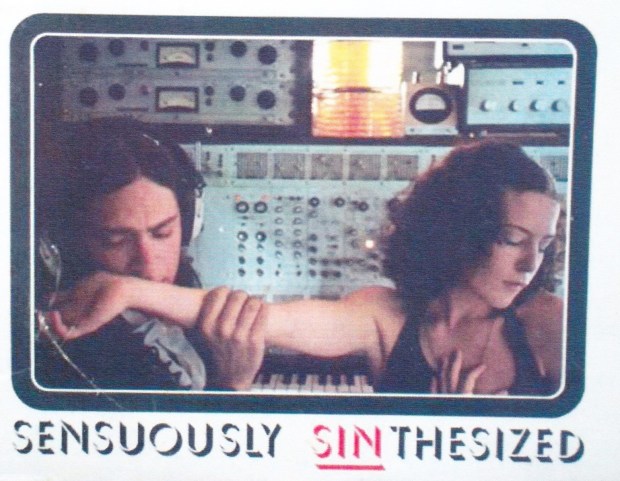
The Sounds of Love …A to Zzz—Fred Miller

Take those blips and buzzes and add some heavy-breathing and you get this mind-wrecking curiosity. True, there were some very sexed-up tunes hitting the airwaves back then, like Jane Birkin and Serge Gainsbourg’s semi-scandalous “Je taime” and the get-a-room groove of novelty hit “Jungle Fever.” But this misbegotten platter becomes an object of derision just seconds after the needle drops. Still, if you ever wanted to know what Debussy’s exquisite “Pavane for a Dead Princess” sounds like played badly on a wobbly synth, and accompanied by half-hearted carnal moaning, here’s your chance (the whole thing is on Youtube). Received an aggregate half a star on Rate Your Record. Grade: (wt)F

Fred Miller and friend.

Some Time in New York City—John & Yoko/Plastic Ono Band

By 1972, John Lennon’s restless intellect had compelled him to take on any and every issue that rankled the era’s New Left (and they had easy access to he and Yoko, who were living in Greenwich Village at the time). In the couple’s haste to make an album of self-professed “front-page songs” they left listeners sifting through a set of tunes full of preachy sloganeering (followed by a “bonus” record of live jams). Most topics–be it Attica, male chauvinism or the Troubles in Northern Ireland–get two goings-over, once by John and once by tag-team partner Yoko. The John Sinclair song, and the fun Big Apple anthem “New York City,” are good tunes but that’s about it for me. An album that sold poorly and was savaged by the press, Some Time in New York City usually ranks at the bottom of Lennon’s post-Beatles work. As a reminder of the visceral radicalism that permeated the air back then it certainly rates at least one listen but seems destined to remain largely unloved. Grade D+

Individually and Collectively—5th Dimension

I was a bit surprised at the low collective rating for this one. It’s a pretty good record even if the title hints at a less-united group. The giants of supper-club soul do stray a bit from the reliable formula that earned them so many previous hits, with the power couple of Marilyn McCoo and Billy Davis, Jr. up front, supported by the strong harmonies of the other three. There is more sharing of the lead vocals on this album with both Florence Larue and Ron Townson acquitting themselves well in the spotlight. The group, famously great interpreters, choose well for the most part, with spirited versions of Elton John’s “Border Song” and Laura Nyro’s “Black Patch.” Still, Individually and Collectively contained what would be their last Top Ten hit (the sublime “I Didn’t Get to Sleep at All”) and the album stalled at #58. Grade: B

Jamming With Edward—Various Artists

The other Rolling Stones-related release from ’72 was this somewhat random release. Sure it had Mick Jagger and the Stones’ rhythm section of Charlie Watts and Bill Wyman, plus two highly-respected guests in American guitarist Ry Cooder and ace British session pianist Nicky Hopkins (whose nickname was Edward). It was actually recorded back in April of 1969, “while waiting for our guitarist to get out of bed,” according to Jagger’s self-denigrating liner notes. The tapes were then forgotten (which “may have been for the better,” notes Mick) but later unearthed and put out as a budget-priced item on the Stones’ own label in January of 1972. It scraped its way to #33 on the U.S. charts while being universally panned (“A dull document,” sniffed Rolling Stone magazine). It’s really not that bad just nothing special in its performance and lacking in sound quality: when they do Elmore James’ “It Hurts Me Too” it sounds like Jagger’s vocal mic has been wrapped in a beach towel. Befitting its title, Jamming with Edward’s one shining light is Hopkin’s lively piano work. On his lead, the band really catch fire on the closing track “Highland Fling.” But overall this is more like a odd curio that you would only keep on the shelf for sentimental reasons. So let me put Edward back on the shelf while I take down Ziggy again. Grade: B-

—Rick Ouellette

Make Mine a Double #23: “Chicago Transit Authority” (1969)

Chicago’s career trajectory as a band is the equivalent of that guy you knew in college who was a bit of a hotshot and always there making his presence known at the biggest parties and campus demonstrations. When you catch up with him decades later you find he has moved to the most strait-laced town in your state, where he has ended up on the board of selectmen, voting down a new skateboard park or marijuana dispensary. Oh, how I kid the guys in Chicago. When this rock-group-with-horns busted out big-time from the Windy City, they were a septet known for their musical experimentation and leftie politics. But less than a decade later, on the cusp of the Reagan era, they were safe-as-milk mainstays of the Soft Rock category.

Yet the band’s keen pop sensibilities were already much in evidence on their dauntless debut, a double album released in April of 1969. Here, three Top 40 Billboard singles were in the mix along with the esoteric touches and long jams common to that period.

Chicago Transit Authority (which was then the band’s name until the actual CTA threatened legal action) opens with a lively mission statement called “Introduction” which is written and sung by guitarist Terry Kath. “Sit back and let us groove/And let us work on you, yeah,” cajoles the husky-voiced Kath and indeed the song’s arrangement follows what would become a tried-and-true formula they would develop with their producer James William Guercio. After a couple verses, the song takes off into an extended, multivariate instrumental section led off with by the horn section. This trio (Walter Parazaifer on sax, Lee Loughnane on trumpet and James Pankow on trombone) gave the group a jazzy cosmopolitan sheen that proved to have strong appeal. They yield to a solo by Kath, often the band’s ace-in-the hole, before coming back strong for a final verse where Terry notes on how they “turned around the mood/We hope it struck you different/And hope you feel moved.”

Well, something worked as the album’s next three songs were all hit singles and were all written and sung by keyboardist Robert Lamm.  The original side one is filled out by “Does Anybody Know What Time It Is?” and “Beginnings” both featuring strong melodies and vibrant playing. Listeners on the AM side may have been hearing these longish numbers in edited form as the piano prelude in the former song and the two-minute percussion outro in the latter were excised for the Casey Kasem crowd.

This edited single version of reached #7 in the U.S.

The hits keep on coming at the start of side two with “Questions 67 and 68,” with lead singing shared with bassist Peter Cetera. The song is also notable for the supple, momentum-driving drum fills of Danny Seraphine, who has never really gotten his full due as one of classic-rock’s great stickmen. From here on out, though, your results may vary. There is one more chart entry, a vigorous cover of the Spencer Davis Group’s “I’m a Man,” curiously released two years later as a double-sided single with “Questions 67 and 68.” Future adult-contemporary crooner Cetera helps out here with a muscular bass line and swapping out macho lead vocals with Lamm and Kath. But things also get pretty self-indulgent over the final two sides, starting with the seven-minute “Free Form Guitar.”

Faster than a speeding El train, Terry Kath shreds away in concert.

Terry Kath, who tragically died of an accidental gunshot to the head in 1978, was a major talent (and reputedly one of Jimi Hendrix’ favorite guitarists) but I’m not sure what justified this fingernails-on-blackboard exercise in musique concrete. But considering that Guercio devotes a whole paragraph to it in his immodest liner notes, I’m willing to shift the blame. It’s esp. confounding since “FFG” is bookended by two songs that showcase Kath’s torrid soloing within amenable blues-rock contexts: “Poem 58” and “South California Purples.”

After touching on the events of the previous year’s turbulent Democratic Convention in their hometown with “Someday” (with the inclusion of “The whole world is watching!” chant), the album ends with a brash free-form instrumental (credited to Pankow) called “Liberation” that clocks in at a healthy 15:41. While nowadays this jam may only appeal to Terry Kath completists and the odd speed freak, it does show a band willing to think big and take chances.

This spirit carried on to the next two albums (also double disc affairs) where adventurous compositions sat cheek by jowl with accessible rockin’ hits like “Make Me Smile” and “25 or 6 to 4.” Not content with three doubles, they upped the ante with the four-LP At Carnegie Hall, a lavishly-packaged and rather self-congratulatory box that only featured one new song. Their first single disc was 1972’s Chicago V (fans would become used to the Roman numerals and the band’s persistent curlicue logo) and what, for me, was an early red-flag on the song “Dialogue.” Although written by Robert Lamm, the song features a back-and-forth between a concerned college student (Kath) and a hedonistic friend (Peter Cetera, tellingly) that comes down on the side of complacency (“If you had my outlook, your feelings would be numb,” is Peter’s crowning comment). OK, maybe I’m reading too much into it, and Chicago did have a fistful of attractive hits on thru the mid-70s, like “Saturday in the Park” and “Feeling Stronger Every Day.”

But for many folks, especially rock geeks, the wheels came of the bus following the death of Terry Kath in early 1978. Although several original members remained, the band dabbled in disco but mostly became known for Peter Cetera’s treacly romantic numbers, which were indistinguishable from many other power ballads of the time from the likes of REO Speedwagon and Foreigner. Granted, this trend started before Kath’s passing (“If You Leave Me Now”) but steadily tracked downward with cliched love-song rhymes and sterile 80s production values featuring lots of electric piano. If you need examples, check out “Loser with a Broken Heart”, “Stay the Night” (don’t miss the absurd video!), and culminating in 1984’s mind-numbing “Hard Habit to Break” (from Chicago 17 if you’re keeping track). Cetera, probably miffed at having to share the profits at this point, left for a solo career shortly after.

Am I being too hard here? Chicago was not the only band from that era whose politics now seem like a fashion and whose target audience shifted from hard rock buffs to lovesick teenage girls and divorced single moms for whom songs like “Hard to Say I’m Sorry” was the purest poetry. You’re supposed to get more comfortable as you get older and for Chicago that meant hitting the summer-shed tour circuit with other mellowed-out acts like the Doobie Brothers, who started life as a de facto Hell’s Angels house band. So, to tweak the analogy I started with, Chicago Transit Authority is like that old hell-raising high-school buddy that you see again for the first time at your classes’ fortieth reunion. When you ask him what has been up to since then, he replies “nothing much.”

—Rick Ouellette