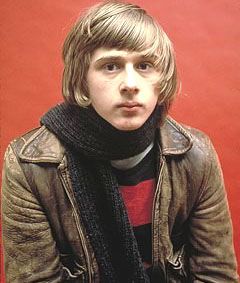
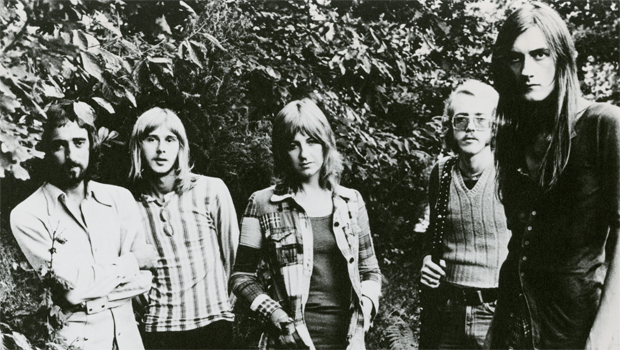
To millions of music fans, Fleetwood Mac means Stevie Nicks and Lindsey Buckingham, along with the founding rhythm section of Mick Fleetwood and John McVie and recently rejoined singer-keyboardist Christine McVie. It’s not hard to see why. They were the most commercially successful incarnation of the band (remember a little record called Rumours?) and for the last forty years, the only incarnation. But before rock music’s timeline became so stretched out, there were of course two earlier stages of the band. The psychedelic blues combo fronted by guitar legend Peter Green and, after Green left in 1970, a transitional period in the early Seventies that saw the addition of Christine and, for a while, Bob Welch. Straddling those two periods was Danny Kirwan, who was born in South London in 1950 and joined Mac as an 18 year-old guitar prodigy in ’68. By the time he left in 1972, Kirwan was the de facto leader of the band, but was let go amid tales of alcohol abuse and erratic behavior.
Someone like Kirwan, who developed mental health issues and was out of the music business by the late 70s, is an easily forgotten by the average pop fan. But for the passionate baby-boomer music buff, who have big record collections and read legacy rock magazines like Mojo and Uncut, a guy like Danny is often revered beyond what would normally be expected. And that’s how it should be. With the earlier version of FM, he was part of a formidable three-guitar formation (the third axe played by Jeremy Spencer) who carved out indelible rock classics like “Oh Well,” “Albatross,” “The Green Manalishi” and “Black Magic Woman.” In the post-Green years, the band developed a more ethereal and at times folk-rockish sound and, with the addition of Christine McVie, developed a feminine mystique that would that would really broaden their appeal a few years down the road.
With a front line of Kirwan, C. McVie and Welch, the group made two excellent albums (1971’s Future Games and 72’s Bare Trees) that certainly set the table for that mega-success to come. Kirwan had a hand in composing about half the material on those records and his maturing writing style on songs like “Woman of 1000 Years” and “Dust” was central to their aesthetic appeal. But like a lot of the people I’ve profiled in this series, Kirwan’s step up from role player to nominal leader didn’t seem a good fit. There were stories of it being a stressful arrangement and Kirwan’s developed a serious drinking problem, leading to bad behavior which alienated him from band members. In the end, Mick Fleetwood was the only one he was still on speaking terms with, if only to let the guitarist know he was out of the band.
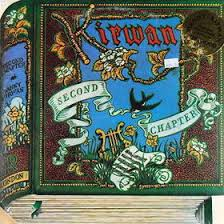
Kirwan’s first solo album wasn’t released until 1975, when his Second Chapter came out around the same as Fleetwod Mac, the curiously eponymous LP that was the first to feature the Buckingham-Nicks team. In some ways, Kirwan’s offering was a continuation of his more low-key offerings with his former outfit: thoughtful, melodic, attractively folkish if a tad under-produced. “Ram Jam City” is a sprightly uptempo number to kick things off, but not nearly as driving as its tittle may suggest. The rest of the old side one is an enjoyable set of songs analogous to Nilsson or early 70s Paul McCartney. It’s on the second half that the record deepens and Kirwan’s engaging voice and nimble guitar work are put to best use on songs like “Lovely Days” and “Silver Streams.” An air of melancholy like a premonition has already edged in by the time we get to the beautiful closer “Cascades.”
Danny Kirwan’s second chapter would be an abbreviated one. There would be a few more undervalued solo LPs to follow, while his old band, mining a similar musical vein but with more of that ineffable “It Factor” went mega-platinum. Many have said that if Kirwan’s issues could have been worked out, that his talents would have contributed greatly to the Buckingham-Nicks lineup, even if it would have been a crowded stage. But the vicissitudes of a pop musician’s life are many and often fall unkindly on the more deserving. Kirwan would spend part of the 80s and 90s homeless in London, occasionally being shadowed by tabloid reporters who on at least one occasion made fun of his alcoholism in a news story. Things may have improved some since then but tentative talks about a one-off reunion of early edition Fleetwood Mac (with Peter Green and Jeremy Spencer who, despite life problems of their own, are musically active) don’t hold out much hope that Kirwan can be included. Never say never, but in the meantime, astute and sensitive fans still have Second Chapter as a great Sunday morning listen while wondering what could have been.
Postscript: Alas, there would be no personal or professional redemption for Danny Kirwan, who passed away on June 8, 2018.
There must be plenty of people out there who dig the Talking Heads who couldn’t tell you the first thing about Jerry Harrison, except that he was the handsome, curly-haired guy who switched off between guitar and keyboards. But that’s OK. Harrison is the music equivalent of a versatile utility baseball player who could play any infield position and maybe even fill in at catcher. He comes off the bench to hit a 2-run double during a World Series that his team wins, and is forever fondly recalled by hometown fans. And so it is sometimes with rock ‘n’ roll.
Jerry Harrison was born in Milwaukee in 1949 and moved to the Boston area to study architecture at Harvard. There he met Danny Fields and the journalist and future punk impresario introduced him to Jonathan Richman. He joined Richman’s group the Modern Lovers in 1971 and played keys on their seminal debut album (recorded the next year but not released until ’76). After Jonathan turned to a quieter and more naïve performing style, Jerry left but the legacy of that first record—with its streetwise but brainy aesthetic—was not lost on the groups in the emerging New York scene centered around CBGBs. When the Talking Heads, then a trio with singer-guitarist David Byrne and the husband-wife rhythm section of Tina Weymouth and Chris Frantz, were looking for a fourth member to fill out their sound, Harrison was recommended to them by mutual acquaintance Andy Paley.
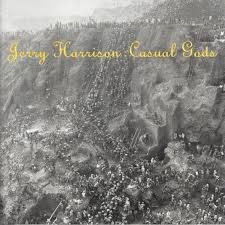
He went to New York to meet the band and audition and they were impressed with his versatility. Harrison, in a move sure to be appreciated by parents everywhere, agreed to join the group so long as he could finish his last semester at Harvard. The Heads’ success, with Harrison as the group’s valuable middle man, is well known. But when tensions between dominant frontman Byrne and the Weymouth-Frantz axis came to a head in the late 80s, the group went on a long-term hiatus, before officially breaking up in 1991. Harrison didn’t waste much time getting in the solo game, releasing “Casual Gods” in 1988, the same year as the Heads’ last studio album. Jerry had also put out a solo disc in 1981 (“The Red and the Black”) but with the band’s future in doubt, this perhaps was made with more of a sense of urgency to it.
From the opener “Rev it Up” you get the sense of a consummate pro at work. Led by Harrison’s signature trebly, funky rhythm guitar, the song is a suave booty-shaker that is not dissimilar to his old band in the “Stop Making Sense” period.
Certainly, the overall sound, with the glossy production values and world-music overlay, is of its time but in a good way. Harrison has a nice mid-range voice even if he is not the most expressive of vocalists. And while as a lyricist he is not as willfully eccentric as David Byrne (few are) he can be just as striking upon closer inspection (“I feel there’s a time coming when we are all angels… a time when nothing will be new”). The standout track of “Casual Gods” has got to be “Man With a Gun” an ineffably touching tune about the mysteries of love that also comes with a stylish video.
“Casual Gods” was an impressive album (even if it did get a little samey towards the end of side two) and seemed to promise that there would be more to come. There was a follow-up album a couple of years later (“Walk on Water”) but that was his last solo effort to date. As is the case with many of the musicians profiled in this series, some people are just born to supporting roles. While watching the “Stop Making Sense” concert film, for instance, it’s a little hard to imagine a low-key dude like Jerry Harrison climbing into that giant white suit to claim the spotlight like David Byrne does so memorably. We all have our roles to play and for Jerry it would mostly be as producer or in-house player, working with the Violent Femmes, General Public, Crash Test Dummies, the BoDeans, Black 47 and many others. And say what you will about the Rock & Roll Hall of Fame, at least it gets warring bands back together one more time and for the Talking Heads it happened in 2002, with Jerry looking just as boyish as ever.
(The anecdote about Harrison joining the Talking Heads was taken from Will Hermes’ great book “Love Goes to Buildings on Fire” which takes its title from the Heads’ first single (before J.H. was in the group). More on that tome in my upcoming post “Books That Rock, Part 2.” Coming soon!)
The curious case of Mick Ronson is a great example of why I like doing this series so much. Rock fans can be a sentimental lot and Ronson, who came to prominence as David Bowie’s right-hand man in the heady days of Ziggy Stardust, is still greatly admired long after his untimely death in 1993 at age 46. A classically-trained musician from the craggy port city of Hull, England, Ronson did not find much success in London with his late 60s rock outfit called The Rats. He eventually left the capital, not knowing he had recently attracted the attention of Bowie. Although he had had a hit with “Space Oddity” (considered a bit of a novelty record at the time), Bowie harbored plans to achieve pop immortality via some transformative concept.
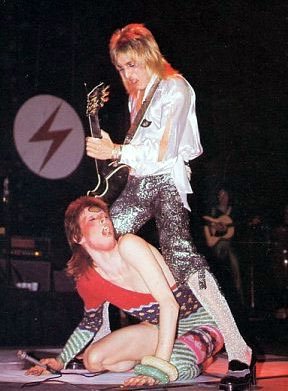
As the story goes, one of Mick’s ex-drummers found the guitarist back up in Hull, marking out the end lines on a rugby field, part of his job in the city’s parks dept. Convinced to give London another try, Ronson got the gig as Bowie’s guitarist on the two albums (The Man Who Sold the World and Hunky Dory) leading up to the world-beating The Rise and Fall of Ziggy Stardust and the Spiders from Mars. By the time of Bowie’s alter-ego masterstroke, Ronson was more than just the flashy lead guitarist in the singer’s gender-bender, sci-fi alternate universe. Ronno, as he was now known, was a principal player in the album’s cinematic sweep, as arranger and keyboardist in addition to his incandescent guitar work—not to mention his role as Bowie’s onstage foil when the Ziggy show went on the road.
Obliged to dress in the glittery style of the leader, as did drummer Woody Woodmansey and bassist Trevor Bolder, those were special times for Ronson as the top Spider. But as revolutionary as the look and sound was, pointing the way to both the punk era and the image-conscious 80s pop, Bowie was not a guy to stay in one bag for very long. Though Ronson was still an integral part of the Ziggy follow-up Aladdin Sane and the covers album Pinups, he was soon out of the silver suit and would only play with David on a couple of occasions after that.
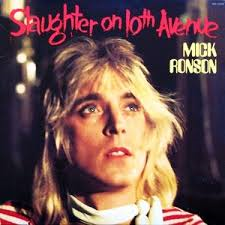
His first solo LP, Slaughter on Tenth Avenue, arrived soon after in Feb. of 1974 and made #9 on the UK charts. This is an album that still gets a lot of love, sometimes to a strange degree. On the extreme fringe, one online true believer, states that Tenth Avenue is the greatest rock music ever produced, with the exception of Jimi Hendrix. Really, even better than Ziggy Stardust? This is obviously the work of a very talented musician but it also gives every indication of being a toe-dipper in the solo-artist waters. Mick makes a very debatable decision opening the record with a version of “Love Me Tender.” Starting off with a soft-serve Elvis cover does not exactly indicate a forward charge up to the rock ‘n’ roll Acropolis. Elsewhere, there are three tunes that David Bowie had a hand in writing, all well sung and played by Ronson in the moonage-daydream style of recent vintage. (The best of the three, “Growing Up and I’m Fine,” is heard above). Most intriguing is the title cut as Ronno delivers a sterling rockist rendition of a Richard Rogers dance piece he loved since the days of his youthful music lessons—the cabaret-style piano and the long line of dramatic sustained guitar notes does justify the hype of the man’s eager-beaver followers.
Like a lot of the folks featured in the series, Ronson found his greatest market value in a support role or behind the scenes. In between this album and his solo follow-up (Play Don’t Worry, #29 UK) he was in the final line-up of Mott the Hoople. Ronson would go on to form a partnership with Mott frontman Ian Hunter that would last for several albums and tours. Later he would appear with Bob Dylan’s Rolling Thunder Revue while producing and/or playing on records from a diverse list of artists that included Lou Reed, Van Morrison, Ellen Foley, the Rich Kids, T-Bone Burnett, Morrissey and even David Cassidy. In 1992, shortly after being diagnosed with cancer, he appeared at the Freddie Mercury Tribute Concert where he was re-united with both Bowie and Hunter. Despite never being as famous as those he helped support (or partly because of it), the secondary spotlight shining on Ronson still burns plenty bright.
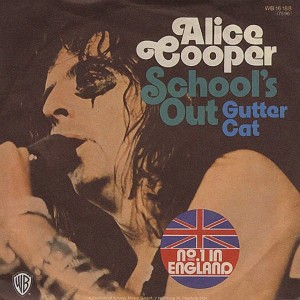
Alice Cooper’s intransigent anthem was of course well-timed with its release date coming in the late spring of 1972. Zipping up twelve spaces this week some 43 long-ass years ago, it signaled the “blessed” end to eight years of parochial school. After a white-sky summer where I suddenly turned agnostic, September would lead me gratefully into the rebel-held territory of public-school hallways. On the last day at St. John’s I imagined myself poised to push the bar on the exit door, calling out over my shoulder to any nun within earshot: “If that don’t suit ya, that’s a drag!”
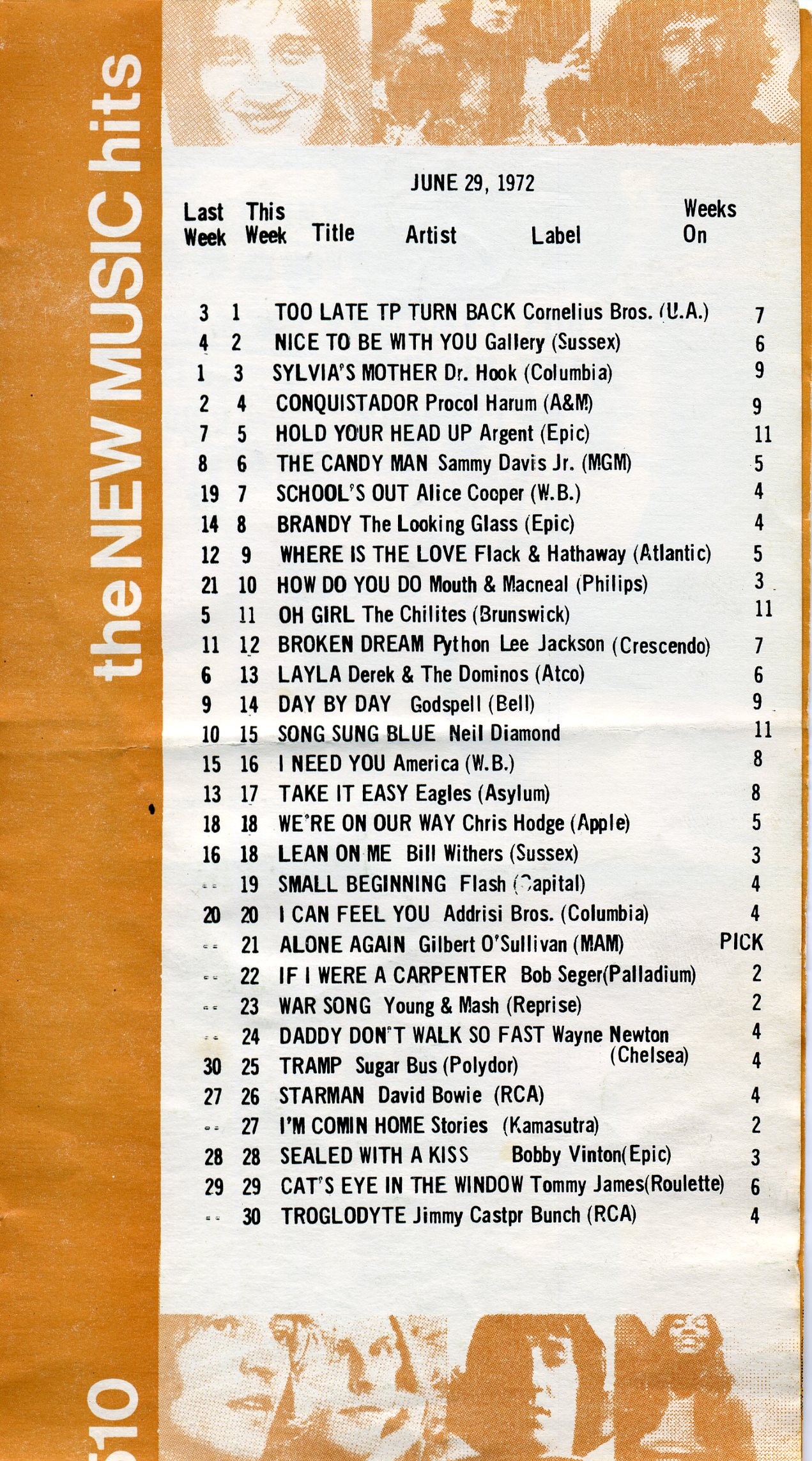
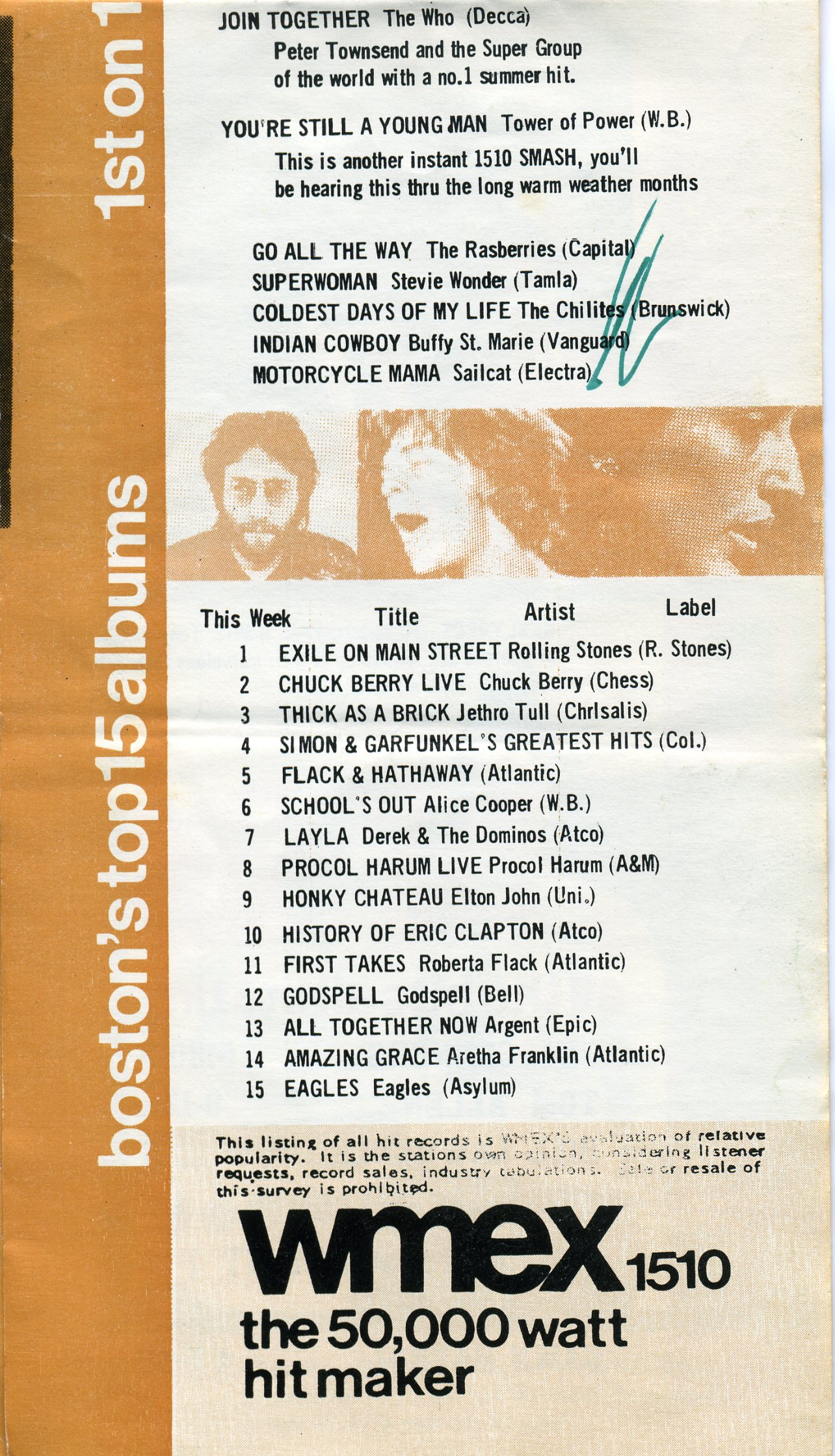
I was still collecting the WMEX weekly surveys at the record dept. of my local Lechmere (the Massachusetts pre-equivalent of Best Buy), another music-mad kid like so many others at the time. My collection of these brightly-colored snapshots of pop history that survived as one of the few remaining physical items from boyhood (and unlost through a dozen moves as an adult) would drop off as summer waned. I’m not sure if they stopped printing them or if I was putting aside childish things. At the very least, there was an inkling of the young adulthood to come. Several of the songs on this Top 30 I always relate to the events of the 4th of July on Juniper Point where friends of my parents were throwing a BBQ. That part of Salem Neck was mostly residents by then but still held vestiges of its summer colony identity. We, meaning us younger kids, quickly caught on to the news that this was a “hippie house” a couple of blocks away.
There was this narrow walkway between two tall houses and an open door leading out to it. A little child in our group half wanders into it. A fortyish guy in a bathing suit is coming up the other way. “Don’t let her go in there, she’ll never come out the same way.” Cool. We’ve already heard the reports of emanating marijuana smoke. The walkway leads to a large rocky outcropping from which you could take a dip in the “refreshing” waters of this Atlantic inlet. Straights and freaks and kids all congregate there in the late afternoon sun and someone brings out a radio. It was playing my beloved WMEX, still cool enough (as a “progressive” AM station) for the twentysomethings and plenty hip for the young teens. “Layla” plays, as does David Bowie’s “Starman” and we bob our heads, the kids and the bearded guys sitting next to girlfriends with silky middle-parted hair, as straight and long as yardsticks. When the ballad “I Need You” plays, one dude says to his buddy, “Oh yeah, man. I saw America play in upstate New York last year so when the album came out I got it right away.” The independent rock ‘n’ roll lifestyle beckons, I felt like I already had one foot in the door.
“It’s Too Late to Turn Back Now” Cornelius Bros. and Sister Rose. Swooshing into the #1 spot on a cushion of silky strings, the second (and last) big pop hit for the soulful family-act from south Florida. Like their first (“Treat Her Like a Lady”) this had the close harmonies and the good-advice lyrics but also a sweet mid-tempo grooves that always associates positively with the early 70s. “Nice to Be With You” Gallery. By contrast, songs like this by Detroit soft-rockers Gallery would one day be representative of the type earning the second-hand scorn of later generations, associating the age with the Brady Bunch and sidewalk-sweeping bell bottoms. But with its era-typical unpretentious optimism (and delightful pedal steel solo) we knew what we liked. May it ever be thus. “Sylvia’s Mother” Dr. Hook. Before their successful gambit to get on the “Cover of the Rolling Stone”, the Hooksters had a pretty decent hit with this melodramatic payphone ballad about some unlucky guy who just wants to say farewell to his former girlfriend who’s marrying some “fella down Galveston way” but he can’t get past her ball-busting mom. A little overwrought maybe, but us old-timers from the pre-cellular age know the particular agony of that “forty cents more for the next three minutes” refrain. “Conquistador” Procol Harum. The only other Top 40 hit for the “Whiter Shade of Pale” band. When PH did this re-engineered version live with an orchestra, only vocalist-pianist Gary Brooker and drummer BJ Wilson remained from the 1967 studio original. “Hold Your Head Up” Argent. Another proggy song to round out the top five, ex-Zombie Rod Argent found he could really stretch out on the keyboards in this day and age, though MEX were likely playing the single edit.
“Candy Man” Sammi Davis, Jr. The Revenge of the Rat Pack? Those crazy rock ‘n’ roll sounds had been dominating the charts for almost a decade now, but Rat Packer Sammi was representing the old guard with this “Willy Wonka” teeth-grinder. At first reluctant to do the song, Davis had a change of heart when it revived his career (#1 Billboard) and after that sang the sickly-sweet lyrics with grateful gusto. “School’s Out” Alice Cooper. Now quickly back to the rock ‘n’ roll. “Brandy” Looking Glass. Eternal one-hit-wonder (over 10 million hits on YouTube), it seems the world will never tire of this finely-crafted tune with its slightly archaic lyric of a dishy barmaid pining away for some sailor dude whose real “love and lady is the sea.” His loss. “Where is the Love” Roberta Flack & Donny Hathaway. The Marvin & Tami of the 70s? This velvety duet also has had major staying power in compilations, soundtracks and a re-tooled version by the Black-Eyed Peas. “How Do You Do” Mouth & MacNeal. OK, sometimes the Seventies did stink. Exhibit A, this insidious earworm foisted on the world by the zany Dutch duo whose legend lasted a lunchtime, just like the Rutles. “Oh Girl” the Chi-Lites. More smooth soul, this time for the Chicago vocal group that had been together in some form since the late Fifties. Their long-deserved first national #1 followed the even more brokenhearted “Have You Seen Her” which hit #3 late in 1971.
“In a Broken Dream” Python Lee Jackson. A real anomaly of a hit, this Aussie rock band had re-located to the UK in the late 60s and used a still relatively-unknown singer named Rod Stewart for three lead vocals. But these did not see wide release until three years later when this powerful number was sent out to compete head-to-head with Rod’s own “You Wear it Well.” Not sure why classic rock radio stations don’t trot this out more often. “Layla” Derek and the Dominos. Well, this one has no problem staying in classic rock rotations. “Day by Day” Godspell cast. Thanks to the good folks at St. John’s, I had my first live theater experience in spring of ’72, and the original cast LP dominated our Music Appreciation class. As to the continued cultural revelance of “Day by Day,” please refer to the first “Meet the Parents” movie. “Song Sung Blue” Neil Diamond. “Song sung blue/everybody knows one”? For proof of that, Meet The Parents again.
“I Need You” America. Oh yeah, maann. “Take it Easy” the Eagles. I better plan that rock ‘n’ roll field trip to Winslow, Arizona. After all, I’m not getting any younger. “We’re on Our Way” Chris Hodge. Mr. Hodge was a bit of a protégé of Ringo Starr (they shared a common interest in UFO theories) and released two decent pseudo-glam singles on Apple before returning to obscurity (in a flying saucer?). “Lean on Me” Bill Withers. Wait, there are two songs at #18? This evergreen soul hymn to abiding friendship will remain a strong reminder of an age when such sentiments were still valid for lyric ideas. It also didn’t hurt that royalties earned here allowed early-retiree Bill to enjoy a future relaxing at home and watching “Judge Judy” as he let us know at his recent Hall of Fame induction. “Small Beginning” Flash. Another great proggy hit, this time by a Yes spin-off band with their original guitarist Peter banks as leader.
“I Can Feel You. The Addrisi Brothers. When is someone going to make an Addrisi Brothers biopic? OK, they weren’t that famous, probably best remembered for writing the smash “Never My Love” for the Association, which would become one of the most valuable song copyrights ever with over 300 cover versions. But they were born in Winthrop, Mass. where the jets fly right over the house on their way to/from the adjacent Logan Airport (making for a great opening scene) and their family were trapeze artists for f**k’s sake. But brothers Don and Dick were musical naturals and were helped into the business by Lenny Bruce. I know, right? With groovy songs sporting titles like “I Can Feel You” and “We’ve Got to Get it on Again” I see a “Boogie Nights” vibe when we get to the Seventies. Unfortunately, their career as a vocal duo was cut short when Dick died at age 45 in 1984. Fade to black.
“Alone Again, Naturally” Gilbert O’Sullivan. The impish Irishman, whose sub-Peter Noone warblings delighted and dismayed radio listeners the world over, debuted this week at #21 with this suicide-contemplation anthem that would go on to be #1 both on WMEX and nationwide. I was never sure what the countdown meant when it said PICK in the “weeks on list” column. In this case, it might have meant that Gilbert couldn’t decide whether to PICK jumping off a building or drinking poison. “If I Were a Carpenter” Bob Seger. By 1972 you might think that this standard was a bit played out. Yet this soulful version by the future “Night Moves” man is one of the better versions I’ve heard. “War Song” Neil Young & Graham Nash. This anti-Nixon screed, credited to “Young & Mash” by the mistake-prone employee who typed up these surveys, was said to have been timed to give a boost to George McGovern’s campaign just ahead of the Democratic convention. A lost cause but a cool lost single from Neil’s discography. “Daddy Don’t Walk So Fast” Wayne Newton. Yeah, Dad. Don’t walk so fast or you may rush by a washed-up lounge singer without recognizing him. “Tramp” Sugar Bus. I don’t recall this one and the combination of those three words has proven to be Google-proof. Can anything in this day and age really remain a mystery? If anyone knows this song, please comment below.
“Starman” David Bowie. Not the first thing I had heard from D.B. as there had been “Changes” and “Space Oddity” but when my cross-the-way buddy got the Ziggy Stardust album it was a whole new ballgame, led by this single which was not just an earworm, but a mindworm as well. “I’m Comin’ Home” the Stories. If all one knows by them is “Brother Louie” than a little deep-diving is in order. Great tune. “Sealed With a Kiss” Bobby Vinton. Dang, this is a sweet-sounding classic but it sounds like it was made ten years before, and may even be a re-release. At any rate, the Old Guard wasn’t giving up easy and that’s OK. “Cat’s Eye in the Window” Tommy James. Well, this one is not a classic, but still has that trademark T.J. sound. It might be the era when he was sneaking in Christian themes but damned if I can tell. “Troglodyte” Jimmy Castor Bunch. It’s the last song on the survey and the last typo. This knuckle-dragging funk workout by Jimmy “Castpr” should be high up in an imagined book called “1001 Novelty Songs You Must Hear before You Die.” Especially so considering that this has apparently been much sampled in dance clubs and hip-hop parties thru the years. Evidence enough of the future and past push-pull of these great surveys at such a fertile time in pop history.
And naturally there was a lot more to come that summer by looking at the “1st on 1510” section, with new entries on the way by The Who, Tower of Power, Stevie Wonder—as well as the immortal “Motorcycle Mama” by Sailcat. The Top 15 Albums? Well, about half of them I would put down as Rock all-timers, starting with “Exile on Main Street” in the #1 spot. By I’m also glad to see the “Godspell” cast album hanging tough at #12. I wouldn’t want to burn my bridges that quickly.
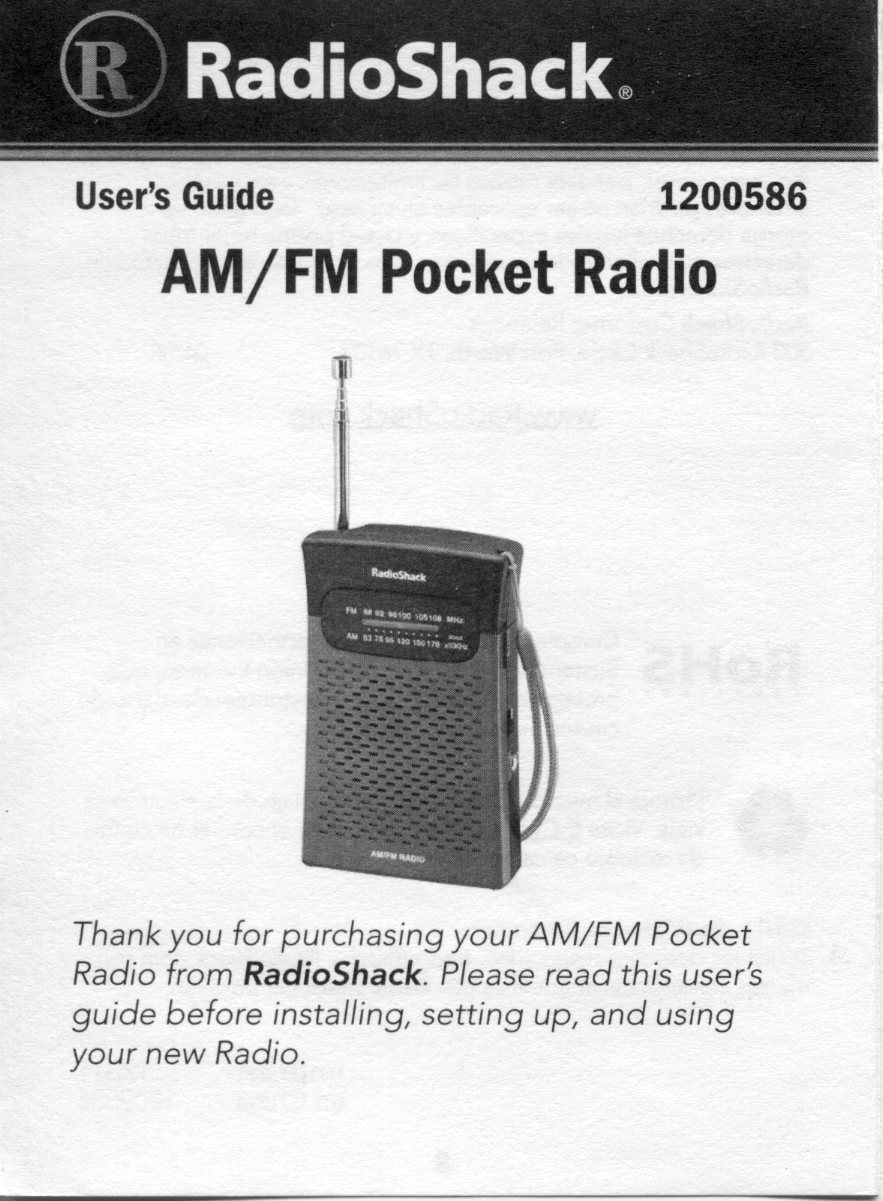
By the spring of ‘73, I’d have my own stash and an almost girlfriend and the times of the first countdown in this 3-part series (summer of ’71) were starting to seem far off. City life and punk rock was only five years away, and a whole other zeitgeist to replace these halcyon days—then many years after that, my own family and the inexorable creep back to the suburbs. But through it all, I always owned a transistor radio and they went with me as far afield as Europe on two occasions. There were five Replacement songs in a row as I got ready to go out and see them at the Paradiso in Amsterdam and the Pogues’ “Sally MacLennane” played in my room after hitting the pubs in Dublin. Nowadays I own two—when I heard that Radio Shack was in trouble I got a spare just in case. Happy listening in all the days ahead.
We’ve all gone duo? Since Keith and Donna Godchaux, the husband-and-wife package deal who were members of the Grateful Dead for the better part of the Seventies, are almost always thought of as one, I figured they’d qualify. Certainly they fit the underdog ethos of this series. There is a lot of attention on the Dead this summer, with a high-profile series of 50th anniversary shows at Chicago’s Soldiers Field stadium on the July 4th weekend, and all the various magazine cover stories, video tributes, memorabilia etc. I have a feeling not a lot this will figure in the Godchauxes, even though I’m sure they are fondly remembered by many Deadheads. Their story is a bit unusual, even with the “long, strange trip” aura that surrounds the band. In the more accessible days of the early 70s, the couple basically talked their way into the group (see the Donna G. interview clip below) even if the two of them did not appear as naturals to join. The Alabama-born Donna was a former Muscle Shoals backup singer who moved to San Francisco but was unimpressed on first hearing the “druggie” records of Jerry Garcia and Co. but became a convert after seeing a particularly great show at the Winterland ballroom. Her new husband was also reluctant at first. Keith was a Bill Evans-inspired jazz pianist who didn’t go much for the rock epoch of the day. But he came around as well after agreeing to go to a Dead concert with his “old lady” and some friends.
The couple’s timing was fortuitous. Founding member Ron “Pigpen” McKernan, who played organ as well as harmonica while singing the Dead’s blues numbers, was in poor health (he died in 1973) and unable to keep up with the band’s rigorous touring schedule.
In ’73, Keith and Donna first appeared on a Dead studio album. “Wake of the Flood” was one of their most musically rich outings and the fluid keyboards and feminine vocal backdrop provided by the couple were a key part. But it was clear that they were in a supporting role. Keith’s only songwriting credit and lead vocal in the band was on that album’s “Let Me Sing Your Blues Away” while Donna had to wait until 1977’s “Terrapin Station” LP for her turn in the spotlight, with the song “Sunrise.”
So it was not unusual that the we-got-our-own-album-to-do bug hit them during one of the Dead’s sabbaticals. The group had their own label by then (Round Records) and the Godchauxes, who had a baby son named Zion, turned part of their Stinson Beach house into a temporary studio. Garcia, who lived around the way, played all the guitar parts and in return the couple helped him out on some subsequent dates with the Jerry Garcia Band. There are a lot of Dead-related solo records and side projects out there and unfortunately this one quickly got lost in the shuffle. It’s not exactly the second coming of “Beggars Banquet” but it’s a likable helping of Marin County Mellow, undermined by a lightweight production and a couple of programming lapses. It opens with Donna’s too-deferential version of “River Deep, Mountain High” but once she finds her comfort (like on the Muscle Shoals-style zinger “When You Start to Move”) things pick up in a hurry. Keith, who never had a great singing voice, generally sticks to the keyboards, otherwise they could have more closely approached the Delaney and Bonnie brand of soulful rock. The album wraps up nicely with the six-minute plus “The Song I Sing” which gives Jerry a little room to stretch out on lead guitar.
In the latter half of the Seventies, things started going south for the couple. Keith’s hard drug use and their domestic troubles were part of it, and stylistically they were not fitting in as well as before. Donna’s vocals, so strong in her FAME Studio’s framework, became, in the modern parlance, “a little pitchy” when trying to keep up with the Dead’s higher-flying excursions. They mutually parted ways in early 1979. Brent Mydland replaced Keith; Donna was destined to remain the only woman member in the band’s history.
Before the couple could fully re-group, Keith died in a car accident in July 1980 at age 32. Donna is still performing while Zion, whose adorably scowling infant self appears on the “Keith and Donna” LP, currently plays in the band BoomBox. This album has never appeared on CD and was uploaded to YouTube 8 months ago by Tony Sclafani, an author of a Grateful Dead book, and has received 1260 views as of this writing. I’d say it deserves better.
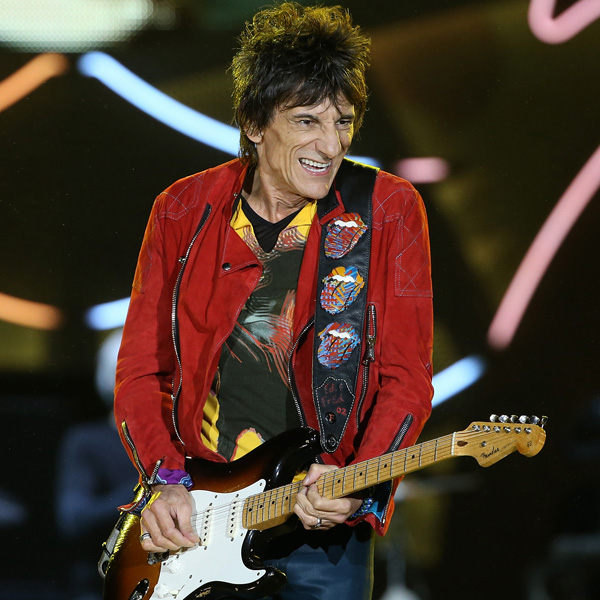
Is Ronnie Wood rock music’s ultimate wingman? Born in 1947 in an outlying district in London, he’s a guitar-playing guy who came into the world at just the right time. After knocking around a bit in the capitol’s hothouse music scene, he got a gig in 1967 playing bass for the Jeff Beck Group and never looked back.
When the restless Beck dissolved that version of JBG, Wood and vocalist Rod Stewart quickly joined forces with Ronnie Lane, Ian MacLagan and Kenny Jones from the beloved Small Faces whose own frontman, Steve Marriott, had left to form Humble Pie. With the Faces, Wood went back to shouldering a six-string and took up his stage right position, dishing out his buzzing riffs and slide guitar fills through several notable albums (and co-writing such great tunes as “Stay With Me” and “Ooh La La”) and high-spirited tours with that archetypal group of working-class blokes made good. Oh, and since the mid-70s he’s been a Rolling Stone.
So life’s been good for this son of a long line of river barge operators—he’s been rock royalty for over four decades without ever seeming to hog the spotlight. Employing the time-tested tricks of the trade (rooster haircut, low-slung guitar, dangling cigarette) Wood’s been a reliable foil to Mick Jagger and Keith Richards in rock history’s most durable top-line act. He’s also played with Bob Dylan at Live Aid, represented the Stones at the Last Waltz concert, had an affair with rock super-muse Patti Boyd Harrison, been in and out of rehab several times and was twice married to models—the second one divorced him several years back after he had a fling with a barely-legal Russian girl. I think that about takes care of the checklist.
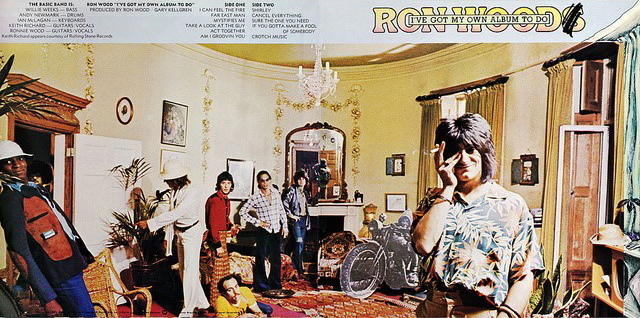
And when it was time to do his first solo record in 1974, he came up with the perfect title. (I was going to name this blog series I’ve Got My Own Album to Do before choosing the more compact title I nicked from the chorus of “Solo,” the Sandy Denny song about the comings and goings of Fairport Convention alumni). Naturally, Wood had no trouble rounding up some mates to help him out. The credits are full of Faces and Stones (both Mick and Rod the Mod help out on vocals), not to mention the great rhythm section of bassist Willie Weeks and drummer Andy Newmark. This album is a real corker, as they say across the pond. You expect ol’ Ron to be chuffing away on the bluesy rockers that were the calling card of his various groups, but there is also some impressive variety in the songwriting. There’s the very nice “Far East Man” with George Harrison (who co-wrote it) on slide guitar and harmonies, plus a few songs (“Mystifies Me,” “Cancel Everything”) that channel that sweet melancholic vibe associated with his Faces songwriting partner Ronnie Lane. These slowies are especially well-suited to Wood’s slightly raspy, Everyman voice. But whether the mood of an individual song is sad or sassy, the overall ambience recalls a fun night out with the lads and it all ends with a loose, funky instrumental jam called “Crotch Music.”
This wouldn’t be Ronnie Wood’s only solo LP. His most successful one in the States would come in 1979 with Gimme Some Neck, which led to the short-lived semi-supergroup with Keith Richards called the New Barbarians. But mostly, life with the Stones has kept him pretty busy over the years, with occasional solo outings to fill the gaps and keep him (mostly) out of the tabloids. When you’re this high up in the court of the Royal Rock Stars, it is good to be The Wingman.
From the 2007 concert film “Shine A Light.”
My latest book, Rock Docs: A Fifty-Year Cinematic Journey is now available. You can view a 30-page excerpt by clicking on the image of the book cover on the upper right.
(A series of occasional posts hearing out the solo excursions of rock history’s supporting players whose breakaway efforts never amounted to a high-profile solo career.)
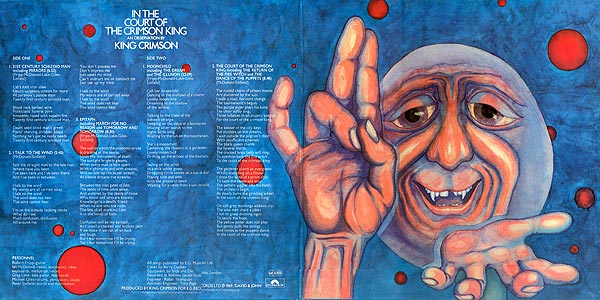
Progressive rock as a genre had well and truly arrived in October of 1969 with the release of King Crimson’s formidable debut album In the Court of the Crimson King. This was obviously not sock hop music but instead an album to be reverently pondered in teenage dens of iniquity half-obscured in a cloud of hashish smoke. Their music, like many of their prog contemporaries, was undeniably adventurous, ranging from almost medieval-style balladry to speed-demon jazz-rock—in this case led by the guitar work (lilting and furious by turns) of KC kingpin Robert Fripp.
In a musical zeitgeist where subject matter was reaching way beyond the old boy-gets-girl-or-not variations, it was not unheard of for bands to have their own in-house wordsmith—Procol Harum’s Keith Reid, the Grateful Dead’s Robert Hunter, etc. Enter Pete Sinfield, born in the Fulham section of London and raised by his bohemian-activist single mother, helped by Maria Wallenda from the famous high-wire family. An easygoing poet/songwriter type, he was briefly in a band with multi-instrumentalist Ian MacDonald before the latter joined King Crimson. Sinfield didn’t have a chance matching up with the highly-skilled players in this band, but his words were a perfect fit. Pete’s fanciful lyrics had an otherworldly flair, drawing on both ancient-sounding fantasy scenarios and science-fiction. The words were printed prominently on the inner-gatefold amid the album’s striking artwork.
The keeper of the city keys
Put shutters on the dreams.
I wait outside the pilgrim’s door
With insufficient schemes.
The black queen chants
the funeral march,
The cracked brass bells will ring;
To summon back the fire witch
To the court of the crimson king.
Such writing reflects the era in its own way, the turbulence, the inner searching, the drugs. Though Sinfield’s type of lyricism, along with prog rock in general, came under a lot of criticism for its perceived pretensions, younger boomers embraced it as an alternative maybe to the naïve we-can-change-the-world stance of slightly earlier hippie times. In fact, a lot of his implied social criticism (see “21st Century Schizoid Man”) holds up much better nowadays.
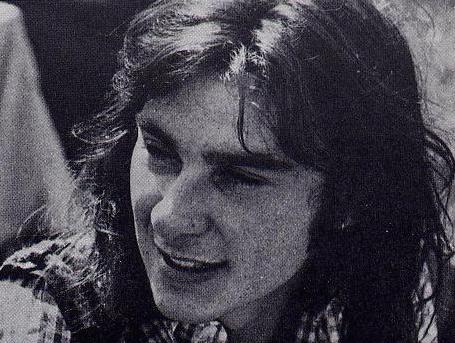
Sinfield in 1971.
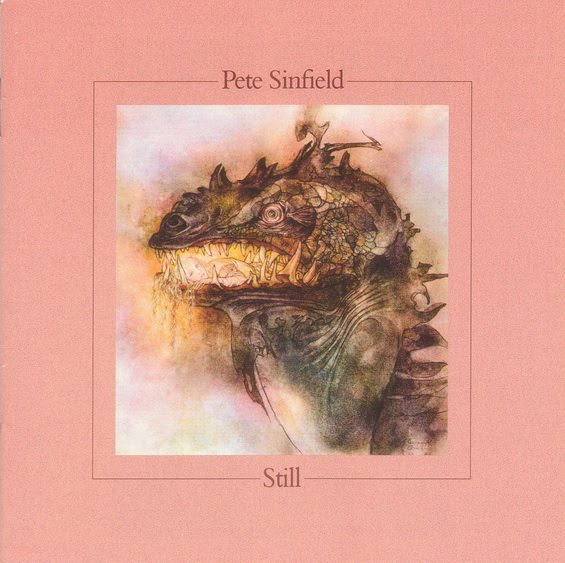
Sinfield would pen the words for the first four King Crimson albums and near the end of that tenure, released the 1972 solo LP “Still” with Manticore Records. Although he was a decent enough singer, he did enlist ex-Crimsoner Greg Lake to help with some vocalizing. Still was a pleasing effort that wisely stayed away from trying to replicate the instrumental firepower of his band’s output (though several of them help out), leaving the songwriting front-and-center. There are some eclectic touches: a brass section on one song and a vegan-themed rocker called “Whole Food Boogie” stand out. But the best parts are on ethereal numbers like “Under the Sky” and “The Piper”, the folksy “Hanging Fire” and the untypically straightforward “Can You Forgive a Fool?”
On into the Seventies, he re-teamed with Greg Lake to write for supergroup Emerson, Lake and Palmer, as well as for Italian proggers PFM. In 1975, Sinfield and Lake collaborated on “I Believe in Father Christmas” which has become a holiday standard, although the steely core behind the seasonal frosting is a trademark touch. Sinfield has attempted in recent years to record another solo album, stymied in part by health issues, though he remains active as a poet and member of the British Academy of Songwriters.
Here he is featured in a 2008 clip from the excellent Prog Rock Britannia series, looking back at the heady early days of King Crimson.
One of my favorite real-life Spinal Tap moments is when Uriah Heep vocalist David Byron announces on their 1973 live album that the next song features keyboardist Ken Hensley on the “Moog Simplifier.” This was eleven years before the film so you know it’s legit, not like some band today cheerfully calling out “Hello Cleveland!” when they know perfectly well they are in Pittsburgh. The Heep were a solid second-tier English hard rock outfit of that era, never quite achieving the full thunderdome aura of Zeppelin, Sabbath or Deep Purple. But they seemed like decent blokes and were quite capable of slugging it out night after night in the mid-sized venues of those halycon days. They could serve up the straight-ahead stompers like their hit “Easy Livin’”, break out the Simplifier for grandiose proto-power ballads like “Circle of Hands” or get the crowd shaking with a then-trendy 50s rock medley.
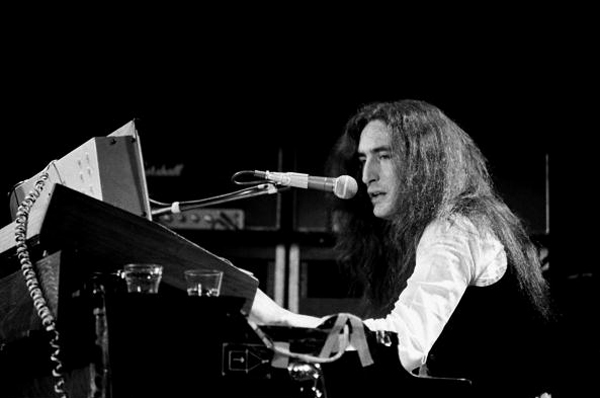
Ken Hensley in 1973
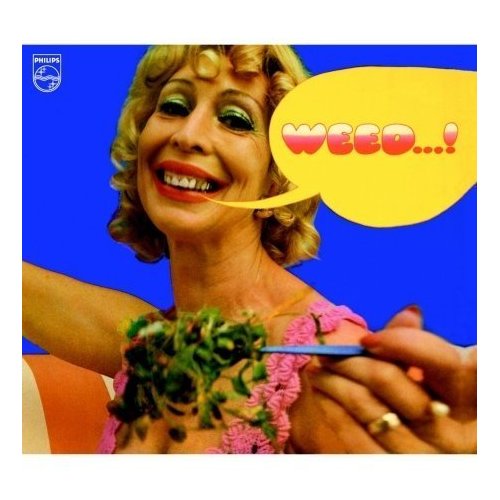
Ken Hensley, seated stage left at his Hammond organ piggybacked with a Mini-Moog, was maybe overshadowed a bit by lead guitarist Mick Box and the dramatic singing of Byron. Yet in a way, he was the band’s MVP. The Hammond was a big part of their sound but he could also play a mean guitar when called for or take the occasional lead vocal; above all he was Heep’s principal songwriter. So it’s little surprise that he tested the solo waters early. In 1971, a year when U.H. released two studio albums, Hensley found time to repair to Germany for a one-off project called Weed, recorded with a local band there called Virus. But it’s a Hensley solo LP in all but name with Ken doing all guitars, keys and vocals.
Leading off is a great spring-has-sprung number called “Sweet Morning Light.” Since at least the time of Beethoven’s “Pastoral” symphony, this theme has almost always been a cue to employ a light touch. Here we get a cobweb-clearing blast of noise before the Teutonic central riff kicks in. Winter is over by decree of the metal gods!
All in all, “Weed” is a pretty dope album, if you will. Though he doesn’t stray very far from the Heep template, Hensley is a confident performer who lays it all out 70s style. There are rockers, a brooding acoustic guitar number (“Lonely Ship”), a piece that starts with a hushed piano solo before the band barges into the room (“My Dream”), the Procol Harum-ish “Before I Die” and the title cut, a vigorous jam-band instrumental.
Yet in 1971, Uriah Heep’s most successful phase lay just ahead of them, so the heels were cooled a bit on the solo work (though 73’s “Proud Words on a Dusty Shelf” is also recommended). At the end of the 1970s, with the group’s classic line-up splintered, Hensley left U.H. and entered into various bands and did further solo records. But after David Byron’s death in 1985, Hensley went into semi-retirement, eventually re-emerging and collaborating with a long line of British rockers with whom he came up with in the day: the guy would even go on to write a my-life-in-music rock opera called “Blood on the Highway.” Heep were always an item on the Continent (a Cold War-era Bulgarian hippie movement was named after their 11-minute warhorse “July Morning”) and Hensley has found recent success summer gigging in places like Norway where genres like progressive metal flourish. Apparently, being Big in Scandinavia has replaced the old Big in Japan fallback once enjoyed by the likes of the Runaways, the New York Dolls and, for that matter, Spinal Tap.
“Lady in Black” is one of Hensley’s most notable turns as lead singer with Uriah Heep.
Sitting on a bench in London’s Hyde Park “on holiday” in Sept. 1994, I chanced upon a lengthy and admiring obituary of pianist Nicky Hopkins in The Guardian. Hopkins, one of rock’s great session players, had died at age 50, far away from the city where he had first rose to prominence in the Sixties, playing keyboards on classic recordings by the Stones, the Who, Jeff Beck, the Kinks and many others. Instead, he passed away in Nashville which seems oddly appropriate, giving his calling. Hopkins struggled with Crohn’s Disease throughout his life, making a career as a studio hired gun more agreeable than that of a touring musician.
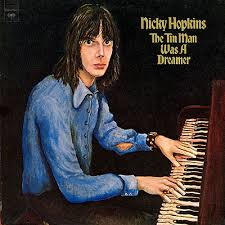
The Guardian obit talked about Hopkins’ uncanny instinct to play just what was needed on any number of great rock records—even the partial list in his Wikipedia entry is mighty impressive—he was an expert in both technique and feel. About halfway thru the article it was suggested that as a natural accompanist the result of his time taken in the spotlight was bound to be underwhelming. Still, “The Tin Man was a Dreamer” (his second and best known solo LP) is a good listen. I especially like the song below, with its sly wink to an occupational situation I’m sure he faced on more than one occasion.
By the late Sixties, Hopkins had made a move to America’s West Coast, recording with Steve Miller, the Jefferson Airplane (with whom he played at Woodstock), Quicksilver Messenger Service and Jerry Garcia, among others. After Nick’s health problems caught up with him in 1994, Kinks frontman Ray Davies spoke appreciatively about the pianist’s great ability “to turn an ordinary track into a gem.” Of course, it was Davies who had, way back in ’66, wrote the tongue-in-cheek song “Session Man” partly with Hopkins in mind. But N.H. was a far cry from the song’s clock-punching player, as one listen to the tune’s distinctive harpsichord intro will indicate.
(After nearly two years in exsistence, Reel and Rock has its first guest-written post! Joe S. Harrington is the author of “Sonic Cool: The Life and Death of Rock ‘n’ Roll” [previously recommended in my “Books That Rock Pt. One” post] and was editor of the former Kapital Ink magazine. When I wrote a column on rock documentaries for KI, I was in the habit of sending edit-defying articles of a few thousand words each and now Joe has returned the favor. Visuals and captions by “Ed.” Enjoy!–Rick Ouellette)
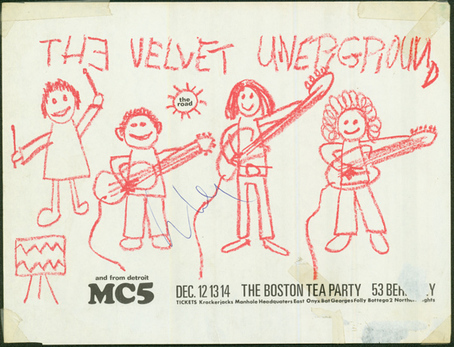
What more could possibly be said about the Beatles? And for that matter, the Velvet Underground? The Beatles are like the “learner’s manual” of rock n’ roll—they covered every discernible style, and did it all first. The Velvets, on the other hand, represent the dark underbelly of rock, from whence emerged a Cause and a Way of Life. It’s just proof of something that’s been said a million times about the VU: their influence didn’t really take hold until years later. So even though they were contemporaries of the Beatles, what they were doing was so far ahead of its time that the influence of it wouldn’t be felt or years, or even decades. So while the Beatles were totally of the ‘60s, the Velvets transcended it, making them the “better” group, right? But maybe that’s because the influence of the Beatles is so profound and well-engrained that it doesn’t even need to be clarified—which is what I’ve been forced to reconsider, having read Ian McDonald’s epic Revolution in the Head, and hence actually listened to the Beatles, album-by-album, for the first time in decades.
This aural re-evaluation ultimately led me to “lend my ears” to that most sacred of sacred cows, Sgt. Pepper’s Lonely Hearts Club Band, which has suffered so much overkill that genuine proponents like Rolling Stone, in their ultimate anti-hip measure, only rated it FOUR stars in the first edition of The Rolling Stone Record Guide, published in 1978. The point being, what was once considered “the greatest rock n’ roll album” of all time, in just a decade had come to be seen as sadly dated, a curio of a bygone era, and somehow quaint in its timeliness. At the same time, to demonstrate how much the critical consensus had changed since the ‘60s, in the same volume, The Velvet Underground & Nico pulled five stars. With the rise of punk—viewed by critics as the Velvets’ progeny—esteem for the VU had only risen and they were seen as innovators, whereas the Beatles, as adventurous as their mid-sixties music had been, now had their lot lumped with the bastions of “classic rock,” beloved by FM rock listeners, but considered passe by hipsters.
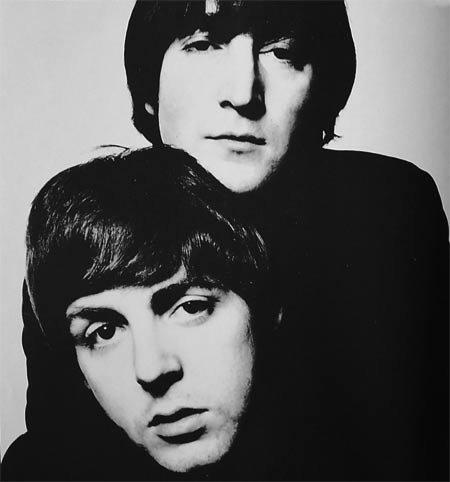
J & P, moments after learning the results of a Hipster Popularity Contest, where they went up against Alex Chilton and Chris Bell
In the ‘80s, as the post-modern mentality crept in, the Beatles, given their universal mainstream appeal, were short-changed in favor of not only the Beach Boys but far lesser groups like Big Star. But these things are cyclical—first Yoko Ono was acknowledged as kind of a godmother figure to both new wave and Riot Grrl, and then it was the Scorsese documentary about George Harrison, but eventually the Beatles came back into favor…but they’ve been “going in and out of style,” as they themselves said on Sgt. Pepper, for so long that, at this point, all such arguments are moot, because as the years go by the whole ERA gets more compressed—hence the Beatles have much more in common, in the long run, with, say, the Ramones or even Metallica than any of them have with Taylor Swift. At a certain point there came a time, especially as a barometer of the Zeitgeist, when music just didn’t matter anymore. But it can be argued that the Beatles—along with Dylan, the Stones and all the rest—ultimately represent the moment when music did begin to matter, and that’s why, ultimately, the Beatles and Velvet Underground have a lot more in common than critics and fans may have surmised back in rock’s golden age.
Make no mistake, the Beatles were not a boy-band, or a pop artifice—they had some of that in their music, but by the time they recorded, in 1962 (not counting a few odd recordings a year or so before as a backing band), they were a seasoned performing unit in a way that few groups who followed them could match, simply because the Beatles opened the floodgates for those groups. The Beatles not only had to prove themselves, they had to prove the worth and merits of the whole style of music—rock n’ roll—because their embrace of such was simply unprecedented. Therefore, by the time the other great groups of the ‘60s emerged—the Kinks, the Rolling Stones, the Grateful Dead, the Velvets, the Byrds, the Doors, the Airplane, the Who, Zappa, etc.—they didn’t need to toil away playing the dingy bars of Hamburg (or its equivalents) for more than six months whereas the Beatles had been doing it for six years. Sure, there are arguments that those bands, given their relative youth and inexperience, caught up—and even surpassed—the Beatles in record time.
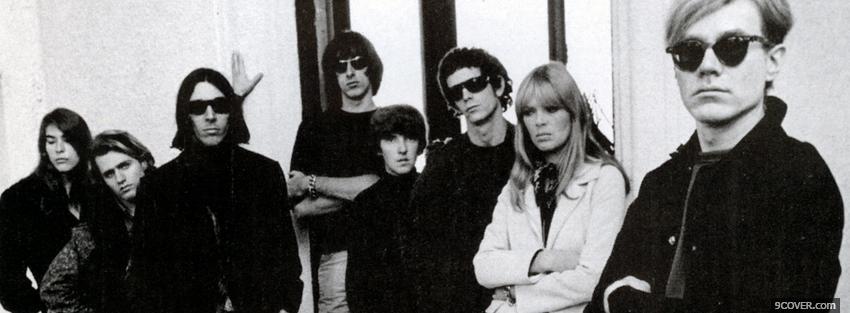
The Velvet Underground during their open enrollment period
That included the Velvets—but don’t think they weren’t hip to the Beatles: Lou Reed played a hollow-bodied Gretsch guitar like George Harrison and on the flexi disc that came with Index magazine in 1967, which featured a conversation recorded at Andy Warhol’s Factory just after the Velvets’ first album came out—and, consequently, Sgt. Pepper as well—one hears Nico mimicking “Good Morning, Good Morning”…not sarcastically either, but just because that’s what everybody was doing in the Summer of ’67, because the album was ever-present. In other words, even though the Velvets, who could loosely be considered “rivals” with the Beatles, had just put out their own LP, they couldn’t get out from under the shadows of Sgt. Pepper. After all, it was Number One for fifteen weeks—virtually the entire summer of ’67—and, other than Michael Jackson’s Thriller, how many other albums can you say that about?
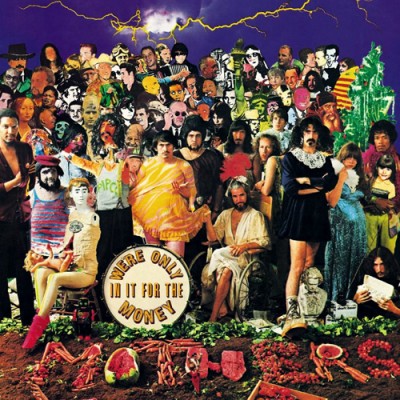
Even as late as 1970, the Velvets’ Sterling Morrison gave an interview to Fusion magazine where he actually venerated Sgt. Pepper in favor of Frank Zappa’s parody of it, We’re Only In It for the Money: “Let me see him come out with something as good as Sgt. Pepper. What Zappa saw in Sgt. Pepper was something good which showed real perception and talent, and lacking these attributes himself, he decided to do something else, and make fun of it. Is there anything on We’re Only in It for the Money that even remotely compares to the original?” Given this evidence, it’s clear that it wasn’t the Beatles whom the Velvets considered rivals, but the California groups like the Mothers and Grateful Dead.
I’m more of a “Weasels Ripped My Flesh” guy, anyway.
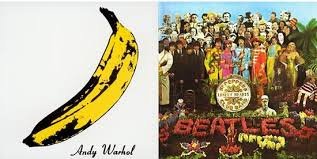
In fact, as rock rolls on, it becomes clearer that perhaps the two most enduring bands of the entire rock n’ roll era are the Beatles and the Velvets. Don’t believe me? Just ask Robert Christgau, who proclaimed the VU “the number three band of the sixties” after, of course, the Beatles and James Brown & His Famous Flames. Now JB is sacrosanct, irrefutable…where would Gospel, Soul, Funk, Disco, Hip Hop and Rap be without the Godfather of Soul? But it’s not rock, it’s R&B, and therefore in a separate category. The Velvets, on the other hand, format-wise, are the same as the Beatles—guitar/bass/drums—but both groups dabbled with non-rock motifs: the Beatles with symphony orchestras and the Velvets with electric viola. And both had high-art aspirations, not the least of which was they employed actual artists to design their album covers, instead of leaving it to the record company. Therefore you could have the infamous Andy Warhol banana on the cover of The Velvet Underground & Nico, and Klaus Voorman’s black-and-white collage adorning the Beatles’ Revolver, the album that predated Sgt. Pepper. By the time of Pepper, standards were being raised even higher by Michael Cooper’s elaborate cover design, and the fact the Beatles actually printed the lyrics on the back to assert that Lennon and McCartney warranted serious consideration as “composers.” And although almost no-one knew it at the time, and the Velvets didn’t print the lyrics on their album, a future generation of critics would assert much the same thing about Lou Reed.
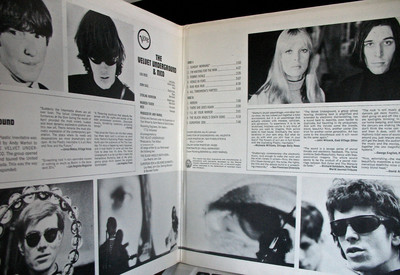
Add to that the fact that both Sgt. Pepper and the Velvets’ first album were among the first rock LPs to be issued with a gatefold, extremely rare for rock albums at the time—the thought being the Powers That Be at the record companies didn’t want to waste the cardboard on mindless fodder. But the Beatles being the Beatles, and the Velvets with the Warhol connection, obviously warranted a higher standard from their respective labels (only Frank Zappa, who recorded for the same label as the Velvets—Verve, who’d previously specialized in jazz—was accorded the same dignity).
There were precedents for this kind of maturation in rock—not only Zappa but the Beach Boys of Pet Sounds (both cited by the Beatles as influences on Sgt. Pepper). But compared to the breakthroughs established by both the Beatles and Velvet Underground in 1967—even though they were worlds apart—such early innovators can be seen as merely stepping stones. And the Stones, although their early R&B-based work and even proto-psychedelic stuff can be seen as superb, didn’t really surpass the Beatles until the great string of albums beginning with Beggar’s Banquet and culminating with Exile on Main Street—by which time both the Beatles and Velvet Underground were no more.
Released within three months of one another in 1967, Sgt. Pepper’s and the Banana album represented the two social and sonic spheres of the sixties—the Beatles were light, optimistic, effervescent; the Velvets were dark, foreboding, luminescent. It’s hard to say which one had the most influence, but it’s obvious the Beatles’ influence was more immediate and the Velvets’ was more latent. What’s obvious, though, is that, taken together, they are the two most influential groups of their time—and hence any time, because, despite punk, it’s doubtful, at this point, in terms of rock music, the ‘60s is ever going to be surpassed.
1967 was the apex of that renaissance. Surely there will never be another year in which the possibilities of rock music seemed so limitless, before it became clouded by irony and pretention. Both the Velvets and the Beatles epitomized rock’s giant breakthrough as an art-form, and Sgt. Pepper and The Velvet Underground & Nico were both high water marks of the revolution—but whereas the Beatles used a more ornate style to reflect rock’s increasing maturity, the Velvets, in stark contrast, produced an almost primitive sound. Despite the stylistic differences, however, both groups shared similar concerns (which admittedly were in the air at the time). Themes of alienation, for instance, are reflected in both Pepper’s “She’s Leaving Home” and the Banana Album’s “All Tomorrow Parties.” Both albums are heavily drug-influenced, and while something like John Lennon’s “Lucy in the Sky with Diamonds” is nowhere near as blatant as Lou Reed’s “Heroin” and “I’m Waiting for the Man,” it probably turned more people onto acid than any similar song of the era (and John would have his own junk-song a couple years later in the form of “Cold Turkey’). That’s one of the things McDonald makes clear in his book—the Beatles greatest importance was as the Uber-messengers of not just rock, and psychedelia, but the avant-garde. And the Velvets of course benefited from this, being an “art band” and all.
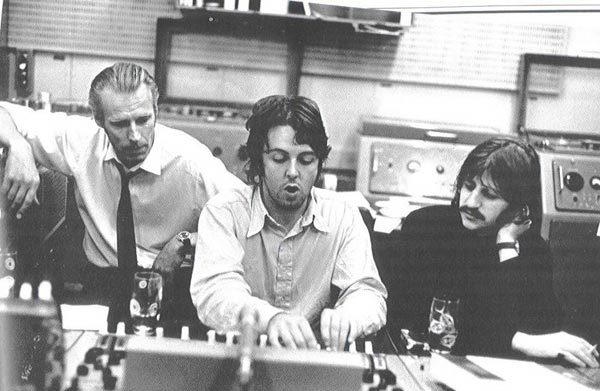
Thanks, George, we’ll take it from here.
Noise was another integral element of the new, freer music, in both jazz and rock, and perhaps the first aspect of the Velvets to be fully grasped by future generations was this atonal quality. The Velvets were the first band, save perhaps the Who, to embrace the concept, even calling an early track “Noise.” And while the Beatles are more universally remembered for their melodic qualities, by 1968, when the whole world seemed to be in a state of chaotic dissonance, even the Beatles were pushing the sonic envelope with what could loosely be called “noise experiments”—including of course the infamous “Revolution 9” on the White Album, 8 minutes of audio mélange that, as McDonald acknowledged, became the most widely-disseminated “avant garde” document, in any art form, ever. As so often happened with the Beatles, they may not have come up with the idea, but their enormous popularity guaranteed that such concepts—ones first promulgated by the actual bastions of the avant-garde like Warhol and John Cage (and, for that matter, Yoko Ono)—would reach a much wider audience.
Speaking of noise, certainly John Lennon’s embrace of atonality in the later stages of the Beatles—from audio pastiches like “Revolution 9” and Two Virgins to the raunchy and dissonant guitar playing on tracks like “Cambridge 1969” on Life with the Lions and the live version of “Don’t Worry Kyoko” on Live Peace in Toronto—owe a lot more to the Velvets’ type of pure-noise exorcisms than the more sculpted textures of the Who and Jimi Hendrix.
While everyone was aware of the Beatles, there’s a good chance the Beatles were aware of the Velvet Underground as well. Mick and Keith already copped to the influence of the VU on “Stray Cat Blues,” and it’s a known fact that, in those days, Paul McCartney was an avid champion of the underground (sometimes even in the philanthropic sense, such as his support for the International Times or the Monterey Pop Festival). In the spring of ’67, when Andy Warhol was trying to bring Chelsea Girls to Europe, he and his entourage actually visited Paul McCartney at his home in London right around the time of Sgt. Pepper. There’s a video on YouTube, dating from ’67 or so, where Paul Morrissey, Warhol’s director, talks about how, at the time, Paul McCartney, like just about everyone else in those days, was experimenting with underground movies (which Morrissey refers to as “psychedelic”). There’s even the possibility that, right before he died, Brian Epstein, the Beatles’ manager, was thinking about managing the Velvets!
Says “factory interview” but took place in England–Ed.
According to Danny Fields in the book Uptight (pg 84): “I had given Brian the banana album and one night I was with Lou at Max’s and Brian came in briefly. He said he was on his way uptown. I went outside to his limousine with him and then I said, ‘wait a minute I have an idea.’ And ran back in and said to Lou, ‘This is your big chance to talk to Brian Epstein.’ He got in the car but there was like total silence because they were both too proud to say anything to each other. Finally Brian leaned over and said ‘Danny recommended this album to me and I took it to Mexico with my lover. It was the only album we had there. We rented a phonograph, but we couldn’t get any more albums, so we listened to it day and night on the beach in Acapulco. Consequently my memory of the whole week in paradise was your album.’”
Of course if Brian Epstein was listening to the Velvets’ first album there’s a pretty good chance the Beatles themselves had caught wind of it. Ironically, it was Brian’s death in 1967, just a couple months after Sgt. Pepper was released, that finally liberated the Beatles from their former teen-pop image…which is just another way of saying, with rock’s increasing maturity, the Beatles were no longer necessarily “leading” the movement, but increasingly were just one more hue in its ever-expanding palette. And it can be argued that, once that happened, it was inevitable that the Beatles—and hence the whole movement—would fragment. Which is why, in the ensuing years, the Velvets, who’d symbolized this individualistic, non-unifying quality from the beginning—cynicism, if you will—would be increasingly looked upon as being as important, if not more so, than the Beatles (a premise that would’ve seemed unthinkable in 1967). It should be noted also that Richard Hamilton, the artist who designed the blank cover for the White Album—undoubtedly the Beatles’ most experimental and musically-varied opus—actually appeared in Warhol’s film, Kiss, in 1964. In the ‘60s, the worlds of art, music, media and graphic design were all converging. The Beatles were at the forefront of it, but the point is, so was the Velvet Underground
And not everybody at the time favored the Beatles either—critic Richard Goldstein, who’s somewhat praise-worthy article in the Village Voice about the Velvets actually made the press blurbs reprinted on the sleeve of the banana album, famously panned Sgt. Pepper when it was released (making him, admittedly, the lone dissenter at the time). It’s clear that, in 1967, both Pepper and the VU & Nico were pointing the way towards the future; but there was no shortage of groundbreaking albums released that year, from the first albums by Cream, Pink Floyd, the Bee Gees, the Jimi Hendrix Experience, Traffic and the Doors to the Mothers’ Absolutely Free, Love’s Forever Changes, the Beach Boys’ Smiley Smile, After Bathing at Baxter’s by the Jefferson Airplane, the debuts of Moby Grape and the Grateful Dead, the 13th Floor Elevators’ Easter Everywhere, the Incredible String Band’s Hangman’s Beautiful Daughter, the Who Sell Out, There Are But Four Small Faces, Younger than Yesterday by the Byrds, Captain Beefheart’s Safe as Milk and Nico’s own Chelsea Girls to name but a few. Changes were in the air—yes, of the “forever” variety—and while it’s tough to say whether ’67 was the “best” year that rock will ever know, it’s clear that it was the turning point. And if this is true, two albums clearly stand out as definitive: Sgt. Pepper and the Velvets’ first.
Those were the days
Despite other similarities between the two groups—such as the fact they were both managed by prominent older gay men and they both sacked their original drummers—the worlds of the Velvet Underground and the Beatles were still universes apart in 1967. And although, in post-modern terms, there’s a tendency to view the Velvets’ album as having even greater impact than Sgt. Pepper, in critics’ polls conducted over the years, both albums are almost always in the Top 20. For example, in the VH1 poll conducted in 2001, Pepper comes in at Number Nine, and the VU & Nico at Number Nineteen. In 2003, Rolling Stone placed Pepper at Number One of all time, with the Banana Album at Number Thirteen. The NME, on the other hand, in a more recent Top 500—in which the Smiths’ The Queen is Dead pulled number one—the Velvets’ debut was at Number Five and Sgt. Pepper’s was relegated to the 87th spot (although Revolver was Number Two). But that’s just another example of post-modern revisionism (which the Brits are champs at). For another more Anglo-centric view there was Paul Gambacinni’s groundbreaking 1977 Top 200 Albums, where Sgt. Pepper copped the Numero Uno spot, and the Velvets’ first album placed at Number 14. Ten years later, in the book’s revised edition, although Pepper still sat firmly at the top spot, the Velvets had risen to Number Seven.
More telling is a more recent poll by Rolling Stone supposedly entailing the 100 Best Debut Albums of All Time where they proclaim the first Velvets album “the most prophetic album ever made.” Which is somewhat closer to the truth—and goes back to Ian McDonald’s original premise that the Beatles were so much a product of their time—while at the same time DEFINING it–that it became almost impossible for them to transcend it (and not be judged totally within the context of it). Sgt. Pepper was such a cataclysmic event when it was released in the Summer of Love that it honestly had nowhere to go but down in terms of esteem in the ensuing decades. The Velvets, on the other hand, were so underground in their time that it took 25 years for their full impact to be assimilated. If the Beatles were the most influential band of the ‘60s, the VU were clearly the most influential band of the ‘80s—and that influence continued to grow up until a few years ago, with the Strokes being yet another band who took their cue from the Velvets, following in the tradition of the Modern Lovers, Feelies, Dream Syndicate, Sonic Youth, Gang of Four, Jesus & Mary Chain, you name it.
It really doesn’t have to be decided which one is “better” because ultimately it can’t be. But one thing remains clear—in the minds of music fans, 1967 will live forever, and Sgt. Pepper’s Lonely Hearts Club Band and The Velvet Underground & Nico are two big reasons why.
This 4-minute clip is from the Beatles official YouTube channel, so the over/under as to when it will be taken down is 36 hours based on past Reel and Rock history.


 Reel and Rock