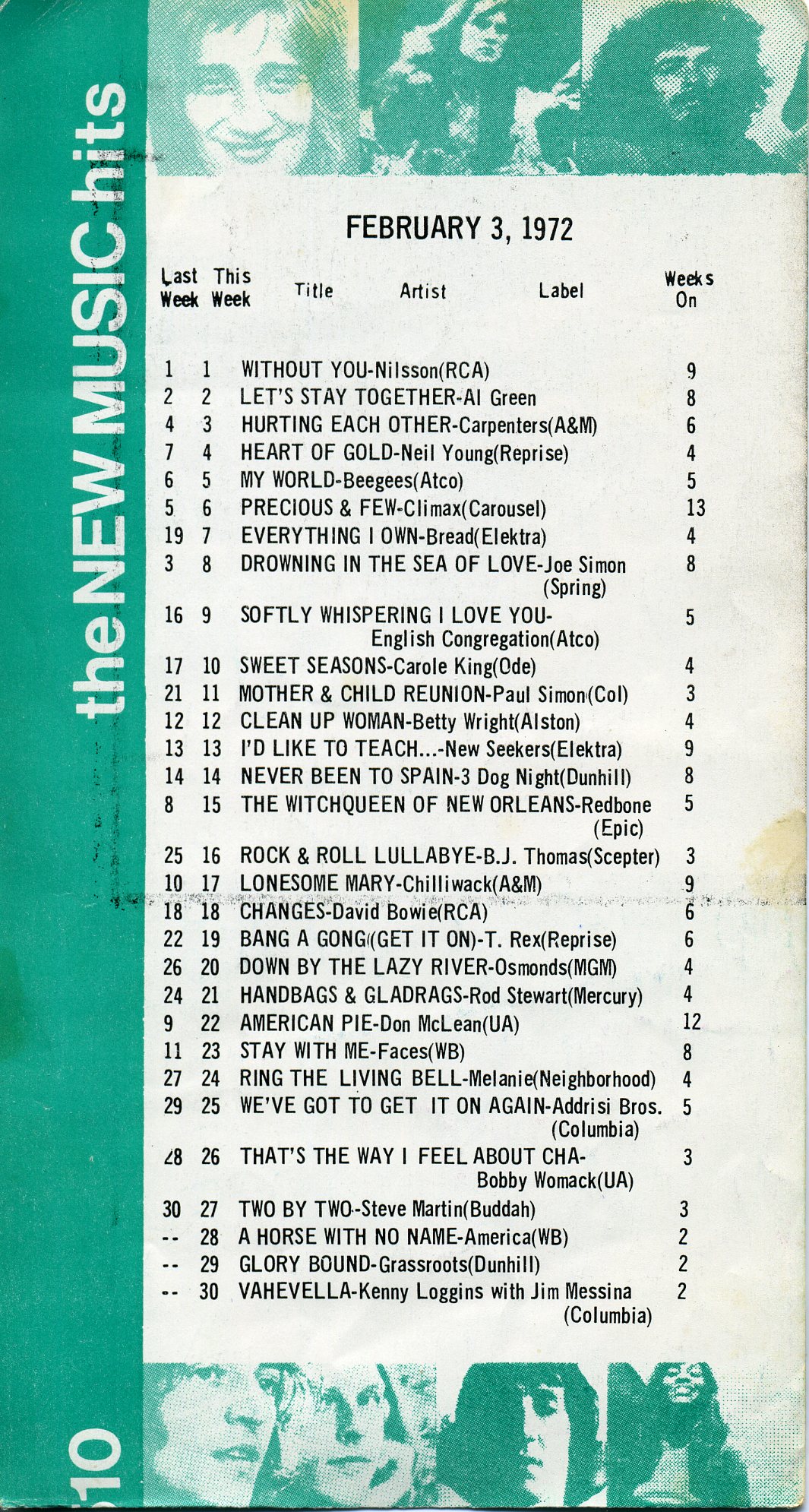
“A long long time ago, I can still remember how that music made me smile.” I know, right? What I have more trouble recalling is whether or not I had one of my several boyhood paper routes (as described in Part One) during that winter when Don McLean’s middlebrow magnum opus “American Pie” topped the charts. The pensive introduction to this 8-minte rock-history metaphor recalls his own days as a newspaper slinger, especially the heartbroken morning when the news told of the plane-crash deaths of Buddy Holly, Richie Valens and the Big Bopper. “The Day the Music Died” was February 3rd, 1959, a day after my first birthday. Exactly thirteen years later on Feb. 4th, it was me side-arming the papers into snowbanks (presumably, anyway) and digging the tunes on my beloved WMEX in Boston. Thing is, like paper routes, classic pop music for me seemed to largely exist in some vaguely-defined eternal summer, with only a minority of favorite songs associated with cold weather. Even songs released in October or March became mentally backdated or fast-tracked into a heat wave. Or that is how it seems as I look back down the “foggy ruins of time” with apologies to the so-called Jester. Despite this meteorological-based selective memory, here were the songs counting down on the great 1510 on the 13th anniversary of that terrible crash in Clear Lake, Iowa.
“Without You” Harry Nilsson. This plainitive and despondent big ballad was catnip to those young ones carrying a classroom crush into 1972. Nilsson’s versatile vocal abilities were perfect for this Badfinger song featuring hushed verses and an anguished wail of a chorus. Unfortunately, the specter of untimely death looms over this as well. Badfinger co-writers Pete Ham and Tom Evans both committed suicide over the next decade and the hard-living Nilsson died in 1994 at age 52.
Speaking of 1994, that was the year Pariah Carey tried to ruin this song for everyone.
“Let’s Stay Together” Al Green. Some sweet soul cajoling by the Reverend and another one destined for a long shelf live on classic-hits radio. “Hurting Each Other” the Carpenters. Another hit arriving right on schedule for the brother-sister team with the honeyed contralto of future pop martyr Karen sounding particularly sad. “Heart of Gold” Neil Young. The only national #1 hit for Neil but Top 40 success seemed an ill-fit for the Laurel Canyon maverick and he was soon releasing the astringent concert LP “Time Fades Away” and recording material that would later end up on the junkie polemic “Tonight’s the Night.” “My World” the Bee Gees. Not to worry, guys. Disco is only a few years up the road. “Precious and Few” Climax. I LOVE this song. There, I said it. Sure it’s sappy and sounds like it was made five years before but it did the trick for those of us who didn’t want to quite give up their association with the Association, whose sound this recalls. “Everything I Own” Bread. And I’m doubling down on this one. Bread had a hit song about every three months from the summer of 1970 to early 1973, tapping the market for us young teens with budding romantic longings, though the tone struck by David Gates and Co. was always more adult-seeming than that. “Drowning in a Sea of Love” Joe Simon. Right behind Bread at #8 was a smoldering chunk of primo early 70s R&B that no one will feel shy about admitting to liking.
“Softly Whispering I Love You” English Congregation. Every so often, Transistor Heaven takes a side trip to hell. “Sweet Seasons” Carole King. Her mega-successful “Tapestry” album practically defined 1971 and was just cooling off when this first single off the follow-up took hold. It was an appealing, mid-tempo number that nudged listeners’ expectations towards springtime, not a bad mission for a winter hit. “Mother and Child Reunion” Paul Simon. Jumping up ten spots this week, the first of many Top 40 hits for Simon sans Garfunkel and definitely a winter song since the first time I heard it was driving thru the snow with my old man. “Clean up Woman” Betty Wright. Another in this era’s long line of great hits by lesser known woman soul singers, a list that would also include Freda Payne’s “Band of Gold”, Jean Knight’s “Mr. Big Stuff” and the Honey Cone’s “Want Ads.”
“I’d Like to Teach the World to Sing” New Seekers. Come back, English Congregation, all is forgiven. This vacuous sub-kindergarten sing-along paved the way for corporate takeover of the peace-and-love ethos. At least the pie-in-the-sky lyrics were minutely tolerable in its original form, but when a diabetes-peddling company called Coca-Cola hired a gang of Stepford Youth to sing the revised words from an idyllic hilltop, you knew the Sixties were over for real. #13 in the charts and #666 in the boardroom. “Never Been to Spain” 3 Dog Night. The hits keep on coming for these Top 40 titans, with another quirky Hoyt Axton tune (“Joy to the World” was the first) and one notable for confusing Oklahoma with heaven. “The Witchqueen of New Orleans” Redbone. This danceable Cajun-influenced rocker from the Native American band was their first hit, followed two years later by the perennial “Come and Get Your Love” revived last year by its prominent place in the “Guardians of the Galaxy” soundtrack. “Rock and Roll Lullaby” B.J. Thomas. Some would think that the terms “rock and roll” and “lullaby” are a bit on the mutually exclusive side, but it seems on YouTube many boomers love this now as parents. Who am I to hate on it?
“Lonesome Mary” Chiliwack. I remember a WMEX DJ quipping that this trio came from so far up in Canada that their drummer was a grizzly bear. Ba-boom. Actually this band was from relatively civilized Vancouver (hello there, Canuck fans!) and singer-guitarist Bill Henderson is still going strong. Chiliwack wouldn’t hit the U.S. Top 40 until their more New Wavey incarnation in the early 80s but I absolutely loved this early power-trio outing that hit at least as high as #10 in Boston.
“Changes” David Bowie. My radio introduction to the wonderful world of rock’s great chameleon as the earlier “Space Oddity” only became a hit with its 1973 re-release. An awakening to adult concerns was no doubt part of this single’s appeal, reminding us that “pretty soon now you’re going to get older.” But what a trip it would be tracing time with Bowie thru the years starting now. “Bang a Gong” T. Rex. Marc Bolan’s group seemed to be coming up thru the ranks right along with his friend David Bowie, though this radio staple would be their only big stateside hit before Bolan’s tragic death in a 1977 car crash. “Down By the Lazy River” the Osmonds. Pass.
“Handbags and Gladrags” Rod Stewart. This bittersweet ballad written by Mike d’Abo was first heard on Rod’s first solo album, released exactly two years previous, but it seems it was pressed into service as a single in the lull between his monster LP “Every Picture Tells a Story” and the follow-up to hit the stores in the upcoming summer. A definite winter song this one, as an old man casts a cold eye on the trendy ways of his school-skipping granddaughter.
“American Pie” Don McLean. After three months on the local survey, Donnie’s anthem slipped thirteen places, out of the Top Ten to #22. Its impact was still pervasive. (8th grade English teacher: “That part ’I met a girl who sang the blues and I asked her for some happy news,’ that’s about Janis Joplin.” Class: “We know that!!”) “Stay With Me” the Faces. Here’s Rod again, with his old mates and a raucous stomp about a lady of easy virtue, well loved by us boys in that 8th grade class. “Ring the Living Bell” Melanie. I had completely forgotten this one from the Woodstock poster girl and when I looked it up all I could find was 5-minute LP version, which was about three minutes too long for me. “We’ve Got to Get It on Again” Adrisi Brothers. The pride of Winthrop, Mass. (the flyover town next to Boston’s Logan Airport) and another Association association, as these guys wrote “Never My Love” once cited by BMI as the second most played songs ever, with over 7 million airings, just ahead of “Yesterday.” “That’s the Way I Feel About Cha” Bobby Womack. The classic slow-burner by the recently passed-on R&B legend. I loved when it was slow dance time on Soul Train.
“Two by Two” Steve Martin. A great but nearly forgotten single by the former Left Banke lead singer. “A Horse with No Name” America. According to Randy Newman, a song “about a kid who thinks he’s taken LSD”. More on the greatest of all folk-rock army brat trios in the third and final Transistor Heaven installment this summer. “Glory Bound” the Grassroots. The second-to-last national Top 40 hit for these guys, who were still mining their classic sound amid a sea change that was less favorable to pure pop bands and more so to singer-songwriters or heavier groups. “Vahevella” Loggins and Messina. At first you would think this is more a summer song, but a sailing tour of the Caribbean had just the right touch of February escapism.
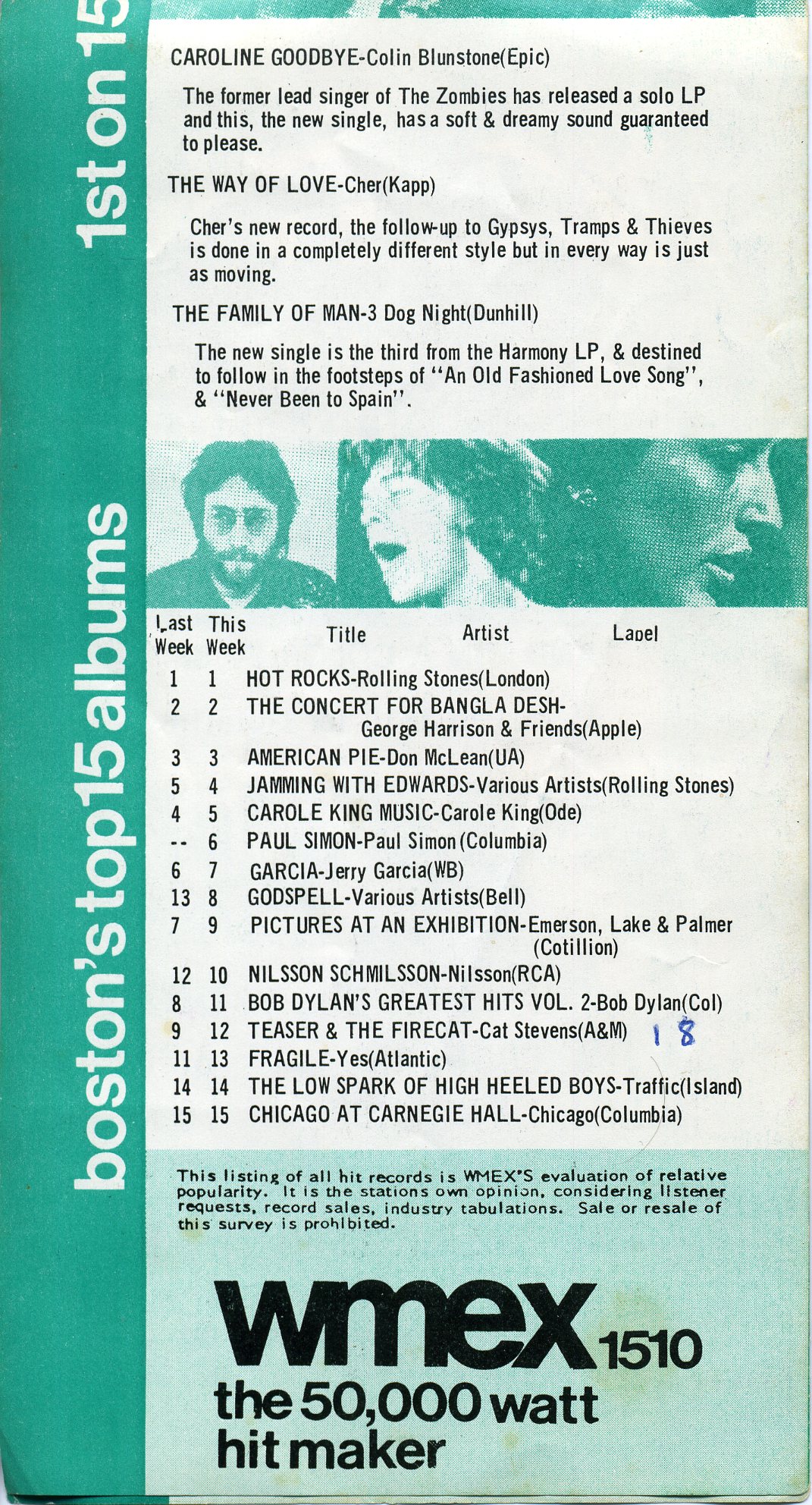
The pick of the litter for the hitbounds this week has to be “Caroline Goodbye” by former (and future) Zombies lead singer Colin Blunstone. As in Part One, the Top 15 albums show a pretty good smattering of classics. Interestingly, at #4 (and hot on the heels of the “American Pie” LP) was “Jamming With Edwards” (sic), the ramshackle jam album featuring Mick, Charlie and Bill from the Stones as well as Ry Cooder and Nicky Hopkins. Jagger has admitted the record was cobbled together one morning while waiting for Keith Richards to get out of bed. Elsewhere, there seems to be a Christmas season hangover, with double-album best-of offerings from both the Stones and Bob Dylan and the 3-LP “Bangla Desh” box set from George Harrison and friends. Not to be out done, Chicago upped the ante with a four-disc live set. Ah, but those were bigger times.
Now if you’ll excuse, I have another new snowfall to shovel, “bad news on the doorstep” of another kind.
In a scene from “The Last Waltz” film, the Band’s bassist-vocalist Rick Danko sits at a studio mixing board with director Martin Scorsese and plays back a track he’s been working on for his upcoming solo album. These interviews were filmed in 1977, after the original group’s guest-star-studded farewell concert on Thanksgiving Day in 1976. In response to the filmmaker’s question as to what’s next for him, Danko’s chipper reply of “just trying to keep busy” is tempered when he lowers his head while listening to the playback. Re-watching the film recently for a piece I’m writing, it all just seems so sad.
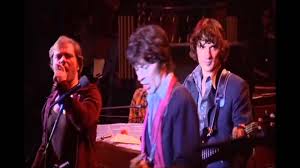
Van Morrison, Robbie Robertson and Rick Danko at The Last Waltz
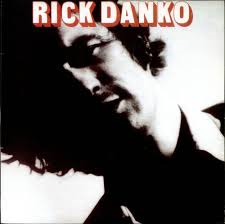
While drummer-singer Levon Helm made no secret his vehement disapproval of the idea of ending the Band as a touring unit (they were ostensibly supposed to continue as a recording unit but this lasted for only one album) he and the others went ahead and did their thing until reforming in the early Eighties without guitarist-songwriter (and “Last Waltz” producer) Robbie Robertson—accused by Helm of splitting up the Band to make a grandiose film statement about the end of rock’s classic era. Danko’s self-titled solo album was released in later 1977 and was a greatly appealing rootsy rock offering, with heart-aching ballads, cheeky roadhouse rumbles and a little social commentary sprinkled in for good measure. Danko as a songwriter didn’t have Robertson’s uncanny ability to tap a rich vein mythic Americana but then again neither did Robbie after ’77 and at least Rick was still in there mixing it up. His famously tender voice was especially well used on the ballads like “Sweet Romance.”
The thing is, once the Band was gone you had five potential solo artists instead of one beloved group and in the crowded rock marketplace that can be a tough sell. It was much easier to see the Rick Danko album as Band-lite and it was lightly regarded by the press, didn’t sell well, eventually went out of print and has had a patchy history at best on CD. Luckily, all tracks are available on YouTube if you want a listen.
Speaking of “The Last Waltz”, you can have your “I Shall Be Released” all-star sing-a-long but for my money the film’s theme-defining moment comes half-way through. In a remarkable vocal performance that is both fierce and vulnerable (and pushed along by Garth Hudson’s mad-scientist organ), Danko delivers “Stage Fright” as an all-encompassing cri de Coeur for all those star-crossed performers who “got caught in the spotlight” only to want to “start all over again” at the perceived finish line. Danko, both in re-formed versions of the Band and as a solo artist, carried on until his death by heart attack in 1999.
(A series of occasional posts hearing out the solo excursions of rock history’s supporting players whose breakaway efforts never amounted to a high-profile solo career.)
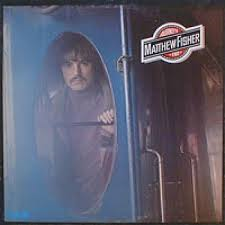
Founding Procol Harum member Matthew Fisher was one of the early masters of the Hammond organ, the cabinet-encased keyboard whose full-bodied sound could go toe-to-toe with rock music’s dominant electric guitars. Procol’s 1967 mega-hit “A Whiter Shade of Pale” was constructed around Fisher’s magisterial organ but the fact that he received no songwriting credit (and hence no royalties) was a stick in his craw—and later a lawsuit. Departing P.H. after three albums, Fisher’s first solo record was 1973’s “Journey’s End”, a worthy progressive-pop affair that was nonetheless filled with depressive lyrics that at times directed ill-will at his former musical colleagues, presumably the P.H. songwriting team of Gary Brooker and Keith Reid. These songs (“Going for a Song” and “Play the Game” especially) reveal a comprehensive bitterness at a divide-and-conquer music business that elevates talented and canny individuals and leaves by the side of the road other talented people less prepared to deal with its unsentimental ways. It’s not all gloom and doom, though, as Fisher’s deft melodic and instrumental skills serve as an uplifting counterweight and the would-be hit song “Suzanne” is a real winner.
Fisher would go on to make a few more solo albums and find work as a producer—he even joined up with the re-formed Procol Harum in the early 90s. But soon after he left again in 2004 he brought a suit for a share of future royalties on “Whiter Shade”, noting his undeniable contribution to its success. A fascinating case to be sure and one found in Fisher’s favor in a decision ratified by the House of Lords in 2009. For more on that see below.
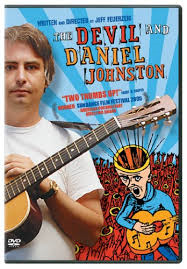
The Devil and Daniel Johnston
Directed by Jeff Feuerzeig—2006—110 minutes
Early on in this film, when Daniel Johnston is introduced at a 2001 gig as “the best singer-songwriter alive today”, those for whom this praiseful documentary was made will nod their heads while neutral observers may well start scratching theirs. His braying voice and incongruous philosophizing is guaranteed not to be to everyone’s fancy, but still director Jeff Feuerzeig lets stand numerous favorable comparisons that have Johnston right up there with Bob Dylan, the Beatles and even the greatest classical composers.
Johnston is a compulsive and reasonably talented musician, illustrator and audio diarist who is also a deeply troubled man with significant mental health issues that went largely unaddressed while growing up in a religiously conservative household in West Virginia. Soon after he moved to Texas, Johnston was adopted by Austin scenesters and his homemade cassettes became all the rage. Before long he shouldered his way into an MTV special and was befriended and/or championed by members of Sonic Youth, Nirvana and the Butthole Surfers among others. “The Devil and Daniel Johnston” may prove an uncomfortable experience for those not already converted. Johnston’s schizophrenia has led to violent and extremely reckless behavior that have endangered himself as well as friends and families. While his guileless music and lyrics sometimes hit peaks of uncommon grace, there is a nagging notion that people wouldn’t be half so enamored if it weren’t for his mental illness, which for years was dealt with willy-nilly. Feuerzeig doesn’t go anywhere near that issue, leaving his film looking like a vanity tribute to counter-intuitive hipsterdom.
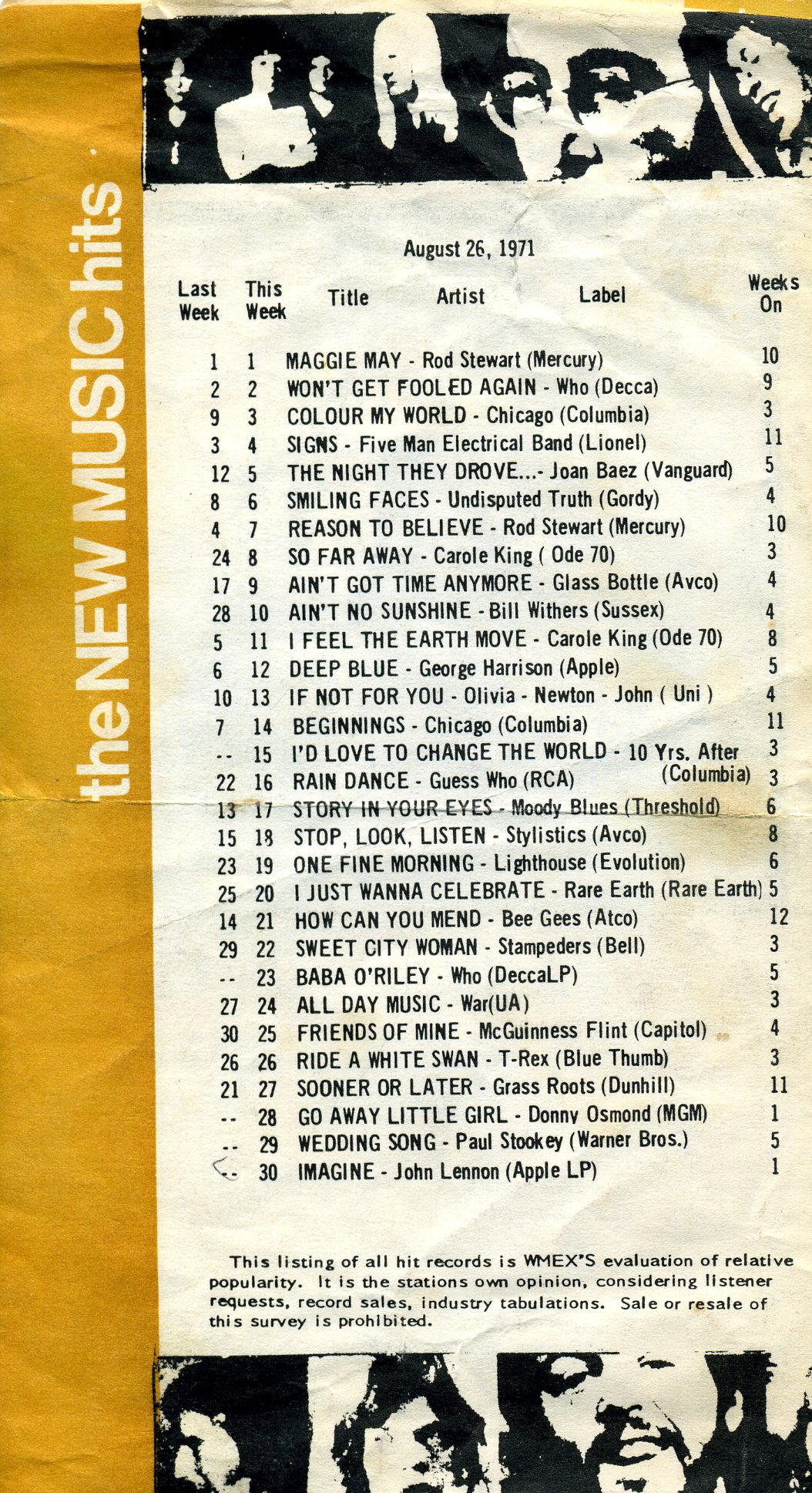
At 13 years old, you’re old enough to leave the house and mess about on your own, but not quite old enough for a real summer job once school vacation rolled around. Back in 1971, a paper route or mowing the odd lawn would be enough to keep you in cream sodas and 45s for the time being. It was the type of singles below that would infatuate us later baby boomers either on our record players or over the humid airwaves on stations like the old WMEX 1510 AM, whose playlists I once collected and managed never to lose. With the transistor radio pressed to the left ear with one hand, while the other flung copies of the old Boston Evening Globe at suburban ranch houses, here is how it went down 43 years ago today—a typically great countdown of the post-Woodstock, pre-disco age.
“Maggie May” Rod Stewart. Rod the Mod’s breakout solo hit dominated the local charts that whole summer, as did the album as a whole. Maybe us young’uns were in awe of a singer who would happen to know a seducing older woman who would actually “wreck the bed.” But by late August, the inevitable backlash set in, with some WMEX DJs grousing about its overexposure. But it was nothing like the backlash from his old rock fans when he dropped “Do You Think I’m Sexy” some seven years later. “Won’t Get Fooled Again” The Who. Another classic that hasn’t left the radio since its ’71 debut. But here you’d be listening to the lean-and-mean single version, which clocked in at 3:37, a full five minutes shorter than what was on Who’s Next. This edit, which blows by like a bullet train, pre-figures punk rock and was matched with a great B-side as well (“I Don’t Even Know Myself”). “Color My World” Chicago. With its drowsy six-note piano motif and Hallmark lyrics, this song was the inevitable slow dance choice at school cafeteria mixers. Awkward! It was also an early indicator that Chicago as a band would soon go from cool to clueless. “Signs” Five Man Electrical Band. The Sixties may have ended but that didn’t mean we had to stop getting up in the grill of The Man, as this Ottawa quintet so righteously proved. C’mon, all together, “If God were here he’d tell it to your face/Man, you’re some kind of sinner!” “The Night They Drove Old Dixie Down” Joan Baez. Like a surprise cavalry attack, Joan’s dilettante version of the Band’s masterful Civil War drama charged into the Top 5 before anyone could react in time. As Janet Maslin (then a Rolling Stone record reviewer) pointed out, the original Robbie Robertson lyrics were printed right inside her own album jacket, making inexcusable such gaffes as singing “so much cavalry” instead of “Stoneman’s cavalry” and declaring “there goes the Robert E. Lee” as if the narrator were watching a riverboat and not the legendary Confederate general in the flesh. “Smiling Faces Sometimes” Undisputed Truth. Blue-chip advice on dealing with frenemies from this R&B vocal trio from the Motor City. Hear them out; they’re “only trying to school ya.”
“Reason to Believe” Rod Stewart. Back to the Summer of Rod. His pensive take on the great Tim Hardin ballad was originally the A side but Maggie was not to “B” denied. “So Far Away” Carole King. It was also the Summer of Carole, who assured us that the age of the woman singer-songwriter had well and truly arrived with the blockbuster Tapestry album. “So Far Away” and “I Feel the Earth Move” (at #8 and #11) followed up “It’s Too Late” which had been #1 nationally for five weeks that spring. “Ain’t Got Time Anymore” Glass Bottle. One-hit wonders who harkened back to the AM pop style of the later 60s. “Ain’t No Sunshine” Bill Withers. Two “ain’t” songs in a row? What would your 7th grade English teacher think? Withers’ brooding acoustic-soul classic made the biggest leap up the chart this week. “Deep Blue” George Harrison. The flip side to the “Bangla Desh” single made it much higher in the survey, helped no doubt by WMEX’s quirky methodology.
“If Not for You” Olivia Newton-John. If not for this limp Dylan cover, the Top 30 would be a much better place. “Beginnings” Chicago. A damn sight better than “Color My World” though it was a bit odd that Columbia Records was going back to the first album for hits even though Chicago III was already in the stores. “I’d Love to Change the World” Ten Years After. The only hit single by Britain’s blues-rock titans, who had wowed the hippie hordes at Wodstock exactly two years earlier. “Rain Dance” Guess Who. Eccentric later hit by Burton Cummings and Co. and much appreciated by future hipster kids in our subdivision. “Story in Your Eyes” the Moody Blues. Gateway prog for the same group as above. “Stop, Look, Listen” Stylistics. The first of many elegant U.S. Top 40 hits for one of the premier Philly Soul groups. “One Fine Morning” Lighthouse. Kick-ass Canadian brass rock which also featured some blazing lead guitar, which you could hear in full if you caught it on an FM station, something we were catching wind of by then.
“I Just Wanna Celebrate” Rare Earth. The first successful white band to record for Motown (who named a label imprint after them) and this song, famous for its count-off and thunderous beat, had a refrain that made it popular in commercials and soundtracks ever since. “How Can You Mend a Broken Heart?” the Bee Gees. After three months on the survey, plenty of us were tired of hearing Robin Gibb’s tremulous rhetorical question, but it wasn’t going without a fight, barely getting pushed out of the top 20 this week. “Sweet City Woman” the Stampeders. Those Canadians keep right on coming. It’s Instant Summer once you hear that triple-time banjo strum, cowbell and lyrics filled with romantic anticipation—the biggest hit for the Calgary-based trio. “Baba O’Riley” the Who. If the ‘MEX staff wanted a great album track on the countdown then on it went, though I wondered how a song that was debuting at #23 could have been on the charts for five weeks. “All Day Music” War. The first post-Eric Burdon hit for the multi-ethnic Long Beach band, and one of several associated with the warmest of seasons.
“Friends of Mine” McGuiness Flint. These appealing and unassuming folk-rockers probably couldn’t get played nowadays unless they owned a radio station. For shame. “Ride a White Swan” T. Rex. If you listened to the New Music Authority on 1510AM you wouldn’t have to wait around for “Bang a Gong” to get hip to Marc Bolan and his elfin ways. Of course, the first of many HUGE hits for him in the U.K. “Sooner or Later” the Grass Roots. One of the latter-day smashes for these AM pop princes. I’m pretty sure Creedy had left the band by then. “Go Away Little Girl” Donny Osmond. You know, I always thought that this ditty should have had an answer song from the fairer sex. There would be a mid-song spoken word part where the girl would say “Why don’t you go away first, Donny, and we’ll call it even.” “Wedding Song” Paul Stookey. Wow, two clunkers in a row. I said it was a great Top 30, not a perfect one. “Imagine” John Lennon. This actually didn’t become a hit until the fall and an international anthem after that. But that didn’t stop the new Music guys, though the progressive AM business model would not hold and as we young teens grew up and it was quickly onto WBCN and other FM rock outlets, including college radio in the 80s and beyond.
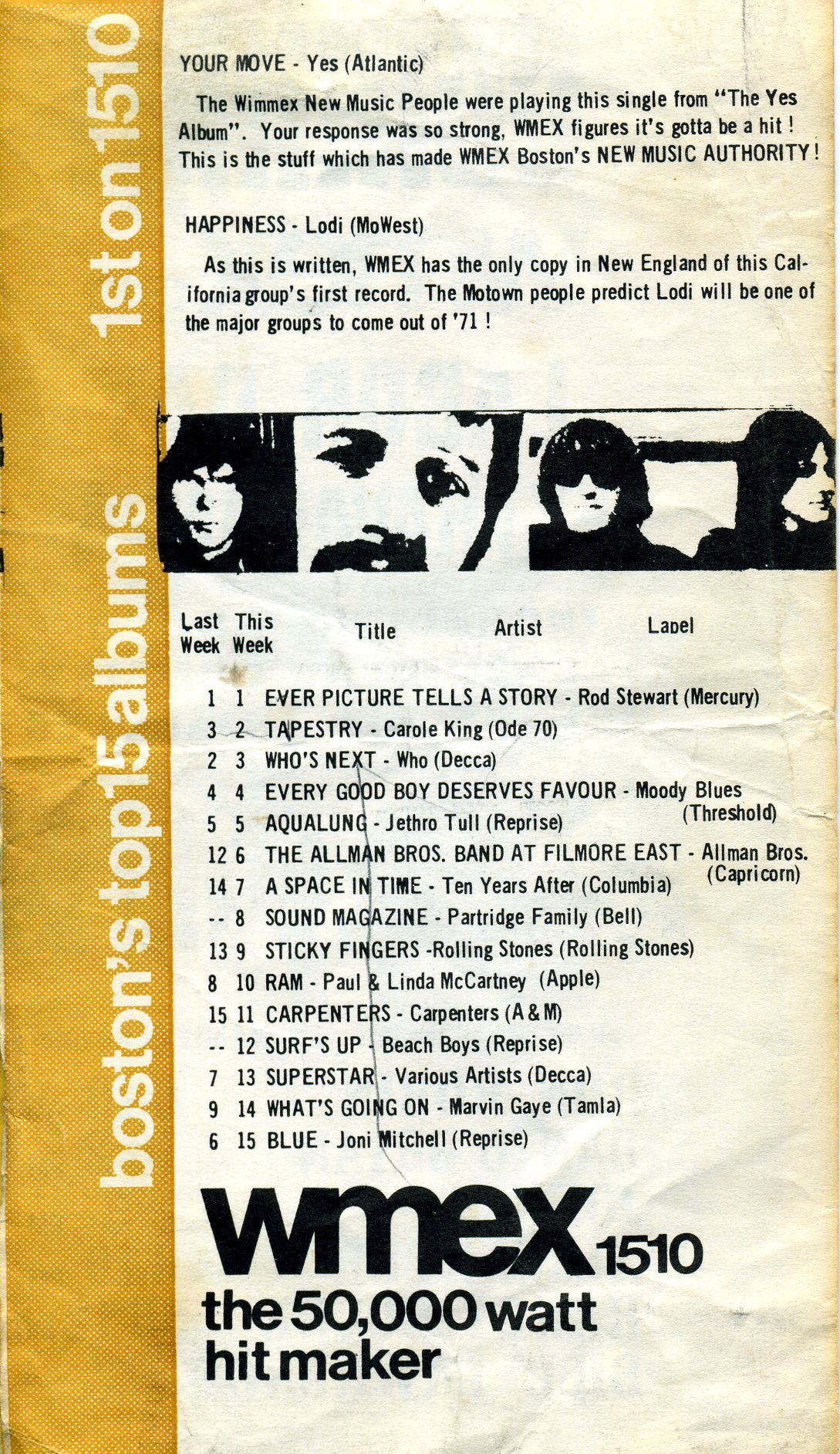
Well, I’m not sure what, if anything, happened to Lodi—though album-oriented groups like Yes were quickly migrated to the FM band. Speaking of albums, this top 15 list (with a few exceptions) is like a veritable Mt. Rushmore of classic rock LPs. But those aged 11 or under at the time get a pass if the first of these you owned was Sound Magazine.
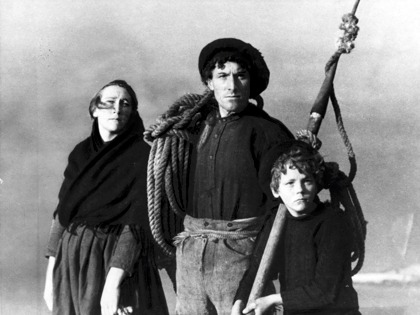
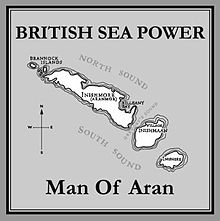
It will be 80 years ago this August that Robert Flaherty’s docu-fable Man of Aran won the prize for Best Foreign Film at the third Venice Film Festival. In a world where certain market psychologies would have you think that something a year old is passé, a documentary that’s been eight decades in the rearview mirror could be assumed to interest only academics and deep-diving film buffs. But Flaherty’s piece, which vividly evoked (somewhat anachronistically) the rugged lives of Aran Islanders, seems to resonate from around the margins of present popular culture. Daniel Radcliffe is currently starring on Broadway as “The Cripple of Inishman” a drama based around the production of the film, a 2010 feature-length retrospective on Flaherty (“A Boatload of Wild Irishmen”) references Aran in its title and a recent DVD release of this semi-silent film features a new soundtrack by the iconographic indie-rock group British Sea Power. On their regular albums, BSP’s poetical topics often revolve around the natural world and geographical/environmental themes that are simpatico with Flaherty’s work. Samplings of their lyrics are in bold face throughout.
“I headed for the coastalry/Regions of mind, to see what I’d find”
Robert Flaherty had considerable difficulty duplicating the great achievement of Nanook of the North, his 1922 Eskimo epic that is widely considered to be the mother of all narrative documentaries and also helped popularize awareness of indigenous populations. It would not be until 1934, twelve years after Nanook, that Flaherty would recapture his winning formula for success with Man of Aran. It is a film filled with stark beauty and authentic admiration for the stalwart people of these islands off the west coast of Ireland, a place where “the peculiar shelving of the coastline piles up into one of the most gigantic seas in the world”. As in Nanook, Flaherty went beyond straight documentary; he also convinced fishermen and their families to collaborate with him in conjuring up a nearly pre-industrial lost age, making for a unique film experience but one that has come in for a certain amount of criticism over the years.
“Hoopoes and herring gulls over chalky cliffs/It’s all that’s left you know, carbonate and myth”
Initially, Flaherty had mixed results gaining the islanders’ cooperation but eventually recruited enough residents to make the production possible and was assisted at times by members of England’s famed EMB Film Unit, the groundbreaking organization run by John Grierson, the man who coined the term documentary after seeing Nanook of the North. Yet the film was financed as a “real-life drama” by the Gaumont British studio. It was just as well. Flaherty, who was born in 1884, had “one foot in the age of innocence” according to photographer Walker Evans and was a filmmaker who was as enthralled with the spirit of truth as he was with the letter of it. Several recent documentaries, like Surviving Progress or Werner Herzog’s Encounters at the End of the World, have noted a particular aspect of our current ecological crisis stems from the notion that mankind sees itself as separate and superior from the very planet that it is part of. Man of Aran by contrast is a vivid re-imagination of man as sublimely co-existent with nature and even if this ideal is archaic or unrealistic, it still remains a quiet but powerful corrective.
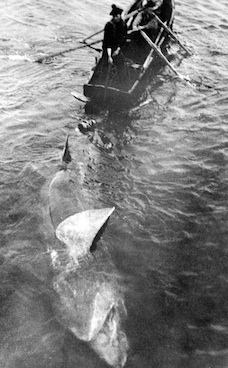
In this arcadian sequence above, boy protagonist Michael Dillane interrupts his fishing to climb partway down a craggy bluff when he spies a basking shark lolling just below the water’s surface (at the end of the clip which is 5:10 not 1:34 as listed). The song that British Sea Power chose to go along with this scene is a lovely instrumental re-working of the song “North Hanging Rock” from their 2005 album Open Season.
The local practice of hunting these whale-like creatures with harpoons died out a half-century earlier but Flaherty’s enthusiasm and persuasion won the day and soon the men, especially his closest Irish collaborator Pat Mullen, were brushing up on the subject and getting new harpoons forged. This centerpiece of the film, and one of the great prototypical scenes Flaherty would ever commit to film, shows Mullen and the “Man” of the title (Colman “Tiger” King) as they lead the crew through the daunting surf in their modest curraghs then meticulously track down and harpoon the beast—but not before it repeatedly slaps at the boat with its tail and nearly tows it out into the open sea. This led to rebukes that his film almost led to the drowning of a “boatload of wild Irishmen.”
“I don’t know what I’m made of or where from I came/Don’t even seem to remember my name or why the ghost’s alive in this cave”
Although Flaherty did not pretend that he was making anything more than a “picture” that used real islanders, Man of Aran can seem disingenuous when the purpose of the hunt is said to be to gain “shark oil for their lamps”. Electricity had been available on the Aran Islands for some time. Contemporary critics pointed out that, in the midst of the Great Depression, the poverty and absentee-landlord system that existed on the Arans at least deserved a mention. The headstrong Flaherty felt entitled to his own agenda and his tribute to his leading man (“In this desperate environment the Man of Aran, because his independence is the most precious privilege he can win from life, fights for his existence, bare though it may be”) can and probably did resonate back then as well as any more literal recognition of economic inequality.
^^^^^^^^^^^^^^^^^^^^^^^^^^^^^^^^^^^^^^^^^^^^^^^^^^
British Sea Power is based in Brighton on England’s cliff-lined southern coast and is known for their melodic indie rock and poetic lyrics that veer from personal and romantic concerns into themes that suggest astute ecological and historical awareness and that celebrate the overarching domain of nature. There are not too many bands out there inventing words like “coastalry” and writing a paean to “Larsen B” their “favourite foremost coastal Antartic shelf” that disintegrated in 2002. When the band addresses Larsen with the acknowledgment “you had 12,000 years and now it’s all over” the bittersweet observation seems turned on mankind itself, esp. with the recent escalation of dire warnings about catastrophic climate change and the Ostrich Oblivion of denial and resignation that exists alongside it.
“Daisy chains of light surround the city now/They glow but never quite illuminate/Hell and high water won’t stop us now/The future’s twisted, righteousness is coming back around/And we fall like sparks from a muzzle”
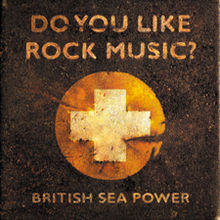
In Flaherty’s 1948 Louisiana Story, his last major film, benign oil riggers treaded lightly on the primeval Cajun bayou and indulged its inhabitants (the film was commissioned by Standard Oil though R.H. had free creative reign). Flaherty tried to see his way clear to a world where industry and nature could indefinitely co-exist. Were it only so. When British Sea Power advocated “Lights Out for Darker Skies” on their 2008 CD, Do You Like Rock Music?, it reminded me of a couple of things—the ethereal late-night radio ads from a skywatcher’s advocacy group I used to hear in the Eighties and the idea that the true meaning of the word “understanding” is nearly literal with the idea of letting oneself stand under something in order to fully comprehend it. BSP’s brand of bracing anthemic rock comes from that same imperative, devoid of the overly self-conscious type of uplift you get from bands with similar attributes. (Not to mention any names, but one has the initials A.F. and another has the initials U.2.) If you like rock music pick up one of their CDs, you won’t be sorry.
Official video for British Sea Power’s “It Ended on an Oily Stage.”
All rights to video, music and re-printed lyrics go to BSP and their publishers
Here’s a preview of a feature that will begin on a regular basis sometime next month. The next few posts will be dedicated to the upcoming 50th anniversary of the Beatles first arrival in America, an epochal turning point in the history of youth culture. At the rate the world spins in our hyper-technologized society, I find now more than ever the need to be lifted up and over it by the transformative power of music. Here are the first three entries in my survey of great rock tunes of over ten minutes in length, with the quixotic suggestion that they be listened to without distraction, a nearly lost art that I will expound upon in future entries.
“The Little House I Used to Live In”—Mothers of Invention (1969, 18:42)
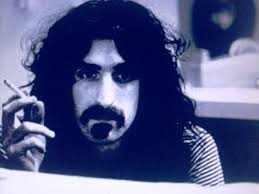
A studious contrast to the class-clownish title of the album on which it was placed (“Burnt Weeny Sandwich”), this elegantly constructed jazz-rock piece was a big coming out party for Frank Zappa as a serious composer and bandleader. After the improv piano prelude by Ian Underwood, the group falls in abruptly with a syncopated groove of a type that was fast becoming a Zappa trademark: somewhat whimsical and marked by rigorous playing (including some stretches in 11/8 time). “Little House” is such a rewarding piece because funny-guy Frank checks his tendency to rely on pastiche and gives the work (which deftly alternates live and studio segments) a lyrical flow throughout, with emphatic jamming trading off with drifting interludes to keep things interesting. Violinist Sugar Cane Harris gets a lot of solo time and makes the most of it, while Zappa checks in with a great compact guitar lead, one foot heavy on the wah-wah pedal. A “sunburst” effect (using harpsichord, xylophone, flute and clarinet) leads to the finale, with Zappa sitting at the organ for a wild solo while the Mothers blaze away in a tempo that is barely comprehensible. Adventurous stuff for an adventurous time.
“Walk on By”—Isaac Hayes (1969, 12:00)
Though in later years he was better known as the animated character Chef on “South Park”, the late great Isaac Hayes will go down in pop history for the way he emerged from the Memphis recording scene in the late Sixties to play a huge role in the development of modern soul music. The writer-arranger-keyboardist for Stax Records may have been pictured in a suit and top hat on his 1967 debut solo LP, but by the follow-up it was a whole new ball of wax. The cover photo of “Hot Buttered Soul” was a high-angle shot that looked down on Ike’s imposing chrome dome while his bare torso sported an enormous gold chain. This guy was a player and he wasted no time in revolutionizing R&B in a way not unlike the way rock’s horizons were expanding in the psychedelic era. His epic funkification of “Walk on By”, that classic slice of Bert Bacharach-Hal David melancholia, kicked off the album. Backed by the legendary Bar-Kays and summoning all his prodigious arranging skills, the track sweeps in on a bed of strings and some hot, Southern-fried lead guitar by Michael Toles, which is soon sent thru some trippy stereo-panning effects. Flutes and female backing singers join with the steady pulse of the rhythm section as Hayes delivers the song in the deep, intimate voice soon to be world famous. What sounds like a conventional fadeout starts at the seven-minute mark and rides into the sunset with a magnificent coda longer than most singles of the time, with Toles’ soloing reaching fever pitch and Hayes’ organ glissandos adding to the building excitement. Over the course of the next several albums, Hayes would record many other tracks of similar or even greater length (witness the 18 minutes of “By the Time I Get to Phoenix” on side two of HBS) but none ever quite matched the grandeur of this.
“Star Storm”—UFO (1971, 18:54)
Until recently, I’ve only known UFO as those long-serving British thumpers who would occasionally turn up on a mix tape or compilation with an entertaining four-minute blast like “Doctor Doctor” or “Lights Out.” But classic rock’s golden period (roughly the mid-60s to the mid-70s) is the gift that keeps on giving and I recently found out about the group’s early, more psychedelic phase when Mick Bolton was the guitarist. Their second LP, “UFO 2: Flying” was aptly sub-titled “One Hour Space Rock.” That’s a lot to squeeze onto a single album and “Star Storm” wasn’t even the longest track, it’s nineteen minutes falling short of the 26-minute trajectory of the title track. But I’ll take this one for its way-out wayfaring, a period high point (as it were) in the annals of power-trio acid rock. The track begins and concludes with the husky vocals of mainstay lead singer Phil Mogg but it’s really all about Bolton leading the rhythm section (bassist Pete Way and drummer Andy Parker) through a sci-fi wonderland that you’ll be too happy to get lost in. Bolton puts his axe through all its paces and then some, with bracing bluesy soloing alternating with sections that run his instrument through a panoply of processed effects.
Thought I would share one of my favorite Lou Reed songs, on the 50th anniversary of JFK’s killing. From his great 1982 album, The Blue Mask. The where-I-was-that-day middle section is sandwiched between two passages showing his exceptional knack for direct language and a clear message to be taken to heart. Thanks, Lou.
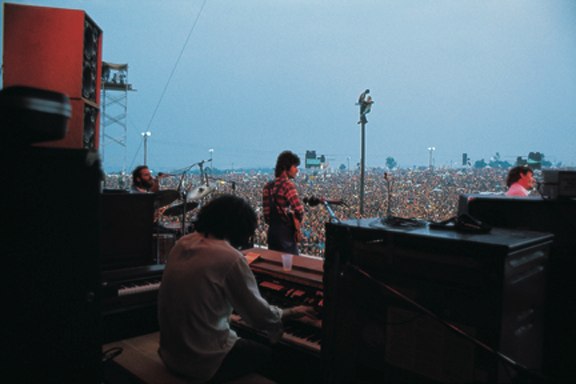
The Band perform for 600,000 at the Watkins Glen festival in July 1973. If you look real hard you may see your older brother just to the left of Robbie Robertson’s shoulder.
In terms of the baby-boomer cultural zeitgeist, 1973 hardly would stand out as a pinnacle year, at first glance anyway. It was on the tail end of that generation that had already staked its place in 20th century lore with the seismic political and musical upheavals of the previous decade. The Sixties have long been lionized—often to the point of self-parody—but looking back on it from a 40-year (gulp!) perspective, I wouldn’t give up anything for having fallen into a group that was just starting high school around then. The Sweet Spot Generation you might call it. Just old enough to have seen the Beatles on Ed Sullivan and a mite too young to consider hitchin’ to Woodstock (a good thing considering my aversion to mud and large crowds) but wised up enough to dig our older siblings’ 3-LP soundtrack from the film.
By 1973, the Vietnam War was winding down and the military draft had ended, ensuring males of my age that little would interfere with the pursuit of a rock ‘n’ roll lifestyle. Spiro Agnew was on the way out and his partner in crime, Tricky Dick Nixon, was in the middle of Watergate and soon to follow. You could say that ’73 was the true start of the Seventies, especially if viewed from a musical perspective. The period from 1970-72 was like the beach break from the last cresting wave of the Sixties rock revolution and 1973 was the year that the next wave of classic rockers would come out from the wings. Aerosmith, Queen, Bruce Springsteen, Tom Waits and Lynyrd Skynyrd were some of the artists releasing debut albums in that year. So there we were, the less-celebrated poor cousins of the oh-wow-we-changed-the-world early Baby Boomers, we were fated to be made fun of for the poofy hairstyles and class pictures taken in powder-blue leisure suits (I would know), easy objects of ridicule in decades after. But this was (especially in retrospect) a great bridge era between a waist-high view of the epic Sixties and a young adult coming-of-age during the punk rock revolution set to hit in our college- age years.
It was a time so accurately (and hilariously)depicted in the great Richard Linklater film “Dazed and Confused” as in this off-the-hook discussion of American history>
So what did the musical landscape look like then? The ranks of the previous decade’s heroes were already thinned by the deaths of Hendrix, Janis and Jim Morrison. With others from the top of the pantheon it was a mixed bag. The Stones served up “Goat’s Head Soup”, considered by many to be something less than a culinary classic. Coming on the heels of “Exile on Main Street”, it would come to signify the start of the group’s figurehead status and the close of their extended period as a vanguard act. The Who fared better with the stormy concept album “Quadrophenia”, a vivid look back at the Mod era of the mid-60s from whence they came. I thought it made for a better rock opera than the more celebrated “Tommy.” It at least inspired a much better film than Ken Russell’s queasy adaptation of the deaf-dumb-and-blind-kid opus.
Amid cover stories where Hunter Thompson and his illustrator Ralph Steadman excoriated the scandal-plagued Nixon administration, Rolling Stone magazine profiled “The Corporate Dead” as Jerry and the boys released a tasty platter called “Wake of the Flood”, the first album released on their own label and a telling title for the times. The Jefferson Airplane, still feisty but past their prime, released the live “Thirty Seconds over Winterland” before quickly morphing into the more user-friendly (and lucrative) Jefferson Starship. Bob Dylan was still a nebulous public presence some six years after his game-changing motorcycle accident and 1973 saw him appearing in the Sam Peckinpah film “Pat Garrett and Billy the Kid.” His soundtrack album of the “Watergate western” yielded “Knockin on Heaven’s Door,” his first Top 20 single in four years. He was a year away from his triumphant comeback tour with the Band and, according to some, hasn’t stopped gigging since.
It was forty years ago today that the former Fab Four were well established in their solo careers, three years after The Breakup. Ringo had a #1 hit with “Photograph”, the lost-love ballad that also sounded like a mash note to a lost era. John Lennon left his radical causes behind and released the introspective “Mind Games” while George dealt with the always tricky business of “Living in the Material World.” Paul McCartney had a typically busy year, first with the inadvisable “Red Rose Speedway” LP (“Little Lamb Dragonfly” anyone?), then scoring a major hit with the Bond theme song “Live and Let Die” before ending the year with his most acclaimed album, “Band on the Run.” It was the last one he put out on Apple Records.
For the second wave of boomers, who missed out on the age of liquid lightshow ballroom concerts and acid-fried festivals, the post-hippie standard bearers were the progressive rock bands. Mainly from England they hailed and in the peak year of 1973 they were the undisputed kings of hockey arenas and bedrooms where cabinet-sized stereo systems blared out their records under a hashish haze. Sidelong suites filled with squealing Moog synthesizers, swelling Mellotrons, heroic guitar solos, hyperkinetic rhythm sections and arcane lyrics delivered by ethereal lead singers were the order of the day.
It was the year that Pink Floyd’s perennial bestseller “Dark Side of the Moon”, was released to grateful headphone-wearing teens the world over. The turntables and 8-track players of prog fans were getting quite a workout with delectable titles from King Crimson (“Lark’s Tongue in Aspic”) and Emerson, Lake and Palmer (“Brain Salad Surgery”), while other notable works included Mahavishnu Orchestra’s “Birds of Fire”, Hawkind’s “Space Ritual” and Mike Oldfield’s “Tubular Bells”, which lent its opening theme to “The Exorcist” soundtrack and help foist Richard Branson onto an unsuspecting planet (it was his Virgin Records debut release). Groups like Yes, Jethro Tull and Peter Gabriel’s Genesis were at the top of their game and the poison pen of established critics (who would later vilify this genre) were not yet dipped in the inkwell. But such stuck-up spoilsports couldn’t bother we of a certain age. As an outgrowth of Sixties pyschedelia, this limey art-rock was a heady stand-in for us who were a bit too young for the original article.
That’s not say there wasn’t any groundbreaking trends amid all the refining of the Sixties pop business model. Looking ahead to the punk-new wave-indie movement that would give youth music an essential kick in the behind a few years on, there was the New York Dolls’ first album, two by Roxy Music (“Stranded” and “For Your Pleasure”), Mott the Hoople’s classic underdog testament, “Mott” and Iggy and the Stooges “Raw Power.” Not to mention the recording of Big Star’s second long player. But all that could wait and it usually did—except for “Mott” all those were discoveries made later when I struck out for life in the big city and a world made safe for the Ramones and the Clash. But back in 1973, it was what it was. So to finally to get to my alternate Top 10 of that strange but wondrous year, let us not forget what a real best-of list would look like for that 12-month period. Stevie Wonder’s “Innervisions”/”The Harder they Come” soundtrack/Steely Dan’s “Countdown to Ecstasy”/the Allman Brothers’ “Brothers and Sisters”/Zeppelin’s “Houses of the Holy”/Little Feat’s “Dixie Chicken”/Marvin Gaye’s “Let’s Get it On.” But for those game enough to explore the real zeitgeist of 1973, feast yourself on these ten offerings:
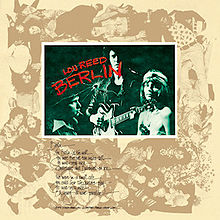
Berlin—Lou Reed
It wasn’t just the calendar that prodded me into getting out my 40th anniversary post. The recent death of Lou Reed brought out all the accolades the Godfather of Punk deserved. But I was reminded that post-mortem adjectives like “uncompromising” and “defiant” that are now standard-issue compliments didn’t come without something legitimately ballsy to back them up. In July 1973—just four months after “Walk on the Wild Side” gave him his only Top 40 hit—Lou flipped off the world with one of the most infamous albums in rock history. It’s a 50-minute pop operetta that starts ominously and soon plummets into a hellish tale of an ill-fated couple’s descent into violent, drug-fueled co-dependency and eventual suicide. Of course, nowadays it’s a recognized classic.
(Reed took advantage of the music’s cunning charisma and gave it the full oratorio treatment in a 2007 concert film).
Before today’s deferential music press, where Arcade Fire will get a four-star rating just for showing up at the studio door, critics took their job seriously. Sometimes a little too seriously as when Rolling Stone reviewer Stephen Davis called “Berlin” a “distorted and degenerate” record of a type “so patently offensive that one wishes to take some kind of physical vengeance on the artists that perpetrated them.” Luckily, Lou evaded Davis’ murderous intent and gave us 40 more years of a musical life-and-times that will never be duplicated. (While discovering or re-visiting “Berlin” why not make it a ’73 double feature with the elegant “Paris 1919” by Reed’s former Velvet Underground partner John Cale, featuring such literary name-dropping numbers as “Child’s Christmas in Wales”, “Graham Greene” and “Macbeth.”)
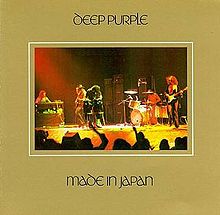
Made in Japan—Deep Purple
It wasn’t just the aforementioned prog that had the full attention of the era’s denim-clad and music-loving youth. Good old-fashioned “hard rock” also held sway, whether your preference was Alice Cooper’s ”Billion Dollar Babies”, Blue Oyster Cult’s “Tyranny and Mutation” or the venerable “Sabbath, Bloody Sabbath.” But for this year, you just gotta give it up for Ritchie Blackmore & Co. Deep Purple slashed and burned their way to the top in the early days of metal and legions of stringy-haired, guitar-wielding malcontents eagerly followed suit. Caught here in their plundering prime, the Purps managed to squeeze seven entire songs onto a double live LP. Highlights include the bong-blasting hit version of “Smoke on the Water”, Jon Lord’s epic sci-fi organ solo on the 20-minute “Space Truckin’” and singer Ian Gillian repeatedly referring to his Osaka fans as “you mothers.”
Beck, Bogert and Appice
It had all started with Cream several years earlier, these stapled-together power trio supergroups whose shelf life seemed to shorten with each new configuration. It was even spreading to folk-rock circles with Souther, Hillman & Furay—not to be confused with McGuinn, Clark & Hillman. This combination of the manic ex-wunderkind of British blues-rock guitar and the Vanilla Fudge/Cactus rhythm section did not result in world domination and Beck split after one studio album (even West, Bruce and Laing lasted for two). Too bad, because it was an entertaining effort, even if their handling of cover versions was a bit schizoid. The record boasted both a thorough bludgeoning of Stevie Wonder’s “Superstition” and a sensitive take on Curtis Mayfield’s “I’m So Proud”, a minor hit and the slow dance of choice for that year’s high school sophomores. File this one next to Emerson, Lake and Powell.
Eric Clapton’s Rainbow Concert
Oh, sure—it’s easy to be all into E.C. nowadays as a three-time Hall of Fame inductee. But the kids of ’73 were there in the record-store trenches, shelling out $3.99 for this single-disc sampling of the one-off “comeback concert” organized by Pete Townshed that January. Ol’ Slowhand was in the early stages of kicking his crippling heroin addiction and he works his way through struggling but ultimately winning versions of “Badge”, “Little Wing” and four others, backed up by Pete, Ronnie Wood and most of Traffic. Sneaking just inside the Top 20 in both America and the UK, it has of course been expanded beyond all recognition in the CD era.
Live—Uriah Heep
These journeymen heavy-rocking Brits never had the mysterious aura surrounding Led Zep or the full-out instrumental virtuosity of contemporaries like Wishbone Ash or Focus. But they had a distinct flair for the type of proggy metal so popular at the time and rode its coattails for all it was worth. This was a thunderous genre that didn’t sit well with trendy rock scribes (“from the first note, you know you don’t want to hear any more” said one early reviewer). But by the ’73 they had reached the point where they were ready to go boldly where all men had gone before and get out their double live album. It was split between compact rockers like “Easy Livin’” and “Sweet Lorraine” and longer arty pieces. Unintentional humor stemming from the excesses of the age crop up. There is the Fifties-revival bandwagoning on the lengthy “Rock ‘n’ Roll Medley” and singer David Byron introduces the 11-minute warhorse “July Morning” by saying it features Ken Hensley on the “Moog Simplifier.” The gatefold packaging bears a curious resemblance to the 1984 soundtrack album of the Spinal Tap movie. File this one next to “Break Like the Wind.”
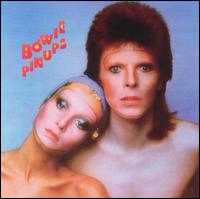
Pinups—David Bowie
In 1972, Bowie first achieved worldwide fame via his Ziggy Stardust persona, but by the following year it was time to look back to his roots. After the springtime release of “Aladdin Sane” (described by David as “Ziggy goes to America”), he recorded this cover album of British Invasion-era songs, even though it was packaged with cover art where he posed futuristically with supermodel Twiggy. While a mega-star’s version of “Friday on my Mind” may not exactly recapture the spirit of the Marquee Club, there’s still a lot of fun stuff here. Check out the airy melancholia of his take on the Mersey’s “Sorrow” or his stardusted version of early Pink Floyd’s “See Emily Play” (even more psychedelic than the original) or the slowed down re-casting of the Who’s “I Can’t Explain” complete with sexy sax. The Pretty Things, the Yardbirds and Them also get a tip of the cap. Also worth a listen is a sort of American equivalent to this, “Moondog Matinee”, the Band’s ’73 tribute to their early rock and roll influences.
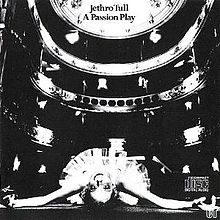
A Passion Play—Jethro Tull
In the early 70s Ian Anderson and his merry band of men were one of the world’s most popular groups. The continuous LP-length composition was the last word in Brit-rock concept albums and this was their second in a row, after the popular and widely-praised “Thick as a Brick.” With its oracular vocal sections connected by complex instrumental passages (often featuring Anderson’s multi-tracked flute playing) and lyrics that seemed to rise up from a sublimated consciousness, “Passion Play” was maybe the most unusual album to ever hit #1 in the U.S. album charts. Throughout 1973, the pages of Rolling Stone were filled with supportive reviews of even spin-off progressive rock records like those from Badger, Flash and ex-Procol Harum organist Matthew Fisher. But for critics, this was a sudden line in the sand. RS savaged the album and the live show in the same issue—there was just no more patience for Anderson’s satyr-like stage antics and his libretto about a man’s near-death journey through the afterlife. Of course, the kids in my age group, ready to expand musical horizons, ate it up. Tull’s “Passion Play” tour rolled into the Boston Garden that September with its theatrics and films and pyrotechnics and kinetic, rafter-shaking jams was my memorable entrée into the wonderful world of rock concerts.
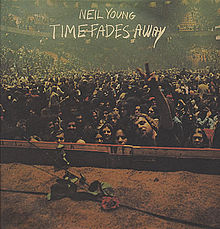
Time Fades Away—Neil Young
Lou Reed wasn’t the only guy in 1973 to turn his back on a 1972 commercial breakthrough. After the world-beating success of the sensitive “Harvest” album, Neil Young swerved his car off of Easy Street and left the seekers and the lovelorn in the care of other singer-songwriters like Cat Stevens (“Foreigner”), Jackson Browne (“For Everyman”) and Joni Mitchell (“For the Roses”). He took his “Harvest” backup band, the Stray Gators, on the road to record this ramshackle live disc of dark new material. It has been scarcely available since it’s original release, with Neil admittedly unhappy with the tumultuous tour, the botched experiment in early digital recording and his own mental state at the time. Audiences jonesing for “Heart of Gold” were met with disillusioned anti-epics like “Last Dance” and “Don’t be Denied”, the latter’s look back at parental divorce and schoolyard thugs a far cry from the rosy memory-lane scenes in the recent documentary “Neil Young Journeys.” I thought I heard once it was an inspiration to the future Johnny Rotten, not surprising considering its uncompromising power. The exceptional cover photo of faithful fans hoping for an encore in a quickly emptying arena perfectly sum up the album’s underlying theme of lost Sixties idealism: Time Fades Away, indeed.
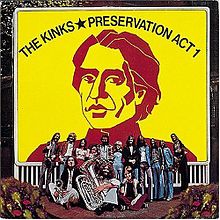
Preservation Act One—The Kinks
The period attraction of concept albums was certainly not lost on this pioneering North London group—Ray Davies and Co.’s “Arthur” was one of the three origin rock operas of the late Sixties (along with “Tommy” and the Pretty Thing’s “S.F. Sorrow”). After the double-album Act Two came out in 1974, “Preservation” did appear as a one-off touring production for the group that was memorable for those in their dedicated fan base that happened to catch it. Getting nostalgic about this record has a peculiar knock-on effect. Some of its best tunes (“Daylight” and “Sweet Lady Genevieve”) yearn for another, nearly pre-industrial era. So, too, with the other LP the Kinks put out in ’73, the odds-and-ends “Great Lost Kinks Album” that lived up to its name by quickly going out of print. At least “Preservation”, a distinctive political jeremiad unloved by many critics, made it into the CD age. Around the millennial years, fans around here were treated by the Boston Rock Opera’s revivals of this work. The last one, with Ray Davies as advisor, finally realized the works full musical-theater potential, which the Kinks were surely too busy and disorganized to make happen back in the day.
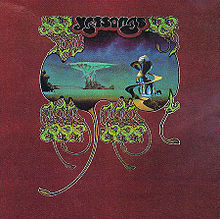
Yessongs—Yes
This list was in no particular order. But by virtue of putting a 3-record live set and booklet inside a Roger Dean-designed six-panel gatefold sleeve, you have to admit that Yes released the “heaviest” album of the year. With cranked-up versions of nearly everything from their previous three albums, it had something for every fan of English art rock. Don’t miss Chris Squire’s towering bass solo, Steve Howe’s interstellar guitar fury on “Yours is No Disgrace” or Jon Anderson singing his mystic extrapolations on themes from the Age of Aquarius. And cape-wearing keyboard wizard Rick Wakeman, in an excitable medley from his ’73 solo work “The Six Wives of Henry VIII”, proves for all time that there’s no sense in playing one note when ten in the same space will suffice.
I remember listening to it with a few other guys in a house of textbook suburban ennui while the parents were off to the Tri-Plex one Friday night. We were smoking up a basement space that had morphed from a rumpus room to a den of iniquity in a few short years. When the taped introduction of Stravinsky’s “Firebird Suite” yielded to the band exploding into “Siberian Khatru”, the blast from the foot-high speakers knocked one of my buddies off his seat and we all had a good cough. The sound of the front door opening confirmed to the others that “The Sting” wasn’t a three-hour movie as one had insisted.
We grabbed the remaining Haffenreffers and stumbled up through the bulkhead and into the frosty night. Making our way to the golf course behind the last houses of our “development”, we drank our beer and loudly discussed novel ways of using the using ball washer. In a more poetic moment, someone said the strange light we saw in the sky was the “Starship Trooper” coming to take us away from all this. The next thing we knew (or thought) the cops were after us with their flickering flashlights. We beat it on down the fairway, laughing and running and running. We kept going long after the authorities had given up on us, knowing that 1973 couldn’t last forever.
It was a shame to hear about the death of guitar hero Alvin Lee, especially since it seems it was a case of the dreaded complications during “routine surgery.” If I’m not mistaken, it’s similiar to the circumstances that ended Andy Warhol’s life. A horrible way to go and very tough on the surviving loved ones–you’re dropped off at the hospital for a minor operation and the next thing they know you’ve “rung down the curtain and joined the Choir Invisible” (with apologies to John Cleese).
Of course, Lee’s band Ten Years After never really made it into the upper echelon of iconic British rock bands. True, they were a sensation at Woodstock and Lee’s famous speed-demon guitar runs were on full diplay when their signature jam “I’m Going Home” made it into the film. He and boyhood friend (and eventual Ten Years bassist)Leo Lyons made it to London from their native Nottingham in the early 1960s, playing and sharing bills with the likes of John Lee Hooker, Hendrix and Larry Coryell. “I’m Going Home” made their name but became a bit of an albatross–on their later double live LP knucklehead fans can’t even wait for this obvious set-closer, instead loudly requesting it after the second number. But the albums sold pretty well and they slugged it out on the arena circuit during the first half of the Seventies for audiences that appreciated instrumental virtousity or just loved to freak to Lee’s mind-bending solos on his trusty hollow-body Gibson.
(Check out Alvin Lee doing his thing in the TYA segment of Murray Lerner’s brilliant documentary “Message to Love” about 1970’s contentious Isle of Wight festval: http://youtu.be/2vZVVq7WJFY)
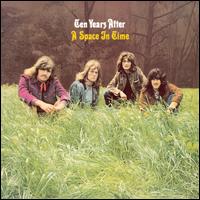
To his credit, Lee did move to broaden the band’s sound from the more basic blues-riffing and lengthy jams they were known for (by the time they finished their version of “Good Morning, Little Schoolgirl” it was usually mid-afternoon). No one would confuse his songwriting with Bob Dylan’s, but on 1971’s “A Space in Time” he steered Ten Years After towards a dreamy, folk-rock sound that on tunes like “Here They Come” and “Over the Hill” recalled classic Traffic. That LP also yielded their one big AM hit, “I’d Love to Change the World.” But as that kitchen-sink protest song would suggest, finger-picking and not social commentary was Lee’s true calling. His real mission statement may lie in that LP’s rural-blues shuffle “Once There Was A Time.”
“And if I don’t get to heaven
And I go down there below
Better be a guitar when I get there
Or I will refuse to go”
Bye the bye, ever notice how rock stars of today just don’t sit around in meadows like they used to?
 Reel and Rock