Why Burn Books When You Just Can Just Ignore Them? Fahrenheit 451 Revisited

f451

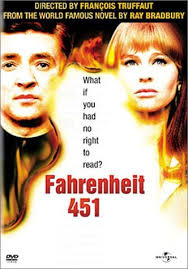
While puttering around in the library a couple of weeks ago, I looked down at the cart where they put the recently-returned DVDs and caught the soulful gaze of Julie Christie on the cover of the recently re-issued 1966 film version of “Fahrenheit 451” directed by Francois Truffaut. So of course I had to check it out. The French auteur’s first English-language movie has always had a mixed reputation at best: the acting and dialogue was deemed too starchy and the themes of Ray Bradbury’s classic speculative novel too flattened out.

But it had been so long since I last watched it (probably on a 13-inch TV) that I figured a new viewing would be like a re-discovery. And how. In this age of restored content and hi-def screens, Truffaut’s “451” looks fantastic with its autocratic iconography, bold primary colors and the retro futurism of its deftly chosen locations. Also, in view of broad societal shifts since it was made 48 years ago, the film seems more prophetic than ever.
img758
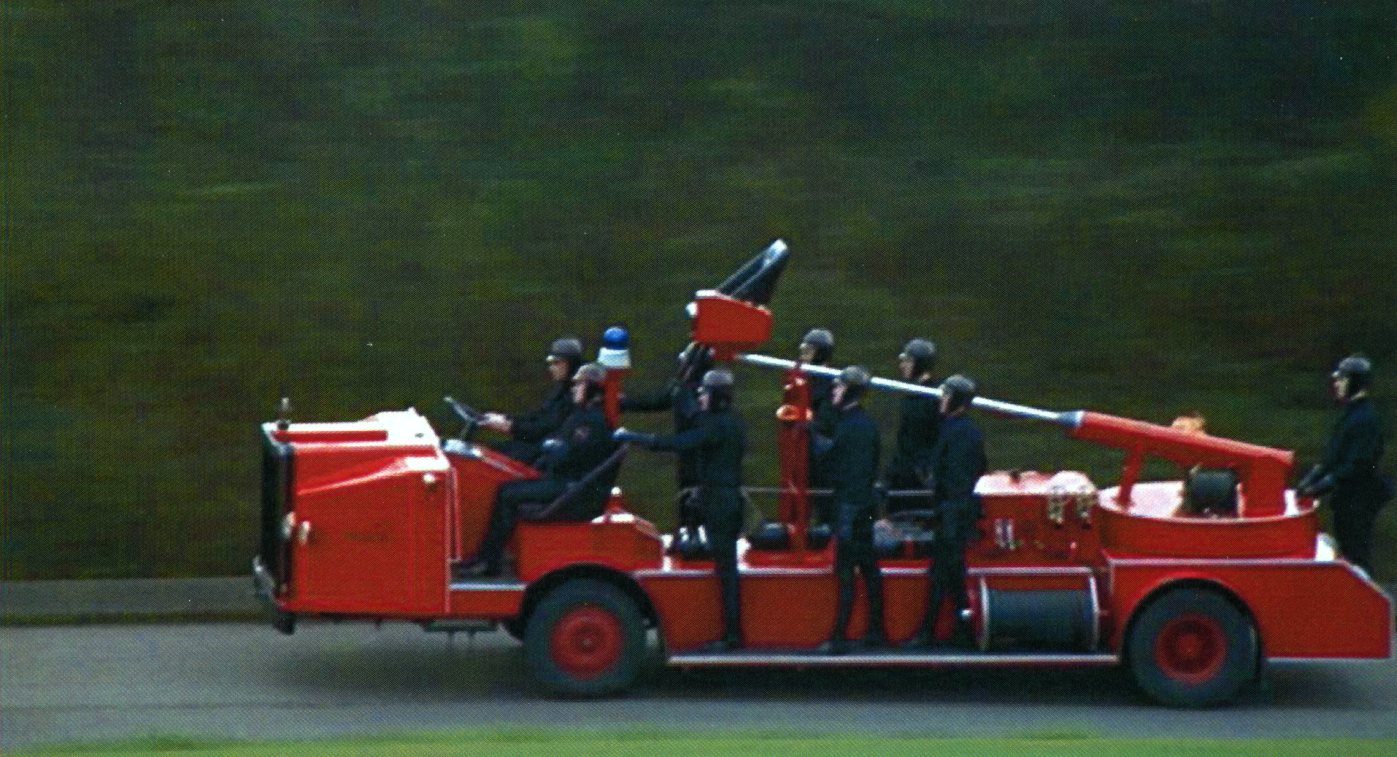
The flamethrowing fanatics of “Fahrenheit 451”
Coming soon to a Barnes & Noble near you!

Of course, the central premise of Bradbury’s cautionary tale may seem silly in retrospect. In a world where all literature is banned, the protagonist, Guy Montag (Oskar Werner), is part of a team “firemen” who rely on informants (usually neighbors) to swoop down on the homes of violators and publicly burn their hidden stashes of books. The plot centers on Montag’s crisis of conscience as he starts to read books that he has slipped into his kit bag during raids. Matters are complicated by his budding friendship with the non-conformist Clarisse. Both Clarisse (a student in the novel but a young teacher here) and Linda (Montag’s media-overloaded, pill-popping wife) are played by Christie.

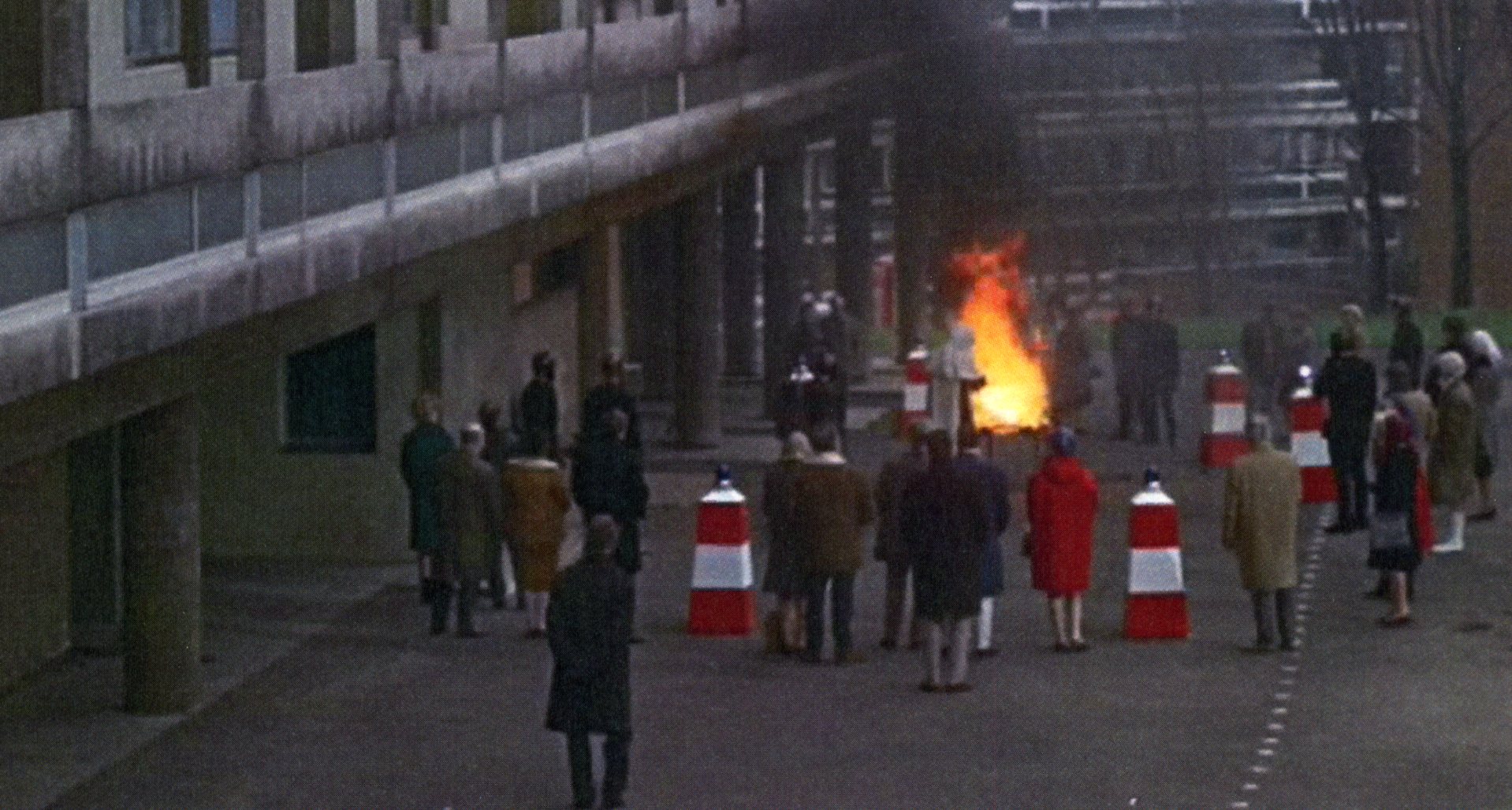
The institutionalized conflagrations of this story can appear far-fetched. Yet when Bradbury wrote this in 1953 the Nazi book burnings were in recent memory and the dirty dealings of the House Un-American Committee were in full swing. The state-sanctioned pyromaniacs of “Fahrenheit 451” were more broadly symbolic of the casting off of all independent knowledge and self-determination.

Behind the visual hyperbole of the black-shirted firemen with their brass kerosene squirters and fascist salutes, Truffaut tweaks some of the book’s subtler messages to great effect. Although this is supposed to be a totalitarian society, there is no overarching Big Brother; the local fire department zipping around in their pyromobile is about the only representation we really see. Instead, the tiresome tirades of some blowhard dictator has been effectively supplanted by ingratiating TV hosts making every one of their “cousins” feel as if they are Special just by tuning in.

This personal neediness, so well evoked by Christie’s nuanced performance as the wife, is all too indicative of an attention-starved 21st century Western population. Instead of Orwell’s 1984-style eternal-boot-in-the-face, the people are kept in place by being incessantly flattered. Instead of widespread state censorship, we get instead access to everything in a completely commodified environment. (The child-less Linda remarks that “when you have a second wall screen put in, it’s like having your family grow around you.”)

But access is a long way from enlightenment. In our own age, ads endlessly hawk Internet speeds “ten times faster” than speeds that are already all but instantaneous, an age of aggressive techno-snobbery where people wait in overnight lines to trade in their “old” I-phones that were state of the art six months before. Relatively recent analog technologies are dismissed and even disdained while we barely bother to shrug at the widespread loss of personal privacy and make no distinction between reasonable progress and a runaway train. Meanwhile, deep-seated problems like income inequality and a ticking environmental time bomb, while not exactly ignored, fight for attention in a 24/7 overflow of content where melting Arctic pack ice and the latest celebrity baby bump are two equal drops of information and bookstores close left and right.
img763
The brutalist architecture of Alton Estate in the London suburbs frames the firemen’s handiwork

Truffaut’s film is an uncanny time-indefinite fable, where such technology, as far as it could be imagined back then, has rendered a population inured to any causes but their hedonism. In the world of “Fahrenheit 451” there are few options left, which make’s Christie’s housewife Linda more sympathetic than her counterpart in the book, who was named the less-appealing Mildred. But Bradbury made clear in the book that the totalitarian state came about in part because the over-abundance of pleasure-delivering technologies sapped the populace of their willpower to challenge authority, and the jackbooted thugs just stepped in to finish the job with flamethrowers. We still have something of a choice left, but it doesn’t appear to stretch out indefinitely. If our own era is the start of an invisible dystopia, then give me the film’s version, where at least you can ride home from work in an awesome monorail (that lets you off in a meadow!) and walk back to your house chatting with a mini-skirted bookworm subversive.

img757

Oskar Werner (who was best known for his role in Truffaut’s “Jules and Jim”) is quietly impressive as the conflicted Montag. The Austrian actor (who was a pacifist) had fled the Nazis in the latter stages of World War II and with his young child and half-Jewish wife, waited out a battle by hiding in the Vienna Woods. This scenario is echoed in the film’s final scenes when Montag, who is found out and forced to take part in a raid on his own house, takes drastic action before fleeing. (Even the clunky process shot of jetpacking policemen in pursuit–the film’s one big visual miscue—-seems endearing in retrospect). He follows an old railroad line to a forest populated by the Book People, each committing one volume to memory so as to carry forth the world’s knowledge while staying within the law. Of course, too-hip critics gagged at the achingly sincere tableau of societal holdouts introducing themselves to Montag as their title. Ray Bradbury may have liked many things about the adaptation, including the decision to not kill off Clarisse and to have one of the Book People introduce himself as “The Martian Chronicles” (a surprise tribute from the director). But the official consensus was that the film was a Disappointment and the monolingual Truffaut would not make another English-language film nor would he attempt another genre movie—although an admirer of the novel he was not a big science fiction fan. Too bad, “Fahrenheit 451” is a great embodiment of the old saying that “if you don’t stand for something, you’ll fall for anything” and this worthy cinematic complement to the book drives home that ever-salient point even further. Check it out and see if you agree, cousins.
img760

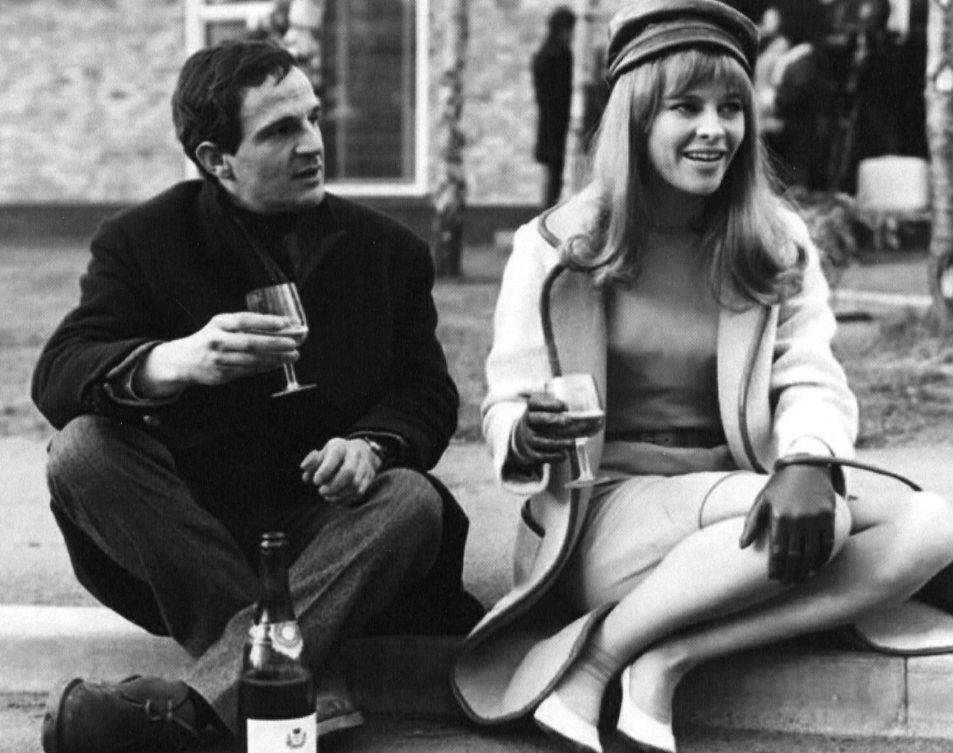
Truffaut and Christie after a day’s shooting in Roehampton, England 1966
Lucky for the director, Julie speaks French

National Poetry Month by default

My psychic antenna doesn’t always pick up on National Poetry Month when April rolls around. Early April is more like the time that we in New England are kept busy searching the weather reports for any viable sign of real springtime. Typical of this seasonal limbo is my current disinclination to put pen to paper even though, as Bobby Dylan once put it, “I have a head full of ideas that are driving me insane.”

img737

I did spend some quality procrastination time this week going over old notes and clippings and perusing photos I took long ago with my first camera, a brown-and-cream colored instamatic that used 126 cartridge film (see above). I also found a torn-out notebook page that I knew would come in handy some day. Back in the late 90s, while living in Cambridge, Mass. the city put up several magnetic poetry boards in Central Square. You know the kind, with hundreds of individual little magnets made up of one word each. I was quite enamored at the beguiling and beautiful poetic snippets that arose from scrambled word combinations and wrote down my favorites. So I’m marking NPM with a celebration of the inner poet that apparently resides in us all. I also got into the spirit yesterday by going to a site that tells you how to make your own magnetic poetry kit. I printed out a page of random words, closed my eyes, and put a pencil down on several words then fashioned them into a half-haiku that uncannily seemed to be saying something to me that I ordinarily wouldn’t have found a voice for (see the header above). I’m sure many of the people that came up with these little gems below felt the same way at the time.

Start to end winter inside; you are born in our desire

Elaborate green garden remember

Some swim like rain forest picture

Listen: all yesterday my fever and fire like moose did sail in liquid star

Every marble which must always shine
Lie like a cat this game this game may die
By sky look at I am joy

Magic perfume went blindly into the night

A girl once flew to get together and out

For the castle the moon, a bare angel
Soft like no boy of sweet summer

Forgive live as magic it may wake up or go

Love grow fast and free girl

Did owl have feline heart?
Round and wet blue, song-fed dinosaur
Stop once in peace

Dad that cried do not get sad
Slowly happy together grow
We were green and are

My bath may smoke up and have sun on the breeze

One silly day you were bleeding and went into my box

Born on yellow farm, summer night glow
Homeless child of night cried “friend!”

Yesterday went away like a slow song of woman’s desire
Joy ran from a friend, she went round slowly
A blue sky whispering yes
Smart rain round my night, moon turn out poison

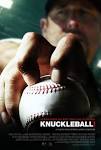
Knuckleball! — Life in the Slow Lane

knuck dvd

Knuckleball!
Directed by Ricki Stern and Anne Sundberg—2012—85 minutes

It’s nearly a lost calling, like a shoe repair shop or a pen-and-stationery store hanging on in a world otherwise dominated by Apple and Wal-Mart. A patient craft that is difficult to master in an age of instant gratification and performance-enhancing drugs. The confounding knuckler, like the hidden ball trick or stealing home, is almost gone from baseball. This pitch, delivered at a velocity some 20-30 miles per hour slower than standard-setting fastball, flutters and floats in on the batter. If swung on and missed, he’ll look ridiculous, if he connects he could hit it into the next time zone.

America’s oldest professional team sport may be losing this eccentric part of its legacy, but not many players and managers are mourning the near demise of the knuckleball. The pitch infuriates many habit-obsessed hitters and knuckleball throwers usually require special coaches and catchers. So in celebration of baseball’s opening week, let’s take a look at the recent DVD release of Ricki Stern and Anne Sundberg’s winsome 2012 documentary on the small and misunderstood cult of the knuckleball, referred to by non-believers as “fraudulent” or “a freak pitch.” It’s a celebration of non-conformity and persistent humility now fleshed out with almost two hours of featurettes.

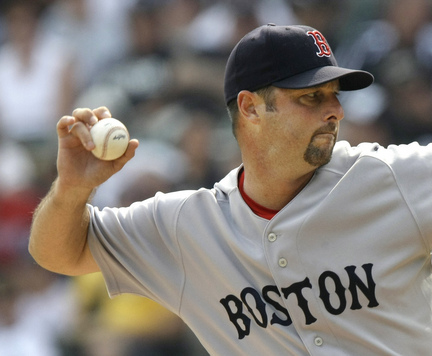
As a fan of my hometown Boston Red Sox, I got to see one of the filmmakers’ two primary subjects up close. Tim Wakefield started out as a first baseman in the Pittsburgh Pirates organization but developed the knuckleball pitch after being told he would likely never make the Major Leagues as a position player. After a sensational first season with the Pirates, the knuckleball magic abandoned him (walking ten men in a game at one point) and he was cut loose, surfacing next year in Boston for a 17-year career where fans would become intimately familiar with fickle fortunes of one who depends on such an unusual skill.

Tim Wakefield

Tim Wakefield and the unorthodox fingernail grip

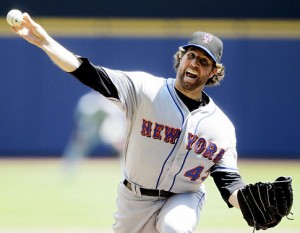
Wakefield was 45 years old and already a member of two World Series champion Red Sox teams when seen here playing in his last year; much of the focus here is on his protracted efforts to secure his 200th career win before the season ends. The only other current knuckleballer, the much younger R.A. Dickey of the New York Mets, is also profiled and the usual slings and arrows of outrageous fortune that come with his craft are compounded with a health issue that threatens his livelihood. The filmmakers cut back and forth between these parallel tracks during the 2011 season, often blending in the players’ personal stories and putting the lie to the easy notion that all pro players are spoiled and overpaid. Dickey, for instance, bounced around the minors for a long time making $1800 a month (summers only) and sometimes moving his young family two or three times a year, trying to keep the faith that his big-league dream would pay off in the end. On the verge of making it to “The Show”, a medical review found a congenital anomaly in Dickey’s pitching elbow, but in a gutsy move he took a drastically reduced contract offer instead of cashing in a million-dollar insurance policy.

RA Dickey

Battle Cry of the Knuckler: R.A. Dickey in action

Elsewhere, Stern and Sundberg review of a bit of the knuckleball’s mystery history (no one’s sure who started it and it’s only had 70 or 80 true practitioners in the last century plus) and emphasizing its true outsider status: Wakefield unpretentiously declares that a knuckler is “on a little island by yourself.” Never has that been truer than in the 2003 American League playoffs. Wakefield had dominated the Red Sox’ age-old rivals, the New York Yankees, in two of the series’ previous games and would have been the hero had the Sox won and gone on to the World Series with a good chance to win it for the first time since World War I. But he was called in from the bullpen late in the deciding seventh game because the Sox manager had left their starting pitcher in too long, allowing the Yankees to tie the game. When Wake gave up a game-winning home run, it was one of the most ignominious defeats in the team’s history and the film makes the viewer live the pain of an athlete (and a person) who has quietly done all that’s been asked of him, including being put into an untenable position. When the Red Sox went on to win a championship the next year they had to beat the Yankees in another epic 7-game series (winning four in a row after losing the first three)along the way. Wakefield played a crucial role in the second of those victories, the winning pitcher in a six-hour game that helped pave the way for Boston’s first World Series win in 86 years (you’re welcome!). Tim’s redemption was almost biblical in it’s serendipity, though the directors curiously underplay it (unlike me).

Tim Wakefield has the Yankees “turning Japanese” as they try in vain to fathom the elliptical flight path of an in-form knuckleball during the 2003 playoffs while the Boston fans eat it up.

The knuckleball pitch, being both unpredictable and easy on the arm, destines these pitchers to be used either too often or too seldom or treated unfairly: being shuttled between a starting role and the bullpen, being brought into games when the score is lopsided, dropped from playoff rosters. Little wonder that one of the more enjoyable parts of “Knuckleball!” is the get together of Wakefield and Dickey with two old-timer practitioners, Charlie Hough and the incomparable Phil Niekro. Hall of Famer Niekro won an amazing 318 games as a knuckleballer and pitched in the pros until the age of 48. The self-deprecating camaraderie of knuckleballers and the way this fraternity helps each other (Niekro tutored Wakfield who in turn offered advice to Dickey) will appeal to viewers jaded by the media over-hype that so often dominates sports coverage.

Maybe it’s not surprising, given their built-in status as sporting underdogs, that many of these guys would be doing good works outside of their profession. Yankee knuckleballer Jim Bouton, best known for his classic expose bestseller “Ball Four”, was also a liberal activist who protested the South Africa’s apartheid government way back at the 1968 Summer Olympics. Both Wakefield and Phil Niekro are past winners of the Roberto Clemente Award, named after the Pirates’ superstar who lost his life in a plane crash on the way to delivering supplies to victims of the 1973 Nicaraguan earthquake. R.A. Dickey is involved in the Bombay Teen Challenge, which aids victims of overseas human trafficking. The good karma seems to be paying off for Dickey the way it did for Wakefield in 2004: the season after this doc was filmed R.A. won twenty games and became the first knuckleballer to win the Cy Young award as his league’s best pitcher.

Documentary 101: the e-book

Happy to announce that my book, “Documentary 101: A Viewer’s Guide to Non-Fiction Film”, previously available only in paperback, has now been released as an e-book in all formats—in most cases selling for the low low price of only $4.99. The list of the various online outlets is below; all of these sites allows you to “look inside”, usually meaning a peek at the first 40 pages that before now was only available on my author page of the publisher BookLocker.com

BookLocker has done a great job on the e-book conversion, allowing readers to land on any of the over 300 reviews by clicking on the title in the table of contents.

In my Catergories list to the right,the “Documentary 101 Samplers” features highlights from a more varied cross-section of the book, along with film stills only seen there.

Cheers, Rick

AMAZON:

BARNES & NOBLE:
http://www.barnesandnoble.com/w/documentary-101-rick-ouellette/1116257055?ean=2940149447824&itm=1&usri=2940149447824

BOOKLOCKER:
http://booklocker.com/books/6965.html

ITUNES:
https://itunes.apple.com/us/book/documentary-101-viewers-guide/id833794635

KOBO:
http://store.kobobooks.com/en-US/ebook/documentary-101-a-viewer-s-guide-to-non-fiction-film

Salem Film Fest: So many docs, so little time

img695

The weeklong all-documentary Salem Film Fest, running from March 6-13, has a great and remarkably diverse line-up of films, with 37 features and almost as many short subjects. I was able to see several of them last week and even if I can’t get back there in its last two days, will have a sizable checklist for future viewing choices.

I feel a little silly that before this year I was largely unaware of this supercool event that takes place in my hometown of Salem, Mass. and that is barely a half-hour’s drive from where I live now. It’s been gong on for seven years and during that whole time I was writing a book called “Documentary 101.” Actually, considering the 420-page ordeal, maybe it’s not that surprising. In conjunction with the festival I took a “Discovering Documentary” class taught by Erin Trahan, co-editor and publisher of the online film magazine, The Independent. An all-day class (at the Montserrat College of Art in neighboring Beverly) the week before was followed by an inclusive SFF full day pass on a Saturday accompanied by panel discussions etc. Any non-fiction film buffs in my neck of the woods take notice for next year, it was great! And as for the Salem Film Fest, what a first rate program, accompanied by a welcoming vibe, all centered on the town’s historic Essex St. pedestrian mall. Looks like March may be the new October for the Witch City when it comes to attracting attention…

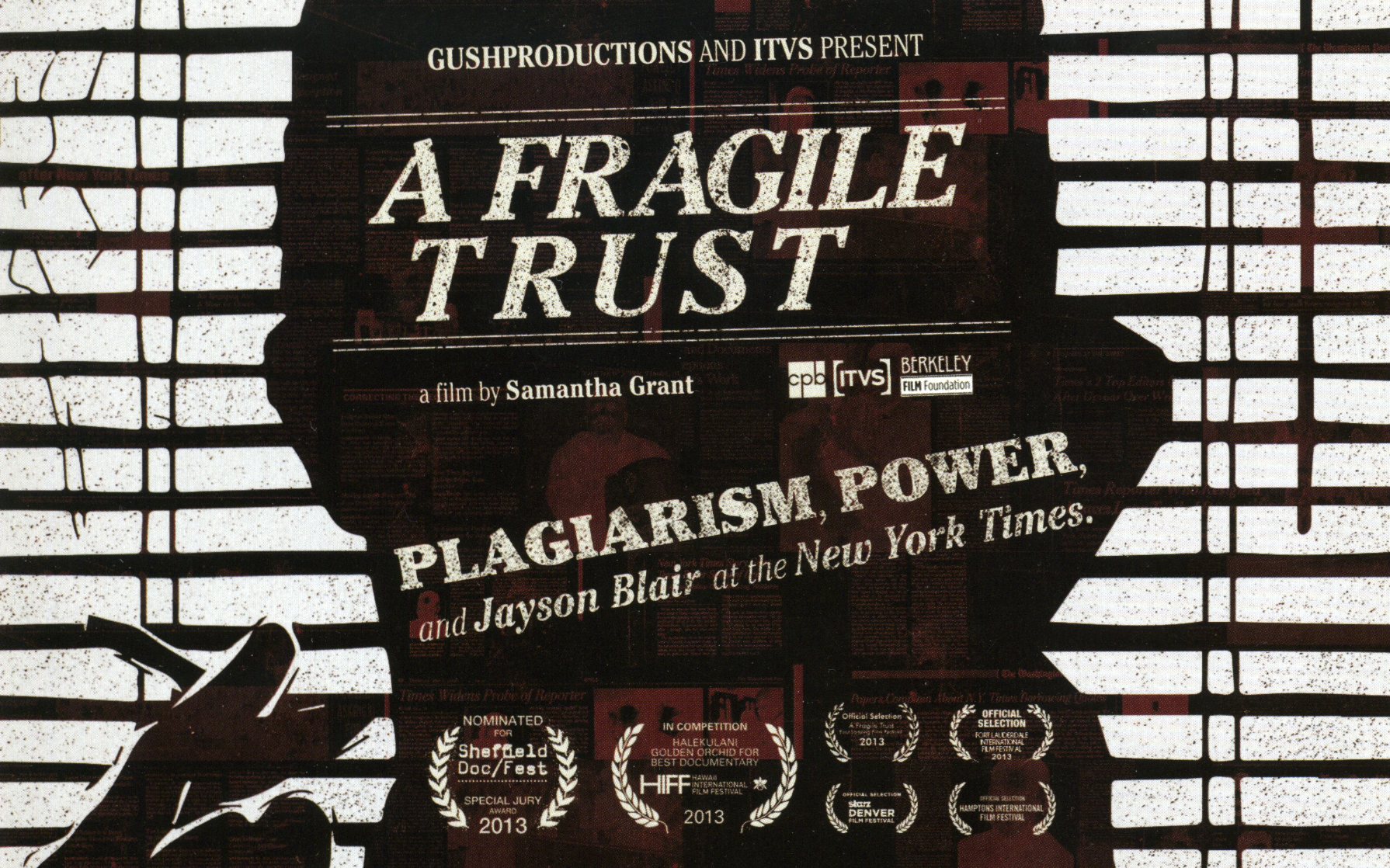
Of the film’s I did see, the opening night presentation of “A Fragile Trust,” profiling the plagiarizing New York Times reporter Jayson Blair, was a treat. Filmmaker Samantha Grant was in attendance (as were most directors of the selected films, it seemed) and during the Q&A, one person compared it to Errol Moris’ Oscar-winning “The Fog of War” as a mea culpa coup of sorts. Robert McNamara’s defensive testimony in “Fog” of his dubious high-level role in escalating the Vietnam War may have more gravity. But Blair’s high-profile case, which caused an erosion of confidence in journalism at a time when traditional news could least afford it, is no small potatoes. Blair’s rampant ego, blended in with lingering mental health issues and substance abuse, led to a prominent scandal and his presence in the film as a less-than-reliable interviewee was fascinating stuff. (“Where does the illness stop and the gaming begin?” wondered one of the talking heads). A show of hands at the Q&A revealed about half thought the film made them at least somewhat sympathetic of Blair, while the other half were left with disdain. Another example of the engaging power of the documentary form, although I have to agree with my sister Pam, who I watched it with it with, Grant should tone down that cue-happy soundtrack music. If you get a chance, check out “A Fragile Trust” when it airs on PBS on May 5th.

On Saturday, I saw the charming “Tokyo Waka” by John Haptas and Kristine Samuelson, about the 20,000+ jungle crows that inhabit one of the world’s biggest cities. The poetic flow of this work reflected both the natural world’s interaction with the built environment and the Japanese people’s philosophy of everyday life as seen in relation to this enigmatic, iconic bird. Also got to check out the vibrant “Everybody Street” (directed by photojournalist-filmmaker Cheryl Dunn) about notable photographers who have worked the streets of New York City through the decades. Tellingly, most of the folks behind the camera (like Joel Meyerowitz, Jill Freedman, Bruce Davidson and the Serbian-born Boogie) are as least as fascinating as the diverse multitudes they take pictures of, and that’s saying something. Like “Waka” this is a sidelong portrait of a great city as a whole.

img696

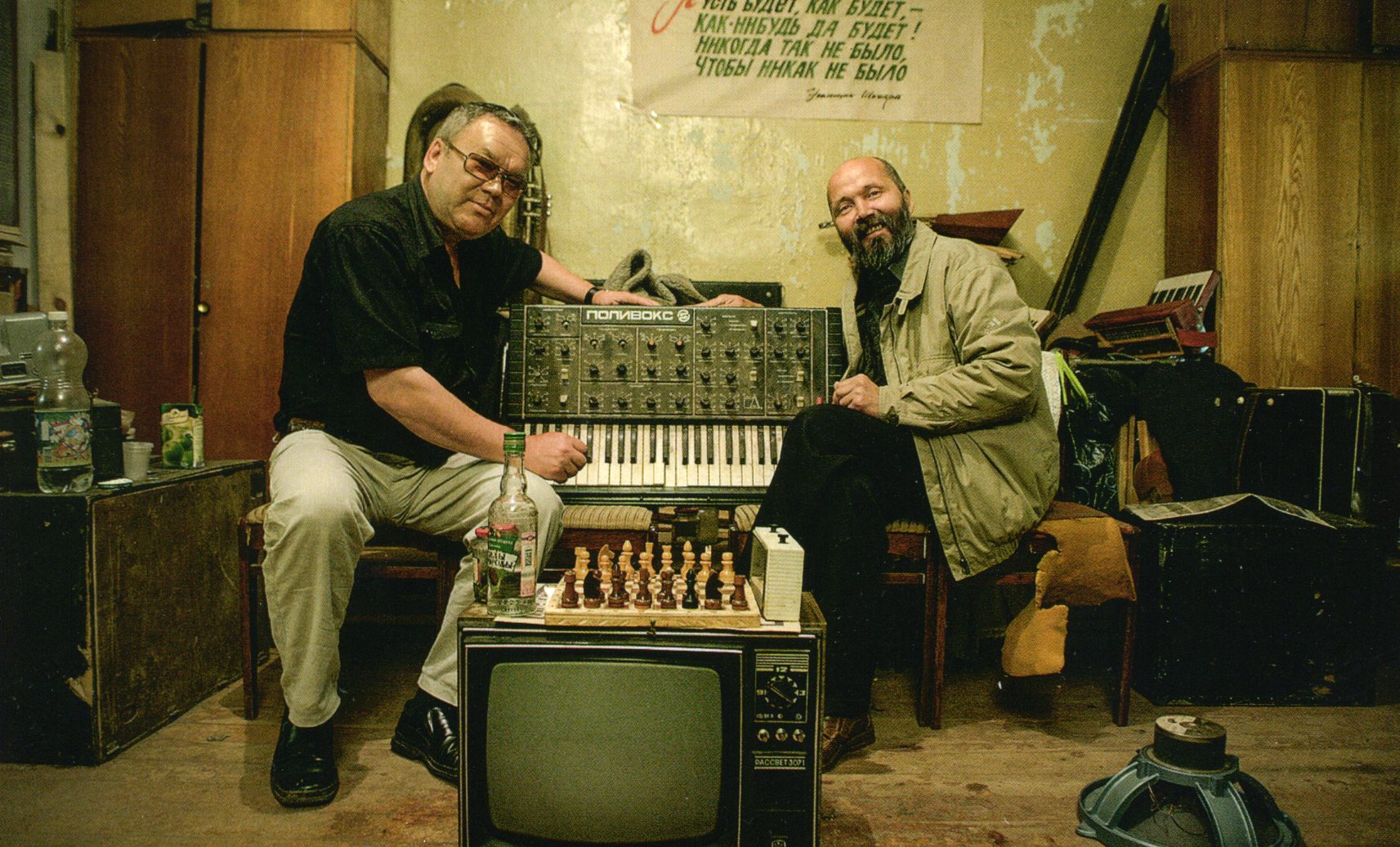
Among the entries I circled in the program for future viewing: “Dear Mr. Watterson” about the creator of the beloved Calvin and Hobbes comic strip; “Rich Hill”, a look at the de-population of large swatches of heartland America thru the example of one Missouri town; and relatedly, “The Human Scale”, Andreas Dalsgaard’s new film on the urban challenges facing a world where 80% of the population will be living in large cities by 2050. And as a fan of music docs, I hope to soon be seeing “Elektro Moskava” (pictured above) and it’s tale of Russia’s vital historical role in the development of electronic music. Sounds like it would make a great double feature with 1995’s “Theremin: An Electronic Odyssey” about Russian-born Leon Theremin who invented the self-named first electronic instrument. Theremin, who was the toast of Manhattan in the pre-war years, mysteriously disappeared (and rumored to be a kidnap victim of the KGB) before turning up a half-century later in Moscow, making a trip to NYC in his last years to be re-united with his protégé Clara Rockwell. I always sensed there were other stories where that came from.

You can still see the entire festival line-up at salemfilmfest.com. Happy viewing!

“Documentary 101: A Viewer’s Guide to Non-Fiction Film” is now available as an e-book in all formats for only $4.99, more details in next post.

Two in a Row for Rock Docs in Oscar Category

In the end, it may have been that much-lauded “The Act of Killing” was just a wee bit too radical for the Academy voters (see previous post), so for the second year in a row the statuette for best feature documentary went to a music film. The vivacious and lovable “20 Feet from Stardom” was probably as deserving a winner in what is by its very nature an apples-and-oranges competition. And thanks to the unstoppable Darlene Love, the acceptance “speech” turned into one of the night’s most memorable moments:

Ms. Love was a subject of the film and not one of the actual award winners, but when director Morgan Neville and the producers let her do her thing it could only help the already raised profile of a feelgood film that has connected with over 500,000 people in its theatrical release, great numbers for a documentary.

Exactly one year ago today, I began this blog by mentioning the recent Oscar win of “Searching for Sugar Man”, the second rock doc to win the award, the other being “Woodstock” way back in 1970. Now there are two in a row and there may be more to follow. The redemptive or belated-recognition pop music documentary has really taken off in recent years and will probably only get more popular as rock and roll’s golden age recedes ever into the past.

Sixto “Sugar Man” Rodriguez, whose luckless career as a singer-songwriter was salvaged by the unlikely admiration bestowed upon him decades later by countless South Africans or Darlene Love, whose ace lead vocals went uncredited on a #1 single in 1963 and who (along with many other studio vocalists) had to fight against forced anonymity and industry ill treatment, are just two of the better known examples of this mini-genre. “New York Doll” was when it first came to me as a distinct subset (in 2005) and there’s been many since then, with “Big Star: Nothing Can Hurt Me” and “Gene Clark: The Byrd Who Flew Alone” next up in my docket.

gravity

“Now it’s time to leave the capsule, if you dare”

I’ll leave the discussion of Hollywood’s big night to the 173 million other media outlets that hash it over. However, I was a tad disappointed that the science fiction genre was once again passed up as a legit contender for Best Picture. It was nice to see the visionary Alfonso Cuaron win for Best Director and in my mind was due one about seven years ago for the masterful “Children of Men.” But in the end “12 Years as a Slave” had more gravitas than “Gravity” (sorry) and already tedious idiomatic arguments about whether his nominated film was even science fiction or just a disaster film shot in outer space have sworn me off the subject for some time to come. Meanwhile, we have in Steve McQueen the first African-American director of a winning picture and how cool is that?

Another good outcome was that “Wolf of Wall Street” came away empty-handed and so depraved felon Jordan Belfort, who somehow got his claws into Martin Scorcese, does not for the moment have any further reason to laugh in the faces of the American citizenry that he ripped off so unrepentantly. Here’s hoping that Marty can re-connect aesthetically with the human race in 2014 while documentarians the world over continue their quest for truth, justice and discovery.

(I found out my choice for best feature documentary Oscar–Jehane Noujaim’s “The Square”–did win that prize at the recent awards show of the International Documentary Association, so congrats. At the same event the great Alex Gibney, who made “Taxi to the Dark Side” and “The Armstrong Lie” among his over two dozen directorial eforts, won the IDA’s annual Lifetime Acheivement award).

Here’s a list of Academy Award-winning feature documentaries starting with Michael Wadleigh’s great Woodstock film 43 years ago:

1970—Woodstock
1971—The Hellstrom Chronicle
1972—Marjoe
1973—The Great American Cowboy
1974—Hearts and Minds
1975—The Man Who Skied Down Everest
1976—Harlan County, USA
1977—Who Are the DeBolts?
1978—Scared Straight
1979—Best Boy
1980—From Mao to Mozart
1981—Genocide
1982—Just Another Missing Kid
1983—He Makes Me Feel Like Dancin’
1984—The Times of Harvey Milk
1985—Broken Rainbow
1986—Artie Shaw: Time is All I Got and Down and Out in America (tie)
1987—The Ten Year Lunch
1988—Hotel Terminus
1989—Common Threads: Stories From the Quilt
1990—American Dream
1991—In the Shadow of the Stars
1992—The Panama Deception
1993—I Am a Promise
1994—Maya Lin: A Strong Clear Vision
1995—Anne Frank Rembered
1996—When We Were Kings
1997—The Long Way Home
1998—The Last Days
1999—One Day in September
2000—Into the Arms of Strangers
2001—Murder on a Sunday Morning
2002—Bowling for Columbine
2003—The Fog of War
2004—Born into Brothels
2005—March of the Penguins
2006—An Inconvenient Truth
2007—Taxi to the Dark Side
2008—Man on Wire
2009—The Cove
2010—Inside Job
2011—Undefeated
2012—Searching for Sugar Man

Documentary Oscar Pool Party Spectacular

Just in case your office Oscar pool doesn’t include the documentary category, Vote Here for what you think will (and/or should be) the winner for Feature Documentary. This could end up being the smallest poll sample in history but why not. Although it hardly rates next to races like Cate Blanchett vs. Amy Adams for best actress, for instance, the fact is that new breeds of non-fiction film have creeped into the public consciousness, esp. when it comes to home viewing and film festivals. Mark your virtual ballot below (by commenting)for one of five nominees:

The Act of Killing
Cutie and the Boxer
The Square
Dirty Wars
20 Feet From Stardom

I’ve seen 3 of 5 so far. Of the ones I haven’t seen, “Cutie and the Boxer” from all I hear is a vibrant bio of painter Ushio Shinohara and his illustrator wife, Noriko. It joins a growing list of fascinating art-related docs in recent years. “Who the @#$% is Jackson Pollock?” “The Art of the Steal”, “Exit through the Gift Shop” and “My Kid Could Paint That” are other recommendations in this mini-genre and the just-released “Tim’s Vermeer” sounds like a must-see as well. Some will favor “Dirty Wars” by Richard Rowley and investigative journalist Jeremy Scahill. But after finally putting out my book “Documentary 101” last year, and writing about the numerous great but sobering films ranging down from the Holocaust to Vietnam to the Iran/Afghan wars, I wasn’t rushing pell mell to see another just to confirm my worst fears. But Scahill is an experienced war correspondent and a stand-up guy not afraid to stir the pot. He has an advocate in Bill Maher, who threw in his vote for “Dirty Wars” on the Feb. 14th edition of his HBO show. He thanked panelist Scahill for all his work, “while we still have you”, joking that there may be a drone out there with the reporter’s name on it.

The real crowd-pleaser of this quintet is “20 Feet From Stardom”, one of the better entries in what could constitute another mini-genre: the belated-recognition rock doc. It gives some of pop and soul’s best back-up singers their day in the sun, while also looking back on backstories of music-biz exploitation and cold-shouldered solo careers. But considering that last year’s winner (“Searching for Sugar Man”), about the long-delayed recognition of forgotten 70s singer-songwriter Sixto Rodriguez, was in a similar vein, it may be that Academy voters will be looking elsewhere. That is, if it can be said that voters in the Documentary Feature category, long known for their arcane methodology, even think like that.

At any rate, the real buzz in the non-fiction form this year has been about “The Act of Killing.” This is as brilliantly conceived and daring a film that came out last year in any category. First time director Joshua Oppenheimer had set out to film surviving relatives of the approximately 500,000 Indonesian Communists and other perceived enemies killed in a 1965 purge that established long-term authoritarian rule in that country. But anti-leftist sentiment there is still so strong that this concept became unworkable and, reportedly on the suggestion of one of the survivors, hatched the idea of turning his cameras on the aging members of the killing squads, eventually encouraging them to cinematically re-create their ghastly deeds of a half-century ago.
(Below is an interview clip with Oppenheimer that also includes the film’s trailer)

It turns out that this gambit, designed to affect a sort of negative catharsis for sanctioned mass murderers who are still revered as heroes, leads to some fascinating filmic moments. Main subject Anwar Congo and his associates come from a “gangster” culture, a word that has a positive ring for many in the political culture. It also has a lot to do with movie culture as Anwar and his fellow ex-war criminals, as slick and as full of references as Tarantino stock players, readily acquit themselves as filmmakers with results both grisly (a reenactment of a beheading) or downright campy (a musical number by a waterfall featuring Anwar’s stocky male friend (also from the notorious Pemuda Pancasila paramilitaries) in drag. Oppenheimer’s “documentary of the imagination” records this process almost as a beguiling dream/nightmare state that is stylistically brilliant.

The complimentary “gangster” is, to them, the linguistic equivalent of “free man.” Shaking down humble merchants and pining for the good old days before the pesky concept of “human rights”, you wonder why these guys don’t get recruited by Wall St. wolves or the North Korean government. Since Oppenheimer was unable to be openly critical of his subjects (many folks in the end credits are listed as “Anonymous”) don’t expect any to have any conventional sense of justice satisfied. The guilt and remorse is buried so deep it can barely be excavated from Anwar Congo himself in the film’s climatic scene, even though he has taken part in Oppenheimer’s provocative premise. But there is some hope as officials in Indonesia have had to acknowledge the film and even to let it slip that these were war crimes being referred to and not some heroic deed from the past.

Still, in the end my vote has to go to “The Square”, an absolutely riveting and literally street-level look at the mass protests in Cairo’s Tahrir Square in 2011 that led to the ouster of Egyptian President Hosni Mubarak. After the unceremonial departure of their autocratic leader, Epypt—an immemorial country with little or no background in democracy—was convulsed by a series of demonstrations, counter-demonstrations, civil resistance, occupations and riots to try and determine what came next. Director Jehane Noujaim (who also made the excellent “Control Room” and “Startup.com”) was there with her camera for as much of the so-called Lotus Revolution and it’s still-unresolved aftermath as she could and still have a release date. Originally released by its producer Netflix in Jan. 2013, she has updated it in later releases throughout the past year. Seldom has a documentary felt this immediate in its impact.
(Below interview clip with Noujaim also includes trailer)

Noujaim had followed the revolution’s affect by focusing in on the participation of several people. In the final film, there are mainly three story arcs: that of the young secular idealist Ahmed; Magdy, a thoughtful member of the Muslim Brotherhood who becomes friends with Ahmed; and actor-activist Khalid Abdalla (star of “The Kite Runner”) who returns to his homeland to help man the barricades. With what’s going on in the world today, most notably in the Ukraine and Thailand, “The Square” is a bracing reminder that for so many the only way to affect change against forces of oppression is to enter into a mortal struggle with forces more powerful than yourself. As in so many places, in Egypt the buck stops with the army and a decision on whether or not to use fatal firepower. (In this case, you also have the organizational power of the Brotherhood who elected the ill-fated Mohamed Morsi in 2012). At present, it looks like the military holds the winning hand but the people power unleashed in Tahrir Square in January of 2011 cannot be held back forever, or at least that’s the hope you take away from Noujaim’s extraordinary film.

*********************

A Forty-Year Oscar Flashback in the Best Documentary Category

The scathing anti-Vietnam War film “Hearts and Minds” won the Academy Award for top Documentary Feature of 1974, and the acceptance speeches by director Peter Davis and producer Bert Schneider touched off one of the more interesting backstage brouhahas in an awards show that has been no stranger to controversy over the years. Schneider got the crowd especially riled up, speaking of Vietnam’s impending “liberation” and reading a telegram from the Viet Cong delegation at the Paris peace talks that recognized the efforts of American anti-war protestors. Offstage, Bob Hope was furious and proceeded to make a big scene. The unctuous comedian had looked bad in a brief scene in “Hearts and Minds” where he spoke appreciatively of his “captive audience”: a roomful of ex-POWS at a White House dinner. Hope got Frank Sinatra, cohosting the show that year with fellow Rat Packers, to read a disavowal, getting the same mixture of boos and cheers that Davis and Schneider earned only minutes earlier, reflecting the polarizing effects of the war. The documentary category would remain a fairly quiet one on the Big Night until 2003 and Michael Moore’s notorious “shame on you!” harangue aimed at President George W. Bush over the recently launched Iraq war.

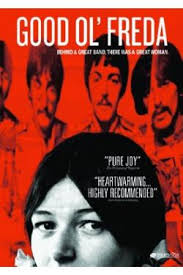
Good Ol’ Freda and stodgy ol’ Ed

freda poster

Good Ol’ Freda
Directed by Ryan White–2013–87 minutes

Now available on DVD and online, fans of the Beatles (or for that matter, fans of the human race) should definitely check out the wonderful documentary “Good Ol’ Freda” if missed during its brief festival/theatrical run last fall. Its opening moments take us back fifty Christmases ago and the first of the group’s annual holiday-greeting records. Amid the general jollity we hear the guys give a shout-out to their secretary and fan club president, prompting the titular exclamation. Freda Kelly, in the words of one who knew her when, was “a snip of a teenager”, employed as a typist in a Liverpool office when asked if she’d like to join some co-workers to see a lunchtime concert by a certain local combo at the nearby Cavern Club.

The 17 year-old Freda got to know the Beatles as only one can who was part of the band’s original fan base. She can tell you the best place in the Cavern to watch (second archway on the left), tell sweet anecdotes of Paul walking her to the bus stop and still calls Ringo “Ritchie.” In 1962, the Beatles new manager Brian Epstein asked the incredulous teen if she wanted to work for the band. It was a canny move. As both Brian and Freda realized, she was a fan but not a fanatic and could directly relate to the band’s famously ardent female supporters, which would grow into numbers unimaginable back then. A bit player in a worldwide cultural phenomenon, she held the job for a decade and still dutifully replied (on her own time) to the back log of letters even after the band broke up, a process that took some three years.

The personable and straightforward Kelly makes a winning documentary subject. “Loyalty” and “privacy” are the two keywords with her and instead of making her a spoilsport (think of all the dirt there is to dish!) it serves as a refreshing reminder to the special value of basic human decency in a crazy world. Did she profit from the surplus riches (in the form of autographs, ephemera, locks of hair and the like) that her position left her holding? Not a chance. She personally handed much of it over to Beatle fans and kept a few boxes for old time’s sake. Untouched for over thirty years, she heads up to the attic to retrieve them for the camera crew. Did her closeness to the group ever lead to an amorous tryst or two? Maybe, but as Freda sits on a sofa in her modest Liverpool home a half-century later, she coyly takes a pass. “I don’t want anyone’s hair falling out,” is her answer, which sounds sensible enough.

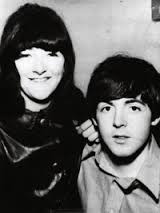
With her girlish smile and helmet of dark hair, the teenage Freda looks like she could have been too overwhelmed or awestruck to ever handle the job description that would come with working for the most popular rock band in history. Not a bit of it. Her unfussy dedication and the band’s ability to not lose themselves in all the mass adulation, speaks volumes for their unpretentious Liverpool roots. And Kelly was no pushover. After John Lennon made a move to unilaterally fire her after she whiled away an hour hanging out with the Moody Blues, he quickly found himself unsupported by the other three and Freda (only half-jokingly) made him get down on one knee to beg her back. With upper echelon pop stars now resembling corporate monoliths more than actual human beings, it would be hard to imagine something like that happening today—esp. if you’ve seen the documentaries of say, Madonna or Beyonce, where employees are subjected to boot camp discipline when they’re not being herded into prayer circles.

couple

freda old

Freda Kelly, then (with a pre-Sir Paul) and today.

Approaching seventy years of age, Freda agreed to be the subject of Ryan White’s cameras only so her grandchildren will grow up knowing who she once was, a notion as simple, likeable and bittersweet as the film itself.

***************

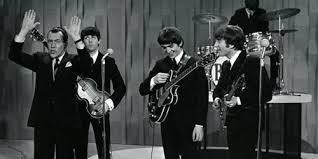
Sullivan with Beatles

“Before I introduce these fine youngsters from Liverpool, can I just say to all the girls in the gallery… Shut the @#$% up!”

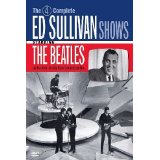
ed dvd

The 4 Complete Ed Sullivan Shows Starring The Beatles (2010)

At this late date and with the 50th anniversary coming this week, just about everything that could be said about the Beatles epoch-making appearances on Ed Sullivan’s weekly TV showcase has been said, and multiple times. The televised specials will be all over the place and we’ll all catch at least one. But this DVD, which has been circulating for years, gives the viewer the extra context of viewing the four entire E.S. shows (including commercials) that featured the Fab Four in all their Beatlemania glory, playing to delirious packs of girls in the theater as well as to a record-shattering 73 million viewers at home. Sullivan had been ready to put up a princely sum for one Beatles appearance but Brian Epstein, in an astute bit of managerial razzle dazzle, agreed to accept only a fraction of the offer (settling on $10,000) if the band could instead be on for three weeks, opening and closing each show.


Besides the three famous shows of Feb. 1964, the DVD also has the return appearance from August 1965.

The other material on these discs offers up the last death throes of a vaudeville business model about to be replaced by the Beatles-led youth-centric entertainment revolution. Ed Sullivan got his start as a newspaper columnist focused on Broadway and New York nightlife but his Sunday night variety show,which ran from 1948 to 1971, was a star-making juggernaut of the age when we watched four TV channels on a 9-inch screen. Week after week Sullivan, with his notoriously uncomfortable body language and awkward stabs at humor, would introduce the magicians, acrobat teams, comedy duos, dance troupes, pop singers, puppets and God knows what all. These shows are no exceptions and most look instantly dated next to the Beatles triumphant re-invention of rock and roll. Interspersed are the kinds of commercials that make one feel that 50 years is a really, really long time. Did you know, for instance, that Lipton tea is “friendlier than coffee”, or that Anacin brand aspirin cures depression?

There are a few exceptions: the great Cab Calloway, then 57, turns in a high-spirited performance and we get to see a pre-Monkees Davy Jones appearing with the original cast of “Oliver!” At the Feb 16th show, when Ed moved the show to it’s occasional Miami Beach location (allowing the boys a few days in a warm locale) the Fabs are almost upstaged by the irrepressible Mitzi Gaynor (of whom they were great fans) as she makes the most of her 13-minute turn in the spotlight as if to try and turn back the clock to the days to where superhuman (if slightly hokey) song-and-dance routines and expressive “jazz hands” were the last word in light entertainment. It didn’t quite work that way (the heavyosity of later Sixties culture soon followed), but it wasn’t for lack of effort on Mitzi’s part. So we end Beatles doc month with a little dose of the hotsy-totsy Ms. Gaynor and a great slide show of Beatlemaniacs set to “Twist and Shout.” Enjoy!

Documenting the Beatles on Film

Plus the Rutles: All You Need is Laughs

compleat
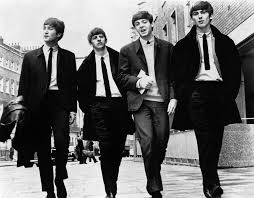
The coolest-looking quartet ever, at the height of world domination

rutles pysch
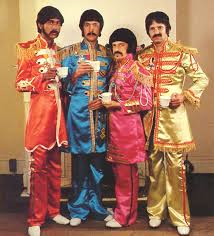
The Rutles, caught in the act of drinking tea, seen during their “Tragical History Tour”

Considering the Beatles overarching prominence in rock history, it’s a little odd that there isn’t currently available a standard-length documentary that captures their glory in any definitive sense. Perhaps this is understandable; maybe the story is just too big to be captured in one sitting. I cherish my copied-from-the-library tape of 1982’s The Compleat Beatles, a straightforward two-hour clips-and-commentary doc narrated by Malcolm McDowell. This thoughtful, soup-to-nuts approach makes for an impressive, single-volume encapsulation of the band’s legendary success in both artistic and commercial terms. Unfortunately, after its theatrical run and a successful release on videocassette it sort of dropped from view, remaining unreleased on DVD and relegated to spotty-quality ten-minute chunks on YouTube.

It could be said that 1995’s Beatles Anthology, a 3-part television special, supplanted the need for the less in-depth “Compleat”. The Anthology series does have a lot going for it, especially extensive interviews with the then three surviving Fabs. It also had a serious case of the recently discovered Ken Burns Syndrome, clocking in at 683 minutes. That may have been heaven on earth for Beatlemaniac bingers, but for the lean and mean younger generations (millions of whom have an instinctive inclination to love the band as we boomers did) this is about 583 minutes too much. Maybe some sort of updated variation on “The Compleat Beatles” will eventually see the light of day. It is important. John, Paul, George and Ringo are a shining example of creative striving and inspired collaboration. It’s also a sublime lesson in how to affect societal change using a light touch, and that being rebellious does not have to mean being revolting (yes, we’re pointing fingers at you, Mr. Beiber and Ms. Cyrus).

compleat vhs 4195
The Compleat Beatles–Now available on VHS from Amazon for only $41.95

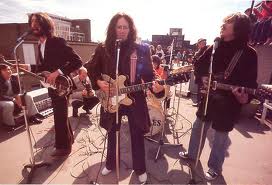
It may be that 1964’s A Hard Day’s Night will end up being the best real-life record of their initial career peak, seeing that director Richard Lester smartly chose a pseudo-doc style that mirrored the Maysles Brothers’ What’s Happening! The Beatles in the USA shot on the band’s epoch-making American visit just weeks before Lester’s cameras started rolling. (Almost exactly a half-century ago. See my previous post for details!) Of course, there were also documentary cameras running during the turmoil that pointed to the band’s break up in 1970. Yet if it weren’t for bootlegs and the InterWebs, little would be seen nowadays of Michael Lindsay-Hogg’s Let it Be. McCartney and Starr show little inclination at this late date to re-air the group’s dirty laundry, although a lot of the worst of it was left on the cutting room floor. Despite the uneasy vibe and Yoko Ono’s divisive presence in Lennon’s corner of the soundstage, there are gratifying moments from the Jan. 1969 filming—an electric studio performance of the bittersweet John/Paul valedictory “Two of Us” and of course the oft-imitated rooftop concert, as London pedestrians crane their necks trying to get a last look at the world’s most famous rock band playing live.

With Compleat Beatles out of print, maybe the current front-runner as the best one-sitting Beatles film bio is—wait for it—The Rutles: All You Need is Cash. This 1978 satire began a few years before as a skit on a UK television show by Monty Python alum Eric Idle. When he hosted Saturday Night Live in ’76, he brought the clip (the gag where Idle as onsite narrator finds the camera van pulling away from him) to air on the show. Idle teamed with SNL producer Lorne Michaels and director Gary Weis (whose short films were a staple of the show’s early days) to virtually invent the rock mockumentary with their wickedly funny film about Dirk, Nasty, Stig and Barry—the alternate-universe moptops whose “legend will last a lunchtime.”

With Idle playing the hapless presenter (as well as the Paul-like Dirk) All You Need is Cash is just as much a spoof of the documentary form as it is of the Beatles. Often showing up at the wrong locale or getting nowhere with certain interviewees, he still manages to tell the entire tale of the Pre-Fab Four. Completing the Liverpool chapter after catching up with his van, he takes us to Hamburg, where the Rutles learn the ropes playing dodgy, red-light district nightclubs on Hamburg’s Reeperbahn (“the naughtiest street in the world”). That’s followed by segments on their great success in America (including their record-breaking concert at “Che Stadium”), their experimentations with tea (endless pots of it) that led to such way-out records as “Sgt. Rutter’s Darts Club Band” (“a millstone in pop history”) and onto their final works, “Shabby Road” and “Let it Rot” which was “released in 1970 as an album, a film and a lawsuit.”

rutles roof
Fun fact: The Rutles rooftop performance was so bad they got arrested.

As you can tell, the Rutles saga is chock full of that dry Flying Circus wit, livened by the sharp performance of Python sidekick Neil Innes as the Lennon-like Nasty. Innes, ex of the Bonzo Dog Band, composed the many spot-on song parodies, doppelgangers like “Ouch!” (Help!), “Piggy in the Middle” (I Am the Walrus) and “Doubleback Alley” (Penny Lane). It’s remarkable how the slightest sardonic twist can transform real-life musical legends into a band of incompetents. This does lead to some lapses in logic—could these goof-offs really sell out Che Stadium? But it’s the conspiratorial allowance to have a bit of fun with our cultural icons, and recognize the tendency to place them a little too high on a pedestal, that in the end shoots their stock value even higher.

And what of the band’s reaction? John apparently loved the Rutles and refused to return the preview tape he was given. One can imagine his secret delight at the film’s scenario of having Nasty hook up with destructo-artist Chastity, “a simple German girl whose father invented World War II.” Ringo reportedly loved the scenes set in the salad days, but not so much the parts that skewered the band’s messy dissolution. Paul’s reaction was pretty frosty but he may have come around when wife Linda became a Rutles fan. George of course was a big Monty Python supporter and even appears in the movie, playing a silver-haired reporter who interviews Michael Palin as an executive of Rutle Corp. (i.e. Apple) who assures us that everything is A-OK with the group’s finances even as thieves empty out the offices in the background. People with fond memories of the first incarnation of SNL will also enjoy the cameos by John Belushi, Gilda Radner, Bill Murray and Dan Akroyd.

rut bluray

The recent Blu-ray release The Rutles Anthology includes the decent 2005 sequel Can’t Buy Me Lunch. This 56-minute follow-up fleshes out the Rutles Apocrypha with outtakes from the first film and includes some amusing new bits like the ongoing routine where Eric Idle’s presenter faces competition from a microphone-stealing Jimmy Fallon. But as where “All You Need is Cash” featured droll testimonials from Mick Jagger and Paul Simon playing themselves, here we get the likes of Gary Shandling, Russell Brand and Tom Hanks rambling on witlessly (and redundantly) about how much the Rutles meant to them. It only serves to emphasize what the project was originally poking fun at. This mockumentary thing can be a tricky business

The Beatles meet the Maysles, 7 Feb 1964

first US

The review below taken From “Documentary 101: A Viewer’s Guide to Non-Fiction Film”
Now on sale: http://booklocker.com/books/6965.html (This author page has an extended book excerpt. Also available from Amazon and barnesandnoble.com)

img363

The Beatles: The First U.S. Visit
Albert and David Maysles—1964/1991—83 minutes

It was only ten weeks after the assassination of President John Kennedy. With the pall of national tragedy still in the air that winter, the filmmaking team of Albert and David Maysles got a call from Granada Television in England saying a musical group named the Beatles were arriving in New York in a couple of hours and would they mind heading down and maybe getting some footage? Albert was a bit nonplussed but younger brother David was more hip to the current pop scene and sensed the opportunity. After negotiating a deal right there on the phone, the light-traveling duo were on their way to recently renamed John F. Kennedy Airport, getting there just in time for the famous moment when John, Paul, George, and Ringo hesitated a moment at the top of the steps while leaving the plane, realizing that the hordes of people lining the balcony of the terminal were there for them and not some head of state as they first thought. And just like that the Maysles brothers found themselves in the middle of one of the twentieth century’s defining cultural moments. The First U.S. Visit is a 1991 re-edit of the original ’64 film (called “What’s Happening: The Beatles in the U.S.A.”) that adds more music and excises some interview material. But both versions pull the viewer right into the middle of the tumultuous birth of 1960s youth culture. It also features the Beatles performing thirteen unedited songs, from both a Washington, D.C., concert and the epochal Ed Sullivan Show TV appearances.

beatles in Miami
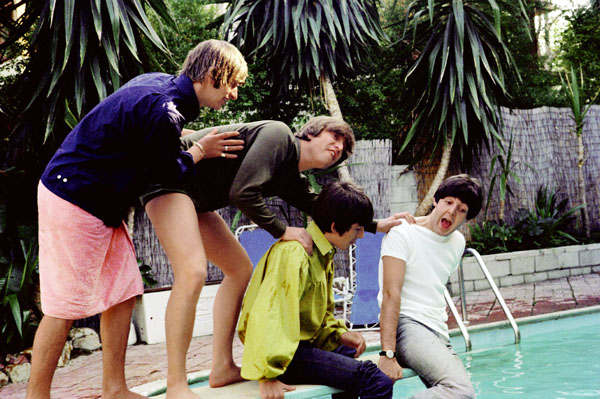
Twisting by the pool in Miami Beach, 1964

The Beatles were poised for big things and “I Want to Hold Your Hand” (their first widely distributed single in the U.S.) had hit #1 two weeks previous. Early segments show famed DJ Murray the K in his studio hyping them up but establishment media were often belittling in their opinions and their long-term prospects in America were uncertain. At the airport press conference they quickly charm the jaded New York press corps with their contagious high spirits and sharp wit, then are whisked off to Manhattan and to a rock ’n’ roll superstardom never to be equaled. Although a few hours before they had hardly heard of the Fab Four, the filmmakers found themselves squished into the back of a limo with the confident but still nonplussed band members. Arriving at the Plaza Hotel, we get the first dose of Beatlemania up close with fans pounding on the window, the boys dashing from the car to the lobby door, and the scenes of police struggling to keep back the hordes, all soon to become iconic images of the decade. Two nights later, on February 9, 1964, the band would make television history with 73 million people tuning in to Sullivan’s Sunday-night showcase. The Maysles brothers would tag along for the next five days with unfettered access and whether it’s the boys goofing around in hotel rooms, dancing at the Peppermint Lounge, or getting photographed in Central Park, the camera never seems more than a few feet away from the action.

When it’s time to head south for the D.C. concert, the whole entourage takes the train like it is no big deal and the band jovially mingles with the other passengers. The group here is shown at a giddy apex of fame just before becoming imprisoned by their own celebrity. And although the performances on Sullivan’s show seem as fresh and buoyant as ever, the gig at the old Washington Coliseum may be the musical highlight here. Playing from a makeshift stage in the middle of the arena, the group is surrounded by the deafening din of screaming girls but cut through the pandemonium with a manic energy unseen on the tube. “I Saw Her Standing There” rocks with an almost punkish jolt and Ringo gets a rare concert lead vocal during a likewise frenetic “I Wanna Be Your Man.” The sight of the four of them having to turn around their own amps and rotate the drum riser to play to a different part of the house couldn’t be quainter—roadies weren’t even invented yet!

The Beatles raise the roof on the Washington Coliseum, Feb. 11th, 1964

Ed Sullivan is waiting down in Miami Beach, ready to introduce these “fine youngsters” for the second of the three consecutive weeks on his show. Although the Maysles brothers’ time with the Beatles ended down there, also included is their return appearance (taped earlier) at the regular New York location for week three on Sullivan (with a farewell rave-up of “Twist and Shout” and “I Want to Hold Your Hand”) and a bit of their departure and triumphal airport reception back in London.

The filmmakers’ methods seem to point the way to one of rock’s most celebrated films, “A Hard Day’s Night”, which started filming a month after the group’s return. That movie’s director, Richard Lester, carefully crafted a pseudo-documentary feel and a few notable scenes, like the mob-besieged Beatles running to their catch their train before being eaten alive, were not staged but done spontaneously, a bit of cinematic verisimilitude not appreciated by the band. “What’s Happening!” (as it was still known) was a great feather in the cap for the Maysles brothers. With an eerie symmetry, these Johnny-on-the-spot filmmakers would close out the 1960s with “Gimme Shelter”, unwittingly filming the dark flip side of the scene the Beatles created while following a late 1969 tour by the Rolling Stones.