The review below taken From “Documentary 101: A Viewer’s Guide to Non-Fiction Film”
Now on sale: http://booklocker.com/books/6965.html (This author page has an extended book excerpt. Also available from Amazon and barnesandnoble.com)
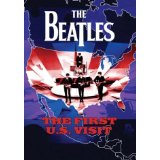
The Beatles: The First U.S. Visit
Albert and David Maysles—1964/1991—83 minutes
It was only ten weeks after the assassination of President John Kennedy. With the pall of national tragedy still in the air that winter, the filmmaking team of Albert and David Maysles got a call from Granada Television in England saying a musical group named the Beatles were arriving in New York in a couple of hours and would they mind heading down and maybe getting some footage? Albert was a bit nonplussed but younger brother David was more hip to the current pop scene and sensed the opportunity. After negotiating a deal right there on the phone, the light-traveling duo were on their way to recently renamed John F. Kennedy Airport, getting there just in time for the famous moment when John, Paul, George, and Ringo hesitated a moment at the top of the steps while leaving the plane, realizing that the hordes of people lining the balcony of the terminal were there for them and not some head of state as they first thought. And just like that the Maysles brothers found themselves in the middle of one of the twentieth century’s defining cultural moments. The First U.S. Visit is a 1991 re-edit of the original ’64 film (called “What’s Happening: The Beatles in the U.S.A.”) that adds more music and excises some interview material. But both versions pull the viewer right into the middle of the tumultuous birth of 1960s youth culture. It also features the Beatles performing thirteen unedited songs, from both a Washington, D.C., concert and the epochal Ed Sullivan Show TV appearances.
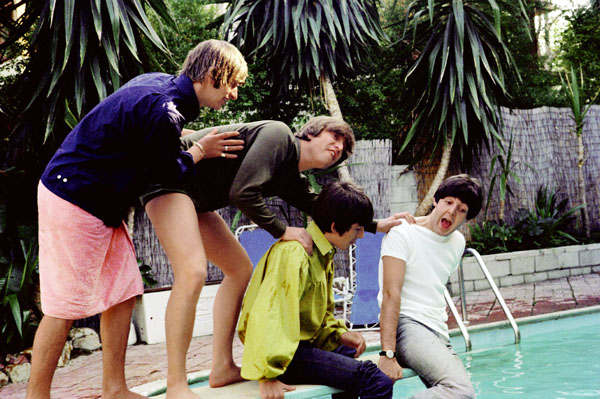
Twisting by the pool in Miami Beach, 1964
The Beatles were poised for big things and “I Want to Hold Your Hand” (their first widely distributed single in the U.S.) had hit #1 two weeks previous. Early segments show famed DJ Murray the K in his studio hyping them up but establishment media were often belittling in their opinions and their long-term prospects in America were uncertain. At the airport press conference they quickly charm the jaded New York press corps with their contagious high spirits and sharp wit, then are whisked off to Manhattan and to a rock ’n’ roll superstardom never to be equaled. Although a few hours before they had hardly heard of the Fab Four, the filmmakers found themselves squished into the back of a limo with the confident but still nonplussed band members. Arriving at the Plaza Hotel, we get the first dose of Beatlemania up close with fans pounding on the window, the boys dashing from the car to the lobby door, and the scenes of police struggling to keep back the hordes, all soon to become iconic images of the decade. Two nights later, on February 9, 1964, the band would make television history with 73 million people tuning in to Sullivan’s Sunday-night showcase. The Maysles brothers would tag along for the next five days with unfettered access and whether it’s the boys goofing around in hotel rooms, dancing at the Peppermint Lounge, or getting photographed in Central Park, the camera never seems more than a few feet away from the action.
When it’s time to head south for the D.C. concert, the whole entourage takes the train like it is no big deal and the band jovially mingles with the other passengers. The group here is shown at a giddy apex of fame just before becoming imprisoned by their own celebrity. And although the performances on Sullivan’s show seem as fresh and buoyant as ever, the gig at the old Washington Coliseum may be the musical highlight here. Playing from a makeshift stage in the middle of the arena, the group is surrounded by the deafening din of screaming girls but cut through the pandemonium with a manic energy unseen on the tube. “I Saw Her Standing There” rocks with an almost punkish jolt and Ringo gets a rare concert lead vocal during a likewise frenetic “I Wanna Be Your Man.” The sight of the four of them having to turn around their own amps and rotate the drum riser to play to a different part of the house couldn’t be quainter—roadies weren’t even invented yet!
The Beatles raise the roof on the Washington Coliseum, Feb. 11th, 1964
Ed Sullivan is waiting down in Miami Beach, ready to introduce these “fine youngsters” for the second of the three consecutive weeks on his show. Although the Maysles brothers’ time with the Beatles ended down there, also included is their return appearance (taped earlier) at the regular New York location for week three on Sullivan (with a farewell rave-up of “Twist and Shout” and “I Want to Hold Your Hand”) and a bit of their departure and triumphal airport reception back in London.
The filmmakers’ methods seem to point the way to one of rock’s most celebrated films, “A Hard Day’s Night”, which started filming a month after the group’s return. That movie’s director, Richard Lester, carefully crafted a pseudo-documentary feel and a few notable scenes, like the mob-besieged Beatles running to their catch their train before being eaten alive, were not staged but done spontaneously, a bit of cinematic verisimilitude not appreciated by the band. “What’s Happening!” (as it was still known) was a great feather in the cap for the Maysles brothers. With an eerie symmetry, these Johnny-on-the-spot filmmakers would close out the 1960s with “Gimme Shelter”, unwittingly filming the dark flip side of the scene the Beatles created while following a late 1969 tour by the Rolling Stones.
Here’s a preview of a feature that will begin on a regular basis sometime next month. The next few posts will be dedicated to the upcoming 50th anniversary of the Beatles first arrival in America, an epochal turning point in the history of youth culture. At the rate the world spins in our hyper-technologized society, I find now more than ever the need to be lifted up and over it by the transformative power of music. Here are the first three entries in my survey of great rock tunes of over ten minutes in length, with the quixotic suggestion that they be listened to without distraction, a nearly lost art that I will expound upon in future entries.
“The Little House I Used to Live In”—Mothers of Invention (1969, 18:42)
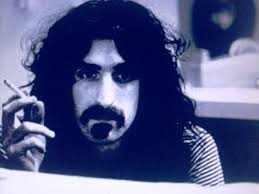
A studious contrast to the class-clownish title of the album on which it was placed (“Burnt Weeny Sandwich”), this elegantly constructed jazz-rock piece was a big coming out party for Frank Zappa as a serious composer and bandleader. After the improv piano prelude by Ian Underwood, the group falls in abruptly with a syncopated groove of a type that was fast becoming a Zappa trademark: somewhat whimsical and marked by rigorous playing (including some stretches in 11/8 time). “Little House” is such a rewarding piece because funny-guy Frank checks his tendency to rely on pastiche and gives the work (which deftly alternates live and studio segments) a lyrical flow throughout, with emphatic jamming trading off with drifting interludes to keep things interesting. Violinist Sugar Cane Harris gets a lot of solo time and makes the most of it, while Zappa checks in with a great compact guitar lead, one foot heavy on the wah-wah pedal. A “sunburst” effect (using harpsichord, xylophone, flute and clarinet) leads to the finale, with Zappa sitting at the organ for a wild solo while the Mothers blaze away in a tempo that is barely comprehensible. Adventurous stuff for an adventurous time.
“Walk on By”—Isaac Hayes (1969, 12:00)
Though in later years he was better known as the animated character Chef on “South Park”, the late great Isaac Hayes will go down in pop history for the way he emerged from the Memphis recording scene in the late Sixties to play a huge role in the development of modern soul music. The writer-arranger-keyboardist for Stax Records may have been pictured in a suit and top hat on his 1967 debut solo LP, but by the follow-up it was a whole new ball of wax. The cover photo of “Hot Buttered Soul” was a high-angle shot that looked down on Ike’s imposing chrome dome while his bare torso sported an enormous gold chain. This guy was a player and he wasted no time in revolutionizing R&B in a way not unlike the way rock’s horizons were expanding in the psychedelic era. His epic funkification of “Walk on By”, that classic slice of Bert Bacharach-Hal David melancholia, kicked off the album. Backed by the legendary Bar-Kays and summoning all his prodigious arranging skills, the track sweeps in on a bed of strings and some hot, Southern-fried lead guitar by Michael Toles, which is soon sent thru some trippy stereo-panning effects. Flutes and female backing singers join with the steady pulse of the rhythm section as Hayes delivers the song in the deep, intimate voice soon to be world famous. What sounds like a conventional fadeout starts at the seven-minute mark and rides into the sunset with a magnificent coda longer than most singles of the time, with Toles’ soloing reaching fever pitch and Hayes’ organ glissandos adding to the building excitement. Over the course of the next several albums, Hayes would record many other tracks of similar or even greater length (witness the 18 minutes of “By the Time I Get to Phoenix” on side two of HBS) but none ever quite matched the grandeur of this.
“Star Storm”—UFO (1971, 18:54)
Until recently, I’ve only known UFO as those long-serving British thumpers who would occasionally turn up on a mix tape or compilation with an entertaining four-minute blast like “Doctor Doctor” or “Lights Out.” But classic rock’s golden period (roughly the mid-60s to the mid-70s) is the gift that keeps on giving and I recently found out about the group’s early, more psychedelic phase when Mick Bolton was the guitarist. Their second LP, “UFO 2: Flying” was aptly sub-titled “One Hour Space Rock.” That’s a lot to squeeze onto a single album and “Star Storm” wasn’t even the longest track, it’s nineteen minutes falling short of the 26-minute trajectory of the title track. But I’ll take this one for its way-out wayfaring, a period high point (as it were) in the annals of power-trio acid rock. The track begins and concludes with the husky vocals of mainstay lead singer Phil Mogg but it’s really all about Bolton leading the rhythm section (bassist Pete Way and drummer Andy Parker) through a sci-fi wonderland that you’ll be too happy to get lost in. Bolton puts his axe through all its paces and then some, with bracing bluesy soloing alternating with sections that run his instrument through a panoply of processed effects.
These are terrible people. They hate you and (according to experts) you want to be just like them.
I’ve had it. In an even slightly more sane world, folks from all over would take one look at the very premise of Martin Scorsese’s latest movie, give it the middle finger, and make other plans for their post-Christmas cinema excursion. But no: I’m sure this film about a 1990’s Wall Street scumbag named Jordan Belfort will be a big hit among moviegoers (it already has an 8.9 rating on IMDB). It doesn’t even matter that the global economy has been screwed over by the Belforts of the world. Let’s just sit in the multiplex vicariously reveling in his financial scams and the pathetic drug abuse, dwarf-tossing, whore-mongering and who knows what else that goes with it. It’s just entertainment. In my view, “The Wolf of Wall Street” being released on Christmas Day is an outrageous insult to whatever is left of the middle- and working class, even more so because few will even notice the irony. April Fool’s Day would have been far more appropriate, if it ever needed to be made at all. That Scorsese couldn’t stop himself from making this film considering all the others he could have made is mind-numbing.
No, I’m not going to see it. This is a societal review, not a film review. In most cases, I do like to experience that which I’m about to criticize. But to spend $11.00 on a product that benefits an unrepentant felon (who has paid back only 10% of the agreed victim-restitution) is strictly a no-can-do with me. Anyway, after reading several reviews I quickly and predictably found out that I was missing the point. That we were supposed to watch nearly three hours (!!!) of Belfort and his greed-blinded gluttonous Moonies getting their cinematic tires inflated by Scorsese as they bilk hundreds of millions out of the everyday citizens is OK because his “downfall” comes at the end. But Belfort’s downfall was nearly non-existent. He spent only 22 months at a downscale country club thanks to ratting on people even worse than himself and then quickly re-invented himself as a “motivational” speaker. Furthermore, we’re supposed to enjoy “Wolf of Wall Street” because, deep down, “we all want in, one way or another” (according to one critic). Well, speak for yourself. That our popular culture has become so devalued that we can just forget about our common humanity and fantasize ourselves as someone who would do everything to debase it is uniquely depressing.
Oddly enough, in my time of isolated rage at the demise of populist ideals, I found comfort in the arms of the arch-conservative New York Post. In their December 19th issue Lou Lumenick lambasted the film as interminably vulgar and called it “an advertorial that crime pays.” Too bad he had to sit through 180 minutes before coming to a conclusion I got from watching the nauseating trailer. In the same day’s editorial page, Fox Business Network correspondent Charles Gasparino chided Scorsese for letting Belfort and his “low-life penny thieves” con him into thinking they were some sort of big deal and not bit players in a bigger scandal that eventually drained countless billions of dollars out of the economy.
“At least Mr. Belfort is doing well.”
“Yeah, God bless him.”
I don’t expect much from the 1% people who run the criminal syndicates otherwise known as Wall Street financial firms. They are laughing at us and if you don’t mind being laughed at go see the film. I do, however, expect more from those who were once upholders of counter-culture standards. Yes, I’m looking at you Rolling Stone. Last spring, many people (esp. in the Boston area where I live) objected to the magazine’s decision to run a cover photo that was a glamour-puss selfie of the surviving Boston Marathon terrorist bomber. We were told we were misguided to have a “knee-jerk” reaction to an image which accompanied their (rather pedestrian) news coverage of the attacks. So it’s OK to have a terrorist looking like a pop star on your cover but for folks who manage to go through life without killing or maiming people it’s not OK to have one knee-jerk reaction??
It’s all the same in the end, whatever.
Now we have RS film reviewer Peter Travers, genuflecting at the altar of Scorsese in a praiseful write-up of “Wolf of Wall Street” that seemed to emanate from a deep well of defensiveness. He just can’t seem to get enough of the “frisky bad boy” at the center of the story and suggests that for those of us who “can’t take it” the only other alternative is seeing something like “Saving Mr. Banks.” WTF?! In conclusion, he says, “Does Scorsese say you should love these people? Is that what it’s about? Of course not. He’s looking at the American character; he’s looking at us all.” Well, if this director is looking at Jordan Belfort and seeing a reflection of me or anyone else I know, then both of them should have their eyes (and heads) examined. I guess in the twisted view of the Cultural 1%, we everyday citizens making an honest living are only too happy to have the wool pulled over our eyes in an oversaturated media landscape where Kurt Cobain’s refrain “Here we are now, entertain us” has lost its righteous irony.
Spoiler Alert for Losers: This clip contains admirable human emotions
And speaking of Marty, just what the hell is up with him anyway? I think I’m particularly galled at “Wolf” because it came out shortly after I re-watched “Hugo” with my family the other night. Of course, I would normally be wary of saying that “Hugo” is my favorite Scorsese film, because that would reveal myself as an uncool loser who has grown uneasy over the years with the stylized depiction of debased criminals in films like “GoodFellas” and “The Departed” which eases into semi-glorification when viewed by a violence-desensitized culture. The value of “Hugo” lies more in personal redemption, finding your true place in the world and, of course, the transformative power of cinema as seen in the early example of George Melies. And while Scorsese may have set the cause back a few years with “The Wolf of Wall Street” I’m sure we’ll all get by in the end, although a little less so thanks to the likes of a certain “motivational” speaker. Now excuse me while I spend my eleven dollars on “Inside Llewyn Davis.”
Directed by Clive Donner; screenplay by Roger Hirson; cinematography by Tony Imi; production design by Roger Murray-Leach; starring George C. Scott, David Warner, Frank Finlay, Angela Pleasance, Edward Woodward, Roger Rees, Susannah York and Anthony Walter. 100 minutes.
So familiar for so long to so many is Charles Dickens’ “A Christmas Carol” that most people won’t bat an eyelash at the various types of artistic license taken in its many film and television adaptations. After touching on all the main plot points, the producers and directors can choose to amplify some of the more obscure occurrences in Dickens’ detail-crammed “ghostly little book”, invent whole new scenarios or transport the entire story to a different time and place. All three methods have been widely practiced since the first known film version in 1901; in recent years PBS devotees may have caught the 2000 edition featuring “Eddie Scrooge”, a brutal loan shark who intimidates the residents of a contemporary London housing estate. But early on in director Clive Donner’s masterful (and often underappreciated) made-for-TV version from 1984 there’s an invented moment that indicates that this will be a more keenly humanistic take on a story that most of us know by rote.
George C. Scott’s Scrooge, who we’ve already seen dress down his humble clerk and brush off his kindly nephew, emerges from his counting house to head for the Exchange and passes close by a boy leaning on a single crutch.
“Merry Christmas, Mister Scrooge!”
“Don’t beg on this corner, boy.”
“I’m not begging, sir. I’m Tim Cratchit, I’m waiting for my father.”
“Then you’ll have a long wait, won’t you?”
Maybe it’s not surprising that Scrooge is unaware that his only employee has a handicapped child. Donner’s underlying symbolism is not hard to fathom: on this narrow street corner the gap between the two could be as wide as the English Channel. The youngest Cratchit faces a future with little or no prospects if he is to have any future at all while the wealthy Scrooge is under no societal pressure to pay even lip service to the underprivileged. This is a crucial point and one that is often overlooked in the many retellings of “Christmas Carol.” Ebenezer Scrooge is not the sole miser in an otherwise merry old London Town. He’s a product of the cruel economic Darwinism of England as it experienced the growing pains of the new Industrial Age. It was an England of high unemployment where the debtors’ prisons and workhouses kept untold thousands a half step ahead of starvation if they were lucky. Donner and screenwriter Roger Hirson don’t over-emphasize the political subtext of the story but they do keep it pretty close to the surface, a reminder of the growing disregard for the needs of the less privileged that marked the “greed is good” Reagan/Thatcher era that echoes straight into our own age of gaping income equality.
At the Exchange, we find Scrooge willing to let a whole warehouse of corn go to rot unless he can bluff an extra 5% onto his previously quoted price (it’s not fair, but “it’s business”). We then meet the two gentlemen seeking donations so as to provide “slight provisions” for the poor. When Scrooge declares, “if the poor be like to die they had better do it” Dickens’ outrage lies more with a ruling class where the notion of a “surplus population” was actually advanced at the time. Thus the stage is set for the otherworldly intervention. For only moments after his detestable comments, Scrooge is walking to his house down a desolate side street, already half-spooked by a disembodied voice calling to him from a hearse and now by the transformation of his doorknocker into the face of a certain ex-business partner, dead seven years ago that very night.
With its monomaniacal skinflint, spectral visitations and abundance of Victorian local color, “A Christmas Carol” will always be an irresistible public-domain title for filmmakers, animators and theatre companies. The quality of Scrooges’ portrayal is naturally going to be the key. At once you have this vivid personification of an economic system with a lost conscience but also a person who came into this world like any other. Even a little empathy for Scrooge in the story’s first section goes a long way to a better appreciation of the happy denouement to come. Scott seems to sense this and he delivers the famous bit about how Christmas revelers should be “boiled in their own pudding” with a laughing hesitancy, as if to suggest he’s really just a curmudgeon who somehow got walled up in a room of greed and misanthropy with no exit visible. In fact, his other early comments about the season, that it’s “a poor excuse for picking a man’s pocket” and a time “for finding yourself a year older and not an hour richer”, almost sound like a rallying cry for stressed-out holiday shoppers in our own day and age.
The main strength of Donner’s adaptation is in Scrooge’s interaction with Jacob Marley’s ghost and the three Christmas spirits. In a daring move, he directs these visitations as an ongoing opportunity for intellectual sparring and quiet soul-searching. It’s a refreshing approach although subtle enough in its nature to be not to every viewer’s taste. Donner served as an editor on the 1951 film version of “Carol”, which in recent years has been deemed the definitive version by the forces of conventional wisdom. While Alistar Sim is ferociously convincing as the bad-guy Scrooge, he is soon betrayed by scriptwriters who give him little else to do in the presence of the three spirits aside from moaning with apprehension or repeating choice phrases like “show me no more!”
Other Scrooges of Christmas Past
A glass of holiday cheer for:
Reginald Owen, 1938
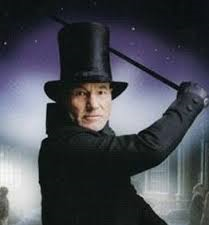
Patrick Stewart, 1999
Mr. Magoo, 1963
To be boiled in their own pudding:
Jim Carrey, 2009
Albert Finney, 1970
Simon Callow, 2001
By contrast, Scott’s Scrooge remains his own man and finds ways to stick up for himself even as his harsh worldview begins to soften. The spirits will prove to be more than his debating equal but Scrooge nonetheless seems to relish the give-and-take and is even disappointed to find that the ominous Ghost of Christmas Yet to Come is mute (“You’re devilish hard to have a conversation with”). Using this tack, the chance for reform offered by Jacob Marley begins a convincing tale of personal redemption and not a long, spooky night to be endured before receiving the existential equivalent of a Get Out of Jail Free card.
Speaking of Marley, one can’t say enough about his depiction here by Frank Finlay, the veteran British character actor. Sheathed in the bluish-gray pallor of Dickens’ dead-man-walking netherworld, Finlay cuts a memorable figure. His dramatic line readings place equal emphasis on Marley’s deep despair at his own sorry fate and the gravity of his mission to save his old partner.
This highlight reel has a decent excerpt from the great Scott-Scrooge/Finlay-Marley scene.
This is the best-written part of the book and screenwriter Roger Hirson wisely leaves it be, save for trimming a few extraneous lines when Dickens’ dialogue gets a bit verbose. Faithful to a small detail in the book, Hirson does include the two instances when Marley emits his “frightful cry”, the first after Scrooge’s glib suggestion that “there’s more of gravy than of grave about you”. Finlay nearly topples the set with that unearthly scream but it is the second one that is key. It comes at the end of his despairing monologue on being “doomed to wander through the world” after death, utterly unable to share in happiness or otherwise make amends for his lack of good deeds when alive.
Angela Pleasance is a luminous but not especially otherworldly presence as the Ghost of Christmas Past. This is a good thing—Donner has her play the role as a no-nonsense middle-aged woman who acts as a wise tour guide through Scrooge’s checkered past. It is a past not without some close human connections and you can sense the old geezer’s heart beginning to thaw out at the first sight of his long-deceased sister Fan. The ghost casually but importantly mentions that Scrooge’s nephew Fred bears a strong resemblance to his beloved sibling, an element introduced for this film. This theme will keep popping up, implying that part of Fan lives on in Fred and that those connections need not stay cut forever.
This kind of additional background also enhances the importance of young Scrooge’s broken-off engagement to Belle. Donner places their breakup scene in a twi-lit park and creates a fateful scene brimming with tension and regret. The financial insecurities that may hang over their marriage are not lost on his fiancé, who has no dowry to bring to the table. Yet Scrooge’s growing obsession with “the golden idol” is not without its reasons. His memories of the dumping-ground school (the type of which Dickens featured prominently in the early chapters of “Nicholas Nickleby”), probably only a step above the poorhouses themselves, had to be fairly fresh.
Edward Woodward’s Ghost of Christmas Present is the robust and hearty, bearded and be-robed behemoth we have come to expect for the part. Christmas Past was subtle enough to even use classical irony at one point, calling Fezziwig “a silly man” in order to dig out Scrooge’s buried conviction that his mentor was an admirable boss who truly cared for his workers. Woodward takes full account of the two righteous monologues where he gets to use Scrooge’s words against him, turning them into textbook examples of populist anger. This is especially true in the first instance when Tim is revealed to be part of the “surplus population” by the clairvoyant spirit. It does cast the necessary shadow over the Cratchit’s otherwise joyous Christmas dinner scene. David Warner’s excellent turn as the mild-mannered Bob comes into sharp relief here as the beleaguered clerk we met earlier is seen in his element as a loving and attentive family man. The reliable Susannah York makes the most of her big moment as Mrs. Cratchit, unleashing a colorful barrage of insults against Scrooge when Bob dares to propose a toast to “the founder of the feast”.
At the end of the book’s Stave Three, they stand by a cavernous bridge underpass where a homeless family sits around a meager fire, trying to cook some potatoes that have fallen off a cart. This grim episode can be seen as a nod to Dickens’ revulsion at Britain’s Poor Laws, which had been amended a few years before he wrote his Christmas book. No longer would able-bodied men be eligible for public assistance of any kind, regardless of circumstances. In times of widespread joblessness the options boiled down to taking “employment” at a dead-end union workhouse (which often separated families), succumbing to a life of crime or, as this family decides, literally scraping together a life on the streets. Even Scrooge is appalled. After causing him to see the evidence of uncaring society, and speaking the gloomy prophecy that awaits it, the middle spirit leaves Ebenezer to ride out the evening in the care of the Ghost of Christmas Yet to Come.
Donner spices up this segment with some phantasmagoric imagery and eerie sound effects, but without any conversational company it’s up to Scott to dig in and complete Scrooge’s long night’s journey into day on his own. Even with a creeping premonition of his own unlamented demise he will not take lightly to the idea of petty thieves robbing him of the curtains surrounding his deathbed (“I’ll have them before a magistrate!”). There is a heartbreaking return visit to the Cratchit’s house and then the mortifying confrontation with his own headstone, making the transformation complete. Scrooge has learned it’s no use to learn these lessons piecemeal but to exist with the spirits of Past, Present and Future “striving” inside of him, the three divisions of time representing the importance of “memory, example and fear” (in the words of Dickens biographer Edgar Johnson) all pointing the way to the life well lived. Some viewers may be less than fully taken with the more subtle celebration that Scott plays out when Scrooge finds himself still alive on a brilliant Christmas morning. But Scott has delineated the director’s intentions perfectly. His Scrooge is still his own self at the end of this tale, someone who has been convinced to retrieve his own innate goodness and not some giddy fool who has replaced the meanie we met when the film began. This is the especially true of the immensely rewarding scene when he shows up at Fred’s house before the party. With a mid-December deadline bearing down on him, Dickens rushed through this scene which in Clive Donner’s hands becomes a poignant family reconciliation.
It is, in fact, typical of this version of “A Christmas Carol”. With Donner’s pitch-perfect direction and Hirson’s intelligent and entertaining script, it’s one of those rare movies that feels like an improvement of a literary classic. (Donner, who died in 2010, would only direct three more films after this). Also of note is Roger Murray-Leach’s production design which takes great care to mold the historic English town of Shrewsbury into a worthy stand-in for the vibrant and gritty streets of 1840s London. As for George C. Scott, who died in 1999, it’s not hard to view his performance as a late-career highlight for one of America’s most highly regarded actors. It all makes for an impressive and inventive retelling of a story whose underlying concerns remain relevant to this day. Although the debtor’s prisons and workhouses of Dickens’ day may be gone that will be of little comfort in a time where the same problems of poverty, homelessness and widespread economic insecurity are papered over with a thin sheet of modernity. Meanwhile, the bloated salaries and greedy transgressions of executives seen in the wake of the 2008 financial collapse make the penny-ante grasping of an Ebenezer Scrooge look positively benign. Where are you when we need you, Jacob Marley?
Thought I would share one of my favorite Lou Reed songs, on the 50th anniversary of JFK’s killing. From his great 1982 album, The Blue Mask. The where-I-was-that-day middle section is sandwiched between two passages showing his exceptional knack for direct language and a clear message to be taken to heart. Thanks, Lou.
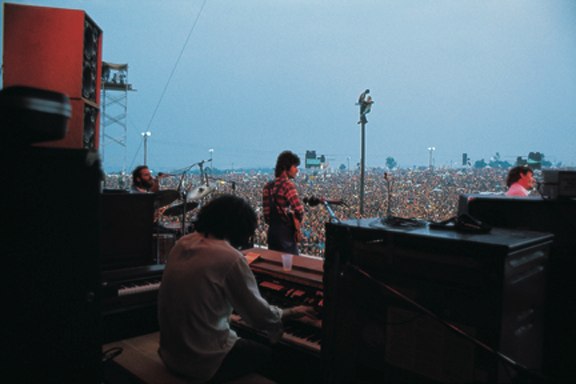
The Band perform for 600,000 at the Watkins Glen festival in July 1973. If you look real hard you may see your older brother just to the left of Robbie Robertson’s shoulder.
In terms of the baby-boomer cultural zeitgeist, 1973 hardly would stand out as a pinnacle year, at first glance anyway. It was on the tail end of that generation that had already staked its place in 20th century lore with the seismic political and musical upheavals of the previous decade. The Sixties have long been lionized—often to the point of self-parody—but looking back on it from a 40-year (gulp!) perspective, I wouldn’t give up anything for having fallen into a group that was just starting high school around then. The Sweet Spot Generation you might call it. Just old enough to have seen the Beatles on Ed Sullivan and a mite too young to consider hitchin’ to Woodstock (a good thing considering my aversion to mud and large crowds) but wised up enough to dig our older siblings’ 3-LP soundtrack from the film.
By 1973, the Vietnam War was winding down and the military draft had ended, ensuring males of my age that little would interfere with the pursuit of a rock ‘n’ roll lifestyle. Spiro Agnew was on the way out and his partner in crime, Tricky Dick Nixon, was in the middle of Watergate and soon to follow. You could say that ’73 was the true start of the Seventies, especially if viewed from a musical perspective. The period from 1970-72 was like the beach break from the last cresting wave of the Sixties rock revolution and 1973 was the year that the next wave of classic rockers would come out from the wings. Aerosmith, Queen, Bruce Springsteen, Tom Waits and Lynyrd Skynyrd were some of the artists releasing debut albums in that year. So there we were, the less-celebrated poor cousins of the oh-wow-we-changed-the-world early Baby Boomers, we were fated to be made fun of for the poofy hairstyles and class pictures taken in powder-blue leisure suits (I would know), easy objects of ridicule in decades after. But this was (especially in retrospect) a great bridge era between a waist-high view of the epic Sixties and a young adult coming-of-age during the punk rock revolution set to hit in our college- age years.
It was a time so accurately (and hilariously)depicted in the great Richard Linklater film “Dazed and Confused” as in this off-the-hook discussion of American history>
So what did the musical landscape look like then? The ranks of the previous decade’s heroes were already thinned by the deaths of Hendrix, Janis and Jim Morrison. With others from the top of the pantheon it was a mixed bag. The Stones served up “Goat’s Head Soup”, considered by many to be something less than a culinary classic. Coming on the heels of “Exile on Main Street”, it would come to signify the start of the group’s figurehead status and the close of their extended period as a vanguard act. The Who fared better with the stormy concept album “Quadrophenia”, a vivid look back at the Mod era of the mid-60s from whence they came. I thought it made for a better rock opera than the more celebrated “Tommy.” It at least inspired a much better film than Ken Russell’s queasy adaptation of the deaf-dumb-and-blind-kid opus.
Amid cover stories where Hunter Thompson and his illustrator Ralph Steadman excoriated the scandal-plagued Nixon administration, Rolling Stone magazine profiled “The Corporate Dead” as Jerry and the boys released a tasty platter called “Wake of the Flood”, the first album released on their own label and a telling title for the times. The Jefferson Airplane, still feisty but past their prime, released the live “Thirty Seconds over Winterland” before quickly morphing into the more user-friendly (and lucrative) Jefferson Starship. Bob Dylan was still a nebulous public presence some six years after his game-changing motorcycle accident and 1973 saw him appearing in the Sam Peckinpah film “Pat Garrett and Billy the Kid.” His soundtrack album of the “Watergate western” yielded “Knockin on Heaven’s Door,” his first Top 20 single in four years. He was a year away from his triumphant comeback tour with the Band and, according to some, hasn’t stopped gigging since.
It was forty years ago today that the former Fab Four were well established in their solo careers, three years after The Breakup. Ringo had a #1 hit with “Photograph”, the lost-love ballad that also sounded like a mash note to a lost era. John Lennon left his radical causes behind and released the introspective “Mind Games” while George dealt with the always tricky business of “Living in the Material World.” Paul McCartney had a typically busy year, first with the inadvisable “Red Rose Speedway” LP (“Little Lamb Dragonfly” anyone?), then scoring a major hit with the Bond theme song “Live and Let Die” before ending the year with his most acclaimed album, “Band on the Run.” It was the last one he put out on Apple Records.
For the second wave of boomers, who missed out on the age of liquid lightshow ballroom concerts and acid-fried festivals, the post-hippie standard bearers were the progressive rock bands. Mainly from England they hailed and in the peak year of 1973 they were the undisputed kings of hockey arenas and bedrooms where cabinet-sized stereo systems blared out their records under a hashish haze. Sidelong suites filled with squealing Moog synthesizers, swelling Mellotrons, heroic guitar solos, hyperkinetic rhythm sections and arcane lyrics delivered by ethereal lead singers were the order of the day.
It was the year that Pink Floyd’s perennial bestseller “Dark Side of the Moon”, was released to grateful headphone-wearing teens the world over. The turntables and 8-track players of prog fans were getting quite a workout with delectable titles from King Crimson (“Lark’s Tongue in Aspic”) and Emerson, Lake and Palmer (“Brain Salad Surgery”), while other notable works included Mahavishnu Orchestra’s “Birds of Fire”, Hawkind’s “Space Ritual” and Mike Oldfield’s “Tubular Bells”, which lent its opening theme to “The Exorcist” soundtrack and help foist Richard Branson onto an unsuspecting planet (it was his Virgin Records debut release). Groups like Yes, Jethro Tull and Peter Gabriel’s Genesis were at the top of their game and the poison pen of established critics (who would later vilify this genre) were not yet dipped in the inkwell. But such stuck-up spoilsports couldn’t bother we of a certain age. As an outgrowth of Sixties pyschedelia, this limey art-rock was a heady stand-in for us who were a bit too young for the original article.
That’s not say there wasn’t any groundbreaking trends amid all the refining of the Sixties pop business model. Looking ahead to the punk-new wave-indie movement that would give youth music an essential kick in the behind a few years on, there was the New York Dolls’ first album, two by Roxy Music (“Stranded” and “For Your Pleasure”), Mott the Hoople’s classic underdog testament, “Mott” and Iggy and the Stooges “Raw Power.” Not to mention the recording of Big Star’s second long player. But all that could wait and it usually did—except for “Mott” all those were discoveries made later when I struck out for life in the big city and a world made safe for the Ramones and the Clash. But back in 1973, it was what it was. So to finally to get to my alternate Top 10 of that strange but wondrous year, let us not forget what a real best-of list would look like for that 12-month period. Stevie Wonder’s “Innervisions”/”The Harder they Come” soundtrack/Steely Dan’s “Countdown to Ecstasy”/the Allman Brothers’ “Brothers and Sisters”/Zeppelin’s “Houses of the Holy”/Little Feat’s “Dixie Chicken”/Marvin Gaye’s “Let’s Get it On.” But for those game enough to explore the real zeitgeist of 1973, feast yourself on these ten offerings:
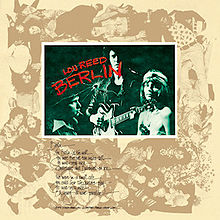
Berlin—Lou Reed
It wasn’t just the calendar that prodded me into getting out my 40th anniversary post. The recent death of Lou Reed brought out all the accolades the Godfather of Punk deserved. But I was reminded that post-mortem adjectives like “uncompromising” and “defiant” that are now standard-issue compliments didn’t come without something legitimately ballsy to back them up. In July 1973—just four months after “Walk on the Wild Side” gave him his only Top 40 hit—Lou flipped off the world with one of the most infamous albums in rock history. It’s a 50-minute pop operetta that starts ominously and soon plummets into a hellish tale of an ill-fated couple’s descent into violent, drug-fueled co-dependency and eventual suicide. Of course, nowadays it’s a recognized classic.
(Reed took advantage of the music’s cunning charisma and gave it the full oratorio treatment in a 2007 concert film).
Before today’s deferential music press, where Arcade Fire will get a four-star rating just for showing up at the studio door, critics took their job seriously. Sometimes a little too seriously as when Rolling Stone reviewer Stephen Davis called “Berlin” a “distorted and degenerate” record of a type “so patently offensive that one wishes to take some kind of physical vengeance on the artists that perpetrated them.” Luckily, Lou evaded Davis’ murderous intent and gave us 40 more years of a musical life-and-times that will never be duplicated. (While discovering or re-visiting “Berlin” why not make it a ’73 double feature with the elegant “Paris 1919” by Reed’s former Velvet Underground partner John Cale, featuring such literary name-dropping numbers as “Child’s Christmas in Wales”, “Graham Greene” and “Macbeth.”)
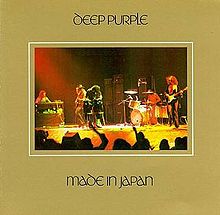
Made in Japan—Deep Purple
It wasn’t just the aforementioned prog that had the full attention of the era’s denim-clad and music-loving youth. Good old-fashioned “hard rock” also held sway, whether your preference was Alice Cooper’s ”Billion Dollar Babies”, Blue Oyster Cult’s “Tyranny and Mutation” or the venerable “Sabbath, Bloody Sabbath.” But for this year, you just gotta give it up for Ritchie Blackmore & Co. Deep Purple slashed and burned their way to the top in the early days of metal and legions of stringy-haired, guitar-wielding malcontents eagerly followed suit. Caught here in their plundering prime, the Purps managed to squeeze seven entire songs onto a double live LP. Highlights include the bong-blasting hit version of “Smoke on the Water”, Jon Lord’s epic sci-fi organ solo on the 20-minute “Space Truckin’” and singer Ian Gillian repeatedly referring to his Osaka fans as “you mothers.”
Beck, Bogert and Appice
It had all started with Cream several years earlier, these stapled-together power trio supergroups whose shelf life seemed to shorten with each new configuration. It was even spreading to folk-rock circles with Souther, Hillman & Furay—not to be confused with McGuinn, Clark & Hillman. This combination of the manic ex-wunderkind of British blues-rock guitar and the Vanilla Fudge/Cactus rhythm section did not result in world domination and Beck split after one studio album (even West, Bruce and Laing lasted for two). Too bad, because it was an entertaining effort, even if their handling of cover versions was a bit schizoid. The record boasted both a thorough bludgeoning of Stevie Wonder’s “Superstition” and a sensitive take on Curtis Mayfield’s “I’m So Proud”, a minor hit and the slow dance of choice for that year’s high school sophomores. File this one next to Emerson, Lake and Powell.
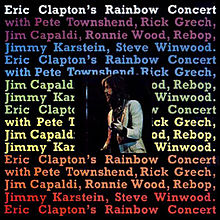
Eric Clapton’s Rainbow Concert
Oh, sure—it’s easy to be all into E.C. nowadays as a three-time Hall of Fame inductee. But the kids of ’73 were there in the record-store trenches, shelling out $3.99 for this single-disc sampling of the one-off “comeback concert” organized by Pete Townshed that January. Ol’ Slowhand was in the early stages of kicking his crippling heroin addiction and he works his way through struggling but ultimately winning versions of “Badge”, “Little Wing” and four others, backed up by Pete, Ronnie Wood and most of Traffic. Sneaking just inside the Top 20 in both America and the UK, it has of course been expanded beyond all recognition in the CD era.
Live—Uriah Heep
These journeymen heavy-rocking Brits never had the mysterious aura surrounding Led Zep or the full-out instrumental virtuosity of contemporaries like Wishbone Ash or Focus. But they had a distinct flair for the type of proggy metal so popular at the time and rode its coattails for all it was worth. This was a thunderous genre that didn’t sit well with trendy rock scribes (“from the first note, you know you don’t want to hear any more” said one early reviewer). But by the ’73 they had reached the point where they were ready to go boldly where all men had gone before and get out their double live album. It was split between compact rockers like “Easy Livin’” and “Sweet Lorraine” and longer arty pieces. Unintentional humor stemming from the excesses of the age crop up. There is the Fifties-revival bandwagoning on the lengthy “Rock ‘n’ Roll Medley” and singer David Byron introduces the 11-minute warhorse “July Morning” by saying it features Ken Hensley on the “Moog Simplifier.” The gatefold packaging bears a curious resemblance to the 1984 soundtrack album of the Spinal Tap movie. File this one next to “Break Like the Wind.”
Pinups—David Bowie
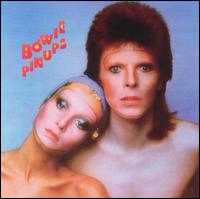
In 1972, Bowie first achieved worldwide fame via his Ziggy Stardust persona, but by the following year it was time to look back to his roots. After the springtime release of “Aladdin Sane” (described by David as “Ziggy goes to America”), he recorded this cover album of British Invasion-era songs, even though it was packaged with cover art where he posed futuristically with supermodel Twiggy. While a mega-star’s version of “Friday on my Mind” may not exactly recapture the spirit of the Marquee Club, there’s still a lot of fun stuff here. Check out the airy melancholia of his take on the Mersey’s “Sorrow” or his stardusted version of early Pink Floyd’s “See Emily Play” (even more psychedelic than the original) or the slowed down re-casting of the Who’s “I Can’t Explain” complete with sexy sax. The Pretty Things, the Yardbirds and Them also get a tip of the cap. Also worth a listen is a sort of American equivalent to this, “Moondog Matinee”, the Band’s ’73 tribute to their early rock and roll influences.
A Passion Play—Jethro Tull
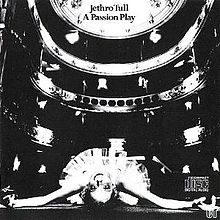
In the early 70s Ian Anderson and his merry band of men were one of the world’s most popular groups. The continuous LP-length composition was the last word in Brit-rock concept albums and this was their second in a row, after the popular and widely-praised “Thick as a Brick.” With its oracular vocal sections connected by complex instrumental passages (often featuring Anderson’s multi-tracked flute playing) and lyrics that seemed to rise up from a sublimated consciousness, “Passion Play” was maybe the most unusual album to ever hit #1 in the U.S. album charts. Throughout 1973, the pages of Rolling Stone were filled with supportive reviews of even spin-off progressive rock records like those from Badger, Flash and ex-Procol Harum organist Matthew Fisher. But for critics, this was a sudden line in the sand. RS savaged the album and the live show in the same issue—there was just no more patience for Anderson’s satyr-like stage antics and his libretto about a man’s near-death journey through the afterlife. Of course, the kids in my age group, ready to expand musical horizons, ate it up. Tull’s “Passion Play” tour rolled into the Boston Garden that September with its theatrics and films and pyrotechnics and kinetic, rafter-shaking jams was my memorable entrée into the wonderful world of rock concerts.
Time Fades Away—Neil Young
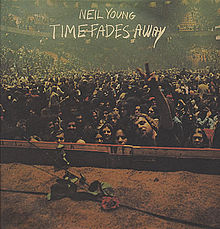
Lou Reed wasn’t the only guy in 1973 to turn his back on a 1972 commercial breakthrough. After the world-beating success of the sensitive “Harvest” album, Neil Young swerved his car off of Easy Street and left the seekers and the lovelorn in the care of other singer-songwriters like Cat Stevens (“Foreigner”), Jackson Browne (“For Everyman”) and Joni Mitchell (“For the Roses”). He took his “Harvest” backup band, the Stray Gators, on the road to record this ramshackle live disc of dark new material. It has been scarcely available since it’s original release, with Neil admittedly unhappy with the tumultuous tour, the botched experiment in early digital recording and his own mental state at the time. Audiences jonesing for “Heart of Gold” were met with disillusioned anti-epics like “Last Dance” and “Don’t be Denied”, the latter’s look back at parental divorce and schoolyard thugs a far cry from the rosy memory-lane scenes in the recent documentary “Neil Young Journeys.” I thought I heard once it was an inspiration to the future Johnny Rotten, not surprising considering its uncompromising power. The exceptional cover photo of faithful fans hoping for an encore in a quickly emptying arena perfectly sum up the album’s underlying theme of lost Sixties idealism: Time Fades Away, indeed.
Preservation Act One—The Kinks
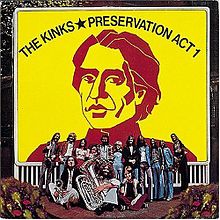
The period attraction of concept albums was certainly not lost on this pioneering North London group—Ray Davies and Co.’s “Arthur” was one of the three origin rock operas of the late Sixties (along with “Tommy” and the Pretty Thing’s “S.F. Sorrow”). After the double-album Act Two came out in 1974, “Preservation” did appear as a one-off touring production for the group that was memorable for those in their dedicated fan base that happened to catch it. Getting nostalgic about this record has a peculiar knock-on effect. Some of its best tunes (“Daylight” and “Sweet Lady Genevieve”) yearn for another, nearly pre-industrial era. So, too, with the other LP the Kinks put out in ’73, the odds-and-ends “Great Lost Kinks Album” that lived up to its name by quickly going out of print. At least “Preservation”, a distinctive political jeremiad unloved by many critics, made it into the CD age. Around the millennial years, fans around here were treated by the Boston Rock Opera’s revivals of this work. The last one, with Ray Davies as advisor, finally realized the works full musical-theater potential, which the Kinks were surely too busy and disorganized to make happen back in the day.
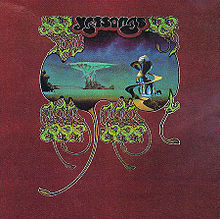
Yessongs—Yes
This list was in no particular order. But by virtue of putting a 3-record live set and booklet inside a Roger Dean-designed six-panel gatefold sleeve, you have to admit that Yes released the “heaviest” album of the year. With cranked-up versions of nearly everything from their previous three albums, it had something for every fan of English art rock. Don’t miss Chris Squire’s towering bass solo, Steve Howe’s interstellar guitar fury on “Yours is No Disgrace” or Jon Anderson singing his mystic extrapolations on themes from the Age of Aquarius. And cape-wearing keyboard wizard Rick Wakeman, in an excitable medley from his ’73 solo work “The Six Wives of Henry VIII”, proves for all time that there’s no sense in playing one note when ten in the same space will suffice.
I remember listening to it with a few other guys in a house of textbook suburban ennui while the parents were off to the Tri-Plex one Friday night. We were smoking up a basement space that had morphed from a rumpus room to a den of iniquity in a few short years. When the taped introduction of Stravinsky’s “Firebird Suite” yielded to the band exploding into “Siberian Khatru”, the blast from the foot-high speakers knocked one of my buddies off his seat and we all had a good cough. The sound of the front door opening confirmed to the others that “The Sting” wasn’t a three-hour movie as one had insisted.
We grabbed the remaining Haffenreffers and stumbled up through the bulkhead and into the frosty night. Making our way to the golf course behind the last houses of our “development”, we drank our beer and loudly discussed novel ways of using the using ball washer. In a more poetic moment, someone said the strange light we saw in the sky was the “Starship Trooper” coming to take us away from all this. The next thing we knew (or thought) the cops were after us with their flickering flashlights. We beat it on down the fairway, laughing and running and running. We kept going long after the authorities had given up on us, knowing that 1973 couldn’t last forever.
“Documentary 101: A Viewer’s Guide to Non-Fiction Film” is a first-of-its-kind anthology, covering the entire spectrum of non-fiction film from 1895 to the present day. There are 101 full-length reviews of documentaries chosen for their aesthetic prominence and/or historical significance, followed by briefer entries on related titles. There are 325 total reviews and an informational appendix in its 418 pages.
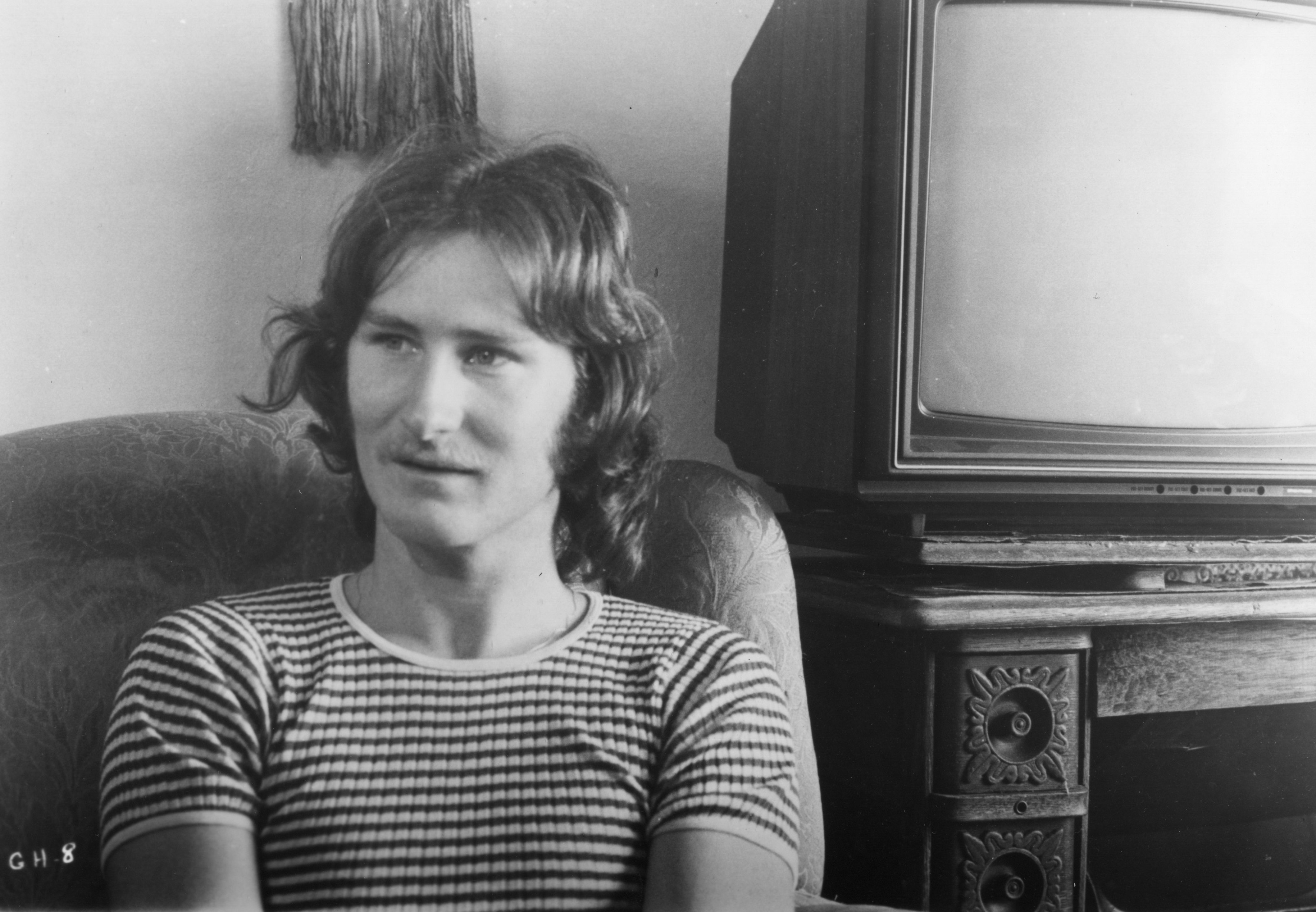
The relocated deceased pets are given a final final-resting place at the Bubbling Well Pet Memorial Park run by Calvin Harberts and his family. His younger son, Danny, ranks above older brother Phillip due to his length of service. Danny is a soft-spoken, hippie-ish young man who plays guitar and is the sole occupant of a hilltop bungalow overlooking the park. He seems indifferently fated to inherit the family pet cemetery as he sits in his room surrounded by stereo equipment and a TV, talking up vague notions of love and rock ’n’ roll superstardom. In one well-known scene, he takes his electric guitar and his powerful amplifier outside, serenading the passed-on pets and the whole empty valley with some choice hard-rock riffs. Danny seems as dispossessed as any protagonist from a Kafka novel. It’s startling to realize how far Errol Morris has expanded from his base subject. “Gates of Heaven” is a film permeated with a certain kind of human fragility, the kind that lies just behind the veneer of people’s stoical everyday lives.
(Gates of Heaven, 1978)
*********************************
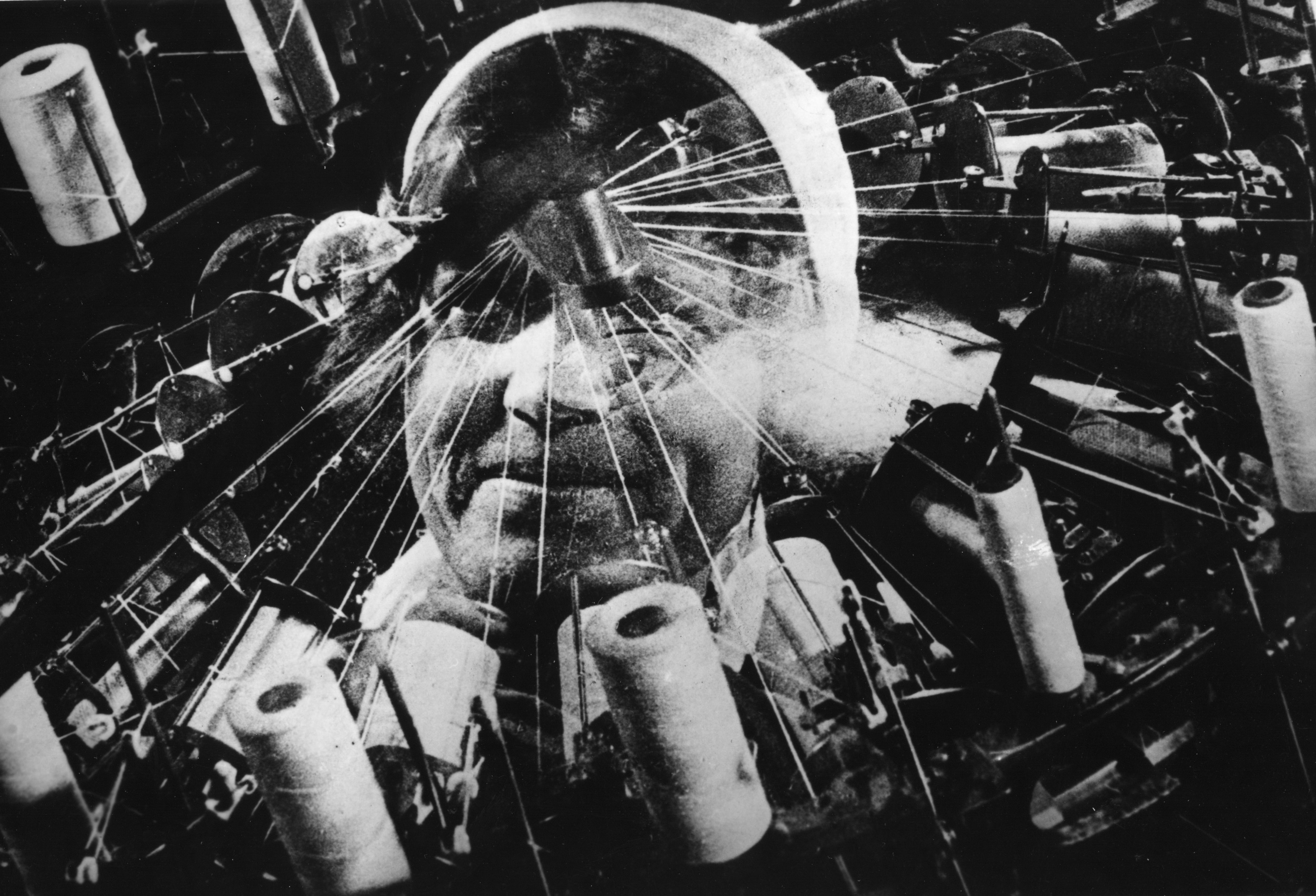
Russian director Dziga Vertov, along with fellow countryman Sergei Eisenstein, did much to pioneer the development of film montage and subjective editing. His was a cerebral brand of filmmaking, encompassing as it did patriotic movies for the young Soviet Union as well as the methodology of elevating the “life-facts” of photographic observation into a wider realm using stylistic flourishes. Vertov cleverly uses the actual making of the movie as its own framing device and along the way uses frenzied jump cuts, subliminal dissolves, overlapping images and split screens with the utmost confidence. Vertov’s stature was eventually undermined by Josef Stalin’s iron-fisted rule. Vertov may have been a committed Marxist but Stalin was an even more committed dictator and the director did not fare well when film projects started to fall under the auspices of rigid planning committees. His considerable talents and boundless creative drive were not so much crushed as gradually marginalized.
(Man With a Movie Camera, 1929)
***************************************
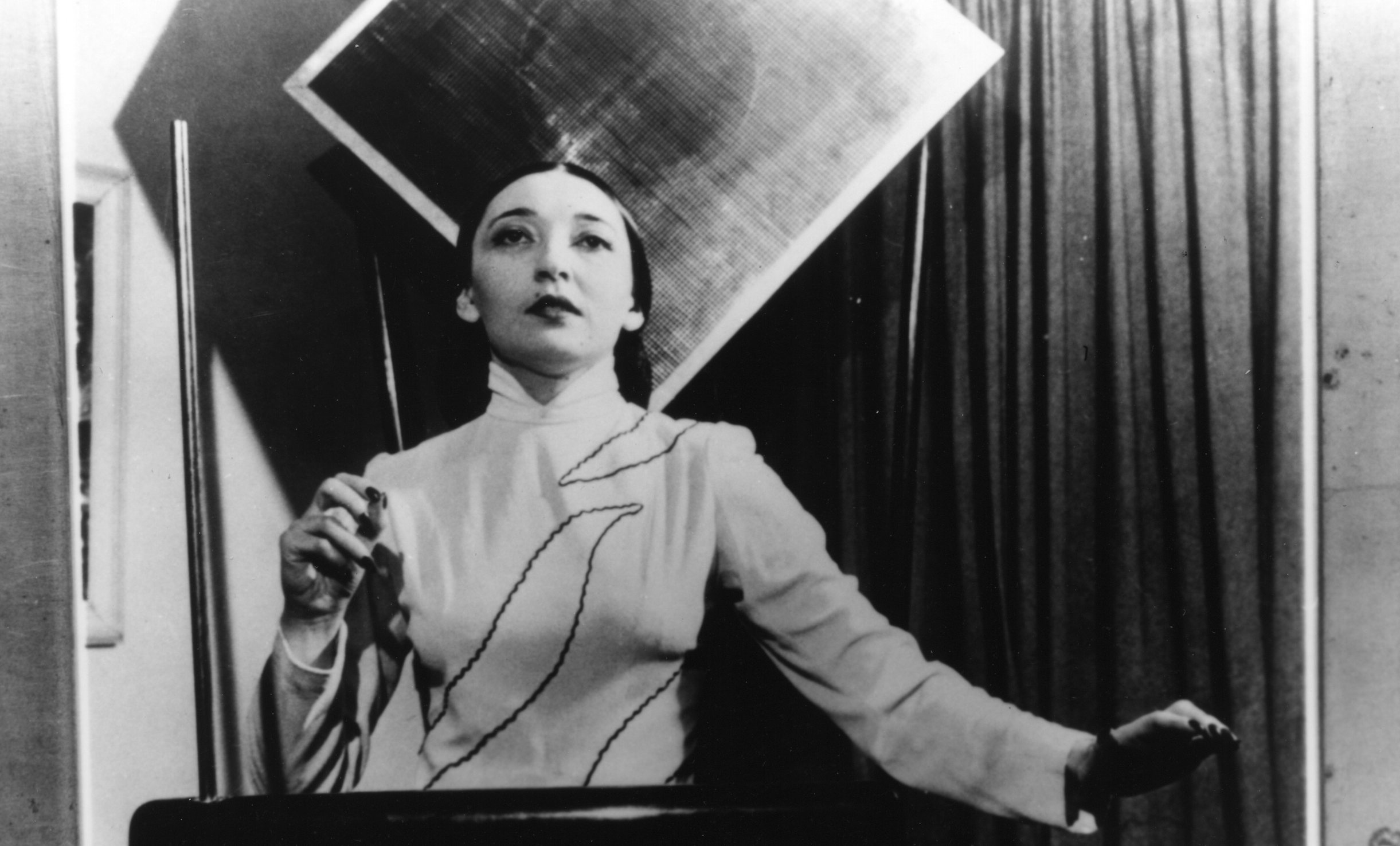
The haunting “voice” of the theremin, the first electronic musical device, wafted above a long stretch of the twentieth century and found its apotheosis as a creepy backdrop for Cold War-era science fiction and suspense movies, as well as on the Beach Boys’ optimistic pop gem “Good Vibrations.” Even more intriguing than the instrument’s sound is the life story of its enigmatic inventor, Russian émigré Leon Theremin. At the height of his fame, Theremin vanished from his swank New York penthouse amid speculation that the KGB had kidnapped him. He reappeared several decades later, living in Moscow. Director Steven M. Martin unearthed exceptional archival footage of Theremin’s early years when he was the toast of New York, playing Carnegie Hall and hosting grand parties at his Fifty-Fourth Street compound with paramour, Clara Rockwell, also a theremin virtuoso.
(Theremin: An Electronic Odyssey, 1995)
*****************************************
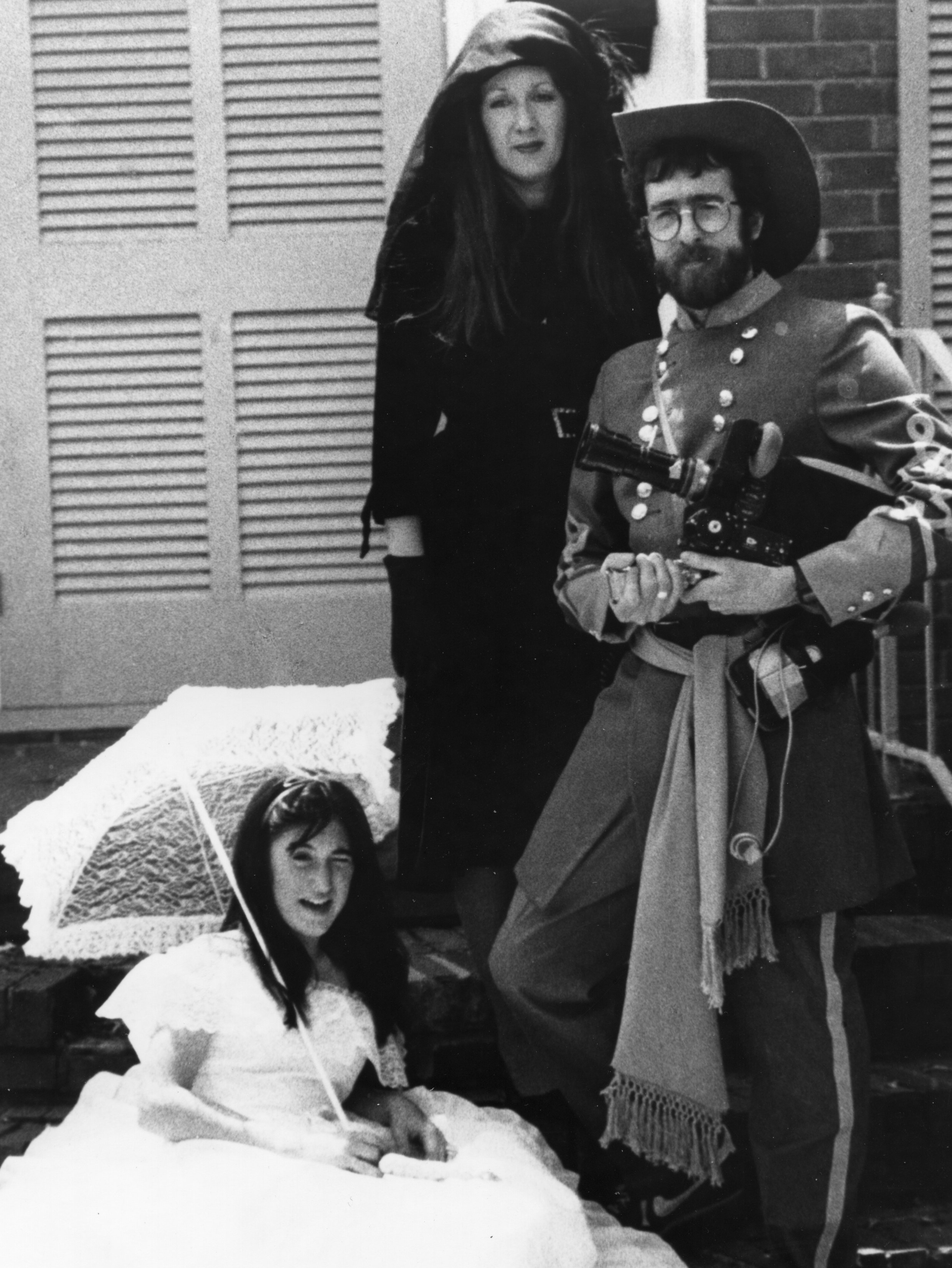
Ross McElwee was born in 1947, into an old-line Southern family from Charlotte, North Carolina. He attended Brown University in Rhode Island, where he was exposed to the socially conscious films of Frederick Wiseman. Since doing his graduate work at MIT (under the tutelage of master documentarian Richard Leacock), he’s been based in the Boston area. Under different circumstances, his first full-length film may have been a fine, straightforward doc on the notorious march to the sea by Civil War General William Tecumseh Sherman. But, as film history would have it, his girlfriend dumped him just as the funding for the project was secured. Beset by self-recrimination over the break-up, McElwee headed south with something more than the siege of Atlanta on his mind. McElwee gets sidetracked over large stretches of the old Confederacy, training his camera lens on seemingly every available woman on his own path to the sea. What came out of all this was a very droll landmark in the annals of the personal film-essay style, taking below the Mason-Dixon Line the kind of cerebral romantic comedy that Woody Allen used to be famous for. But McElwee is canny enough to keep his would-be womanizing from becoming self-indulgent, and his occasional insights about the Civil War and more modern forms of annihilation keeps the interest level high despite the film’s long running time.
(Sherman’s March, 1987)
Sweetgrass
Ilisa Barbash and Lucien Castaing-Taylor—2010—100 minutes
In 2003, married filmmakers Barbash and Castaing-Taylor recorded the last traditional sheep run in the American West. This 150-mile round-trip trek in Montana’s Beartooth mountain range, by turns idyllic and treacherous, was conducted by the Allesteds, an old-school ranching family that time is about to pass by. And time is a central issue here.
“Sweetgrass” is a patient, immersive and exceptionally handsome film about 21st century people plying an ancient trade in communion with animals and the natural world. Without the distractions of narration or musical soundtrack, the sight of stoical cowboys and their sheepdogs striving to keep their immense flock in line on their way to summer pasture feels like a much-needed re-calibration of a frantic and over-technologized world. The directors (who also hold positions at Harvard University in anthropology-related departments) have fashioned a work that can stand with 1925’s seminal Merian Cooper/Ernest Schoedsack documentary “Grass”, as well as with the observational classics of Frederick Wiseman.
Did you ever wonder what it’s like to slosh around in bilge water on the killing floor of a large trawler, eyeball to eyeball with dead and dying fish? Then, man, do I have a motion picture for you. It turns out that Castaing-Taylor’s next film (and the first under the auspices of his Sensory Ethnography Lab at Harvard) was a narrative-free trip on an unnamed commercial fishing boat released earlier this year to generally admiring reviews.
“Leviathan”, like “Sweetgrass” before it, is an immersive experience but one that is a little more difficult to appreciate (the rhetorical question above will give you some idea why). Outside of the fact that the viewer will realize that he or she is watching the operation of a commercial fishing vessel, there is little context to the film. This is the general idea, of course. According to the SEL’s website, the lab’s purpose is to promote “innovative combinations of aesthetics and ethnography that deploy original media practices to explore the bodily praxis and affective fabric of human and animal existence.” Well, fair enough I suppose. I appreciate the rigorous aesthetic employed here and in interviews Castaing-Taylor and co-director Verena Paravel are earnest and deserving of admiration for their keen understanding of their subject matter. (Their implicit sympathies with the ship’s crew recalls 1929’s “The Drifters” by pioneering documentarian John Grierson, whose deep respect for his working-class subjects—also fishermen—was novel at the time). But context counts for a lot in the mind of an average viewer; without it a film like “Leviathan” can be misconstrued as merely a technical exercise.
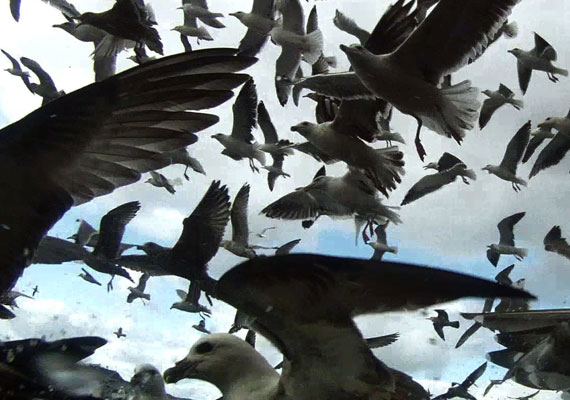
One can only gape in amazement at some of the photographic techniques on display here. The best bits involve some sort of bobbing camera (likely a small consumer model) that is often dunked under the ocean waves, occasionally getting pulled back up to reveal frantic flocks of gulls or the wedge of the ship’s bow plowing straight at you. But the first twenty minutes of the film are naturalistic to the point of distraction. OK, you can tell by the grainy unlit footage that the ship’s enormous net is being rung up, about to disgorge (any minute now!) a huge tally of luckless sea life onto the floor and the gutting and cutting will commence. But what of it? Art, like nature, abhors a vacuum and many a viewer’s mind will fill with questions about overfishing, government regulations, environmental concerns, etc. But that’s for another documentary—2009’s “The End of the Line”, perhaps. I do look forward to Castaing-Taylor’s future projects and hope he steers away from the academic echo-chamber impulses that prompted him to try and transcend (in the SEL’s words) the “purely verbal sign systems” that people seem to rely on. If not, their next film make not make it past the hallowed halls of you-know-where.
Oceangoing themes popped up again recently when I checked out a Blu-ray of Stanley Kubrick’s quickly withdrawn first film “Fear and Desire”, now finally seeing a home video release. As an extra, it contains his 1954 doc “The Seafarers.” It’s a boilerplate industrial film where the sponsoring Seafarer’s International Union is presented as a magnificently generous benefactor for its seamen members, who are happy enough to live in human-scale houses and only ask for a fair shake in the workplace. This makes it almost painfully nostalgic in our tough-luck economy of six decades later. On the other hand, it’s not hard to see why Kubrick suppressed “Fear and Desire.” Though it has many early inklings of his masterful visual style, it is hopelessly hamstrung by Howard O. Sackler’s overboiled script and stilted dialogue.
“Documentary 101: A Viewer’s Guide to Non-Fiction Film” is a first-of-its-kind anthology, covering the entire spectrum of non-fiction film from 1895 to the present day. There are 101 full-length reviews of documentaries chosen for their aesthetic prominence and/or historical significance, followed by briefer entries on related titles. There are 325 total reviews and an informational appendix in its 418 pages.
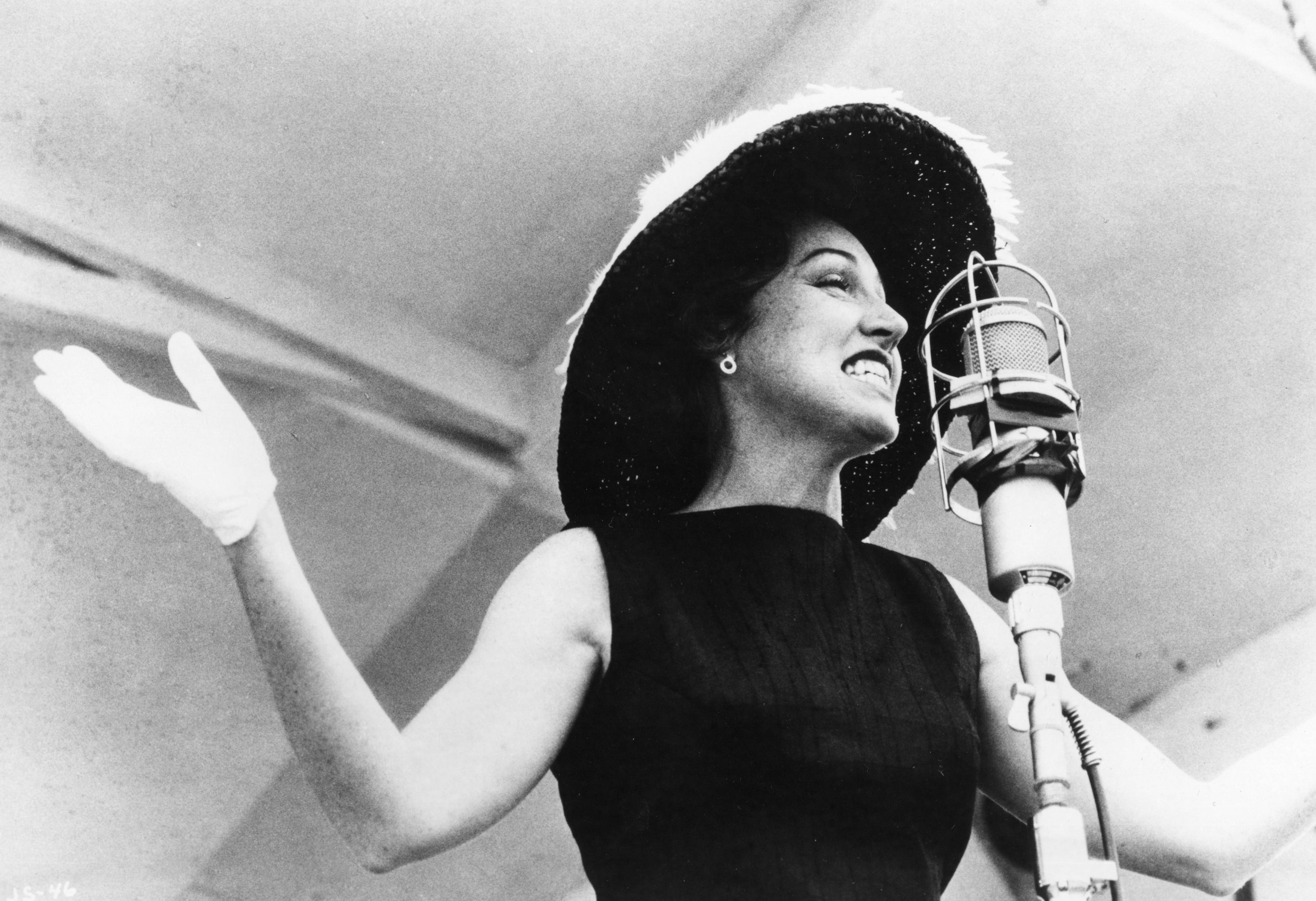
Several notable rock festival documentaries—”Woodstock”, “Monterrey Pop” and “Gimme Shelter” being the most famous—not only capture the giants of their genre in a live setting but also serve as sociological snapshots of their era. But in the half-generation that preceded those events, it was the annual Newport Jazz Festival that was the place to be for city hipsters and savvy suburbanites alike… Director Bert Stern quickly establishes the breezy carnival atmosphere of the 1958 edition of the festival as a moderately rebellious beatnik crowd blends into the gauzy, Eisenhower-era comfort zone with relative ease. The concert footage starts with Anita O’Day entertaining an afternoon crowd of more-formally dressed folks with some wild scat singing during her elaborate deconstructions of “Sweet Georgia Brown” and “Tea for Two.”
(Jazz on a Summer’s Day, 1959)
*************************************
It would be difficult to imagine a documentary style more personal than the one behind the Oscar-winning “Best Boy”. Director Ira Wohl followed his fifty-two-year-old developmentally disabled cousin Philly for three years, during which he gained a measure of self-reliance and entered the outside world for virtually the first time. It was Wohl himself, convincing Philly’s loving but elderly parents that their son should prepare for the time when they were not around anymore, who prompted this move to greater independence. Pearl and Max, are the very image of stoic, uncomplaining people of modest means who got along playing the hand that was dealt them. “If God wants to punish someone, he should only punish them with retarded children,” Pearl says, but even this comment seems free of bitterness.
(Best Boy, 1979)
**************************************
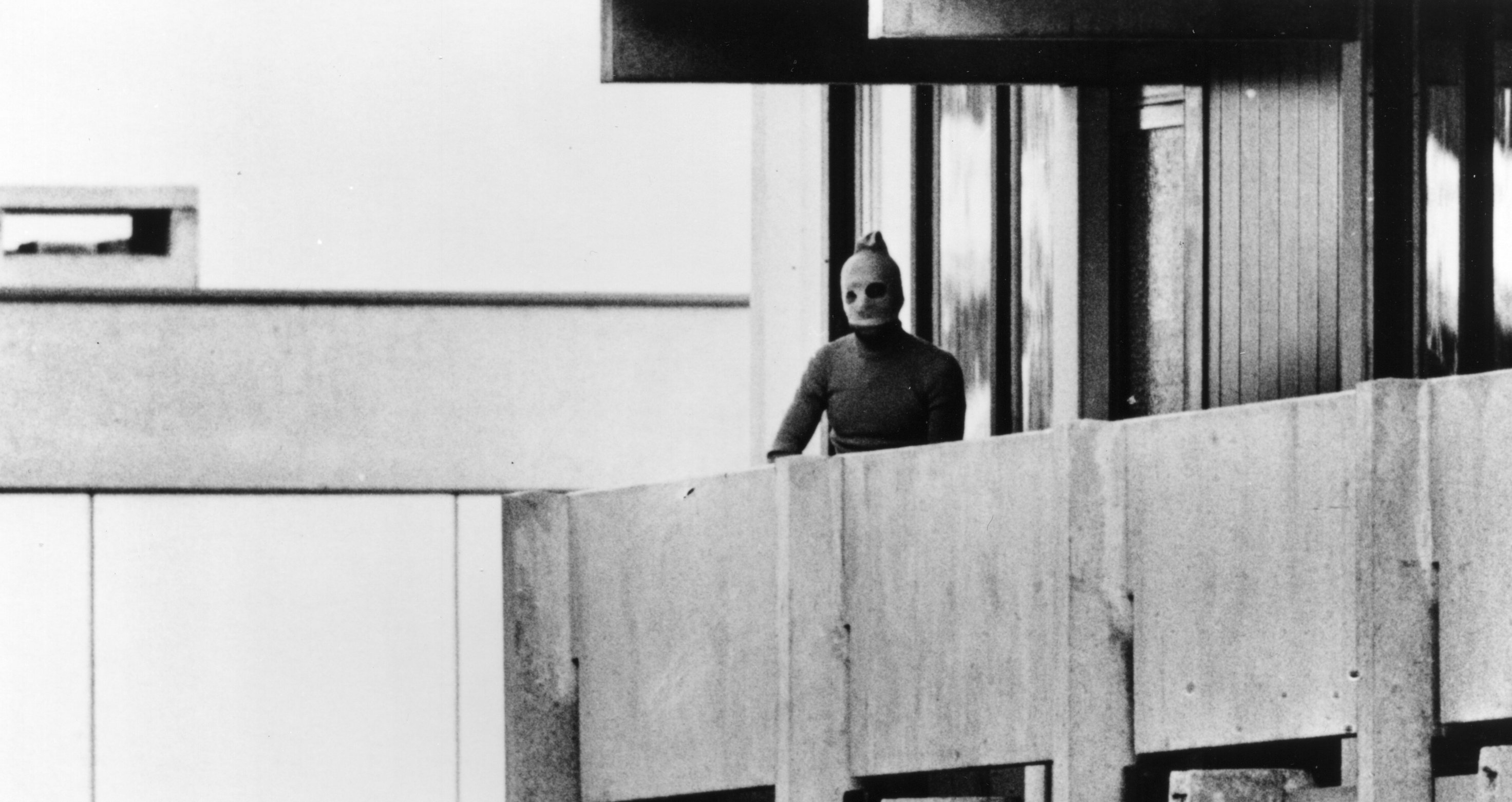
When Munich was chosen as the site of the 1972 Summer Olympics, World War II was not that far in the past, and neither were the sour memories of the 1936 “Hitler” Olympics in Berlin. So the event organizers were determined to show the world the modern liberal-democratic face of West Germany. But instead of the “Olympics of Serenity,” they got a globally televised nightmare when Palestinian terrorists invaded the athletes’ village, kidnapping and eventually killing eleven Israeli sportsmen. In his riveting film about the tragedy, director Kevin MacDonald views it as a watershed moment in mass media and as a momentous debacle of West German incompetence. For many Americans, when all those cameras turned away from the competition to focus on the sudden hostage story, it would be their first close-up view of international terrorism.
(One Day in September, 1999)
**************************************
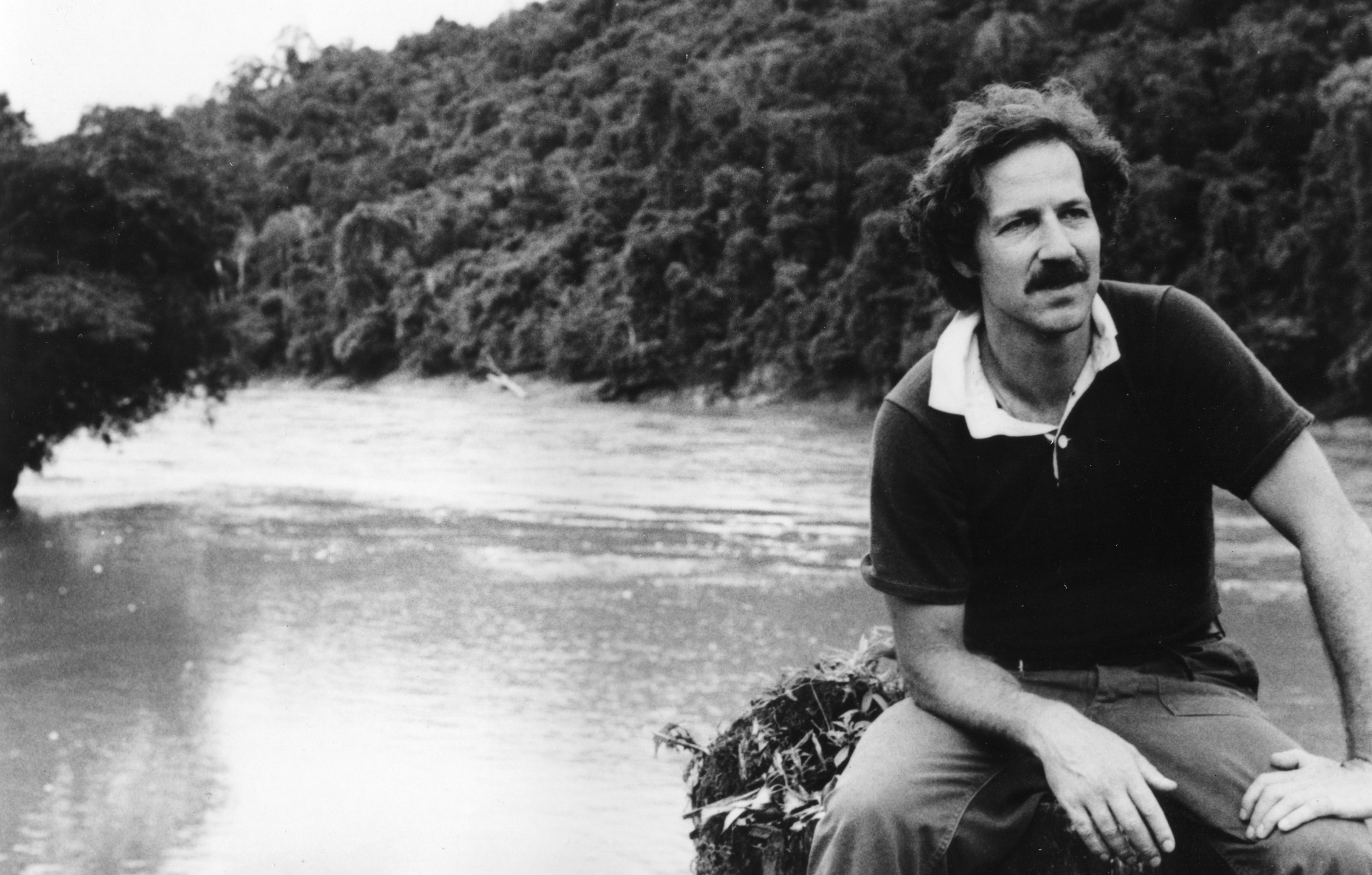
Werner Herzog’s “Fitzcaraldo” was the based-on-real-life story of an eccentric impresario whose goal in life is to build a grand opera house in the deep Amazon backcountry and have Enrico Caruso sing there. In the script, Fitzcaraldo is faced with navigational difficulties in the pursuit of that goal and decides to have his hired hands haul his three-hundred-ton steamship up and over a mountain ridge to a parallel river. Herzog hired local men as extras to do just that, spurning the idea of doing a process shot, bringing the art of cinematic realism to a new extreme. The easygoing Les Blank was just the man to coolly record the monomaniacal impulses of both Fitzcaraldo and Herzog (“I live my life and I end my life with this project,” the director tells us at one point) and deftly examines the dizzying heights and desperate depths that such an attitude will lead to. “I don’t want to live in a world where there are no lions anymore,” Herzog says at one point. Yet with the coming age of demographic targets, played-down-to audiences, test endings, and the like, it is little wonder that those of Herzog’s ilk found it ever more difficult to foist something like the beautifully crazed fever dream of Fitzcaraldo onto to the public. But as Herzog puts it, “all these dreams are yours as well.”
(Burden of Dreams, 1982. Werner Herzog is pictured on the set of “Fitzcaraldo” in a photo taken by Blank’s trusty editor and sound recordist, Maureen Gosling)
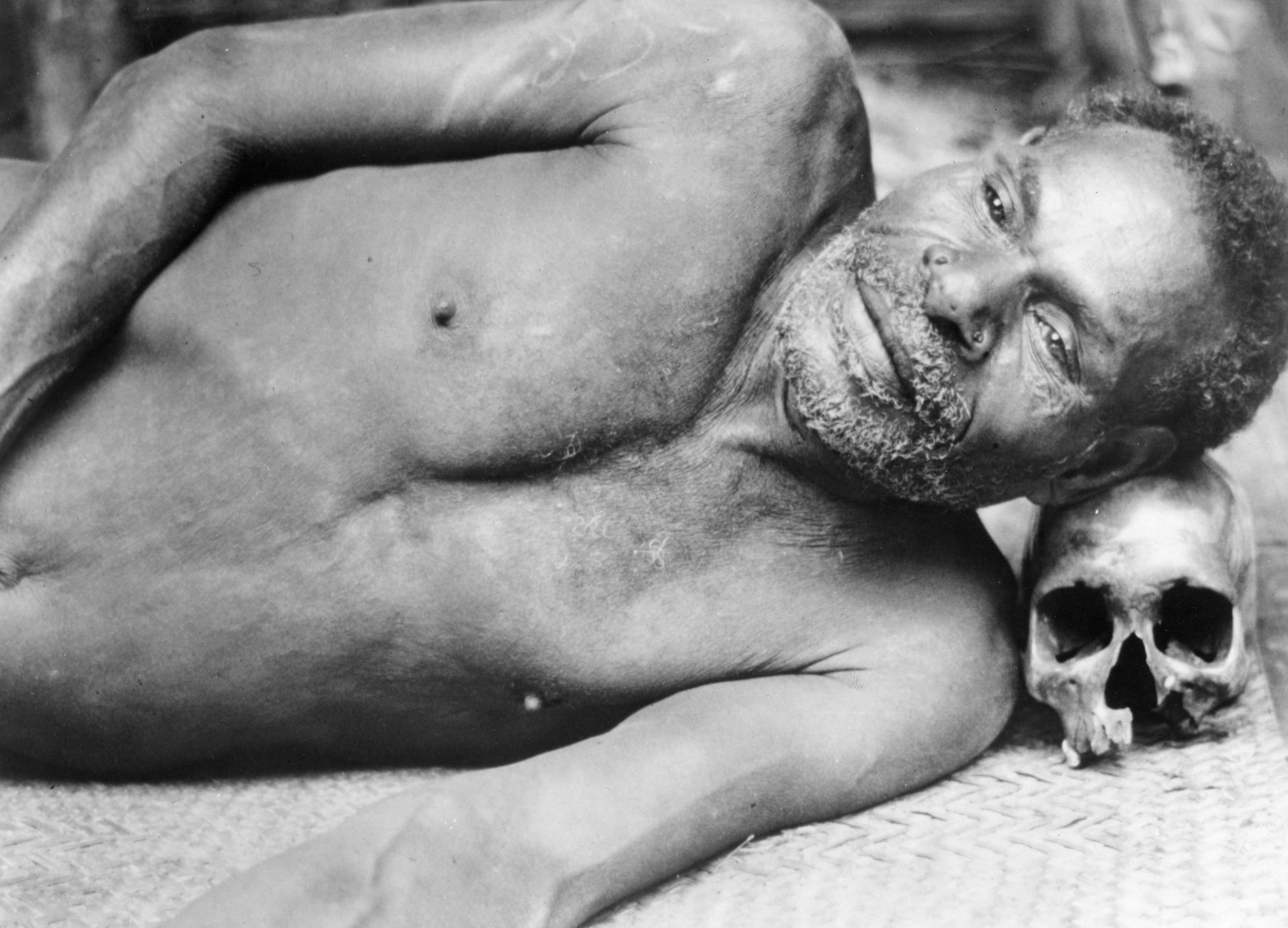
Almost two hundred years after Captain Cook discovered New Guinea, French explorers set out for the same island, most of which has changed little since the Stone Age. Although director and expedition leader Pierre-Dominique Gaisseau contemplates the different eras as he stares out the jet window (“distances have lost their meaning”) this is no week at the beach. His group is to bisect the island on foot, a distance of 450 miles (150 of them uncharted) and an area still replete with headhunters and virtually impassable jungle growth. Gaisseau’s journey into “blank spots on the map” is memorable; the team deal with dense masses of undergrowth, monstrous rivers, and days spent nervously negotiating the island’s formidable central ridge, which tops off at 12,000 feet. Just as risky and unforgettable are their meet-ups with indigenous warrior tribes little changed since the days when Cook and his crew beat a hasty retreat from the island.
(Sky Above, Mud Below, 1961)
The Now and Then Documentary Spotlight
Samsara
Directed by Ron Fricke—2011—98 minutes
When I decided to replace my Doc of the Week feature with a less time-pressured spotlight series that considers newer non-fiction films with their cinematic antecedents, I chose to kick it off with Ron Fricke’s 2011 piece, “Samsara”, now available in a glorious Blu-ray edition. There was a reason for this: documentary escapism. After completing my book “Documentary 101” I was a bit war-weary in the wake of seeing and writing about so many films that grappled with some of the world’s toughest issues. A sampling of the current news cycle—focused on the Syria crisis, America’s ever-widening income inequality (a new report says it’s the worst since the introduction of progressive taxation a century ago supposedly ended the Gilded Age) and the latest depressingly predictable mass shooting (just down the road a piece from the NRA boot-lickers on Capitol Hill)—only reinforced this feeling. I felt like Bob Dylan in the last verse of “Mr. Tambourine Man”, asking to be delivered to a place “far from the twisted reach of crazy sorrow.”
So let’s forget about today until tomorrow and go for a ride with Ron Fricke. He first made his name as the cinematographer for “Koyaanisqatsi”, Godfrey Reggio’s trippy, non-narrative blend of travelogue, implied social critique and cool special effects that was a bona fide arthouse hit in the Eighties. Soon after, he employed the same style of eye-popping 70mm photography when he directed the 40-minute “Chronos”, an early favorite in the newly popular IMAX theaters. He followed in 1992 with the feature-length “Baraka” of which “Samsara” is a sort of belated sequel. Mind you, these types of films (“guided meditations”, Fricke calls them) you just don’t churn out. It apparently took him five years to assemble these just-so visual gems, using painstaking large-format equipment and traveling the four corners of the earth. From the exotic Balinese dancers and mandala-constructing Tibetan monks that ease us in, to the various sites of exquisite historical antiquity, the viewer is lifted into the heavens of visual revelation. Shots of the vast complex of Buddhist temples and pagodas on the Bagan plains of Mandalay look like they could stand in for the Red Planet in a hi-def remake of “The Martian Chronicles.” To extend the “Tambourine Man” gambit one last time, Fricke is certainly enamored with the “foggy ruins of time” and the images of man-made monuments and ageless natural wonders are impressive and transportative. But even in the midst of this Panavision paradise, I knew there would be a catch.
There always is with this genre. Subsequent viewings of “Koyaanisqatsi” left a slightly sour aftertaste with the feeling that Reggio only seemed to approve of nature and Hopi mysticism; the modern world is depicted as a time-lapse whirl of frantic chaos or slowed down to a death crawl. In scenes of assembly lines and rush hours, regular people are made to look like either sardines in a can or rats in a maze. This is unfair to productive, workaday citizens when the powers-that-be behind the problems that the director seemingly cares about (environmental degradation, say) are sure to be out of the sight and unacknowledged. In the end, that’s the problem with the kind of non-verbal film—the camera is the only context.
See if you agree. Thanks to science (and the YouTube poster)you can now watch the full “Koyaanisqatsi” in 5 minutes at 16x speed.)
That has been less of a sticking point with Fricke’s work: he appreciates man’s built environment and largely avoids the whiff of elitism that hovered around Reggio’s “Qatsi” trilogy amid all the jaw-dropping imagery. Still, during “Samsara” there are the usual disconcerting segues. We go from the devastated aftermath of Hurricane Katrina to the Hall of Mirrors at Versailles, from African tribesmen to a kaleidoscopic flyover of L.A. at night. At about 45 minutes in, the joy ride ends and we’re left with the killjoy images of folks toiling to fill the ungracious demands of a mass consumerist world; gun culture and the international sex trade also come under a critical gaze, if only in passing. As a subject for further study, you could also check out 2011’s “Surviving Progress.” It combines the impressive visual scale of the guided meditation films with actual talking heads discussing man’s dysfunctional relationship with his home planet.
In the end, Fricke brings the viewer back around, closing with an absolutely lovely record of a Chinese 1000 Hands Goddess Dance, leaving the viewer with warm feelings as to the better side of our nature. That doesn’t erase any of the intractable problems of an overstressed globe but, for a couple of hours anyway, you can let the bad news wait.







 Reel and Rock