1970s Rock Music

Place that Band: Battle of the Geo Groups

Rock and roll band names are always a fun subject and historically have fallen into specific categories. Early on, bug names were popular: Buddy Holly and the Crickets inspired the Silver Beetles (later the Beatles), and we went from Iron Butterfly to the Spiders from Mars; it all culminated in the legendary Mosquitoes, secretly rehearsing on Gilligan’s Island to escape their adoring fans.

In the psychedelic era, crazy food-related names abounded (Strawberry Alarm Clock, Chocolate Watch Band, Ultimate Spinach, Peanut Butter Conspiracy) but as we got into the 70s, the somewhat grandiose idea of naming your group after a (usually) large city, or even a country or continent, took hold. Sometimes (but certainly not always) it reflected where the group was from. This trend has continued somewhat crazily into the present, as we will find out at the bottom of the post.

But here we are mostly sticking with better-known groups from the 70s to the millennium. There is a subjective group rating and a ROBTL rating (Relation of Band to Location). Only straight-up geographic group names are considered (sorry, New York Dolls) and the locations are limited to our home planet. But in case you’re wondering, there IS a group called Uranus.

CHICAGO

This is one of the most famous, even though they were originally called Chicago Transit Authority, until transportation officials from the Windy City objected.  Many of the members from the original septet met while in college in Chicago. They were originally an adventurous, even political, jazz-rock ensemble over the course of their first three albums (all two-record sets). They gradually lost their way in the woods of MOR pop pablum after the tragic death of guitarist/guiding force Terry Kath.

Group Rating: B+ for the first five albums, after that you’re on your own. ROBTL Rating: Good, considering their roots

This track from their debut features demonstrators’ chant from the Chicago Dem Convention in 1968.

AMERICA

An interesting one, as the three members were U.S. Air Force brats living in England at the time of their formation. But their sound, influenced by the CSN&Y type sound of the day, was very un-British. They went on to great success, of course, with songs like “Ventura Highway” (inspired by a stretch of road in California) and that one about a lonesome Western desert where for some reason you can’t remember your name.

Group rating: B ROBTL: Good I guess, since it was a bit of a mission statement.

BOSTON

This Tom Scholz-invented band is a tough one, since they were from the area but were not exactly road-tested locals, like Aerosmith or J. Geils Band. Mostly a studio creation, thanks to Scholz’s whiz-kid tech knowhow, that didn’t stop them from claiming they were “just another band out of Boston” on their debut album which sold 17 million copies. Then they started touring.

Group rating: B- ROBTL: Not great, even that line about playing in Hyannis was not about them but instead was inspired by the drummer’s previous experience of playing in bar bands down on Cape Cod.

BERLIN

Crossing over the Atlantic, kind of. Berlin, fronted by icy-sultry singer Terri Nunn, was from Los Angeles. Nunn, who posed for Playboy while underage, was (and would later be) an actress, and she once auditioned for the part of Princess Leia. She had the perfect look and voice for the band’s stylish 80s synth-pop sound, which would be fair to say, drew some influence from Krautrock pioneers like Kraftwerk.

Group rating: B ROBTL: Pretty good, considering.

LINDISFARNE

This accomplished British folk-rock outfit, once led by guitarist singer Alan Hull, were from Newcastle and named themselves after the nearby monastery castle that I had the pleasure of visiting last year (see my photo!).
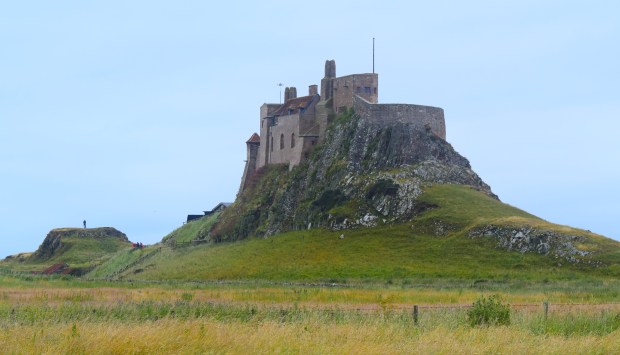
Lindisfarne often drew from locales known to them and it would be easy to imagine the ghostly “Lady Eleanor” from their most famous song roaming the drafty corridors of that edifice.

Group rating: A- ROBTL: First in class.

ASIA

Another very famous name and a progressive-rock supergroup made up of former (and in some cases future) members of Yes, King Crimson and ELP. I’m a huge prog fan but at the time of their big debut LP (1982) I was much more in thrall to the likes of the Replacements and the Psychedelic Furs than this machine-tooled AOR approach. Even guitarist Steve Howe, who would do much much better work in Yes) admitted that the production of said album was “Journeyesque,” not a good thing. But they fared well on middle-of-the-road rock stations and sold lots of plastic.

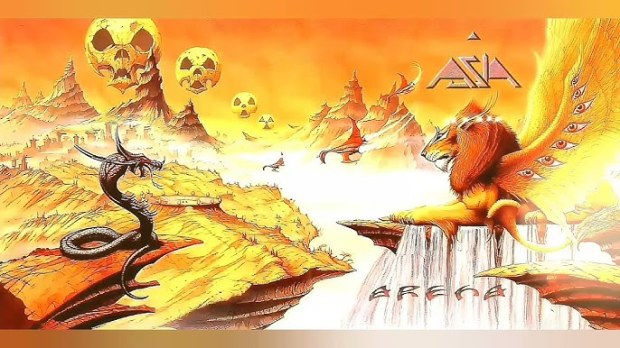
Group rating: C ROBTL: Nil, unless you count Roger Dean’s somewhat Oriental cover art. (see top image)

EUROPE

Staying on the continental theme, we doubt anyone ever looked to these lugs for a representation of European culture. The glam-metal Swedes did have their moment in the sun (not that I noticed) and got a recent ironic boost due to their famous Geico commercial featuring their biggest hit.

Group rating: C- ROBTL: Nothing doing.

ENGLAND

This prog-rock band was destined to be under-appreciated, seeing that their excellent debut album, “Garden Shed,” came out in 1977, the same year that the Sex Pistols and the Clash were shaking up things in their native land. England were led by keyboardist-singer Robert Webb and they hailed from Kent County, an area known as the Garden of England. Later reevaluations and rereleases of their work led to reunions (and some new work) first in 2006, including a nice 2-disc CD edition of “Garden Shed.”

Group rating: B+ ROBTL: Very high

JAPAN

This London-based group started out in 1974 as more of a glam act and evolved a synth-heavy, futuristic approach in the New Wave era. Not my cup of tea and initially their records flopped in the UK, but they found fame in the Land of the Rising Sun. Not sure how much that had to do with their name. They did release a single called “Life in Toyko” but it oddly featured the catch phrase “life can be cruel.”

Group rating: C+ ROBTL: Well, they sold out Budokan three nights running.

NEW ENGLAND

Getting back to my neck of the woods, this Boston-based group was managed by Queen impresario Don Aucion. They got a peek at the Top 40 with “Don’t Ever Wanna Lose Ya” (#40 in 1979) but their career soon stalled. Although stubbornly a product of their Asia-Journey age, New England did poke at the edges of several genres, including Art Rock. Seeking a sales lift, they came up with the multi-part “Explorer Suite.” Brimming with dramatic vocals and flashy keyboards, they were hoping the “Bohemian Rhapsody” lightning would strike twice, but to no avail.

Group Rating: B- ROBTL: Nothing you would notice.

NANTUCKET

Another New England locale, but these guys were from North Carolina and got their start as an oceanside bar band. They named themselves after the song “Nantucket Sleighride” by Mountain. There is some of that influence here, but also of arena-rock plodders like Foghat. Nothing special but I like their energy and the cheeky covert art of their first album is a 70s guilty pleasure.

Group Rating: B ROBTL: Very little.

KANSAS

I really don’t want to talk about these guys. You know them, you love them. Well, you know them anyway. Me, I always get them mixed up with Styx, another location-named band, though in this case a presumably fictional one. Anyway, I don’t dislike them, but I don’t regard them either. They did find a curious common denominator in pop history. “Carry On My Wayward Son,” is annually one of the most played song in classic-rock radio formats.

Group Rating: B- ROBTL: Well, they are from Topeka.

MANASSAS

I don’t much want to talk about Steve Stills either. He’s one of rock’s least likable characters. If you care for a taste, consult the interview of jazz drummer (and one-time Joni Mitchell squeeze) in the book “Girls Like Us” or check out Steve’s belligerent reaction to a little healthy criticism in the festival film “Celebration at Big Sur.” Having said that, Manassas (named after the Virginia town where the first great land battle of the civil war took place) were a good band for him, esp. in the case of second-billed Chris Hillman, the reliable wing man late of the Byrds and Flying Burrito Bros. Their first album was one of Stills’ stronger efforts (and a double LP no less) and I’ll be happy to post my favorite track.

Group rating: B ROBTL: Well, it is kinda country rock.

CHILIWACK

Chiliwack’s 1971 single “Lonesome Mary” was one of my favorite obscure near-hits of my early radio-listening days I remember the DJ telling listeners that the group was from Canada, and so far north there that there “drummer is a grizzly bear.” They were actually from Vancouver and named themselves after a cool-sounding town nearby. “Lonesome Mary” was one of those killer 3-minutes slabs of power rock, with Bill Henderson’s urgent vocals and blazing guitar.

Later, Chiliwack dabbled in progressive rock, which was still evident in their 1979 album “Breakdown in Paradise” which I picked up on cassette in a Quebec City shop last year. In the early Eighties, they got their commercial due with a few poppier U.S. Top 40 hits, most notably with “My Girl (Gone Gone Gone)”, and are still a going concern these days.

Grade: A (just because) ROBTL: Grizzly bear or no grizzly bear, they representing!

The geo band phenomenon continues to this day, although reading up on the subject can cause confusion. There’s an Indiana band called Brazil but formerly called themselves London. The group Spain are from California, and Jamacia are from France. That’s not even mentioning the ones named after planets and constellations, though I do want to check out Uranus, lol.
For the Records #6: Got Live if You Can Bear It

The live album holds a curious place in many discographies of rock bands and solo artists. It can be many things: a peak-career highlight for some (The Who’s Live at Leeds, the Stones’ Get Yer Ya-Yas Out, James Brown’s live-at-the-Apollo recording) and a career maker for others (Frampton Comes Alive). Many others are seen as placeholders between studio albums or as a de facto souvenir for fans who have seen their favorites in concert.

Sometimes though, an official live release can end up being a millstone in the canon of even the best musical artists, scoffed at by both critics and fans alike. It could be a case of shoddy production, sloppy performance, a group in career downturn or even an excess of success. Creem magazine was once so put off by the rank triumphalism Quenn’s Live Killers they compared it to the sound of “someone peeing on your grave.”

Over time I have gathered up a list these bad-rep concert documents and re-visited them, wondering if they really deserved all those one-star reviews. In some cases, time has been kinder, initial victims of a hot-take hostility in a tougher age of music criticism. Others are still big-time stinkers.

Who’s Last—The Who (1984)

I’ve always wondered about this one. Dismissed and derided at the time, Who’s Last was a document of the band’s at-the-time Farewell tour back in 1982. I mean it couldn’t be as bad as all that, right? Yes and no. On one hand it is the Who and there are gobs of great tunes that are played well enough. But on the other hand, don’t expect anything transformative. The galvanizing versions of “Magic Bus” and “My Generation” on the celebrated Live at Leeds put the ones here to shame, not to mention how poorly this “See Me, Feel Me/Listening to You” stacks up to victorious version on the Woodstock soundtrack. True, people thought it was a swan song back then and a release was justified (though it only hit #81 in America) but after Pete and the boys resumed touring in 1989 it seemed irrelevant, esp. after the sublime Leeds was expanded from 6 to 14 tracks in the CD era. Grade: C-

Take No Prisoners—Lou Reed (1978)

“What do I look like, Henny Youngman up here?” Yeah, kinda. This smart-ass double album was reportedly Lou’s answer to those who said he never talked on stage. True to Reed’s incorrigible nature he goes too far in the other direction, ad-libbing over opener “Sweet Jane” until the song is just an afterthought. True, he does get out a few good lines (“Give me an issue, I’ll give you a tissue”) and a sick burn on Patti Smith (“Fuck Radio Ethiopia, this is Radio Brooklyn!”) but it sets the tone for what is really a punk novelty record.

The music, such as it is, starts at 2:20

The crowd at the Bottom Line nightclub in NYC seem to be there as much for the cult of personality as for the music, and “Walk on the Wild Side” becomes a rambling 16-minute monologue a la Lenny Bruce. When Lou does manage to get thru a whole song without ragging on rock critics or his old Factory friends the results can be pretty good, as on “Coney Island Baby” and “Satellite of Love,” but they add up to a relatively small fraction of the album’s long 98-minute run time. Grade: C

Coast to Coast: Overture and Beginners—Rod Stewart/Faces (1974)

The Faces were on borrowed time when this concert record came out, maybe accounting for the poor press it got. Some saw it as a quick cash-out before Rod Stewart finally split to commit full-time to his burgeoning solo career. Key contributor Ronnie Lane had already left, replaced by Japanese bassist Tetsu Yamauchi. Coast to Coast is an enjoyable (if slapdash) mix of Rod solo numbers, a couple of Faces songs and clutch of covers. Most successful is a top-shelf take on the Motown lament “I Wish it Would Rain,” featuring an impassioned vocal by Rod and a great blues guitar solo from Ronnie Wood. Grade: B-

On the Road—Traffic (1973)

Traffic were another stalwart British group who were heading down the home stretch when this leisurely live double hit the shops. They released one more studio album before disbanding the following year. This was the end of their expanded-lineup era, with the core trio of Steve Winwood, Jim Capaldi and Chris Wood were joined by percussionist Rebop and three Muscle Shoals session men. This period was marked by a certain languid jam-band sound and most of the material here was drawn from the previous two studio sets, Low Spark of the High-Heeled Boys and Shoot Out at Fantasy Factory. The only nod to the “old” Traffic was a 21-minute medley of “Glad/Freedom Rider.” The band may have set themselves up for rock-mag ridicule by including the recent “(Sometimes I Feel So) Uninspired.” But that one turns out to be a highlight, with some electrifying lead guitar from Winwood, so go figure. Grade: B-

David Live—David Bowie (1974)

This is a textbook case of a concert album being recorded at precisely the wrong time. Bowie’s ’74 show started off as the “Diamond Dogs” tour and ended as the start of his “plastic soul” era. (His next album would be Young Americans). The album is unfocused and lacking in true energy, his vocals careless and strained. Hard drugs were an issue. It tends to sound better if you don’t know the studio version and have nothing to compare it against (I rather like his version of the Ohio Players “Here Today, Gone Tomorrow”). But the only one of his many famous songs here that maybe outdoes the original is a strong version of “Rock ‘n’ Roll Suicide,” that closes this misbegotten release. Grade: D+

T.V. Eye Live—Iggy Pop (1977)

Speaking of Mr. Bowie, the year 1977 brought him renewed recognition not only for two of his classic Berlin-era albums (Heroes and Low) but also reviving the career of a certain James Osterberg, who was at loose ends after the dissolution of his proto-punk band the Stooges. Iggy Pop, as he was better known, joined Bowie at his digs hard by the Berlin Wall, both trying to kick long-standing drug habits and get new inspiration in their bleak Cold War surroundings.

Iggy also released two great albums in ’77 (The Idiot and Lust for Life), both produced and largely co-written by his pal Dave. This single live album also got a release but was panned across the board (one meager star at AllMusic) but nowadays it’s hard to see why. It’s a pretty strong set, some of it from an American tour where Bowie supported him on keyboards and backing vocals. The sound quality is not so hot, probably because RCA gave him a $90,000 advance to produce the album (he owed them one more LP) but then spent five grand on it and pocketed the rest. That alone bumps it up half a grade. B+

Bob Dylan at Budokan—Bob Dylan (I think) 1978

Perhaps we will never know just what compelled Zimmy to release this album of his revolutionary repertoire performed as a vacuous Vegas lounge act (and presented as such). On the heels of his divorce and the epic flop that was his “Renaldo and Clara” movie, maybe he thought he could release a quicky double live album and recoup his losses before anyone noticed, it did hit #13 in America.

It did have a few critical defenders and of course if you go by the YouTube fanboys, Budokan ranks right up there with the Sistine Chapel at the apex of Western Civilization. But unless it’s enjoyed as a perverse form of performance art, I don’t know how anyone can like the Wayne Newton arrangements, the cloying back-up singers, the overwrought saxophone and Dylan singing his visionary back catalogue as if it were the collected works of Tony Orlando and Dawn. Just take this encore version of “The Times They are A-Changing” (please) and listen to the fake sincerity of the spoken intro and then Dylan actually telling the crowd “We’re here for four more nights” as if he really were at a casino cocktail lounge and not one of the world’s most revered concert halls. Wow. Grade: D

Still Life—The Rolling Stones (1982)

The era of the true mega concert tour, complete with corporate sponsorship, was under way in the early 80s and naturally the Stones were on the leading edge. That means fans packed in like 80,000 sardines at a place like Arizona’s Sun Devil Stadium and the band trying to fill it with sound and vision no matter how impersonal the setting. (You can see some of that scene in the Hal Ashby-directed tour film, “Let’s Spend the Night Together”). The stage is so big that Mick Jagger and Charlie Watts seem to be in different zip codes). This dynamic comes thru in the unfortunately- titled Still Life.

Like Who’s Last, there are lots of great songs here and the notes are all in the right place (mostly). Yet, it comes down to a business model that just doesn’t work—for me, anyway. I’ve never been to a football stadium concert, and this shows me why. Sure, it’s quite possible to have a good time at this kind of show (many have) but to me the possibility of a good aesthetic return on your monetary investment seems low. I can’t see the band and they can’t reach me; that dubious dynamic carries over to the album. Like David Live, this album sounds OK when you don’t have any previous recording to compare it to, so I chose their new cover of Smokey Robinson’s “Going to a Go-Go” as the best of the lot. Grade: C

Live ‘n’ Kicking—West, Bruce and Laing (1974)

Twin Peaks—Mountain (1974)

When you apply the contemporary phrase “Go big or go home” to the classic rock era, it’s hard not to think of Leslie West. He was a “mountain” of a man (his girth inspired the band’s name), his bellowing vocals and scorched-earth guitar solos known far and wide since the band made a big splash at Woodstock. By 1972, Mountain were on hiatus and West and Mountain drummer Corky Laing joined ex-Cream bassist/singer Jack Bruce to form a blooze-rock supergroup that released two studio albums and this single live set, released just after announcing their break-up in early ’74.

As a group, Mountain, as heavy as they were, also had a melodic sign, seen in deft compositions like “For Yasgur’s Farm” and “Nantucket Sleighride.” WBL cast away most of that. To start off Live ‘n’ Kicking, they turn the Stones’ refined and brooding ballad “Play With Fire” into a 13-minute marauding metal warhorse, complete with drum solo. The “96-decibel freaks” in the audience eat it up. Jack Bruce, replacing the more refined Felix Pappalardi as West’s frontline partner, was rougher-edged. He fills the space between songs with arena-rock bravado and his bass is turned up to overload levels nearly as loud as West’s guitar, if that’s even possible. True, there is some nimble trip interplay on the WBL original “The Doctor” but things go happily off the rails with closer “Powerhouse Sod” which turns into a Bruce showcase, because everyone knows the best way to end a 70s live album is with a bass solo!

Around the same time that West, Bruce and Laing were dissolving due to internal dissension and hard-drug abuse, West was and Pappalardi were re-uniting with a new lineup. Corky Laing, for whom the drug issues were hitting esp. hard, was replaced this time by Alan Schwartzberg. Original keyboardist Steve Knight was subbed off in favor of Bob Mann, who also doubled on second guitar for added sonic impact. My roommate at the time called the Japan-recorded Twin Peaks “the album with the biggest tits in the world” (riffing on Monty Python) and it did seem like the band was out to prove scale new heights of heavyosity.

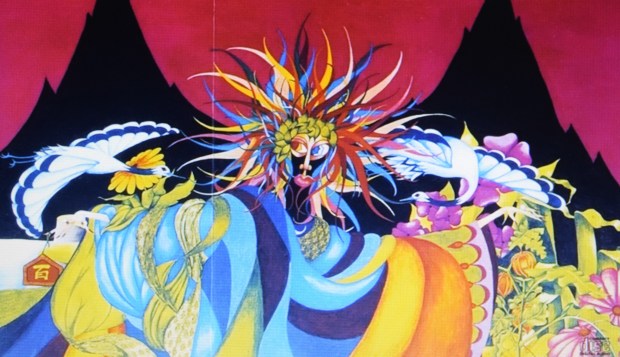
Twin Peaks, with its confident air attractive artwork (see banner image at top of this post) did fare a little better in the critical arena than Live ‘n’ Kicking, which got an E+ (?) in the Village Voice. However, many scribes headed for the exits at the prospect of a 32-minute “Nantucket Sleighride.” Of course, fans, in this age of bong hits and good stereo systems, loved every long minute of it and didn’t mind having to get up and flip the record halfway thru. The glorious noise continues right through to side four, as the band run over the “Mississippi Queen” with a Mack truck and play “Roll Over Beethoven” at such volume that it would have made ol’ Ludwig van deaf all over again. Best of all is West’s signature “Guitar Solo,” where he gets free reign to indulge himself for five uninterrupted minutes, to the point where he injects a bit of “Jingle Bells” even though it’s August in Osaka. The Seventies, they were a thing, man.

Grades: Live ‘n’ Kicking: B-, Twin Peaks: A (fight me).

And speaking of “Jingle Bells,” Happy Holidays, everyone!

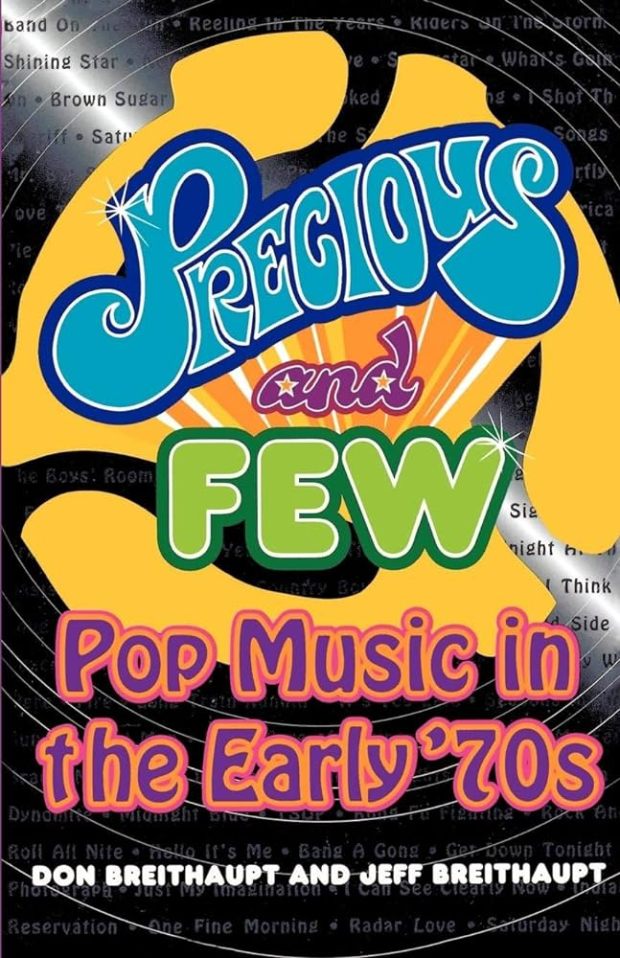
Books That Rock: “Precious and Few–Pop Music in the Early ’70s” (1996)

It’s been said that your musical identifications and tastes are cemented at a very early age, maybe as young as fourteen. That doesn’t mean you can’t expand your sonic palette later on—I didn’t get into jazz, reggae or classical until my mid-20s or so. But in the pop music universe, the “14 Rule” hold true.

One of my lasting musical fixations is Top 40 radio in the early Seventies, from about when I was 13 to 17 years old. So imagine my delight when I came across this tome at a retro store in Portland, Maine—a little shop stuffed with old albums, cassettes, VHS tapes, comic books and pop culture knick-knacks. I took one look at the cover and said to myself, “These guys get me.”

The guys in question are brothers Don and Jeff Breithaupt. They hail from Toronto, Don is singer in the band Monkey House and Jeff is an arts-fundraiser. In the mid-80s they began to wonder what became of the 45s they collected in the previous decade and found out from Mom that they were up in the attic crawlspace, still in their original faux-denim case.

The book’s “title track.” Go ahead and sing along, you know you want to.

So began their deep-dive journey through a large swatch of Billboard-charting singles dating from 1971-75. They starting with a survey of early 45s by the ex-Beatles and end at the Dawn of Disco. Early in their introduction, the Breithaupts make clear that they won’t abide by any lazy notion of this era being an inferior zeitgeist. Sure, there were questionable fashions and silly fads (with some novelty records to match), but they contend (rightly) that it was also a time of a vital incorporation of the strengths of venerated Sixties. “The rock press has a good ear for innovation,” they write, “but has shown little patience with the slower process of consolidation.”

The early 70s would be the last period of the Big House notion of commercial Top 40 radio. The authors note that the continuation and expansion of the earlier Boomer rock era: this was the end days of when R&B artists, singer-songwriters, hard rockers, foreign pop bands and teenybop idols would all share space on the Billboard charts. This rich audio-cultural diversity, delivered with none of today’s virtue signaling, would soon give way to specialized radio formats, a separation process that would eventually be reflected in America’s culture wars and divisive politics.

A decade-defining case in point. The sublime “Everybody Plays the Fool,” by the Harlem-based trio The Main Ingredient, was a huge hit in 1972 and of the last of the great “advice songs” (see also Petula Clark’s “Downtown” or the Beatles “She Loves You”). From its droll spoken intro to its last buoyant chorus, this was a stone-cold classic. But it was kept from the No. 1 spot by Chuck Berry’s infantile “My Ding-a-Ling.” Such was the Seventies.

The brothers collect these disparate musical trends into a colorful collection of concise chapters, preceded by a list of ten songs which best exemplify them. For instance:

“Revoluncheon: The Sixties Continued” Includes posthumous hits by Jim (“Riders on the Storm”) and Janis (“Me and Bobby McGee”) and post-mortem anthems like “Won’t Get Fooled Again” and “Knockin’ on Heaven’s Door.”

The authors note that some Sixties-identified artists like the Who, Stevie Wonder, Paul Simon and even the Rolling Stones put out much of their best work in the early Seventies, this continuation couldn’t last forever. “The relatively unified front of the Beatles, Stones and Motown,” they note, referring to the musical Sixties, “shattered into a million Hamilton, Joe Frank and Reynoldses.”

“Dancing in the Moonlight: Seventies Pop.” Featuring Carole King’s “It’s Too Late,” Seals and Croft’s “Summer Breeze,” Rod Stewart’s “Maggie May” and Jackson Browne’s “Doctor My Eyes.” Sure it wasn’t as transformative as Monterey Pop, but only a snobby leading-edge Baby Boomer could resist the unabashed good vibes of “Dancing in the Moonlight” or this 3 Dog Night gem:

“The Sound of Philadelphia” Motown began to lose its way a little after moving from Detroit to L.A. in 1972—despite some great records by Stevie, the post-Diana Supremes and Marvin Gaye in his “What’s Going On” era. But in its place came the rise of the Philly Soul sound, led by the songwriting/producing team of Leon Huff and Kenneth Gamble. This is one of the book’s best chapters. Get ready to fall in love all over again with the Spinners, the Stylistics, the O’Jays and Harold Melvin and the Bluenotes. And let’s not forget this timeless adultery anthem by Billy Paul.

“Richard Nixon’s Greatest Hits” The era’s social protest songs were a mixed bag, but I am ready to defend the honor of the 5 Man Electrical Band’s “Signs” despite its many detractors (“the sign says you gotta have a membership card to get inside, ugh!”).

Also getting a going-over in this chapter are the likes of “Bring the Boys Home” (Freda Payne), “Give Ireland Back to the Irish” (Wings), “Fight the Power” (Isley Brothers), and the Raider’s white-guilt classic “Indian Reservation.” Sometimes the execution would get muddled and sentiments would veer more into apathy than action, despite good intentions. Ten Years After frontman Alvin Lee would “Love to Change the World” but didn’t know how so he just decided “to leave it up to you.” The authors also drill down on Chicago’s rather confounding minor hit “Dialogue (Parts 1 and 2).” Here, guitarist Terry Kath, playing a “well-informed progressive,” grills a “spoiled college kid” (sung by Peter Cetera) about his views on the world. The kid is so callow that when asked if he’s angry about the way the disastrous Vietnam War is dragging on, he plainly states that he “Hopes the president (Nixon) knows what he’s into.” And yet he somehow wins the argument by inexplicably convincing the Kath character (without providing evidence) that “everything is fine.” Wow.

By way of comparison, the Breithaupts contend that the “feminist pop” of the era was a lot more effective. Of course, Helen Reddy’s “I am Woman” gets a mention, but they are not too impressed with her “tame delivery.” Instead they rightly rave about the female singers (mostly African-American) who boldly turned the tables on the philandering macho men of the time. The politics here are mostly sexual, spawning a number of memorable, whip-smart singles like “Mr. Big Stuff” (Jean Knight), “Clean-Up Woman” (Betty Wright), “Women’s Love Rights” (Laura Lee) and my favorite, “Want Ads” by Honey Cone. In this infectious soul-groove workout, lead singer Edna Wright serves notice on her cheating-ass (ex) boyfriend by advertising for a new main squeeze in the Personals section of her local newspaper, noting that “experience in love preferred, but we’ll accept the young trainees.” Hell, yeah!

“Want Ads” was #1 on both the pop and soul charts in the spring of 1971. Here is the extra-funky extended version.

There are many other categories covered here, too many to review. Some of them are: Jazz Pop, Religious Pop, Progressive Rock, Hard Rock, Instrumentals, Story Songs (that chapter is named “Harry, Keep the Change” lol) and even “Self-Pity Pop”. This section features the lachrymose likes of “At Seventeen” (Janis Ian), “All By Myself” (Eric Carmen), “Seasons in the Sun” (Terry Jacks) and “Alone Again Naturally,” the suicide-ideation hoot by the regrettable Gilbert O’Sullivan.

But good, bad, or ugly, this music from the last great period of open-format radio do have a lasting virtue. That’s because most of the hits we were digging on back then were marked by a dogged sincerity. This can be hard to reckon with in our own ironic age. When this book came out in the mid-90s, the Seventies were enjoying a moment, but not for all the right reasons. “Generation Xers find it easy to laugh at everything,” the brothers wrote in ‘96, “they aren’t used to pop culture that wants to be taken at face value.”

This recalls a couple of big-charting songs of the time. First is “Brandy,” the only hit by the Jersey Shore band Looking Glass. The story of a lovelorn barmaid in a harborside tavern, this tune is sung in complete earnestness and was listened to in the same spirit as it headed to #1 in June 1972. But upon closer inspection, if was Brandy was such “a fine girl” and desired by all, couldn’t she just dump this sailor guy who has clearly stated “My love and my lady is the sea” (I mean, really). Or conversely, the sailor could finally give up on his stinky old boat, put a ring on it and, I don’t know, open a bait-and-tackle shop?

The other is the inimitable “Sweet City Woman” by the Calgary-based trio, the Stampeders. In this winsome, banjo-driven ditty, the singer hops a train heading out of the boonies to hook up with his lady friend living in town. He even mentions his banjo twice in the song and his anticipation is heightened not just by his girlfriend’s good loving but also her macaroons. Like I said, such was the Seventies. So the next time either song comes over the radio, we late baby boomers will be singing along with affection not irony. But I’m posting “Sweet City Woman” because at least the guy in that song knew when he had a good thing going!

—Rick Ouellette

Rock Docs Spotlight: “The Terry Kath Experience”

Chicago: The Terry Kath Experience

Directed by Michelle Kath Sinclair–2016–80 minutes

A few weeks ago, I did a retrospective review of Chicago Transit Authority, the debut long player by Chicago, as part of my ongoing series of rock’s notable double albums. A good portion of that piece focused on their renowned guitarist Terry Kath, who died tragically in 1978. Kath is the Chicago member of choice for rock geeks, not just for his musical achievements but for the might-have-beens. Chicago started out as an adventurous jazz-rock ensemble that had softened its edges by the time of Terry’s passing and would soon become all but a MOR yacht-rock ensemble by the Eighties, whose soppy love ballads are easy objects of derision.

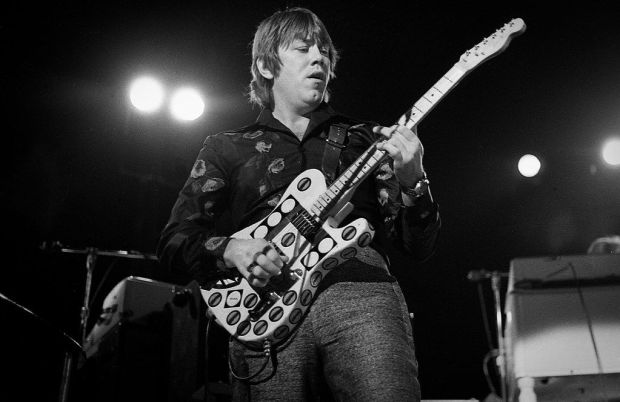
“The Terry Kath Experience” gets its title early on in a comment about how a power trio of that proposed name led by Jimi Hendrix’ favorite guitarist may have been quite the ticket had Kath left the chart-topping septet (he was in the process of forming such a “TKE” group just before he died). But this affecting documentary also give proper due to the man himself. Directed by none other than his daughter how could it not be? Michelle Kath Sinclair was but a toddler when her dad passed, and the film takes the form of a personal quest to know him better (and retrieve a cherished guitar of his) as well as exploring his career. She visits with all six of the others in the original band as well as their manager/producer James William Guercio and his widow Alicia Kath.

The quest to retrieve Kath’s many-stickered Telecaster becomes a subplot of the film.

Kath was a largely self-taught prodigy who would sit in with future Chicago bandmates at DePaul Univ. music school in the Windy City. Many local players like them were serving time in “show bands” at local night clubs. His former colleagues attest that it was “renegade” Terry who began pushing for the band to be more themselves after acts like Cream and the Yardbirds started blowing thru town. It was Kath who wrote the mission-statement song “Introduction” that kicked off their bold first album, released in 1969. A remarkable piece of writing that managed to be both accessible and complex, Kath had to describe it from his head for a bandmate to transcribe. Chicago were on to a winning combination with their punchy horn section, accomplished playing and the keen pop sense that went with it (esp. of keyboardist Robert Lamm) in the early days. Kath’s husky vocals and fierce but passionate guitar solos were the feature of many of their hits, with “25 or 6 to 4” and “Make Me Smile” being maybe the most notable.

His daughter is an appealing presence and a natural for putting his surviving bandmates at ease in front of the camera. Drummer Danny Seraphine is esp. notable in his mix of fondness and regret when looking back on Terry’s role in the band. Kath was set to try his own luck in Los Angeles before deciding to see the band thru to its early success. The whole outfit did move to L.A. in the wake of international success and Kath was the one leading the way to camaraderie, good times and fruitful recording at the Caribou Ranch, the Rocky Mountain studio and home-away-from home built by Guercio in 1972. It was here that Kath and his wife Alicia spent much time in the early years of their marriage.

In relaxed interviews with Terry’s brother Rodney and Alicia, the pair speak to their niece and daughter of a big, amiable bear of a man. He grew up with annual vacations in the country and thrived in the company of friends and bandmates at the wide-open Colorado ranch/studio. There is ample home-movie footage, and even excerpts from a television special filmed, to attest to this.

Spoiler alert: director Michelle Kath Sinclair finds her dad’s prized Telecaster at a relative’s house in Florida.

Eventually, a darker side reveals itself. (“The trappings of success trapped him,” Seraphine says). There are not-uncommon tales of drink and drug abuse and then there’s Kath’s obsession with firearms. For the life of me I’ll never understand this widespread American fixation, esp. with someone like Kath who appears to be an unviolent man. But his favorite movie was “Taxi Driver” and he often imitated Robert De Niro’s famous “You talkin’ to me?” scene.

The end came in January of 1978 when Kath repaired to his place with a member of the group’s road crew after a long night of substance intake. His companion became alarmed when the guitarist started fooling around with a handgun. Moments later, Kath accidentally shot himself in the head after removing the clip but forgetting the one bullet in the chamber.

But moving beyond this needless death, there is plenty of good stuff for fans and guitar geeks here. There are lots of great live clips (several from Chicago’s great gig at Tanglewood, Mass. in summer 1970), a discussion of his boundary-pushing “Free-Form Guitar” from the first album (recorded several months before Hendrix’ famous Woodstock finale), and the guitar quest thru several homes of friends and family that will delight fans and six-string collectors all over. (Streaming now for free “with ads” on YouTube).

—Rick Ouellette

I am the author of “Rock Docs: A Fifty-Year Cinematic Journey.” To look at a 30-page excerpt, please click on the book cover image above.

I Have Seen the Top of Rock Mountain: The Clash live in Boston, Sept. 1979

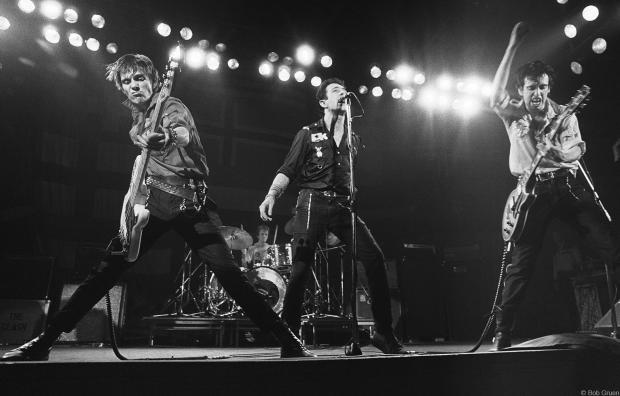
One of the great action shots in rock history, ace photographer Bob Gruen took this snap of the Clash at the Harvard Square Theater in Cambridge, Mass., at the Feb. 1979 show mentioned below.

If I was backed into a corner for an answer as to what was my favorite concert ever, I’d have to say the Clash at the Orpheum Theater in Boston, 42 years ago tonight, in September of 1979. Opening acts were the Undertones fresh out of Derry, N. Ireland and R&B legends Sam & Dave (both great). The Clash had made their area debut about seven months earlier at the old Harvard Square Theater, a legendary gig ‘round these parts. However, the band’s stand-offish attitude kinda dampened their appeal at that show.

Not so on 9/19/79. By that time their first LP had been finally released in America (re-configured to include a fistful of their classic singles) broadening their fanbase while their collective surly demeanor had been replaced by more of a band-of-the-people image. That become clear three songs into the set during (appropriately enough) “Complete Control.” (My memory has since been aided by a bootleg cassette of the show that I purchased in the 90s). Near the end of the song, Joe Strummer’s ad-libbing to the “C-O-N Control” chant abruptly ends and there is a sudden roar from the crowd (at 9:55 of the above-mentioned recording, seen below). The brutish security guards employed in those days by monopolistic rock promoter Don Law were manhandling fans streaming down the aisles for a closer look. The guards were not used to being challenged, least of all by a relatively scrawny lead singer from England, who had just come ten rows deep (with his Fender in tow) to confront them.

After the commotion, Strummer went back to the stage and went all Popeye Doyle, demanding to know who’s-running-this-operation? When the name Don Law was called out it was a bit of a laugh: the Clash’s version of “I Fought the Law” was released as a single two months earlier. “Where’s Don Law?” Joe repeatedly bellowed. When the man didn’t show, he declared the area in front a stage open to all and the crowd went nuts. The goonish guards were obliged to stand down.

The Clash were spectacular that night, playing every song as if their lives depended on it, with a passion and ferocity seldom equaled. Guitarist Mick Jones further endeared the band to the fans by allowing, “This is a good crowd for us, don’t think we don’t appreciate it.” Mick got off another good one later, while introducing his song “Stay Free,” saying it was about a couple of friends who were sent to the nick. “That’s the penitentiary to you lot.”

The cassette ran out before the end of the show, but I do remember the first encore, a new reggae number where Strummer came out from the wings swinging a train-signal lantern. This was “Armagideon Time” which would soon be released as a b-side to the title track of the album that would break them in the U.S. From that same month (Dec. 1979) that “London Calling” was released, here’s them doing “Armagideon” at the benefit concerts for Kampuchea. RIP Joe, there will never be another.

Days of No Future Past: The Skids and the Punk Repertoire

Any music genre that was once new and fresh and radical is bound to become established and settled if the quality of the original output was great enough to still be well-loved years, decades or, in the case of classical, even centuries later. So it is now with punk rock. True, there are many younger practitioners of the form and some of them I go and see in my own area. But just as some talented young jazz artist will not make aficionados forget Miles Davis or John Coltrane, so too these ardent newcomers could never outstrip the golden era.

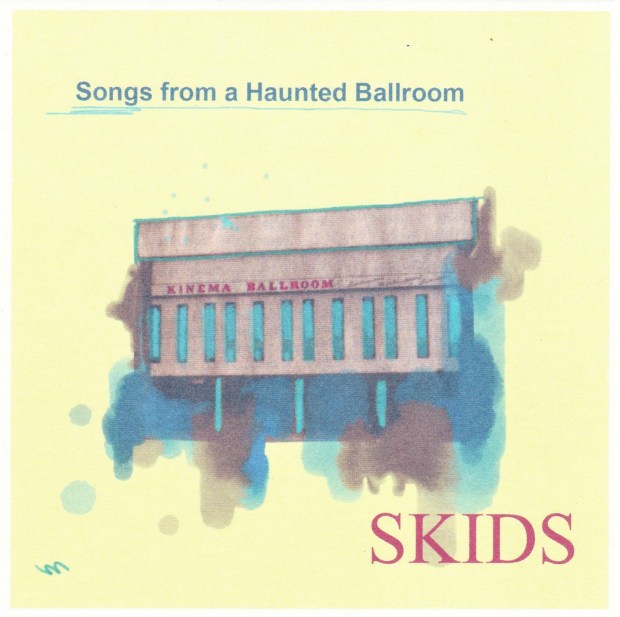
Which brings us to the Skids. No newbies are they: their first single was released in the halcyon days of 1978. But these veteran Scottish punkers have just released the vigorous and entertaining Songs From a Haunted Ballroom, a covers album leaning heavily to late 70s battle cries from the likes of the Clash, Sex Pistols, Ultravox etc. and also a few left-field choices that help tell a larger story. Lead singer Richard Jobson and bassist William Simpson are from the original band and drummer. The Skids’ current line-up is rounded up by the father-son guitar team of Bruce and Jamie Watson. (Bruce the elder was also in Big Country, formed in 1981 by the late Stuart Adamson who was Skids’ original lead guitarist). This duo provided plenty up six-string firepower to the amped-up arrangements heard here.

The Skids front line of today. Left to right, Jamie Watson, Bruce Watson and Richard Jobson.

The original Sids were a dtermined and edgy outfit that worked their way down to London from Dunfermline and scored a UK #10 single with the anthemic classic “Into the Valley” in 1979. They would stay together and put out four albums until splitting up in 1982. Since their 2007 re-forming they have been more centered on their Scottish origin. The “Haunted Ballroom” of the title refers to the Kinema Ballroom which recently closed before re-opening as a global fusion restaurant. Generally, tribute albums can be a hit-and-miss affair and it’s likely that some listeners will be underwhelmed by the energetic but pro-forma versions of the Sex Pistols’ “Submission,” the Adverts’ “Gary Gilmore Eyes”, the Stooges oft-covered “I Wanna Be Your Dog” or the Clash’s “Complete Control.” (In the latter, Jobson shouts out Joe Strummer’s iconic ad lib “You’re my guitar hero” twice–maybe once for each of the Watsons).

In the liner notes, Jobson relates the personal significance of the selections, usually being a song from a band he saw at the ballroom in the heady days of the “No Future” punk uprising, or songs that were popular DJ selections on dance-club nights. The Kinema looms large in Richard’s largely personal mythology and not just for the revolutionizing groups he saw there and inspired his own music-making. He makes several mentions of Scotland’s numerous gangs who would occasionally crash the Kinema, giving an added edge to several cuts. Haunted Ballroom kicks off strong with Ultravox’s “Young Savage” and it’s telling tag line “Anything goes where nobody knows your name.” It also informs the Skids’ turbo-charged take on Mott the Hooples’ “Violence” and Magazine’s “The Light Pours Out of Me.” Jobson would later form The Armoury Show with that group’s talented journeyman guitarist, the late John McGeoch.

One of the more intriguing covers here is “Rock On” where the band take David Essex’ frothy 1973 glam hit and gives it an ominous edge with a spoken-word section where Jobson recalls how gangs like the fearsome AV Toi (“the most mental gang in all of Scotland”) would use the chorus of “Rock On” as a cue to cause mayhem on the dance floor. Also having novel appeal on the song list is Garland Jeffrey’s lost gem “35mm Dreams” (the Skids’ did it as an encore back then) and Ace Frehley’s discofied “New York Groove.”

The guys end the album with re-makes of “Into the Valley” and another great early single, “The Saints Are Coming,” before concluding with their cheeky holiday song “Christmas in Fife.” The two makeovers only improve by way of modern production values, so I’m going to go with the august ’79 original where you can read the hard-to-decipher lyrics and see the band in the full flower of their rough-hewn youth. We all have some special nightspot that is now gone (for me it was The Rat in Boston) but Jobson suggests the importance of the Kinema for him goes beyond nostalgia. For him, “it’s the place that made me what I am.” And listening to an album like “Songs From a Haunted Ballroom” can help keep alive the psychic rebellion of the punk rock soul.

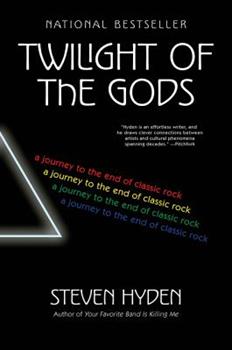
Books that Rock: “Twilight of the Gods” by Steven Hyden (2018)

The daily posts I put up for my Facebook group Rock Docs (check it out if interested) generally fall into a few different categories: birthday tributes, trailers for upcoming music documentaries and seasonal-themed series (I recently had a weeklong string of posts about Irish bands centered around St. Patrick’s Day). Another frequent category that can’t be avoided: obituary posts. Any rock music fan of a certain age who is on social media knows these well. Whenever one of our beloved stars dies, the online tributes, often very heartfelt, come pouring in and last for days if not weeks. This phenomenon probably peaked in early 2016, when David Bowie and Prince passed away within a few months of each other.

Of course, a lot of this can’t be helped: rock ‘n’ roll is a youth-centric artform that is now about 65 years old. While many of the baby-boomer stars of its Golden Age are in their Golden Years, rock has ceded its primacy in the pop-music pyramid since at least the late Nineties. A book like Twilight of the Gods: A Journey to the End of Classic Rock was inevitable.

Freelance author and podcaster Steven Hyden has acquitted himself well on this subject. Twilight of the Gods is an accessible, witty and committed book. Part of its success may be that Hyden was born in 1977 and grew up in suburban Minnesota, a Gen X/Millennial bitten bad by the Classic Rock bug. He is no portentous, self-serious scribe a la Greil Marcus, but he gets it. By early middle school he was subsumed by rock “as an act of faith: albums as sacred texts, live concerts as quasi-religious rituals, and rock mythology as a means of self-discovery.” An avowed agnostic, Hyden admits that “if there is a God, I was sure I had found Him on side two of Abbey Road.”


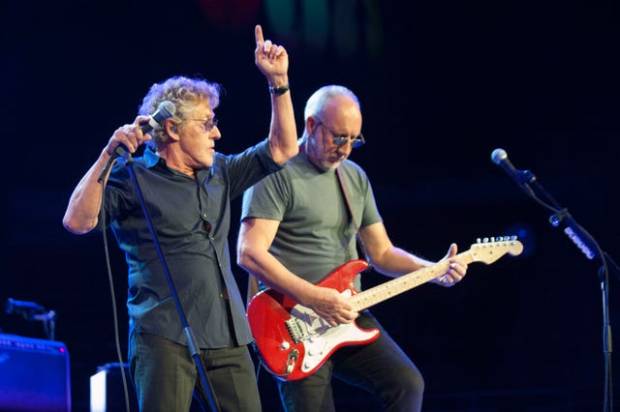
Hope I die before I get old—or not. Roger Daltrey and Pete Townshend on the “Who Hits 50 Tour” in 2016

He first saw his favorite band (the Who) in 2002, so the timeline of his grand obsession was already leaning into advanced middle age. But by the end of the night, Hyden had found his musical Olympus as the Who rose to the occasion of past greatness. Or, more precisely, Pete Townshend and Roger Daltrey did that. Bassist John Entwistle had recently died (after a night of latter-day rock-star debauchery) and Keith Moon, the original wildman drummer, was already a quarter-century in the grave.

But to Hayden and countless other fans, what may matter above all is the (hoped for) immortality of the form itself. Bands like the Beatles, the Stones, Led Zeppelin and Pink Floyd not only have a considerable repertoire of recordings but are also steeped in rich mystique and all sorts of esoterica. Like many before him, Hyden enthusiastically partakes of both the canon of accepted masterwork albums and more obscure discoveries, reads the books and music mags and views all the important rock docs.


By 1988, when American TV viewers were treated to the legendary “Freedom Rock” commercial, the canonization of Sixties and Seventies youth music was in full swing.

The result of this deep-diving is an often quirky book where the author explores all sorts of different tributaries on this long and winding musical river. Hyden tells of his great appreciation of both the rebel spirit of Bruce Springsteen’s wilder early albums and the more reflective tone of his later work (both men had complicated father/son relationships). He talks of how fans can keep the classic-rock experience fresh by embracing once-avoided “good bad albums” like the Stones’ Black and Blue and Neil Young’s Trans. And of course, no book about rock history would be complete without foray’s into the subjects of the occult (there is an excellent dissection of the Ozzy Osbourne song “Mr. Crowley”) and the old stand-by discussion of how awful the Eagles are (“They were cool like the captain of the high-school baseball team is cool… the kind of guys who will tape your ass cheeks together if you dare pass out early at the party”).

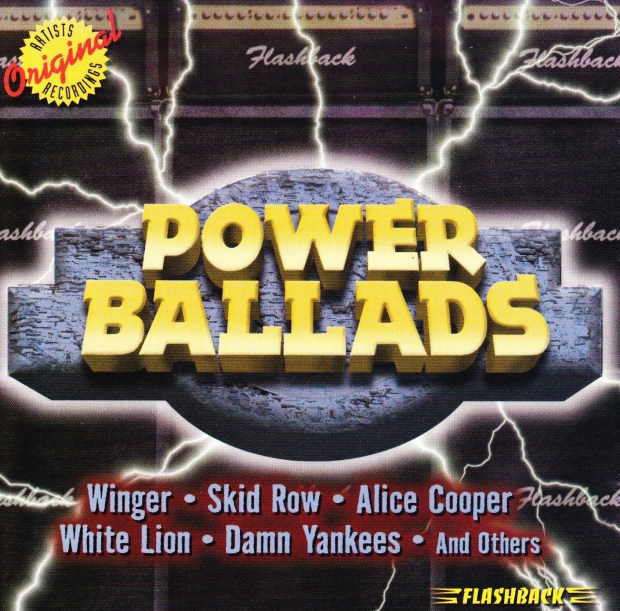
Not every section of The Twilight of the Gods works equally well. The “dad rock” chapter, while entertaining enough, goes on too long with its Wilco vs. Pearl Jam showdown. But Hyden mostly stays on point, often keenly so. Through the real-life example of his own divorced mother, he discerns a generational class of women who by the Eighties had moved on from the randy sex anthems of Aerosmith et al. Instead, they welcomed the embrace of goopy power ballads like “Open Arms” by Journey and “Keep on Loving You” by REO Speedwagon. But for good reason. Here, wised-up sensitive men were also looking for something more lasting. “These power ballads are about damaged people trying to make a go of love despite trying circumstances” and Hyden has the stats to mark this as a growing demographic.


Divorce Rock? Singers of this song type were often (and improbably) culled from glam metal bands.

As the author observes, eventually “you’ll see there is no beginning or end to music, only grooves that you can lock into until you find another groove.” But there is an end to the mortal coil and early on in the book he makes note of the rock notables who passed on while he was working on it: Chuck Berry, Gregg Allman, Leonard Cohen etc. Each of these deaths is mourned personally (online) often in ways that are inter-generational. In the the closing pages he notes, “The exaggerated arc of rock stardom creates a framework for understanding our own lives. Now classic rock is helping us understand, and accept, the inevitability of death.” Not the most pleasant thought, but I’m glad that Steven Hyden has tackled this thorny subject with such insight and panache.
–Rick Ouellette

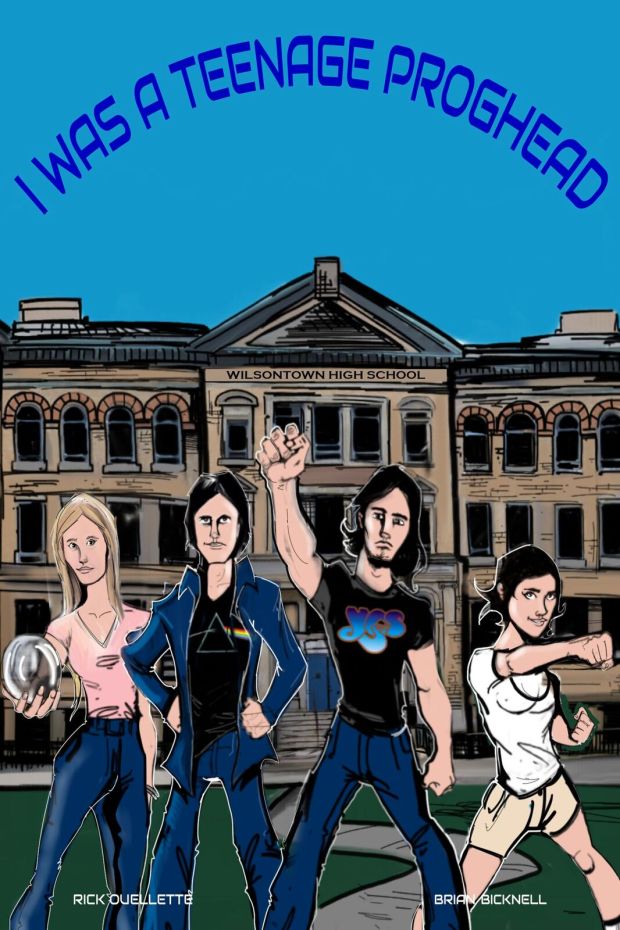
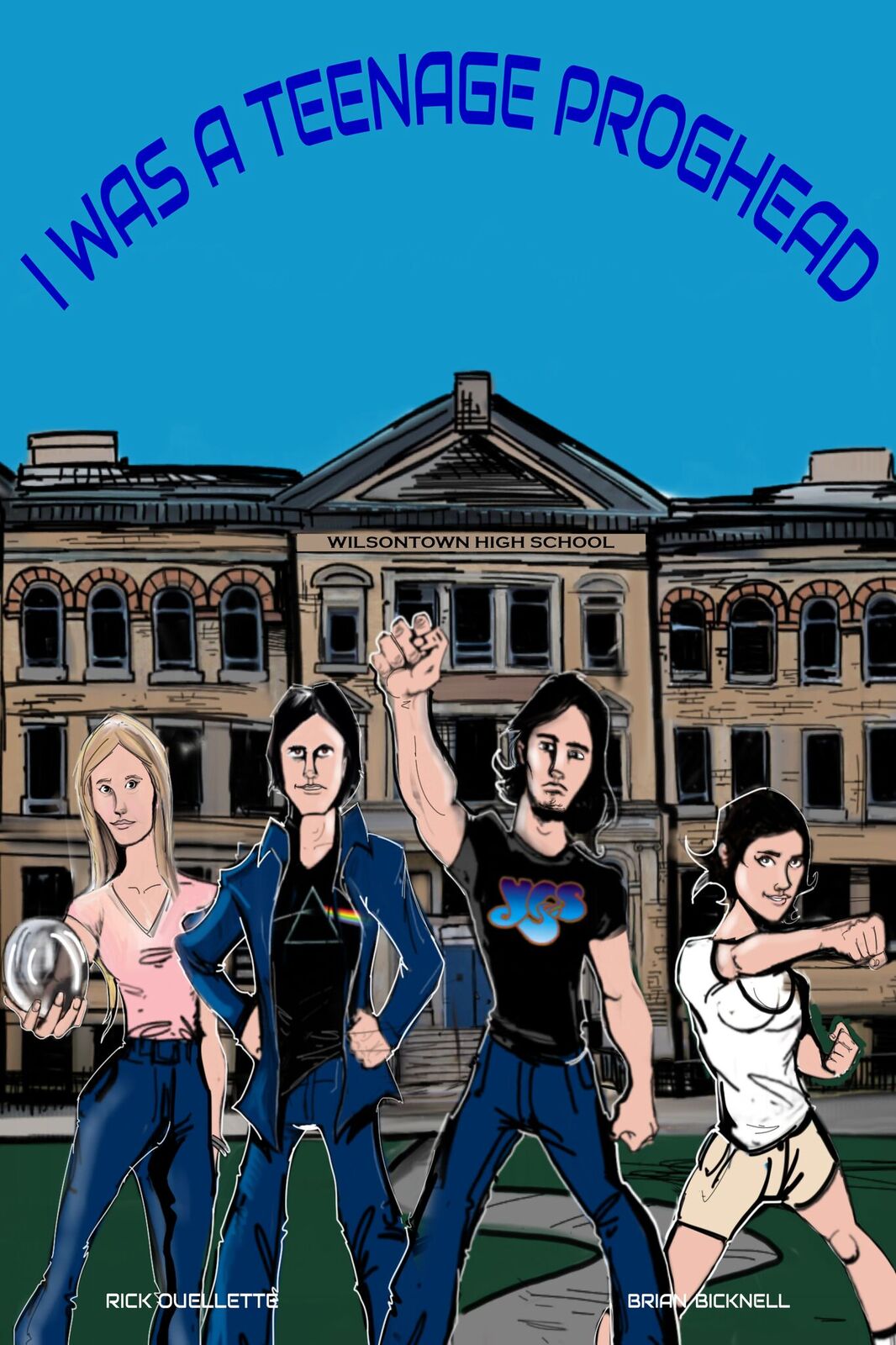
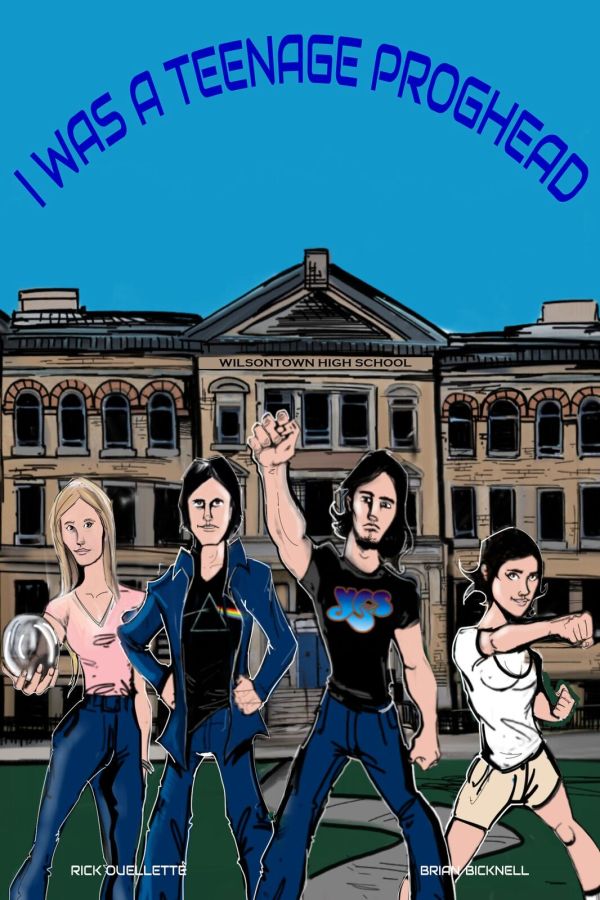
Now available: The complete “I Was a Teenage Proghead” comic book!


Comic Book

Postage included (even outside the USA), please provide mailing address in PayPal

$5.00

Spin yourself back down all the days to…
Wilsontown High School, 1974

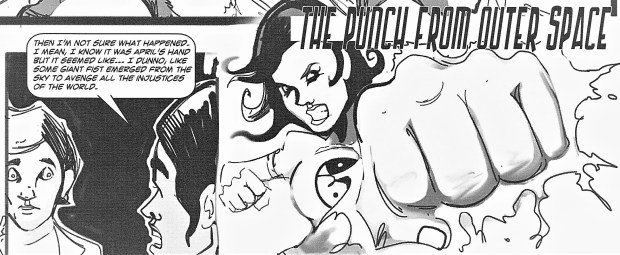
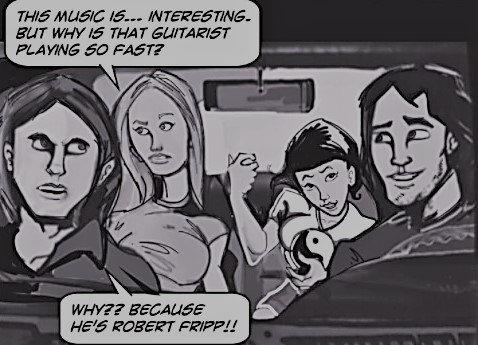
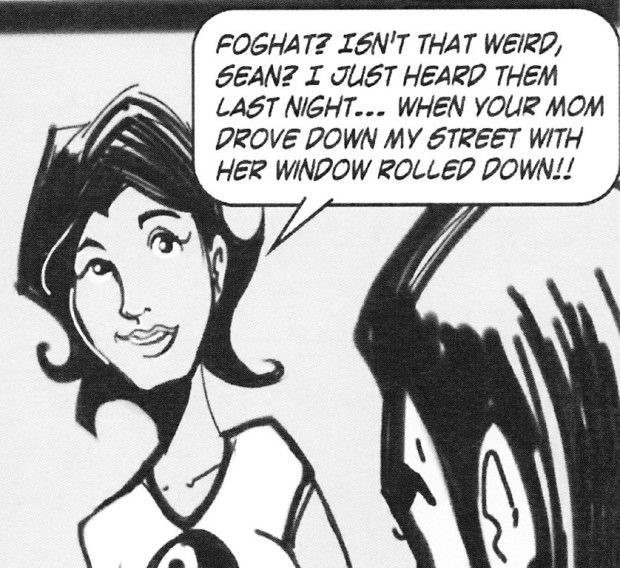
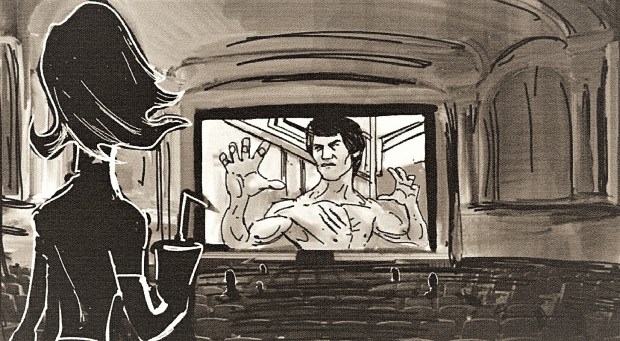
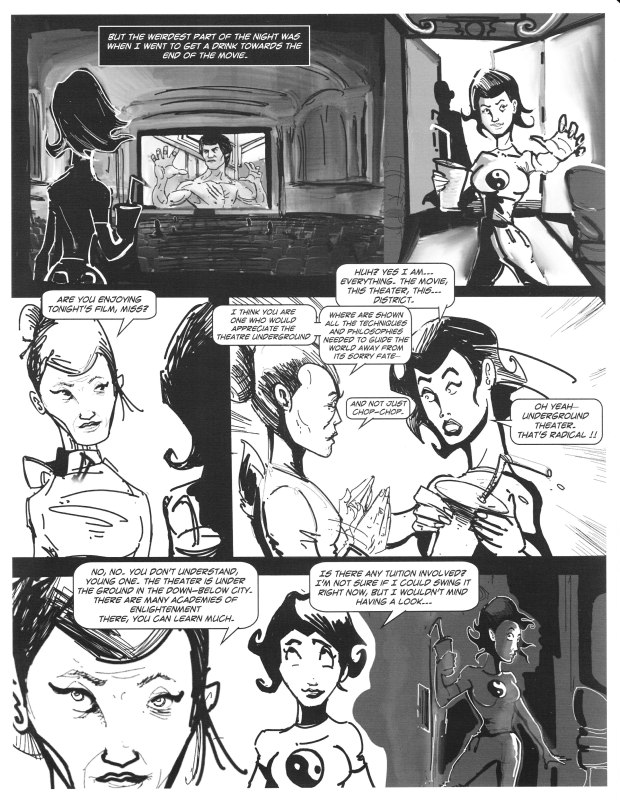
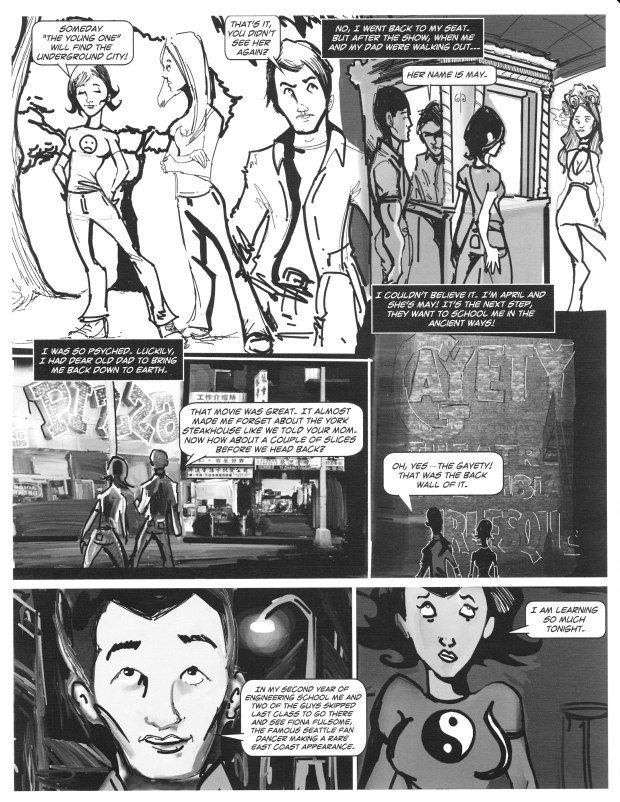
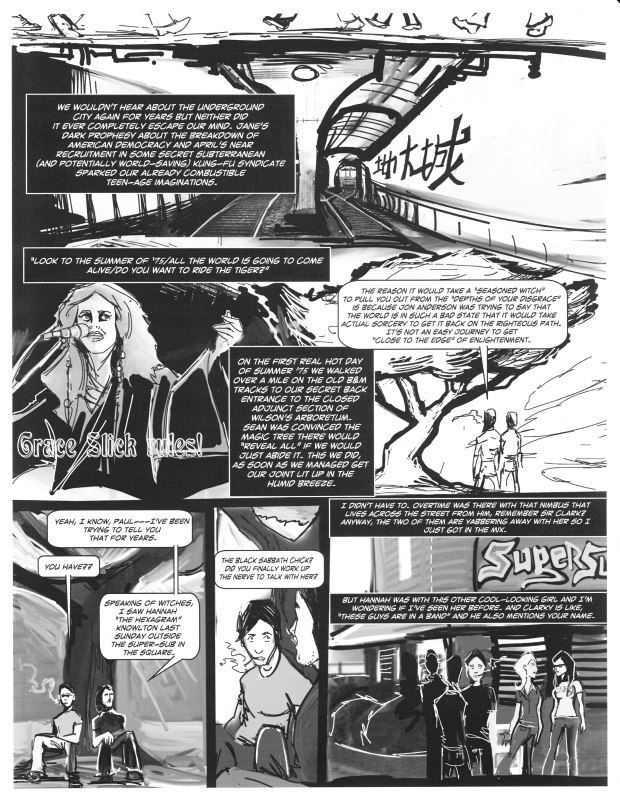
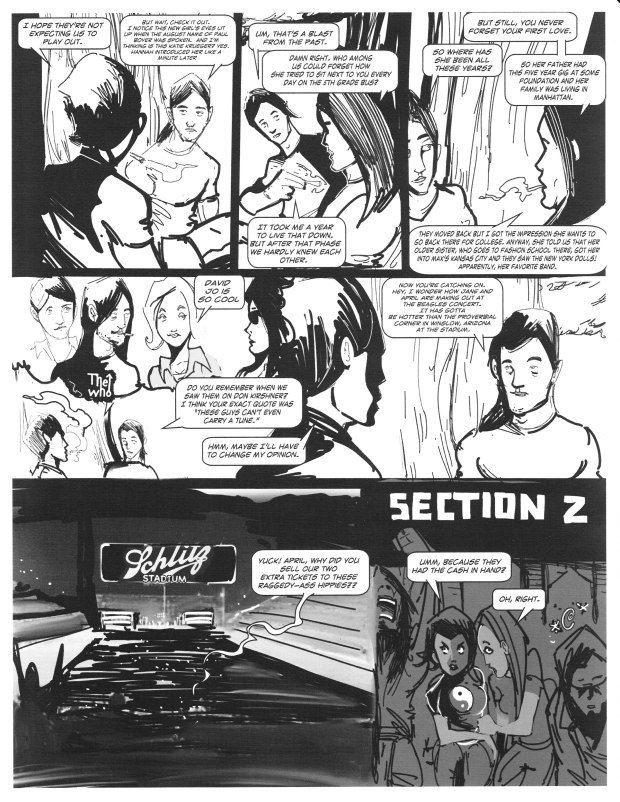
It was a time when the hair was long and so were the musical attention spans. That fall the mellow vibe of Wilsontown High gets disrupted by a mysterious rich-kid bully. But he makes a “sad” miscalculation when he focuses his grievances on Sean and Paul—two know-it-all aspiring rock critics—and their two new friends: clairvoyant Jane Klancy and kung-fu enthusiast April Underwood. Things are going to get personal in a hurry…

It’s here! The complete 32-page “I Was a Teenage Proghead” is now available in a shiny new standard comic-book format. Text is by me (Rick Ouellette) and artwork is by Brian Bicknell. The recently added 8-page epilogue catches up with the kids in the summer of 1975, a year after the events of Part One.

This project is 100% author-funded. If you would like to support indie, rock ‘n’ roll-inspired comics, you can purchase your own copy (and/or buy one for a friend) for only $5, postage included.

Thanks, Rick Ouellette

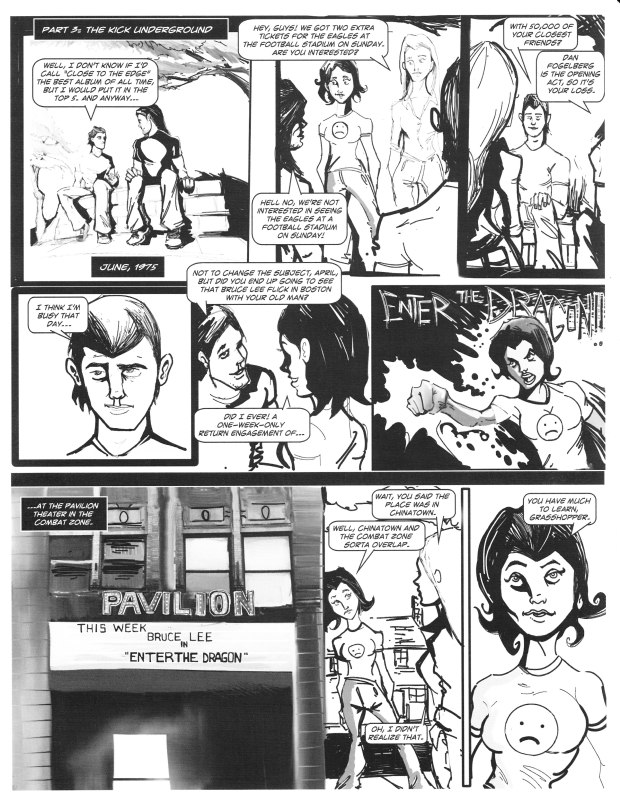
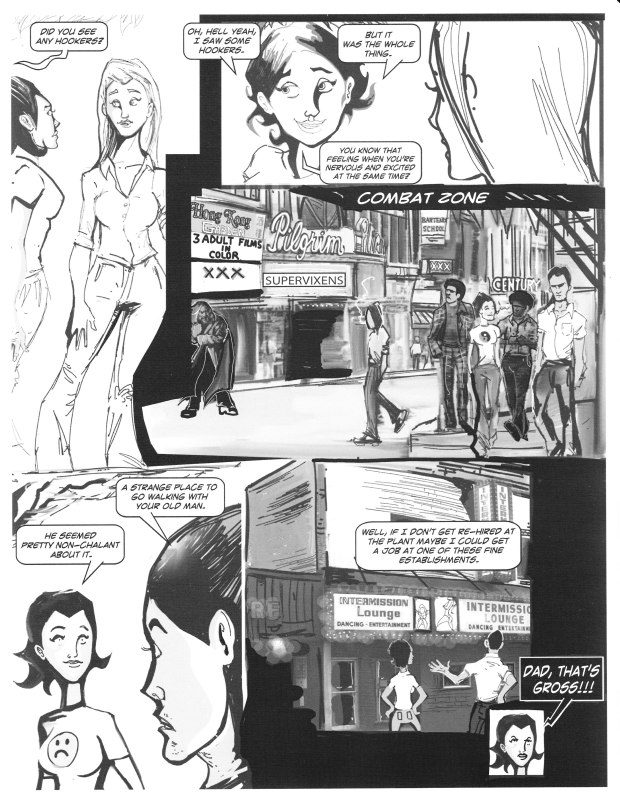
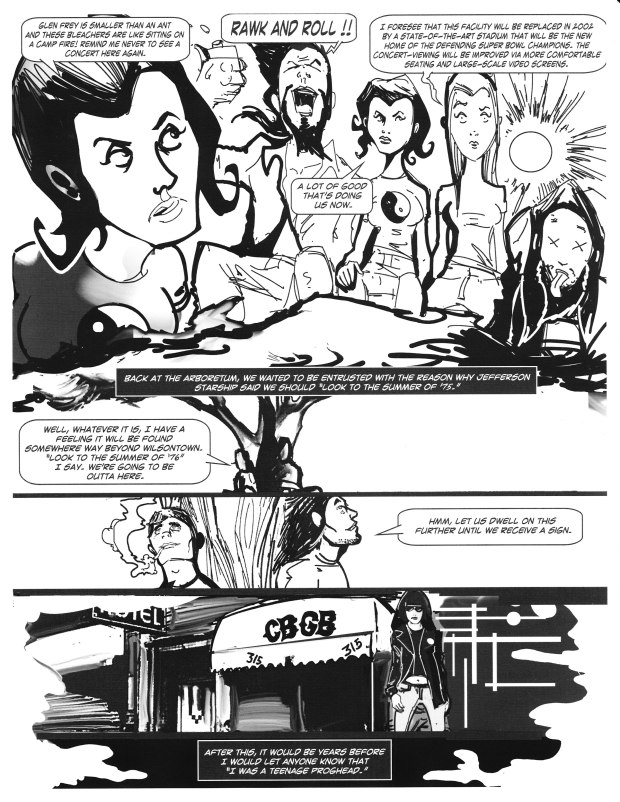
“I Was a Teenage Proghead” Part 3

This is final installment, see below the final page to find out how you can obtain a FREE copy of the full 32-page “Proghead” comic book when it comes out in print next month.

Text by Rick Ouellette, Illustrations by Brian Bicknell


This is my first foray into the world of indie comics and the first time in 25 years that I’ve written any fiction! So feedback is important. The first five people who comment with something specific that they either like or dislike about the comic will get a FREE copy of the complete 32-page “Proghead” comic book when it comes out next month. Entries outside the USA are welcome! I will contact you when the time comes for details. This is a print item only. Although I did not post Part Two of this to protect my intellectual property, you can look at Part One by looking for the link below. Thanks, Rick

Make Mine a Double #6: Grand Funk’s “Mark, Don & Mel” (1972)

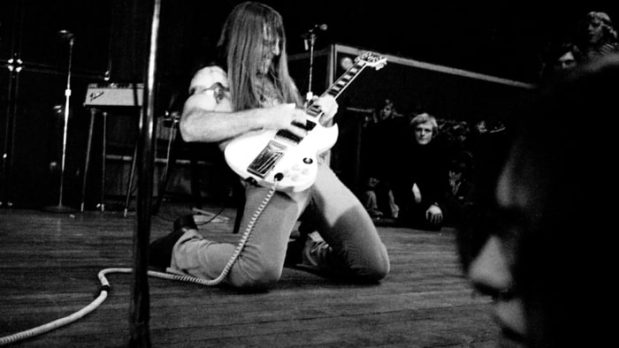
What separates the names Mark, Don and Mel from those of say, Moses, Cleopatra and Napoleon when it comes to their relative significance in world history? Apparently not much. That’s at least what you would think if you took at face value the shameless audacity of the liner notes to this Grand Funk Railroad compilation album released in 1972. Written by their then-manager Terry Knight, this proclamation, pictured as written on a parchment scroll (!!), was the last salvo in a monomaniacal hype campaign that pitted him in a three-year war of words with America’s rock music press. That Messrs. Farner, Brewer and Schacher should find fame and fortune in the rock and roll business would probably have sat better with the critics if it had just been left at that. The hard-working and hirsute power trio from economically distressed Flint, Michigan was not the most imaginative or technically proficient band to ever come down the chute. But they busted their tails in their emerging arena-tour economy and their manic stage show earned them a large, and largely blue-collar, following. But by constantly stating Grand Funk’s real value in terms of the Most Albums Sold or Quickest Sell Outs practically ensured a backlash by a music press that Knight claimed to be the enemy of the people. The divisive nature of this episode in pop history has some interesting parallels to the socio-political climate that we are dealing with in the U.S. today.


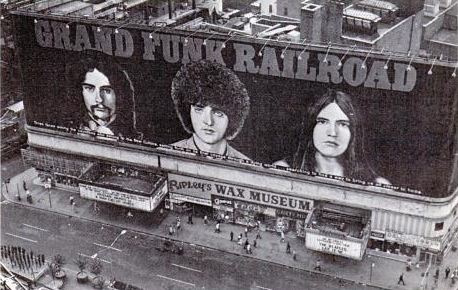
Terry Knight got Capitol Records to fork over $100,000 for this colossal Times Square billboard of Mel, Don and Mark (from left to right).

For this 3-year period, Grand Funk was statistically the #1 band in the USA. During this time, Terry Knight’s leadership was marked by extreme self-absorption, intellectual vacancy, shady business dealings, a distinct persecution complex and the demonization of a press corps who called him out for appealing to the baser instincts of a demographic that had felt neglected. Gee, sound familiar? To get at the full story, let us wind back the parchment scroll a little bit. Knight, who hailed from the Flint area like the three guys he was fated to manage, began his career as a radio DJ but after burning a few bridges in that field tried his hand as a singer in the mid-Sixties. The result was Terry Knight and the Pack, who scored a few regional hits. The biggest of these was his histrionic version of the oft-covered “I (Who Have Nothing).” But soon Knight left performing to concentrate on the business side of things. Some of the Pack people, which now included guitarist Mark Farner and drummer Don Brewer, continued on the club circuit. But a dubious wintertime booking on Cape Cod left them stranded after a major blizzard in Feb. of 1969 (I remember that one well, having grown up on the North Shore of Massachusetts). Fed up, they phoned up Knight and asked him if he would manage them. Knight, who was several years older than Farner and Brewer agreed, so long as they agreed to do exactly as he told them. Mel Schacher, formerly of ? and the Mysterians was added on bass and a record deal with Capitol (for whom Knight was working) was quickly hammered out. Under their new moniker, based on the Midwest’s Grand Trunk Railroad that passes thru Flint, they released their first album, On Time, that August.

But the record, with Knight’s less-than-auspicious production values, sounded a bit tinny—more like heavy aluminum than metal. The first single off it (“Time Machine,” which also kicks off this compilation) was the type of bare-bones blues rock that was decidedly aimed at a lower common denominator in these peak years of Hendrix-Clapton-Who-Stones etc. The critics pounced, decrying this “regressive rock” that was like catnip to an early-teen demographic. These were the hippies’ younger siblings, perusing the record sections of countless department stores and anxious to start attending big concerts. It was an emerging market and Terry Knight was all over it. Under his strict directions, the trio gave a balls-to-the-wall performance at thundering volume every night. Finesse was sacrificed at the altar of frenzy. A nice studio track like “Into the Sun” (included on MD&M) had an instrumental intro whose soundscape was more reminiscent of progressive than regressive rock but on the double Live Album it was extended to twice its original six-minute length and culminated in an ear-splitting crescendo of guitar feedback, the part of the show where the ever-shirtless Farner was obliged to hump his guitar a la Hendrix. The kiddies were sent into a tizzy just as they were during Don Brewer’s earlier 7-minute drum solo, judging from the noise level of howling fans.

This was definitely not the first choice of more discerning rock fans and record reviewers, but the band certainly struck a vein. They toured early and often, building a huge base. They released five studio albums in little over two years, all of them went gold as did the live album, which I was very excited to obtain when I was thirteen—critics and parents be damned. Side Three of Mark, Don & Mel was devoted to this notorious concert document, including the track that contained the drum solo. Listening to some of the more choice cuts on Mark, Don and Mel nowadays, like their turbo-charged remake of the Animals’ “Inside Looking Out,” is a fun throwback to the elemental rock & roll joys of our youth, esp. for those of us just coming of age. For the older peeps of the music press, it was a different story. On the inner paper sleeves of this record, are re-printed articles that paint a less-than flattering portrait of the band. Sample headlines:

“Grand Funk Railroad Finks Out In Concert”
“Hot Group Gets Cold Shoulder At Home”
“E Plurbis Funk, All Others Pay Cash”

or, cutting straight to the chase:
“Grand Funk is Lousy”

It may seem strange to include these clippings in a best-of album whose manager-composed liner notes begin: “From the dawn of recorded history, stemming through the lifetimes of every man, woman and child who ever walked upon the earth, there have been but a handful whose fate it was to become known as Phenomenon.” (Dang, even Spinal Tap would be embarrassed by that). But by the time Terry Knight put pen to parchment his solipsistic reign was nearly over. The band had become more and more suspicious of why they were still on a weekly salary after all their record-breaking exploits and soon enough found the consequences of running all your publishing thru a scheming agent that had been working for the record company you signed with. He was making at least three times as much as the band members and had tied up much of their earnings in tax-shelter investments, some of which were later disallowed by the IRS.

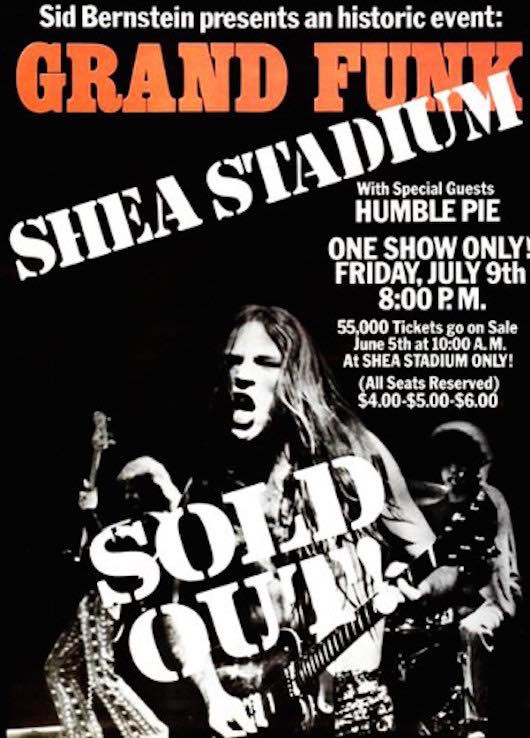
The ugly split came about just around the time of what should have been their crowning achievement: their blockbuster 1971 show at the 55,000-capacity Shea Stadium in New York which they sold out in 72 hours despite the fact that Shea’s box-office windows were the only outlet (the Beatles took several weeks to sell out the same venue in ’65). Albert and David Maysles, the famed documentary-making brothers who were just six months removed from the release of Gimme Shelter, had been hired to make a film of the group. But for Terry Knight, it was a triumph tainted by both his bitterness at the media and the ridiculous self-aggrandizement that he projected onto his charges. (Of course, these two elements fed each other: Knight was livid when he threw a lavish press conference to announce the Shea gig and only six of the 150 invited reporters showed up).


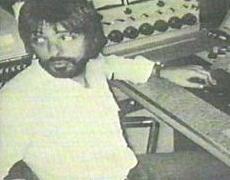
Terry Knight in the studio. “I’m in control from now on, you hear! Now, tell me, how do you work these controls?”

In a released statement, he said that the mega-show was “the next logical step in (Grand Funk’s) now-famous not so logical nose-thumb to the media critics who have been consistently relentless in their outrage at the group’s soaring popularity.” He claimed for his clients’ the mantle of cultural revolutionaries: “An appearance of Grand Funk Railroad does not announce a musical concert. It hails a gathering of people… it is politics, that supersedes music.” Considering the decibel-soaked maelstrom of the group’s live act, deemed “obnoxiously loud” even by their own road manager, the non-believers would at least agree that GFR superseded music… in all the wrong ways.

The end came soon after, during a screening of the Maysles’ Shea footage. According to later interviews with Mark Farner, the guys were wary of Knight from the start but appreciated his music biz connections. The working stiffs touted as gold (record) plated demi-gods had had enough and confronted Knight for the books. In a fit of pique, they fired the manager a short time after, though Knight points out they were only three months away from the end of that contract and could have renegoitated then. “How stupid can you get?” he said of his ex-clients. When you’re dealing with a Terry Knight, it’s a thin line between being a demi-god and a dumb-ass.


As relations between the band and Terry Knight became frayed, funding for what could have been a fascinating film by the Maysles Brothers was cut off. This Shea Stadium clip survives.

So naturally the lawsuits started flying and Grand Funk were eventually able to buy out Knight’s interest at great cost to themselves. But they quickly recovered and in 1973, with new keyboardist Craig Frost and a real producer in tow (Todd Rundgren), they streamlined their sound and scored their first #1 single with “We’re an American Band.” By that time Knight, who had been let go by Capitol Records, was out of show biz. Although interest in GFR waned at the end of the decade (they were a uniquely Seventies “Phenomenon”) they soldiered on, sometimes with different personnel. But by the mid-Nineties they re-formed in their original trio form to make some hay on the classic-rock circuit.


Long live Mark, Don and… Dennis?? Graffiti on a Grand Trunk R.R. overpass in Flint celebrates an Eighties line-up of the city’s favorite sons.

How does the early Seventies Grand Funk craze contain early inklings of Trumplandia?

1. Play to the Base and the Fake News impulse.

Terry Knight saw the growing appeal of the hard-rock power trio and stripped it down for parts to reach as large an audience as possible without striving for aesthetic advancement. Gone were the artful touches of predecessors like Cream. They maxed out the volume and did songs that seemed expressly written to rile up a live audience. Two of these (“Are You Ready” and Footstompin’ Music”) are included on MD&M. When the music press, whose natural role it is to analyze records for potential buyers, noted this more primitive style, Knight played the Fake News card. He suggested that the critics only said that because they were jealous of the band’s (and his) materialistic success. The naysayers then got more personal in their attacks and it just escalated from there.

2. The Rightward Drift of Middle America

Until Knight started harping on the subject, the core of GFR’s fan base probably didn’t even realize it had been shortchanged by the Coastal Elites of Haight-Ashbury, Laurel Canyon and Greenwich Village. Now, this base wasn’t pandered to in the outrageously vulgar and racially-hostile way of a certain current U.S. president during the 2016 presidential campaign. The band had African-American fans and, on the surface anyway, left-of-center views. They were anti-Vietnam and pro-ecology, though songs like “People, Let’s Stop the War” and “Save the Land” didn’t offer much more than their titles. (More admirable, and more unusual for the time, was their anti-hard drug stance). But Trump’s pig-headed avarice is backwards-reflected by Knight’s silly insistence that his group’s music wasn’t nearly as important as “Mark holding his guitar over his head and saying, ‘You see this, Brothers and Sisters, you see me? I’m free. I own this stage, it’s mine and it’s yours.” This has echoes of the long-time Republican propaganda tool that has plebeians feeling like “undiscovered millionaires” and voting against their own interests and in favor of obscene tax cuts for the wealthy because they will be one of then someday, and in the process helping to turn the land of opportunity into one of chronic income inequality. It would not surprise me if a much larger percentage of Grand Funk fans of the Seventies became Trump voters than, say, people whose favorite band was Jefferson Airplane. (Some of this anti-liberal bias was not so latent: in an October ’72 interview Mel Schacher said, “One thing is sure, if McGovern gets elected, they’ll be a depression”).

3. Ignore the Flyover States at Your Own Peril

How fitting that Mark, Don and Mel hailed from Flint in the future swing state of Michigan. The town’s auto plants started closing around the same time that GFR were riding high, leaving the city (and to a greater extent, Detroit) nearly empty shells. The capitalist evacuation of southern Michigan’s dominant industry and the more recent poisoning of Flint’s water supply as a result of cost-cutting by a tax-averse Republican administration, is the stuff of dire legend. But it’s leftie documentarian (and Flint native and GFR fan) Michael Moore, that was out there in 2016 warning complacent liberals who thought there was no way that Trump could beat Hillary Clinton in the general election. Hillary’s ill-advised crack that some potential Trump voters were “deplorables” must have rubbed the wrong way not only a lot of undecided voters, but chafed Moore’s working-class roots as well. The current noxious term for Middle America used by some (“flyover states”) has roots in the New Yorker’s famous cover of a Manhattanite’s view of America (a whole lot of nothing between the Hudson River and California) and even in the overstated snobbery of critic John Mendelsohn’s review of Mark, Don & Mel in a June ’72 issue of Rolling Stone, calling the music “worthless rubbish” and the group’s fans “insecure dingbats.” Sure, maybe they were people too prone to seek someone outside the accepted system to blindly idolize (ahem) but they hardly deserved that. Payback is a bitch, even when it takes over four decades to be delivered.

Sure, Grand Funk Railroad will not go down in history as the Einsteins of rock and roll. But they and their fans deserved better but for the lame-brain arrogance of their manager. He invited derision and it deflected off anyone in his orbit. Terry Knight ended up selling ads for a local newspaper in Temple, Texas where he shared an apartment with his adult daughter: it was her boyfriend that murdered Knight in 2004 after a drug argument. The lessons learned have a long reach as we find out in the Mark Farner interview below, where his magnanimity wins out over any hard feelings. So let’s take that to heart. The early Grand Funk anthem “I’m Your Captain” had a subtle anti-war theme that Michael Moore claimed was not lost on the very draft-liable young men of places like Flint, where the proportion of college deferments had to be a lot lower. As Mark repeatedly sings “I’m getting closer to my home” as if it were a mantra (enhanced by strings and oceanic sound effects) it seemed less about a returning veteran and more of a call to return to a larger American home. But over the long years since, that’s become a house ever more divided. To get back closer, it will take a little less certitude and a lot more mutual understanding from all interested parties. Are You Ready?

My latest book Rock Docs: A Fifty-Year Cinematic History, explores the social and musical history of youth culture through the prism of non-fiction film. To find out more, check out a 30-page excerpt at http://booklocker.com/books/8905.html