psychogeography

Placeology #10: Dead Mall Deluxe

There’s a scene early on in George Romero’s 1978 zombie epic “Dawn of the Dead” where a traffic reporter and his producer/girlfriend (along with two SWAT officers) flee the apocalypse in his helicopter. Seeking refuge, they come across a large shopping mall, and figure it may be a good place to hole up—even though many of the walking dead are already ambling through the empty parking lot towards the entrance.

Baffled, the producer asks, “What are they doing, why do they come here?” Her fly-guy looks down thru aviator shades and deadpans, “A kind of instinct, memory… this was an important place in their lives.” Howls of audience laughter were all but guaranteed.
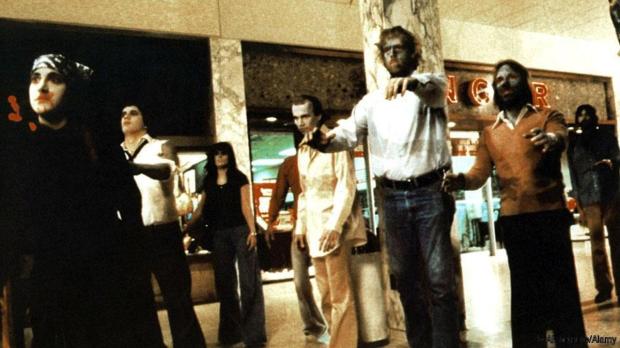
Hitting the mall, George Romero style.

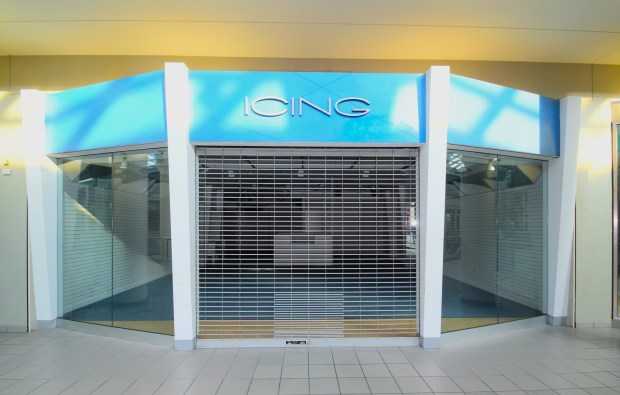
But comic relief aside, the large indoor mall was a significant place in the lives of many Americans. That is until Amazon came along. The double whammy of online shopping and the Covid pandemic caused many such shopping centers to see their vacancy rates skyrocket—making them more suitable as the setting of a ghost story than of a zombie rampage.
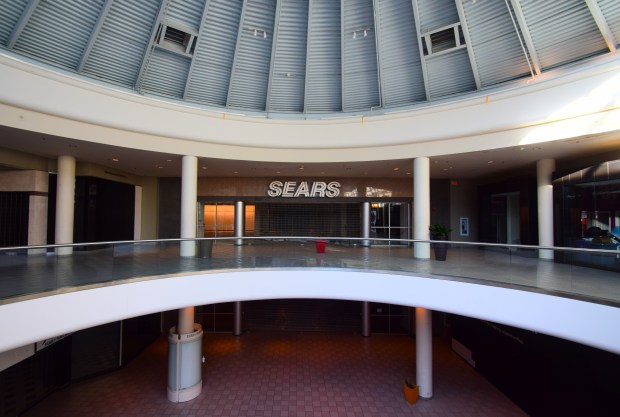
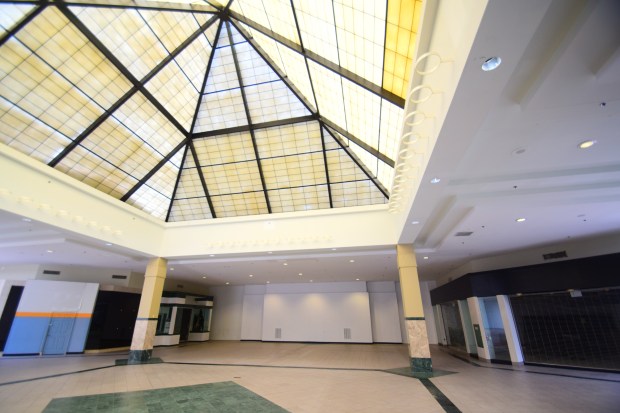
This trend has given birth to the new verb “deadmalling,” whereby urbex photographers and lovers of liminal spaces visit these forlorn victims of a fickle consumer culture. I recently hopped onto this bandwagon, visiting four struggling malls in the Boston area. (Emerald Square Mall, Liberty Tree Mall, Solomon Pond Mall and the Kingston Collection).

Since the middle of the 20th Century, these places were the engine that drove the American idea of identity-through-acquisition. But at least you had to get up and go somewhere, park and then walk to your destination store, then interact with another human being. They were also social gathering places, and many people of coming of age in those decades will fondly look back at the “mall rat” days of teenage bonding.
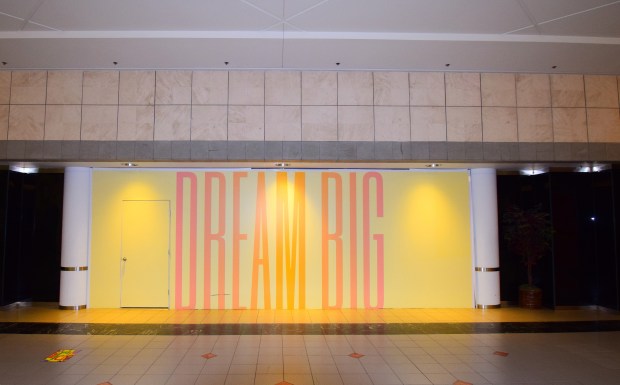
You won’t likely find roving bands of incorrigible kids roaming the corridors of dead malls. While they live it up on social media, and their parents buy “everything” on Amazon (if only I had a dollar for every time…), a mostly older clientele shuffle around and check out what stores remain or head to the multiplex cinema which always seems to be situated in the property’s deepest recess. Many are there to simply get some exercise—mall walking has long been a thing for seniors. It was a little eerie when I noticed that many don’t just walk straight down the hallways but hew to the perimeter, like they were assigned the outermost lane at a track meet.
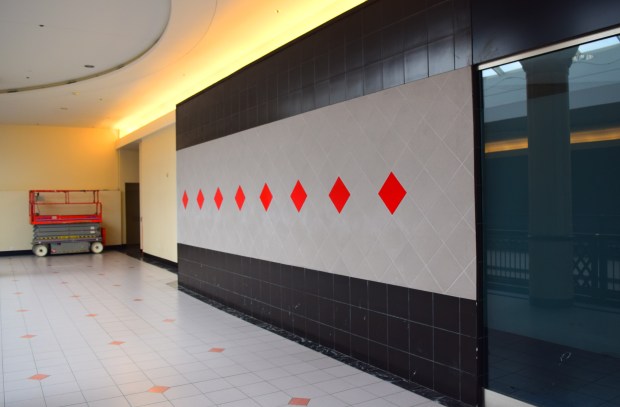
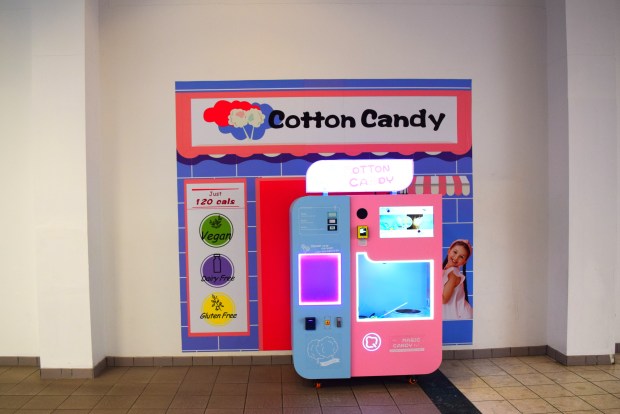
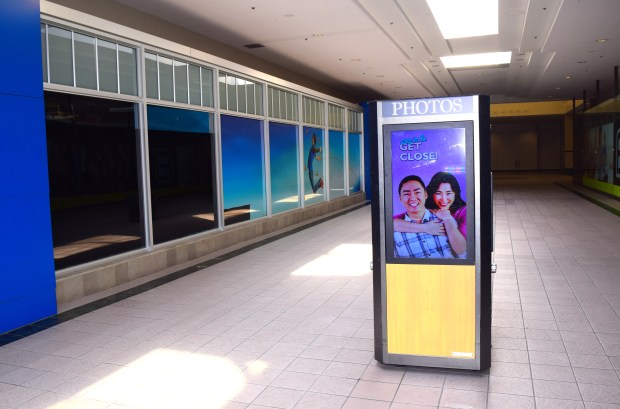
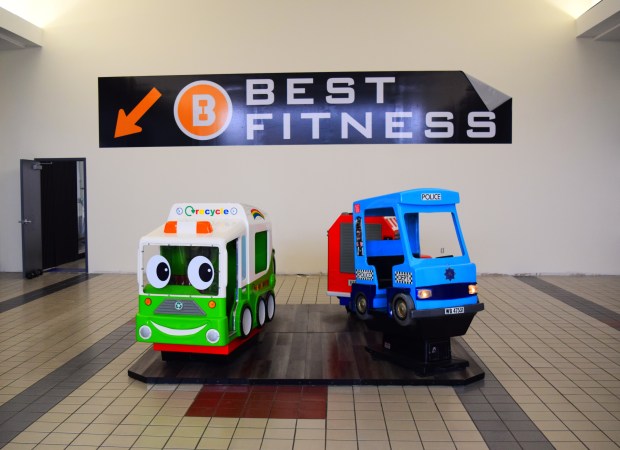
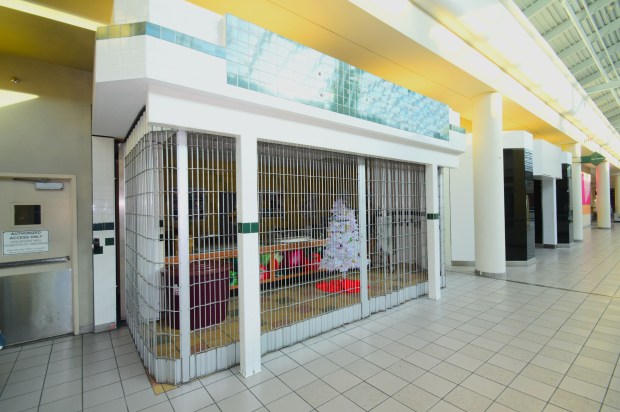
It’s all a bit unsettling, with its blank-faced side entrances, darkened food courts, former anchor-store dead ends and the isolated sitings of photo booths, massage chairs, kiddie rides and gumball machine stations. But there is also a weird, minimalist beauty to a lot of it, though I don’t believe the architects and designers ever imagined they would be appreciated this way.
While online shopping certainly has its place, its existence should not preclude previous ways of doing things, although I’m afraid that thinking through things is not currently a noticeable American trait. Amazon owner Jeff Bezos may be a very successful businessman, but he is far less successful as a human being (as anyone left at the Washington Post could tell you). His retail model has not only helped to close anchor stores but also uncountable small and middle-size businesses. Working at a mall might not be the greatest, but it beats the soul-crushing pressures of working at a cavernous Amazon warehouse, where many employees are only one rung up the ladder from bonded labor.
The malls that are surviving have opened themselves up to some smaller and/or quirkier retailers and added various events and alternate uses to help stem the tide. Some of them won’t make it and many others will likely lurch along in the strange twilight bubble they exist in now. One of them, the Monroeville Mall outside of Pittsburgh (where “Dawn of the Dead” was filmed) has recently added a museum/gift shop dedicated to “Night of the Living Dead” its (literally) ground-breaking predecessor in the original “Dead” trilogy. I’m sure the late Mr. Romero would appreciate that.

Text and photos by Rick Ouellette
Placeology #1: Psychogeography and You

The places we walk through or drive past, the sites we visit or that simply fall into our frame of vision, all have a heritage and inner spirit of their own. Even in our familiar everyday world, we are often just steps away from some location rich in hidden history and forgotten associations.

The ideational term “psychogeography” refers to the attainment of deep connections with man-made environments, usually by way of unplanned walks thru cities. It has been described as a “charmingly vague” practice by no less a man the French Situationist philosopher Guy Debord, who coined the phrase himself in 1953. It can also be seen as a more risk-averse cousin of today’s urban explorer subculture, which I’ve written about many times in this blog.

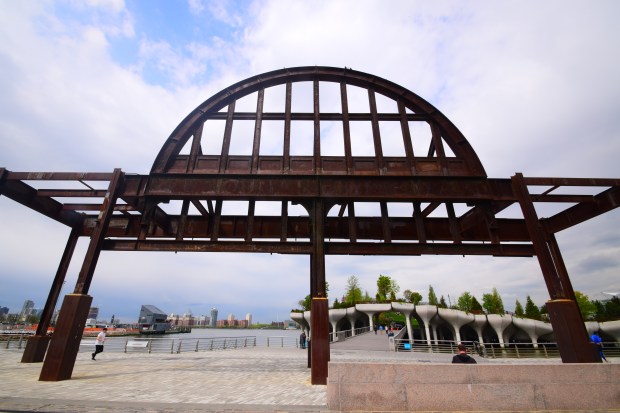
The preserved archway frame of Pier 54, where survivors of the Titanic disembarked from the Carpathia, now serves as the south entrance to New York’s Little Island.

But there is also a very practical side to psychogeography, that would do us all good to be aware of. The theory goes that the distractions and pressures of modern society have caused people to become disconnected from the public realm, leaving the one-percenters to run roughshod over the greater public interest. Understanding and appreciating our common built heritage can lead to thoughtful historic preservation and the design of more livable cities thru greater community involvement.

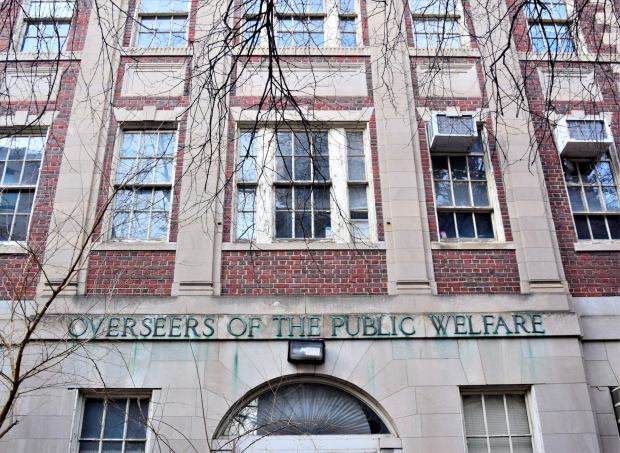
Winter’s bare trees reveal the vestigial facade of a paternalistic institution on Hawkins Street in Boston.

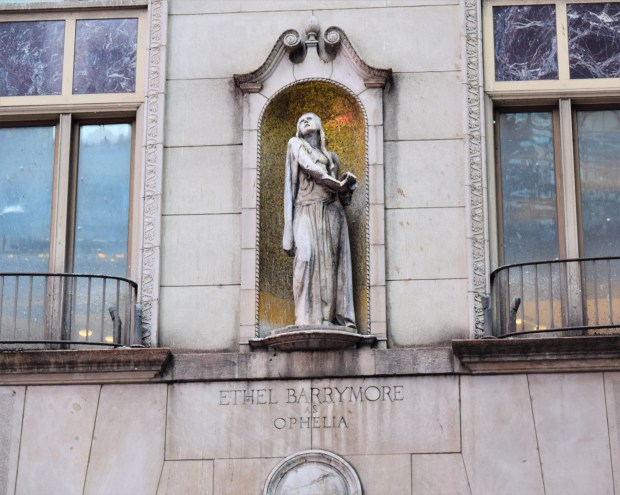
So while coming to understand the effects of the built environment can lead to a greater good, psychogeography can be both a passive pleasure or a wildcat experience. It’s something almost everyone has experienced, whether consciously or not. It can be the satisfaction of finding a great hole-in-the-wall eatery or tucked-away antique store because you wandered away from a usual walking route. It could mean tiptoeing into an off-limits but unguarded location to do a photo session with friends or discovering a fascinating historical vestige steps away from a throng of selfie-taking tourists, as in my photo below.

This statue of Ethel Barrymore, and of two other former stage icons, evoke an earlier era of Broadway, just a few feet away from the back of a gigantic electronic billboard in Times Square.

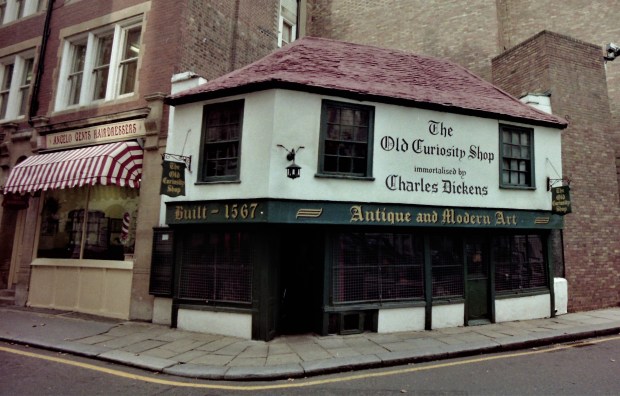
In his 2006 book “Psychogeography,” writer Merlin Coverley, traces this concept back to its immediate roots: French Marxists and Situationists. But he also vividly  digs back to an earlier era and the “urban gothic” stylings of authors like Charles Baudelaire, Edgar Allan Poe, Charles Dickens and Robert Louis Stevenson, showing how their “obsessive drifting (yielded) new insights.” Poe’s 1840 story “The Man of the Crowd” is perhaps the first examination of the mysteries and perplexities of the modern teeming metropolis. In “Dr. Jekyll and Mr. Hyde,” Stevenson shows not only the duality of man’s nature but the stark dichotomy of the different parts of London his split protagonist inhabits. Dickens was a famously keen observer of the same city (often engaging in all-night walks) and had the fame and power to influence social reforms in the darker aspects of the city he witnessed, the exploitation of children, the workhouses, slum conditions etc.

I stumbled on this Dickens landmark during a London walkabout in 1994.

It’s Baudelaire, quoted by Cloverley, who has the most telling description of the psychogeographer, which has as its alpha the Parisian flaneur (or boulevardier). “For the perfect flaneur it is an immense joy to set up house in the heart of the multitude… to be away from home and yet to find oneself everywhere at home… to be at the center of the world and yet remain hidden from the world.”

Sounds cool? If so, try out some psychogeography yourself. Put away the GPS and get to know your town. Stick up for livable cities and against gentrification. Patronize independent small businesses and out-of-the-way points of interest. Lastly, LOOK UP AND AROUND to see what I call the Museum of the Street, and feel a little of what it means to be “everywhere at home.”

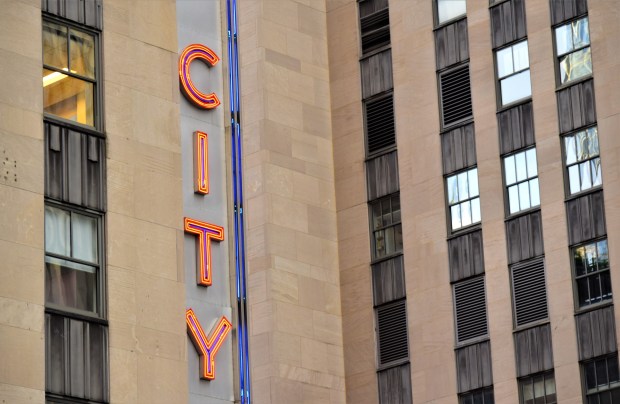
All photos and text by Rick Ouellette. Top Photo is Radio CITY Music Hall, NYC.

More info on my “Placeology” photo series coming soon!

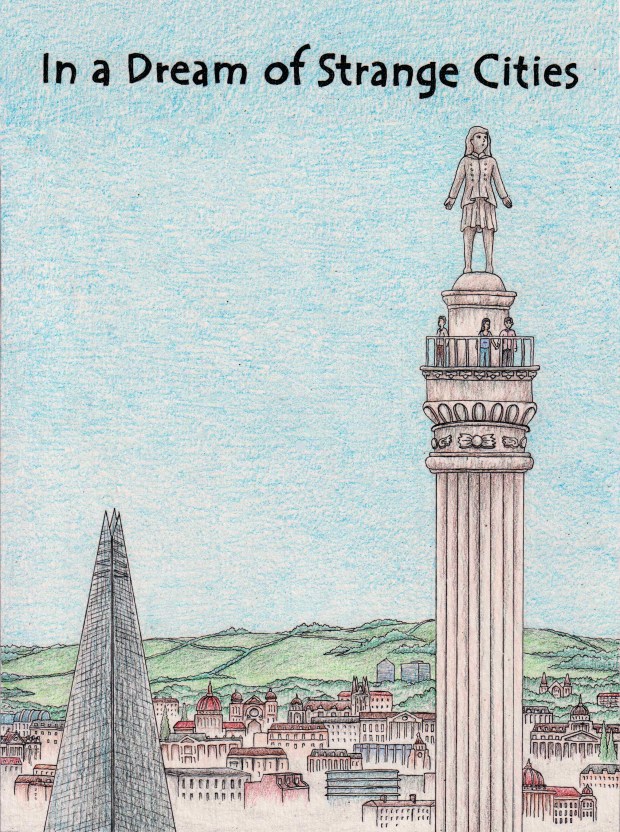
“In a Dream of Strange Cities” sneak peak

The familiar turns fantastical as “sleep voyager” Swain roams through fractured cities and societies, while meeting people bent on creating an enlightened breakaway state.

That’s my one-sentence blurb. What do you think?

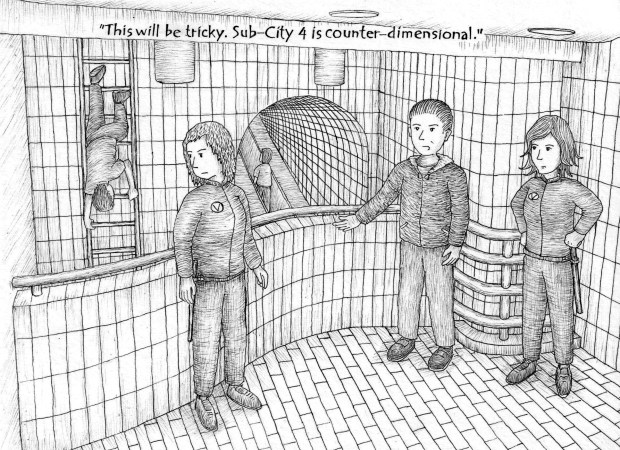
From the chapter “Cthonic Days”

“In a Dream of Strange Cities” is an in-progress illustrated novel composed of several actual dream-state narratives, overlaid with a fictional framework. These loosely connected stories probe personal life transitions and societal shifts that arise from an autonomous subconscious. The text and illustrations will draw from themes of contemporary folklore, urban exploration and psychogeography.

I have just completed the draft text and have a nice handful of concept illustrations by Indonesian artist Ipan. A sample chapter will be posted soon. For more info, follow this blog or leave a message below.

Thanks, Rick Ouellette