Rock books

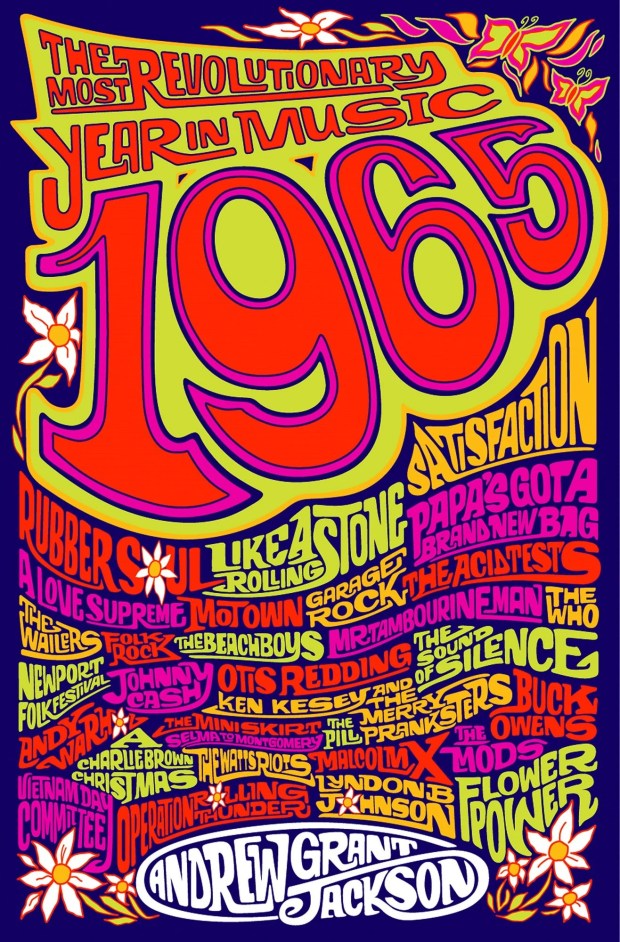
Books That Rock: “1965, The Most Revolutionary Year in Music” by Andrew Grant Jackson (2015)

It was 60 years ago that the music world was turned on its head, smack dab in the middle of that terrific and turbulent decade. While there is room for debate as to what was “the most revolutionary year in music,” rock scribe Andrew Grant Jackson makes a great case for ’65. Consider masterwork albums ranging from the Beatles’ Rubber Soul to John Coltrane’s A Love Supreme. How about era-defining singles like “(I Can’t Get No) Satisfaction,” “Eve of Destruction,” “Like a Rolling Stone,” “Papa’s Got a Brand New Bag,” “My Generation” and “The Sound of Silence?” The year also saw the rise of garage rock and psychedelia. And it all happened against the backdrop of tumultuous events like the Watts Riots and the first large-scale protests over the Vietnam War.

What makes this book so compulsively readable is Jackson’s knack for conflating musical events with related social themes of the age. One of the best examples is the advent of the Pill and the concurrent dawning of the “Free Love” era and the shattering of the age-old “Madonna/whore” complex, at least among the younger generation. (Women with the upper hand started making appearances in Beatle songs like “Day Tripper” and “Ticket to Ride”). Models such as Edie Sedgwick and Twiggy were “waifish and full of wonder” and made words like “tramp” seem suddenly outdated. Jackson writes: “An act (casual sex among unmarried people) that had always been shameful now acquired a butterfly-winged lightness.”

Edie Sedgwick and Twiggy

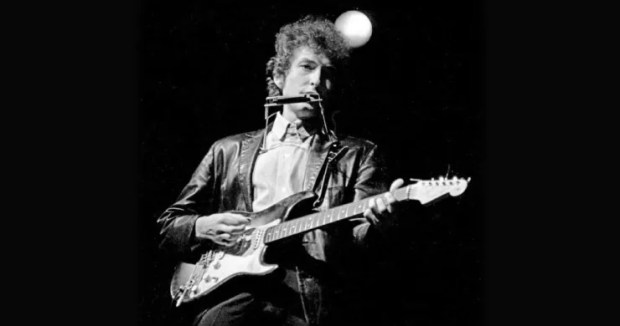
But it was still largely a man’s world and Bob Dylan’s “Like A Rolling Stone,” which has been praised to high heaven for six decades, is a rather harsh put-down of a poor little rich girl—supposedly inspired by Bob’s brief affair with the vulnerable Sedgwick. Brilliantly composed for sure, but I prefer the more spiritual “Mr. Tambourine Man” as my 1965 Dylan touchstone. The Byrds’ #1 hit version in June was the early high-water mark of the folk-rock movement.

Dylan was famously booed by many for “going electric” at the Newport Folk Festival that July but, inspired by the global success of the Beatles and Stones, he already had at least one foot out the door of folk-music orthodoxy and was destined for rock stardom himself.

Jackson points out that, in a year which saw the savage attacks on civil rights marchers in Selma and elsewhere, it was in the music world that pointed the way to positions of peace, solidarity and understanding. The Temptations’ “My Girl” was #1 pop hit the same week that ABC interrupted the Sunday Night Movie to show Alabama state troopers brutal attack on non-violent black demonstrators.

When the Beatles invented the big stadium rock concert at New York’s Shea Stadium in August, the opening acts were Motown singer Brenda Holloway, jazz/soul saxophonist King Curtis and the Mexican-American band Cannibal and the Headhunters. It was the type of diversity that didn’t have to announce itself. Things were bubbling up all over: in Jamacia the new reggae band Bob Marley and the Wailers released no less than 17 singles that year, including an early version of “One Love.”

Another sign of increasing cultural cross-pollination was the dawning influence of Indian culture. The first salvo was the bewitching drone ambience of the Kink’s “See My Friends.”

Ray Davies was influenced by chanting fisherman in Mumbai when coming up with this Kink Klassic.

Then there was the fateful moment when George Harrison met up with a sitar on the set of “Help!,” the Beatles’ second feature film that was shot in early ’65. By year’s end George was playing one himself on “Norwegian Wood.” More importantly, the group was gifted a copy of Swami Vishnudevananda’s “The Complete Illustrated Book of Yoga,” The more serene, inward-looking type of wisdom offered by Hindu philosophy would become hugely influential in the years to come, offering an alternative to the kind of might-is-right that brought the U.S. into the Vietnam quagmire.

While the year 1965 may not ever be considered as relevant as Summer-of-Love 1967 or Woodstock 1969, Jackson has made a very compelling case that the groundwork for all that came later is in the Big Bang year of ’65 and this brilliant page-turner will have you convinced. —Rick Ouellette

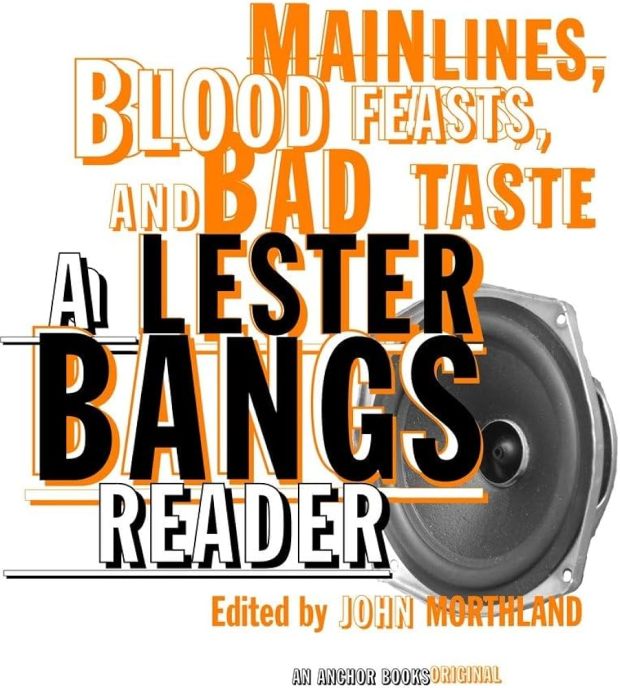
Books that Rock: “Mainlines, Blood Feasts and Bad Taste: A Lester Bangs Reader” (2002)

“The American Dream is only a dream, and the American Reality is imperative, a powder-keg situation.” Lester Bangas, 1968.

These are soul-killing times if you are among those who believe that the affairs of the world should be handled with empathy and common decency. The Orange Puke from Hell is back and we’ve gone from the nagging but manageable general anxiety of modern life to the psychic (and sometimes literal) equivalent of having a band of greedy twisted degenerates roaming your neighborhood, out to rob you of your life savings and your medicine, while knocking your grandma to the pavement and kidnapping your neighbor. An administration that has gleefully performed every perdition short of forcing kids to eat lead paint.

While mentally barricaded thusly, I began looking for something to read that would be entertaining but intellectually fortifying. I was seeking something relevant but far removed from the current hellish news cycle and the persistent panic-filled postings of my liberal friends, I came across an unlikely hero in Lester Bangs.

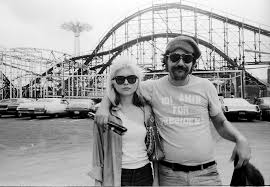
Lester and Debbie Harry on Coney Island back in the day.

Unlikely in the sense that Bangs, the infamous raconteur and rock critic el supremo, died of an accidental drug overdose in1982. Multitudes of music fans of that era were familiar (if not always in agreement with) Lester’s discursive reviews and articles appearing in Rolling Stone, Creem, the Village Voice and other periodicals. Younger folks might have got to know him from the iconic 1987 collection “Psychotic Reactions and Carburetor Dung,” edited by Greil Marcus or from Philip Seymour Hoffman’s colorful portrayal of him in the 2000 film “Almost Famous.” I had been familiar with Bang’s work since his gleeful hatchet job on Paul McCartney and Wings appeared in a summer of ’76 cover story in Creem. But I was never aware of this second anthology of his work (from 2002) until chancing upon it recently at a used bookstore.

Edited by John Morthland, “Mainlines” is notable for including pieces of a more personal nature, including travelogues and a few entries of a previously unpublished manuscript he wrote at age 19 in that despairing and violent year of 1968—including the astute “Two Assassinations and a Speedy Retreat into Pastoral Nostalgia.” This gives the reader valuable insights (that still ring very true today) into Bangs as the grizzled idealist. But fear not, there’s still plenty of the crazy Lester we knew and loved, with entries like:

“Jim Morrison: Bozo Dionysus a Decade Later”

“Dandelions in Still Air: The Withering Away of the Beatles”

“Stevie Nicks: Lillith or Bimbo?”

“Grace Jones Beats Off”

“Deaf/Mute in a Telephone Booth: A Perfect Day with Lou Reed”

Bring Your Mother to the Gas Chamber!” (his epic essay extolling the virtues of Black Sabbath).

Along the way he also promotes the idea of goody-two-shoes Anne Murray as pop music’s ultimate female sex symbol (“a hypnotically compelling interpretrix with a heavy erotic vibe”) and fully embraces the feminist career move of Helen “I am Woman” Reddy. (“All men but me are spuds. What I would like to see is an all-girl band that would sing lyrics like, ‘I’ll cut your nuts off, you cretins,’ then jump into the audience and beat the shit out of the men there”).

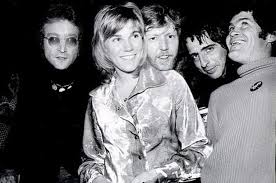
Anne Murray at her sex-symbol peak, with male admirers John, Harry, Alice and Mickey.

You see, Mr. Bangs was in on the great Cosmic Joke. We should be too. Because even at his snarkiest, you could always tell that Lester cared a lot—about music, about culture, about his country.  The Cosmic Joke posits that despite all the meaning and purpose we try to attribute to life on earth, we are all headed to the same end (“fellow passengers to the grave” as Dickens put it) so we best embrace our common humanity, give a hoot about something other than ourselves, and have a few laughs along the way.

Bangs had himself plenty of laughs, as you might be able to tell from the titles of the above magazine articles. But the passion and seriousness of much of this collection caught me off guard, in a very good way. “Two Assassinations,” written the day after Robert Kennedy was shot dead, is remarkably astute for a kid still six months shy of his 20th birthday. He declares Kennedy “something of a final straw for me” as he predicts Richard Nixon’s upcoming election and envisions a future America seized by “monstrous social earthquakes.”  

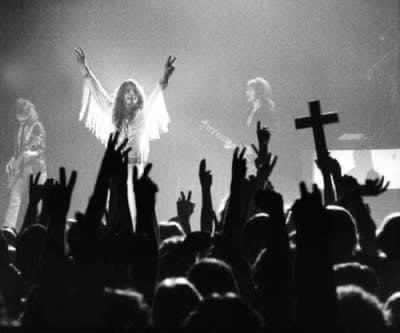
Lester on Black Sabbath: “As close as you can get to blood-lust orgies, death, or utter degradation without having to experience them firsthand.”

Of course, music was a saving grace for Lester as it still is for so many of us. Even then, he has a strong propensity for detailing the “aural abyss” of such challenging albums as Nico’s “The Marble Index,” Velvet Underground’s “White Ligh/White Heat” and Pil’s “Second Edition,” among other personal favorites. In an age of hit-and-run social media opinions, it’s a throwback reading pleasure to see Bangs spend pages wrestling with the patchy quality of hero Miles Davis’ early 70s output or painstakingly lambasting Bob Dylan for the “Mafia Chic” misjudgment of his ill-advised paen to psychotic mobster Joey Gallo.

Many contemporary readers will be justifiably put-off by Bangs’ casual use of insensitive epithets (spade, homo, bitch) but maybe what we’ve gained in sensitivity we’ve lost in critical thinking. In his prime years, in the age of Nixon and Vietnam, he saw the cruelty of the right but also the rigidity of the New Left and took on life with endless creative drive and steely purpose, warning us way back then about the vast social chasms awaiting America and the urgent individualism needed to keep your head above the waters that would otherwise have you drowned.

Books That Rock, Part One

No one is quite sure who originated the saying “Writing about music is like dancing about architecture,” though it has been repeated by Martin Mull, Frank Zappa, Steve Martin, Elvis Costello and many others. This has got to be the dumbest epigram ever. First off, it necessarily assumes that music writers are somehow trying to duplicate the ineffable ability of music to enrich our lives. Moreover, it is a prime example of someone willing to miss the point in the quest to make themselves look smarter than others. Considering that the saying is often used by musicians, it may just be they don’t like getting reviewed.
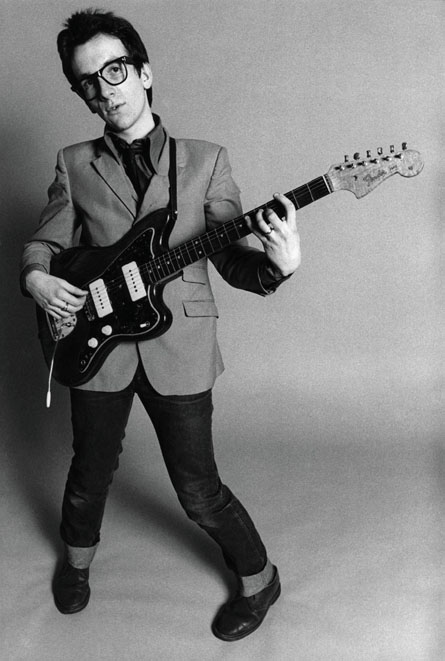
elvis-costello
“Critics hate Van Halen and love Elvis Costello because most critics look like Elvis Costello”
-David Lee Roth, circa 1981

But with its limitless supply of colorful characters and tortured geniuses, artistic triumphs and cringe-worthy flops, jet-setting successes and undeserved obscurities, the music world is an endless repository of subject matter that also reflects on history, sociology, race, class, fashion and many other topics. Many authors have written very well about music, thank you very much.
Here is the first half-dozen, mostly taken from my trusty film-and-music bookcase at arm’s length to my desk. Part two will have six more and should arrive in time for any last-minute gift ideas for the music nut in your life. Of course, you can do that by asking at your local independent bookstore or by ordering from that great online retail place that begins with A. That of course would be Alibris.com, where all these titles are available.
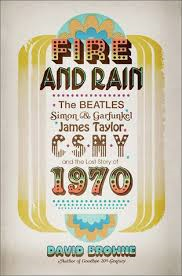
Fire and Rain

“Fire and Rain” by David Browne (2011)

Author and Rolling Stone contributing editor David Browne finds the “Lost Story of 1970” by formulating a narrative that explains the end of the momentous Sixties through four iconic rock artists, the albums they released to usher in the Seventies and their personal stories at that time, extending it into the society at large. The end of the Beatles is explored through the bittersweet ”Let it Be” and the fitful start of four solo careers amid lawsuits and a retreat from the crushing weight of superstardom. Simon and Garfunkel’s “Bridge over Troubled Water” is seen as hymn-like response to social upheaval, “a much-needed respite from one piece of bad news after another.” Similarly, the mellow introspection of James Taylor and the popularity of his breakthrough “Sweet Baby James” is viewed as a reflexive response to revolutionary rancor. The chaotic interpersonal dynamics of Crosby, Stills, Nash & Young provides Browne with plenty of choice material for a dissection of the drug-clouded judgments and hedonism of the day. Their “Déjà vu” album released in March featured themes of domesticity that quickly gave way to embittered protest of the “Ohio” single in the wake of that May’s Kent State killings (in one of the book’s many intriguing anecdotes, we find that two future members of Devo were attending school there at the time). This kind of musicology mixed with social history can be a tricky tightrope but Browne stays on the wire with a relevant voice that never gets ponderous.
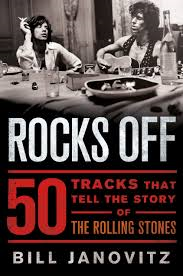
rocks off

“Rock Off: 50 Tracks that Tell the Story of the Rolling Stones” by Bill Janovitz (2013)

Writer and Buffalo Tom frontman Bill Janovitz, who also penned a book on “Exile on Main St.” for the “33 1/3” series, gets to expand on his appreciation and encyclopedic knowledge of the Stones with this intriguing concept. He explores the half-century career of rock’s defining bad-boy band by devoting one succinct chapter each to 50 different songs and how it relates to both their musical evolution and their life and times. This gives the oft-told tale of Jagger, Richards and Co. a fresh spin. The chronological spin is impressive, taking in both the Mt. Olympus material like “Gimme Shelter” and “Jumping Jack Flash” and some lesser-known gems like Aftermath’s “I am Waiting” and Bridges to Babylon “Saint of Me.”
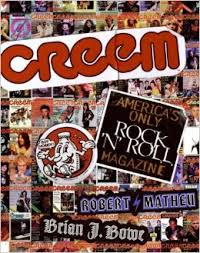
Creem

CREEM: America’s Only Rock ‘n’ Roll Magazine
Edited by Robert Matheu and Brian J. Bowe (2007)

It was a classic “Merry-Xmas-To-Me” moment when this Creem anthology/coffee-table book turned up at my local late-lamented Borders store several Decembers ago. Ex-Creem photographer Robert Matheu and Brian Bowe, who helped develop the now-moribund Creem online site, compiled articles, interviews, photos, cover art and other quirky features of one of the most celebrated and irreverent music magazines ever published. From its gritty beginnings as a local counterculture rag in Detroit, through its 1970s heyday and on to its demise in 1988, Creem was a genre unto itself: “stripped down, no pretension but plenty of attitude, an urban lyricism and a wicked sense of humor” as says Paul Trynka in the foreword. Much emphasis is placed on the influential groups that Creem championed in the early days—there are multiple entries on the Stooges and MC5 and a prescient Ben Edmonds piece on the New York Dolls from summer ’73: “the main reason the Dolls have been so misunderstood is that they don’t play to any existing audience; it’s an audience that has yet to reveal itself.” Creem was long known as the magazine that gave its writers so much creative latitude that they often became stars in their own right and you’ll find them all here: Lester Bangs of course, as well as Dave DiMartino, Richard Riegel, Billy Altman, Lisa Robinson and the late Rick Johnson, who is represented in a couple of brief pieces, including a recap of his notorious feud with the Runaways. It would have been nice to see more than just a few entries from the famously feisty record-reviews section, where you were implored to buy albums from the Ramones and Sex Pistols while the complacent superstars of the day were pilloried on a set schedule (their take on Queen’s Live Killers? “Makes you feel someone is peeing on your grave.”) Considering that the Creem brand name, which various parties have been trying to revive for years, has been tied up in legal disputes, it’s amazing that a book like this ever got out, so if interested scoop one up while you can.
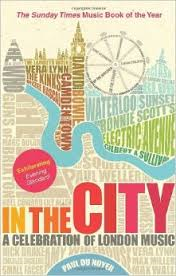
in the city

“In the City: A Celebration of London Music” by Paul Du Noyer (2010)

Paul Du Noyer is founding editor of the excellent rock-legacy magazine Mojo and although a native of Liverpool, proves himself as good or better than a native Londoner with this exemplary book about the music from and about the U.K.’s capital city. Comprehensive in content but sprightly in tone, Du Noyer’s 280-page history ranges from the broadside balladeers and singing street merchants of Medieval times all the way through to Lilly Allen. Befitting his background, the author does concentrate on the rock icons associated with the city such as the Kinks, the Who, Small Faces, Ian Dury, Elvis Costello, Blur, the Clash, Paul Weller (and other usual suspects) who are profiled as to how the city influenced their music and vice versa. But popular culture was not invented in 1964 and Du Noyer deftly ties it all in with antecedents like Noel Coward, Gilbert and Sullivan and music-hall star Marie Lloyd. “Popular songs have been the perfect expression of London’s character,” he writes on the very first page and finishes the thought a well-chosen appendix list of 140 London-related songs.
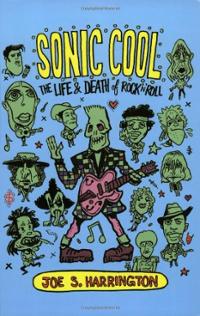
sonic-cool

“Sonic Cool: The Life and Death of Rock ‘n’ Roll” (2002)

Iconoclastic rock scribe Joe S. Harrington wrote for a wide variety of publications (ranging from New York Press to Wired to High Times) before putting down his impassioned and schismatic views in this weighty tome that delineates the “massive cultural movement” called rock ‘n’ roll that is seen to be collapsing under its own weight at the turn of the century. But what a ride it was and Harrington includes most every significant event and sub-genre as well, with trenchant but entertaining analysis coloring chapters like “Elvis Gotta Gun”, “Kill the Business”, “The Revolution” and “Days of Malaise.” This is compulsive page-turning stuff for zealous rock fans already used to the literary stylings of Lester Bangs and Nick Tosches. The fact that the last chapter is called “Post-Everything” will let you know where this is going and though rock ‘n’ roll is not now what it was once, Harrington leaves us pondering the worth of “88 billion pieces of mass-produced plastic” still out in the world even after the controlling forces of big business has seemingly squashed the medium’s original (and occasionally re-occurring) rebellious instincts.
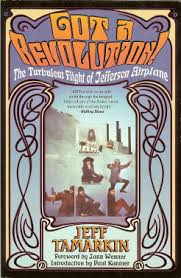
Jeff Airplane

“Got a Revolution! The Turbulent Flight of Jefferson Airplane” by Jeff Tamarkin (2003)

When a famous band has a long history together, it can be ripe material for both a look into the evolving life and times of their days together as well as pump-priming for what are likely to be gossipy interpersonal issues. Well, the Jefferson Airplane story has plenty to offer on both angles and Tamarkin’s enlightening band biography is wonderfully adept at both. It traces the story of San Francisco’s signature acid-rock group through its small-venue early days before the Summer of Love, to its heady heyday as romantic and revolutionary figureheads of the late 60s and its eventual metamorphosis into the more consumer-friendly Jefferson Starship in the 70s and beyond. Suffice to say there are lots of literal highs and lows along the way and Tamarkin also traces some interesting storylines through the book’s arc, like how the band’s lawsuit against its original manager (with whom they signed a contract when they were young and idealistic) carried on into the 1990s as a famous test case. As far as the dirt-dishing, the author can leave a lot of that up to the participants as Grace Slick, Paul Kanter, Marty Balin and most of the rest were interviewed and their colorful comments are sprinkled oral-history style throughout.

Hopefully by summer 2015 I’ll be “dancing about architecture” myself, when my next book “Rock Docs: A Fifty-Year Cinematic Journey” is due to be released.