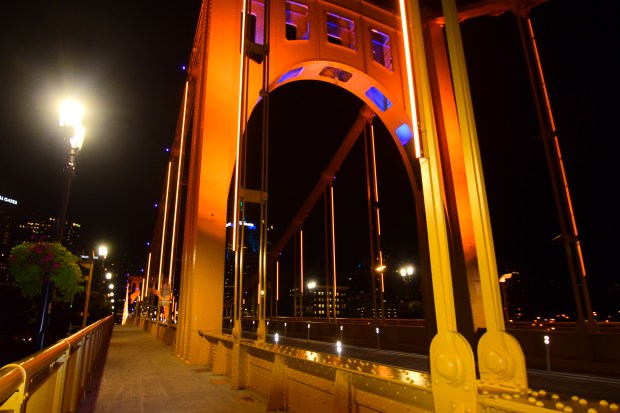
Andy Warhol Bridge, Pittsburgh
Photos and text by Rick Ouellette
A recent article mentioning that National Geographic has named Pittsburgh one of the Top 25 places to visit in the world (the only U.S. city to make the list), was posted online and made my Facebook feed. Invariably, one of the first comments was “That’s the best laugh I had all day.”
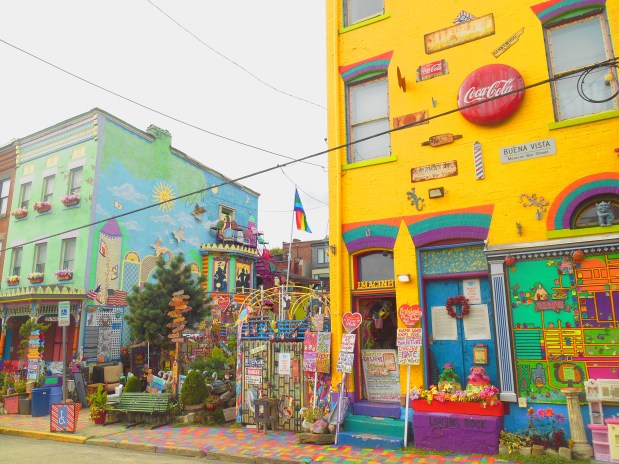
I was tempted to reply, “How so?” But I’m trying to be less judgy nowadays, so I let it slide and left a comment saying how much I enjoyed my own trip to Iron City last year. I mentioned the newly expanded Andy Warhol Museum, a great ballgame experience at the Pirates’ PNC Park with its bridge-and-skyline backdrop, the Nationality Rooms at the Cathedral of Learning and the colorful folk-art complex called Randyland. (See below)
Besides, if I asked that person why she thought it was so funny, the likely answer would be: “Really, I mean, PITTSBURGH?!” If there is one thing I’ve learned over the years, it’s that people love knowing what they already know, even when it’s wrong. This is esp. true when it comes to Rust Belt cities. If you mention Cleveland, a likely response is about the Cuyahoga River being on fire, even though that was 56 years ago. And don’t let’s get started about the state of New Jersey, which many motorists have reduced to the “smelly” stretch of I-95 opposite New York City, filled with refineries and powerlines. We want all the gasoline and electricity we can get—but are somehow offended to see where it comes from.
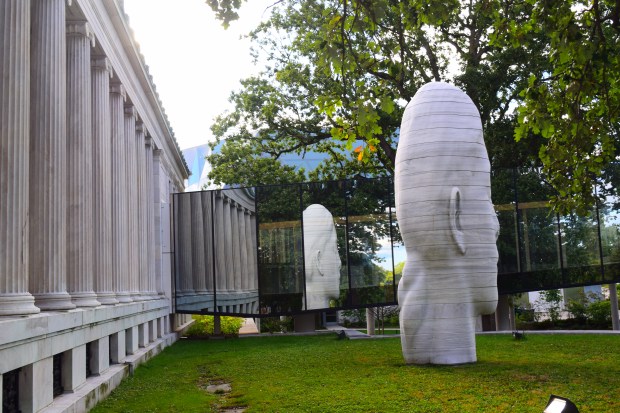
The AKG Museum in Buffalo. The mirrored surfaced of the institute’s modern walkway reflects both the older building and an outside sculpture.
Perceptions are gradually starting to change, and just not in Pittsburgh. Buffalo’s AKG Art Museum was named by Time magazine as one of The Greatest Places in the World in 2024. A dazzling modern addition has been added to the original 1905 Greek temple-style original, connected by a serpentine elevated walkway.
And the AKG is far from an isolated location: it sits in the middle of Buffalo’s cultural corridor near Frank Lloyd Wright’s jewel-like Martin House, the Buffalo History Museum (housed in the only remaining building from the city’s 1901 world’s fair), an outdoor Shakespeare theater and various gardens and a lake with flamingo pedal boats. All of this in the beauteous confines of the Frederick Law Olmstead-designed Delaware Park.
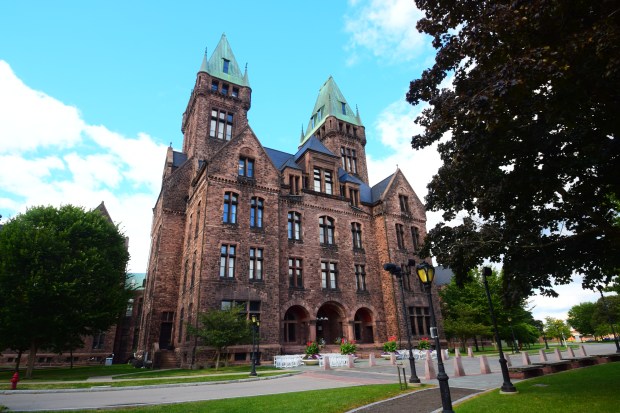
But my favorite part was staying at the nearby Richardson Hotel (above), which occupies the middle section of the former Buffalo State Asylum. Opened up in 1880 on grounds also designed by Olmsted, this massive architectural gem was an early commission of famed architect H.H. Richardson, fresh off his masterful Trinity Church in Boston. Underneath it’s two colossal towers, the main administration building, as well as its two matching Romanesque wings, make up the footprint of this remarkable boutique hotel. As with many such facilities, this asylum grew overcrowded and it was expanded (in brick, not the expensive Medina sandstone of the original building) to such an extent that it takes about a half-hour to walk around it.
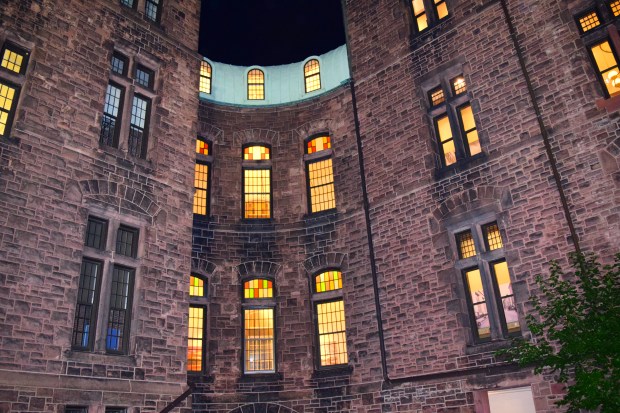
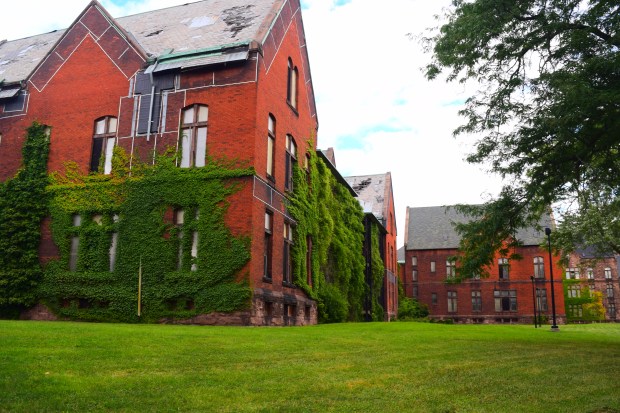
The nighttime photo at top shows both the elegance of Richardson’s design and the great work of the restoration crew. The bottom photo gives one some idea of the scale of the former asylum, some of which is hopefully being set aside for much-needed affordable housing.
Like many other state hospitals, this one was closed in the late 20th century. But unlike others that were demolished without much opposition, Richardson’s piece de resistance sat there until the city realized what they had. Now this asylum is a point of civic pride, a lynchpin in the city’s ambition to become a design capitol, with a focus on the many significant buildings, including its magnificent City Hall (below) and Central Terminal (currently being restored), two of the region’s premier Art Deco edifices.
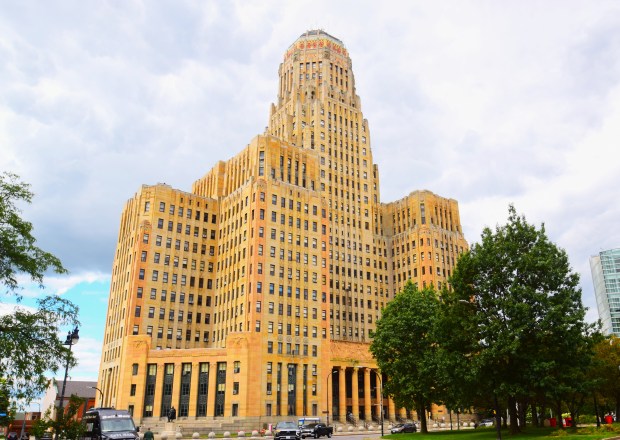
The effects of deindustrialization has been devastating for many U.S. cities in the Northeast and Midwest. The poverty, crime, population loss and disinvestment that followed is of historic proportions. But a potential silver lining is the fact that, at their economic peak, places like Buffalo, Pittsburgh, Cleveland and Detroit used some of that manufacturing wealth in the building of first-class (and often majestic) museums, libraries, theaters, railway stations, hotels and monuments—all speaking to a grand sense of collective civic pride all but missing in our age of calcified socio-political divides.
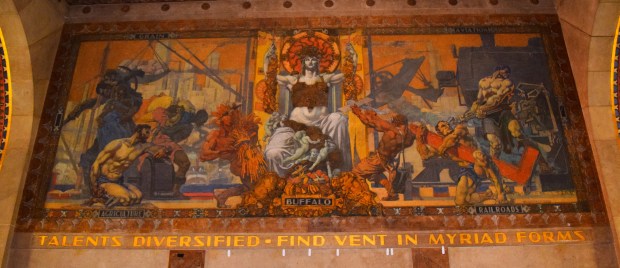
A mural inside Buffalo City Hall from more optimistic times.
I’m not suggesting, or even hoping, that people will give up the default destinations like Las Vegas or Disneyworld. Yet the trend towards sub-genres of domestic travel is encouraging and should help in the nascent Rust Belt revival. These days, there is foodie tourism, historic preservation tourism, music tourism, film festival tourism, sports tourism—Pittsburgh is hosting the NFL Draft next year and it’s a BIG deal. Anything that gets us out and about on a path that leads to greater understanding of our common heritage is a welcome move in the right direction in these wrong times.
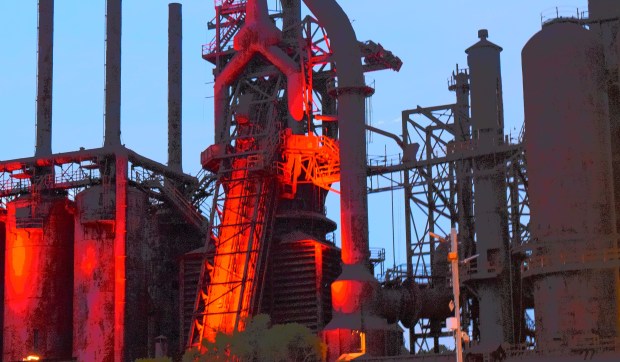
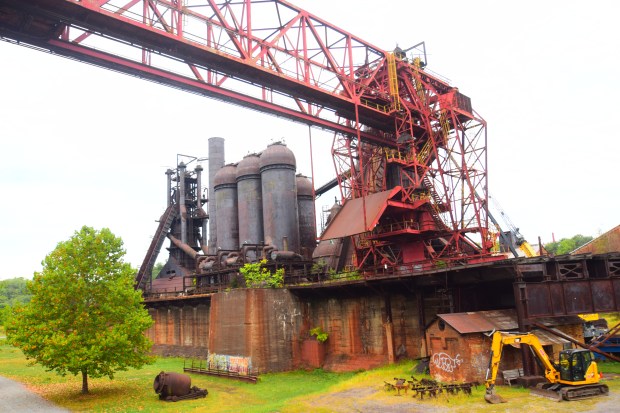
Lastly, a word about an even newer trend: abandoned steel mill tourism. In the not-too-distant past, places like the former Bethlehem Steel plant (above top) and the Carrie Furnaces (above bottom) were top-line locations for the urban explorer community. Now I’m no stranger to the wild and woolly world of urbex photography. But I have never been one of its real hardcore practitioners and I was glad when I eventually got the chance to visit such places without fear of arrest.
The gargantuan Bethlehem Steel plant (renamed Steel Stacks) is now the dramatic backdrop to an outdoor concert venue and cultural center. The elevated walkway brings one up close to this amazing structure. Placards inform the visitor of the “Hot, Loud and Dangerous” conditions that the steelworkers put up with to provide the nation with its infrastructure. It’s a “thank-you-for-your-service” moment that some risk-taking explorers would not realize or get the chance to find out.
The same goes for the formerly off-limits Carrie Furnaces, now a state heritage park. Visitors can learn that this was a big part of World War Two’s “Arsenal of Democracy.” Factories on an 8-mile stretch of the Monongahela River, starting in Pittsburgh, produced more iron and steel during the war than all the Axis Powers combined. The scale and complexity of the furnaces are mind-boggling, and the implied message of strength and national unity is haunting in an age where even the word “democracy” seems compromised. So let’s get out there and live and learn: and when someone asks, “Pittsburgh, really?” you can answer, “Yes, really.”
 Reel and Rock