West Bruce and Laing

For the Records #6: Got Live if You Can Bear It

The live album holds a curious place in many discographies of rock bands and solo artists. It can be many things: a peak-career highlight for some (The Who’s Live at Leeds, the Stones’ Get Yer Ya-Yas Out, James Brown’s live-at-the-Apollo recording) and a career maker for others (Frampton Comes Alive). Many others are seen as placeholders between studio albums or as a de facto souvenir for fans who have seen their favorites in concert.

Sometimes though, an official live release can end up being a millstone in the canon of even the best musical artists, scoffed at by both critics and fans alike. It could be a case of shoddy production, sloppy performance, a group in career downturn or even an excess of success. Creem magazine was once so put off by the rank triumphalism Quenn’s Live Killers they compared it to the sound of “someone peeing on your grave.”

Over time I have gathered up a list these bad-rep concert documents and re-visited them, wondering if they really deserved all those one-star reviews. In some cases, time has been kinder, initial victims of a hot-take hostility in a tougher age of music criticism. Others are still big-time stinkers.

Who’s Last—The Who (1984)

I’ve always wondered about this one. Dismissed and derided at the time, Who’s Last was a document of the band’s at-the-time Farewell tour back in 1982. I mean it couldn’t be as bad as all that, right? Yes and no. On one hand it is the Who and there are gobs of great tunes that are played well enough. But on the other hand, don’t expect anything transformative. The galvanizing versions of “Magic Bus” and “My Generation” on the celebrated Live at Leeds put the ones here to shame, not to mention how poorly this “See Me, Feel Me/Listening to You” stacks up to victorious version on the Woodstock soundtrack. True, people thought it was a swan song back then and a release was justified (though it only hit #81 in America) but after Pete and the boys resumed touring in 1989 it seemed irrelevant, esp. after the sublime Leeds was expanded from 6 to 14 tracks in the CD era. Grade: C-

Take No Prisoners—Lou Reed (1978)

“What do I look like, Henny Youngman up here?” Yeah, kinda. This smart-ass double album was reportedly Lou’s answer to those who said he never talked on stage. True to Reed’s incorrigible nature he goes too far in the other direction, ad-libbing over opener “Sweet Jane” until the song is just an afterthought. True, he does get out a few good lines (“Give me an issue, I’ll give you a tissue”) and a sick burn on Patti Smith (“Fuck Radio Ethiopia, this is Radio Brooklyn!”) but it sets the tone for what is really a punk novelty record.

The music, such as it is, starts at 2:20

The crowd at the Bottom Line nightclub in NYC seem to be there as much for the cult of personality as for the music, and “Walk on the Wild Side” becomes a rambling 16-minute monologue a la Lenny Bruce. When Lou does manage to get thru a whole song without ragging on rock critics or his old Factory friends the results can be pretty good, as on “Coney Island Baby” and “Satellite of Love,” but they add up to a relatively small fraction of the album’s long 98-minute run time. Grade: C

Coast to Coast: Overture and Beginners—Rod Stewart/Faces (1974)

The Faces were on borrowed time when this concert record came out, maybe accounting for the poor press it got. Some saw it as a quick cash-out before Rod Stewart finally split to commit full-time to his burgeoning solo career. Key contributor Ronnie Lane had already left, replaced by Japanese bassist Tetsu Yamauchi. Coast to Coast is an enjoyable (if slapdash) mix of Rod solo numbers, a couple of Faces songs and clutch of covers. Most successful is a top-shelf take on the Motown lament “I Wish it Would Rain,” featuring an impassioned vocal by Rod and a great blues guitar solo from Ronnie Wood. Grade: B-

On the Road—Traffic (1973)

Traffic were another stalwart British group who were heading down the home stretch when this leisurely live double hit the shops. They released one more studio album before disbanding the following year. This was the end of their expanded-lineup era, with the core trio of Steve Winwood, Jim Capaldi and Chris Wood were joined by percussionist Rebop and three Muscle Shoals session men. This period was marked by a certain languid jam-band sound and most of the material here was drawn from the previous two studio sets, Low Spark of the High-Heeled Boys and Shoot Out at Fantasy Factory. The only nod to the “old” Traffic was a 21-minute medley of “Glad/Freedom Rider.” The band may have set themselves up for rock-mag ridicule by including the recent “(Sometimes I Feel So) Uninspired.” But that one turns out to be a highlight, with some electrifying lead guitar from Winwood, so go figure. Grade: B-

David Live—David Bowie (1974)

This is a textbook case of a concert album being recorded at precisely the wrong time. Bowie’s ’74 show started off as the “Diamond Dogs” tour and ended as the start of his “plastic soul” era. (His next album would be Young Americans). The album is unfocused and lacking in true energy, his vocals careless and strained. Hard drugs were an issue. It tends to sound better if you don’t know the studio version and have nothing to compare it against (I rather like his version of the Ohio Players “Here Today, Gone Tomorrow”). But the only one of his many famous songs here that maybe outdoes the original is a strong version of “Rock ‘n’ Roll Suicide,” that closes this misbegotten release. Grade: D+

T.V. Eye Live—Iggy Pop (1977)

Speaking of Mr. Bowie, the year 1977 brought him renewed recognition not only for two of his classic Berlin-era albums (Heroes and Low) but also reviving the career of a certain James Osterberg, who was at loose ends after the dissolution of his proto-punk band the Stooges. Iggy Pop, as he was better known, joined Bowie at his digs hard by the Berlin Wall, both trying to kick long-standing drug habits and get new inspiration in their bleak Cold War surroundings.

Iggy also released two great albums in ’77 (The Idiot and Lust for Life), both produced and largely co-written by his pal Dave. This single live album also got a release but was panned across the board (one meager star at AllMusic) but nowadays it’s hard to see why. It’s a pretty strong set, some of it from an American tour where Bowie supported him on keyboards and backing vocals. The sound quality is not so hot, probably because RCA gave him a $90,000 advance to produce the album (he owed them one more LP) but then spent five grand on it and pocketed the rest. That alone bumps it up half a grade. B+

Bob Dylan at Budokan—Bob Dylan (I think) 1978

Perhaps we will never know just what compelled Zimmy to release this album of his revolutionary repertoire performed as a vacuous Vegas lounge act (and presented as such). On the heels of his divorce and the epic flop that was his “Renaldo and Clara” movie, maybe he thought he could release a quicky double live album and recoup his losses before anyone noticed, it did hit #13 in America.

It did have a few critical defenders and of course if you go by the YouTube fanboys, Budokan ranks right up there with the Sistine Chapel at the apex of Western Civilization. But unless it’s enjoyed as a perverse form of performance art, I don’t know how anyone can like the Wayne Newton arrangements, the cloying back-up singers, the overwrought saxophone and Dylan singing his visionary back catalogue as if it were the collected works of Tony Orlando and Dawn. Just take this encore version of “The Times They are A-Changing” (please) and listen to the fake sincerity of the spoken intro and then Dylan actually telling the crowd “We’re here for four more nights” as if he really were at a casino cocktail lounge and not one of the world’s most revered concert halls. Wow. Grade: D

Still Life—The Rolling Stones (1982)

The era of the true mega concert tour, complete with corporate sponsorship, was under way in the early 80s and naturally the Stones were on the leading edge. That means fans packed in like 80,000 sardines at a place like Arizona’s Sun Devil Stadium and the band trying to fill it with sound and vision no matter how impersonal the setting. (You can see some of that scene in the Hal Ashby-directed tour film, “Let’s Spend the Night Together”). The stage is so big that Mick Jagger and Charlie Watts seem to be in different zip codes). This dynamic comes thru in the unfortunately- titled Still Life.

Like Who’s Last, there are lots of great songs here and the notes are all in the right place (mostly). Yet, it comes down to a business model that just doesn’t work—for me, anyway. I’ve never been to a football stadium concert, and this shows me why. Sure, it’s quite possible to have a good time at this kind of show (many have) but to me the possibility of a good aesthetic return on your monetary investment seems low. I can’t see the band and they can’t reach me; that dubious dynamic carries over to the album. Like David Live, this album sounds OK when you don’t have any previous recording to compare it to, so I chose their new cover of Smokey Robinson’s “Going to a Go-Go” as the best of the lot. Grade: C

Live ‘n’ Kicking—West, Bruce and Laing (1974)

Twin Peaks—Mountain (1974)

When you apply the contemporary phrase “Go big or go home” to the classic rock era, it’s hard not to think of Leslie West. He was a “mountain” of a man (his girth inspired the band’s name), his bellowing vocals and scorched-earth guitar solos known far and wide since the band made a big splash at Woodstock. By 1972, Mountain were on hiatus and West and Mountain drummer Corky Laing joined ex-Cream bassist/singer Jack Bruce to form a blooze-rock supergroup that released two studio albums and this single live set, released just after announcing their break-up in early ’74.

As a group, Mountain, as heavy as they were, also had a melodic sign, seen in deft compositions like “For Yasgur’s Farm” and “Nantucket Sleighride.” WBL cast away most of that. To start off Live ‘n’ Kicking, they turn the Stones’ refined and brooding ballad “Play With Fire” into a 13-minute marauding metal warhorse, complete with drum solo. The “96-decibel freaks” in the audience eat it up. Jack Bruce, replacing the more refined Felix Pappalardi as West’s frontline partner, was rougher-edged. He fills the space between songs with arena-rock bravado and his bass is turned up to overload levels nearly as loud as West’s guitar, if that’s even possible. True, there is some nimble trip interplay on the WBL original “The Doctor” but things go happily off the rails with closer “Powerhouse Sod” which turns into a Bruce showcase, because everyone knows the best way to end a 70s live album is with a bass solo!

Around the same time that West, Bruce and Laing were dissolving due to internal dissension and hard-drug abuse, West was and Pappalardi were re-uniting with a new lineup. Corky Laing, for whom the drug issues were hitting esp. hard, was replaced this time by Alan Schwartzberg. Original keyboardist Steve Knight was subbed off in favor of Bob Mann, who also doubled on second guitar for added sonic impact. My roommate at the time called the Japan-recorded Twin Peaks “the album with the biggest tits in the world” (riffing on Monty Python) and it did seem like the band was out to prove scale new heights of heavyosity.

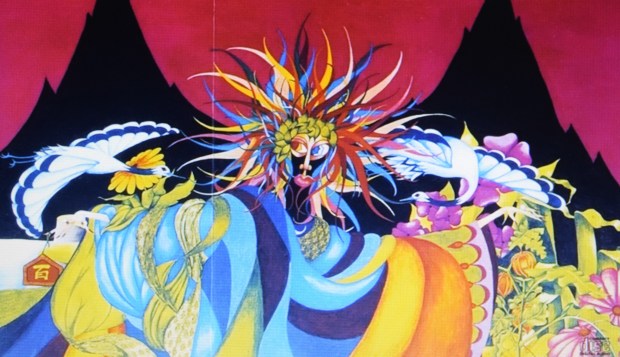
Twin Peaks, with its confident air attractive artwork (see banner image at top of this post) did fare a little better in the critical arena than Live ‘n’ Kicking, which got an E+ (?) in the Village Voice. However, many scribes headed for the exits at the prospect of a 32-minute “Nantucket Sleighride.” Of course, fans, in this age of bong hits and good stereo systems, loved every long minute of it and didn’t mind having to get up and flip the record halfway thru. The glorious noise continues right through to side four, as the band run over the “Mississippi Queen” with a Mack truck and play “Roll Over Beethoven” at such volume that it would have made ol’ Ludwig van deaf all over again. Best of all is West’s signature “Guitar Solo,” where he gets free reign to indulge himself for five uninterrupted minutes, to the point where he injects a bit of “Jingle Bells” even though it’s August in Osaka. The Seventies, they were a thing, man.

Grades: Live ‘n’ Kicking: B-, Twin Peaks: A (fight me).

And speaking of “Jingle Bells,” Happy Holidays, everyone!
Rock Band or Law Firm? The Invasion of the Would-Be Supergroups

Jeff Beck, Roger McQuinn, Paul Kantner, Jack Bruce, Keith Emerson, Leslie West. These are a few of the names burned into the pages of rock music history. They made their reputations in iconic bands of the Sixties like the Yardbirds, Cream, Jefferson Airplane, Mountain and the Byrds. But bands are invariably fragile entities, from the chart-toppers right down to the local covers group. Think of even your two or three best pals in the world and try to imagine working and travelling with them nearly non-stop for an indefinite period of time—not to mention with other people you may not be nearly as tight with—and you can see where even many of the most successful of groups have pretty limited time spans.

But an advantage of success is that you meet other talented peers and these connections invariably lead to new bands once the bloom is off the rose of your first star-making gig. For every Paul McCartney or Eric Clapton who had the right stuff for lasting solo careers, there were dozens of others more suited to being role players (for more on this check out some of my entries in the “We’ve All Gone Solo” category to the right) or nominal leaders who needed complimentary wingmen. With the surnames of these guys (they were almost exclusively male) already well-known to fans, this re-shuffling of the rock-musician deck led to a number of law-firm or acronym group names throughout the 70s and 80s. While some found even greater fame in this incarnation (notably Crosby, Stills, Nash and Young and Emerson, Lake and Palmer) many others had just a shining moment or two before splintering again, with others going solo and/or re-forming their more famous band, especially as the classic-rock “legacy act” thing became big starting in the Nineties. Here are nine of the more notable examples of this curious sidebar of pop history.

West, Bruce and Laing

I start with this power trio as perhaps the most natural fit in this category and who seemed most destined for bigger things as a unit. Felix Pappalardi produced most of the records by Cream, maybe the original pre-designated “supergroup.” When he hooked up with fellow New Yorker Leslie West in 1969, they formed Mountain as a sort of Americanized version of Cream, alternating gritty blues-rock (courtesy of West’s gruff vocals and blazing lead guitar) with an almost baroque take on pop songcraft (Pappalardi’s specialty). In 1972, with Mountain winding down and Cream long since broken up, West teamed up with Mountain drummer Corky Laing and Cream’s Jack Bruce, who neatly reprised his role as powerhouse bassist and co-lead singer, also Felix’s part in Mountain.

There was a lot of buzz circling around West, Bruce and Laing, who got a nifty million-dollar, three-album deal after a bidding war. Their first album, Why Dontcha, hit #26 in the U.S. charts and ticket sales were brisk for their concerts. The bloozy rockers dished out by the wrestler-sized West (like “Pleasure” and the title track) were popular with the decibel-crazed longhairs of the era and Bruce’s somewhat softer material balanced them out. In 1973 came the pretty good follow-up Whatever Turns You On but that LP stalled at #87 and rock music’s perennial elephant-in-the-room, hard drug abuse, would lead to bitter in-fighting and WBL never toured again. Their official break-up wasn’t announced until early ’74 around the time an indulgent live album (featuring a bum-blasting 13-minute version of the Stones’ “Play With Fire”) was released to complete the three-album deal. Jack Bruce would move on to his many projects, which in 1993 included the not-dissimilar BBM (with his Cream frenemy Ginger Baker and Irish guitar great Gary Moore) and, in 2005, a one-off Cream reunion. Mountain re-formed for one more studio album and, after Pappalardi’s death in 1983, West and Laing played under the Mountain banner for many years with a rotating cast of bass players.

Beck, Bogert and Appice

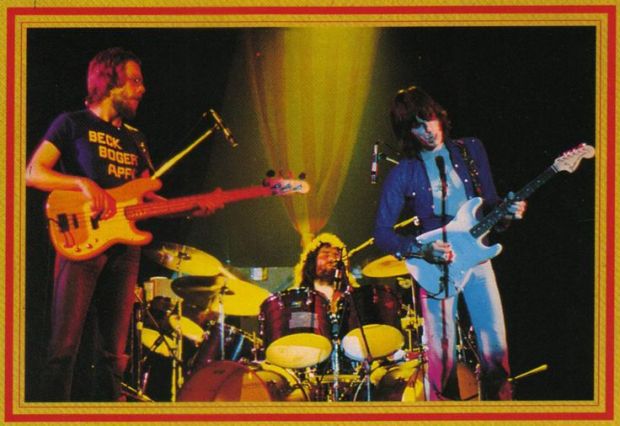
As the second of the Yardbird’s three iconic axemen, the mercurial Jeff Beck had a lot to do with the creation of the modern rock guitar sound but with his vast array of squealing, whooshing or stabbing sound effects, he was the most difficult to pin down. Bassist Tim Bogert and drummer Carmine Appice were forerunners of the heavy hard-rock engine stokers with their work in Vanilla Fudge and Cactus. Beck had met the package-deal rhythm section as early as 1967 with intentions of getting a thing together but contractual issues and the early edition of the Jeff Beck Group (which launched Rod Stewart) kept this from happening until 1972. The trio did some well-received shows and started working on an album, released in early ’73. I loved the BBA album as a 15 year-old (and still do) and it’s very much an article of its era. Beck’s bracing, sometimes unhinged, guitar solos and brash power chords, Appice’s walloping drum fills and Bogert’s hyperactive bass are well-matched to the slap-happy arrangements of a do-as-you-please era when rock was king. “Livin’ Alone” and “Lady” (with its Who-ish dynamics) are the highlights of the group originals. The group gleefully steamroll over Stevie Wonder’s “Superstition” while changing gears completely for a refined remake of Curtis Mayfield’s “I’m So Proud” with a sensitive vocal from Appice that helped it become a minor hit. But soon, the restless Beck was packing up his white Stratocaster and moving on, and BBA would not complete a second studio LP, though a live album (originally released only in Japan) is now available on the Internet.

The Souther Hillman Furay Band

It wasn’t just the heavy rockers who were getting on the roll-call bandwagon when it came to assembling new “sure-thing” bands. SHF was the idea of David Geffen, who figured that the combo of singer-songwriter J.D. Souther and country-rock stalwarts Chris Hillman (a founding member of both the Byrds and the Flying Burrito Bros.) and Richie Furay (Buffalo Springfield, Poco) would make a great addition to his roster of artists at Asylum Records. With a supporting cast that included keyboardist Paul Harris, drummer Jim Gordon and pedal steel/dobro master Al Perkins, SHF got off to a promising start with the 1974 hit single “Fallin’ in Love” while the debut album hit #11, meaning there were quite a few copies mixed in with the Jackson Browne and Doobie Brother titles in the record racks of those so inclined. Though a pretty solid entry in that category, the group couldn’t overcome the personal disagreements natural in such inorganic assemblages. SHF did manage to squeeze out a second album in 1975 (Trouble in Paradise) but split up soon after.

Kossoff, Kirke, Tetsu and Rabbit

A few months ago, I wrote about Paul Kossoff in the aforementioned “We’ve All Gone Solo” series as one of those deeply sad rock & roll fatalities, a talented and influential lead guitarist who was less than fully equipped to deal with the often callous vicissitudes of the music industry and band dynamics, never mind the wide availability of hard drugs. Free were hard rock pioneers but bad blood (esp. between singer Paul Rodgers and bassist-songwriter Andy Fraser) and Kossoff’s heroin use precipitated an initial break-up in 1972. Kossoff pulled himself together enough to lead up this band with Free drummer Simon Kirke, Japanese bassist Tetsu Yamauchi (later Ronnie Lane’s replacement in the last line-up of the Faces) and future Who sideman John “Rabbit” Bundrick on keys and lead vocals. With its brooding bluesy sound, the KKTF album sometimes seems the lost bridge between Free and Bad Company, fans of either/both groups may find this a pleasant discovery if it flew under their radar first time around. It has many fine examples of Kossoff’s trademark sustain-filled soloing and Rabbit’s fluid keyboard work is a nice added dimension, even if his singing is merely competent when compared to Rodgers. But this was strictly a one-off and soon Free were having another go, though Kossoff’s continued addiction problem (among other factors) derailed that idea in ’73. Rodgers and Kirke soon saw the top of the mountain as half of Bad Co. while Kossoff died in 1976, his drug-damaged heart giving out on a flight from L.A. to New York.

Paice Ashton Lord

Hard rock heavyweights Deep Purple split up in 1976 after which two of their original members, drummer Ian Paice and keyboardist Jon Lord, teamed up with fellow Englishman Tony Ashton. The Blackburn-born Ashton was an accomplished pianist and singer and a bit of a gadfly, having done tons of session work, most notably for Family and John Entwistle. In 1971, he had had a big hit called “Resurrection Shuffle” with another group that sounded like an accounting firm—-Ashton, Gardner and Dyke. Paice, Ashton and Lord kept on with the sound of Ashton’s earlier group, blending in elements of R&B, jazz and rock with Ashton’s extroverted vocals on top. More of an enjoyable side project than an intended supergroup, they would only do the one album (with a live CD added years later). Jon Lord and PAL’s guitarist Bernie Marsden went on to form Whitesnake with singer David Coverdale (Paice was also in the band for a while) while Ashton was a bit out to dry. He re-invented himself in later years as a TV host and painter before dying in 2001. His two PAL bandmates went back to a re-formed Purple in 1984; Lord passed away in 2012.

McQuinn, Clark and Hillman

Let me take this time to give a shout-out to Chris Hillman, one of rock’s great utility players. Never a big star in his own right, he was nevertheless a founding member of the Byrds, the Flying Burrito Bros. and Stephen Still’s Manassas. Good bands all, and of course in the first case, damn near legendary. Hillman, who was a steady hand at the bass guitar and mandolin as well as a sometime singer and songwriter, had already been down the great re-shuffle road with Souther, Hillman and Furay. In 1979 he agreed to join his more high-profile ex-bandmates Roger McGuinn and Gene Clark but he soon found out that while Byrds of a feather may flock together, they don’t always do so in flawless formation. The original line-up already had a brief, middling re-union in 1973 but MCH never even got off the ground artistically. These bona-fide folk musicians, who did so much to kick-start the great folk-rock movement in the mid-Sixties, almost totally abandon that here. Instead of trying to update that sound for a newer audience they settled for an glossy, soulless production style that was grounded in a no-man’s land somewhere between the Little River Band and Firefall (there’e even a semi-disco number). I bet Hillman and McGuinn likely would prefer to forget that debut nowadays, but for the talented but troubled Clark, this is a sadder case. He saw MCH as a boost to a post-Byrds career that never really gelled. But he overcame the production values he so disliked and cut what to my ears sounds like the band’s best song (“Won’t Let You Down”) on their second album though his continued substance abuse issues meant he lost equal billing (1980’s City merely “featured” Clark). It was likely these same drinking/drug problems that contributed to Clark’s premature death in 1991.

KBC Band

For such a group of disparate talents and personalities, Jefferson Airplane maintained their classic line-up from late 1966 to 1970, becoming one of America’s great psychedelic-era bands, augmenting the Aquarian platitudes of the day with tough-minded social and political lyrics. Starting in the early Seventies, the Airplane parts would splinter off into an uncountable number of solo projects, duos and reconfigurations. Of course, from 1974-78 the front line of vocalist-songwriters (Marty Balin, Paul Kanter and Grace Slick) led the evolution into Jefferson Starship and more widespread commercial success than they ever saw in the Sixties. Meanwhile, the band’s formidable guitar-bass pairing (Jorma Kaukonen and Jack Casady) had formed the blues-centric Hot Tuna. By the time of the late 70s, this deck of cards was getting re-shuffled with ever increasing frequency. With Balin’s departure, Starship had recruited the full-throated AOR belter Mickey Thomas and had scored a huge hit with the paint-by-numbers arena rocker “Jane” which was a long way away from the days of “White Rabbit.” In 1984 Kanter, with his idealism and sci-fi sensibilities out of fashion, was eased out of an organization he co-founded almost twenty years before. He soon re-teamed with Balin, the other co-founder in 1965, and added Jack Casady when Hot Tuna went on sabbatical. The group’s self-titled 1986 album turned out to be a solid, sometimes inspired affair that balanced romantic and political themes in a way that recalled the heyday of both the Airplane and Starship. Sure, the closely-miked drums and sax refrains are pure skinny-tie 80s. But Marty and Paul combined to pen two excellent topical numbers here: “Mariel” was inspired by revolutionary Nicaragua (Kanter had visited there with Kris Kristofferson) and the mini-epic “America” which not only did some soul-searching about the home country but also featured shout-outs to everything from the struggle against apartheid to West Germany’s Green Party. This anthem compared favorably to the Starship’s recent laugher “We Built This City” and though not a hit did get considerable FM airplay. As did “It’s Not You, It’s Not Me” which was one of several classy, grown-up romantic tunes by the Balin. But Marty was more reliable in his songwriting than he was in the area of band commitment. When he skipped out on a music video shoot to take an extended Hawaiian vacation, the group dissolved though all three would be on board for a brief Jefferson Airplane re-union some five years later.

GTR

OK, this is cheating a bit as GTR is not an acronym but an abbreviation for “guitar.” The two GTRs in this case are the lead guitarists from the classic lineups of two leading progressive rock bands, Steve Howe of Yes and Steve Hackett of Genesis. By 1986, when this band released their sole album, their old bands had adapted in the post-punk 80s, when the fantasy themes and 18-minute suites of classic prog had fallen from favor. Genesis had become a pop juggernaut when Phil Collins stepped out front after Peter Gabriel opted for a solo career and Yes had recently scored their only #1 single with the new-wavey “Owner of a Lonely Heart.” Howe was also a charter member of Asia, the standard bearer of amalgamated post-prog, but GTR was clearly a bridge too far. There’s certainly some fine playing by the two formidable six-string masters but the LP is bogged down by material that is neither fish nor fowl. Slick arrangements and clichéd lyrics trump the occasional instrumental inspiration and the leisure-suit videos didn’t help any (see below). Howe quickly retreated back to alternating his time between Asia and Yes, while Hackett (who has been critical of the project in retrospect) moved on to his many thoughtful solo efforts, earning much respect from both older fans and the younger neo-prog crowd.

Emerson, Lake and Powell

Well, this sort of brings us full circle, as the original ELP(almer) was cited up top as one of those self-named bands that did hit the jackpot, a group emblematic of both prog’s majesty and self-indulgence. Years after that band had run its course, keyboard maestro Keith Emerson and bassist-singer Greg Lake were keen to have another go but by 1985 drummer Carl Palmer was employed as the stickman with (wait for it) Asia. All involved insist that it was mere coincidence that his replacement had the right surname initial to keep the famous acronym going. Cozy Powell was the valued journeyman drummer (Black Sabbath, Robert Plant, Rainbow etc.) who also had a #3 solo hit in England with the Hendrix-influenced instrumental “Dance With the Devil.” ELP2 (as they were sometimes called) was a bit of a return to form considering the later albums of the predecessor band (Love Beach anyone?) with a unified group attack that replaced the solo-spot indulgences of old. It yielded a moderate hit (“Touch and Go”) that added a heady synth hook from Keith to a streamlined 80s arrangement.

Elsewhere, ELP2 built on past success with the “Karn Evil 9” echoes of “The Score” and also included was a mighty classical adaption just like in the good old days-—Holst’s “Mars, Bringer of War.” Despite reaching #23 on the U.S. charts, there would be no encore record. Like the work of many of the bands here, this project was a fleeting moment in the vast backlog of pop music. It’s a mighty long way down rock ‘n’ roll, as they say, so when you need something a little off the beaten path after hearing the greatest hits once too often, it’s places like these where you can turn to appreciate as well the ambitions that came up a little short.

Copyright 2016–Rick Ouellette