Month: July 2013

“Documentary 101” Sampler (Part One)

img363

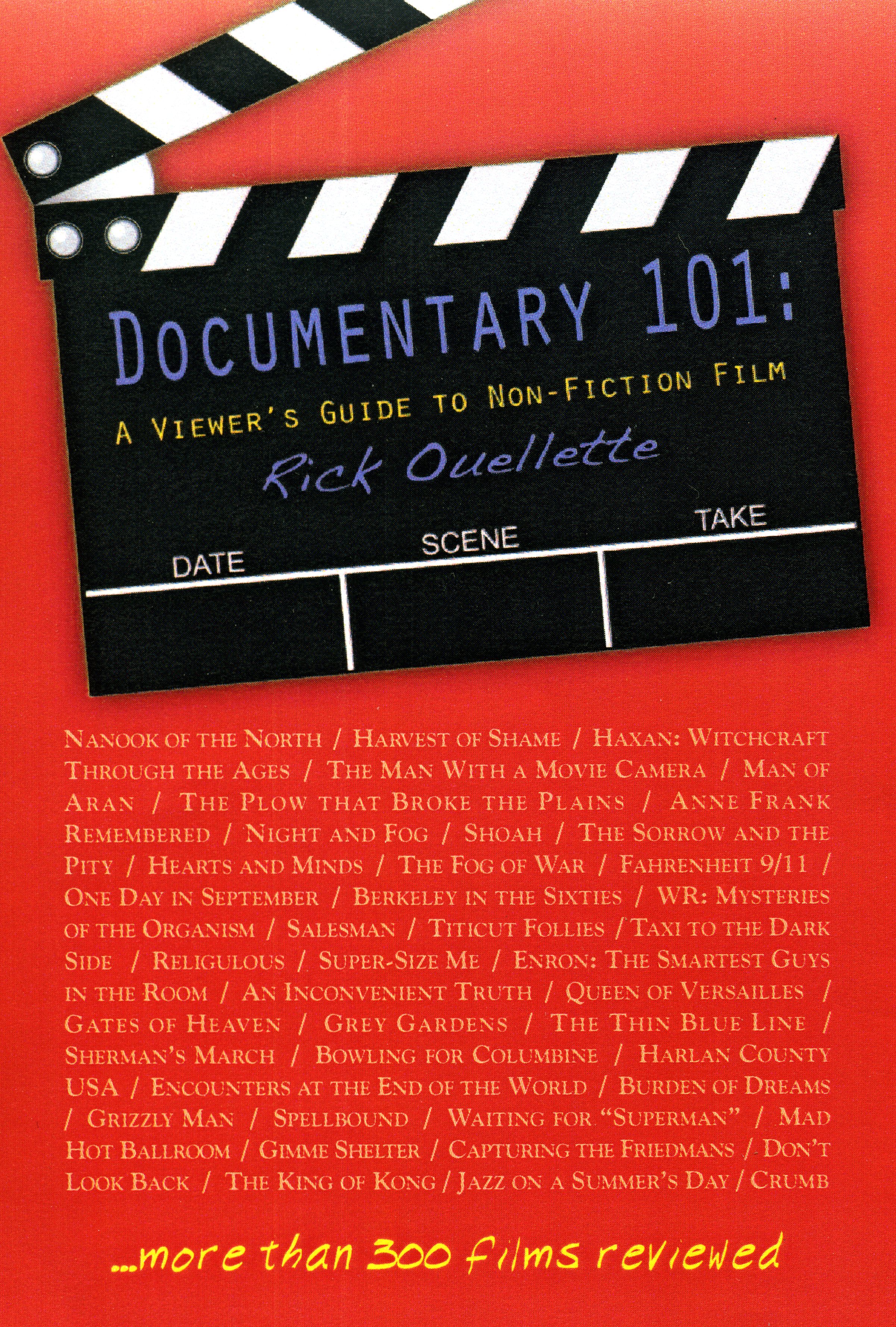
Now on sale as both a paperback and e-book: http://booklocker.com/books/6965.html Also available from Amazon and other online book sellers.

Roger and Me. March of the Penguins. Man on Wire. Paradise Lost. Grizzly Man. Gates of Heaven. Taxi to the Dark Side. Super-Size Me. Spellbound.

In recent decades, titles like this have raised the profile of documentaries like never before. The appeal of films that rely on the testimony of real life have increased in the age of the “indie” and attracted a growing numbers of viewers looking for an alternative to a movie industry that too often seems fixated on the bottom line.

Documentary 101 is a first-of-its-kind anthology, covering the entire spectrum of non-fiction film with entries on over three hundred titles from the years 1895 to 2012. There are 101 full-length reviews of documentaries chosen for their aesthetic prominence and/or historical significance, followed by briefer entries on related titles. There are 325 total reviews and an informational appendix in its 418 pages.

Over the next several weeks I will be excerpting the book, using film stills I purchased that were not included for reasons of cost and the eternal differing opinions on what constitutes fair use.
img356

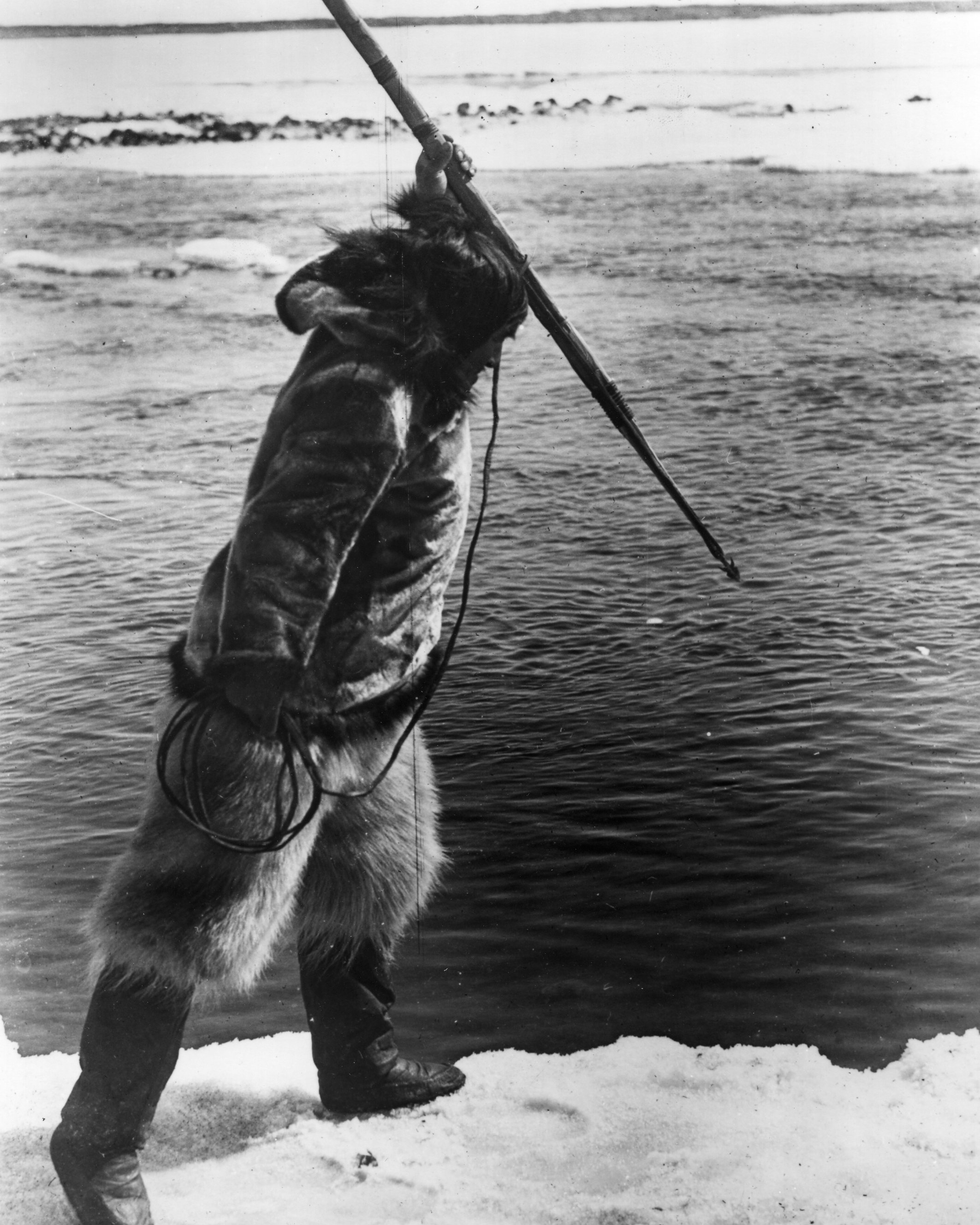
The man director Robert Flaherty named Nanook (“The Bear”) was a prominent hunter for the Inuit tribes in the landmass to the east of uppermost Hudson Bay. He fashioned a “family” for Nanook and brought along on expeditions a handful of men known to him. They were all enthusiastic about the idea of the movie, which they called the “aggie” (big picture). From the start of film, Flaherty’s sympathies are clear: free of civilized neuroses, these are “the most cheerful people in all the world”, and the keen focus on daily survival skills affords them an inspirational aura. The affection Nanook and his screen wife show to the children and the children’s affection towards their puppy shrinks the vast distance between the subject and viewers. But the survival “lifestyle” is rugged stuff and the bulk of “Nanook of the North” is made up of a series of memorable hunting scenes. The 300 members of this tribe scrape out a living on a frozen range the size of England. The specter of starvation is always close at hand and Flaherty does not forget the crucial nature of this struggle—he hardly could have because he was part of the same knife’s edge existence during his sixteen months of filming. (“Nanook of the North” 1922)
fires started

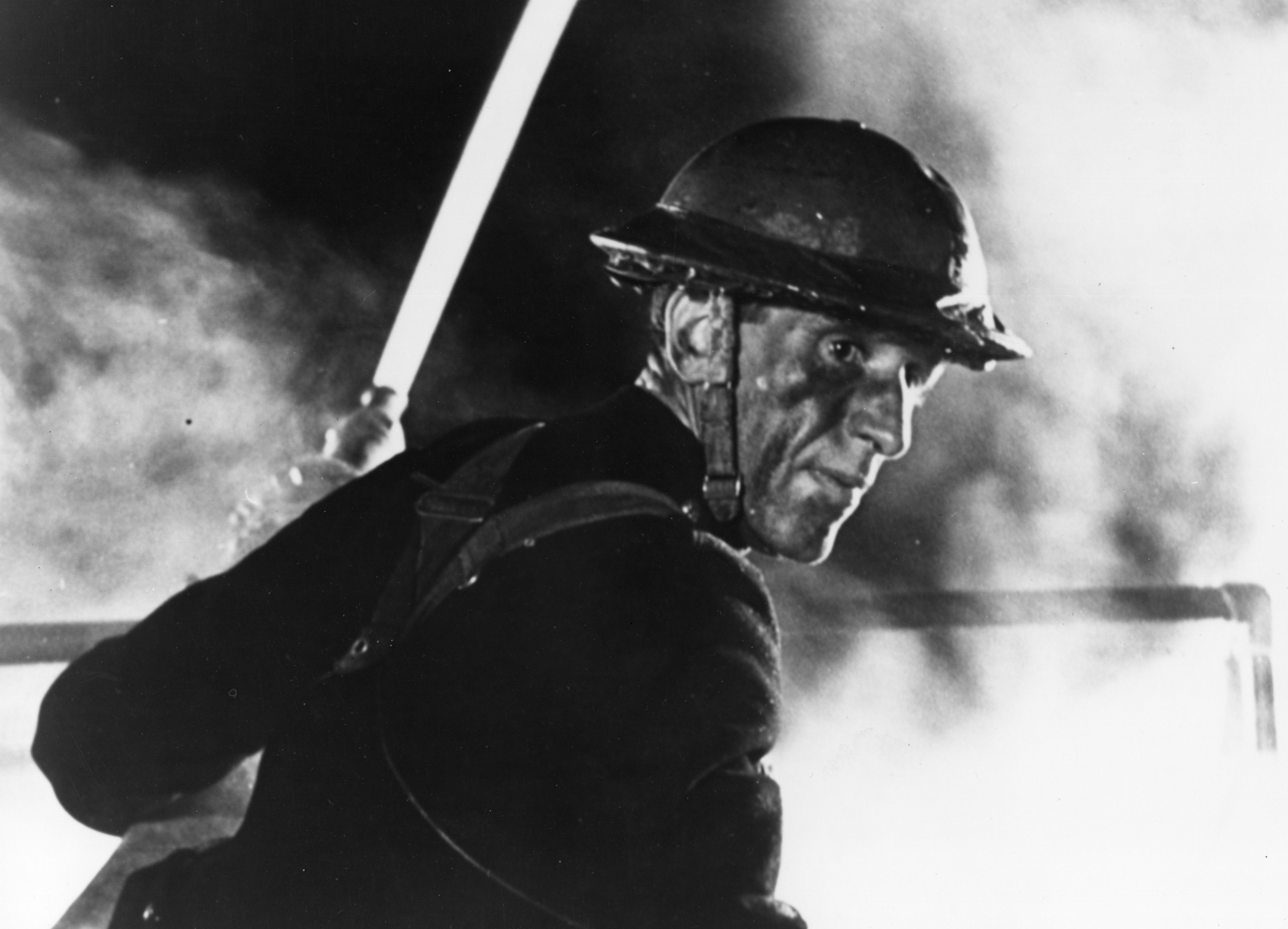
Humphrey Jennings’ tribute to (Britain’s) Auxiliary Fire Service was called “Fires Were Started” and may have seemed passive in comparison (to the war’s more pugnacious bugle-call films), despite now being the most critically lauded of his works. It is set up as a dramatic film, largely re-created by real brigade members since large-scale bombings had ceased in London by 1943. There is no mention of the Germans until the twenty-eight-minute mark, when the banshee wail of an air-raid siren pierces the night. The brigade is sent to tackle an inferno at a dock warehouse and keep it from spreading to munitions-carrying ships due to sail for the Continent.
(“London Can Take It” and other films by Humphrey Jennings, 1940-1951)
img357

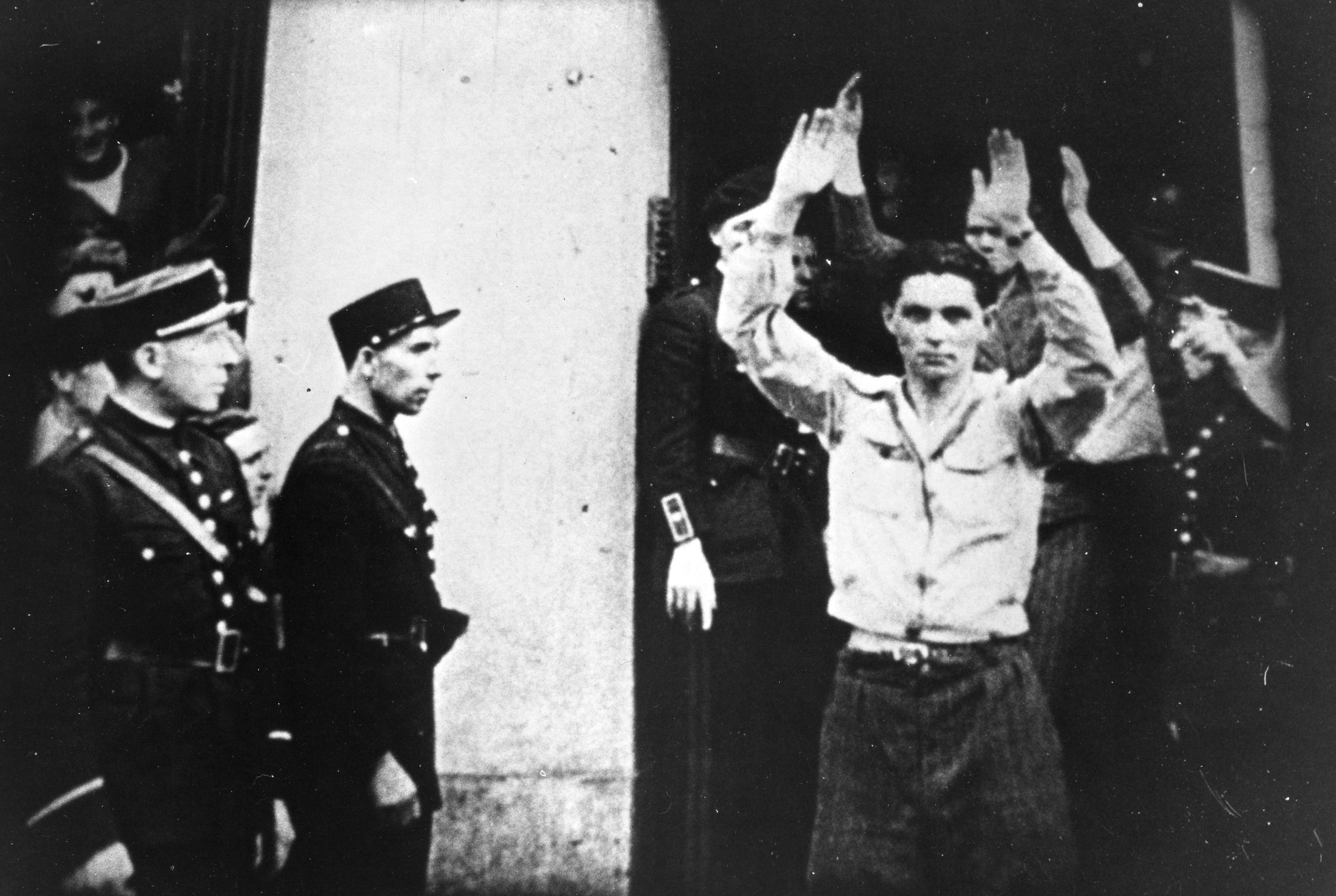
The popular legend that took hold in France after World War II, of a widespread resistance that fought Nazi occupation tooth-and-nail, comes under intense scrutiny in Marcel Ophuls’s epic work, one of the most critically acclaimed of all documentary films. Using the city of Clermont-Ferrand as a microcosm of the whole nation, Ophuls bravely makes the case that the forces of collaboration were much stronger and reduced France to a long-term accommodation with one of the most deplored regimes in history. “The Sorrow and the Pity” certainly struck a raw nerve with officialdom at the time of its release. It was banned from French TV for ten years.
(“The Sorrow and the Pity” 1971)

columbine

In the early minutes of the film there are some readymade Michael Moore moments like the well-known scene where he opens a savings account at a Midwest bank in order to receive the free shotgun that apparently has replaced the complimentary toaster of days gone by. But “Bowling for Columbine” works best when Moore is seen on camera talking matter-of-factly to a wide variety of Americans and trying to come to terms with the country’s high level of gun violence. This is not the easiest issue to suss out, especially when the murder rates of other industrialized countries barely rate as a fraction when compared to the United States. During a side trip into Canada, Moore finds that there are seven million guns in about ten million households nationwide, yet the folks there would barely know what a homicide looks like.
(“Bowling for Columbine” 2002)

img360

In 1983 Life magazine hired acclaimed photojournalist Mary Ellen Mark to do a story on the growing problem of teenage runaways. Her central subject was Seattle’s skid row and within a year Mark returned there with her filmmaker husband, Martin Bell, to make this equally sympathetic and non-judgmental film. These kids, most in their early teens, eke out a living via panhandling, prostitution and dumpster diving, forming a makeshift society on the fringes of the “respectable” world.
(“Streetwise” 1985)

All Hail Summer

Lord of the Ry's

When I return from vacation in early August, the almost never-ending saga of getting my book into final (and publishable) form will be over. “Documentary 101: A Viewer’s Guide to Non-Fiction Film” will be available on Amazon, my indie publisher booklocker.com, barnesandnoble.com and other online outlets. If you’re interested and feeling particularly virtous, request it from a local bookshop.

The book is a first-of-its-kind comprehensive anthology of non-fiction film, featuring reviews of well over 300 documentaries. Excerpts, along with related film stills that I had bought but never used, will start appearing in weekly installments here starting in August.

With a little luck and free time, I should also be releasing Part Two of my series “The Pale Beyond” about abandoned state hospitals in Massachusetts. In the fall, I’ll be back to the film reviewing, with added emphasis on rock docs and other musical subjects.

Enjoy your summer, hopefully we are done with the mid and upper 90s!
Thanks for reading,
Rick

Charlie is My Darling (Doc of the Week #10)

Charlie

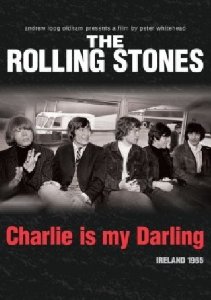
The Rolling Stones: Charlie is My Darling—Ireland 1965
Directed by Peter Whitehead—1966—64 minutes

The Rolling Stones certainly are no strangers to celluloid, at least from the late Sixties on. In roughly chronological order, we got their headlining appearance in “Rock and Roll Circus”; a Jean-Luc Goddard agitprop period piece framed around their recording of “Sympathy for the Devil”; the Maysles Brothers’ hippie-dystopia classic “Gimme Shelter”, and various concert films from the 1970s on, culminating in Martin Scorcese’s 2008 “Shine a Light.” This spirited record of a showcase gig at New York’s Beacon Theater established the Stones as leaders of a movement that can only be called geriatric rock, carrying the flag of a genius era into the Social Security age bracket.

Good footage of the early Stones has been harder to come by. Their ascent to fame in the days before mass media overkill has yielded little more than their “T.A.M.I. Show” set and some old Ed Sullivan clips. Until now. Produced by their manager Andrew Loog Oldham reportedly to get his rising stars used to the idea of film, “Charlie is My Darling” was the first documentary about the band. The director was Peter Whitehead who would go on to make 1967’s “Tonight Let’s All Make Love in London” when the music-driven youth movement was in full “swing.”

After a brief theatrical release, however, all prints of “Charlie” were reportedly stolen and the film receded from memory, only getting a proper re-release in conjunction with the band’s 50th anniversary tour. Now you can wind the clock back almost as many years to the screaming-teenager epoch of the mid-1960s, as the boys are whisked off to Ireland for a quickie tour hastily arranged to capitalize on the recent smash hit “Satisfaction.” It’s a bit of a revelation here to see the Stones in the first flush of their youthful success. The Beatles have “A Hard Day’s Night” and Bob Dylan the warts-and-all “Don’t Look Back.” Here the five Stones likewise struggle with whirlwind fame, each of them ambivalent and thoughtful when Whitehead interviews each in turn.

A brilliant montage set to “Heart of Stone” shows the band arriving in Dublin where the establishing street scenes recall the age of James Joyce a half-century previous. But even if the country was still largely in the parochial grip of the Catholic hierarchy, the kids quickly shake free of that once the Stones hit the stage. The clarity and immediacy of this restored footage is electrifying, the lean-and-mean band whip their fans into a frenzy straight out of the gate with “The Last Time”, not that the crowd needs much whipping up. The Stones were already well known for the riotous audiences they attracted and by the end of third number, the stage invasion is in full stride, easily captured by Whitehead’s in-the-wings camera.

A bit of this footage recently turned up in the recent “Crossfire Hurricane” doc but it’s good to get the full flavor of those days here. The interviews reveal five guys to whom fame is still new and a little intimidating. Mick Jagger, an exciting young performer but hardly the indomitable peacock of later years, admits “I don’t know who I am on stage.” Keith is already the sly one, Bill is practical and Charlie misses his wife. Most poignantly, Brian Jones frets about the Stones’ chances for sustained success and—four years before his death—says, “I’ve always been a little apprehensive about the future.”

Elsewhere, you get the expected shots of the band being chased in public places, vox populi with the teenybopper lasses and hotel scenes of the guys goofing around and (more interestingly) writing a new song, “Sitting on a Fence.” Back onstage in Belfast, the joyful abandon in their version of Chuck Berry’s “Around and Around” is visceral and the cathartic discontent of “Satisfaction” would probably never sound so real again—worldwide success was just around the bend. The druggy excesses and jet setting and artistic peaks were all to come and this guileless snapshot from a distant monochromatic past is the perfect antidote to today’s over-hyped media landscape.

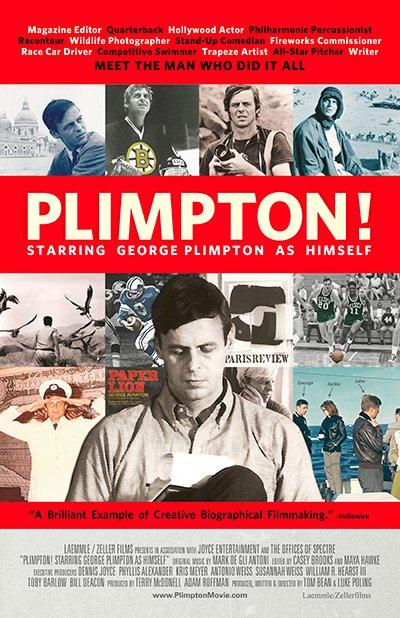
Plimpton! (Doc of the Week #9)

movie_poster

(Currently only showing in Boston, LA and D.C., make a note to maybe check this out when it gets a wider release or is made available on DVD or to stream. A fine work by a couple of guys wo got started at Scout Productions, a place where I worked at in 2000-01)

Plimpton! Starring George Plimpton as Himself
Directed by Tom Bean & Luke Polling—2013—86 minutes

Lately I’ve been thinking it is time to tweak that old saying by Andy Warhol. In the future, everyone and everything will be the subject of a documentary. This week it’s George Plimpton’s turn to shine in the non-fiction film firmament. In this appealing film bio, Bean and Polling uncover extra layers of documentary riches while focusing on the life of the lanky New Yorker who was the good-natured pioneer in the field of participatory journalism as well as co-founder and editor of the Paris Review.

From the 1950s through to his death in 2003, George Plimpton held his spot as a bon vivant of literary life and high-end celebrity culture, the latter nearly a forgotten art form. He will always be most remembered for his everyman-style excursions into pro sports, risking life and limb (or at least embarrassment) by boxing Archie Moore and Sugar Ray Robinson, playing exhibition games as a Detroit Lions quarterback and Boston Bruins goalie, pitching to Major League all-stars and other such misadventures. These experiences would be the raw material for articles in Sports Illustrated as well as full-length books, including the best-selling “Paper Lion” about his footballing follies.

Polling and Bean first met while working at Scout Productions around 2001, around the time the company was becoming known for releasing such singular middle-period Errol Morris films as “Fast, Cheap and Out of Control” and “Mr. Death.” Some of that resident quirkiness can be seen here in the succession of recovered film foibles (Plimpton also tried his hand at being a circus trapeze artist and symphony percussionist) and the bemused recollections of friends and family. Though the general tone is one of admiration, it is tempered with a dash of retroactive regret. “Serious” writers, like novelist James Salter, bemoan the fact that Plimpton was more of a dabbler and could not or would not raise his game to the level of the many authors who he published in the Paris Review and who regularly attended his famous cocktail parties. We see Arthur Miller, Norman Mailer, James Baldwin, Kurt Vonnegut, Philip Roth and the like, sometimes all in the same room together. Once taken under the wing of Hemingway, Plimpton seemed just as content to hang out with the Kennedys or appear in TV commercials for video games and garage door openers.

In the end, though, Plimpton’s knack for straddling both highbrow and pop culture, and making it seem all of a piece, is admirable and endearing. It is all part of our wider American culture and should be appreciated as such. But today a new George Plimpton would almost have to split himself in two trying to straddle the widening gap between mistrusted cultural “elites” and the easy-to-despise lowbrow media content that has puked up Kim Kardashian and Honey Boo-Boo. Another subject for another day, but like I said in the future someone will likely make a doc about that as well.