What a time it’s been for division, uncertainty and rapid technological changes that seem about to overtake us. Every time you look to the “right” one sees intolerance and contempt for diversity and empathy. Over on your “left” the outrage can easily be turned up to 10 on each instance when complete justice is not seen to be delivered.
Of course, this is a subject that can be expanded on and debated until the end of time. And it probably will, but I think most of us need some psychic assurances, or at least pleasant diversions away from the crisis world. One of mine has been retro pinball, which I’ve been playing since before it was retro.
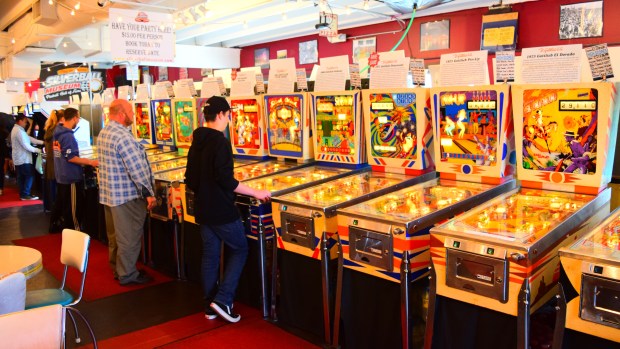
My sweet spot for these machines are the ones 1960s and 70s, the heyday for game manufacturers like Gottlieb, Williams and Bally. Though that may age me, it’s more than just us older folk who have helped the major upsurge in popularity. Hipsters, families and teenagers on stress-free dates can be seen at the many retro arcades where the simple pleasures of electro-mechanical games of skill are a welcome respite from the digital domination of the 21st century.
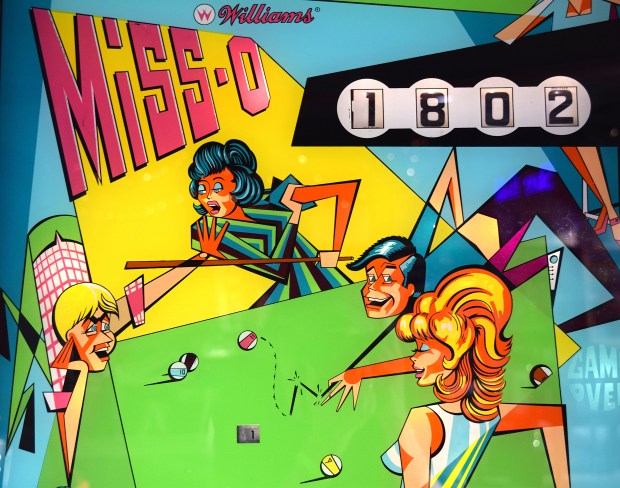
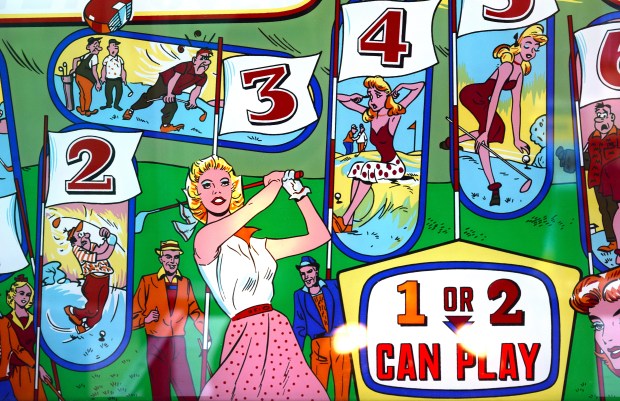
I’m no “pinball wizard,” merely a decent player capable of the occasional reply score. The big appeal for me is the beauty of the machines themselves, esp. the design of the backglasses that show the name of the game and your score. I have come to consider them a classic American pop-art form.
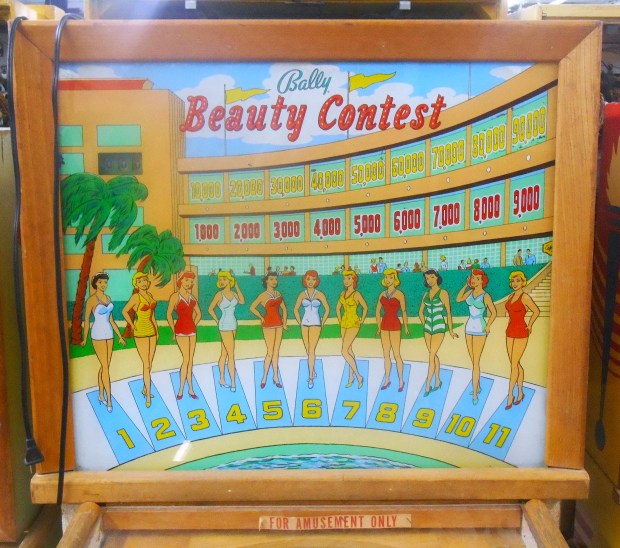
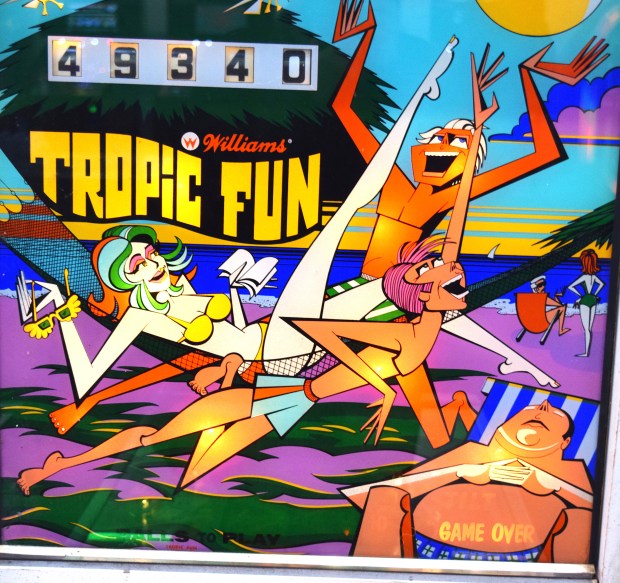
They are colorful of course, but also dynamic, appealing, tempting, sometimes modernistic but always amicable. Here was a sub-culture where seldom was heard a discouraging word, and the skies above the “Tropic Fun” beach were not cloudy all day. Much of the time you had a different form of leisure activity staring back at you: swimming, boating, surfing, card playing, skiing, bowling, billiards (lots of billiards), even dominoes. No licensing bought from domineering entertainment corporations (sadly, that would come later). Good old-fashioned fun but not entirely innocent, the backglass would often show beautiful woman (often with heavenly bosoms) and sly guys on the make. Below is a selection of backglass photos I’ve take in recent years.
Summertime and the living is easy.
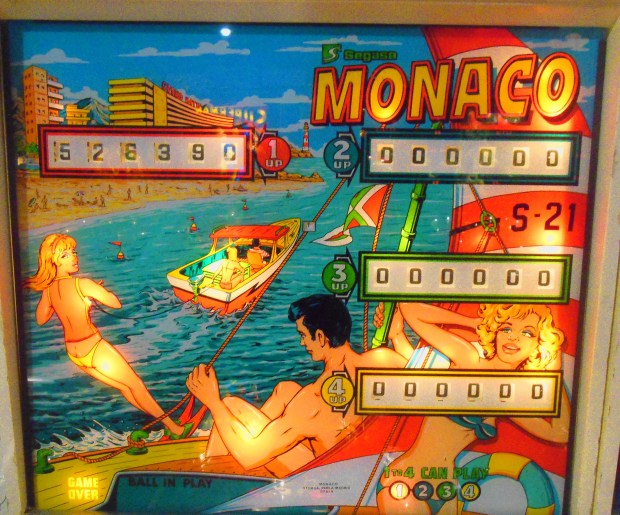
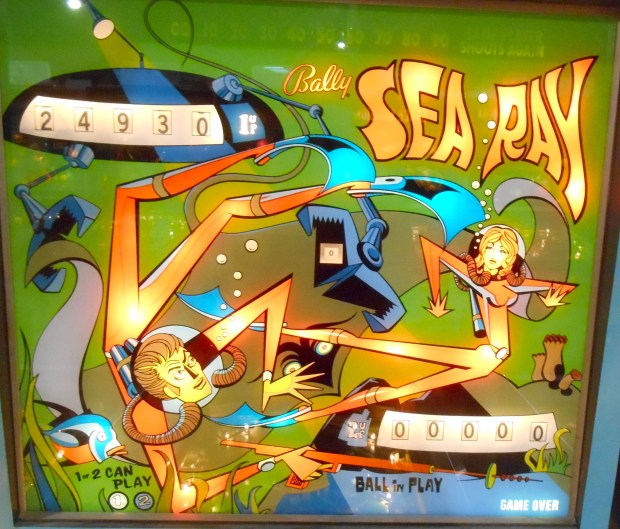
“Miss-O (a Williams game from 1969) is my favorite of the many pool-shooting machines, it seems to tell a story. Golfing and bowling are other pastimes often depicted.
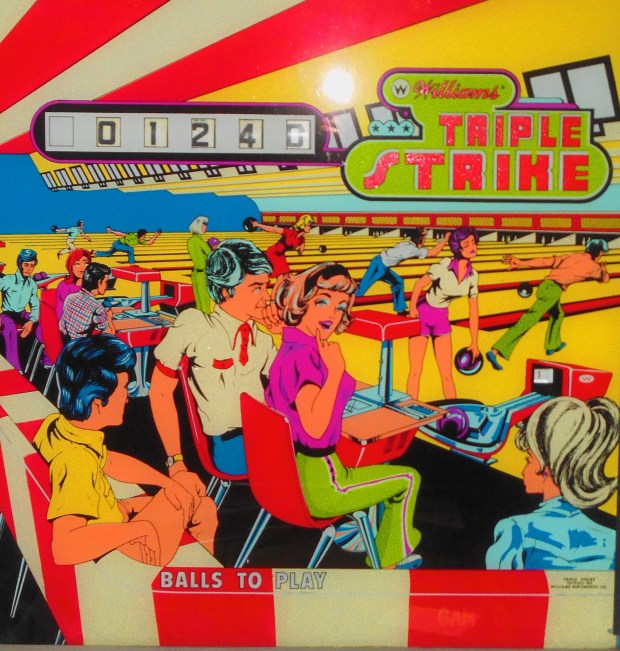
Many talented illustrators worked for the Big Three during this creative high-water mark, usually anonymous outside their own circles. My favorite is Gordon Morrison, who worked for the Chicago-based Gottlieb Co. for the entirety of the Seventies. Although Williams and Bally also had their share of eye-popping backglasses, but Gottleib seemed to have that extra flair and an erudite vibe.
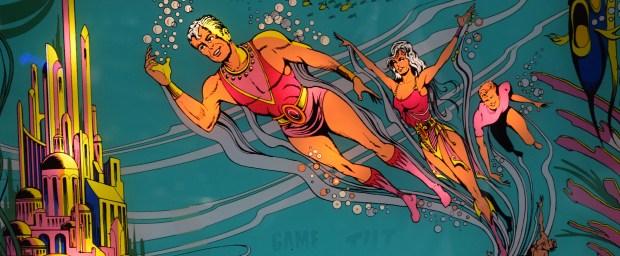
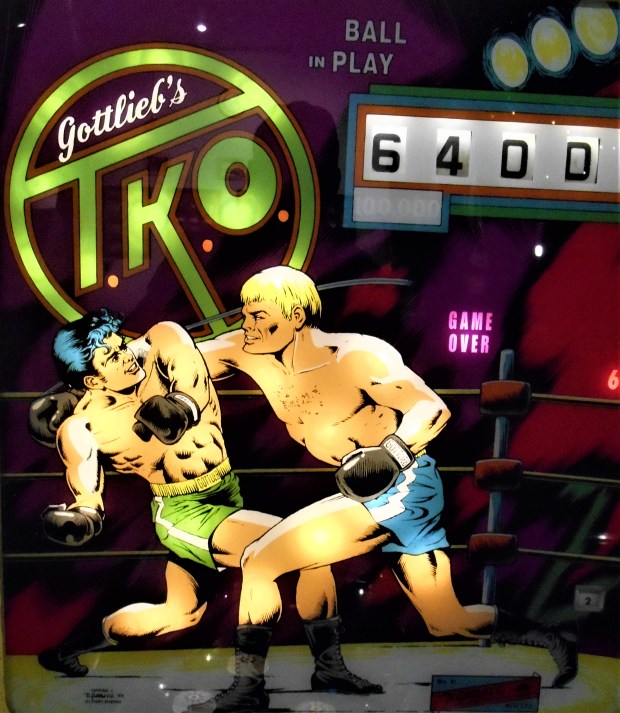
Among Morrison’s work are fantasy themes (a detail from 1978’s “Atlantis” is the banner image at top), science fiction, (the more or less Kubrick-adjacent “2001” from 1971, and 1977’s “Centigrade 37.” He also excelled in historical subjects like the beautiful “Cleopatra” from 1977 and sports subjects. The retro illustration for “TKO” looks like a Fifties prizefight but was from 1979.
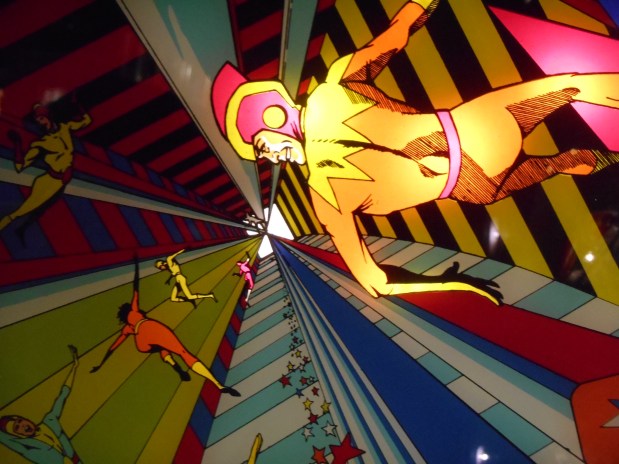
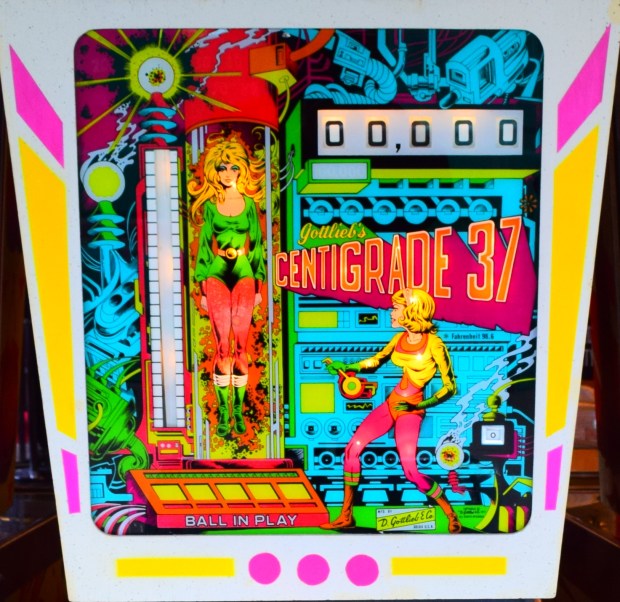
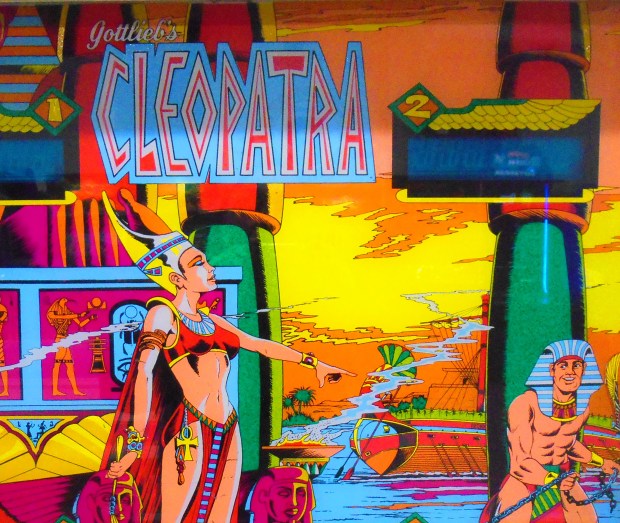
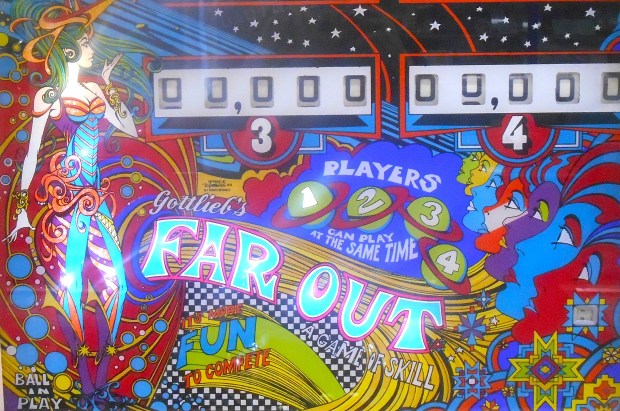
“The kids will love it.” The counterculture was catered to in ways both trippy and kooky.
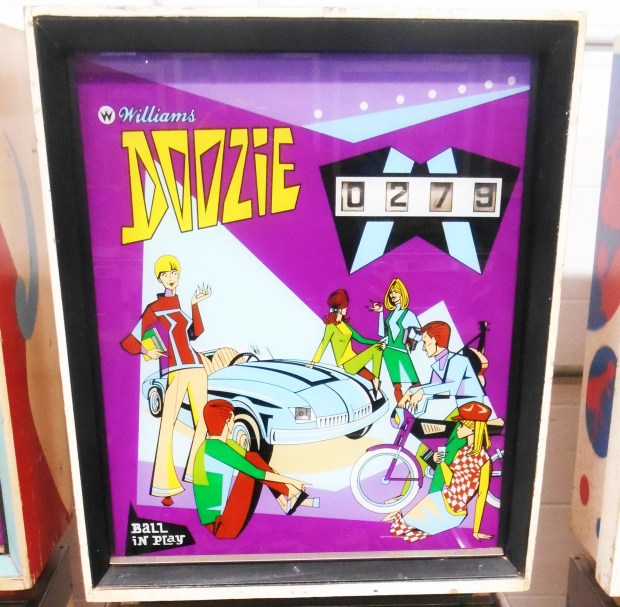
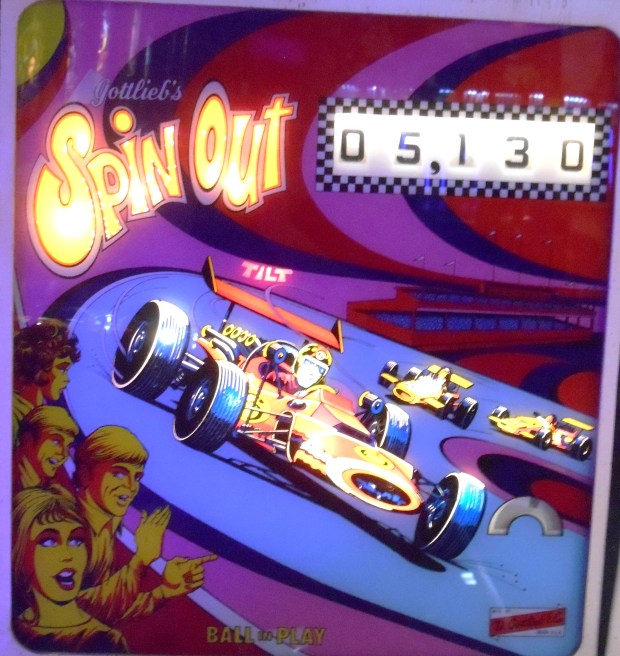
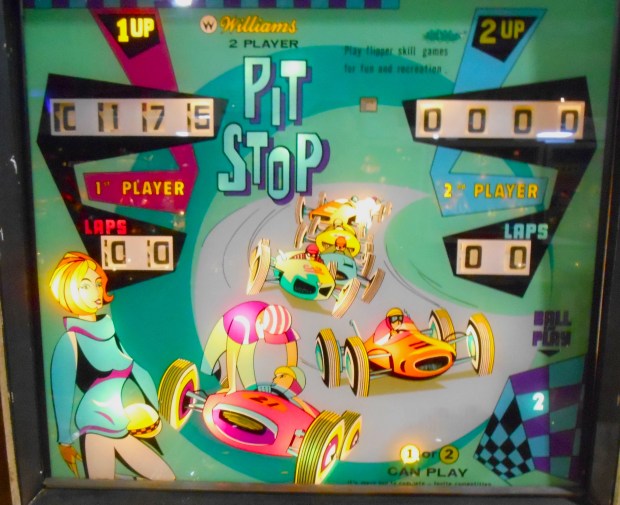
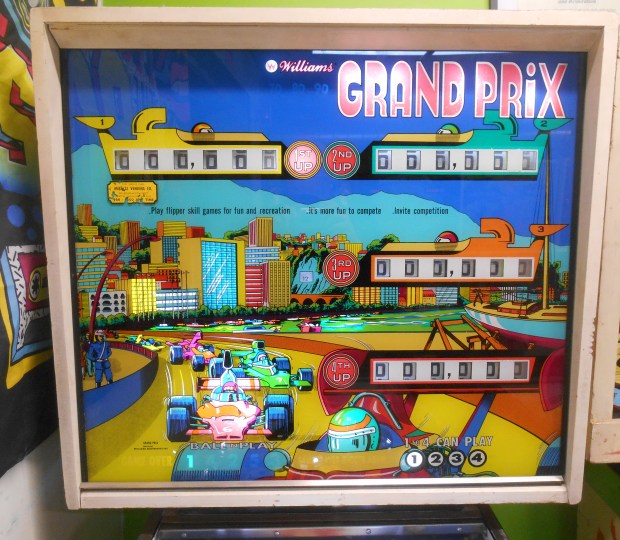
If you’re like me and love old Formula One racing, these are for you!
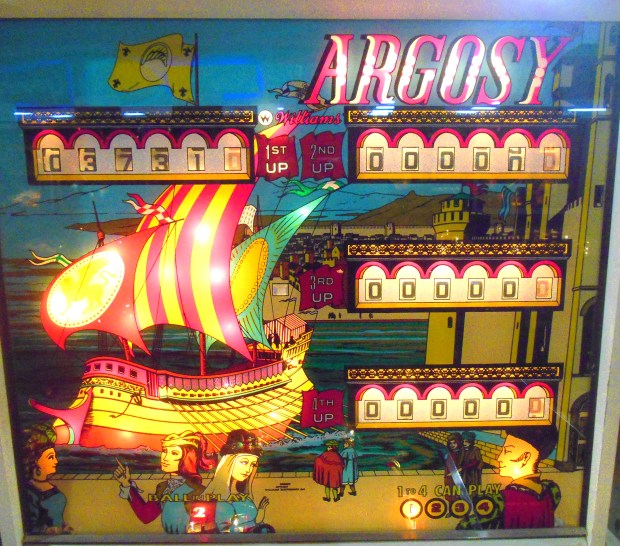
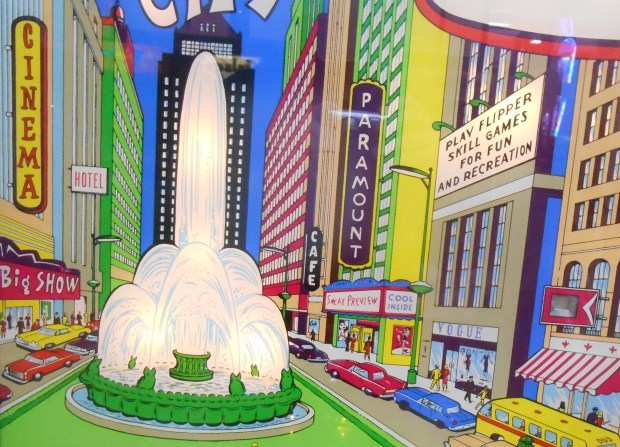
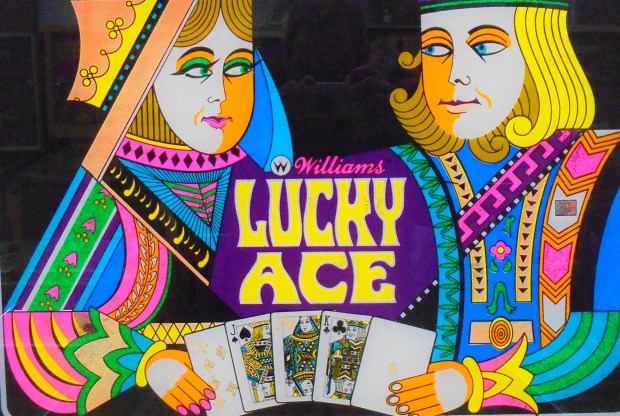
Pinball’s pop-art inclinations towards idealism is apparent in such elegant designs as Williams’ 1977 “Argosy,” at the tail end of the classic electro-mechanical era, the company would soon turn to less desirable (to me) solid-state machines. The 1967 “Magic City” was an enchanting glorification of urban living. The King and Queen of 1974’s “Lucky Ace” never looked so good in a deck cards; the goo-goo eyes they are making at each other is adorable.
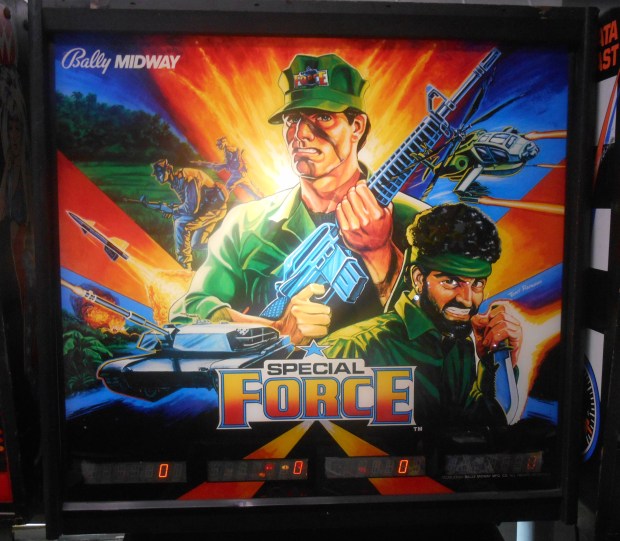
The Eighties saw its share of inspired (solid state) new machines, but the era of Reagan and “greed-is-good” also saw a big uptick in licensed IP and a concurrent decline in the application of inclusive, original content. And with this new president, you could rightly assume that the Age of Aquarius was over. Look below for this unfortunate Rambo-ripoff from 1986.
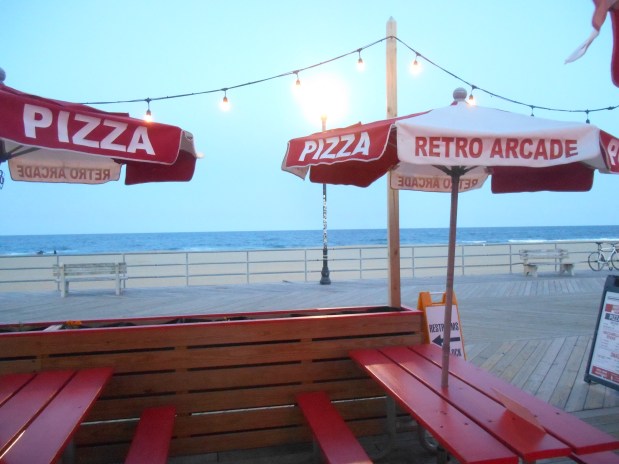
But everything that is old becomes new again and often with a lesson to be learned. Pinball’s peaceable kingdom lives on in an ever-growing number of retro arcades sprouting up across the U.S. My favorite is the Silverball Arcade on the boardwalk in Asbury Park NJ. They have over 200 well-maintained machines ranging from the 1930s to the 90s. Like many other such places, they charge a flat fee (by the hour or a full-day pass) and all machines are set to free play. No more cursing when you just blew quarters on a lousy turn. Plus you can’t beat the location (see below).
The biggest place I’ve been to by far is the Past Times Arcade in Girard, Ohio near the Penn. line. They have 400 pinball machines and like the Silverball, an on-site snack bar, because you’ll need some repast when you’re spending all day there! The Maine Silverball Tavern in Saco is one of those where you can also order up a craft beer. The Game Vault in Morristown, NJ and the giant Funspot in Weir’s Beach, NH are also highly recommended. At Electromagnetic Pinball Museum and Restoration in Pawtucket, RI (where you can play all day for ten bucks!) you can go upstairs and down a long, liminal hallway–don’t worry, the lights will turn on themselves–and visit a room where dozens of classic pinball cabinets await repair and maybe a turn downstairs on the game floor.
There are many more popping up all over the U.S. If you’re interested, just Google “retro pinball in my area” and see what comes up. In our age of dictatorial technology, it can be refreshing to match your wits against a mechanical device and good ol’ gravity itself. And of course, bring family and friends, and don’t forget to have a look at the artwork, which so impressively harkens back when the good vibes were just that much less taxing.
Text and photos by Rick Ouellette



Love your photos, especially of the early machines. Shows the evolution of the female bathing suit!
Happy pinballing.
Thanks, I’m going to the one in Asbury Park on Friday!
As a “soccer” fan, how are you coping with the Tartan Army having descended on your neck of the woods? It looks as if they are enjoying their time in Boston, especially as we won our first group match.
Yeah, the Tartans have won over the whole Boston area, they are media sensations here! They even drank a couple of pubs dry after the Scottish win.
Yes, we’ve been seeing those stories too. Not sure how I feel about being known as a nation that can drink bars dry but glad they have got on the good side of the Boston PD. The England fans are now starting to arrive so hope it all stays good-natured.