I'm a freelance writer and photographer and the author of the graphic novel in-progress "In a Dream of Strange Cities. My previous non-fiction works include "Rock Docs: A Fifty Year Cinematic Journey" and "Documentary 101: A Viewer's Guide to Non-Fiction Film," was released in 2013. My other activities, like psychogeography, bicycling, and a little urban exploring tie into the content of this blog, which is dedicated to the celebrating the rich history of rock music, film, literature and popular culture.
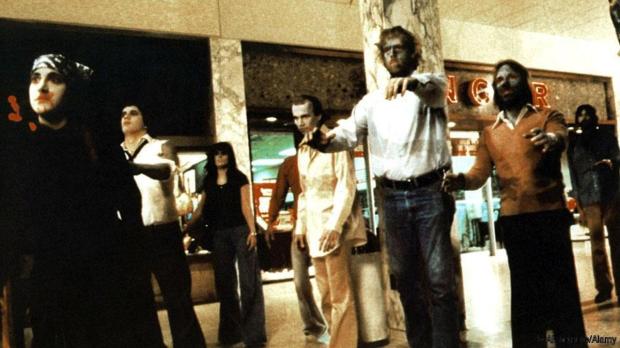
There’s a scene early on in George Romero’s 1978 zombie epic “Dawn of the Dead” where a traffic reporter and his producer/girlfriend (along with two SWAT officers) flee the apocalypse in his helicopter. Seeking refuge, they come across a large shopping mall, and figure it may be a good place to hole up—even though many of the walking dead are already ambling through the empty parking lot towards the entrance.
Baffled, the producer asks, “What are they doing, why do they come here?” Her fly-guy looks down thru aviator shades and deadpans, “A kind of instinct, memory… this was an important place in their lives.” Howls of audience laughter were all but guaranteed.
Hitting the mall, George Romero style.
But comic relief aside, the large indoor mall was a significant place in the lives of many Americans. That is until Amazon came along. The double whammy of online shopping and the Covid pandemic caused many such shopping centers to see their vacancy rates skyrocket—making them more suitable as the setting of a ghost story than of a zombie rampage.
This trend has given birth to the new verb “deadmalling,” whereby urbex photographers and lovers of liminal spaces visit these forlorn victims of a fickle consumer culture. I recently hopped onto this bandwagon, visiting four struggling malls in the Boston area. (Emerald Square Mall, Liberty Tree Mall, Solomon Pond Mall and the Kingston Collection).
Since the middle of the 20th Century, these places were the engine that drove the American idea of identity-through-acquisition. But at least you had to get up and go somewhere, park and then walk to your destination store, then interact with another human being. They were also social gathering places, and many people of coming of age in those decades will fondly look back at the “mall rat” days of teenage bonding.
You won’t likely find roving bands of incorrigible kids roaming the corridors of dead malls. While they live it up on social media, and their parents buy “everything” on Amazon (if only I had a dollar for every time…), a mostly older clientele shuffle around and check out what stores remain or head to the multiplex cinema which always seems to be situated in the property’s deepest recess. Many are there to simply get some exercise—mall walking has long been a thing for seniors. It was a little eerie when I noticed that many don’t just walk straight down the hallways but hew to the perimeter, like they were assigned the outermost lane at a track meet.
It’s all a bit unsettling, with its blank-faced side entrances, darkened food courts, former anchor-store dead ends and the isolated sitings of photo booths, massage chairs, kiddie rides and gumball machine stations. But there is also a weird, minimalist beauty to a lot of it, though I don’t believe the architects and designers ever imagined they would be appreciated this way.
While online shopping certainly has its place, its existence should not preclude previous ways of doing things, although I’m afraid that thinking through things is not currently a noticeable American trait. Amazon owner Jeff Bezos may be a very successful businessman, but he is far less successful as a human being (as anyone left at the Washington Post could tell you). His retail model has not only helped to close anchor stores but also uncountable small and middle-size businesses. Working at a mall might not be the greatest, but it beats the soul-crushing pressures of working at a cavernous Amazon warehouse, where many employees are only one rung up the ladder from bonded labor.
The malls that are surviving have opened themselves up to some smaller and/or quirkier retailers and added various events and alternate uses to help stem the tide. Some of them won’t make it and many others will likely lurch along in the strange twilight bubble they exist in now. One of them, the Monroeville Mall outside of Pittsburgh (where “Dawn of the Dead” was filmed) has recently added a museum/gift shop dedicated to “Night of the Living Dead” its (literally) ground-breaking predecessor in the original “Dead” trilogy. I’m sure the late Mr. Romero would appreciate that.
In one way, you’ve got to hand it to the ancient astronaut “theorizer” Erich von Daniken. The Swiss author, who passed away on January 10th, built himself a very lucrative career on the preposterous idea that visiting space aliens constructed everything from the Great Pyramids to the Easter Island statues, and just about anything else from the B.C. era. His 1969 book “Chariots of the Gods?” and the subsequent film captured the attentions of millions (including myself) despite not having a shred of evidence to back up its claims.
It did inspire a sense of awe and wonder when it came to the cosmos and the colossal monuments of ancient civilizations. But in a saner world, “Chariots” would have remained a cultural curio of the Seventies. Instead, von Daniken’s stubborn promotion of the ancient astronaut trope—played out over some 25 books and debunked by everyone from Carl Sagan on down—became a gateway drug for the destabilized world we live in today. A world that is filled with conspiracy theories, misinformation, willful ignorance, distrust of expertise and “alternative facts.”
To begin with, Erich von Daniken’s publishing empire was built on fraud, literally. A high-school dropout of no known talents but an interest in UFOs, he swindled his employer (a resort hotel in the Swiss Alps) for $130,000 to finance his travel to far-flung destinations in preparation for his first book. He was convicted and served one year of a 3 and ½ year sentence. “Chariots of the Gods?” was turned down by several different publishers until one agreed on the condition that a professional writer be brought in to fix the manuscript. This was Utz Utermann, previously best known as the editor of a Nazi Party newspaper. Just saying.
One saving grace of the “Chariots” film is the beguiling soundtrack by the Peter Thomas Sound Orchestra. “Book of Ezekiel” is a highlight. Of course, Ezekiel’s Wheel was a UFO according to von Daniken.
If Daniken had any writing chops, he could have turned his ancient astronaut thing into an entertaining science-fiction series. Instead, he plowed ahead with his outlandish theory and exploiting an impressionable public newly inspired by the U.S. moon landings. Most galling is the utter contempt Daniken seemed to have for the human race. To imply out of hand that ancient civilizations were incapable of constructing anything better than a mud hut is profoundly insulting. It also ignores historical and scientific research that traces the ingenuity, technology, and development of ancient human cultures. But of course, ol’ Erich had no use for that and instead endlessly claimed that experts (esp. archaeologists) had something to hide. There’s not much of a leap from that to the present-day Trumpie anti-vax crowd that seemed to think that Dr. Anthony Fauci’s whole life was leading up to his big opportunity to fool them into taking a Covid shot.
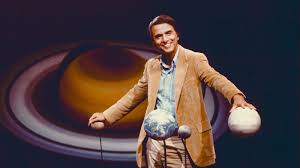
Carl Sagan on von Daniken: “That writing as careless as his, whose principal thesis is that our ancestors were dummies, should be so popular is a sober commentary on the credulousness and despair of our times.” Anybody interested in a point-by-point debunking of the ancient astronaut theory can check out Ronald Story’s “The Space Gods Revealed” and Clifford Wilson’s “Crash Go the Chariots.“
In 2009, von Daniken put it all on the table with a tome called “History is Wrong.” But of course it is. Why believe people who have studied history all their lives, when you can go all in with a convicted embezzler and check-forger who has even admitted to embellishing his claims? Sound familiar? And the man’s twisted legacy lives on in the so-called History Channel and its various “Ancient Aliens” programming. During a single one-hour show, I jotted down all the modifiers:
“There are claims that…”
“There is a theory that…”
“Could it be that…”
“Local legend says…”
Some maintain that…”
“It is rumored that…”
“There’s reason to believe that…”
And my favorite: “You have to wonder…”
Yeah, and I’m wondering right now: how the hell did we get so soft? To have this disregard for the abilities, ideals and aspirations of our own freakin’ species, not just in the ancient world but also in the modern. And left with the hollow phrase of UFO acolytes, “I want to believe.” Believe in what, exactly? Has the world become so daunting that our only hope is that some benevolent alien race is going to come to earth and solve all our problems? Yeah, there was a “Twilight Zone” episode about that once. It ended with that thing about “To Serve Man” being a cookbook.
In an enlightening article published a week before Christmas 2025, New York Magazine writer Lane Brown states that, “Stanley Kubrick’s movies have a habit of aging into new meanings, like monoliths that take time for us apes to figure out.” The enigmatic, maximalist director (2001, Dr. Strangelove, Clockwork Orange, Full Metal Jacket) died in 1999, just four days after completing his final film, Eyes Wide Shut. And it is that psychological fantasy drama, starring then-married Nicole Kidman and Tom Cruise, that is the subject of Brown’s piece. To wit: that “Eyes Wide Shut” could be a coded warning from Kubrick about the horrors of the Jeffrey Epstein sex-ring, which was assumed to have started a few years before. (The “evidence”? There’s a guy who looks like Epstein in the background and Kubrick died right after allegedly having an argument with studio heads, etc.)
Yes, of course, it is bat-shit crazy. The general public should have learned its lesson about pop-culture conspiracy theories way back during the silly “Paul-is-Dead” affair during the latter years of the Beatles. To even assume that reclusive Kubrick, a true artist and not a feckless Reddit rumor-monger, would have had knowledge of this sordid affair and spend years making a 160-minute feature film about it, instead of calling the authorities, is mind-boggling in its inanity.
What Kubrick was aware of is the crushing effect of the misused privilege of the upper-upper classes, a theme he also explored in 1975’s “Barry Lyndon.” If the Internet time-wasters focused on this instead of their fictitious figments, it would all be for the better. Eyes Wide Shut is based on the 1926 book “Traumnovelle” (Dream Story) by Austrian author Arthur Schnitzler. It examines the uneasy marriage of upscale Dr. Bill Harford (Cruise) and his wife Alice. Schnitzler was part of European “Decadent” cultural movement, and though the setting is moved from Vienna at Mardi Gras to Christmastime in 1990s New York City, the film doesn’t take long to fit in with this epoch. First there is the ritzy and libertine Christmas party thrown by one of Bill’s super-wealthy patients, Victor Ziegler (Sydney Pollack), where the doctor is called upstairs to administer Victor’s clandestine date, an unclothed hooker who has almost OD’d on a heroin/cocaine binge. After dealing with the situation, Bill is predictably asked to keep it quiet. But a solitary speedballing prostitute is only the tip of this cold-hearted iceberg.
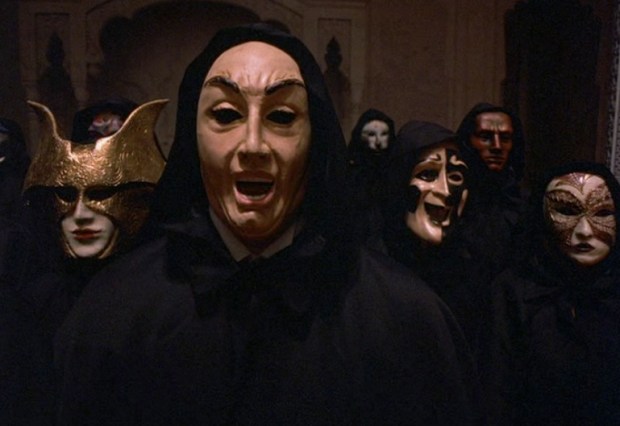
A key scene where the couple talk about their separate flirtations at the party is topped off by Alice revealing her obsession with a handsome naval officer she saw while on vacation, claiming she would leave Bill and their young daughter to be with him. The emotionally upended doctor is then summoned away on a house call. It leads to his all-night series of erotic but unconsummated encounters in a slightly-surreal looking Greenwich Village, and the film’s centerpiece, an elaborate ceremonial orgy scene at a secluded Long Island estate, a place where Bill shouldn’t be and where life is cheap if you’re one of the imported sex workers.
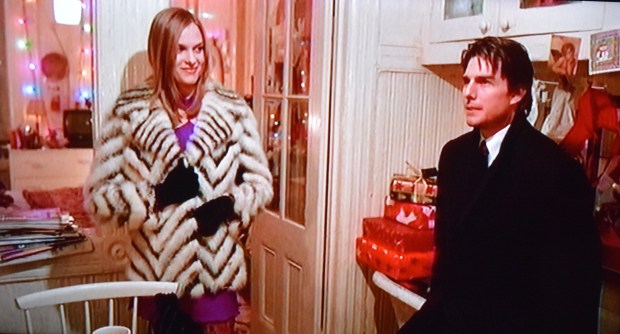
Vinessa Shaw and Tom Cruise discuss Christmas finances.
The tepid response to Kubrick’s last film is partly due to lack of clarity (and subsequent lack of viewer understanding) concerning the work’s origin in dream psychology. (It’s notable that Schnitzler was a contemporary of fellow Austrian Sigmund Freud). “Eyes Wide Shut” is a title indicating “dream awareness,” a kind of window into a deep psychic underworld, where a fantasy like Alice’s would seem to determine a marriage soon to implode. Bill’s Village wanderings, taken at somnambulistic pace, include a vaguely romantic encounter with a streetwalker (see above), interrupted when Alice call him on his cell, being accosted by the betrothed daughter of a freshly dead patient, being shoved aside and gay-baited by a gang of future MAGA assholes, and meeting the sexually promiscuous daughter of a costume-shop owner (played by a 16 year-old Leelee Sobieski).
In one of the film’s most chilling scenes, the costume-shop owner (played by Rade Serbedzija) has suddenly “come to another arrangement” and seems willing to pimp his daughter, hinting at the nefarious workings of secret societies that haunt the movie.
Though it seems like the biggest fever dream of all, Kubrick’s highly stylized orgy scene could be the most plausible aspect of the film. The horrid revelations about the late Jeffrey Epstein, his amoral imprisoned accomplice Ghisane Maxwell, and the numerous powerful men who somehow can’t resist spending time with underage girls, make the orgy seem at first like an elaborate masquerade party, despite the ominous complications caused by Bill’s crashing the scene of the country’s most rich and powerful having it all their way. But the slow-burning but riveting penultimate scene in the billiards room (below) where the untouchable Ziegler uses both tact and veiled threats to make sure to this little Upper West Side doctor will never again spoil the fun. And if someone dies gets themselves killed along the way, so be it. “Someone died, it happens all the time,” Ziegler concludes, sounding like Trump after the latest mass shooting.
At the top of the Epstein list of course, is the Orange Puke From Hell, the current president and convicted sex felon and vile authoritarian-minded degenerate—not to mention a person who built his entire political rise on mendacious conspiracy tropes and toxic social-media exchanges. He has since dragged us so far down into it with him, it feels we can’t stand up for falling down–giving our life over to grievance, rage and fear, both when it’s justified and when it’s not.
Mr. Kubrick, enjoying the holidays his way.
But instead, let’s look into the deeper meanings of what comes across our radar every day, instead of letting everything be a conspiracy or a grievance. And as Stanley Kubrick noted, our dream world is as instructive as the waking one and leads to a reconciliation of this film’s couple (while also acknowledging that “a dream is never just a dream”). The societal reconciliation that would lead all sides to finally come down on the side of stemming the unchecked power of the 1% still seems very far off. So, in the meantime, like in Greg Lake’s famous holiday song, “the Christmas we get we deserve,” meaning the biggest lump of coal that can fit into Santa’s sleigh.
A recent article mentioning that National Geographic has named Pittsburgh one of the Top 25 places to visit in the world (the only U.S. city to make the list), was posted online and made my Facebook feed. Invariably, one of the first comments was “That’s the best laugh I had all day.”
I was tempted to reply, “How so?” But I’m trying to be less judgy nowadays, so I let it slide and left a comment saying how much I enjoyed my own trip to Iron City last year. I mentioned the newly expanded Andy Warhol Museum, a great ballgame experience at the Pirates’ PNC Park with its bridge-and-skyline backdrop, the Nationality Rooms at the Cathedral of Learning and the colorful folk-art complex called Randyland. (See below)
Besides, if I asked that person why she thought it was so funny, the likely answer would be: “Really, I mean, PITTSBURGH?!” If there is one thing I’ve learned over the years, it’s that people love knowing what they already know, even when it’s wrong. This is esp. true when it comes to Rust Belt cities. If you mention Cleveland, a likely response is about the Cuyahoga River being on fire, even though that was 56 years ago. And don’t let’s get started about the state of New Jersey, which many motorists have reduced to the “smelly” stretch of I-95 opposite New York City, filled with refineries and powerlines. We want all the gasoline and electricity we can get—but are somehow offended to see where it comes from.
The AKG Museum in Buffalo. The mirrored surfaced of the institute’s modern walkway reflects both the older building and an outside sculpture.
Perceptions are gradually starting to change, and just not in Pittsburgh. Buffalo’s AKG Art Museum was named by Time magazine as one of The Greatest Places in the World in 2024. A dazzling modern addition has been added to the original 1905 Greek temple-style original, connected by a serpentine elevated walkway.
And the AKG is far from an isolated location: it sits in the middle of Buffalo’s cultural corridor near Frank Lloyd Wright’s jewel-like Martin House, the Buffalo History Museum (housed in the only remaining building from the city’s 1901 world’s fair), an outdoor Shakespeare theater and various gardens and a lake with flamingo pedal boats. All of this in the beauteous confines of the Frederick Law Olmstead-designed Delaware Park.
But my favorite part was staying at the nearby Richardson Hotel (above), which occupies the middle section of the former Buffalo State Asylum. Opened up in 1880 on grounds also designed by Olmsted, this massive architectural gem was an early commission of famed architect H.H. Richardson, fresh off his masterful Trinity Church in Boston. Underneath it’s two colossal towers, the main administration building, as well as its two matching Romanesque wings, make up the footprint of this remarkable boutique hotel. As with many such facilities, this asylum grew overcrowded and it was expanded (in brick, not the expensive Medina sandstone of the original building) to such an extent that it takes about a half-hour to walk around it.
The nighttime photo at top shows both the elegance of Richardson’s design and the great work of the restoration crew. The bottom photo gives one some idea of the scale of the former asylum, some of which is hopefully being set aside for much-needed affordable housing.
Like many other state hospitals, this one was closed in the late 20th century. But unlike others that were demolished without much opposition, Richardson’s piece de resistance sat there until the city realized what they had. Now this asylum is a point of civic pride, a lynchpin in the city’s ambition to become a design capitol, with a focus on the many significant buildings, including its magnificent City Hall (below) and Central Terminal (currently being restored), two of the region’s premier Art Deco edifices.
The effects of deindustrialization has been devastating for many U.S. cities in the Northeast and Midwest. The poverty, crime, population loss and disinvestment that followed is of historic proportions. But a potential silver lining is the fact that, at their economic peak, places like Buffalo, Pittsburgh, Cleveland and Detroit used some of that manufacturing wealth in the building of first-class (and often majestic) museums, libraries, theaters, railway stations, hotels and monuments—all speaking to a grand sense of collective civic pride all but missing in our age of calcified socio-political divides.
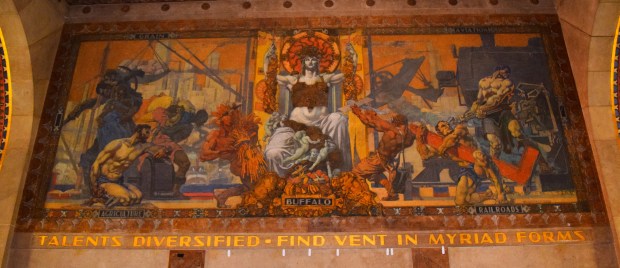
A mural inside Buffalo City Hall from more optimistic times.
I’m not suggesting, or even hoping, that people will give up the default destinations like Las Vegas or Disneyworld. Yet the trend towards sub-genres of domestic travel is encouraging and should help in the nascent Rust Belt revival. These days, there is foodie tourism, historic preservation tourism, music tourism, film festival tourism, sports tourism—Pittsburgh is hosting the NFL Draft next year and it’s a BIG deal. Anything that gets us out and about on a path that leads to greater understanding of our common heritage is a welcome move in the right direction in these wrong times.
Lastly, a word about an even newer trend: abandoned steel mill tourism. In the not-too-distant past, places like the former Bethlehem Steel plant (above top) and the Carrie Furnaces (above bottom) were top-line locations for the urban explorer community. Now I’m no stranger to the wild and woolly world of urbex photography. But I have never been one of its real hardcore practitioners and I was glad when I eventually got the chance to visit such places without fear of arrest.
The gargantuan Bethlehem Steel plant (renamed Steel Stacks) is now the dramatic backdrop to an outdoor concert venue and cultural center. The elevated walkway brings one up close to this amazing structure. Placards inform the visitor of the “Hot, Loud and Dangerous” conditions that the steelworkers put up with to provide the nation with its infrastructure. It’s a “thank-you-for-your-service” moment that some risk-taking explorers would not realize or get the chance to find out.
The same goes for the formerly off-limits Carrie Furnaces, now a state heritage park. Visitors can learn that this was a big part of World War Two’s “Arsenal of Democracy.” Factories on an 8-mile stretch of the Monongahela River, starting in Pittsburgh, produced more iron and steel during the war than all the Axis Powers combined. The scale and complexity of the furnaces are mind-boggling, and the implied message of strength and national unity is haunting in an age where even the word “democracy” seems compromised. So let’s get out there and live and learn: and when someone asks, “Pittsburgh, really?” you can answer, “Yes, really.”
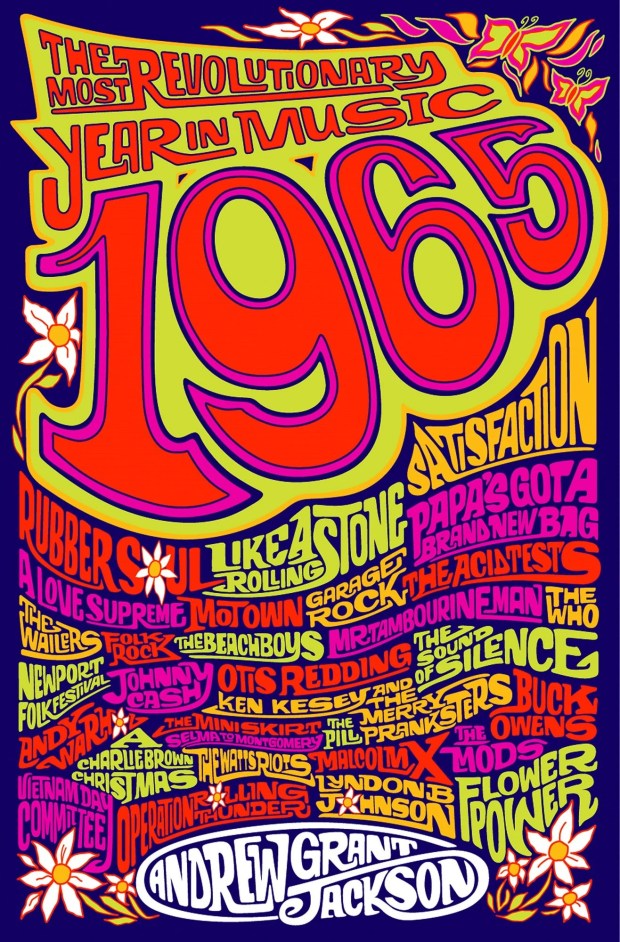
It was 60 years ago that the music world was turned on its head, smack dab in the middle of that terrific and turbulent decade. While there is room for debate as to what was “the most revolutionary year in music,” rock scribe Andrew Grant Jackson makes a great case for ’65. Consider masterwork albums ranging from the Beatles’ Rubber Soul to John Coltrane’s A Love Supreme. How about era-defining singles like “(I Can’t Get No) Satisfaction,” “Eve of Destruction,” “Like a Rolling Stone,” “Papa’s Got a Brand New Bag,” “My Generation” and “The Sound of Silence?” The year also saw the rise of garage rock and psychedelia. And it all happened against the backdrop of tumultuous events like the Watts Riots and the first large-scale protests over the Vietnam War.
What makes this book so compulsively readable is Jackson’s knack for conflating musical events with related social themes of the age. One of the best examples is the advent of the Pill and the concurrent dawning of the “Free Love” era and the shattering of the age-old “Madonna/whore” complex, at least among the younger generation. (Women with the upper hand started making appearances in Beatle songs like “Day Tripper” and “Ticket to Ride”). Models such as Edie Sedgwick and Twiggy were “waifish and full of wonder” and made words like “tramp” seem suddenly outdated. Jackson writes: “An act (casual sex among unmarried people) that had always been shameful now acquired a butterfly-winged lightness.”
Edie Sedgwick and Twiggy
But it was still largely a man’s world and Bob Dylan’s “Like A Rolling Stone,” which has been praised to high heaven for six decades, is a rather harsh put-down of a poor little rich girl—supposedly inspired by Bob’s brief affair with the vulnerable Sedgwick. Brilliantly composed for sure, but I prefer the more spiritual “Mr. Tambourine Man” as my 1965 Dylan touchstone. The Byrds’ #1 hit version in June was the early high-water mark of the folk-rock movement.
Dylan was famously booed by many for “going electric” at the Newport Folk Festival that July but, inspired by the global success of the Beatles and Stones, he already had at least one foot out the door of folk-music orthodoxy and was destined for rock stardom himself.
Jackson points out that, in a year which saw the savage attacks on civil rights marchers in Selma and elsewhere, it was in the music world that pointed the way to positions of peace, solidarity and understanding. The Temptations’ “My Girl” was #1 pop hit the same week that ABC interrupted the Sunday Night Movie to show Alabama state troopers brutal attack on non-violent black demonstrators.
When the Beatles invented the big stadium rock concert at New York’s Shea Stadium in August, the opening acts were Motown singer Brenda Holloway, jazz/soul saxophonist King Curtis and the Mexican-American band Cannibal and the Headhunters. It was the type of diversity that didn’t have to announce itself. Things were bubbling up all over: in Jamacia the new reggae band Bob Marley and the Wailers released no less than 17 singles that year, including an early version of “One Love.”
Another sign of increasing cultural cross-pollination was the dawning influence of Indian culture. The first salvo was the bewitching drone ambience of the Kink’s “See My Friends.”
Ray Davies was influenced by chanting fisherman in Mumbai when coming up with this Kink Klassic.
Then there was the fateful moment when George Harrison met up with a sitar on the set of “Help!,” the Beatles’ second feature film that was shot in early ’65. By year’s end George was playing one himself on “Norwegian Wood.” More importantly, the group was gifted a copy of Swami Vishnudevananda’s “The Complete Illustrated Book of Yoga,” The more serene, inward-looking type of wisdom offered by Hindu philosophy would become hugely influential in the years to come, offering an alternative to the kind of might-is-right that brought the U.S. into the Vietnam quagmire.
While the year 1965 may not ever be considered as relevant as Summer-of-Love 1967 or Woodstock 1969, Jackson has made a very compelling case that the groundwork for all that came later is in the Big Bang year of ’65 and this brilliant page-turner will have you convinced. —Rick Ouellette
Well, here’s the concluding entry in my survey of recordings in that most star-crossed category, the covers album. Star-crossed in an almost literal way: here are stars performing the songs of other stars.
After listening to so many of these albums I can only conclude that placing one or two well-chosen covers on an album of your own original tunes works a lot better. The reason is a whole collection of tributes usually tends to lack coherence and make even the best artists look like a bar band.
The best way around this is for your covers album to have some sort of concept. The highest-ranking record of Part One of this survey (David Bowie’s Pin-ups) worked so well because of its tight focus. Bowie was paying homage to British bands and key songs from the 1964-67 period, just before he broke thru himself. A similar concept guides the first record reviewed here, the only one other than Pin-ups to gain an A- rating.
Songs From a Haunted Ballroom—The Skids (2021)
While not a household name, most fans of early UK punk will recall this tenacious band who moved down to London from their native Dunfermline in the late 70s. The Skids gained notoriety not just for their tough-guy rep (legend has it that they picked fights in clubs to get their names in the English music press) but also for their aggressive-but-artistic musical approach. That included at least two Brit punk classics: “Into the Valley” and “The Saints are Coming,” both of which are featured here in re-recorded versions.
The rest of Songs From a Haunted Ballroom have an association with the Kinema Ballroom, a vital but volatile music venue in their hometown. The Skids, whose guitarist was future Big Country leader Stuart Adamson, got their start here, playing live sets opening for the likes of the Clash before the place changed over to a discotheque later at night.
Both aspects of the Kinema are celebrated here. Mainstay vocalist Richard Jobson is joined here by ex-Big Country second guitarist Bruce Watson and his guitarist son Jamie Watson. The lads come charging out of the gate with Ultravox’s “Young Savage,” one of many allusions to the club’s stormy history (“Anything goes where no one knows your name”). They tip their hat to the Clash with a nice take on “Complete Control.” In light of the father-son axe duo backing him up, Jobson is obliged to use the song’s proclamation “You’re my guitar hero!” not once but twice.
Elsewhere, there are enthusiastic, high-energy tributes to the Adverts, Sex Pistols, Iggy Pop, Mott the Hoople and Magazine. Just as welcome are some of the less obvious choices like Ace Frehley’s “New York Groove” and Garland Jeffrey’s “35mm Dreams.” The key track is probably their ominous take on David Essex’s glam hit “Rock On.” As an after-hours disco, the Kinema was a magnet for the region’s various violent gangs and apparently “Rock On” was the signal for the trouble to start. Jobson describes the scene in a mid-song monologue as the AV Toi (“the most mental gang in Scotland”) get ready to rumble. Grade: A-
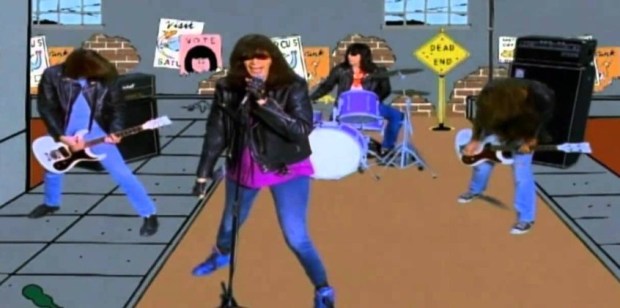
Acid Eaters—The Ramones (1993)
As punk-rock pioneers, the Ramones need no introduction, but once you get past their mid-to-late 70s heyday, they become a lot less examined. By the late Eighties, original bassist and key songwriter Dee Dee Ramone had left, leaving CJ Ramone to man the front line with Joey and Johnny. CJ, who took some lead vocals, was an energizing figure but the band’s run was almost over.
On this, the Ramones’ penultimate studio album, the band matter-of-factly reposition themselves as acid-rock casualties: just look at the disconcerting covert art. Of course, it’s still them so don’t expect Dead-style noodling or Floydish space jams. Opener “Journey to the Center of the Mind” (sung by CJ) may be trippy but it also rocks.
The results here are entertaining if a bit predictable. The Ramones are in a comfort zone when covering their antecedents like the Animals, Seeds and Troggs. And it’s a blast to hear Joey’s long-loved voice singing the Who’s “Substitute” with no less than Pete Townsend guesting on guitar. The same goes when ol’ Bobby Dylan gets the Ramones’ patented faster-and-louder treatment. Their buzzsaw rendition of “My Back Pages” (check out Marky’s triple-time drumming and Joey’s rare lead guitar shredding) gives the Byrds’ celebrated version a run for its money
As usual, though, the results here vary. The Credence vibe (as in “Have You Ever Seen the Rain”) doesn’t seem to suit da brothers and their take on “Somebody to Love” (despite backing vocals by porn star Traci Lords) won’t make any baby boomer forget about Grace Slick. For my money, the Ramones’ best cover came on their next (and last) album Adios Amigos. Their version of “I Don’t Wanna Grow Up,” Tom Waits’ seriocomic take on the old Peter Pan trope, is made all the more affecting by being the final bittersweet salvo of the group’s perpetual teenage rebellion. (The video’s witty animation was done by famed comic artist Daniel “Ghost Story” Clowes). Grade: B (B+ if you add in the Tom Waits tune).
12—Patti Smith (2007)
Rising up from the same Lower East Side scene that birthed the Ramones, New York punk poetess Patti Smith showed a great knack for incorporating others’ work into her own on her revolutionary debut album in 1975. Horses kicked off with her radical recasting of the Van Morrison warhorse “Gloria” with her famous opening line, “Jesus died for somebody’s sins but not mine.” On side two her group seamlessly added “Land of a Thousand Dances” to the outré 9-minute “Land.”
It wouldn’t be until 2007 that the covers-album bug would give Patti a bite. Smith is famously expansive in her fandom, so it’s no surprise that 12 is a grab-bag of songs of different eras and genres. If you want to know how to get from Jimi Hendrix to Tears for Fears to Neil Young in three easy steps, here you are. If you’ve been yearning for a slow-paced version of “Smells Like Teen Spirit” complete with banjo and fiddle, your wait is over.
This will be a pleasurable listen for Patti Smith fans like me. But the fact that her take on “Everybody Wants to Rule the World” is my favorite thing here (despite not being even close to my favorite tune covered) goes to show just how random these records are. Grade: B-
Dylan—Bob Dylan (1973)
This long-derided album can’t be blamed on the artist. A record of traditional songs and covers, they are outtakes from 1970’s lowly-rated 2-LP set Self Portrait It was released against Dylan’s wishes by Columbia Records in “revenge” after Dylan had the audacity to jump ship to Asylum (he came back two albums later).
His largely indifferent takes of various non-originals made up about two-thirds of Self Portrait, and these are the leftovers. There are lackluster tributes to contemporaries (“Big Yellow Taxi” and “Mr. Bojangles”), a few deep oldies (“Spanish is the Loving Tongue” dates to 1907) and a three-hankie Elvis ballad (see below). Bob sings in his appealing “Nashville Skyline” voice but his delivery is lazy, and the record is marred by the overuse of a shrill female chorus too high in the mix. Some have suggested that the ever-cryptic Dylan was engaged in some perverse self-sabotage during this period. I tend to believe it. In his re-issue series, a collection from the same period, called Another Self Portrait, was released in 2013 and it’s freaking great. Grade: C-
Covers—Cat Power (2022)
Chan Marshall, the Atlanta-born singer/songwriter who goes by the stage name Cat Power, has been beguiling fans since she came on the scene in 1992. Her brand of subtle intensity may not be for everyone, but her unique musical stylings make her esp. suitable for doing other people’s material (this is her third, and most recent, covers album). Not everything here sticks the landing, but when it does it’s quietly captivating.
The best to my ears are her artful renditions of two poignant slow numbers. First is the Pogues’ “A Pair of Brown Eyes,” with Marshall accompanying herself on Mellotron (see below). Second is the Replacements’ barroom ballad “Here Comes a Regular.” There are other selections that show the depth of her musical appreciations: Nick Cave’s “I Had a Dream, Joe” and Kitty Wells’ proto-feminist anthem “God Didn’t Make Honky Tonk Angels,” the first C&W #1 hit by a solo woman. On the flip side, she does a song by lesser-chanteuse Lana Del Ray, Bob Seeger’s “Against the Wind” (barely recognizable) and a number from Ryan Gosling’s short-lived group. But with cover albums, variety is the spice of life. Grade: B
Kojak Variety—Elvis Costello (1995)
More “variety.’ First off, I’m glad that this album was named after a store near where it was recorded in Barbados, and not after the charmless TV detective played by Telly Savalas. Secondly, most know that Costello, a generational songwriting talent, has a keen ear for and encyclopedic knowledge of other great tunesmiths—he did a country covers LP (Almost Blue) only a few years into his career. This one also wisely sticks to a plan (the cover touts “Rhythm & Blues, Popular Ballads”) and said tunes are delivered in Elvis’ familiar self-assured style. You get them coming and going: songs by Willie Dixon, Mose Allison, Screamin’ Jay Hawkins, Little Richard, Jesse Winchester etc. Your favorite will depend on your preference for a particular tune. I love his emotive take on Dylan’s “I Threw It All Away” and esp. his elegiac take on Ray Davies’ bittersweet “Days.” This Kinks Klassic Kover was originally from the soundtrack of the Wim Wenders’ film “Until the End of the World,” where it was also a group sing-along during a campfire scene. Grade: B
Through the Looking Glass—Siouxsie and the Banshees (1987)
The distinctive, imperious voice of goth icon Siouxsie Sioux was well known by the time she and the Banshees decided to do this tribute album of early influences a la David Bowie’s Pin-Ups. And like Bowie, she was able to put a unique stamp on many of the well-chosen covers here. Dark and delectable tunes like John Cale’s “Gun,” the Doors’ “You’re Lost Little Girl,” and Kraftwerk’s “Hall of Mirrors” are naturals for her and delivered in excellent style.
Other tracks go next level: Iggy Pop loved Siouxsie’s version of his nocturnal road-tripping “The Passenger” (which added a neat brass section) so much that he asked to do a later duet version with her. Her goth take on the Billie Holiday nightmare classic “Strange Fruit” is not afraid to sit up right up there in the pantheon. And her eerie vocal on Television’s “Little Johnny Jewel” gives that early punk gem a second life, with guitarist John Valentine Carruthers ably reproducing the song’s infamous 8-note guitar motif while wisely avoiding a go at Tom Verlaine’s nervy, virtuoso solo. Grade B+
I didn’t have time to fully review Nick Cave and the Bad Seeds 1986 covers LP Kicking Against the Pricks but was taken by its closing number. It became a signature song (along with “Georgy Girl”) for fellow Australians the Seekers. Written by Tom Springfield, it seems an appropriate place to close. Like a carnival, cover albums have plenty of fleeting pleasure before they move on to another town, while you turn back to your favorite artists doing original material.
“The American Dream is only a dream, and the American Reality is imperative, a powder-keg situation.” Lester Bangas, 1968.
These are soul-killing times if you are among those who believe that the affairs of the world should be handled with empathy and common decency. The Orange Puke from Hell is back and we’ve gone from the nagging but manageable general anxiety of modern life to the psychic (and sometimes literal) equivalent of having a band of greedy twisted degenerates roaming your neighborhood, out to rob you of your life savings and your medicine, while knocking your grandma to the pavement and kidnapping your neighbor. An administration that has gleefully performed every perdition short of forcing kids to eat lead paint.
While mentally barricaded thusly, I began looking for something to read that would be entertaining but intellectually fortifying. I was seeking something relevant but far removed from the current hellish news cycle and the persistent panic-filled postings of my liberal friends, I came across an unlikely hero in Lester Bangs.
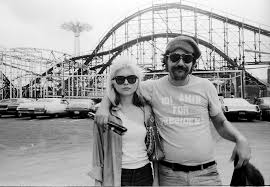
Lester and Debbie Harry on Coney Island back in the day.
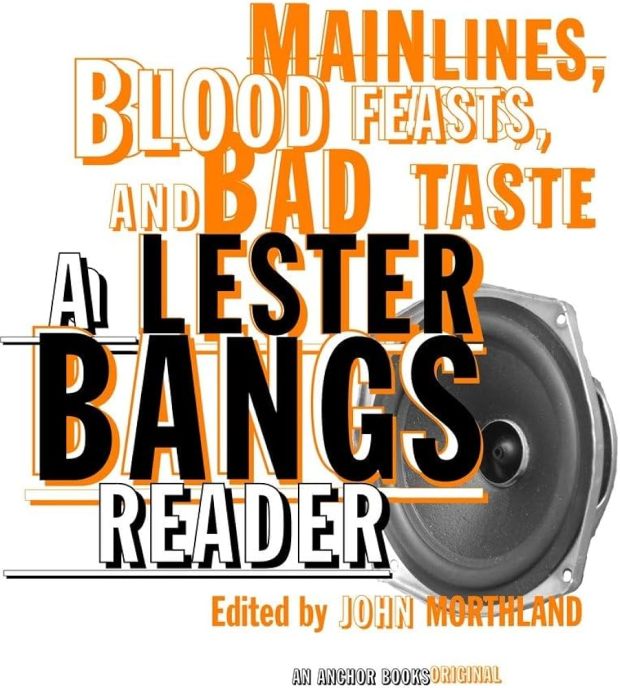
Unlikely in the sense that Bangs, the infamous raconteur and rock critic el supremo, died of an accidental drug overdose in1982. Multitudes of music fans of that era were familiar (if not always in agreement with) Lester’s discursive reviews and articles appearing in Rolling Stone, Creem, the Village Voice and other periodicals. Younger folks might have got to know him from the iconic 1987 collection “Psychotic Reactions and Carburetor Dung,” edited by Greil Marcus or from Philip Seymour Hoffman’s colorful portrayal of him in the 2000 film “Almost Famous.” I had been familiar with Bang’s work since his gleeful hatchet job on Paul McCartney and Wings appeared in a summer of ’76 cover story in Creem. But I was never aware of this second anthology of his work (from 2002) until chancing upon it recently at a used bookstore.
Edited by John Morthland, “Mainlines” is notable for including pieces of a more personal nature, including travelogues and a few entries of a previously unpublished manuscript he wrote at age 19 in that despairing and violent year of 1968—including the astute “Two Assassinations and a Speedy Retreat into Pastoral Nostalgia.” This gives the reader valuable insights (that still ring very true today) into Bangs as the grizzled idealist. But fear not, there’s still plenty of the crazy Lester we knew and loved, with entries like:
“Jim Morrison: Bozo Dionysus a Decade Later”
“Dandelions in Still Air: The Withering Away of the Beatles”
“Stevie Nicks: Lillith or Bimbo?”
“Grace Jones Beats Off”
“Deaf/Mute in a Telephone Booth: A Perfect Day with Lou Reed”
Bring Your Mother to the Gas Chamber!” (his epic essay extolling the virtues of Black Sabbath).
Along the way he also promotes the idea of goody-two-shoes Anne Murray as pop music’s ultimate female sex symbol (“a hypnotically compelling interpretrix with a heavy erotic vibe”) and fully embraces the feminist career move of Helen “I am Woman” Reddy. (“All men but me are spuds. What I would like to see is an all-girl band that would sing lyrics like, ‘I’ll cut your nuts off, you cretins,’ then jump into the audience and beat the shit out of the men there”).
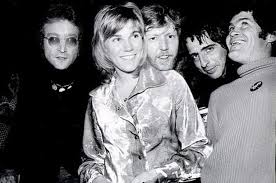
Anne Murray at her sex-symbol peak, with male admirers John, Harry, Alice and Mickey.
You see, Mr. Bangs was in on the great Cosmic Joke. We should be too. Because even at his snarkiest, you could always tell that Lester cared a lot—about music, about culture, about his country. The Cosmic Joke posits that despite all the meaning and purpose we try to attribute to life on earth, we are all headed to the same end (“fellow passengers to the grave” as Dickens put it) so we best embrace our common humanity, give a hoot about something other than ourselves, and have a few laughs along the way.
Bangs had himself plenty of laughs, as you might be able to tell from the titles of the above magazine articles. But the passion and seriousness of much of this collection caught me off guard, in a very good way. “Two Assassinations,” written the day after Robert Kennedy was shot dead, is remarkably astute for a kid still six months shy of his 20th birthday. He declares Kennedy “something of a final straw for me” as he predicts Richard Nixon’s upcoming election and envisions a future America seized by “monstrous social earthquakes.”
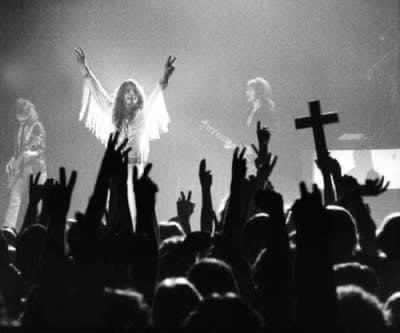
Lester on Black Sabbath: “As close as you can get to blood-lust orgies, death, or utter degradation without having to experience them firsthand.”
Of course, music was a saving grace for Lester as it still is for so many of us. Even then, he has a strong propensity for detailing the “aural abyss” of such challenging albums as Nico’s “The Marble Index,” Velvet Underground’s “White Ligh/White Heat” and Pil’s “Second Edition,” among other personal favorites. In an age of hit-and-run social media opinions, it’s a throwback reading pleasure to see Bangs spend pages wrestling with the patchy quality of hero Miles Davis’ early 70s output or painstakingly lambasting Bob Dylan for the “Mafia Chic” misjudgment of his ill-advised paen to psychotic mobster Joey Gallo.
Many contemporary readers will be justifiably put-off by Bangs’ casual use of insensitive epithets (spade, homo, bitch) but maybe what we’ve gained in sensitivity we’ve lost in critical thinking. In his prime years, in the age of Nixon and Vietnam, he saw the cruelty of the right but also the rigidity of the New Left and took on life with endless creative drive and steely purpose, warning us way back then about the vast social chasms awaiting America and the urgent individualism needed to keep your head above the waters that would otherwise have you drowned.
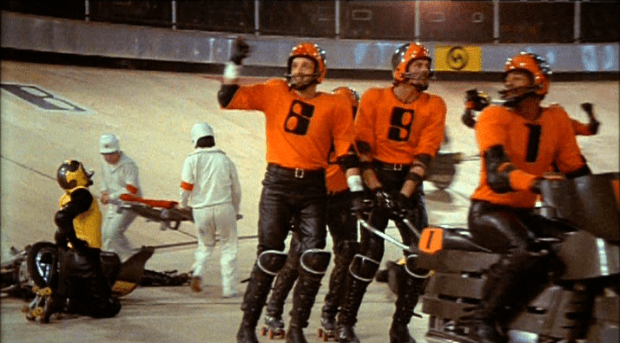
The 1975 science-fiction drama “Rollerball” was a bit of an odd duck of a film: come for the bloodsport, stay for the philosophy. Some weren’t buying. Though a success at the time, this movie has always split viewers and critics. While not sensationalistic enough for certain action fans, it was sometimes seen as too plodding in its thematic thrust by the smarties.
But for someone like me, who enjoys thoughtful sci-fi but also grew up watching Roller Derby on late night TV, “Rollerball” hits just right. Its stature has grown over time and is well worth a look now, esp. as the near future it predicted (the film is set in 2018) has come to pass by several years. (Please note that I’m recommending the James Caan-starring original and not the inconsequential 2002 remake, which currently has a 14% rating om Metacritic).
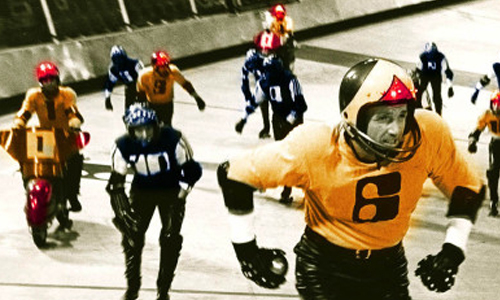
Directed by Norman Jewison, with a script by William Harrison based on his own short story, Caan stars as the foremost superstar of a global sport that combines elements of the old banked-track skating derbies with motorcross and barely-controlled mayhem. Jonathan E. by name, this seemingly indestructible team leader excels like no other at jamming the heavy silver ball into the goal without getting maimed for life (it’s not unusual for there to be fatalities during these “games”).
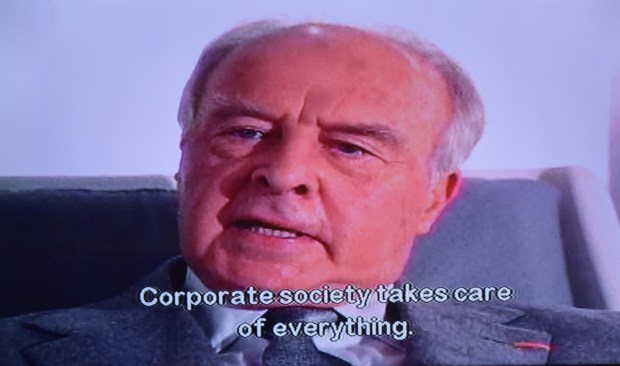
The setting is what I would call a “model dystopia,” where war has been eliminated and all material wants met in a world is run by a cabal of supposedly benevolent corporations. Rollerball is the one unifying element for regular folk to have a visceral outlet for the violence which has supposedly been eliminated otherwise. The game is tightly controlled by the corporations, who are starting to think that Jonathan E. is transcending this concept of social control.
The plot is simple: the corporation wants Jonathan to retire, Jonathan does not want to and attempts to use what leverage he has to resist. No offense to James Caan, who was at the height of his movie-star power and acquits himself well, but the real star of the show is John Houseman as head of Houston’s Energy Corp. and who runs the locally based team.
Houseman, who came up in the theater working with Orson Welles, enjoyed a late-career resurgence as a character actor, winning an Oscar for his imperious Harvard law professor in 1973’s “The Paper Chase.” He is similarly authoritative here, making perfect use of his haughty mid-Atlantic accent which he later employed in memorable TV ads.
His Mr. Bartholemew is a tough nut to crack but Jonathan E. pushes back, wanting to know how their decisions are made, and even to get to the bottom of the mysterious “corporate wars” that brought forth the “material dream world” that he apparently doesn’t appreciate enough, especially in view of the luxury lifestyle he is guaranteed even after retiring.
Aside from the fact that he loves the game and is loyal to his teammates, it is sometimes hard to understand Jonathan’s motivational end game. If he were to beat the global conglomerate, what would he do: bring back war and poverty? I’m kidding, but this does bring up a core problem with the model dystopia brand of futuristic fiction. I recently re-read Adolus Huxley’s classic “Brave New World,” which “Rollerball” resembles in its false-utopia of Pavlovian conditioning helped along by easy access to pleasure drugs and the state-sanctioned rotation of sex partners.
Yes, we have no books: James Caan as Jonathan and (left) John Beck as teammate “Moon Pie”
Bernard Marx, Huxley’s morose protagonist, does rebel against the mindless contentment of his world, chafing against the notion that “Everybody’s Happy Nowadays,” a phrase that inspired the great punk-rock single by the Buzzcocks. Bernard’s attempts to buck the system predictably leads to disaster and although Jonathan’s fate after the film’s climatic and grisly rollerball championship is left ambiguous one is left pondering: when we get the real-world dystopia we have coming to us, it probably won’t be with this government guaranteed sexual fulfillment and free Ecstasy. Just saying.
But although the expository scenes of this film may slow it down at times, Norman Jewison’s artful direction makes it a great watch. Jewison (whose credits include In the Heat of the Night, Fiddler on the Roof, Moonstruck and the original Thomas Crown Affair), was one of those versatile, populist filmmakers of his era—Sydney Pollack and Walter Hill are two others—who did consistently fine work without ever being considered an auteur.
Perhaps to counter audience desensitization, the corporations keep upping the ante, until the final match is played with “No penalties, no substitutions, and no time limits,” essentially setting up a “Hunger Games” type scenario.
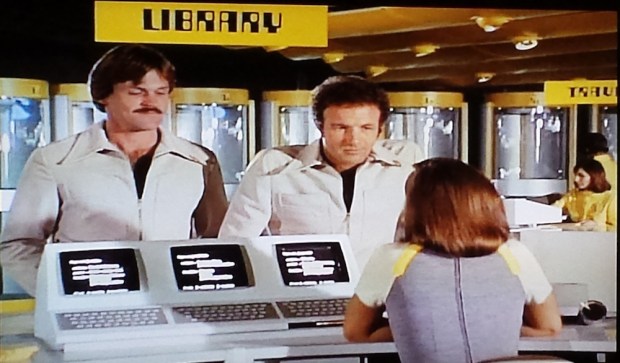
Despite that his work here has a certain Kubrickian vibe. “Rollerball” has shades of “Clockwork Orange” in its ultra-violence and “Eyes Wide Shut” in its upper-class decadence—and even a bit of “2001” in the forbidding hi-tech architecture of the corporate state (provided by the then-new BMW Headquarters in Munich). It’s here that master thespian Ralph Richardson gives a humorous late-career performance as the head “librarian” whose actual job is to tend to the overtaxed super-computer called Zero. In a movie that needed a little comic relief, the befuddled caretaker explains to Jonathan that Zero (who earlier that day “lost the 13th Century”) is so smart that “his borders touch all knowledge.” But the librarian also admits that Zero, who “considers everything,” seems to not know anything at all.
This is perhaps the film’s most prophetic moment, pointing to our own superconnected/disconnected present world. It sends Jonathan E. back to the rollerball arena safe in the knowledge that: Yes, We Have No Utopias.
Rock and roll band names are always a fun subject and historically have fallen into specific categories. Early on, bug names were popular: Buddy Holly and the Crickets inspired the Silver Beetles (later the Beatles), and we went from Iron Butterfly to the Spiders from Mars; it all culminated in the legendary Mosquitoes, secretly rehearsing on Gilligan’s Island to escape their adoring fans.
In the psychedelic era, crazy food-related names abounded (Strawberry Alarm Clock, Chocolate Watch Band, Ultimate Spinach, Peanut Butter Conspiracy) but as we got into the 70s, the somewhat grandiose idea of naming your group after a (usually) large city, or even a country or continent, took hold. Sometimes (but certainly not always) it reflected where the group was from. This trend has continued somewhat crazily into the present, as we will find out at the bottom of the post.
But here we are mostly sticking with better-known groups from the 70s to the millennium. There is a subjective group rating and a ROBTL rating (Relation of Band to Location). Only straight-up geographic group names are considered (sorry, New York Dolls) and the locations are limited to our home planet. But in case you’re wondering, there IS a group called Uranus.
CHICAGO
This is one of the most famous, even though they were originally called Chicago Transit Authority, until transportation officials from the Windy City objected. Many of the members from the original septet met while in college in Chicago. They were originally an adventurous, even political, jazz-rock ensemble over the course of their first three albums (all two-record sets). They gradually lost their way in the woods of MOR pop pablum after the tragic death of guitarist/guiding force Terry Kath.
Group Rating: B+ for the first five albums, after that you’re on your own. ROBTL Rating: Good, considering their roots
This track from their debut features demonstrators’ chant from the Chicago Dem Convention in 1968.
AMERICA
An interesting one, as the three members were U.S. Air Force brats living in England at the time of their formation. But their sound, influenced by the CSN&Y type sound of the day, was very un-British. They went on to great success, of course, with songs like “Ventura Highway” (inspired by a stretch of road in California) and that one about a lonesome Western desert where for some reason you can’t remember your name.
Group rating: B ROBTL: Good I guess, since it was a bit of a mission statement.
BOSTON
This Tom Scholz-invented band is a tough one, since they were from the area but were not exactly road-tested locals, like Aerosmith or J. Geils Band. Mostly a studio creation, thanks to Scholz’s whiz-kid tech knowhow, that didn’t stop them from claiming they were “just another band out of Boston” on their debut album which sold 17 million copies. Then they started touring.
Group rating: B- ROBTL: Not great, even that line about playing in Hyannis was not about them but instead was inspired by the drummer’s previous experience of playing in bar bands down on Cape Cod.
BERLIN
Crossing over the Atlantic, kind of. Berlin, fronted by icy-sultry singer Terri Nunn, was from Los Angeles. Nunn, who posed for Playboy while underage, was (and would later be) an actress, and she once auditioned for the part of Princess Leia. She had the perfect look and voice for the band’s stylish 80s synth-pop sound, which would be fair to say, drew some influence from Krautrock pioneers like Kraftwerk.
Group rating: B ROBTL: Pretty good, considering.
LINDISFARNE
This accomplished British folk-rock outfit, once led by guitarist singer Alan Hull, were from Newcastle and named themselves after the nearby monastery castle that I had the pleasure of visiting last year (see my photo!).
Lindisfarne often drew from locales known to them and it would be easy to imagine the ghostly “Lady Eleanor” from their most famous song roaming the drafty corridors of that edifice.
Group rating: A- ROBTL: First in class.
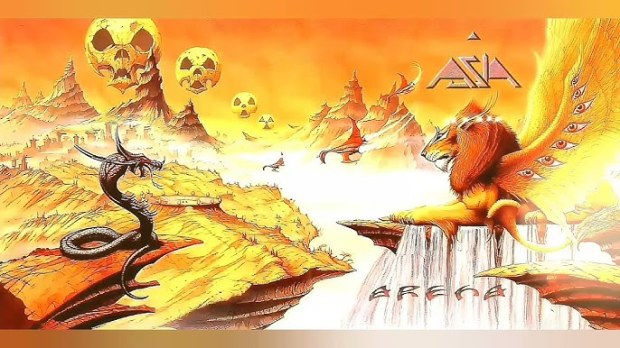
ASIA
Another very famous name and a progressive-rock supergroup made up of former (and in some cases future) members of Yes, King Crimson and ELP. I’m a huge prog fan but at the time of their big debut LP (1982) I was much more in thrall to the likes of the Replacements and the Psychedelic Furs than this machine-tooled AOR approach. Even guitarist Steve Howe, who would do much much better work in Yes) admitted that the production of said album was “Journeyesque,” not a good thing. But they fared well on middle-of-the-road rock stations and sold lots of plastic.
Group rating: C ROBTL: Nil, unless you count Roger Dean’s somewhat Oriental cover art. (see top image)
EUROPE
Staying on the continental theme, we doubt anyone ever looked to these lugs for a representation of European culture. The glam-metal Swedes did have their moment in the sun (not that I noticed) and got a recent ironic boost due to their famous Geico commercial featuring their biggest hit.
Group rating: C- ROBTL: Nothing doing.
ENGLAND
This prog-rock band was destined to be under-appreciated, seeing that their excellent debut album, “Garden Shed,” came out in 1977, the same year that the Sex Pistols and the Clash were shaking up things in their native land. England were led by keyboardist-singer Robert Webb and they hailed from Kent County, an area known as the Garden of England. Later reevaluations and rereleases of their work led to reunions (and some new work) first in 2006, including a nice 2-disc CD edition of “Garden Shed.”
Group rating: B+ ROBTL: Very high
JAPAN
This London-based group started out in 1974 as more of a glam act and evolved a synth-heavy, futuristic approach in the New Wave era. Not my cup of tea and initially their records flopped in the UK, but they found fame in the Land of the Rising Sun. Not sure how much that had to do with their name. They did release a single called “Life in Toyko” but it oddly featured the catch phrase “life can be cruel.”
Group rating: C+ ROBTL: Well, they sold out Budokan three nights running.
NEW ENGLAND
Getting back to my neck of the woods, this Boston-based group was managed by Queen impresario Don Aucion. They got a peek at the Top 40 with “Don’t Ever Wanna Lose Ya” (#40 in 1979) but their career soon stalled. Although stubbornly a product of their Asia-Journey age, New England did poke at the edges of several genres, including Art Rock. Seeking a sales lift, they came up with the multi-part “Explorer Suite.” Brimming with dramatic vocals and flashy keyboards, they were hoping the “Bohemian Rhapsody” lightning would strike twice, but to no avail.
Group Rating: B- ROBTL: Nothing you would notice.
NANTUCKET
Another New England locale, but these guys were from North Carolina and got their start as an oceanside bar band. They named themselves after the song “Nantucket Sleighride” by Mountain. There is some of that influence here, but also of arena-rock plodders like Foghat. Nothing special but I like their energy and the cheeky covert art of their first album is a 70s guilty pleasure.
Group Rating: B ROBTL: Very little.
KANSAS
I really don’t want to talk about these guys. You know them, you love them. Well, you know them anyway. Me, I always get them mixed up with Styx, another location-named band, though in this case a presumably fictional one. Anyway, I don’t dislike them, but I don’t regard them either. They did find a curious common denominator in pop history. “Carry On My Wayward Son,” is annually one of the most played song in classic-rock radio formats.
Group Rating: B- ROBTL: Well, they are from Topeka.
MANASSAS
I don’t much want to talk about Steve Stills either. He’s one of rock’s least likable characters. If you care for a taste, consult the interview of jazz drummer (and one-time Joni Mitchell squeeze) in the book “Girls Like Us” or check out Steve’s belligerent reaction to a little healthy criticism in the festival film “Celebration at Big Sur.” Having said that, Manassas (named after the Virginia town where the first great land battle of the civil war took place) were a good band for him, esp. in the case of second-billed Chris Hillman, the reliable wing man late of the Byrds and Flying Burrito Bros. Their first album was one of Stills’ stronger efforts (and a double LP no less) and I’ll be happy to post my favorite track.
Group rating: B ROBTL: Well, it is kinda country rock.
CHILIWACK
Chiliwack’s 1971 single “Lonesome Mary” was one of my favorite obscure near-hits of my early radio-listening days I remember the DJ telling listeners that the group was from Canada, and so far north there that there “drummer is a grizzly bear.” They were actually from Vancouver and named themselves after a cool-sounding town nearby. “Lonesome Mary” was one of those killer 3-minutes slabs of power rock, with Bill Henderson’s urgent vocals and blazing guitar.
Later, Chiliwack dabbled in progressive rock, which was still evident in their 1979 album “Breakdown in Paradise” which I picked up on cassette in a Quebec City shop last year. In the early Eighties, they got their commercial due with a few poppier U.S. Top 40 hits, most notably with “My Girl (Gone Gone Gone)”, and are still a going concern these days.
Grade: A (just because) ROBTL: Grizzly bear or no grizzly bear, they representing!
The geo band phenomenon continues to this day, although reading up on the subject can cause confusion. There’s an Indiana band called Brazil but formerly called themselves London. The group Spain are from California, and Jamacia are from France. That’s not even mentioning the ones named after planets and constellations, though I do want to check out Uranus, lol.
Someone had to say it. That people would let their democracy slip away on such an embarrassing (and solvable) inflection point as the rise in price of a dozen eggs, is like a national pathology that is nearly impossible to reckon with.
Of course, that was not the only issue that caused the re-election (after a four-year interval) of the convicted felon, admitted sex offender and debased traitor who tried to overturn his 2020 defeat by having a mob kill his own vice president. For the hardcore MAGA crowd it is certainly easier to complain about grocery prices than to admit to being a straight-up (and potentially violent) bigot, with a head stuffed to the gills with false grievances. But what about the rest of us? (I’ll say us to be polite even though I of course voted for Kamala Harris).
Alex had the right idea in “A Clockwork Orange.” He wants to “smash ’em” and so do I.
Fuck eggs. It would be futile for me to argue that the 166 MILLION chickens that died from the recent bird flu may have had something to do with the price hike. Because that would be too normal. Complaining is more fun. I’m not suggesting that there are not real economic troubles affecting some people, but to use that to put back in office a proud psychopath who already said he wanted to be a dictator?
Didn’t anybody ever suggest boycotting those stupid eggs? If most of the country could agree to do this the price would have come down quick, maybe even quick enough to avoid a witless slide into an authoritative nightmare. Joe Biden had about as much to do with egg prices as I have in getting a Pulitzer Prize.
Fuck Eggs. They are the modern equivalent of the old canard that at least Mussolini “made the trains run on time.” No he did not. Reportedly, only the Italian tourist trains ran on schedule. This led some witless British tourists to say that things are better with an autocratic leader running the show from Rome. This then got repeated until it sounded like the truth.
Gang of Four saw thru the ruse. (Lyrics in description)
So in 2024, eggs became some sort of defining issue, much like “soccer moms” were all the demographic rage a few election cycles back. So much so that even a Democratic consultant, was quoted in the paper in January as saying that perhaps it was inevitable that his party lost because, “Just look at the price of eggs.” WTF, dude? With people like that on your side, who needs adversaries?
Also in that day’s New York Daily News there was a poll that showed that about 70% of people thought less of President Biden for pardoning his son Hunter. In the same breath, 70% said they would pardon their own child, Welcome to the USA, kids.
Kamala Harris is certainly no Winston Churchill but I was hoping for at least a little original thinking in her campaign against such an obvious threat to democratic norms. Sure, she may present as America’s “cool aunt,” but recent history has proved that many don’t mind voting for a malignant and demented uncle. If Harris could have convinced a few of them that unkie would be better suited to a padded cell, she may have even squeaked out a victory, God save us.
One little plea. Let’s try to better to learn of “overstanding.” It’s one thing to “understand” that egg prices are high, and a completely different thing to “overstand” the issue and realizing we are being sold a bill of goods much more than $9 a dozen. You don’t even have to man the barricades. On social media, at least treat Trump, Musk et al to a smart-ass putdown, instead of looking up terrified at the sky of worst-case-scenario. We don’t need to be any more anxious than we already are.
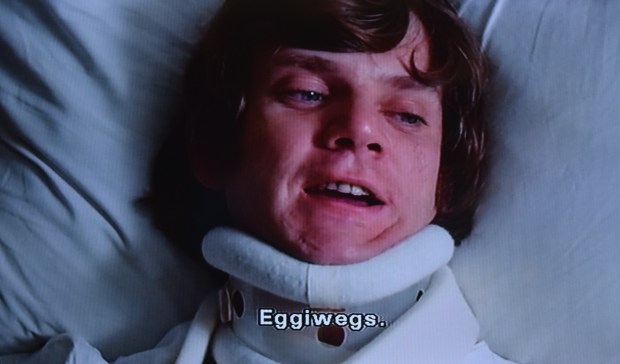
To get back to Alex. In the penultimate scene of “A Clockwork Orange,” he has the upper hand even in a full body cast, being fed the precious eggiwegs (not to mention “steaky-wakes” and “lomsticks of toast”) knowing that he has the unscrupulous Interior Minister right where he wants him (he is obliged to feed Alex his breakfast while being subtly taunted). They both know that the barbaric technique that “cured” him of his criminality also made him defenseless and suicidal. Now Alex has been re-cured and taken to calling the Minister (“my little droogie”) knowing instinctively that thuggery can exist just as easily thrive in the halls of power as it can on the backstreets of London.
In this “horrorshow viddy” clip, Anthony Sharp plays the Interior Minister and, of course, the legendary Malcolm McDowell is Alex DeLarge.
Many readers will know that the Anthony Burgess novel had a “controversial” final chapter that was not included in American editions of the book—and also not included in Stanley Kubrick’s towering film adaptation. Too bad, as it is quite fascinating. It begins almost exactly as the first chapter: Alex is back in the Korova Milkbar with three new droogies. They are making up their “rassoodocks” about what crimes to commit that evening. But later, he runs into his old droogie Pete and is astonished to find him happily married and with a regular job. The softening begins (“Youth must go”) and he imagines himself doing the same. In the end, normalcy will (or should) reign and hopefully Alex will not be the kind of citizen who welcomes a dictatorship because of a temporary spike in the price of eggiwegs. “Alex like groweth up, oh yes,” he thinks to himself. Maybe it’s time to do the same. Righty right.



























 Reel and Rock