Placeology

Placeology #9: The Rust Belt Goes for Gold

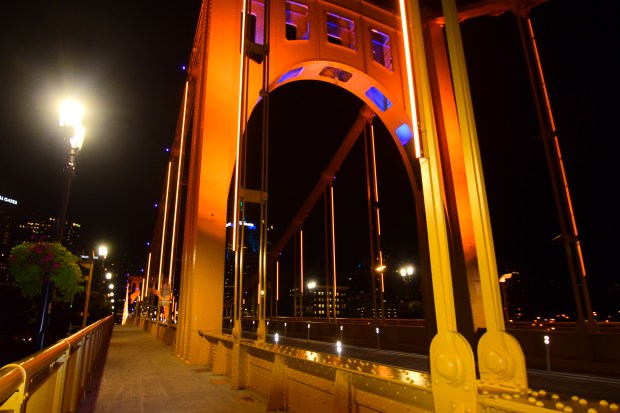
Andy Warhol Bridge, Pittsburgh

Photos and text by Rick Ouellette

A recent article mentioning that National Geographic has named Pittsburgh one of the Top 25 places to visit in the world (the only U.S. city to make the list), was posted online and made my Facebook feed. Invariably, one of the first comments was “That’s the best laugh I had all day.”

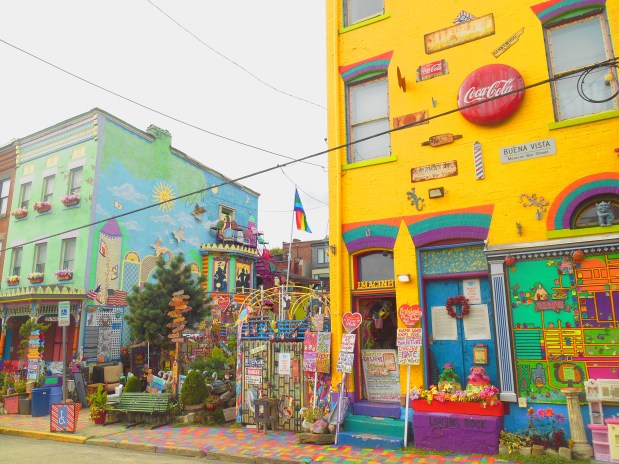
I was tempted to reply, “How so?” But I’m trying to be less judgy nowadays, so I let it slide and left a comment saying how much I enjoyed my own trip to Iron City last year. I mentioned the newly expanded Andy Warhol Museum, a great ballgame experience at the Pirates’ PNC Park with its bridge-and-skyline backdrop, the Nationality Rooms at the Cathedral of Learning and the colorful folk-art complex called Randyland. (See below)

Besides, if I asked that person why she thought it was so funny, the likely answer would be: “Really, I mean, PITTSBURGH?!” If there is one thing I’ve learned over the years, it’s that people love knowing what they already know, even when it’s wrong. This is esp. true when it comes to Rust Belt cities. If you mention Cleveland, a likely response is about the Cuyahoga River being on fire, even though that was 56 years ago. And don’t let’s get started about the state of New Jersey, which many motorists have reduced to the “smelly” stretch of I-95 opposite New York City, filled with refineries and powerlines. We want all the gasoline and electricity we can get—but are somehow offended to see where it comes from.

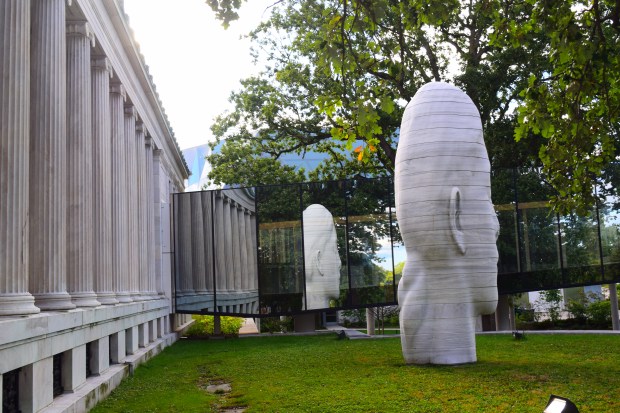
The AKG Museum in Buffalo. The mirrored surfaced of the institute’s modern walkway reflects both the older building and an outside sculpture.

Perceptions are gradually starting to change, and just not in Pittsburgh. Buffalo’s AKG Art Museum was named by Time magazine as one of The Greatest Places in the World in 2024. A dazzling modern addition has been added to the original 1905 Greek temple-style original, connected by a serpentine elevated walkway.

And the AKG is far from an isolated location: it sits in the middle of Buffalo’s cultural corridor near Frank Lloyd Wright’s jewel-like Martin House, the Buffalo History Museum (housed in the only remaining building from the city’s 1901 world’s fair), an outdoor Shakespeare theater and various gardens and a lake with flamingo pedal boats. All of this in the beauteous confines of the Frederick Law Olmstead-designed Delaware Park.

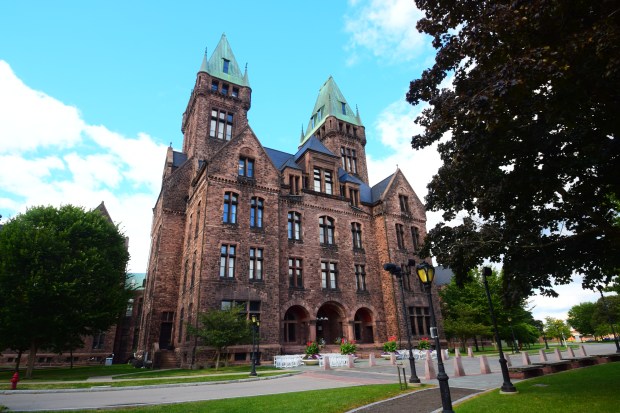
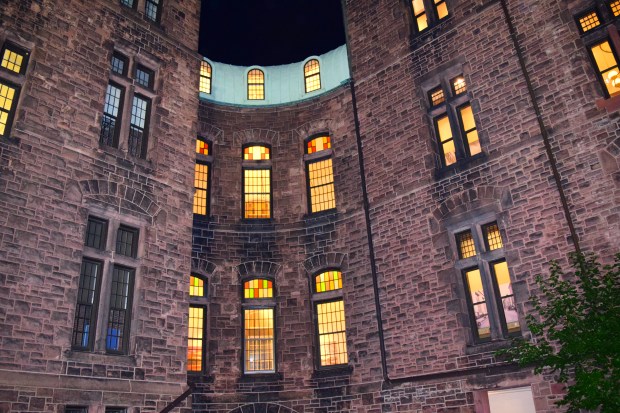
But my favorite part was staying at the nearby Richardson Hotel (above), which occupies the middle section of the former Buffalo State Asylum. Opened up in 1880 on grounds also designed by Olmsted, this massive architectural gem was an early commission of famed architect H.H. Richardson, fresh off his masterful Trinity Church in Boston. Underneath it’s two colossal towers, the main administration building, as well as its two matching Romanesque wings, make up the footprint of this remarkable boutique hotel. As with many such facilities, this asylum grew overcrowded and it was expanded (in brick, not the expensive Medina sandstone of the original building) to such an extent that it takes about a half-hour to walk around it.

The nighttime photo at top shows both the elegance of Richardson’s design and the great work of the restoration crew. The bottom photo gives one some idea of the scale of the former asylum, some of which is hopefully being set aside for much-needed affordable housing.

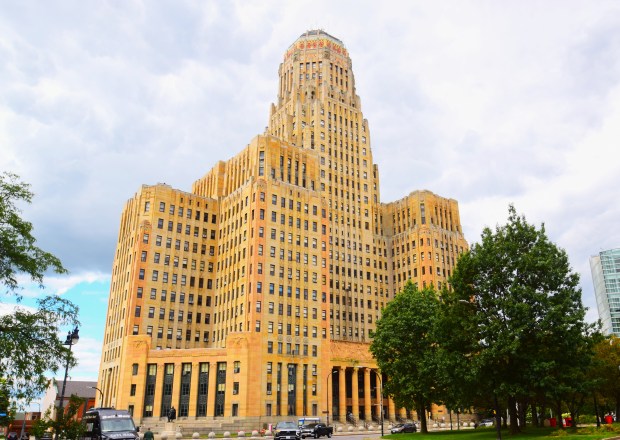
Like many other state hospitals, this one was closed in the late 20th century. But unlike others that were demolished without much opposition, Richardson’s piece de resistance sat there until the city realized what they had. Now this asylum is a point of civic pride, a lynchpin in the city’s ambition to become a design capitol, with a focus on the many significant buildings, including its magnificent City Hall (below) and Central Terminal (currently being restored), two of the region’s premier Art Deco edifices.

The effects of deindustrialization has been devastating for many U.S. cities in the Northeast and Midwest. The poverty, crime, population loss and disinvestment that followed is of historic proportions. But a potential silver lining is the fact that, at their economic peak, places like Buffalo, Pittsburgh, Cleveland and Detroit used some of that manufacturing wealth in the building of first-class (and often majestic)  museums, libraries, theaters, railway stations, hotels and monuments—all speaking to a grand sense of collective civic pride all but missing in our age of calcified socio-political divides.

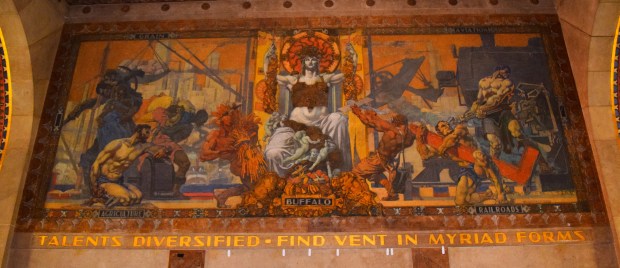
A mural inside Buffalo City Hall from more optimistic times.

I’m not suggesting, or even hoping, that people will give up the default destinations like Las Vegas or Disneyworld. Yet the trend towards sub-genres of domestic travel is encouraging and should help in the nascent Rust Belt revival. These days, there is foodie tourism, historic preservation tourism, music tourism, film festival tourism, sports tourism—Pittsburgh is hosting the NFL Draft next year and it’s a BIG deal. Anything that gets us out and about on a path that leads to greater understanding of our common heritage is a welcome move in the right direction in these wrong times.

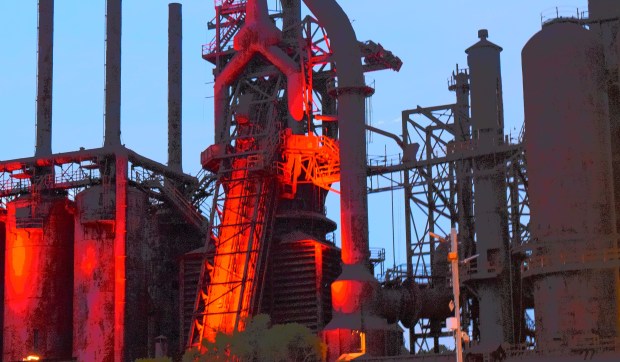
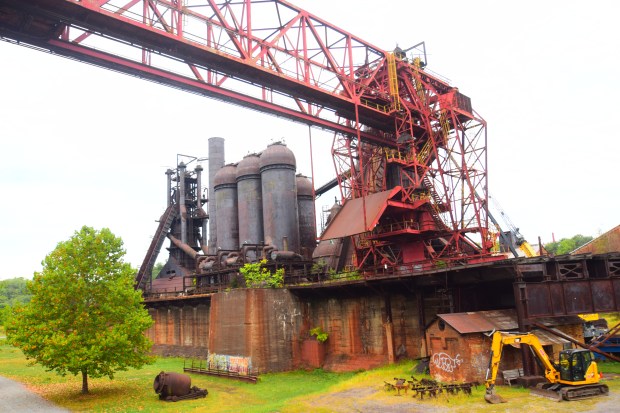
Lastly, a word about an even newer trend: abandoned steel mill tourism. In the not-too-distant past, places like the former Bethlehem Steel plant (above top) and the Carrie Furnaces (above bottom) were top-line locations for the urban explorer community. Now I’m no stranger to the wild and woolly world of urbex photography. But I have never been one of its real hardcore practitioners and I was glad when I eventually got the chance to visit such places without fear of arrest.

The gargantuan Bethlehem Steel plant (renamed Steel Stacks) is now the dramatic backdrop to an outdoor concert venue and cultural center. The elevated walkway brings one up close to this amazing structure. Placards inform the visitor of the “Hot, Loud and Dangerous” conditions that the steelworkers put up with to provide the nation with its infrastructure. It’s a “thank-you-for-your-service” moment that some risk-taking explorers would not realize or get the chance to find out.

The same goes for the formerly off-limits Carrie Furnaces, now a state heritage park. Visitors can learn that this was a big part of World War Two’s “Arsenal of Democracy.” Factories on an 8-mile stretch of the Monongahela River, starting in Pittsburgh, produced more iron and steel during the war than all the Axis Powers combined. The scale and complexity of the furnaces are mind-boggling, and the implied message of strength and national unity is haunting in an age where even the word “democracy” seems compromised. So let’s get out there and live and learn: and when someone asks, “Pittsburgh, really?” you can answer, “Yes, really.”

Placeology #8: Please Don’t Ruin the Ruins!

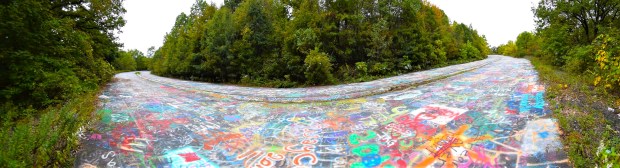
Graffiti Highway (parabolic), Centralia PA. All photos and text by Rick Ouellette except as noted.

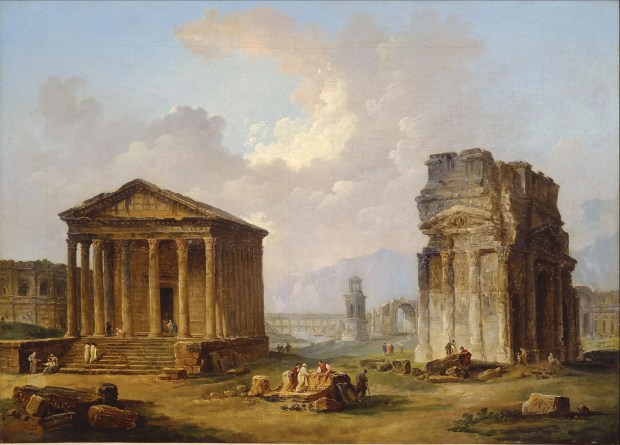
In the late 1700s, towards the tail end of the Age of Enlightenment, the French painter Hubert Robert became well-known for his large-scale canvasses depicting ancient ruins of France and Italy. These romantic (and often semi-fictional) scenes spoke to an age where there was a strong interest in classical antiquity and preserving what remained of it. Hubert and the other artists who followed this trend were surely aware of the evocative power of decay when it came to lost societies.

A typical Hubert Rubert joint.

Flash forward to the 21st century. We may well be deep into the Age of Un-Enlightenment, where hot-takes and online trolling has replaced the philosophical imperative. Yet the “picturesque” art style embodied by Hubert Robert has been carried on into the burgeoning field of ruins photography, the depiction of urban and industrial decay. Closely tied into the subculture of urban exploring, this field of photography has divided opinion. There are commendable practitioners like Matthew Christopher (in his two “Abandoned America” books) and Christopher Payne (the haunting and humane “Asylum: Inside the Closed World of State Mental Hospitals”) that have looked long and hard into the reasons and consequences of how  and why certain American institutions have been left to die on the vine.

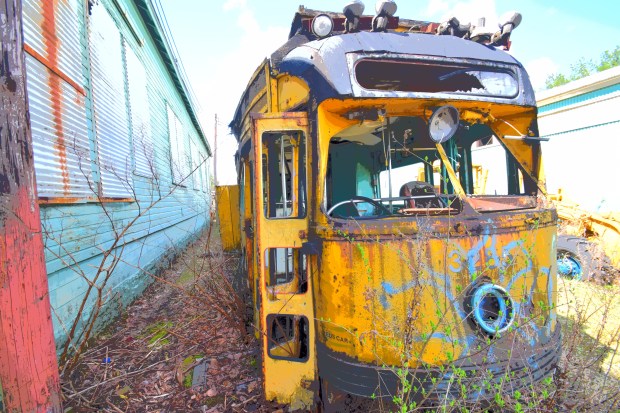
Trolley Graveyard #1, Photo by author.

Critics have pointedly taken aim at some aspects this “urbex” photography, namely the exploitation of people’s natural morbid fascination with the wreckage of off-limits locations, not to mention the implied insensitivity to a region’s economic decline. I have seen a lot of that online, where intrepid shutterbugs return from their trespassing adventures and post pics online to curiously adoring fans who practically gloat over the collapsed remains of defunct shopping malls and shuttered Rust Belt factories.

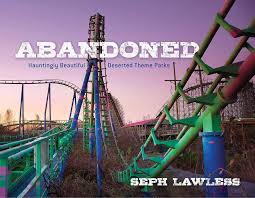
Which brings me to Seph Lawless. Curiously, he released two high-profile photo books in 2017 by two different publishers. “Abandoned: Hauntingly Beautiful Deserted Theme Parks” is exactly as it says, and he put in the big miles to significantly document a big urbex sub-category.

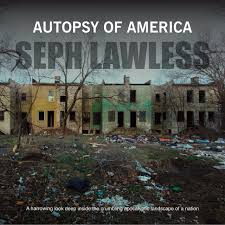
Then somewhere the same year was the boldly presented “Autopsy of America.” In case you don’t get it, you can turn to the back cover where we get in big letters, “Death of a Nation.” Really, the whole nation?? Published by a house called Carpet Bombing Culture (kind of a red flag in itself) the text for this book is so over-the-top that it can only work as self-parody.

“Is this just another recession? Or is this the beginning of the end?”

“America is a giant… mistake.”

“I want Americans to see what is happening to their country from the comfort of their suburban homes and smartphones.”

Oh gawd, spare me the edgelord/drama queen posturing! 😉. As usual, the photography is tremendous, though by this date we’ve all seen enough abandoned houses, darkened shopping centers and the odd isolated ghost town. (Lawless throws in several of his eye-catching theme park images for contrast). Yeah, there is serious income inequality. But it’s preposterous to pretend that cities like Pittsburgh and Cleveland (to name two I have personal evidence of) are hollowed-out landmarks of a country in its immediate death rattle.  Many of those cities have growing, transitional economies and don’t need this. But I get it. He’s Seph LAWLESS for heaven’s sake, and the hype (and apocalyptic rhetoric) often goes with this territory.

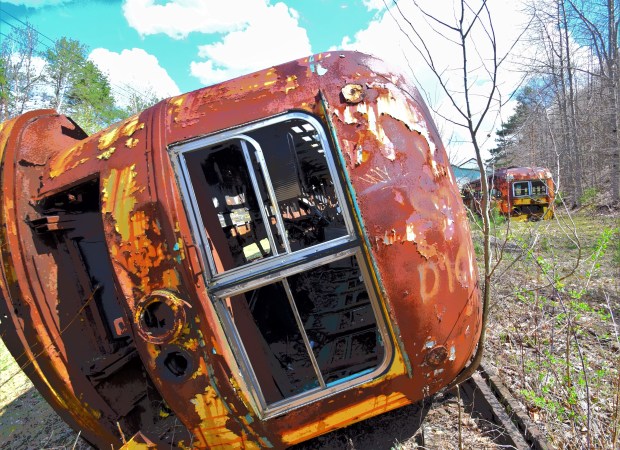
Graveyard Trolley #2, photo by author.

So while I may wince when Seph, like a supervillain in waiting, stands on a half-collapsed roof and gazes at a distant metropolis, you got to hand it to him. The logistics and craft it took to depict these places that so many want to know about. I’m just a part-time amateur at this game and have only been to one of the locations featured in “Autopsy of America.” I took a tour of the (now former) Trolley Graveyard outside of Johnstown, Pennsylvania with the aforementioned Matthew Christopher. He had photographed this huge collection of streetcars, owned by a super-hobbyist, many times before, including the pre-smartphone/GPS days. By the time I got around to committing to a tour, vandals had graffitied almost every car and smashed almost every window on them. It just got too easy in the Internet age to popularize and locate these spots, for good or ill.

But Rust Belt tourism is a thing and these cities often have a long-established culture in arts, cultural attractions and professional sports. As soon as we start realizing the value and vitality of such places, the better it will be for everyone, and we can all avoid the “Autopsy.”

Placeology #7: Farewell, Hobby Street

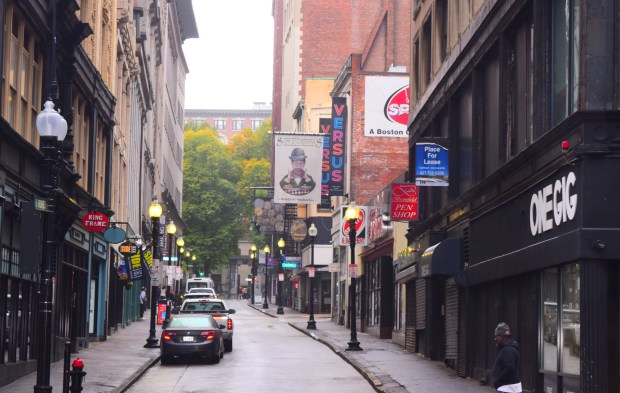
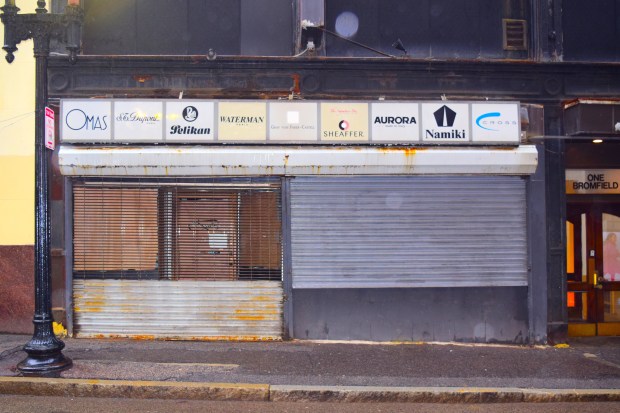
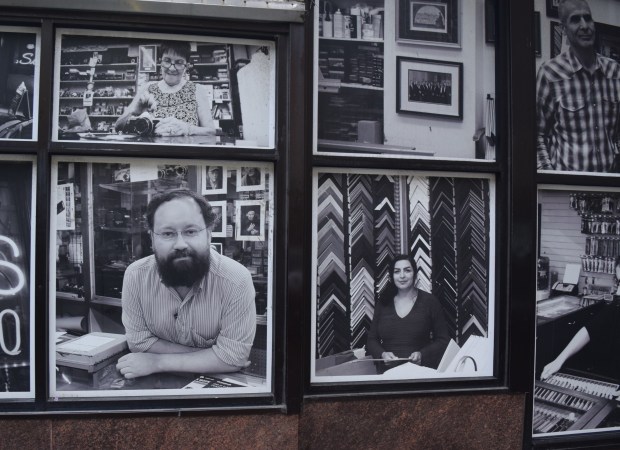
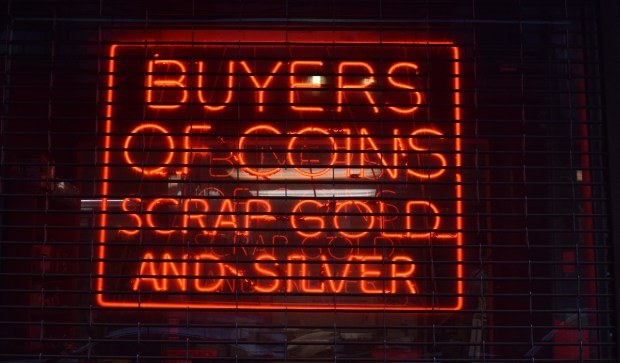
It’s no big surprise that Bromfield Street, a 500-foot long retail strip in Boston’s Downtown Crossing, has lost its informal designation as the city’s “Hobby Street.”  Once it was chock full of shops catering to camera buffs, coin and stamp collectors, baseball card traders and those folks enthusiastic about fountain pens and wrist watches.

Only a couple of those businesses remain and Bromfield is now known for its vacant storefronts. It’s sad, but I know that things change. But what passes for a hobby nowadays? Holding up phones at a concert and blocking the views of others? Cutting off normal cars in traffic in an SUV the size of an armored personnel carrier? Depleting a family’s lifetime savings via online sports gambling?

Oops, sorry. I don’t know how that soapbox got here. Anyway, we do live in a more impulsive age, where the patience required for stamp collecting or model building is at a premium. And when your pocket-size smartphone can take great photos and texting and email are the main form of written communication, there’s little need for once-esteemed shops like Bromfield Camera or the Bromfield Pen Shop (though the latter made it thru the Covid lockdown and only shuttered in early 2024).

Maybe all hope is not lost. Despite gentrification, New York still maintains a Diamond District, Flower District, Meatpacking District, even a Fur District. Industry-specific zones are a key element to a vigorous city life, despite their diminishment. With the transfer of so much retail to online behemoths like Amazon, places like Bromfield Street need a revisioning. People still need a “third place” beyond work and home. Already, a couple of art-related storefronts have opened on Bromfield and on adjacent Province Street, a few popular places of the eating/drinking variety are adding life to an area that hasn’t totally recovered from the pandemic.

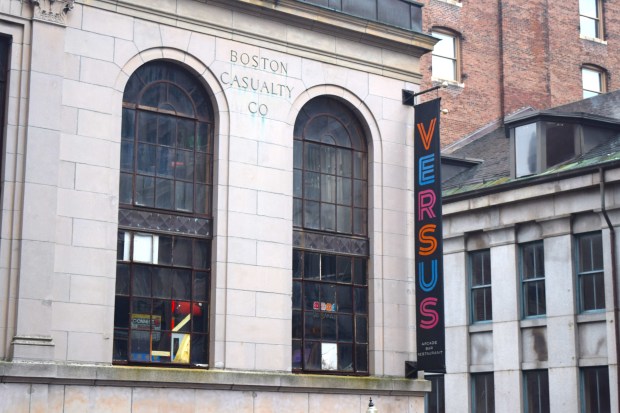
Best of all for this aging “city rat” is Versus, a retro arcade/bar of the type that have been popping up over and over recently. As a lifelong pinball aficionado this has been a later-life boon for someone like me who remembers the large and lively “Amusement Center” that provided many skill-and scheme lunch breaks for us younger office workers back in the day. I’m glad my Gen Z successors are filling those shoes. Now only if someone could resurrect The Littlest Bar, whose shell still sits on Province, even though an obnoxious condo tower sits right on top of it now. I remember going with friends for a pint there after a memorable Pogues concert at the Orpheum Theater, which had a back alley exit that led to Bromfield. Sitting there with the other punters with the place packed to the gills (i.e. about twenty people) is one of those experiences that make the urban experience uniquely special.

Cities never stand still and aren’t meant to. Hopefully, some things that have earned the right to last will last, even if the old Hobby Street is not among them.

Placeology #6: Denver Airport’s Conspiracy Clearinghouse

The Denver International Airport is the largest such facility in the Wester Hemisphere by land area, encompassing 52 square miles of space in the middle of a vast and nearly treeless plain, some 23 miles from the Colorado capital. It may be the sixth busiest airport in the world, but it is the first busiest when it comes to the number of urban legends and conspiracy theories that swirl around it.

It’s been said that, even before it opened in 1995, people were raising questions. Why so far away, why all that land? Things ratcheted up when the imposing and indelibly strange “Blue Mustang” went up in the middle of a plain on the approach to the airport. This 32-foot statue of an electric blue horse has red laser-light eyes and is rearing up enough to grossly display his prodigious man junk. He was finished only after its sculptor (Luis Jimenez) was killed when a large piece of it fell on him just before its completion. The work soon came to be known as “Blucifer.”

But this strange, unsettling sculpture was only the start. Soon the airport was a hotbed of conspiracy theories, based upon the general idea that it’s the new world headquarters of the Illuminati. The large network of underground tunnels was variously seen as a hideout for officials of the New World Order and/or lizard people. They are supposedly great survival bunkers for the rich and elite and, not coincidental to this line of thinking, are connected to the North American missile command. There are gargoyles in suitcases looming above the baggage claim and, to top it off, the central terminal’s roof is made up of multiple tent-like peaks and are said to symbolize the Ku Klux Klan.

To be fair, the Denver airport authority has kind of brought this on themselves. That statue (a winning design) is pretty demonic-looking—check out some close-ups online—and it can’t be decided if the roof is supposed to represent the Rockies or Native American teepees. Oh yeah, I forgot, the whole thing may be built on Indian burial ground.

Let me go on record as one who believes there is a HUGE difference between being self-aware and vigilant against forces that may do you actual harm, and falling for every batshit-crazy conspiracy that comes down the pike. Honestly, you would think that some disgruntled elite would have ratted out the Illuminati by now. Of course, the response by true believers would probably be that the fact they haven’t been exposed is proof of their existence. How grimly ironic when you learn that the known Illuminati, founded in Bavaria in 1776, was founded in part to combat the forces of superstition and obscurantism, i.e. the restriction of knowledge via misinformation, religious intolerance and the denigration of independent thought.

Some say that the popularity of conspiracy theories is due in part that it makes the less intelligent among us feel smarter and it provides a simplistic and hard-to-refute reason for problems that could be otherwise overcome by sometimes-difficult personal effort.

It’s nearly impossible to convince conspiracy theorists that they are wrong, so the best way to deal with it is with a cheeky sense of humor and that’s exactly what the administration of the Denver airport has done. When I was there during a Thanksgiving weekend, I came across several signs along a wall that is covering some renovation work at the large central terminal:

If any conspiracy aficionado were to walk by one of these lizard-people-hardhat signs and nudge a family member, declaring “See, I was right all along,” they would make a complete fool of themselves. Reverse psychology can be a wonderful thing.

In conclusion, these kind of New World Order tall tales are fun for the purpose of a graphic novel or sci-fi movie, but please don’t get to that bad place where before long you start believing that Democratic lawmakers are eating babies or at that the 1969 American lunar landing was fake but that the Nazis had a moon base as early as 1942. For more info, consult the Internet or check out the prime-time programming of the “History” Channel.

It was also slightly annoying that so many people passed by the Denver terminal’s cheeky billboards without the slightest hint of curiosity. I know it’s an airport and folks are rushing to and for but there is also downtime for many. A better engagement by the general (and reasonable) public would give them a greater understanding on the scope and the inherent danger of those whose baseless beliefs can lead them down a very dark alley, and possibly dragging civil society right down with it.

Placeology #5: Up, Up and Away into Hotel Heaven

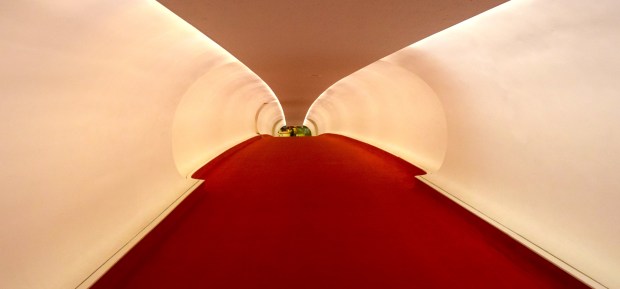
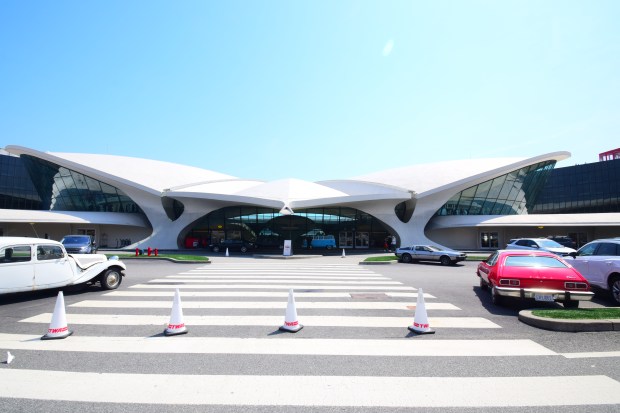
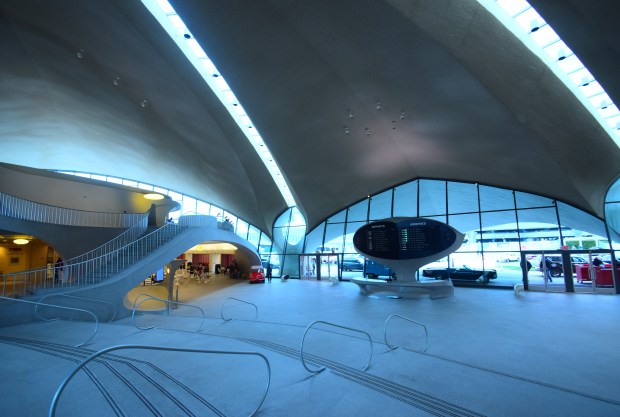
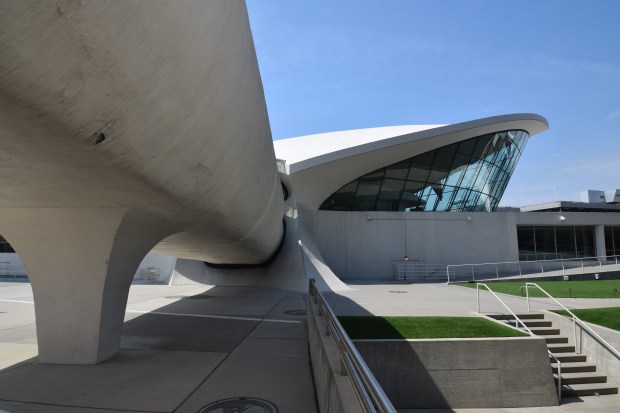
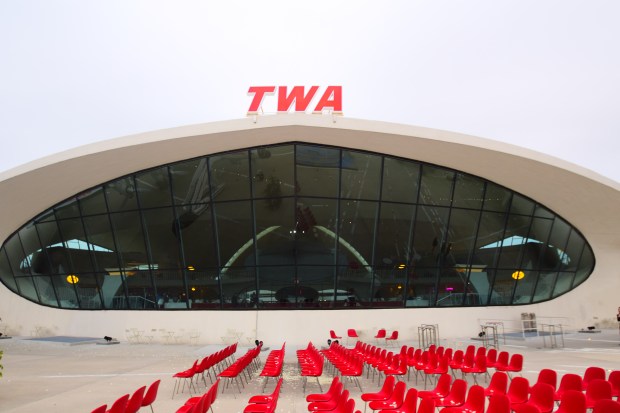
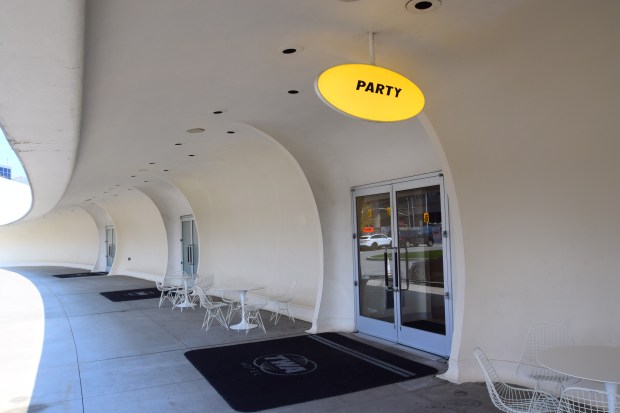
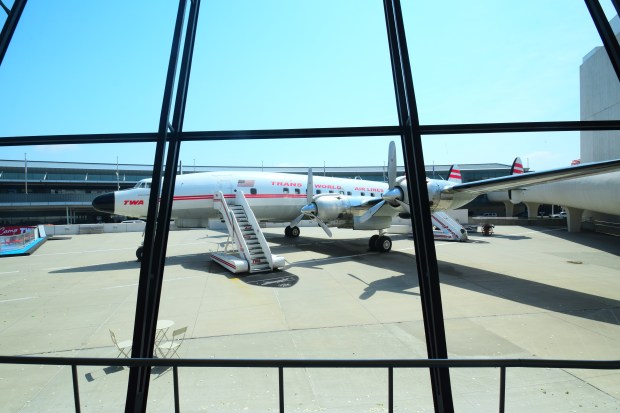
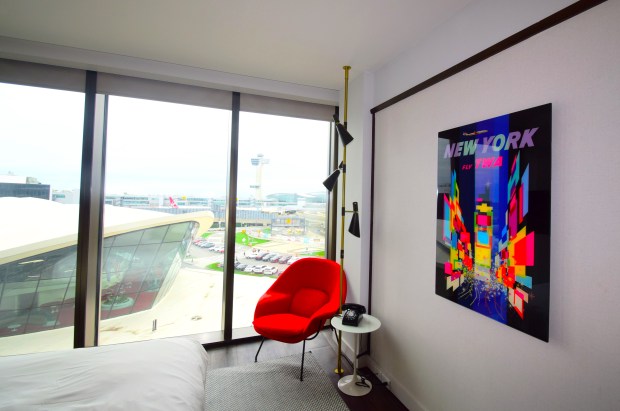
An instant induction into the “Placeology” Hall of Fame goes to the TWA Hotel at the JFK Airport in Queens, New York City. Eero Saarinen’s Jet Age/Space Age masterpiece, opened in 1962, now serves as a gigantic retro-futurist lobby for a hip but friendly destination hotel. The actual guest rooms are in two curved buildings that overlook the great sculptural form of Saarinen’s creation, made to resemble a bird taking flight. You reach the rooms by walking up the terminal’s two iconic red-carpeted tubeways, which may make you feel like you’re living inside the space station scenes in Stanley Kubrick’s “2001.”

Those ramps once led directly to the jet doors, previously passengers had to head out on the tarmac and climb the roll-up stairs in all sorts of weather. They’re indicative of the efforts of Trans World Airlines, with Howard Hughes still as principal owner, to popularize and glamourize the growing airline industry. The sunken lounges, curvaceous stairways, giant viewing windows, in fact everything down to the chic uniforms and pillbox hats worn by the stewardesses, led to a total implied package of adventure and elegance. (Compare to today!).

So you will see walls lined with photos of the Beatles, Muhammad Ali, Presidents Kennedy and Truman and movie stars ranging from Marilyn Monroe to Paul Newman. Of course, you don’t have to be a big shot to stay at today’s TWA Hotel. It’s a bit pricey but not exorbitant when compared to far less attractive places. Since airports are not standard vacation destinations, the people who are staying at the TWA are usually there because they appreciate it (an exception may be if your flight at the adjacent Jet Blue terminal was cancelled until the next day).

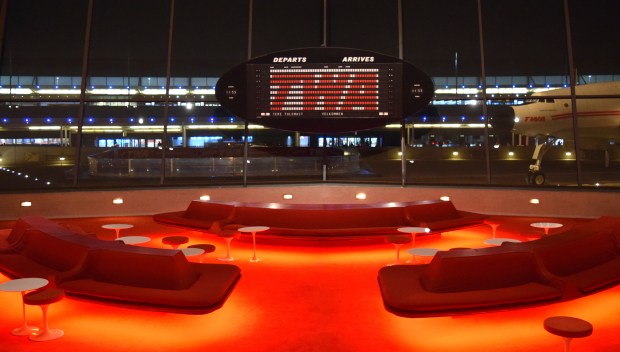
There is certainly lots to appreciate. The hotel is fun and distinctly non-snobby, as amenable to young families as it is to couples on a romantic getaway. The latter can enjoy a drink in the sunken lounger under one of the terminal’s two giant elliptical Arrivals & Departures boards, while the former can entertain themselves by checking out the Twister game room, the many vintage automobiles and the free photo booth. Aside from the soft clattering of electro-mechanical A&D boards, the main sound you’ll hear is the continuous sound of Sixties pop music over the PA, just loud enough to be a nostalgic soundtrack of your stay. Along with the sounds of the British Invasion, Motown, surf, early rock ‘n’ roll and the occasional Frank Sinatra croon, you get a couple of tunes from the girl-group pride of Queens, the Shangri-Las.

A big attraction for many is a restored propeller-driven Lockheed Constellation, an airliner that was produced between 1943-58. Its bold profile dominates the view outside the terminal’s huge oval rear window. Affectionately known as “Connie,” any guest is free to go outside and walk up the steps, where the interior is now an informal lounge (expect a crowd). But there will much less of a crowd in the terminal’s “hidden” nooks and exhibit rooms, where the hotel’s playful quality really hits a peak. There’s the “Pope Room,” a tiny vestibule where Paul VI decompressed in October of 1965 after becoming the first pontiff to set foot in the U.S. At the end of one of the tubeways you can visit (and hang out in) a recreated Sixties living room, a TWA executive office, and a simulation of Saarinen’s studio.

After settling into the fantastical realm of Eero’s creation, you may notice something which is the most gratifying feature of this whole experience: that to whatever extent possible, the developers of the TWA Hotel left this architectural gem as is. The building had been essentially vacant since the terminal was last used in 2001 until it opened as a hotel about five years back. But there was no Disneyfication in the rehab: the carpets, seat cushions, tiling and concrete sheathing are all original and a bit timeworn, even a little tatty in places.

It cost a little more for a room with a “historic view,” but it is worth it.

That’s a good thing. We are invited into (for the price of a room) a real and vital piece of design history, not a replica. As you walk towards the hotel, you will enter this rarefied air with the help of outdoor speakers playing the 5th Dimension’s bouyant hit version of Jimmy Webb’s “Up—Up and Away” which was adapted into a memorable TWA television commercial. Along the way you will see translucent posters, partially blocking views of the construction of a new international terminal, that feature press testimonials of New York’s “sexiest” hotel. The one that stuck with me was from the Wall Street Journal: “They don’t build them like this anymore, and they never will again.” Truth.

Photos and text by Rick Ouellette

Placeology #4: Vikings? What Vikings??

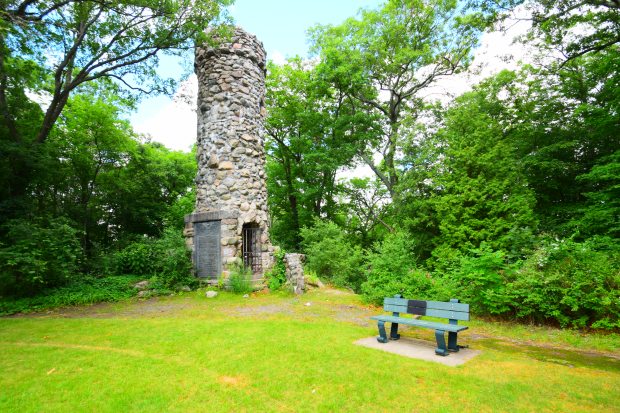
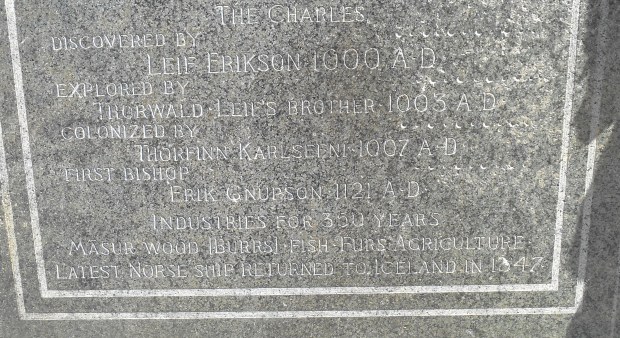
If you live near me have ever chanced upon the Norumbega Tower (on the road of the same name) in Weston, Mass., you’d probably be scratching your head after reading the plaque at its base. It would have you believe that Leif Ericson and other Viking bigwigs established near that spot both a fort and a city of many thousands, at least enough to support the several industries it mentions. The plaque claims that this was the epicenter of the true Vinland, a veritable empire that stretched from present day Rhode Island to the St. Lawrence River! As opposed to say, the established-science location of a tiny patch of land in Newfoundland.

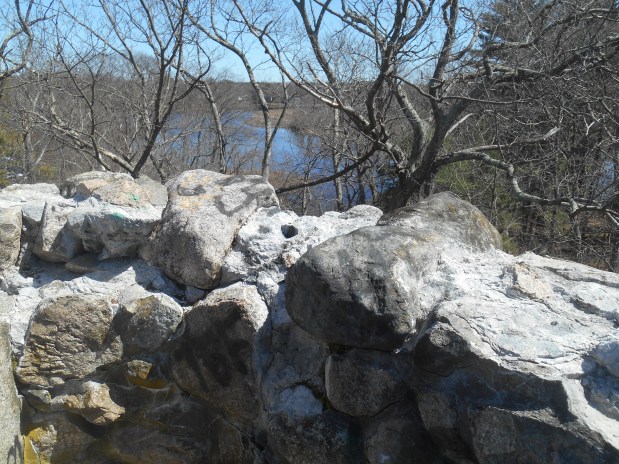
The tower was built in 1889 by Eben Norton Norsford, a guy who made his fortune by refining the manufacture of baking powder. But the dude must have been getting “baked” on something else to believe all that. He may have been the original “I did my own research” guy. Back then, he wrote a “seemingly endless series of books and articles” (Wikipedia) on the subject and built the tower to look down on the location of the alleged settlement (a lake-like section of the Charles River also bordered by present-day Newton and Waltham).

View of the Charles River from the top of Norumbega Tower.

Thing is, Norsford didn’t bother to back up these claims with anything as small-minded as archaeological proof. He just made it all up. He may likely not have believed it himself. In the late 19th century it was not uncommon to have an ulterior motive in trying to establish that America was founded not by swarthy Mediterranean (and Catholic) types like Columbus and Vespucci but by “whiter” Northern Europeans. This at a time of mass immigration from places like Italy.

Norumbega Tower is not the only monument in the annals of false-Viking claims. The Newport Tower in Rhode Island is another well-known example and hoaxes have reached as far away as Minnesota and Oklahoma.

But unlike the wholesale falsehoods and plying of racial grievances being perpetuated in the post-MAGA era, the lack of evidence apparently meant something back then and Norsford’s tall tales were soon discredited. And he did have a good side as well. He was an early supporter of higher education for women—a benefactor of Wellesley College—and built the first public library on Shelter Island in New York City, later Welfare Island and now Roosevelt Island.

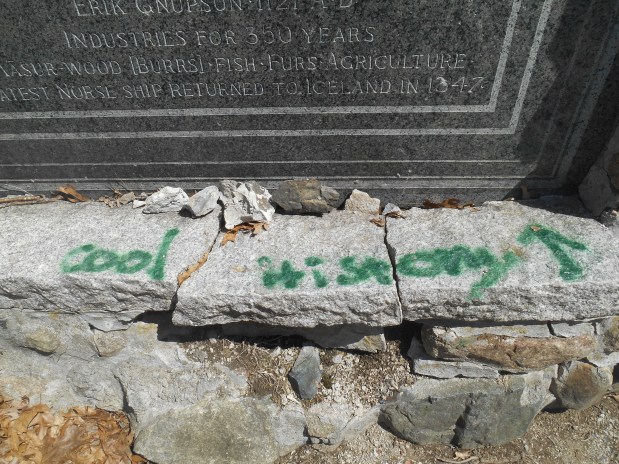
On my most recent visit, the padlock that is usually on the door had been removed and you’re free to walk up to the top of the tower. It is just a hop and skip off the Weston interchange of Interstate 90 (Mass. Pike), so aficionados of the “Old, Weird America” should check it out if in the area. It is mostly free of graffiti (a blessing nowadays) so the “Cool History” tagging, pointing to the plaque, is esp. galling to me. Whoever did that must be a fan of the “History” Channel, which now regularly peddles junk theories about “Ancient Aliens” and such. But more on that in the next installment of “Placeology.”

Text and photos by Rick Ouellette
Placeology #1: Psychogeography and You

The places we walk through or drive past, the sites we visit or that simply fall into our frame of vision, all have a heritage and inner spirit of their own. Even in our familiar everyday world, we are often just steps away from some location rich in hidden history and forgotten associations.

The ideational term “psychogeography” refers to the attainment of deep connections with man-made environments, usually by way of unplanned walks thru cities. It has been described as a “charmingly vague” practice by no less a man the French Situationist philosopher Guy Debord, who coined the phrase himself in 1953. It can also be seen as a more risk-averse cousin of today’s urban explorer subculture, which I’ve written about many times in this blog.

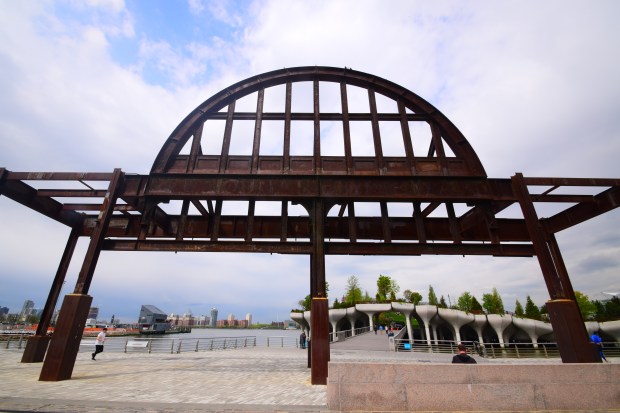
The preserved archway frame of Pier 54, where survivors of the Titanic disembarked from the Carpathia, now serves as the south entrance to New York’s Little Island.

But there is also a very practical side to psychogeography, that would do us all good to be aware of. The theory goes that the distractions and pressures of modern society have caused people to become disconnected from the public realm, leaving the one-percenters to run roughshod over the greater public interest. Understanding and appreciating our common built heritage can lead to thoughtful historic preservation and the design of more livable cities thru greater community involvement.

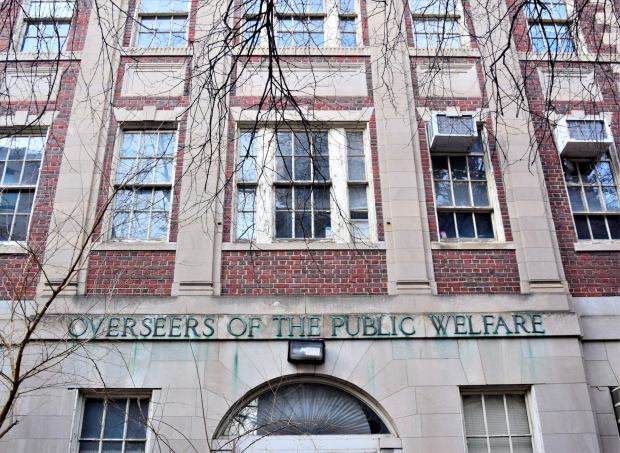
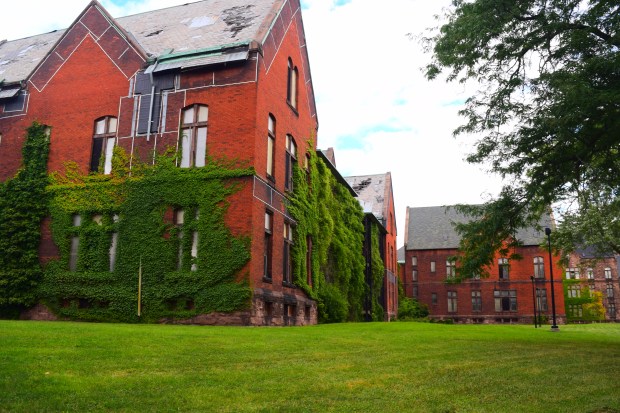
Winter’s bare trees reveal the vestigial facade of a paternalistic institution on Hawkins Street in Boston.

So while coming to understand the effects of the built environment can lead to a greater good, psychogeography can be both a passive pleasure or a wildcat experience. It’s something almost everyone has experienced, whether consciously or not. It can be the satisfaction of finding a great hole-in-the-wall eatery or tucked-away antique store because you wandered away from a usual walking route. It could mean tiptoeing into an off-limits but unguarded location to do a photo session with friends or discovering a fascinating historical vestige steps away from a throng of selfie-taking tourists, as in my photo below.

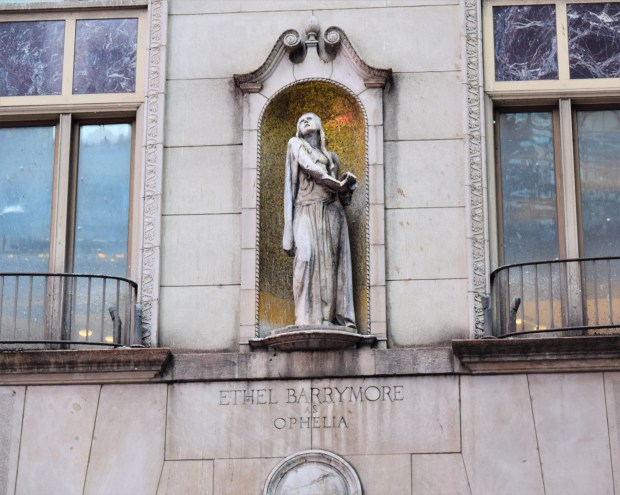
This statue of Ethel Barrymore, and of two other former stage icons, evoke an earlier era of Broadway, just a few feet away from the back of a gigantic electronic billboard in Times Square.

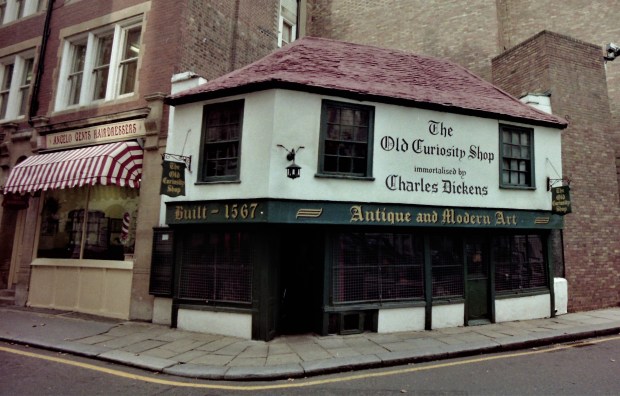
In his 2006 book “Psychogeography,” writer Merlin Coverley, traces this concept back to its immediate roots: French Marxists and Situationists. But he also vividly  digs back to an earlier era and the “urban gothic” stylings of authors like Charles Baudelaire, Edgar Allan Poe, Charles Dickens and Robert Louis Stevenson, showing how their “obsessive drifting (yielded) new insights.” Poe’s 1840 story “The Man of the Crowd” is perhaps the first examination of the mysteries and perplexities of the modern teeming metropolis. In “Dr. Jekyll and Mr. Hyde,” Stevenson shows not only the duality of man’s nature but the stark dichotomy of the different parts of London his split protagonist inhabits. Dickens was a famously keen observer of the same city (often engaging in all-night walks) and had the fame and power to influence social reforms in the darker aspects of the city he witnessed, the exploitation of children, the workhouses, slum conditions etc.
I stumbled on this Dickens landmark during a London walkabout in 1994.

It’s Baudelaire, quoted by Cloverley, who has the most telling description of the psychogeographer, which has as its alpha the Parisian flaneur (or boulevardier). “For the perfect flaneur it is an immense joy to set up house in the heart of the multitude… to be away from home and yet to find oneself everywhere at home… to be at the center of the world and yet remain hidden from the world.”

Sounds cool? If so, try out some psychogeography yourself. Put away the GPS and get to know your town. Stick up for livable cities and against gentrification. Patronize independent small businesses and out-of-the-way points of interest. Lastly, LOOK UP AND AROUND to see what I call the Museum of the Street, and feel a little of what it means to be “everywhere at home.”

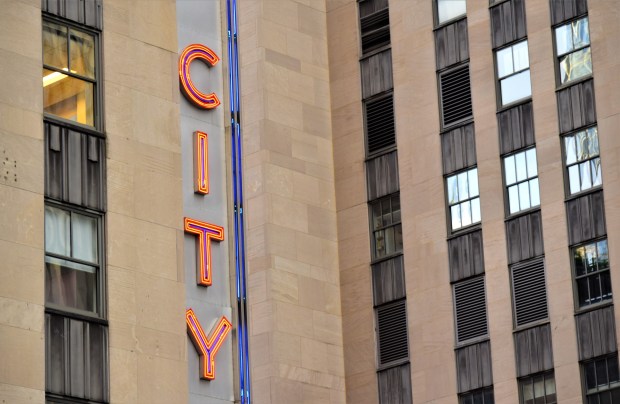
All photos and text by Rick Ouellette. Top Photo is Radio CITY Music Hall, NYC.

More info on my “Placeology” photo series coming soon!

Placeology #2: Twilight of the Road Gods

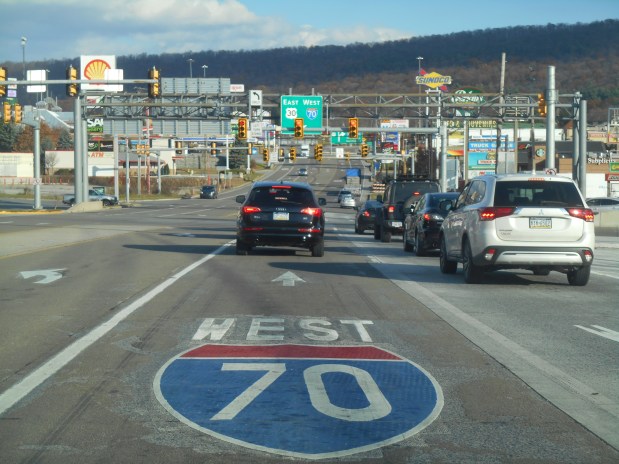
If you ever want to get one of those definitive telephoto pictures of American car culture run amok, there are few places better to trip the shutter than Breezewood, Pennsylvania. Located in the southern central part of the Keystone State, it’s a notorious “choke point” where Interstate 70, the Pennsylvania Turnpike (I-76) and the historic Lincoln Highway (Rte. 30) all meet, sort of.

Breezewood, where the Interstate is also a street.

Because of some arcane law that once proclaimed I-70 could not directly connect to the tolled Turnpike, the Interstate shares a one-mile connector with Rte. 30. This corridor is a densely packed jumble of gas station/convenience stores, fast food joints, chain hotels—all announcing themselves with signs that can reach up to about 70 feet high. There are also two truck washes and plenty of room to park your rig after tear-assing your way thru the six-lane main drag, which seems to be a local sport.

Yes, it’s all very uber-American in a way. There may be no better a democratic leveler than the free breakfast room at the Holiday Inn Express or being in line behind a couple of hunters at Sheetz, the ubiquitous convenience store/coffee shop round these parts. But just beyond the narrow limits of unincorporated Breezewood, it’s a different story. My hotel room had a view of a picturesque farm. And if you head due east, you’ll be driving down the historic and scenic Lincoln Highway as soon as you clear the hill at the end of the strip.

But just before you do, there’s a rutted dirt parking lot next to a paved path you can walk up on. If you do, you’ll be entering one of the state’s strangest and most intriguing points of interest, the Abandoned Pennsylvania Turnpike.

Surrender all hope ye who enter….

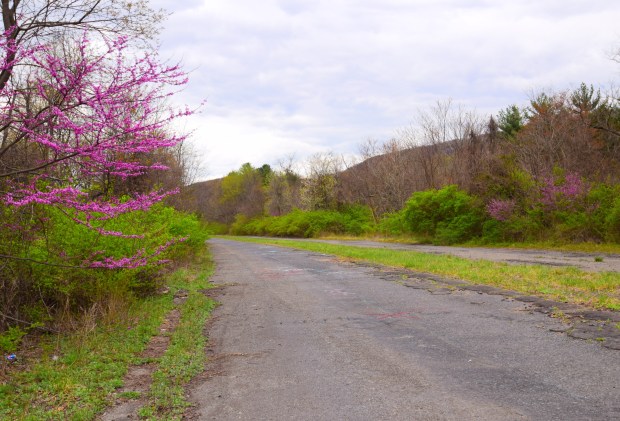
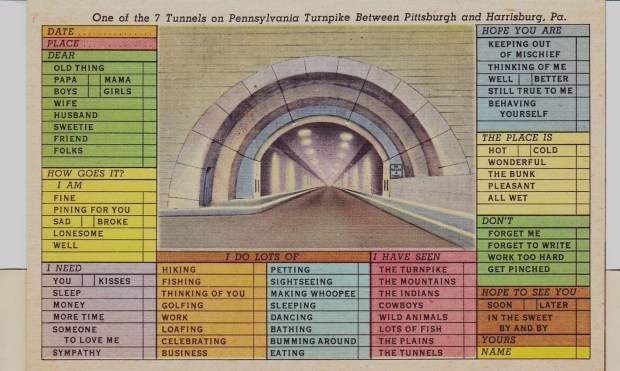
The Turnpike opened in 1940 and was an engineering marvel at the time, and a precursor to the massive American Interstate system that followed. But by 1968, car culture had long expanded and so had the Pike, except for this 13-mile stretch. It was logistically too difficult to widen it here and was re-routed. It is now an accessible (but unmaintained and unmonitored) public walking and biking trail.

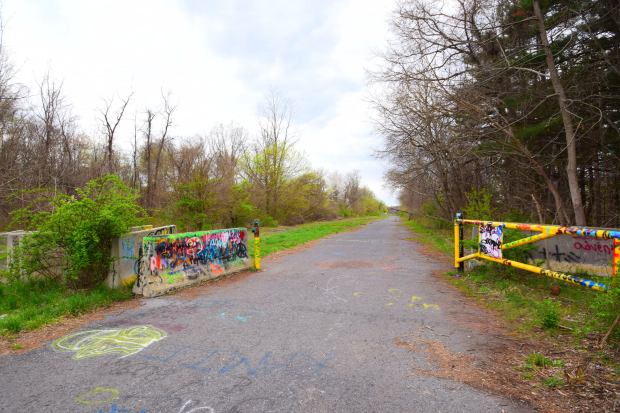
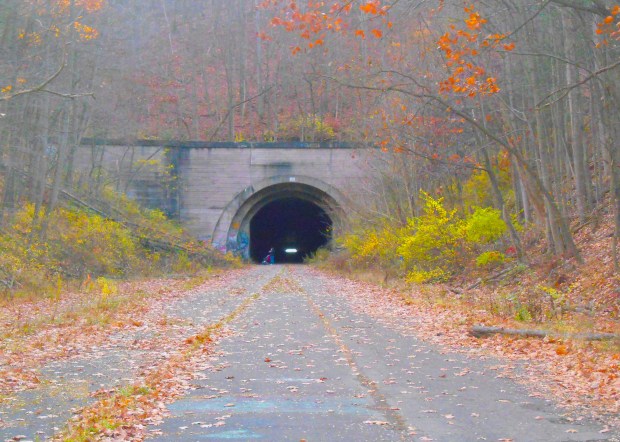
As a devoted (but not hardcore) member of the urban exploring subculture, I had long wanted to visit the APT. I got my first chance a few springtimes ago. I was on foot, and it was almost two miles from the Breezewood parking area to the first of the two tunnels on the trail. The way to Ray’s Hill Tunnel is a bit eerie, and evocative of an age of simpler automobiles and slower driving speeds. It presents as four rather narrow lanes but drops down to two at the tunnel. It was cool to see one of the turnpike’s original scalloped tunnels, not matter how defaced it is with graffiti.

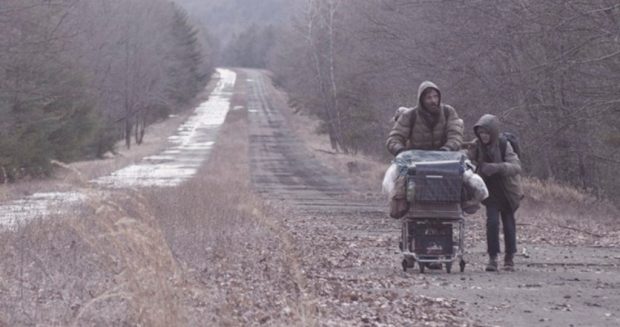
Along with the taggers, curiosity-seekers and photographers, the APT has attracted at least one major film production. The 2009 screen adaptation of the Cormac McCarthy novel “The Road” takes place in the wake of an undefined extinction event (Apocalypse How?) and has many scenes filmed there.

Vito Mortensen and Kodi Smit-McPhee in “The Road.”

It’s curious how highways are such ideal settings for post-apocalypse movies. “The Road” does not feature the fiendishly modified vehicles tearing down outback highways like in the “Mad Max/Road Warrior” series. Things are even worse here, and a key scene is the confrontation between Vito’s protagonist and a wandering member of a violent cannibal gang when the group’s ragtag truck stalls out after emerging from the grim interior of Ray’s Hill Tunnel.

On my second visit to Abandoned Pennsylvania Turnpike last fall, I had my new foldable Zizzo Bike and was ready to explore a bigger chunk of the ruined roadway. After pedaling past the strollers and the Goth kids doing Instagram pics at the mouth of the forbidding tunnel, I sailed thru the underpass with a big assist from a nifty little head lamp I bought for the occasion. On the other side, the atmosphere became more desolate in a hurry.

The far end of Ray’s Hill Tunnel.

Surely, not as desolate as the scenario in “The Road,” where the populace seems divided between killer cannibal gangs and those who retain the minimum standards of civilization, hoping to reach a promised safe haven once they follow the bleak highway all the way to the coast. Still, it is interesting to note that central Pennsylvania is on a sort of political fault line. The more liberal (blue) eastern part of the state can stand in stark contrast to the western hinterlands, where people have been warned to not even have a Joe Biden bumper sticker on their car to guard against reprisals from a hard-core MAGA constituency.

In the book “Divided Highways: Building the Interstate Highways, Transforming American Life,” author Tom Lewis details the passing of the massive legislation that authorized this epic road-building program was initiated by Republican President Dwight Eisenhower and eventually approved by a Democratic-controlled Congress—in an election year, no less! A transcontinental public-benefitting triumph that would “bind the nation.” It would hard to imagine an accomplishment (or agreement) like that with the toxically divided Washington of today.

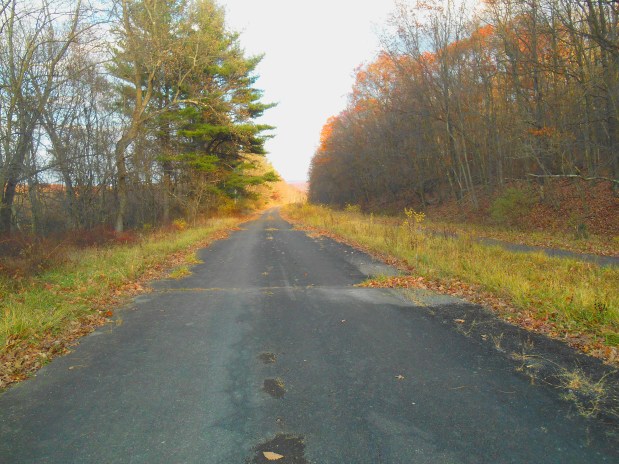
It was twilight time as I reached the lonely halfway section of the APT (see above), and with little time to make the whole route before dark, I turned the Zizzo back towards the parking lot. Riding into the gloaming is enough to make you conjure your own dystopia—the kind where cars are all but obsolete and the world is hard under the heel of ecocide and/or a disastrous civil conflict.

The next morning I was in the better disposition as I checked out of the Holiday Inn, and said good-bye for now to Breezewood, the Las Vegas of service areas. I hope I can get back again to bike the whole ghostly trail. I topped the hill and drove into the immediate rural area on the Lincoln Highway, the road that kicked off America’s Highway Century (it opened in 1913). But that vague dystopic notion from the twilight of the previous day reentered my head when I thought of the next stop on my road trip: the Gettysburg national park.

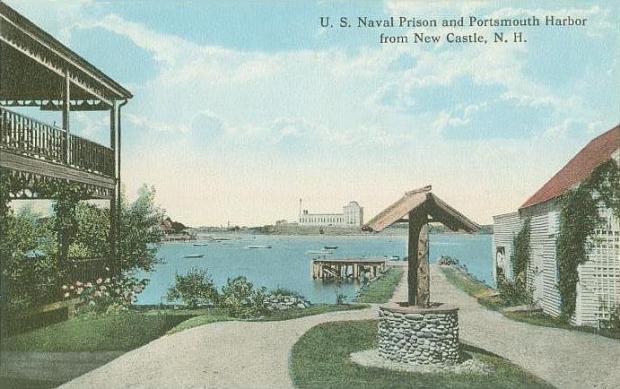
Text and all photos by Rick Ouellette, except “The Road” film still and the circa 1940 postcard.

Placeology #3: The Alcatraz of the East

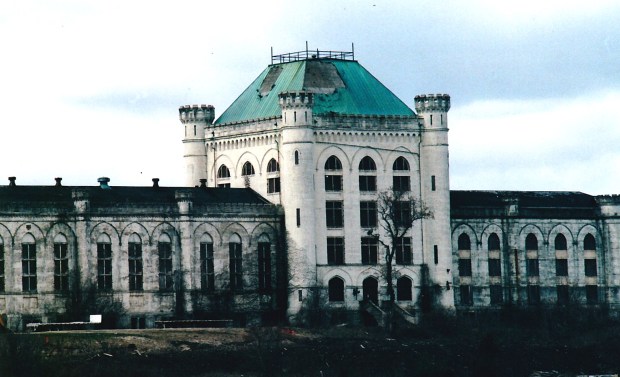
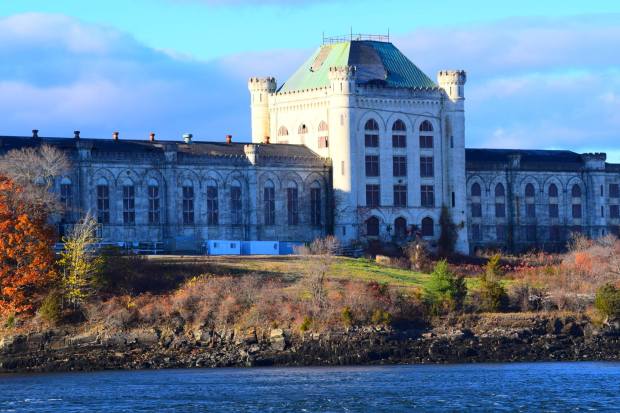
The Portsmouth Naval Prison is located on Seavey Island in New Hampshire. Dark, forebidding, isolated and pointedly medieval, it served as a max security jail for the U.S. Navy from 1905 to 1974. At its peak around World War II, the capacity of the prison (nicknamed “The Fortress”) was 3,008 inmates.

“Impregnable” would be another word for it. To escape this so-called “Alcatraz of the East” (assuming you made it out of building) you’d have to get past the guardhouse on the bridge to the mainland base or make an unlikely swim across the notoriously turbulent currents of the Piscataqua River just east of the cold Atlantic.

But perhaps more interesting is the question, why did the Navy need such an enormous prison? Turns out that around the time of max capacity in the Forties, as much as 40% of the inmates in this brig were in there for sodomy-related offenses. Yikes! This was enough for the top brass, even way back then, to reconsider their policy on homosexuality in the ranks. But it was still decades before even “Don’t Ask, Don’t Tell” and reform likely meant a discharge instead of a lengthy stay in this hellish jail.

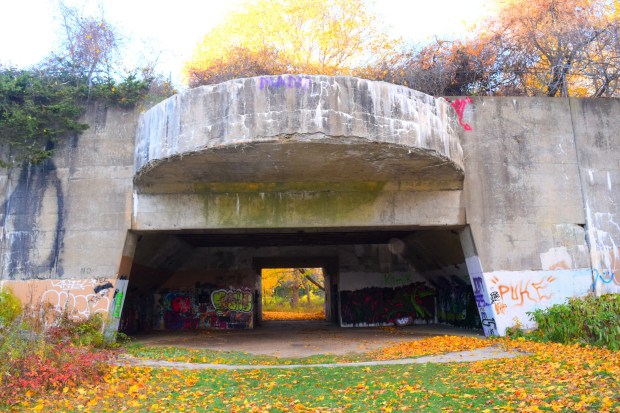
The Portsmouth Naval Prison has been closed now for fifty years, but you can’t visit it. Unlike the similarly decommissioned Alcatraz, sitting out there in the middle of San Francisco Bay, you’d have to pass thru the active Naval Shipyard to get there. Too bad, as it would probably be a great tourist attraction for historic and hip Portsmouth, just as the fascinating Eastern States Penitentiary has in central Philadelphia. Oh well. You can still get a good view of it from Route 1B going from Portsmouth to the seaside village of New Castle. Nearby is Fort Stark and Ordiorne State Park, both featuring the remains of giant gun batteries and other WW2 ruins. That could be another entry for this new series, where I will review many of the interesting places, famous or obscure, that I have photographed.

About “Placeology”

The places we walk through or drive past, the sites we visit or that simply fall into our frame of vision, all have a heritage and inner spirit of their own. Even in our familiar everyday world, we are often just steps away from some location rich in hidden history and forgotten associations. Through this “Placeology” photo series, I will strive to give fresh agency to locales both grand and humble, uplifting and foreboding. More coming soon!

Remains of World War 2 gun emplacement. Battery Seaman, Rye NH

All photos copyright Rick Ouellette