Room 237 (Doc of the Week #6)

Room_237
Directed by Rodney Ascher–2012–102 minutes

There has been a fair amount of buzz surrounding “Room 237” and being a longtime Stanley Kubrick fan, I jumped at the chance to see this compilation of conspiracy theories that have grown up around his 1980 film, “The Shining”. Leaving my local art house a couple hours later, I felt sufficiently entertained (if a bit bewildered) and also a tad envious: where do these people get the time to come up with this stuff? According to the half-dozen interviewees here, Kubrick’s adaptation of the Stephen King horror novel is really one or more of the following things.

A) The veiled confession of a man who feels remorse for helping fake the Apollo 11 moon landing in 1969.
B) An encyclopedic film essay about sexual repression
C) A coded allegory of the Nazi holocaust
D) A connect-the-dots method of decrying the violent disenfranchisement of Native Americans

The director, Rodney Ascher, never shows onscreen the six conspiracy buffs that are heard expounding their obsessive ideas. This molecular-level investigation of details from “The Shining” runs the gamut from thought-provoking to barking mad. Yes, mainstream critics have kicked around aspects of theories “B” and “D” since the film’s original release. It didn’t take me long after pulling down my copy of “The Cinema of Stanley Kubrick” to find a section where author Norman Kagan quotes writers who spotted the Oedipal implications in the script. The tale of struggling author Jack Torrance (played by Jack Nicholson of course), slowly going crazy over a long winter as caretaker of the snowbound Overlook Hotel, eventually menacing his wife (Shelley Duvall) and his physic young son played by Danny Lloyd, is well-known for its domestic abuse angle. The clues on offer here, though, can get a little outlandish. To paraphrase Freud, sometimes a letter tray is just a letter tray. See it and decide for yourself.

The Native American supposition is also not far-fetched, as early on in the film the hotel’s manager reveals that the Overlook was likely built on a tribal burial ground and that the builders were engaged in a few skirmishes during its construction. Kagan details how writers like “History of Narrative Film” author David A. Cook see this “as a film metaphor for a society built on exploitation and even murder.” In “Room 237” one commentator can barely contain his excitement over the prevalence of stacked cans of Calumet Baking Powder (with its Indian logo) in the kitchen scenes. But a more convincing interpretation has to do with the film’s most iconic image. The stationary shot of double elevator doors, from behind which a torrent of blood is unleashed, is all the more powerful when the viewer is reminded that the elevator doors never open, that the genocidal truth will be uncovered even when access to evidence is closed out. It is also intriguing to think that the Jewish, Bronx-bred Kubrick, who never got past the pre-production stages of a planned Holocaust-themed film, may have inserted some below-radar clues that dovetailed with the other secret theme of Indian genocide. But details like the fact that Jack used a German-made typewriter are circumstantial at best.

By here in the land where astonishing revelations lurk behind every continuity error, by far the most eye-rolling of all the theories here is “A”. How did we not know that Kubrick, who set the standard for sci-fi visual magnificence in his 1968 epic “2001”, was somehow recruited by NASA to create on a soundstage what everyone thought they were watching on TV for real when the first men walked on the moon a year later? The old fake-moon-landing gambit has been around forever (remember “Capricorn One” starring O.J. Simpson?) and I doubt that Neil Armstrong would give featured conspirator Jay Weidner the satisfaction of rolling over in his grave. But this part of the film works as well (Ascher is on record as not endorsing his subjects’ opinions) because sometimes it’s just fun to let these people come in from the margins and air it out.

the-shining-still-3[1]

If you can’t tell that Kubrick faked the historic Apollo 11 mission from looking at this still from “The Shining” then you’re simply not trying hard enough.

Weidner is an admirer of Kubrick and in this legit documentary (as opposed to the self-produced ones he hawks on his website) he hedges his bets by stating that he’s not denying those astronauts landed on the moon, only that what we saw on the tube was not all that is seemed. But to use Where’s Waldo methodology to cast doubts on one of mankind’s greatest technological achievements is plain irritating. True, there are eleven cars in the front row of the Overlook Hotel parking lot, and the forbidden Room 217 of the Stephen King novel was changed to 237 for the film, signifying (of course) the approximate distance from Earth to moon in thousands of miles. But that may say more about OCD than it does about the possible secret motives of even a meticulous filmmaker like Stanley Kubrick. Still, some of this does leave you wondering:

shining%20boy[1]

So, yes, there’s a lot of intriguing stuff here and dedicated movie buffs all over will be tipping their caps to Mr. Ascher for this sensory feast. He adds in bits of all the other Kubrick films into the stew and at one point shows us the handiwork of an offbeat film club who project “The Shining” both forward and backward simultaneously, the resulting overlay offers a tantalizing glimpse of thin-air serendipity, comparable to the uncanny sync-up of Pink Floyd’s “Dark Side of the Moon” with “The Wizard of Oz.” But Kubrick’s profile in the clouds during the film’s opening aerial shot? I’m just not seeing it. It is possible, as one “Room 237” interviewee suggests, that Kubrick’s 1975 Georgian-period drama “Barry Lyndon” shows a bored artist who came out of the experience with a determination to formulate a new secret language of film. (While we’re at it, let me put in another vote for the reclamation of “Lyndon”, which not only features some of the greatest cinematography ever but also stands tall as an indictment of the economic and class cruelties that dog us to this day).

But whether or not this assumed “secret language” was Kubrick’s intention is a mystery that he took to his grave in 1999. Since conspiracies are hard to prove and too interesting too ignore, they persist over time, whether it’s the “Paul is dead” hoax, the JFK assassination, devil-worshipping messages in heavy metal songs, etc. It lends us a sense of wonder, that there’s a clandestine layer of existence just underneath our everyday world. It’s a fun source of speculation and rumination, although be careful not to let your interest level get you to the point where people cross the street when they see you coming. It may be a bit too late for some of the interviewees of “Room 237.”

Escape Fire (Doc of the Week #5)

escape fire

Escape Fire: The Fight to Rescue American Healthcare
Directed by Matthew Heineman and Susan Froemke—2012—91 minutes

Using the true-story metaphor of a firefighter who kept his wits while his colleagues panicked in the face of a fast-moving wildfire, this film makes a compelling argument for a levelheaded approach to fix a profligate and profit-driven American healthcare industry. This is a system devised so that it “doesn’t want you to die and doesn’t want you to get well”, instead relegating hundreds of millions of people to an expensive habit of suppressing symptoms while doing little in the way of preventative care.

Director Matthew Heineman (founder of the Young Americans Project and producer of HBO’s The Alzheimer’s Project) and veteran documentarian Susan Froemke (who made the Oscar-nominated LaLee’s Kin and was associate producer of Grey Gardens) do an admirable job of approaching this thorny subject with common-sense clarity and quiet compassion while distinctly avoiding the blame game. Through sections like “Good People, Bad System” and “The Dark Matter of Medicine” we watch demoralized doctors and overwhelmed patients being churned through a $2.7 trillion industry, while credible claims are made that three-quarters of that amount is for the treatment of preventable conditions. The directors point out how technological developments in medical devices and wonder drugs have evolved into an end in themselves, instead of being used as needed. “To a man with a hammer, everything looks like a nail,” offers one expert. This mindset is said to be compounded by the fee-for-service system of doctor compensation, a setup that guarantees a quantity-first/quality-second result.

The end game, of course, has been a crippling inflation of health costs for the patient. One graphic shows what prices of everyday items would be today if they had moved at the same rate of inflation as healthcare since 1945: imagine paying $48 for a gallon of milk! The people interviewed by Heineman and Froemke (like former head of Medicare/Medicaid Don Berwick, nutritionist Andrew Weil and soul-searching PCP Erin Martin) suggest dealing with this issue with a sense of commonality and an enlightened wellness approach. A telling segment dealing with the evolution of a traumatized soldier back from Afghanistan, who frees himself from a multiple-prescription drug regime and finds help with holistic remedies, illustrates the imaginative problem-solving suggested by the title.

Instead, in lobbyist-infected Washington’s we get polarizing healthcare debate of recent years—as depressing as it is predictable—where American’s sense of rugged individualism gets exploited and boiled down into shortsighted self-regard. Even with the passage of Affordable Care Act there is still a long way to go with this issue, not the least of which is the way that the very word “care” (as in “Obamacare”) has been reduced to a derogatory term. Escape Fire is an excellent place to start to get one’s bearing on a crucial societal dilemma that affects us all and needs to be put right in all haste.

The Eyes of Tammy Faye (Doc of the Week #4)

Tammy faye

(In view of the Supreme Court’s recent hearings on gay marriage cases, and the recent conversion of several Republican lawmakers in favor of same, I figured it was as good a time as any to re-print my review of one of the earlier unlikely “evolvers” on this issue).

The Eyes of Tammy Faye
Directed by Fenton Bailey & Randy Barbato—2000—80 minutes

Long seen as a figure of ridicule by those who recall her messy mascara meltdowns during her husband Jim Bakker’s infamous trial, televangelism’s first lady comes across surprisingly well in this entertaining revisionist biopic. Tammy Faye Bakker seems every bit the likable, plain-dealing farm girl who was an equal partner with preacher Jim. The couple built up a three-network TV empire based on a showbiz brand of Christianity that was kinder and gentler than that of most of their counterparts (Tammy is seen embracing AIDS patients way back in the early Eighties). But the Bakkers would be done in by personal scandals (remember Jessica Hahn?) and a penchant for living too high on the hog while their gigantic, parishioner-subsidized Heritage USA theme park was tanking.

The directors have a sharp eye for the snarky appeal of this subject matter, but in the end they ease up on eyeliner discussions and zero in on the dogged perseverance of an open-hearted woman who apparently received a lot more negative publicity than she ever deserved. “The Eyes of Tammy Faye” became a huge hit among homosexual men, and towards the end of her life she declared herself to be in favor of same-sex marriage and made many appearances at Gay Pride events. It’s ironic, given her fundamentalist background, that Tammy became a gay documentary icon almost in a league with Little Edie from David and Albert Maysles’ “Grey Gardens.”

The Pale Beyond (Part One)

The Pale Beyond Part 3 is Coming in June 2014

Danvers State

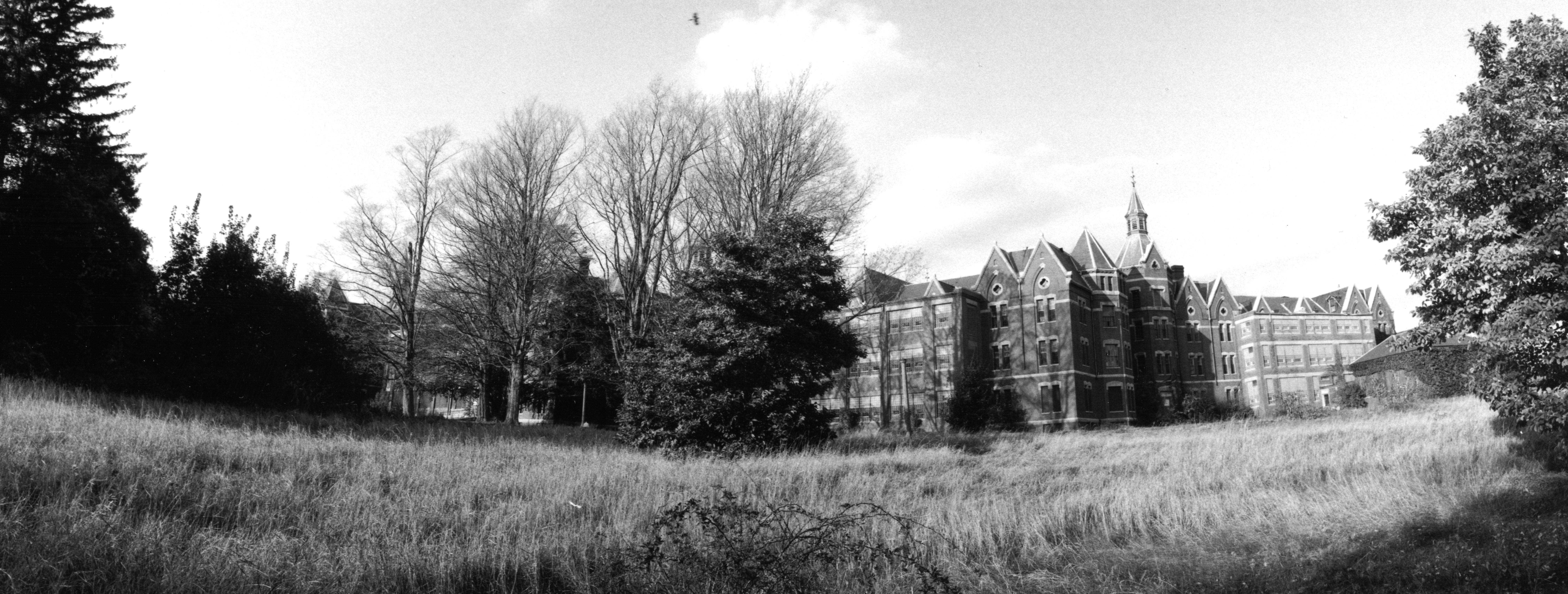
(The shuttered Danvers State Hospital in the late Nineties. Danvers State was once dubbed “the bad vibes capital of the Northeast” by the Boston Phoenix. I certainly felt it that day. Click on photos for larger view.)

To expand a little bit on the subject of this week’s selected documentary is difficult. But to expand on it “a lot of bit” (as my son used to say) is far easier. The topic of abandoned state-run institutions, and their distinctly spooky allure, has really taken off in the Internet age. The timing was perfect. Many such places, which warehoused society’s forgotten people in sprawling complexes of gothic-type structures, closed in the 1980s, in the age of Reagan-era budget cuts and a shift to community-based care in the treatment of people with mental and physical disabilities. The older state facilities had usually been built on leafy campuses on the margins of metropolitan areas and were soon infiltrated by members of the new urban explorer movement, an activity that combines thrill-seeking with amateur anthropology. Some of the participants were also talented photographers. Finding an audience, and each other, on websites like DarkPassage.com, these people gave a whole new meaning to the term “asylum seeker.”

In our age of autism awareness and 10K charity races for most major medical maladies, it’s fascinating to go back and see the lax standards that prevailed just a couple of generations ago. Willowbrook State School, featured in “Cropsey”, was known for living conditions that are hard to believe in today’s wised-up world. Robert F. Kennedy made a fact-finding visit there in 1965 while U.S. Senator from New York, famously referring to it as a “snake pit.” But his suggested improvements were slow in coming. Several years later, a guy named Geraldo Rivera first gained national attention when he brought a local news crew into the overcrowded facility, filming mentally disabled children, some naked, writhing on the floor in agony. (John Lennon and Yoko Ono saw the televised report and were moved to do a pair of benefit concerts—later released as “Live in New York City”—that were to be Lennon’s last full-length live shows). Even with these exposes, and further revelations by Staten Island newspapers, the last of Willowbrook’s residents were not moved out until 1987.

I grew up not far from one of the most infamous of such places. Danvers State Hospital in Massachusetts was opened in 1878 and from my earliest days I remember it looming high above U.S. Route One on a dome-shaped hill surrounded by sloping farmland. Later in life I would find out that it inspired horror writer H.P. Lovecraft’s Arkham Asylum, which in turn was incorporated into the Batman universe. Interesting, as the place was one of many built on the idealized Kirkbride Plan. These imposing, gabled Victorian compounds had a staggered “bat-wing” layout that were meant to allow for maximum, beneficial sunshine for mentally-ill patients who were to be treated with new and enlightened methods.

Unfortunately, Danvers State became better known for electroshock and frontal lobotomies than for enlightenment. Again, overcrowding had a lot to do with the deteriorating conditions, as people with symptoms nowadays treatable with prescription drugs were shoehorned in with legitimately dangerous patients.

Growing up in West Peabody some four miles away, we kids amused ourselves with scare stories about escaped lunatics from the “Nut House” who made their way down the hill to the apocryphal Danvers Road, a shadowy lover’s lane. Thankfully, our tall tales of the unfortunate couples who parked there were more imaginative than our naming of the road.

session 9

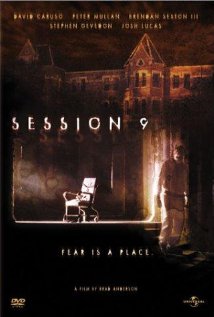
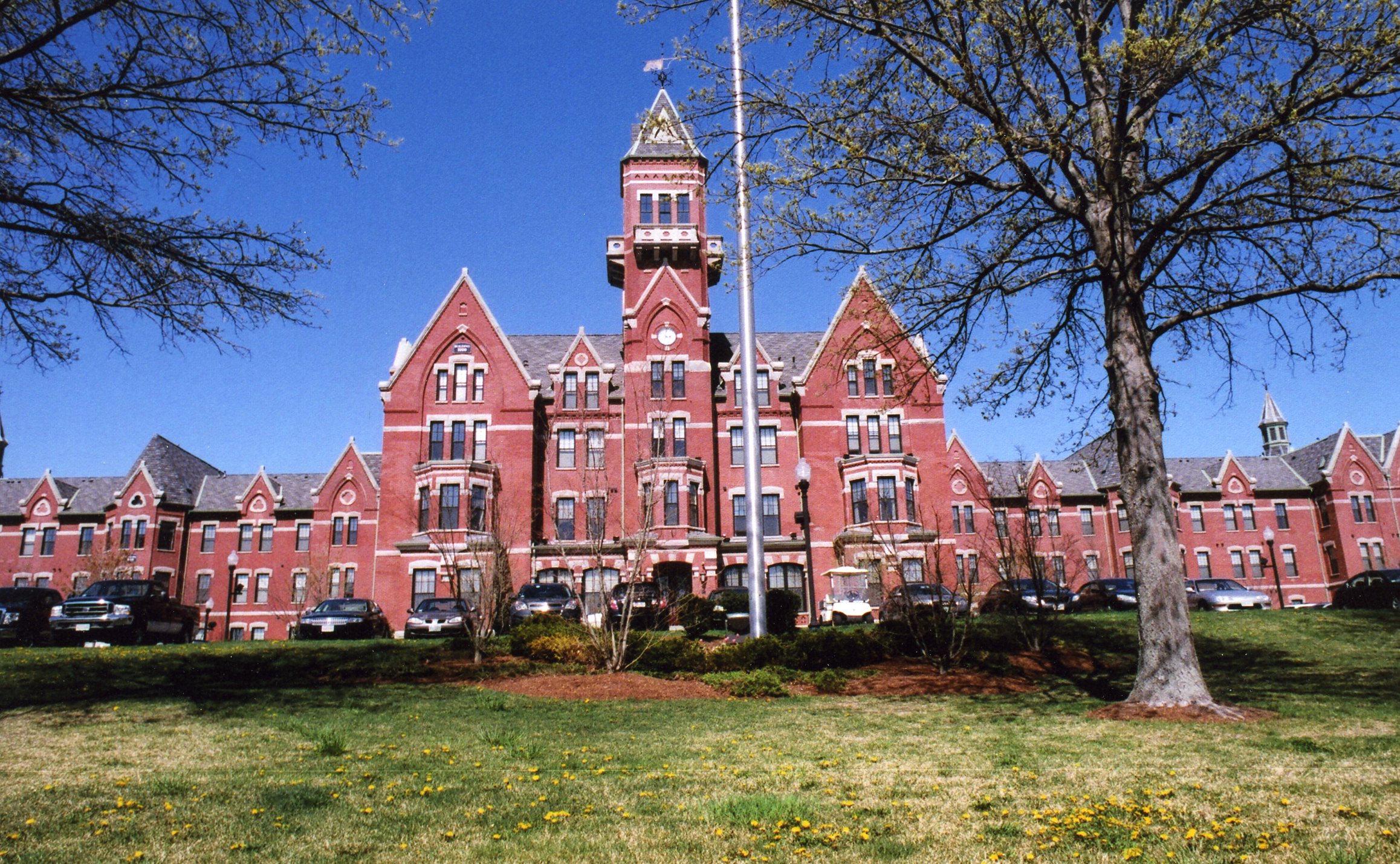
In 2000, I was working for Scout Productions in Boston as a location manager. One day, director Brad “Next Stop Wonderland” Anderson was in a pre-production meeting with a few others at a table near the desk where I was working. I had already heard something of the project that would become the 2001 asylum thriller “Session 9” and I took the liberty of chipping in an idea or two. That would have been a great movie to work on but I was a location scout and none was needed in this case. That’s because the entire movie was to be filmed at Danvers State. Anderson had taken advantage of an initiative by the Massachusetts Film Office to attract filmmakers by allowing free use of any abandoned state-run property. The plot concerned an asbestos-removal crew who get swept up in the evil spirits still radiating from the ruins. Although there was a fairly big star (David Caruso) in the cast, the real main attraction was obvious. From the aerial shots of its massive gothic outline, right down to the skin-crawling claustrophobia of its service tunnels, you just can’t get enough of this place. Although “Session 9” was hampered a bit by its under-developed narrative, it’s still a decent psychological thriller and a valuable time capsule since the site was redeveloped into generic-looking condos. At least the façade of the central section was kept, as seen here in a recent photo I took.
img257

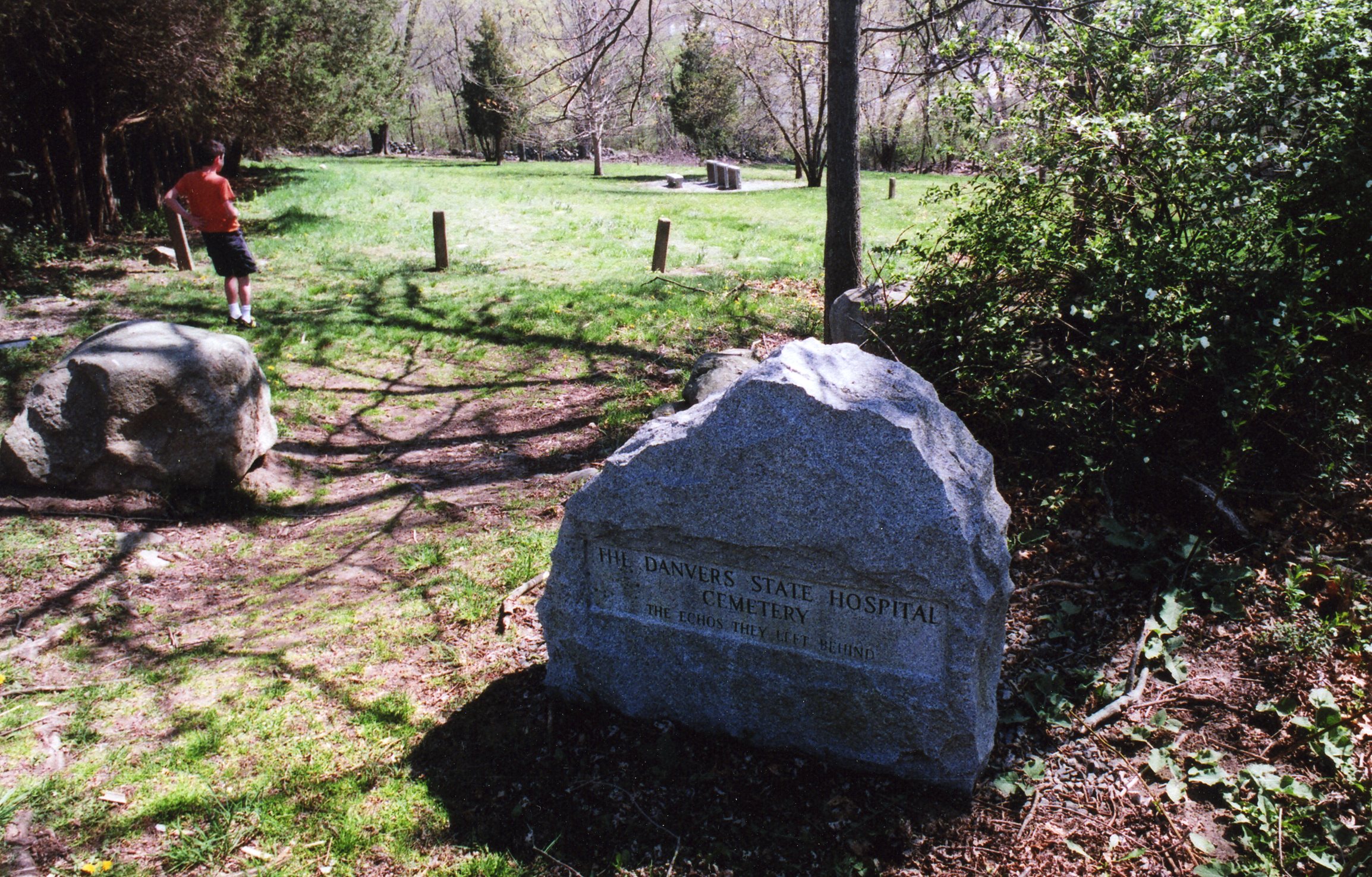
While the behavior of some patients at these places was undoubtedly beyond the pale, the sad legacy of these state hospitals is that untold thousands were committed for reasons that would seem outrageous today (the proverbial “nervous condition” was oft-used). Cast off by unscrupulous or overwhelmed family members and ill-treated by the state, many ruined lives ended there unceremoniously. As a final indignity they often were buried on the grounds in plots marked only by a number.

Here’s my son surveying the spartan landscape of the patient’s cemetery at Danvers State.
img258

In the foreground is one of the recently installed memorial markers. The inscribed numbers are on small gravestones are set flush to the ground. Matching up the numbers to names is not very easy when closed-down institutions kept the records. There are efforts underway by surviving relatives to have the state do more to identify the deceased. But that’s another tangent of this topic, which has legs like few others. More of that in Part Two….

Cropsey (Doc of the Week #3)

220px-Cropsey

Cropsey
Joshua Zeman & Barbara Brancaccio–2011–84 minutes

Both Joshua Zeman and Barbara Brancaccio grew up on Staten Island in the 1970s when the Cropsey urban legend was well known. Cropsey was an all-purpose name given to alleged violent maniacs and was used by children wanting to put a scare into each other or by adults wanting to keep their kids out of the woods. The Cropsey fable was a familiar one up and down the Hudson River Valley but had special resonance around the central greenbelt of New York City’s outer-island borough, with its dense woods and disreputable state-run institutions.

In 1987, with the disappearance of a developmentally-disabled girl near the greenbelt, and further reports of other missing children, these flashlight-under-the-chin stories took on a genuinely scary aspect. Zeman and Brancaccio, both now filmmakers, return to their old haunts, so to speak, to investigate the chilling case of local drifter/creep Andre Rand. Rand was convicted for the girl’s abduction but not for her murder, even though her body was found in the woods near his makeshift encampment. They interview family members, search volunteers and law enforcement officials, most of who are convinced that Rand is responsible for the disappearance of the other missing children. An attempt is made to interview the prisoner himself, but after a series of increasingly bizarre letters sent from his Riker’s Island cell, the obtuse Rand elects to keep his own counsel.

Is Andre Rand the real Cropsey? The greater canvas on which this tragedy is painted is the greenbelt area itself. It had been home to a tuberculosis ward, a poor farm and the Willowbrook State School, a notorious institution that once housed, in the most appalling conditions imaginable, New York’s most severely mentally disabled children (Rand had once been employed there as an orderly). The ghostly abandoned hulk of the school, and the extensive tunnel system underneath it, still seem to echo with awful institutional memories. It is a perfect location for some real life scares as Zeman and Brancaccio decide it would be a great idea to grab their camera and tour the buildings at night alone.

“Cropsey” succeeds so well because it can work on different levels—as a crime story, a look at the bad karma that rebounds from societal abuses and for it’s built-in appeal for the urban explorer crowd or just those with fond memories of “The Blair Witch Project.” Underlying the whole film is a sense of the power of place in our lives, and the enigmatic hold it can have on people is shown on the faces of uneasy residents who find it hard to discern “the facts from the folklore.” Even in our self-absorbed electronic age, these feelings emanating out from the natural world still hold sway, as they have done since time immemorial. It is interesting to note the misgivings of a Native American tribe that inhabited Staten Island long before Dutch settlers arrived. They named it Aquehonga Monocknong—“the place of the bad woods.”

The Art of the Steal (Doc of the Week #2)

“As through this world I wander, I see lots of funny men,” Woody Guthrie sang back in 1939, “Some will rob you with a six-gun and some with a fountain pen.” Although Guthrie wrote those lines for the song “Pretty Boy Floyd” their relevance echoes far beyond the world of bank robbers and foreclosure-happy branch managers during the Great Depression. An interesting modern manifestation of his bon mot is in the field of art thievery. Here in the Boston area, there’s been much in the news lately about the FBI being close to solving the infamous 1990 heist at the Isabella Stewart Gardner Museum. This is a case where old-school bad guys gained entrance by posing as cops, tied up the guards in the basement and made off with a half a billion dollars worth of Rembrandts, Vermeers and Manets. But now there seems to be a more genteel way of relieving museums of their collections and the public of their cultural heritage. The newly-expanded Gardner Museum, like the Barnes Foundation depicted in the film below, was the quirky end product of a maverick art collector, places that (despite the last will and testament of their founders) can be tampered with in an age where top cultural institutions are beginning to look as monolithic as the too-big-to-fail banks.

art of the steal

The Art of the Steal
(Directed by Don Argott—2009—101 minutes)

In “The Art of the Steal”, the corporatization of culture is seen as an invasive, extra-legal force trampling the legacy of the eccentric and combative inventor/art collector Albert C. Barnes, whose extraordinary inventory of early modern paintings were displayed at his semi-private foundation in a Philadelphia suburb. Argott meticulously traces the battle that began after Barnes’ death in 1951 between his foundation and the cultural/political establishment over ultimate control of a collection that came to be valued at around $25 billion. Barnes was born to working-class parents, worked his way through college, and made a fortune inventing an anti-syphilis drug in the days before antibiotics. He was a passionate and prescient art lover and in the depths of the Depression bought up hundreds of canvasses by the likes Cezanne, Picasso, Matisse, Renoir and Van Gogh. These works were ridiculed by Philadelphia’s cultural elite as “primitive” and “debased”, cementing Barnes’ disdain for high-society and causing him to decamp to nearby Merion (a mere five miles away from the detested Philadelphia Museum of Art) where he hung the works in quirky galleries and ran an egalitarian art school.

Argott deftly works this story along two parallel tracks: first as a parlor mystery that traces the subtle chipping away at Barnes’ will (which stated in no uncertain terms that the paintings were never to leave the Merion location) by elements both inside and outside of his foundation; and secondly to the greater question of what is the correct dispensation of world culture in an era when individual works of art can easily sell for tens or even hundreds of millions. As the controversy came to a head in the first decade of the 21st century, Argott was there as the institutional powers that be (the successors of those who once belittled Barnes’ tastes) slowly asserted themselves in the idea that the collection was now too great to be left so inaccessible—-and while an opposing protest movement started calling it the greatest art theft since World War II. This elegantly paced and visually striking documentary seems to be a staunch defense of the Barnes Foundation as a “handmade thing in a machine world”, a populist outpost against the relentless commodification of modern life. Others have perceived “The Art of the Steal” as being one-sided (probably a lot of the same people that Argott lists as declining to be interviewed) as the articulate group of talking heads seem to concur more with Barnes’ rebellious worldview, as impractical as it is, than with those who he saw as putting themselves on a “pedestal… to pose as patrons of the arts.” Argott is in effect holding accountable those who are going to get their way in the end anyhow, as good a reason as any for a non-fiction film. It certainly has struck a nerve as Q&A sessions after film festival showings have repeatedly turned into shouting matches, pointing out the strong emotions behind a contentious issue that Argott has brought so memorably to light.

(Those interested in this subject should look into the case of the Seward House Historic Museum in upstate New York. The painting “Portage Falls on the Genesee”, by Hudson River School founder Thomas Cole, hung in the house for over 100 years before being summarily removed by museum’s overseer foundation. The canvas, recently appraised for a cool $18 million, was removed under police escort after the foundation’s unilateral decision that it was too valuable to hang in just any old historic home and needed to be sold off to a private collector at auction instead. The shocked museum operators may find only cold comfort in the promise that they will share in the proceeds.)

Lucky (Doc of the Week #1)

To go along with the (hopefully) imminent release of my indie book “Documentary 101: A Viewer’s Guide to Non-Fiction Film”, here’s my new weekly post that will spotlight a work of particular interest. This feature will mostly be titles that have come out in recent months since the book’s completion, along with some obscurities that deserve wider recognition or older non-fiction films that are being re-released. Documentary film is one of the most vital of all art forms and has arrived at a sort of golden age in the last couple of decades, with quality and variety of subject matter increasing exponentially, along with viewer interest. So there’s a lot to choose from. A doc a week? Well, with a mid-summer hiatus and maybe a break for the Christmas holidays, I think I can pull it off. Please check in on the weekend for the latest. Cheers, Rick Ouellette

lucky
Lucky
(Directed by Jeffrey Blitz—2010—82 minutes—Docurama Films)

Ever enter a contest and have someone hit you with the old line, “nobody ever wins those things”? The same could be said to those buying tickets for one of the high-stakes lottery games that have become hugely popular in the U.S. in recent decades. Except, of course, we know that people win them all the time—you see them on TV holding up an oversized check for some astronomical sum (often in the tens of millions) then rarely hear about them again. The odds of knowing someone who has hit the Powerball jackpot must be about the same as actually buying a winning ticket yourself—about one in 180 million. So it’s up to documentary filmmaker Jeffrey Blitz, who also directed 2002’s crowd-pleasing Spellbound, to make this fascinating case study of several winners and look at the first year results once the mega-bucks start rolling in. It’s all here, the good, the bad and the ugly and rest assured there is a bit of all three.

Blitz approaches this rather delicate subject with careful steps. Each of his subjects is first introduced with a five-minute segment. We get a feel for their personal backgrounds and the initial euphoria of their sudden fortune, making it more resonant when Blitz circles back and their stories deepen. First up is Quang, a Vietnamese immigrant working in a ConAgra meatpacking plant when he won $22 million as his share of a prize with several others in a company pool. This is a man who had been severely injured fighting alongside Americans in the war and barely escaped with his wife and his life after the Communist victory, luckily getting picked up by a French rescue craft instead of a Soviet warship. These kinds of hard experiences lead to the type of philosophical outlook and rational decision-making that bodes well, where sudden good fortune is seen as an opportunity to build on and not a magical escape hatch from drudgery.

Those less well-centered have more difficulty with their “good fortune.” James was a middle-aged bachelor who had lived with his parents. His employment situation and living condition nose-dived after their deaths and he was down to his last three dollars when he plunked it down on a ticket that replenished his supply to the tune of $5.5 million. But he still seems adrift, buying a needlessly huge house to keep his money away from perceived exploiters and missing the several dozen cats that used to live with him. Buddy, hailed by the local media a year before for saving a baby from a burning building, is said to have been rewarded by a $16 million gift from above. After his bad-news brother from hell re-enters his life, Buddy wonders if the devil didn’t have a hand in it as well.

The conundrum facing mathematician Robert is more subtle but no less important. He’s told by his university employer to “wrap up your work and we’ll find somebody else” almost immediately after breaking the news of his lottery win. The reaction is telling in a country that instinctively worships wealth, while the idea of one’s work being equal to one’s worth is slower to gain traction. The huge disconnect between “something you do” and “something you won” is something he never counted on while buying tickets on a lark. Most relatable of all may be the experience of Kristine and Steve, a solid middle-stream suburban couple with two teenage kids, who win a mind-boggling $110 million. “You work your whole life to be part of the crowd,” they tell Blitz. Becoming estranged to longtime friends who can’t help but be resentful is jarring—-telling your kids that they’ll have to have a pre-nup when they get married is just as disconcerting. No longer on the same wavelength as those still living from paycheck to paycheck (one even tells them she can no longer stand the sight of them) they decamp to an affluent Florida community, enjoying the lifestyle, doing charity work, managing their treasure and suspecting all the while they may never totally fit in there either (“we are our own species”).

Blitz presents all this in an attractive package, familiar though it may be in its modish, non-narrated way. The subjects are comfortable and candid at the hands of an unobtrusive director, who fills in the history-of-the-lottery backstory during appealing animated interludes. These subjects can end up being misguided—-throwing away in a few short years more money than the average person would make in a lifetime—-or canny enough to use the winnings as seed money to build businesses for future family generations to run, avoiding the brain-deadening results of trust fund indulgence (the Kardashian Effect, if you will). They are all treated with equal deference by Blitz and that’s as it should be. One informational sequence early on lets viewers know that lotteries have been around in America since Colonial times but were banned for several decades due to administrative corruption. When it started again in 1964, the top prize was $100,000. After watching Lucky, it’s not hard to feel it would have been just as well if it stayed at that but, say, adjusted for inflation to about $750,00 in today’s dollars. Three-quarters of a million will take the edge off most anyone’s financial pressures without catapulting winners into the warp-speed unrealities depicted here. But in today’s empathy-deficient global economy, where genuine economic security seems to be the domain only of top corporations and those already wealthy, everyday stresses and wishful thinking will lead people to the local convenience store time and again in hopes of riches beyond their wildest dreams—-even if most never realize just how much that will entail.

Once There Was a Time–R.I.P. Alvin Lee

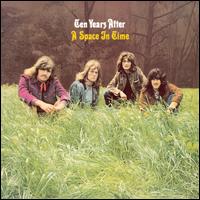
A_Space_in_TimeIt was a shame to hear about the death of guitar hero Alvin Lee, especially since it seems it was a case of the dreaded complications during “routine surgery.” If I’m not mistaken, it’s similiar to the circumstances that ended Andy Warhol’s life. A horrible way to go and very tough on the surviving loved ones–you’re dropped off at the hospital for a minor operation and the next thing they know you’ve “rung down the curtain and joined the Choir Invisible” (with apologies to John Cleese).

Of course, Lee’s band Ten Years After never really made it into the upper echelon of iconic British rock bands. True, they were a sensation at Woodstock and Lee’s famous speed-demon guitar runs were on full diplay when their signature jam “I’m Going Home” made it into the film. He and boyhood friend (and eventual Ten Years bassist)Leo Lyons made it to London from their native Nottingham in the early 1960s, playing and sharing bills with the likes of John Lee Hooker, Hendrix and Larry Coryell. “I’m Going Home” made their name but became a bit of an albatross–on their later double live LP knucklehead fans can’t even wait for this obvious set-closer, instead loudly requesting it after the second number. But the albums sold pretty well and they slugged it out on the arena circuit during the first half of the Seventies for audiences that appreciated instrumental virtousity or just loved to freak to Lee’s mind-bending solos on his trusty hollow-body Gibson.

(Check out Alvin Lee doing his thing in the TYA segment of Murray Lerner’s brilliant documentary “Message to Love” about 1970’s contentious Isle of Wight festval: http://youtu.be/2vZVVq7WJFY)

To his credit, Lee did move to broaden the band’s sound from the more basic blues-riffing and lengthy jams they were known for (by the time they finished their version of “Good Morning, Little Schoolgirl” it was usually mid-afternoon). No one would confuse his songwriting with Bob Dylan’s, but on 1971’s “A Space in Time” he steered Ten Years After towards a dreamy, folk-rock sound that on tunes like “Here They Come” and “Over the Hill” recalled classic Traffic. That LP also yielded their one big AM hit, “I’d Love to Change the World.” But as that kitchen-sink protest song would suggest, finger-picking and not social commentary was Lee’s true calling. His real mission statement may lie in that LP’s rural-blues shuffle “Once There Was A Time.”

“And if I don’t get to heaven
And I go down there below
Better be a guitar when I get there
Or I will refuse to go”

Bye the bye, ever notice how rock stars of today just don’t sit around in meadows like they used to?

“Big Time” Waits for no man (on store shelves)

While at Barnes and Noble the other night I caught Tom Waits’ careworn visage glaring at me from the cover of the latest issue of Uncut magazine. Thing is, that photo looks like it was from 1973, the year of his first album (the piece is called “Birth of a Boho Legend”). Talk about an old soul. I didn’t pick up a copy (at least not yet) as I am still happily absorbed in the same mag’s special all-Kinks issue that my sister surprised me with for my birthday. But it got me thinking on two points. First I have to finish my article on the celebration of 1973 in general, the greatest of all rock years not recognized as such and now forty years in the rear view mirror. I’ll have it out here soon.

Secondly, why hasn’t “Big Time”, the great Tom Waits concert film from 1988, ever made it out on DVD? The VHS-to-VHS copy I once made after checking it out from the library can’t last forever. Yeah, you can watch it on YouTube nowadays but it just isn’t the same. It demands, like any good film, a decent size screen and no other distractions. “Big Time” is a variation on the off-Broadway play “Frank’s Wild Years” (written by Waits and his wife Kathleen Brennan) and is similiar to the stage show on his 1987 tour supporting the LP of the same name. Songs like “Ol’55” and “Grapefruit Moon” made that ’73 debut (Closing Time) a worthy debut but Waits’ offbeat genius as a songwriter and conceptualist didn’t come into full flower until the Eighties and beyond. This is the best showcase for his famously expansive assortment of mid-century American character types: the homesick sailors, the farmboys off to the big city, the strippers and barflies, the beautiful losers and beatnik drifters that crowd into his songs like passengers on a rush-hour Tokyo subway.

“Big Time” was mainly filmed at the art-deco Wiltern Theater in Los Angeles, Waits’ hometown and a place he knows well (he describes the theater as being located on the corner of “Friendly and Snooty”). The 50-year antiquity of the venue is a suitably scenic platform for the Waits’ usher/ticket-seller/hustler character whose droll activities are interspersed with the onstage action. Here the noirish stage set and the musical palette of accordion, honking sax and upright bass complete the picture. The Frank of the title is a downwardly mobile Sinatra wannabe who tells the “beautiful” crowd that he “feels closer to(them)than his own family” and wheezes his way through a song that insists he’s headed “Straight to the Top” where the air is “fresh and pretty clean.” More as himself, Waits either goes to his upright piano for one of his vaunted melancholic ballads like “Johnsville, Illinois” or gets up to front his crack band on deliciously manic performances of “Down in the Hole” or “Telephone Call from Istanbul” (“never trust a man in a blue trench coat/never drive a car when you’re dead”).

Wait’s dry between-songs witticisms are a hoot but by the end, when it’s clear that Frank and his long-shot dream of redemptive stardom are destined to be kicked to the curb,the heartstrings get a pulling during numbers like “The Train Song” and “More than Rain”, the latter betraying the Brechtian influence that crept in during that time. But Waits’ sly nature never gets vanishes for long and he’s compelled to sing the climatic ballad, “Innocent When You Dream” while standing fully-clothed in a bubble bath.

Tom Waits was never big on touring and I was happy to have had the chance to see him on that tour in ’87 at Boston’s Orpheum Theater (not at the corner of anything, but pushed to the back of a cul-de-sac near Park Street Station). From the moment he charged out of the gate with “Hang on St. Christopher” (a driver “jacked-up on whiskey” exhorts the patron saint of travellers through a bullhorn, telling him that “tonight the Devil can ride”), to when he encored with a rip-roaring “Papa’s Got a Brand New Bag”, one of the best shows I saw in the Eighties. If the gig had been scheduled a few months earlier I probably would not have seen it: put off by his notoriously gravelly vocals, I had never giiven Waits a chance. But thanks to my new roommates heavy rotation of such LPs as “Rain Dogs” and “Swordfishtrombone” the light bulb went off just in time to ask him to be me up a ticket as well. An object lesson that musical discoveries are an ever-renewable resource for a better life. True, a guy as willfully eccentric as Waits will never siphon off many middle-of-the-roaders, but for his considerable cult audience and for those destined to discover, a proper home-video release of “Big Time” is long overdue.

The Strange, Forgotten Saga of the Medicine Ball Caravan

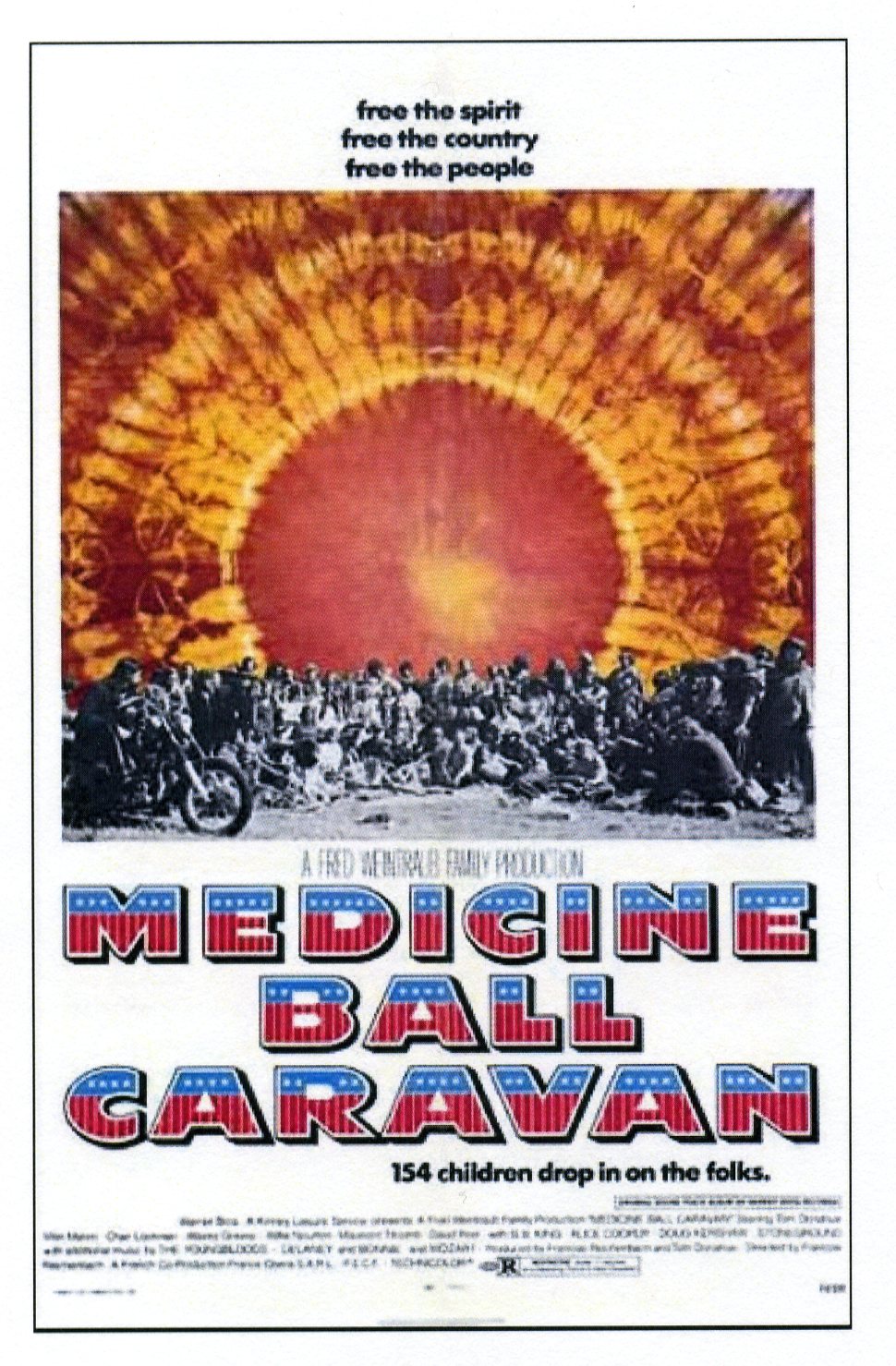
img818

Some 43 years ago, a much-hyped “youth” film was produced with intentions to capitalize on the success of “Woodstock”, Michael Waldleigh’s immensely popular (and Oscar-winning) documentary of the epoch-making rock festival. In the summer of 1970, Warner Brothers spent nearly a million dollars putting together the Medicine Ball Caravan, as 150 recruited hippies, accompanied by a French film crew, undertook a cross-country tour from San Francisco to D.C., promulgating the Aquarian lifestyle and staging a series of free concerts along the way. But when it was released to theaters in August of 1971, the youths stayed away in record numbers and Rolling Stone named it one of the ten worst films of the year. Fred Weintraub, the savvy New Yorker who had owned the star-making Bottom Line nightclub, got the gig as head of Warner’s youth market after taking a gamble on filming some three-day music show upstate that then turned out to be a decade-defining event. WB was eager for a follow up and Weintraub tried to conjure an event that would be a sort of Woodstock on wheels. The story of why “Medicine Ball Caravan” still barely qualifies as an afterthought in the history of rock documentaries says a lot about shifting cultural attitudes at the start of the Seventies, as well as to the potential pitfalls of filming pre-conceived “reality” events.

At the start of the film, as the viewer watches a telephoto view of the long line of buses, vans and trucks motoring over the Golden Gate Bridge, a real sense of possibility is felt. Soon after, “MBC” devolves into a series of caravan vignettes presented with little context. It’s really too bad. Organized by pioneering FM disk jockey Tom Donahue, the caravan could have surfed that last great cresting wave of the hippie ethos, a subject that still had strong innate appeal. The film was directed by Francois Reichenbach, fresh from winning his own documentary Oscar for “Arthur Rubinstein: Love of Life”. Reichenbach had been piling up awards and festival prizes since his filmmaking days started in the early Sixties but his winning streak ended here. “The truth requires not a cold witness but what I call a love witness,” the directed is quoted in John Grissim Jr.’s appealing 1972 book about the caravan called “We Have Come for Your Daughters” (the phrase was painted on the lead vehicle). But Reichenbach’s open-mindedness about longhair culture eventually showed itself as a lack of vision as to what the final work might look like. By 1971, random film scenes of hippie nudity, bus painting, reefer smoking and peace-sign flashing had passed into cliché and all are in abundance here. Matters were not helped by the many interview clips of inarticulate freaks held in front of their tie-dyed teepees.

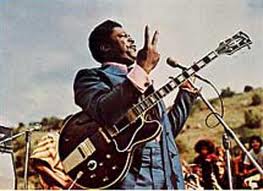
bb at mbc

B.B. King rocks the arroyo

There is a higher success rate with the musical sequences, what there are of them. The featured performers were literally airlifted to the makeshift concert sites. There’s twelve wonderful minutes of a top-form B.B. King, the nattily-attired blues great holding forth from a stage in a sun splashed arroyo somewhere north of Albuquerque. Cajun music icon Doug Kershaw crosses over to the festival crowd with his warp-speed fiddling and playful scat singing on “Battle of New Orleans”. Alice Cooper practically invents goth with a searing rendition of “Black Juju” which culminates in Mr. Furnier showering the front rows with chicken feathers. But that’s about it, not counting the rather undistinguished Stoneground, the traveling “house band” that would later be responsible for providing three-fourths of the lineup for Pablo Cruise. If the studio had snagged their first choice, a Warner-Reprise act called the Grateful Dead, “MBC” would likely not be so obscure.


Sal Valentino, formerly of Beau Brummels and then singer of Stoneground, does a solo number in this scene from MBC that also features some nice caravan footage.

It was generally believed that the studio execs, by sending this freak circus out into the land of the Silent Majority, were hoping for some sort of climatic cinematic confrontation. But most of the straights that Reichenbach shows are cordial if not supportive while any conflicts in the film emanate from within the caravan’s own demographic. There’s a tense run-in with the Manson-lite STP Family at the Boulder, Colorado show and chaotic confrontations on the campus of Ohio’s Antioch College before a proposed concert nearby. There had been grumblings all summer from the New Left that Medicine Ball was a Warner Brothers scam, a ploy to usurp the counterculture by getting naïve hedonists to play act a plastic version of it.

Despite the fact that caravaners were only being paid expenses and counted among their number such bona fides as Wavy Gravy, suspicions about this “sell out” were exploited by provocateurs-without-portfolio David Peel and Tom Forcade, the latter of whom had been nipping at the heels of Tom Donahue weeks before they reached Antioch. Humorless young campus radicals were whipped into hysteria over the notion that corporate suits (AKA “capitalist pigs”) would dare make a movie that may appeal to some in their age group. In the fracas that followed, these summer-program students (“kept in school by their parents to keep them away from home,” says one caravan wag) try to shut down the show, forcing the traveling troupe to stand up for themselves, and defend their efforts to work within the system to spread the peace-and-love message. Suddenly, “Medicine Ball Caravan” turns contentious and interesting, but by then it’s almost over.

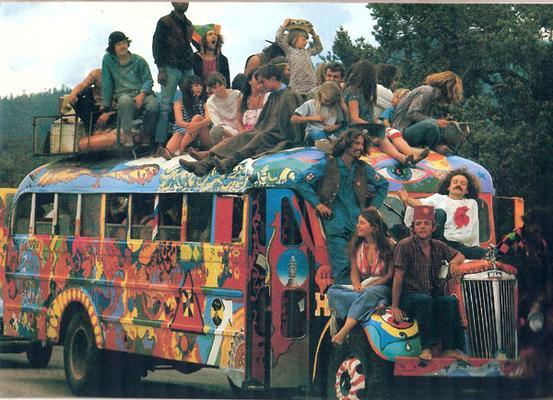
The_hog_farm_bus

Your ride is here

At least there was a film at all as “MBC” barely averted a post-production cancellation. According to eyewitness Grissim, many of the young French crew members partook of the caravan’s ample LSD supply and the result was a lot of mislabeled or blank film cans that could never be matched up with the related soundtrack as well as a lot of out-of-focus shooting and missed opportunities. Moreover, Reichenbach entrusted the first cut of his film to a handpicked editor back in France who did not understand English and had a bias against hippies. Warner Brothers were aghast at the desultory results and almost nixed the film when, at the eleventh hour, a young Martin Scorcese (who had also worked on “Woodstock”) was brought in to fashion a more upbeat 92-minute final cut. Some of the caravan’s spirit survives in Scorcese’s optimistic coda and the clear-eyed Grissim allows that at its best Medicine Ball “kick(ed) a lot of life into a wilted flower fantasy.” Both the documentary and the equally arcane “We Have Come for Your Daughters” probably deserved a better fate even if, as Grissim smartly predicted, the whole adventure was likely to “end up as a historical footnote (and) a small reminder that the Sixties did, after all, end on schedule.”

(I don’t believe “Medicine Ball Caravan” ever saw the light of day during the VHS era, probably being relegated to the very occasional screening in a college film-series setting. It is currently available on DVD from videobeat.com, the grey-market website for music and pop culture miscellany. A search for “We Have Come for Your Daughters” offered up a rare copy that would set you back a C-note. Try the library, especially if like me you live in an area where they are networked with ones from surrounding communities. I found one with little problem.)

My new book Rock Docs: A Fifty-Year Cinematic Journey is now available on Amazon and through my author page at BookLocker.com Please click on the book-cover image (or the link below) to access the 30-page excerpt at BookLocker.
http://booklocker.com/books/8905.html