books

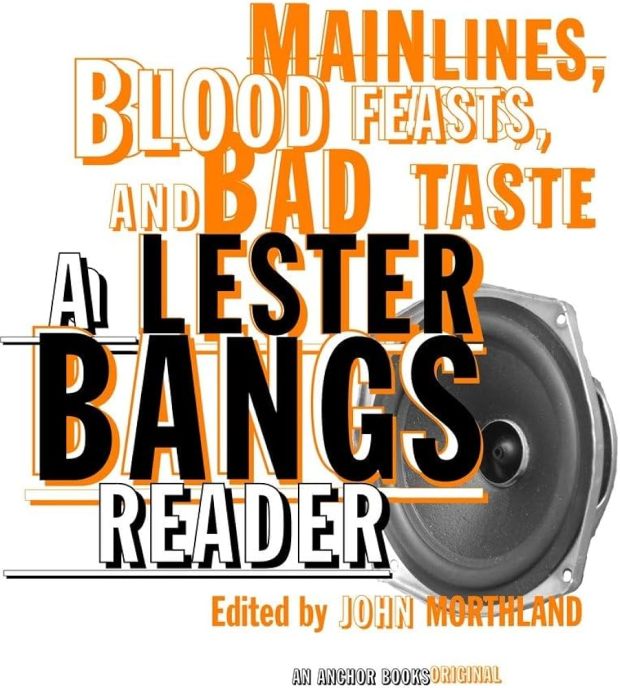
Books that Rock: “Mainlines, Blood Feasts and Bad Taste: A Lester Bangs Reader” (2002)

“The American Dream is only a dream, and the American Reality is imperative, a powder-keg situation.” Lester Bangas, 1968.

These are soul-killing times if you are among those who believe that the affairs of the world should be handled with empathy and common decency. The Orange Puke from Hell is back and we’ve gone from the nagging but manageable general anxiety of modern life to the psychic (and sometimes literal) equivalent of having a band of greedy twisted degenerates roaming your neighborhood, out to rob you of your life savings and your medicine, while knocking your grandma to the pavement and kidnapping your neighbor. An administration that has gleefully performed every perdition short of forcing kids to eat lead paint.

While mentally barricaded thusly, I began looking for something to read that would be entertaining but intellectually fortifying. I was seeking something relevant but far removed from the current hellish news cycle and the persistent panic-filled postings of my liberal friends, I came across an unlikely hero in Lester Bangs.
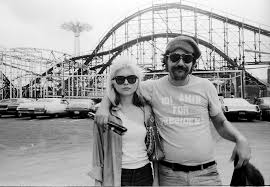
Lester and Debbie Harry on Coney Island back in the day.

Unlikely in the sense that Bangs, the infamous raconteur and rock critic el supremo, died of an accidental drug overdose in1982. Multitudes of music fans of that era were familiar (if not always in agreement with) Lester’s discursive reviews and articles appearing in Rolling Stone, Creem, the Village Voice and other periodicals. Younger folks might have got to know him from the iconic 1987 collection “Psychotic Reactions and Carburetor Dung,” edited by Greil Marcus or from Philip Seymour Hoffman’s colorful portrayal of him in the 2000 film “Almost Famous.” I had been familiar with Bang’s work since his gleeful hatchet job on Paul McCartney and Wings appeared in a summer of ’76 cover story in Creem. But I was never aware of this second anthology of his work (from 2002) until chancing upon it recently at a used bookstore.

Edited by John Morthland, “Mainlines” is notable for including pieces of a more personal nature, including travelogues and a few entries of a previously unpublished manuscript he wrote at age 19 in that despairing and violent year of 1968—including the astute “Two Assassinations and a Speedy Retreat into Pastoral Nostalgia.” This gives the reader valuable insights (that still ring very true today) into Bangs as the grizzled idealist. But fear not, there’s still plenty of the crazy Lester we knew and loved, with entries like:

“Jim Morrison: Bozo Dionysus a Decade Later”

“Dandelions in Still Air: The Withering Away of the Beatles”

“Stevie Nicks: Lillith or Bimbo?”

“Grace Jones Beats Off”

“Deaf/Mute in a Telephone Booth: A Perfect Day with Lou Reed”

Bring Your Mother to the Gas Chamber!” (his epic essay extolling the virtues of Black Sabbath).

Along the way he also promotes the idea of goody-two-shoes Anne Murray as pop music’s ultimate female sex symbol (“a hypnotically compelling interpretrix with a heavy erotic vibe”) and fully embraces the feminist career move of Helen “I am Woman” Reddy. (“All men but me are spuds. What I would like to see is an all-girl band that would sing lyrics like, ‘I’ll cut your nuts off, you cretins,’ then jump into the audience and beat the shit out of the men there”).
Anne Murray at her sex-symbol peak, with male admirers John, Harry, Alice and Mickey.

You see, Mr. Bangs was in on the great Cosmic Joke. We should be too. Because even at his snarkiest, you could always tell that Lester cared a lot—about music, about culture, about his country.  The Cosmic Joke posits that despite all the meaning and purpose we try to attribute to life on earth, we are all headed to the same end (“fellow passengers to the grave” as Dickens put it) so we best embrace our common humanity, give a hoot about something other than ourselves, and have a few laughs along the way.

Bangs had himself plenty of laughs, as you might be able to tell from the titles of the above magazine articles. But the passion and seriousness of much of this collection caught me off guard, in a very good way. “Two Assassinations,” written the day after Robert Kennedy was shot dead, is remarkably astute for a kid still six months shy of his 20th birthday. He declares Kennedy “something of a final straw for me” as he predicts Richard Nixon’s upcoming election and envisions a future America seized by “monstrous social earthquakes.”  
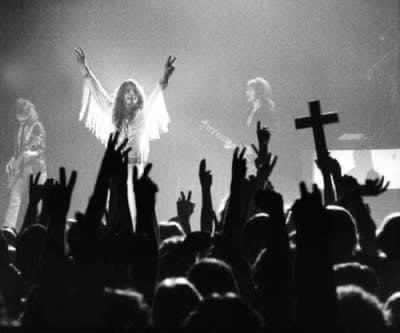
Lester on Black Sabbath: “As close as you can get to blood-lust orgies, death, or utter degradation without having to experience them firsthand.”

Of course, music was a saving grace for Lester as it still is for so many of us. Even then, he has a strong propensity for detailing the “aural abyss” of such challenging albums as Nico’s “The Marble Index,” Velvet Underground’s “White Ligh/White Heat” and Pil’s “Second Edition,” among other personal favorites. In an age of hit-and-run social media opinions, it’s a throwback reading pleasure to see Bangs spend pages wrestling with the patchy quality of hero Miles Davis’ early 70s output or painstakingly lambasting Bob Dylan for the “Mafia Chic” misjudgment of his ill-advised paen to psychotic mobster Joey Gallo.

Many contemporary readers will be justifiably put-off by Bangs’ casual use of insensitive epithets (spade, homo, bitch) but maybe what we’ve gained in sensitivity we’ve lost in critical thinking. In his prime years, in the age of Nixon and Vietnam, he saw the cruelty of the right but also the rigidity of the New Left and took on life with endless creative drive and steely purpose, warning us way back then about the vast social chasms awaiting America and the urgent individualism needed to keep your head above the waters that would otherwise have you drowned.
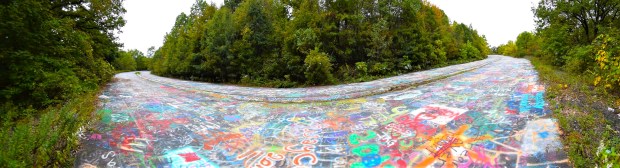
Placeology #8: Please Don’t Ruin the Ruins!

Graffiti Highway (parabolic), Centralia PA. All photos and text by Rick Ouellette except as noted.

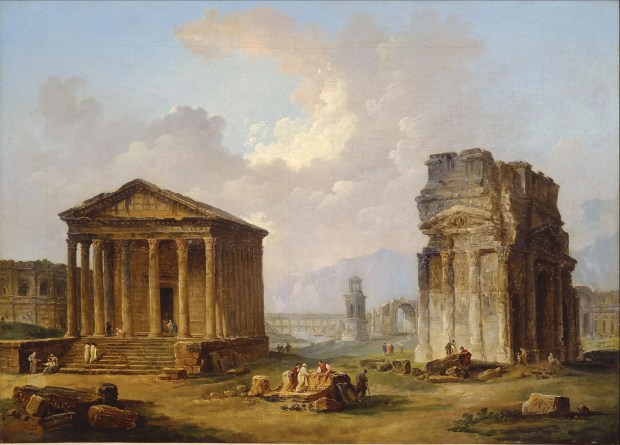
In the late 1700s, towards the tail end of the Age of Enlightenment, the French painter Hubert Robert became well-known for his large-scale canvasses depicting ancient ruins of France and Italy. These romantic (and often semi-fictional) scenes spoke to an age where there was a strong interest in classical antiquity and preserving what remained of it. Hubert and the other artists who followed this trend were surely aware of the evocative power of decay when it came to lost societies.

A typical Hubert Rubert joint.

Flash forward to the 21st century. We may well be deep into the Age of Un-Enlightenment, where hot-takes and online trolling has replaced the philosophical imperative. Yet the “picturesque” art style embodied by Hubert Robert has been carried on into the burgeoning field of ruins photography, the depiction of urban and industrial decay. Closely tied into the subculture of urban exploring, this field of photography has divided opinion. There are commendable practitioners like Matthew Christopher (in his two “Abandoned America” books) and Christopher Payne (the haunting and humane “Asylum: Inside the Closed World of State Mental Hospitals”) that have looked long and hard into the reasons and consequences of how  and why certain American institutions have been left to die on the vine.

Trolley Graveyard #1, Photo by author.

Critics have pointedly taken aim at some aspects this “urbex” photography, namely the exploitation of people’s natural morbid fascination with the wreckage of off-limits locations, not to mention the implied insensitivity to a region’s economic decline. I have seen a lot of that online, where intrepid shutterbugs return from their trespassing adventures and post pics online to curiously adoring fans who practically gloat over the collapsed remains of defunct shopping malls and shuttered Rust Belt factories.

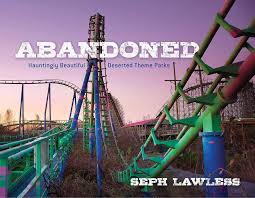
Which brings me to Seph Lawless. Curiously, he released two high-profile photo books in 2017 by two different publishers. “Abandoned: Hauntingly Beautiful Deserted Theme Parks” is exactly as it says, and he put in the big miles to significantly document a big urbex sub-category.

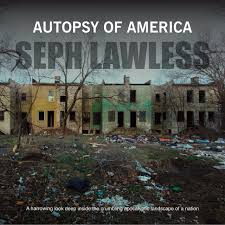
Then somewhere the same year was the boldly presented “Autopsy of America.” In case you don’t get it, you can turn to the back cover where we get in big letters, “Death of a Nation.” Really, the whole nation?? Published by a house called Carpet Bombing Culture (kind of a red flag in itself) the text for this book is so over-the-top that it can only work as self-parody.

“Is this just another recession? Or is this the beginning of the end?”

“America is a giant… mistake.”

“I want Americans to see what is happening to their country from the comfort of their suburban homes and smartphones.”

Oh gawd, spare me the edgelord/drama queen posturing! 😉. As usual, the photography is tremendous, though by this date we’ve all seen enough abandoned houses, darkened shopping centers and the odd isolated ghost town. (Lawless throws in several of his eye-catching theme park images for contrast). Yeah, there is serious income inequality. But it’s preposterous to pretend that cities like Pittsburgh and Cleveland (to name two I have personal evidence of) are hollowed-out landmarks of a country in its immediate death rattle.  Many of those cities have growing, transitional economies and don’t need this. But I get it. He’s Seph LAWLESS for heaven’s sake, and the hype (and apocalyptic rhetoric) often goes with this territory.

Graveyard Trolley #2, photo by author.

So while I may wince when Seph, like a supervillain in waiting, stands on a half-collapsed roof and gazes at a distant metropolis, you got to hand it to him. The logistics and craft it took to depict these places that so many want to know about. I’m just a part-time amateur at this game and have only been to one of the locations featured in “Autopsy of America.” I took a tour of the (now former) Trolley Graveyard outside of Johnstown, Pennsylvania with the aforementioned Matthew Christopher. He had photographed this huge collection of streetcars, owned by a super-hobbyist, many times before, including the pre-smartphone/GPS days. By the time I got around to committing to a tour, vandals had graffitied almost every car and smashed almost every window on them. It just got too easy in the Internet age to popularize and locate these spots, for good or ill.

But Rust Belt tourism is a thing and these cities often have a long-established culture in arts, cultural attractions and professional sports. As soon as we start realizing the value and vitality of such places, the better it will be for everyone, and we can all avoid the “Autopsy.”

Edgar Allan Poe: The American We Need Now

He warned the world about global warming in the 1840s. He had the foresight to know that the application of science and technology without the balancing spirit of poetry would yield a “rectangular obscenity.” He decried the myriad media hoaxes of the middle 19th century and concocted a few of his own as a warning to the gullible. Oh yeah, and he wrote some nifty horror stories as well.

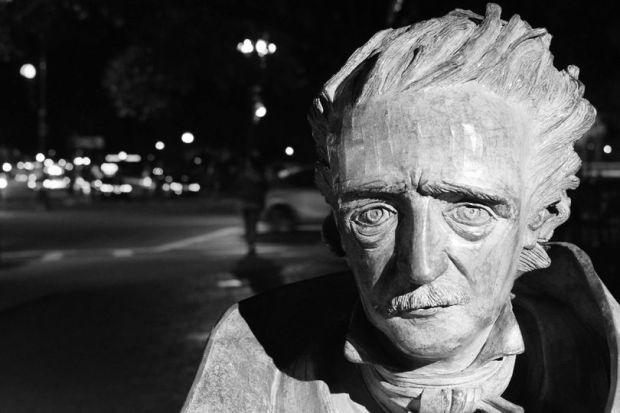
Meet the other Edgar Allan Poe. Everyone knows about the haunted, hard-drinking author of such psychological terror tales as “The Tell-Tale Heart” and “The Pit and the Pendulum” that all but invented the modern Goth aesthetic. Most are familiar with the rigorous poet behind the famous verses of “The Raven” and “Anabel Lee.” But far fewer are aware of Poe the inspired cosmologist, the young man who studied engineering and mathematics at West Point, and who, as America’s first de facto science reporter, cast a very skeptical eye on the era’s centralization of power in that growing field.

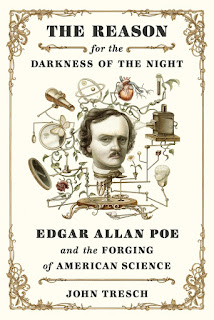
In the extraordinary 2021 book, “The Reason for the Darkness of the Night,” author John Tresch goes a long way into giving this iconic American figure his full due. The fourth and fifth decades of the 19th century saw significant advances in industrialism and science, which had only recently graduated from its previous incarnation as “natural philosophy.”

It was also an age of chicanery, of dubious pseudo-sciences like phrenology, which could be used for racial profiling in an age when the conflict between slavery and abolition were headed to a boiling point. According to Tresch, Poe’s writing (in both fiction and reportage) “dramatized the act of inquiry and the struggles, fears, hopes, and delusions of the human undertaking.”

Foremost in the struggle was Poe’s conflicted feelings regarding the dawning Industrial Revolution. He wrote his “Sonnet to Science” early on (while still in the service), asking this new field “Why prey’st thus upon the poet’s heart/Vulture! Whose wings are dull realities!” and later asking “Hast thou not dragg’d Diana from her car?” In other words, are we now destined to only see the Moon as Earth’s cratered satellite and not perceive the lunar patroness riding her celestial chariot? As both an exceptional book-learner and an amateur astronomer since his youth, Poe could appreciate both.

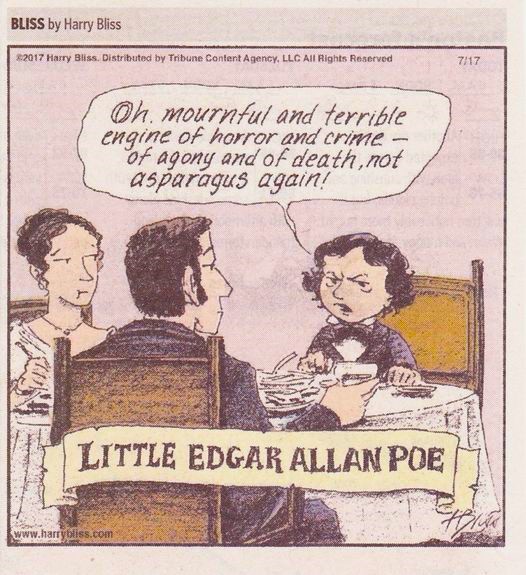
Poe’s enduring popularity even extends to speculation about his childhood, in this personal favorite of cartoonist Harry Bliss.

Around the same time Poe, in a letter, declared “I am a poet… if deep worship of all beauty can make me one.” His deep reverence for—and uneasy awe at the power of—the natural world oozes out of his lesser-known fantasy stories like “The Domain of Arnhiem” and “Tale of the Ragged Mountains.” Oftentimes, Poe depicted a desolate or decayed landscape (read the stark opening of “The Fall of the House of Usher”) a background to what he may have felt in the newly industrializing cities of his East Coast haunts from Boston down to Richmond. A smoke and/or fog blankets many of his tales and while he was no Luddite, the growth of polluting factories free from regulation was indicative to Poe of the at-any-cost mindset when business, science and government were centralized without popular input.

Poe famously had a tough life. His mother, foster mother, brother and wife all died of TB (then called consumption) which he memorably personified in “Masque of the Red Death.” His wealthy rat-fink foster father all but disowned him, undermining his enrollment at the Univ. of Virginia and cutting Poe out of will while providing for several illegitimate children. Poe lived the life of a penurious journeyman writer, struggling to get published and drifting in and out of the employ of various journals and newspapers. Despite fleeting fame for the hugely popular “The Raven,” widespread acclaim avoided Poe in his lifetime.

From 2015, the excellent animated anthology “Extraordinary Tales” is also highly recommended.

But despite (or because) the morbidity of his circumstances and the flavor of his best-known work, Edgar Allan Poe is an enormously popular figure. At his core a man of the people, he’s the guy we need right now. His instinctive opposition to giving great power to those who excel only in a technical sense. One need only look at the barely recognizable human “qualities” of a Mark Zuckerberg or the unstable rantings of an Elon Musk to see where the problem lies into giving such people nearly limitless agency. And that’s not to mention the scourge of the Orange Grotesquerie, whose appeal to grievance and hatred in the pursuit of power is a horror even the master himself would maybe be challenged to depict.

I don’t want to speculate too much on a man that’s been dead for 175 years, but I think Poe today would provide a refreshing antidote to modern society’s pitfalls. Despite his personal tragedies and epic binge drinking, our man Edgar was at heart an idealist. Never afraid to mix it up in the court of public opinion, he would probably be a social media sensation, and a modest Go Fund campaign might alleviate his persistent money problems. A year before his death, he wrote and lectured on his cosmological treatise “Eureka” part of which positioned us all as part of a universal brotherhood united by our common inheritance of a single unitary effect at the beginning of time (Poe was an early proponent of the Big Bang Theory). Tresch begins “The Reason for the Darkness of the Night” with Poe’s last stand, reading “Eureka” before a small but rapt audience in New York City. The author thought that this manifesto would be his defining work, though it was not to be. But still, (in Tresch’s words, “Poe’s work embodies the defining tensions” of both his age and ours: “between popular diffusion and elite control, between empathy and detachment, between inspired enthusiasm and icy materialism.” While we don’t have the Poe we need today, Tresch’s illuminating book and a deep dive into his subject’s lesser-known but still invaluable works, is recommended, if not essential.

Placeology #1: Psychogeography and You

The places we walk through or drive past, the sites we visit or that simply fall into our frame of vision, all have a heritage and inner spirit of their own. Even in our familiar everyday world, we are often just steps away from some location rich in hidden history and forgotten associations.

The ideational term “psychogeography” refers to the attainment of deep connections with man-made environments, usually by way of unplanned walks thru cities. It has been described as a “charmingly vague” practice by no less a man the French Situationist philosopher Guy Debord, who coined the phrase himself in 1953. It can also be seen as a more risk-averse cousin of today’s urban explorer subculture, which I’ve written about many times in this blog.

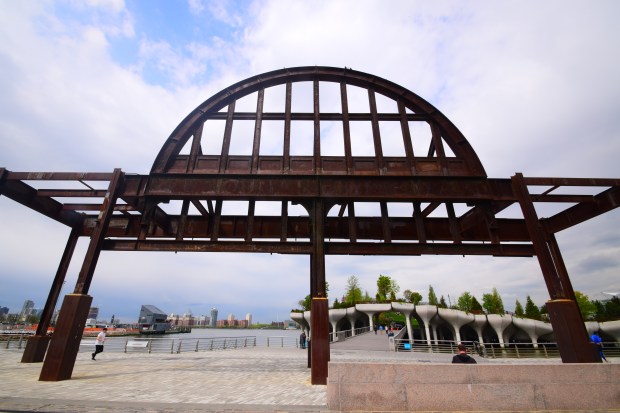
The preserved archway frame of Pier 54, where survivors of the Titanic disembarked from the Carpathia, now serves as the south entrance to New York’s Little Island.

But there is also a very practical side to psychogeography, that would do us all good to be aware of. The theory goes that the distractions and pressures of modern society have caused people to become disconnected from the public realm, leaving the one-percenters to run roughshod over the greater public interest. Understanding and appreciating our common built heritage can lead to thoughtful historic preservation and the design of more livable cities thru greater community involvement.

Winter’s bare trees reveal the vestigial facade of a paternalistic institution on Hawkins Street in Boston.

So while coming to understand the effects of the built environment can lead to a greater good, psychogeography can be both a passive pleasure or a wildcat experience. It’s something almost everyone has experienced, whether consciously or not. It can be the satisfaction of finding a great hole-in-the-wall eatery or tucked-away antique store because you wandered away from a usual walking route. It could mean tiptoeing into an off-limits but unguarded location to do a photo session with friends or discovering a fascinating historical vestige steps away from a throng of selfie-taking tourists, as in my photo below.

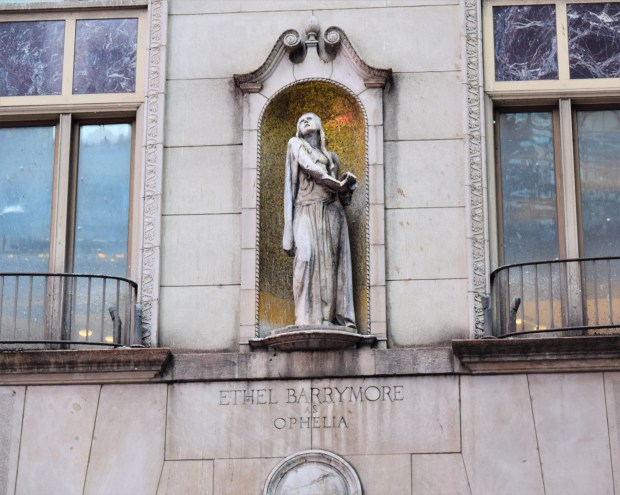
This statue of Ethel Barrymore, and of two other former stage icons, evoke an earlier era of Broadway, just a few feet away from the back of a gigantic electronic billboard in Times Square.

In his 2006 book “Psychogeography,” writer Merlin Coverley, traces this concept back to its immediate roots: French Marxists and Situationists. But he also vividly  digs back to an earlier era and the “urban gothic” stylings of authors like Charles Baudelaire, Edgar Allan Poe, Charles Dickens and Robert Louis Stevenson, showing how their “obsessive drifting (yielded) new insights.” Poe’s 1840 story “The Man of the Crowd” is perhaps the first examination of the mysteries and perplexities of the modern teeming metropolis. In “Dr. Jekyll and Mr. Hyde,” Stevenson shows not only the duality of man’s nature but the stark dichotomy of the different parts of London his split protagonist inhabits. Dickens was a famously keen observer of the same city (often engaging in all-night walks) and had the fame and power to influence social reforms in the darker aspects of the city he witnessed, the exploitation of children, the workhouses, slum conditions etc.

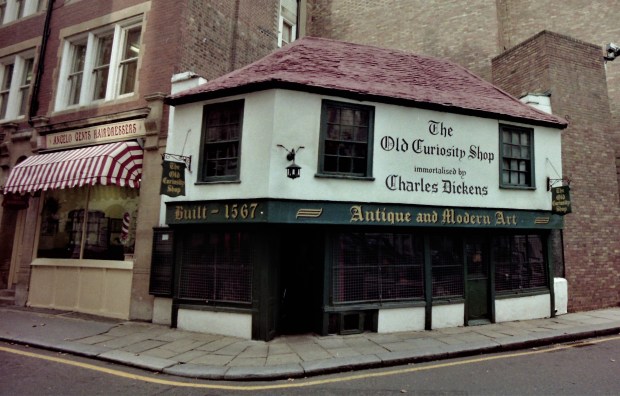
I stumbled on this Dickens landmark during a London walkabout in 1994.

It’s Baudelaire, quoted by Cloverley, who has the most telling description of the psychogeographer, which has as its alpha the Parisian flaneur (or boulevardier). “For the perfect flaneur it is an immense joy to set up house in the heart of the multitude… to be away from home and yet to find oneself everywhere at home… to be at the center of the world and yet remain hidden from the world.”

Sounds cool? If so, try out some psychogeography yourself. Put away the GPS and get to know your town. Stick up for livable cities and against gentrification. Patronize independent small businesses and out-of-the-way points of interest. Lastly, LOOK UP AND AROUND to see what I call the Museum of the Street, and feel a little of what it means to be “everywhere at home.”

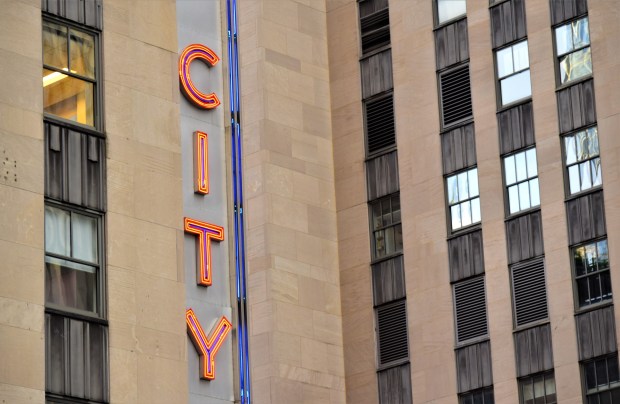
All photos and text by Rick Ouellette. Top Photo is Radio CITY Music Hall, NYC.

More info on my “Placeology” photo series coming soon!