
UFO

Chariots of the Fraud: The Sad Legacy of Erich von Daniken

In one way, you’ve got to hand it to the ancient astronaut “theorizer” Erich von Daniken. The Swiss author, who passed away on January 10th, built himself a very lucrative career on the preposterous idea that visiting space aliens constructed everything from the Great Pyramids to the Easter Island statues, and just about anything else from the B.C. era. His 1969 book “Chariots of the Gods?” and the subsequent film captured the attentions of millions (including myself) despite not having a shred of evidence to back up its claims.

It did inspire a sense of awe and wonder when it came to the cosmos and the colossal monuments of ancient civilizations. But in a saner world, “Chariots” would have remained a cultural curio of the Seventies. Instead, von Daniken’s stubborn promotion of the ancient astronaut trope—played out over some 25 books and debunked by everyone from Carl Sagan on down—became a gateway drug for the destabilized world we live in today. A world that is filled with conspiracy theories, misinformation, willful ignorance, distrust of expertise and “alternative facts.”

To begin with, Erich von Daniken’s publishing empire was built on fraud, literally. A high-school dropout of no known talents but an interest in UFOs, he swindled his employer (a resort hotel in the Swiss Alps) for $130,000 to finance his travel to far-flung destinations in preparation for his first book. He was convicted and served one year of a 3 and ½ year sentence. “Chariots of the Gods?” was turned down by several different publishers until one agreed on the condition that a professional writer be brought in to fix the manuscript. This was Utz Utermann, previously best known as the editor of a Nazi Party newspaper. Just saying.

One saving grace of the “Chariots” film is the beguiling soundtrack by the Peter Thomas Sound Orchestra. “Book of Ezekiel” is a highlight. Of course, Ezekiel’s Wheel was a UFO according to von Daniken.

If Daniken had any writing chops, he could have turned his ancient astronaut thing into an entertaining science-fiction series. Instead, he plowed ahead with his outlandish theory and exploiting an impressionable public newly inspired by the U.S. moon landings. Most galling is the utter contempt Daniken seemed to have for the human race. To imply out of hand that ancient civilizations were incapable of constructing anything better than a mud hut is profoundly insulting. It also ignores historical and scientific research that traces the ingenuity, technology, and development of ancient human cultures. But of course, ol’ Erich had no use for that and instead endlessly claimed that experts (esp. archaeologists) had something to hide. There’s not much of a leap from that to the present-day Trumpie anti-vax crowd that seemed to think that Dr. Anthony Fauci’s whole life was leading up to his big opportunity to fool them into taking a Covid shot.
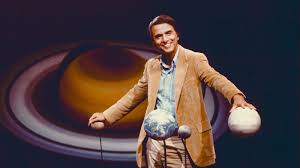
Carl Sagan on von Daniken: “That writing as careless as his, whose principal thesis is that our ancestors were dummies, should be so popular is a sober commentary on the credulousness and despair of our times.” Anybody interested in a point-by-point debunking of the ancient astronaut theory can check out Ronald Story’s “The Space Gods Revealed” and Clifford Wilson’s “Crash Go the Chariots. 

In 2009, von Daniken put it all on the table with a tome called “History is Wrong.” But of course it is. Why believe people who have studied history all their lives, when you can go all in with a convicted embezzler and check-forger who has even admitted to embellishing his claims? Sound familiar? And the man’s twisted legacy lives on in the so-called History Channel and its various “Ancient Aliens” programming. During a single one-hour show, I jotted down all the modifiers:

“There are claims that…”

“There is a theory that…”

“Could it be that…”

“Local legend says…”

Some maintain that…”

“It is rumored that…”

“There’s reason to believe that…”

And my favorite: “You have to wonder…”

Yeah, and I’m wondering right now: how the hell did we get so soft? To have this disregard for the abilities, ideals and aspirations of our own freakin’ species, not just in the ancient world but also in the modern. And left with the hollow phrase of UFO acolytes, “I want to believe.” Believe in what, exactly? Has the world become so daunting that our only hope is that some benevolent alien race is going to come to earth and solve all our problems? Yeah, there was a “Twilight Zone” episode about that once. It ended with that thing about “To Serve Man” being a cookbook.
Epic Rock, Part One: Take Back Your Attention Span in 2014

zappa2

Happy New Year from Reel and Rock!

Here’s a preview of a feature that will begin on a regular basis sometime next month. The next few posts will be dedicated to the upcoming 50th anniversary of the Beatles first arrival in America, an epochal turning point in the history of youth culture. At the rate the world spins in our hyper-technologized society, I find now more than ever the need to be lifted up and over it by the transformative power of music. Here are the first three entries in my survey of great rock tunes of over ten minutes in length, with the quixotic suggestion that they be listened to without distraction, a nearly lost art that I will expound upon in future entries.

“The Little House I Used to Live In”—Mothers of Invention (1969, 18:42)

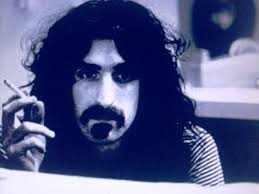
A studious contrast to the class-clownish title of the album on which it was placed (“Burnt Weeny Sandwich”), this elegantly constructed jazz-rock piece was a big coming out party for Frank Zappa as a serious composer and bandleader. After the improv piano prelude by Ian Underwood, the group falls in abruptly with a syncopated groove of a type that was fast becoming a Zappa trademark: somewhat whimsical and marked by rigorous playing (including some stretches in 11/8 time). “Little House” is such a rewarding piece because funny-guy Frank checks his tendency to rely on pastiche and gives the work (which deftly alternates live and studio segments) a lyrical flow throughout, with emphatic jamming trading off with drifting interludes to keep things interesting. Violinist Sugar Cane Harris gets a lot of solo time and makes the most of it, while Zappa checks in with a great compact guitar lead, one foot heavy on the wah-wah pedal. A “sunburst” effect (using harpsichord, xylophone, flute and clarinet) leads to the finale, with Zappa sitting at the organ for a wild solo while the Mothers blaze away in a tempo that is barely comprehensible. Adventurous stuff for an adventurous time.

“Walk on By”—Isaac Hayes (1969, 12:00)
Though in later years he was better known as the animated character Chef on “South Park”, the late great Isaac Hayes will go down in pop history for the way he emerged from the Memphis recording scene in the late Sixties to play a huge role in the development of modern soul music. The writer-arranger-keyboardist for Stax Records may have been pictured in a suit and top hat on his 1967 debut solo LP, but by the follow-up it was a whole new ball of wax. The cover photo of “Hot Buttered Soul” was a high-angle shot that looked down on Ike’s imposing chrome dome while his bare torso sported an enormous gold chain. This guy was a player and he wasted no time in revolutionizing R&B in a way not unlike the way rock’s horizons were expanding in the psychedelic era. His epic funkification of “Walk on By”, that classic slice of Bert Bacharach-Hal David melancholia, kicked off the album. Backed by the legendary Bar-Kays and summoning all his prodigious arranging skills, the track sweeps in on a bed of strings and some hot, Southern-fried lead guitar by Michael Toles, which is soon sent thru some trippy stereo-panning effects. Flutes and female backing singers join with the steady pulse of the rhythm section as Hayes delivers the song in the deep, intimate voice soon to be world famous. What sounds like a conventional fadeout starts at the seven-minute mark and rides into the sunset with a magnificent coda longer than most singles of the time, with Toles’ soloing reaching fever pitch and Hayes’ organ glissandos adding to the building excitement. Over the course of the next several albums, Hayes would record many other tracks of similar or even greater length (witness the 18 minutes of “By the Time I Get to Phoenix” on side two of HBS) but none ever quite matched the grandeur of this.

“Star Storm”—UFO (1971, 18:54)
Until recently, I’ve only known UFO as those long-serving British thumpers who would occasionally turn up on a mix tape or compilation with an entertaining four-minute blast like “Doctor Doctor” or “Lights Out.” But classic rock’s golden period (roughly the mid-60s to the mid-70s) is the gift that keeps on giving and I recently found out about the group’s early, more psychedelic phase when Mick Bolton was the guitarist. Their second LP, “UFO 2: Flying” was aptly sub-titled “One Hour Space Rock.” That’s a lot to squeeze onto a single album and “Star Storm” wasn’t even the longest track, it’s nineteen minutes falling short of the 26-minute trajectory of the title track. But I’ll take this one for its way-out wayfaring, a period high point (as it were) in the annals of power-trio acid rock. The track begins and concludes with the husky vocals of mainstay lead singer Phil Mogg but it’s really all about Bolton leading the rhythm section (bassist Pete Way and drummer Andy Parker) through a sci-fi wonderland that you’ll be too happy to get lost in. Bolton puts his axe through all its paces and then some, with bracing bluesy soloing alternating with sections that run his instrument through a panoply of processed effects.