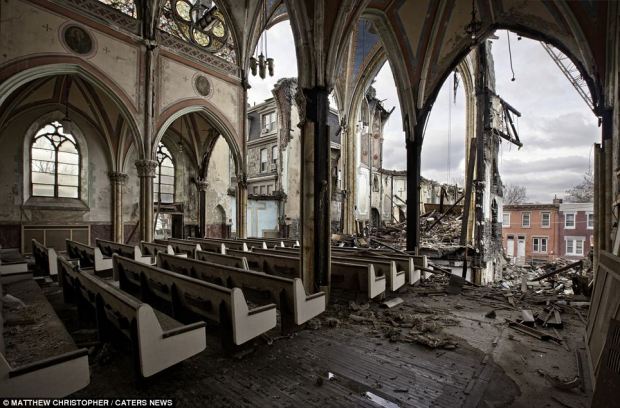
urban explorer photography

Placeology #8: Please Don’t Ruin the Ruins!

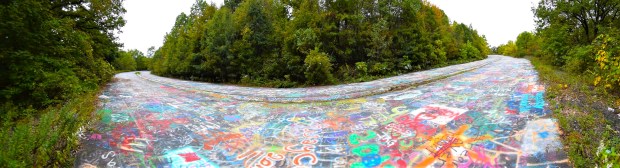
Graffiti Highway (parabolic), Centralia PA. All photos and text by Rick Ouellette except as noted.

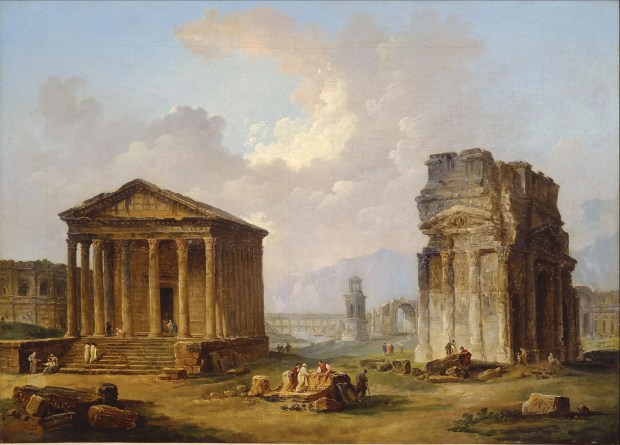
In the late 1700s, towards the tail end of the Age of Enlightenment, the French painter Hubert Robert became well-known for his large-scale canvasses depicting ancient ruins of France and Italy. These romantic (and often semi-fictional) scenes spoke to an age where there was a strong interest in classical antiquity and preserving what remained of it. Hubert and the other artists who followed this trend were surely aware of the evocative power of decay when it came to lost societies.

A typical Hubert Rubert joint.

Flash forward to the 21st century. We may well be deep into the Age of Un-Enlightenment, where hot-takes and online trolling has replaced the philosophical imperative. Yet the “picturesque” art style embodied by Hubert Robert has been carried on into the burgeoning field of ruins photography, the depiction of urban and industrial decay. Closely tied into the subculture of urban exploring, this field of photography has divided opinion. There are commendable practitioners like Matthew Christopher (in his two “Abandoned America” books) and Christopher Payne (the haunting and humane “Asylum: Inside the Closed World of State Mental Hospitals”) that have looked long and hard into the reasons and consequences of how  and why certain American institutions have been left to die on the vine.

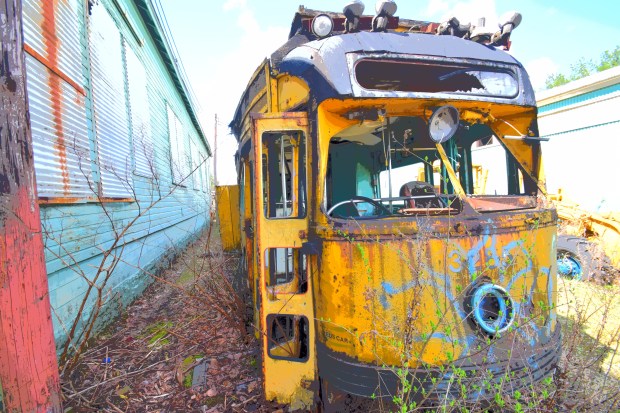
Trolley Graveyard #1, Photo by author.

Critics have pointedly taken aim at some aspects this “urbex” photography, namely the exploitation of people’s natural morbid fascination with the wreckage of off-limits locations, not to mention the implied insensitivity to a region’s economic decline. I have seen a lot of that online, where intrepid shutterbugs return from their trespassing adventures and post pics online to curiously adoring fans who practically gloat over the collapsed remains of defunct shopping malls and shuttered Rust Belt factories.

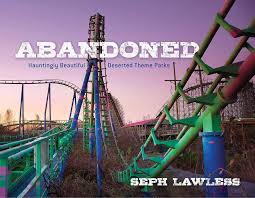
Which brings me to Seph Lawless. Curiously, he released two high-profile photo books in 2017 by two different publishers. “Abandoned: Hauntingly Beautiful Deserted Theme Parks” is exactly as it says, and he put in the big miles to significantly document a big urbex sub-category.

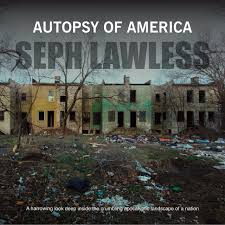
Then somewhere the same year was the boldly presented “Autopsy of America.” In case you don’t get it, you can turn to the back cover where we get in big letters, “Death of a Nation.” Really, the whole nation?? Published by a house called Carpet Bombing Culture (kind of a red flag in itself) the text for this book is so over-the-top that it can only work as self-parody.

“Is this just another recession? Or is this the beginning of the end?”

“America is a giant… mistake.”

“I want Americans to see what is happening to their country from the comfort of their suburban homes and smartphones.”

Oh gawd, spare me the edgelord/drama queen posturing! 😉. As usual, the photography is tremendous, though by this date we’ve all seen enough abandoned houses, darkened shopping centers and the odd isolated ghost town. (Lawless throws in several of his eye-catching theme park images for contrast). Yeah, there is serious income inequality. But it’s preposterous to pretend that cities like Pittsburgh and Cleveland (to name two I have personal evidence of) are hollowed-out landmarks of a country in its immediate death rattle.  Many of those cities have growing, transitional economies and don’t need this. But I get it. He’s Seph LAWLESS for heaven’s sake, and the hype (and apocalyptic rhetoric) often goes with this territory.

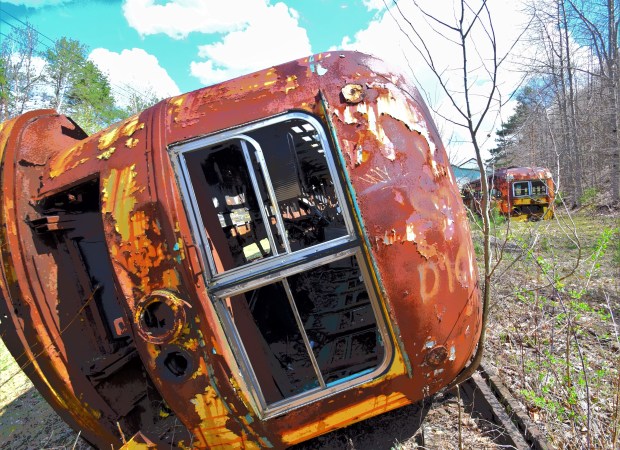
Graveyard Trolley #2, photo by author.

So while I may wince when Seph, like a supervillain in waiting, stands on a half-collapsed roof and gazes at a distant metropolis, you got to hand it to him. The logistics and craft it took to depict these places that so many want to know about. I’m just a part-time amateur at this game and have only been to one of the locations featured in “Autopsy of America.” I took a tour of the (now former) Trolley Graveyard outside of Johnstown, Pennsylvania with the aforementioned Matthew Christopher. He had photographed this huge collection of streetcars, owned by a super-hobbyist, many times before, including the pre-smartphone/GPS days. By the time I got around to committing to a tour, vandals had graffitied almost every car and smashed almost every window on them. It just got too easy in the Internet age to popularize and locate these spots, for good or ill.

But Rust Belt tourism is a thing and these cities often have a long-established culture in arts, cultural attractions and professional sports. As soon as we start realizing the value and vitality of such places, the better it will be for everyone, and we can all avoid the “Autopsy.”

Placeology #2: Twilight of the Road Gods

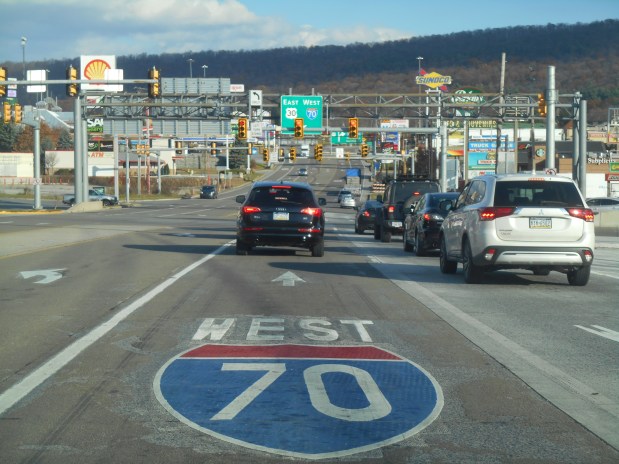
If you ever want to get one of those definitive telephoto pictures of American car culture run amok, there are few places better to trip the shutter than Breezewood, Pennsylvania. Located in the southern central part of the Keystone State, it’s a notorious “choke point” where Interstate 70, the Pennsylvania Turnpike (I-76) and the historic Lincoln Highway (Rte. 30) all meet, sort of.

Breezewood, where the Interstate is also a street.

Because of some arcane law that once proclaimed I-70 could not directly connect to the tolled Turnpike, the Interstate shares a one-mile connector with Rte. 30. This corridor is a densely packed jumble of gas station/convenience stores, fast food joints, chain hotels—all announcing themselves with signs that can reach up to about 70 feet high. There are also two truck washes and plenty of room to park your rig after tear-assing your way thru the six-lane main drag, which seems to be a local sport.

Yes, it’s all very uber-American in a way. There may be no better a democratic leveler than the free breakfast room at the Holiday Inn Express or being in line behind a couple of hunters at Sheetz, the ubiquitous convenience store/coffee shop round these parts. But just beyond the narrow limits of unincorporated Breezewood, it’s a different story. My hotel room had a view of a picturesque farm. And if you head due east, you’ll be driving down the historic and scenic Lincoln Highway as soon as you clear the hill at the end of the strip.

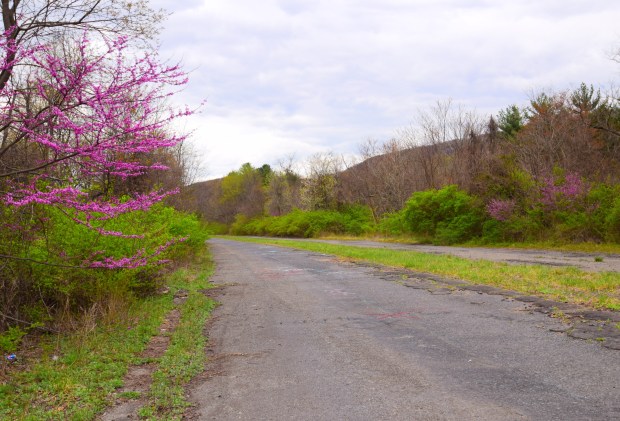
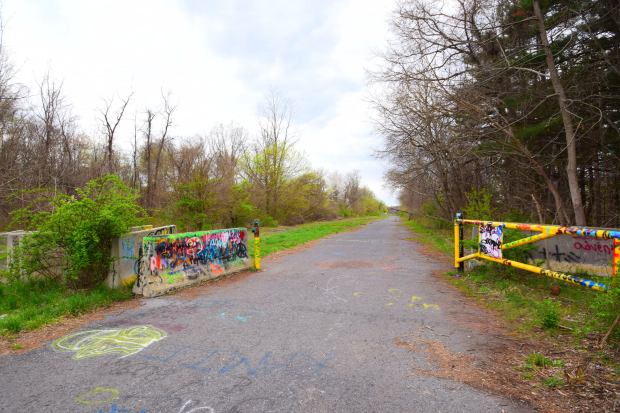
But just before you do, there’s a rutted dirt parking lot next to a paved path you can walk up on. If you do, you’ll be entering one of the state’s strangest and most intriguing points of interest, the Abandoned Pennsylvania Turnpike.

Surrender all hope ye who enter….

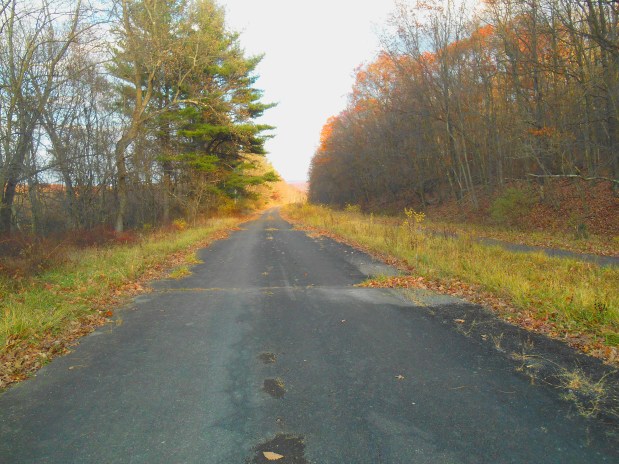
The Turnpike opened in 1940 and was an engineering marvel at the time, and a precursor to the massive American Interstate system that followed. But by 1968, car culture had long expanded and so had the Pike, except for this 13-mile stretch. It was logistically too difficult to widen it here and was re-routed. It is now an accessible (but unmaintained and unmonitored) public walking and biking trail.

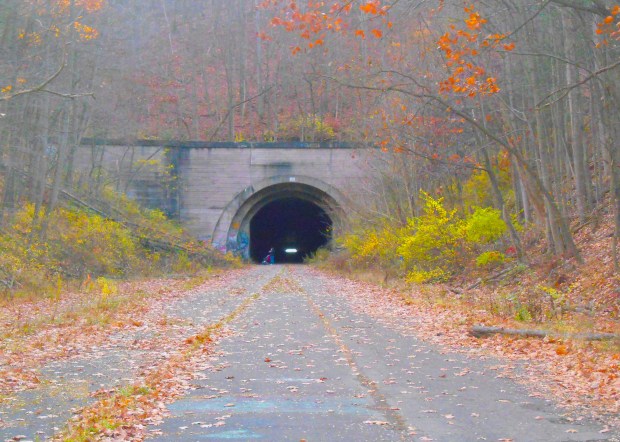
As a devoted (but not hardcore) member of the urban exploring subculture, I had long wanted to visit the APT. I got my first chance a few springtimes ago. I was on foot, and it was almost two miles from the Breezewood parking area to the first of the two tunnels on the trail. The way to Ray’s Hill Tunnel is a bit eerie, and evocative of an age of simpler automobiles and slower driving speeds. It presents as four rather narrow lanes but drops down to two at the tunnel. It was cool to see one of the turnpike’s original scalloped tunnels, not matter how defaced it is with graffiti.

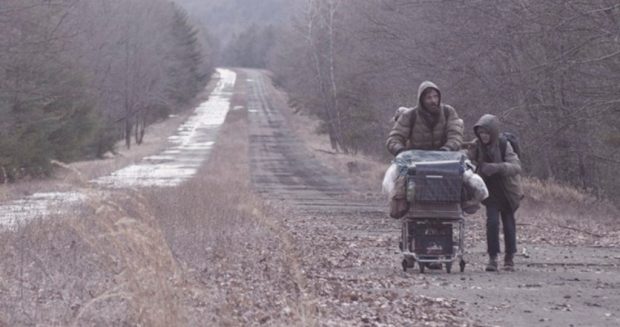
Along with the taggers, curiosity-seekers and photographers, the APT has attracted at least one major film production. The 2009 screen adaptation of the Cormac McCarthy novel “The Road” takes place in the wake of an undefined extinction event (Apocalypse How?) and has many scenes filmed there.

Vito Mortensen and Kodi Smit-McPhee in “The Road.”

It’s curious how highways are such ideal settings for post-apocalypse movies. “The Road” does not feature the fiendishly modified vehicles tearing down outback highways like in the “Mad Max/Road Warrior” series. Things are even worse here, and a key scene is the confrontation between Vito’s protagonist and a wandering member of a violent cannibal gang when the group’s ragtag truck stalls out after emerging from the grim interior of Ray’s Hill Tunnel.

On my second visit to Abandoned Pennsylvania Turnpike last fall, I had my new foldable Zizzo Bike and was ready to explore a bigger chunk of the ruined roadway. After pedaling past the strollers and the Goth kids doing Instagram pics at the mouth of the forbidding tunnel, I sailed thru the underpass with a big assist from a nifty little head lamp I bought for the occasion. On the other side, the atmosphere became more desolate in a hurry.

The far end of Ray’s Hill Tunnel.

Surely, not as desolate as the scenario in “The Road,” where the populace seems divided between killer cannibal gangs and those who retain the minimum standards of civilization, hoping to reach a promised safe haven once they follow the bleak highway all the way to the coast. Still, it is interesting to note that central Pennsylvania is on a sort of political fault line. The more liberal (blue) eastern part of the state can stand in stark contrast to the western hinterlands, where people have been warned to not even have a Joe Biden bumper sticker on their car to guard against reprisals from a hard-core MAGA constituency.

In the book “Divided Highways: Building the Interstate Highways, Transforming American Life,” author Tom Lewis details the passing of the massive legislation that authorized this epic road-building program was initiated by Republican President Dwight Eisenhower and eventually approved by a Democratic-controlled Congress—in an election year, no less! A transcontinental public-benefitting triumph that would “bind the nation.” It would hard to imagine an accomplishment (or agreement) like that with the toxically divided Washington of today.

It was twilight time as I reached the lonely halfway section of the APT (see above), and with little time to make the whole route before dark, I turned the Zizzo back towards the parking lot. Riding into the gloaming is enough to make you conjure your own dystopia—the kind where cars are all but obsolete and the world is hard under the heel of ecocide and/or a disastrous civil conflict.

The next morning I was in the better disposition as I checked out of the Holiday Inn, and said good-bye for now to Breezewood, the Las Vegas of service areas. I hope I can get back again to bike the whole ghostly trail. I topped the hill and drove into the immediate rural area on the Lincoln Highway, the road that kicked off America’s Highway Century (it opened in 1913). But that vague dystopic notion from the twilight of the previous day reentered my head when I thought of the next stop on my road trip: the Gettysburg national park.

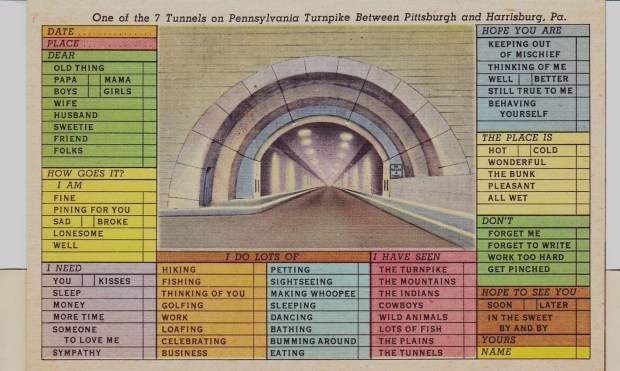
Text and all photos by Rick Ouellette, except “The Road” film still and the circa 1940 postcard.

The Road to Ruins: Visiting the Vestiges in Books and in Person

The road to ruins is paved with both the best and worst of intentions. Since time immemorial, people have either through either direct experience or artistic representation, sought communion with the relics of the man-made glories of the past. The picturesque ruins of the Roman Empire have been tourist sites of one sort or another since forever. These early antiquities give an example of the duality of their appeal. The lofty remains of temples and the Roman Forum stand for the idealism of spirituality, civic and social activity, enterprise and an advancing civilization. The nearby Colosseum, one of the world’s most recognizable ruins, is a wonder of ancient design and its building principles has been a model of stadium design ever since. But the more base appeal is the notion of all the gladiatorial battles and mass killings that went on there, often under the guise of a grim sporting event, as depicted in Hollywood spectacles on more than one occasion.
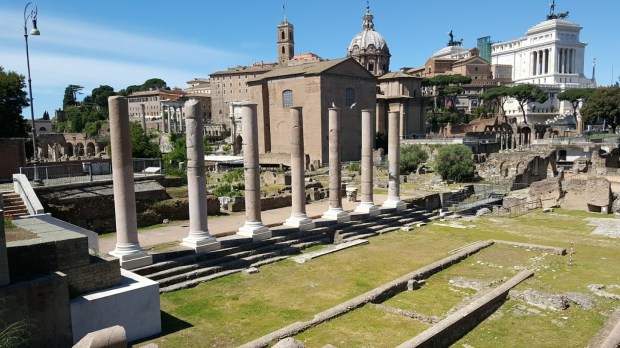
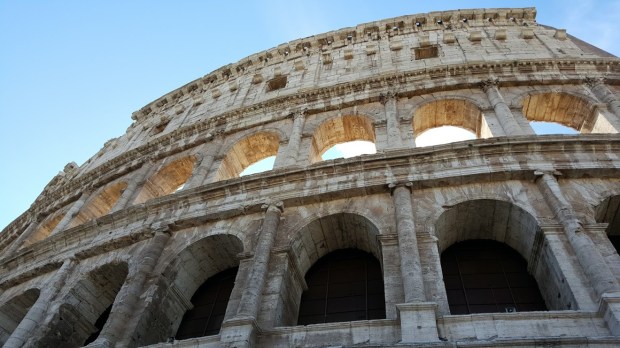
Classic ruins. The Roman Forum and Colosseum, photos by Ryan Ouellette.

With the advent of widespread air travel in the middle of the last century, international touring grew exponentially. Combine that with the fact that the earth’s population has more than doubled in that time and it’s not hard to understand a problem that anyone who’s been anywhere famous lately has encountered: the world is being overrun by tourists. That doesn’t necessarily mean that one should skip the capitals of Europe, the Great Wall of China, the ghostly remains of Pompeii or the top of the Empire State Building—just be prepared to have lots of company. Given the dense points-of-interest overcrowding, coupled with the speed in which modern technological “progress” makes obsolete that which was recently cutting edge, it’s probably not much of a surprise that many people have gone off the beaten path to take history into their own hands.

In the last couple of decades, a whole sub-culture has sprung up under the umbrella phrase “urban exploring.” In general, this brings to mind trespassing photographers and spelunkers of the boarded-up building variety. Favorite objectives included shuttered asylums, closed factories and bankrupted theme parks. The thrill of the illicit is a major factor here even if most of these photographers are sensitive to the backstory of such locations. Still, there was a time (and one not entirely in the past) where the websites of these urban explorers attracted groupie-like followers who littered the comments section with gushing praise over just how “creepy” it all is.
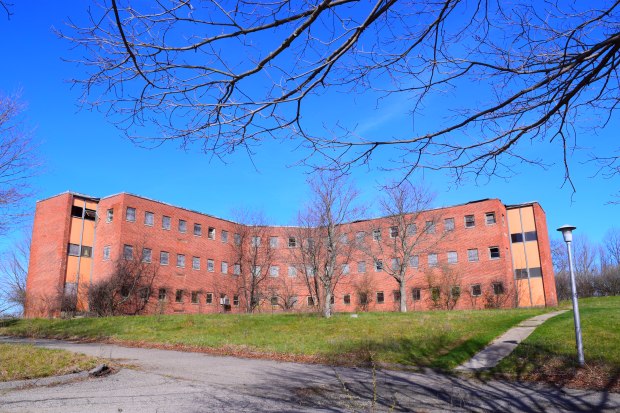

The U.S. is dotted with the remains of hundreds of closed state hospitals or, in the case of the shuttered Fernald School in Massachusetts, fearsome institutions where children with developmental issues real or greatly exaggerated, were once warehoused and even experimented on. Photo by Rick Ouellette

As the dogged pace of technological obsolescence has continued apace, a newer sensibility has taken place: one that strives to understand the complex social and economic reasons why such relatively new man-made achievements fall into disuse and abandonment so quickly, sometimes within a couple of generations. While the voyeuristic tendencies remain—the regrettable phrase “ruins porn” has gained traction—this soul-searching aspect is often a driving force behind the books, articles and websites on this subject.

Rubble tourism is now having its day. Instead of risking arrest, avocational photographers like myself can sign up to tour these once forbidden locations. Sometimes, the nominal purpose can be to inspire a call for landmark designation or renovation instead of demolition. I have taken workshops with two accomplished photographers who run them, sometimes together, and their books (“After the Final Curtain” by Matt Lambros and “Abandoned America” by Matthew Christopher) are reviewed below along with info about their tours. But first to begin at the beginning:
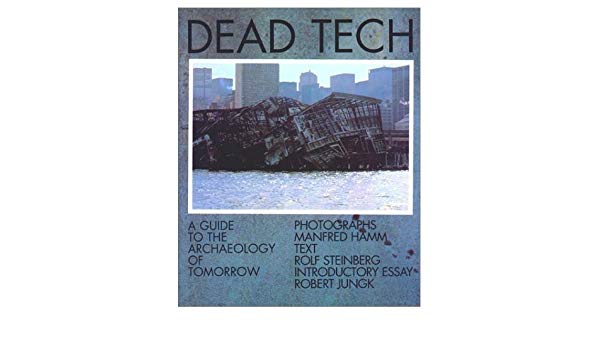
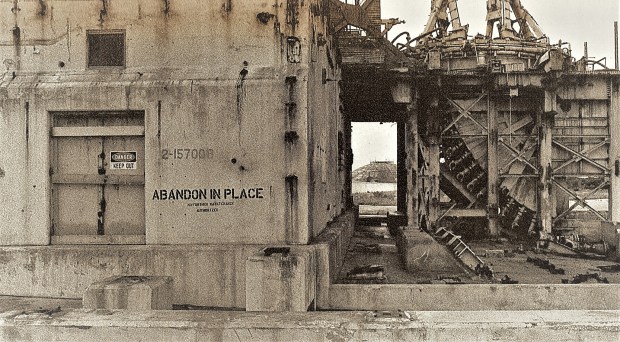
Although I’ve always been pre-disposed to notice the vestiges of a not-distant past (a trait that I have seemed to passed on to my son) this sensation never really had a name or focus for me until I saw (and bought) a copy of “Dead Tech: A Guide to the Archaeology of Tomorrow.” This book was first published in Germany in 1981 and an English version came out a year later, interestingly under the auspices of Sierra Club Books. With its enigmatic cover photo of a New York ocean liner terminal crumbling into itself on the Hudson River waterfront, “Dead Tech” had an immediate impact on me. Across nine themed chapters of evocative photographs by Manfred Hamm and historically insightful text by Rolf Steinberg, we are treated to a captivating catalogue of the recently defunct remains of world-war battlements, ships and airplanes, auto graveyards, abandoned space launch platforms, closed power plants and pleasure piers and quickly obsolete transportation systems.

The photo at the top of this post is from “Dead Tech” and shows the vestiges of the Gemini rocket launch pad in Cape Canaverel
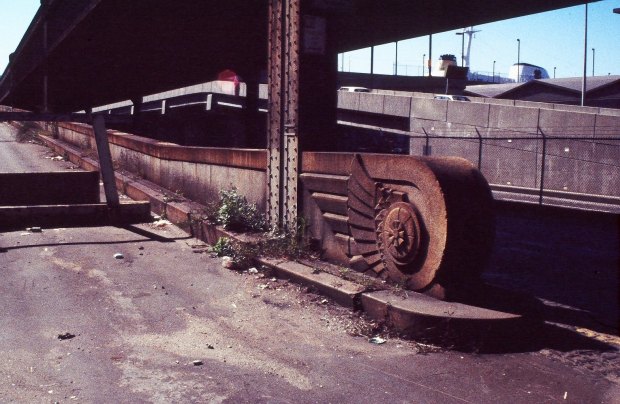

Photo by Rick Ouellette. Not long after obtaining a copy of “Dead Tech” I took to photographing similar (or the same) locations when I had the chance. One of them was Manhattan’s West Side Elevated Highway. It was one of the world’s first freeways, started in 1929. It’s well-intentioned aim was moving vehicular traffic off the surface of 11th Ave., then nicknamed “Death Avenue” because of the dangerous intermingling of autos and freight trains over 106 (!!) grade crossings. Despite the proud winged-wheel symbol seen here—–the insignia of Mercury, patron of commerce and travel—the highway was all but obsolete by the time it was completed in 1951. Interstate trucking had replaced most of the freight trains anyway and when an overloaded truck caused a section to collapse in 1973, the West Side Highway was all but done. By 1989 had been completely dismantled.

“Dead Tech’s” provocative introduction is by Austrian author Robert Jungk, described on the inner flap as an “uncomfortable futurist.” Is he ever. Jungk understood the collective existential dread of a post-war society living under the nuclear shadow, one of his main subjects. Jungk, whose surname invokes both the words “Jung” and “junk,” is no romantic when he contemplates these sites. They speak to him from a deep psychic well of historical human suffering. He writes, “Time does not only heal all wounds, it also blots out the memory of pain.” He sees the detritus of the modern world as not only wasteful but terminally short-sighted and accuses mankind of not admitting past mistakes before diving headlong into his next misadventure. This point is well taken even as you get the feeling that Robert wouldn’t be the most fun person to talk with at a party—about these ruins he says: “They are not uplifting but ludicrous and horrifying at the same time.” But their ghostly attraction is undeniable and hopefully a red flag to be heeded. (The grim stack of crushed cars piled up like a pyramid at a Philadelphia scrapyard is no one’s idea of a tourist trap). It wasn’t all gloom-and-doom with Jungk. He advocated for a new “gentle technology” and ran for president of Austria on the Green Party ticket before dying in 1994.
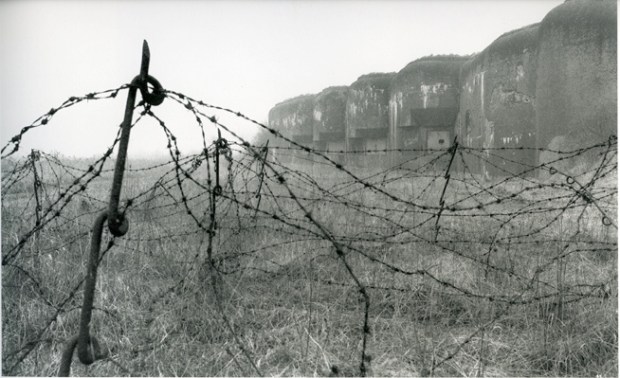

A remaining section of the Maginot Line in France. Photo by Manfred Hamm from “Dead Tech.”

********************************************************************************
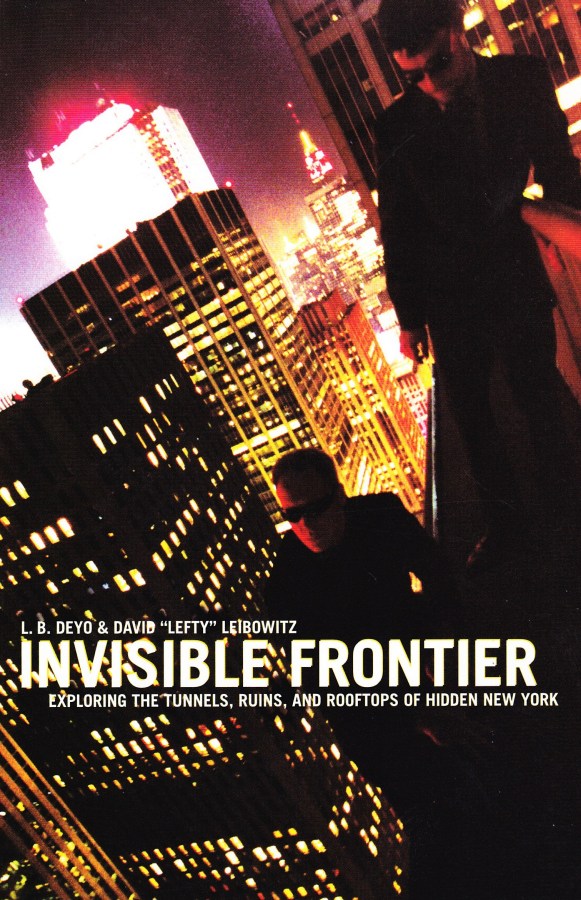
Still, the fascination continued. In the summer of 2001, a group of daring (and incongruously well-dressed) young adults set off on a series of audacious expeditions infiltrating the core of New York City’s daunting superstructure. They were led by two guys calling themselves L.B. Deyo and David “Lefty” Leibowitz, who also documented these exploits in a fascinating paperback called “Invisible Frontier.” In the admirably zany opening chapter, they attempt to traverse the Old Croton Aqueduct tunnel from an entry point in the Bronx’s Van Cortlandt Park to the Central Park area, where it used to pour its water into a giant reservoir that supplied the growing city in the second half o fthe 1800s. This would have meant crossing into Manhattan via the vertiginous High Bridge over the Harlem River. Deep collection pools, not to mention the suffocating dankness and the bats, have them eventually turning back: but not before we are treated to our first taste of the book’s curious mix of historical background and snarky banter. The “Jinx” team members dress in dark business suits—and evening dresses for the ladies—and tend to plan their missions using semi-satirical commando jargon.

Over the course of that summer the group plumbed further depths (the long-closed 1904 City Hall subway station) and then clamber up to the rooftops of Grand Central and the Tweed Courthouse, all done with cheeky aplomb (“Today we will discover a pinnacle of New York’s architectural past hidden from the prying eyes of the slovenly modern citizen”). “Invisible Frontier” culminates in a mad-dog ascent to the top of one of the George Washington Bridge towers and a six hundred feet-in-the-air epiphany. But the authors also quietly note that this off-limits triumph came a mere three days before the events of 9/11, after which a brave new world of heightened security and heightened suspicions would come into play. The Jinx group ceased their trespassing ways but its point had already been made. That despite all the building and development and now extra surveillance, “all around us lay the ruins of a golden age of style,” a half-hidden world that will live on.

********************************************************************************
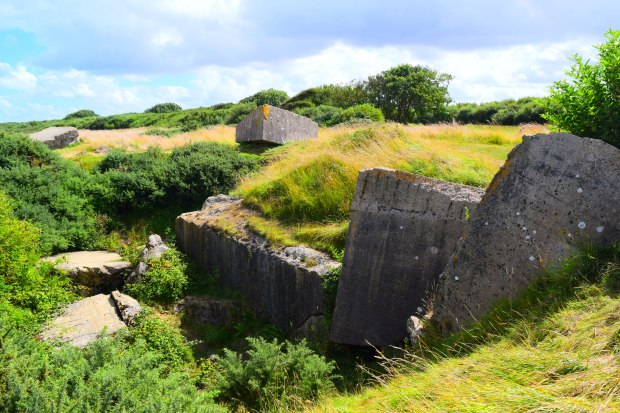

A bombed-out German bunker in Normandy. Photo by Rick Ouellette

World War Two sites, especially in Normandy, are of course enormously popular tourist destinations and have been for decades. But popular also means crowded, esp. during the summer. For the discerning war ruin devotees, the PBS series “Nazi Mega Weapons” (and by extension “WW2 Mega Weapons”) will give viewers a good look at, and the place names of, many crumbling mementoes of Adolph Hitler’s megalomania. These range from the launch pads of V-2 rockets to supposedly impregnable super-bunkers, in locations stretching from the Channel Islands to the old Eastern Front. Curiosity peaked, it’s easy in this Internet age to find even the most obscure of these sites, or to find organizations or individuals who give tours of such World War or Cold War points of interest.

********************************************************************************
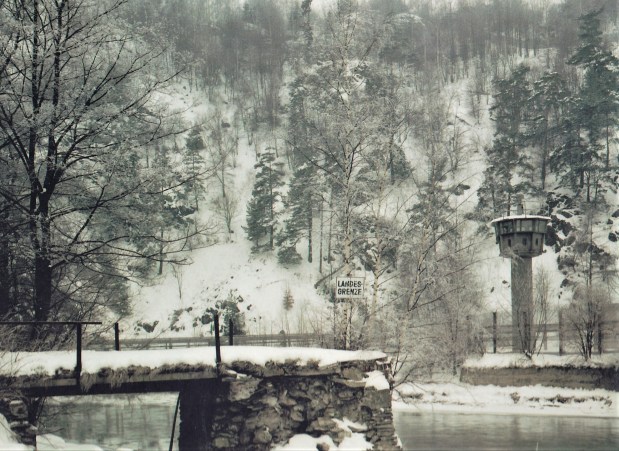
In the middle and late Eighties, American photographer Brian Rose undertook the extensive (and sometimes risky) task of documenting the vast system of walls, fences, no-man lands and guard posts that ran like a geopolitical scar separating the democratic West from the Soviet-dominated countries of Eastern Europe. The project that would result in the book “The Lost Border: The Landscape of the Iron Curtain” began when the “zero-sum logic” of this rigid ideological system—and the architecture which enforced it— was still very much in play. Just as remarkable about this artificial frontier that divided countries, towns and even streets, was the speed at which this system collapsed, as one communist state after another abdicated control after the events of late 1989.

The Iron Curtain stretched from the Black Sea to the Baltic, but Rose began his project in it’s most famous and heavily fortified section. The Berlin Wall was erected in the early 1960s to keep people from the eastern sector from escaping into the encircled enclave to the west. (Although the East German government insisted at the time that it was built to keep “fascist adventurers” from getting in). Rose’s photos deftly display both the physical and physic disconnect between two distinctly different societies sitting cheek-by-jowl. We see tourists in brightly-colored clothing peering into a grim East Berlin from a viewing stand and streets and transit lines cut off at the knee. Farther away from the cities, the border can get pretty diffuse: the fences get smaller and the borderline can be nothing but a small warning sign; one photo shows and easily stepped-over chain dividing a beach. Rose learned early on from the locals not to risk it. A few years after starting the project all this fearful apparatus became obsolete, making “The Lost Border” a valuable socio-political record over and above the high quality of his images.
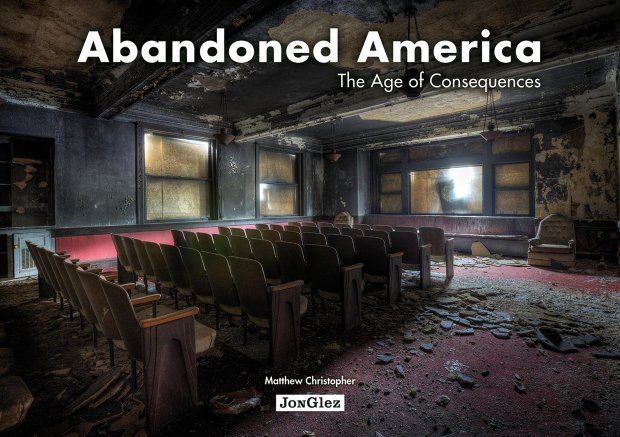
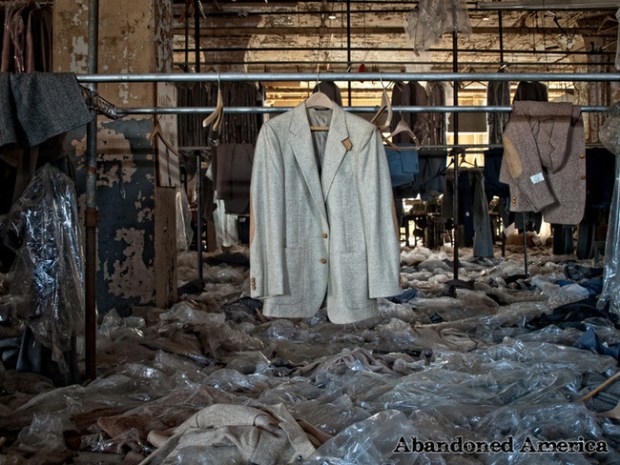
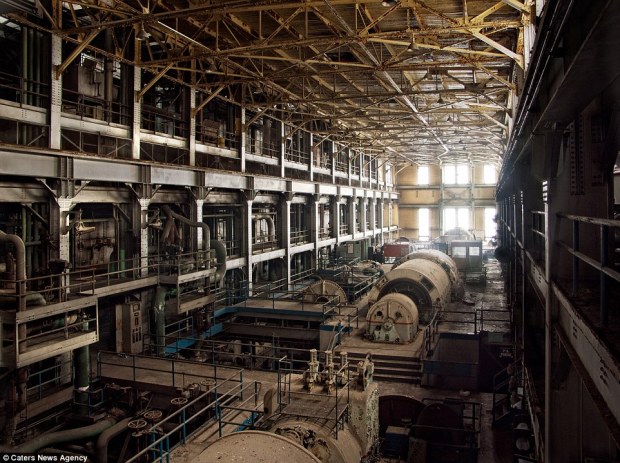
It was at the end of World War II and for the next couple of decades after that the U.S. industrial and economic might was at its peak. Of course, a lot has changed this then and never more viscerally than in photographer Matthew Christopher’s book “Abandoned America: Age of Consequences.” Page after page feature the devastated remains, in beautifully rendered hi-def photos, of buildings magnificent in scope and/or noble of purpose. These eye-popping images of derelict power plants, factories, trade schools, churches, fraternal lodges and communal vacation resorts speak powerfully of a severely shredded social and economic fabric. (Most of these locations are in Midwest and Mid-Atlantic states). These ruins say a lot of what we don’t want to hear.
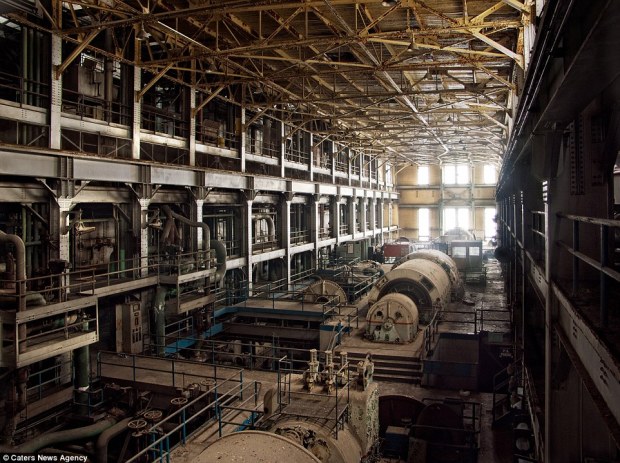

Photo by Matthew Christopher

Back from the late 19th century through to the middle of the 20th, when most of these places were constructed, there were political and social differences aplenty, often profoundly so. But there was also was a common-denominator civic pride as a baseline, not to mention a colossal industrial sector that not long ago was the envy of the world. This formed the basis for the eventual building up of a solid American middle-class and a wavering but respectable network of aid and comfort for those in legitimate need.

Not only do those “permanent achievements” look a lot less invariable by the day and it’s not just callous, cost-cutting corporations to blame. The national political dialogue (such as it is) about what to do has become the worst sort of zero-sum game. The idea that the two sides of the aisle would have a clash of ideas and each would come away with some of what they wanted is almost laughably quaint now. But there is nothing funny in the evidence of this decline seen in Christopher’s haunting images.

******************************************************************************************

Matt Lambros had photographed close to 100 closed theaters and chose twenty of the most prominent for his sumptuous coffee table book “After the Final Curtain.” His fascination with these opulent movie palaces began with personally discovering several near where he lived in New York City. Some still open, some boarded up. Soon he was travelling the country and realizing that almost any city in America with some critical mass of population, had at least one of these places, in widely varying conditions but often the worse for wear. These places were built in the first few decades of the 20th century, when people rather expected their entertainment was to be provided in lush, classically-detailed venues and developers provided for such.

But the short and often discouraging history of these theaters can be representatively seen in the case of the stupendous Loew’s Poli Theater in Bridgeport, Connecticut (a sweeping view of which graces the book’s cover). In opened in 1922, after a two-decade period which saw the city’s population double from 70,000 to more than 140,000. Still, not a megalopolis but enough that the growing port city could support a second auditorium next door and connect it all with a hotel and shops. Over 3000 people could watch vaudeville and silent films in the main hall and it made a successful switch to the talkies. But y’all know what happens next: TV, surburbanization, the income inequality that afflicted many older downtowns. The 50-year timeline of the Loew’s Poli is not uncommon: it soldiered on into the mid-century, underwent name changes and new usages and, like many others, ended as an adult-film house before closing in the 1970s. Some of these places have been re-furbished but it’s always an extremely costly proposition and many still languish.

If you’re interested in visiting these type of places (and esp. interested in photographing them) your’re in luck. Both Matthew Christopher and Matt Lambros run workshops where you can click your cameras at places like this (sometimes the “Two Matts” run these events together). See below for their websites and more info. And wherever you go, may all your travels be “ruined.”

https://afterthefinalcurtain.net/
https://www.abandonedamerica.us/
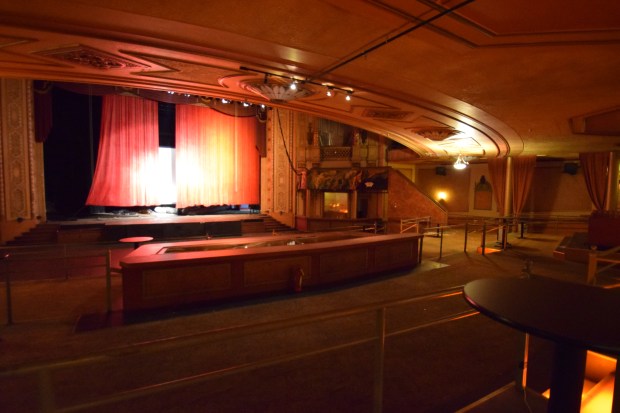

Photo by Rick Ouellette. The old Paramount Theater in Springfield, Mass. (later the Hippodrome nightclub). From a photo workshop I did with Matt lambros and Matthew Christopher.
“Abandoned America” In Extremis: A Place Where More Than the Buildings Have Been Vacated

Abandoned America: The Age of Consequences
Photos and Test by Matthew Christopher, Foreword by James Howard Kunstler
(Jon Glez Publishing)

All photographs in this post are copyright to Matthew Christopher

Regular visitors to this site will know something of my fascination with lost or abandoned places, the main side topic here when I’m not traversing the highways and byways of rock music history and documentary film. The public’s interest level with such deserted locations has grown to the point where the phrase “ruin porn” is now a thing. Photographer Matthew Christopher, in the introduction of this remarkable and sobering book, says he is well aware that his work may be seen as a modern version of the old Picturesque school of aesthetics. But the book’s subtitle lets on right from the cover that there is a lot more afoot here.

abandoned3

Page after page feature the devastated remains, in beautifully rendered hi-def photos, of buildings magnificent in scope and/or noble of purpose. These eye-popping images of derelict power plants, factories, trade schools, churches, fraternal lodges and communal vacation resorts speak powerfully of a severely shredded social and economic fabric. (Most of these locations are in Midwest and Mid-Atlantic states). Some may react with an out-with-the-old-in-with-the-new shrug but these ruins nevertheless say a lot of what we don’t want to hear.

Back from the late 19th century through to the Second World War era, when most of these places were constructed, there were political and social differences aplenty, often profoundly so. But there was also was a common-denominator civic pride as a baseline, not to mention a colossal industrial sector that not long ago was the envy of the world. This formed the basis for the eventual building up of a solid American middle-class and a wavering but respectable network of aid and comfort for those in legitimate need.

abandoned6

Speaking of that America in his foreword, writer and social critic James Howard Kunstler (author of “The Geography of Nowhere”) says “we have come to regard its institutions as permanent achievements.” Reflecting on Christopher’s pictures of a shuttered 1927 movie palace, Kunstler observes that it “presents a display of middle-class opulence that is nearly unimaginable now. Reflect on what that suggests about the psychology of yesterday’s working people: they believed that they deserved to have beauty in their lives, and the builders agreed to furnish it.” Nowadays, not so much.

After Kunstler’s incisive foreword, Christopher in his introduction speaks of the theoretical connection between these defunct places and human mortality. In fact, he does so for several paragraphs, perhaps as a bit of a defensive counterpoint to the fetishization of this subject matter in some quarters. (In fact, he has given several of these locations assumed names to discourage both scrappers and weekend urban explorers). By the end, though, he is squarely on topic: mourning our “shared heritage,” he sees these buildings, both mighty and graceful, as a reflection of a national character that has been diminished. In its stead, Christopher sees the endless repetition of strip malls and big-box stores with their cheap imported goods proffered to people who are often in reduced circumstances, holding down meager service-sector jobs themselves.

abandoned8

abandoned7
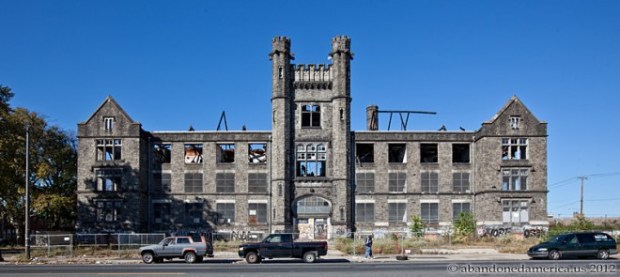
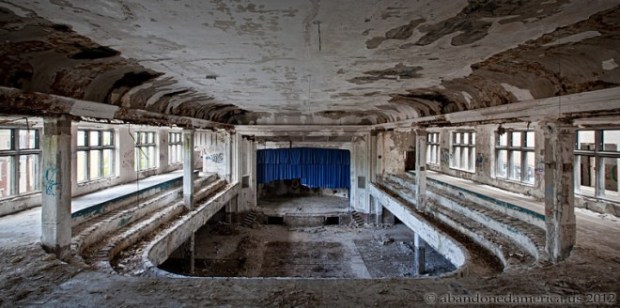
The Northeast Manual Training School, with its distinctive castle design, was built in Philadelphia at the turn of the 20th century as an innovative publicly-funded free school in an area with a burgeoning industrial sector. It later went through various name changes (ending up as the Thomas A. Edison High School) and declined along with the industry and the neighborhood. By the time “Abandoned America” was published it had been unceremoniously demolished and replaced with a discount chain store.

This is not mere nostalgia for a robust heavy-industry economy never to return, it’s more for the loss of the wherewithal to even try and have a constructive dialogue about how to adapt to a changing global economy. It’s there in every achingly vivid photograph of a silenced turbine hall, molding lobby in a working-class resort or half-demolished church. An ideal has been abandoned along with the edifice: this is “a book of heartbreaks” as one person put it in “Abandoned America’s” Amazon comments section.

Not only do those “permanent achievements” look a lot less invariable by the day, the political dialogue (such as it is) about what to do has become the worst sort of zero-sum game. The idea that the two sides of the aisle would have a clash of ideas and each would come away with some of what they wanted is almost laughably quaint now. Now, with Republicans having spent decades literally demonizing Democratic leaders while coastal liberals (many feeling safe with their high-tech jobs) speak glibly of “fly-over states,” we’ve come to a pretty pass indeed.

abandoned5

Some may think of James Howard Kunstler as a gloom-and-doomer when he talks of America as a once-advanced civilization facing a lasting turnaround “toward a loss of complexity, a reduction in the scale of activity, a loss of artistry, and probably the end of many comforts.” It’s that wish for a return to that greatness, without facing up to any of the complexities needed to get there, that looks like an unsolvable problem in this age of anti-intellectualism and safe spaces. After an election season filled with a succession of soul-crushing inanities, the U.S. elected in Donald Trump the exactly wrong person needed, even if his famous slogan played to those sentiments. Spurred on by a frustration with political gridlock and, let’s face it, conservative media outlets that only know how to act on its most pernicious impulses, struggling Middle America elected someone whose one and only skill is exploiting their prejudices and frustrations—-in fact, a man whose narcissism and unpredictability borders on outright insanity. After not hearing a single utterance of true empathy from Trump, even directed at his own voters, it’s safe to say that not only does he not care about any true “social compact”, but he probably has never given it a single thought in his entire perversion of a life. Man, oh fucking man, have we lost our way in the wilderness of of our own self-regard, leaving us with a national psyche as rusted and hollowed out as the places pictured in Matthew Christopher’s elegiac testament.