Author: Rick Ouellette

I'm a freelance writer and photographer and the author of the graphic novel in-progress "In a Dream of Strange Cities. My previous non-fiction works include "Rock Docs: A Fifty Year Cinematic Journey" and "Documentary 101: A Viewer's Guide to Non-Fiction Film," was released in 2013. My other activities, like psychogeography, bicycling, and a little urban exploring tie into the content of this blog, which is dedicated to the celebrating the rich history of rock music, film, literature and popular culture.

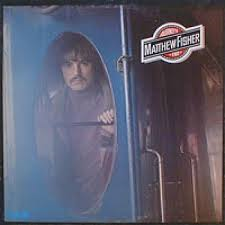
We’ve All Gone Solo #1 (Matthew Fisher)

(A series of occasional posts hearing out the solo excursions of rock history’s supporting players whose breakaway efforts never amounted to a high-profile solo career.)

mfisher

Founding Procol Harum member Matthew Fisher was one of the early masters of the Hammond organ, the cabinet-encased keyboard whose full-bodied sound could go toe-to-toe with rock music’s dominant electric guitars. Procol’s 1967 mega-hit “A Whiter Shade of Pale” was constructed around Fisher’s magisterial organ but the fact that he received no songwriting credit (and hence no royalties) was a stick in his craw—and later a lawsuit. Departing P.H. after three albums, Fisher’s first solo record was 1973’s “Journey’s End”, a worthy progressive-pop affair that was nonetheless filled with depressive lyrics that at times directed ill-will at his former musical colleagues, presumably the P.H. songwriting team of Gary Brooker and Keith Reid. These songs (“Going for a Song” and “Play the Game” especially) reveal a comprehensive bitterness at a divide-and-conquer music business that elevates talented and canny individuals and leaves by the side of the road other talented people less prepared to deal with its unsentimental ways. It’s not all gloom and doom, though, as Fisher’s deft melodic and instrumental skills serve as an uplifting counterweight and the would-be hit song “Suzanne” is a real winner.

Fisher would go on to make a few more solo albums and find work as a producer—he even joined up with the re-formed Procol Harum in the early 90s. But soon after he left again in 2004 he brought a suit for a share of future royalties on “Whiter Shade”, noting his undeniable contribution to its success. A fascinating case to be sure and one found in Fisher’s favor in a decision ratified by the House of Lords in 2009. For more on that see below.

Dubious Documentaries #10

Unknown_white_male_ver2

Unknown White Male
Directed by Rupert Murray—2005—88 minutes

(Unknown White Male? No, it’s not about my status as an indie author but the concluding entry in this series and one that shows that as the documentary field continues to expand and thrive, filmmakers need to be careful that the enhanced aesthetics employed in non-fiction movies don’t confuse people as to the ultimate veracity of your project. This review was adapted from my book “Documentary 101: A Viewer’s Guide to Non-Fiction Film.”)

From Alfred Hitchcock’s “Spellbound” in 1945 to 2000’s “Memento”, the complications arising from comprehensive memory loss has proved a top-drawer cinematic plot device. More novel is the idea of a documentary in which a real amnesia victim is filmed during the tricky process of reacquainting himself with a past life of which he has no recollection. “Unknown White Male” would appear to be just such a film. British-born New York resident Doug Bruce got checked into a hospital in July 2003 after alighting from a subway train in Coney Island not knowing where or who he was. For the next year or so, Bruce’s lifelong friend Rupert Murray constructed this artful film of his rehabilitation. Since its release, many critics and viewers have doubted the reliability of what’s on offer here. With its seeming inconsistencies and claims of a rare retrograde amnesia that is hard to both establish and refute, these nagging reservations will likely persist.

It’s not so much that you don’t want to believe Doug Bruce and his story, it’s just that everything is a little too clean cut—-life goes on pretty well for him with a supportive family, new girlfriend etc. There is far too little expert witness material here, as if you were supposed to accept the amnesia at face value even though what type of trauma may have caused it is unclear. That way we can get right to the human-interest angle, which is admittedly interesting. Perhaps this all would have worked better as a based-on-a-true-story film, maybe fashion it into some sort of thriller… Oh, wait never mind.

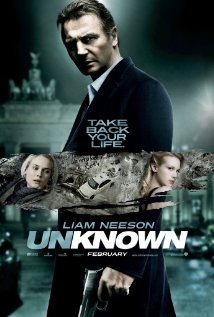
unknown poster

In some markets, this 2011 amnesia caper was also titled “Unknown White Male.” In other places it was known as “Taken 2.5”

Any readers out there have some Dubious Documentaries they’d like to share? Let us know!

Dubious Documentaries #9

Still alive

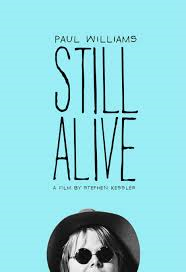
Paul Williams: Still Alive
Stephen Kessler—2011—86 minutes

In the Seventies, Paul Williams was a fabulously successful pop songwriter and, with his famously diminutive stature and impish sense of humor, was a staple of TV talk shows and guest sitcom appearances. His songs were recorded by 3 Dog Night (“Old Fashioned Love Song”, “Out in the Country), the Carpenters (“We’ve Only Just Begun”, “Rainy Days and Mondays”), David Bowie (“Fill Your Heart”) and many others, including the Oscar-winning prom buzzkill “Evergreen.” It is not Mr. Williams who is dubious. It’s just that, as with all but the shiniest stars in the celebrity firmament, he saw his time come and go. One glance at the title of Stephen Kessler’s film will let you in on the premise. The director’s first misstep is riding the I-thought-he-was-dead conceit for the first ten minutes of the movie instead of admitting to just checking Paul’s Wikipedia entry.

stillpaul
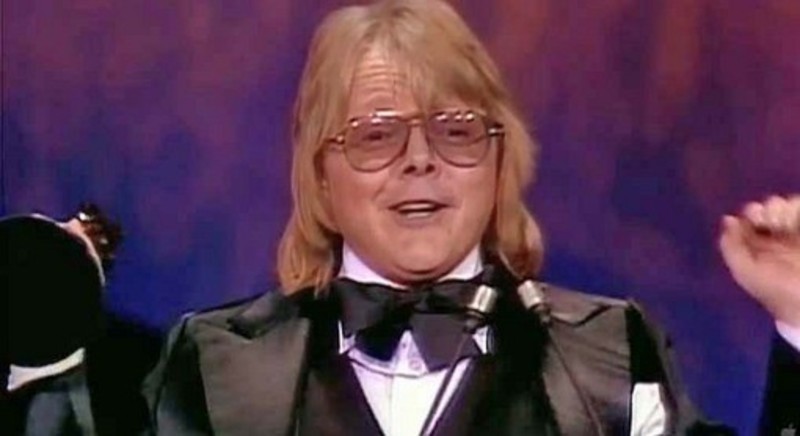
“I was going to thank all the little people but then I remembered I am the little people.” Williams wins an Oscar, 1977

Kessler professes his great admiration for Williams and his work, yet stumbles over several different doc-making strategies and mostly calls attention to himself. First, he stalks the tunesmith, then makes dubious claims about how he was granted access (“Paul and I bonded over squid”), before getting to tag along to the autograph sessions and Vegas nightclub dates that keep things going for an icon of an aging demographic. Kessler’s method seems either clueless (When Williams is in the middle of an poignant boyhood anecdote about his troubled and heavy-drinking father, the director cuts in to ask him about his first talent show) or just tacky (“Paul gave me what I always wanted.. a sleepover”). Williams is a likeable enough subject, if a bit guarded, and he’s more astute than his filmic biographer—at one juncture he even explains Kessler the relative merits of either playing to the camera or keeping it cinema verite. Although Williams’ story does get out in the end, a less kitschy approach would have yielded far more interesting subtexts than a celebrity sleepover—like a look at how fans’ persistent adoration this far down the rock ‘n’ roll road is perhaps colored by their own looming mortality. Still worth a look for fans of Williams (natch) as well as for pop-culture trainspotters of a certain vintage.

My new book, Rock Docs: A 50-Year Cinematic Journey will be released later in 2015.

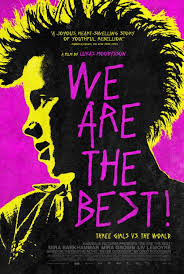
Reel and Rock Film of the Year: We Are the Best!

we are the best poster

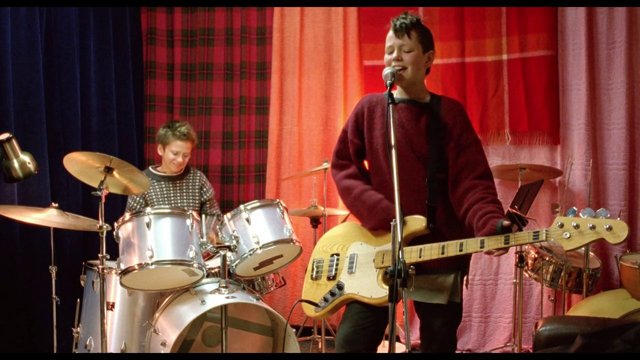
There’s nothing especially profound about this droll and sweetly rebellious indie crowd-pleaser from Swedish director Lukas Moodysson. But in its acute attention to the details of its adolescent outsiders reaching for their identity, “We are the Best” is a rock & roll coming-of-age fable of the first order. Two 13 year-old girls set out to prove that “punk is not dead” to the Olivia Newton-John wannabes in their Stockholm middle school, circa 1982. Best friends Bobo (Mira Barkhammar) and Klara (Mira Grosin) find their days alternating between boredom and the casual indignities passed down to teenage non-conformists. On a whim, they start a group, if only to take away practice time from Iron Fist, the doofus metal band of condescending older boys at the local youth center. Despite their unfamiliarity with the drum set and bass guitar left in the corner of the practice space, they start to bash out a song called “Hate the Sport” that rails against two of mankind’s greatest evils: the threat of nuclear annihilation and gym class. Sample lyric: “People die and scream/But all you care about is your soccer team”.

we are the best practice

“The world is a morgue/But you’re too busy watching Bjorn Borg!!” Swedish punk comes of age.

Convinced of their impending greatness but aware of certain musical limitations, they shrewdly recruit Hedvig (Liv LeMoyne) an ignored girl from a Christian family who is a talented classical guitarist. In exchange for music tips, Bobo and Klara assure her that she’ll never have two better friends. The three lead characters are pitch-perfect in their roles if not always in their music. Between their first meet-up and the culminating trip with Iron Fist and two youth-center staffers to a “Santa Rock” event in a redneck provincial town (in time-honored punk fashion, the girls’ performance starts a riot within a minute), their acting captures early teenhood’s dizzying mix of insecurity and tenacity.

We-Are-the-Best-sofa

“We’re not a makeup band.” Bobo, Hedvig and Klara hold a practice-room confab.

Moodysson blends in all the elements without overselling a single one: the rigid delineation of musical tastes, the nervous phone calls to boys, the junk food binges, the early feeling-out of political principles. As the trailer suggests it is a film for 13 year-olds: past, present and future. That’s casting the net pretty wide but it is amazing how that age, which seems like such a trial at the time, always retains a romantic glow in retrospect. I saw it with my son Ryan (then 13 himself) during its brief U.S. theatrical run last summer. He gave it 4 out of 5 stars, despite noting that it’s no “Lord of the Rings.” Hopefully, this modest gem will find a much wider audience streaming and on DVD and take a deserved spot in the cannon of great fictional rock movies.

According to a self-imposed deadline, my next book “Rock Docs: A Fifty-Year Cinematic Journey” is due to be released in summer 2015.

Dubious Documentaries, Parts 1 and 2

(Somehow, the first two installments of my Dubious Documentaries series got lost in the shuffle, so I’m re-posting them here in shortened form so they’ll be archived. The last two installments coming in early January. Happy New Year!)

chariots

“Chariots of the Gods” (1970)
The unvetted premise of Erich von Daniken’s 1968 bestseller “Chariots of the Gods?” is that alien astronauts visited earth in its antiquity, influencing advances in civilization and supplying the technology that allowed for the building of the Egyptian pyramids, the Easter Island statues and just about everything short of the Brooklyn Bridge. As in the book, the film’s free-associating conclusions range from intriguing-but-unlikely to plain preposterous and matters are not helped by the old school “authoritative” narrator. But we all like ancient mysteries and this movie is very entertaining in an eye-rolling sort of way. “Chariots of the Gods” was even nominated for a documentary Oscar, helped no doubt by Ernst Wild’s globetrotting cinematography and the beguiling musical score by the Peter Thomas Sound Orchestra.

*********************************************

Room-237

“Room 237” (2012)
If there were a quantifiable way of giving an award to the documentary with the most bats in the belfry, “Room 237” would be a strong contender.
This film is a coming-out party for the subculture of conspiracy geeks who think that Stanley Kubrick’s 1980 chiller “The Shining” is a whole lot more than just the master director’s entry in the horror genre. According to the six heard-but-not-seen interviewees featured here, “The Shining” is one or more of the following things:

A) The veiled confession of a man who feels remorse for helping fake the Apollo 11 moon landing in 1969.
B) An encyclopedic film essay about sexual repression
C) A coded allegory of the Nazi holocaust
D) A connect-the-dots method of decrying the violent disenfranchisement of Native Americans

Not all of these theories are over the top. Aspects of “B” and “D” have been discussed by mainstream scholars and critics for years (Oedipal themes bob to the surface and the Overlook Hotel is clearly said to have been built over a tribal burial ground) and Kubrick spent years trying to produce a Holocaust-themed film. But it’s item “A” that’s bound to stick in the craw of those viewers like me who, while recognizing “Room 237” as an enjoyable evening out at the local arthouse, want to land back in the real world by the closing credits. To use “Where’s Waldo” methodology to claim that Kubrick was somehow recruited by NASA to film the moon landing on a soundstage is just silly—I don’t think Neil Armstrong will bother turning in his grave over this one. The five-minute excerpt below shows just how quickly fascination alternates with irritation while listening to theories that seem to say more about OCD than about the possible existence of clandestine reality.

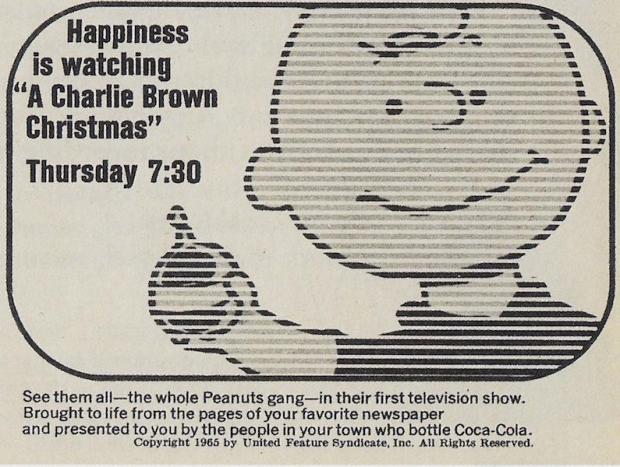
The Annotated Charlie Brown Christmas

charlie xmas ad

Gentle snowflakes fall on an idyllic silver-blue landscape. A group of kids weave around each other on a skating pond, all in time to an angelic children’s chorus. “Christmas Time is here,” they sing, a season that speaks to “olden times and ancient rhymes/of love and dreams to share.” Heading down that way is the comic pages’ most famous underdog, already complaining to his forbearing best friend that despite the many pleasant trappings of the holiday season he can only feel depressed, unable to rise to the way he’s “supposed to feel.” Soon after Charlie Brown and Linus make it to the pond and strap on their skates, the former’s dog has them both has both tangled up in the latter’s security blanket, sending Charlie spinning off the ice and into a tree, where the snow that shakes off the branches reveals the name of one the earliest—and still one of the most popular—TV Christmas specials.
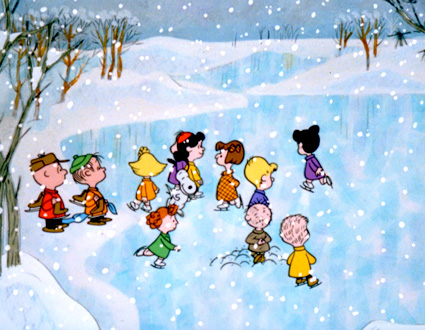
charlie-brown-skate
The short-lived skate pond Arcadia

Sure, there are many reasons that “A Charlie Brown Christmas” ranks so high in the now impossibly crowded parade of annual Yuletide specials. The already popular characters of the daily funnies were first brought to life for this project—by a spot-on cast of child voice actors—and were never as vibrant as here. The memorable smooth-jazz score of Bay Area piano great Vince Guaraldi is a legend in its own right. And the fact that the amenable inclusion of a Nativity reading from the Gospel of St. Luke (and the concluding “Hark the Herald Angels Sing” chorus) has kept it in the hearts of the more religious-minded. This is all to the good.

But let’s face it—it’s the script’s dogged search for the nature of “what Christmas is all about” inside the maelstrom of an uncaring, chaotic and profiteering universe that will always be the big takeaway here. Sure, the show’s repeated gripe that the season is getting “too commercial” sounds a bit quaint now—fifty years later the problem is so pervasive it would be like protesting that the ocean is too wet. When we’ve reached a point where it seems the entire American economy is underpinned by the retail activity of the last two months on the calendar, with people being known to do grave violence to each other at 4 AM on Black Friday just in order to get a “bargain”, no wonder the show’s free-floating anxiety resonates. We are all Peanuts.

Of Phobias and Five Cent Co-Pays

In this strangely de-populated town of mottled skies—not even one honking adult voice in its 25 minutes—the kids fend for themselves even when it comes to mental health services. Of course, this takes the form of the outdoor psychiatric stand run by the gang’s alpha female. Lucy may only charge five cents but seems well-versed in the jargon of her chosen field, picking up bits and pieces from TV and re-purposing them for a small fee. Charlie Brown miserably takes a seat but his plaintive admission (“I’m in sad shape”) is not met with a hug but with a request to pay in advance, and then waiting while the doctor savors the sound of the nickel rattling around in the can.

Just as modern-feeling as the casual indignities of the health care system, is the rush to label Charlie’s neuroses. Lucy famously runs through a bewildering series of possible phobias: hypengyophobia, “ailurophasia” (actually ailurophobia, the fear of cats), thalassophobia and others, before ending with the one she should have started with—pantophobia (aka panphobia), the fear of everything. Welcome to the 20th century. Lucy, who can transition from bully to confidant without batting an eyelash (OK, maybe with batting an eyelash for effect), admits she gets depressed as well, having to settle for getting “stupid toys” under the tree every year when all she wants is the gift of real estate.

Lucy shrink
Ailurophasia, screamed in vain.

Let’s Just Dance

Lucy’s suggestion that Charlie Brown direct the school Christmas play as a sort of involvement therapy can only go wrong (naturally). A production never to be sullied by adult interference, Charlie’s half-decent attempts to whip the group into shape are constantly interrupted by the Harpo Marx-like antics of Snoopy, casting disputes and general disorder. In a better world, his efforts may even have been appreciated. He deftly attempts to defuse Frieda’s objection that the cloud of dust emanating from her innkeeper-husband Pigpen “is taking the curl out of my naturally-curly hair” by suggesting that that it may have originated in ancient Babylon, thereby enhancing the play’s authenticity. But it’s all for naught. Lucy has merely drawn Charlie out the manageable discontents he finds outside (his “commercial dog” decorating its doghouse in hopes of a cash prize, taking down a letter-to-Santa dictated by his sister, Sally “Tens and Twenties” Brown) and into a group setting where his status as a social outcast can be magnified. (His installation as director is met with cries of “We’re doomed!”). Every time Charlie calls for “Action!” the gang break out into the spontaneous free-form dancing that is a hallmark of this special, where the kids can be kids and forget their status as part-time adult stand-ins.
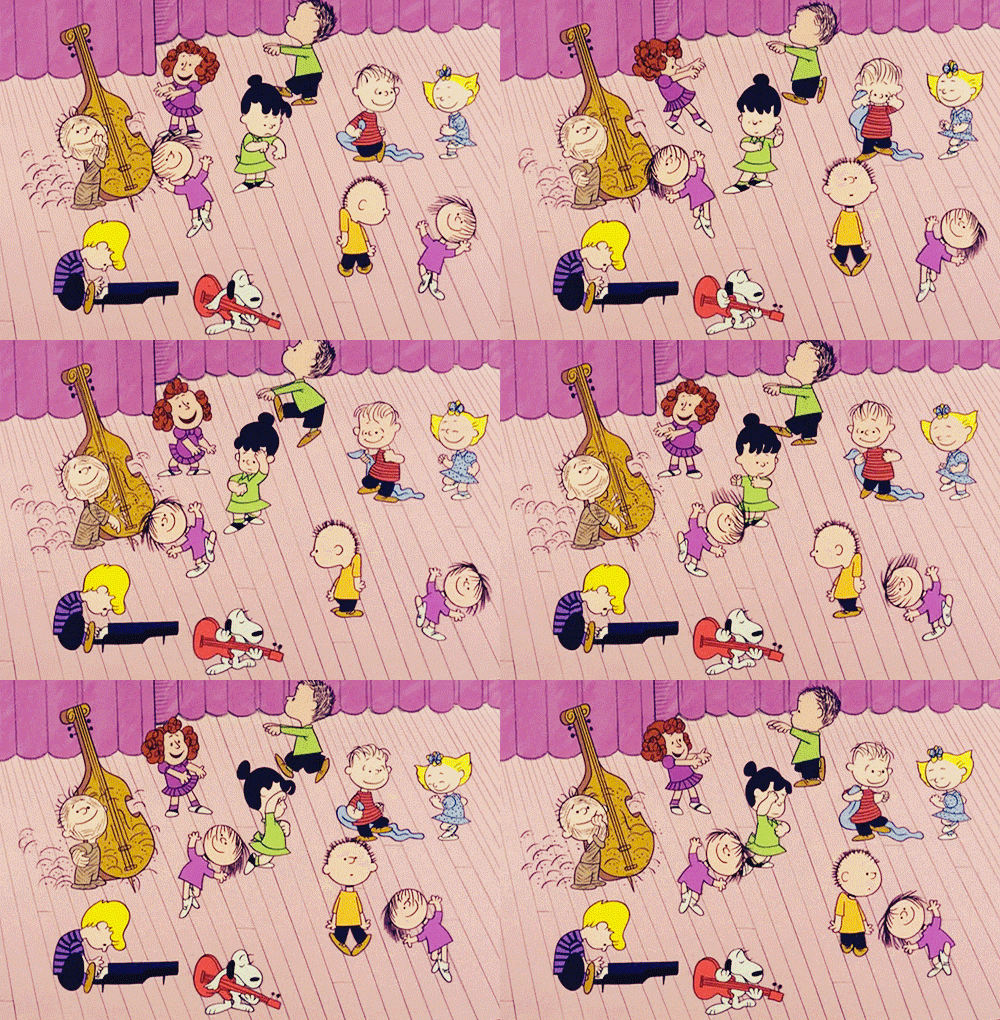
charlie brown dance

“Isn’t it a great play?” (Research by your diligent blogger has revealed that the three children in the middle (the purple-dress twins and the yellow-shirted boy doing the head-bobbing shuffle) are all siblings from the obscure “95472” family, the girls’ first names being 333 and 444 and their brother’s 555. Their parents apparently were preparing them for the impersonal, data-driven world ahead of them.)

I Suggest We Try Those Searchlights

Nagging dissatisfaction with the play leads Lucy to admit that the whole season is little better than a Mob racket (“It’s run by a big Eastern syndicate, you know,” she whispers conspiratorially) and although Charlie suggests getting a Christmas tree as a countermeasure, that idea instantly evolves to mean an aluminum tree, preferably “painted pink.” Uh-oh. With Lucy’s mean-girl lieutenants (Violet, Patti, Frieda) already primed for the kill, Charlie walks off and, despite Linus’ mild objections, picks the comically scrawny natural tree in a forest of exaggerated metal replicas.

charlie-brown-wooden xmas tree
“Fan-tastic!” Inside the aluminum forest

Interestingly, the faddish popularity of aluminum trees—esp. those silver ones that came with a rotating color wheel—had already peaked by 1965 and this show proved to be the nail in the coffin. They went out of general production two years later, relegated to novelties.

“This little one seems to need a home,” Charlie suggests, and marches it back to the auditorium where his charitable instinct is lost on everyone in a hailstorm of derision (“Can’t you even tell a good tree from a poor tree?”) save for Linus who seizes the day with his impromptu Gospel reading. He quietly reprimands the kids without once speaking to them and in doing so forever shields the show from the “War on Christmas” numbskulls at Fox News. Well played, my thumb sucking friend.

As in life, however, our protagonist’s redemption is still tempered by life’s tiny indignities. Even after Linus suggests the application of a little TLC, which turns this plus-sized twig into a regal fir, Lucy is still hedging her bets. “Charlie Brown may be a blockhead, but he did get a nice tree.”

It is strange to think now that so many folks behind the scenes thought that “A Charlie Brown Christmas” was going to go down in flames faster than Snoopy’s doghouse after a fight with the Red Baron. CBS execs, and some people who were working on the project (which had a mere six-month production window), thought the combination of the adultish kids, jazz music, modest animation style and the religious element that Charles Schultz insisted on keeping, was a mish-mash that would never work. Instead, it played to half the TV sets in America on its first airing and was heaped with praise by critics the next day. It seemed like only animation team member Ed Levitt could see his way clear before the broadcast, insisting to producer Bill Melendez that “This show is going to run for a hundred years.” It’s halfway there now.

(If you liked this post, please check out last year’s Christmas entry, “The Education of Ebenezer.” To find, click on the Uncategorized section to the right. Also, please feel free to friend me on Facebook. I’m the Rick Ouellette from Bedford, Mass. Thanks for reading!)
Books That Rock, Part One

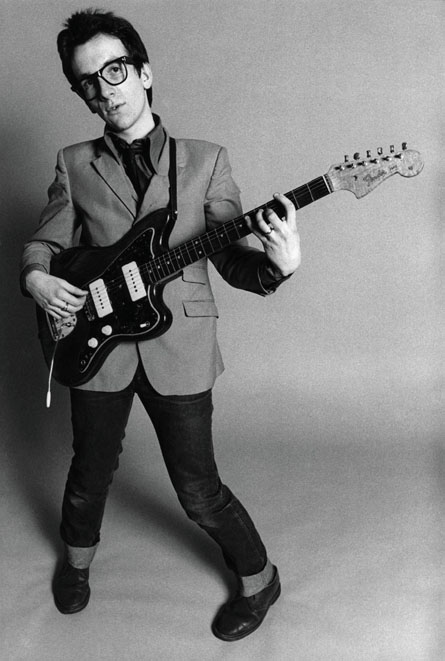
No one is quite sure who originated the saying “Writing about music is like dancing about architecture,” though it has been repeated by Martin Mull, Frank Zappa, Steve Martin, Elvis Costello and many others. This has got to be the dumbest epigram ever. First off, it necessarily assumes that music writers are somehow trying to duplicate the ineffable ability of music to enrich our lives. Moreover, it is a prime example of someone willing to miss the point in the quest to make themselves look smarter than others. Considering that the saying is often used by musicians, it may just be they don’t like getting reviewed.

elvis-costello
“Critics hate Van Halen and love Elvis Costello because most critics look like Elvis Costello”
-David Lee Roth, circa 1981

But with its limitless supply of colorful characters and tortured geniuses, artistic triumphs and cringe-worthy flops, jet-setting successes and undeserved obscurities, the music world is an endless repository of subject matter that also reflects on history, sociology, race, class, fashion and many other topics. Many authors have written very well about music, thank you very much.
Here is the first half-dozen, mostly taken from my trusty film-and-music bookcase at arm’s length to my desk. Part two will have six more and should arrive in time for any last-minute gift ideas for the music nut in your life. Of course, you can do that by asking at your local independent bookstore or by ordering from that great online retail place that begins with A. That of course would be Alibris.com, where all these titles are available.

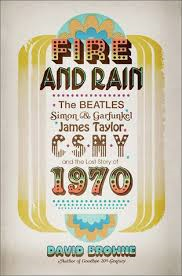
Fire and Rain

“Fire and Rain” by David Browne (2011)

Author and Rolling Stone contributing editor David Browne finds the “Lost Story of 1970” by formulating a narrative that explains the end of the momentous Sixties through four iconic rock artists, the albums they released to usher in the Seventies and their personal stories at that time, extending it into the society at large. The end of the Beatles is explored through the bittersweet ”Let it Be” and the fitful start of four solo careers amid lawsuits and a retreat from the crushing weight of superstardom. Simon and Garfunkel’s “Bridge over Troubled Water” is seen as hymn-like response to social upheaval, “a much-needed respite from one piece of bad news after another.” Similarly, the mellow introspection of James Taylor and the popularity of his breakthrough “Sweet Baby James” is viewed as a reflexive response to revolutionary rancor. The chaotic interpersonal dynamics of Crosby, Stills, Nash & Young provides Browne with plenty of choice material for a dissection of the drug-clouded judgments and hedonism of the day. Their “Déjà vu” album released in March featured themes of domesticity that quickly gave way to embittered protest of the “Ohio” single in the wake of that May’s Kent State killings (in one of the book’s many intriguing anecdotes, we find that two future members of Devo were attending school there at the time). This kind of musicology mixed with social history can be a tricky tightrope but Browne stays on the wire with a relevant voice that never gets ponderous.

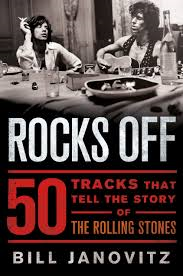
rocks off

“Rock Off: 50 Tracks that Tell the Story of the Rolling Stones” by Bill Janovitz (2013)

Writer and Buffalo Tom frontman Bill Janovitz, who also penned a book on “Exile on Main St.” for the “33 1/3” series, gets to expand on his appreciation and encyclopedic knowledge of the Stones with this intriguing concept. He explores the half-century career of rock’s defining bad-boy band by devoting one succinct chapter each to 50 different songs and how it relates to both their musical evolution and their life and times. This gives the oft-told tale of Jagger, Richards and Co. a fresh spin. The chronological spin is impressive, taking in both the Mt. Olympus material like “Gimme Shelter” and “Jumping Jack Flash” and some lesser-known gems like Aftermath’s “I am Waiting” and Bridges to Babylon “Saint of Me.”

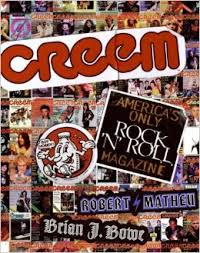
Creem

CREEM: America’s Only Rock ‘n’ Roll Magazine
Edited by Robert Matheu and Brian J. Bowe (2007)

It was a classic “Merry-Xmas-To-Me” moment when this Creem anthology/coffee-table book turned up at my local late-lamented Borders store several Decembers ago. Ex-Creem photographer Robert Matheu and Brian Bowe, who helped develop the now-moribund Creem online site, compiled articles, interviews, photos, cover art and other quirky features of one of the most celebrated and irreverent music magazines ever published. From its gritty beginnings as a local counterculture rag in Detroit, through its 1970s heyday and on to its demise in 1988, Creem was a genre unto itself: “stripped down, no pretension but plenty of attitude, an urban lyricism and a wicked sense of humor” as says Paul Trynka in the foreword. Much emphasis is placed on the influential groups that Creem championed in the early days—there are multiple entries on the Stooges and MC5 and a prescient Ben Edmonds piece on the New York Dolls from summer ’73: “the main reason the Dolls have been so misunderstood is that they don’t play to any existing audience; it’s an audience that has yet to reveal itself.” Creem was long known as the magazine that gave its writers so much creative latitude that they often became stars in their own right and you’ll find them all here: Lester Bangs of course, as well as Dave DiMartino, Richard Riegel, Billy Altman, Lisa Robinson and the late Rick Johnson, who is represented in a couple of brief pieces, including a recap of his notorious feud with the Runaways. It would have been nice to see more than just a few entries from the famously feisty record-reviews section, where you were implored to buy albums from the Ramones and Sex Pistols while the complacent superstars of the day were pilloried on a set schedule (their take on Queen’s Live Killers? “Makes you feel someone is peeing on your grave.”) Considering that the Creem brand name, which various parties have been trying to revive for years, has been tied up in legal disputes, it’s amazing that a book like this ever got out, so if interested scoop one up while you can.

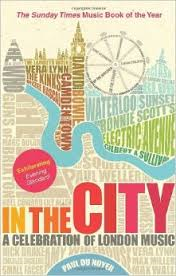
in the city

“In the City: A Celebration of London Music” by Paul Du Noyer (2010)

Paul Du Noyer is founding editor of the excellent rock-legacy magazine Mojo and although a native of Liverpool, proves himself as good or better than a native Londoner with this exemplary book about the music from and about the U.K.’s capital city. Comprehensive in content but sprightly in tone, Du Noyer’s 280-page history ranges from the broadside balladeers and singing street merchants of Medieval times all the way through to Lilly Allen. Befitting his background, the author does concentrate on the rock icons associated with the city such as the Kinks, the Who, Small Faces, Ian Dury, Elvis Costello, Blur, the Clash, Paul Weller (and other usual suspects) who are profiled as to how the city influenced their music and vice versa. But popular culture was not invented in 1964 and Du Noyer deftly ties it all in with antecedents like Noel Coward, Gilbert and Sullivan and music-hall star Marie Lloyd. “Popular songs have been the perfect expression of London’s character,” he writes on the very first page and finishes the thought a well-chosen appendix list of 140 London-related songs.

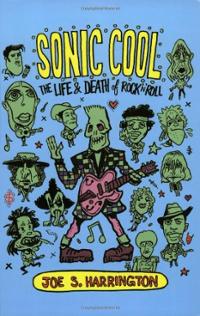
sonic-cool

“Sonic Cool: The Life and Death of Rock ‘n’ Roll” (2002)

Iconoclastic rock scribe Joe S. Harrington wrote for a wide variety of publications (ranging from New York Press to Wired to High Times) before putting down his impassioned and schismatic views in this weighty tome that delineates the “massive cultural movement” called rock ‘n’ roll that is seen to be collapsing under its own weight at the turn of the century. But what a ride it was and Harrington includes most every significant event and sub-genre as well, with trenchant but entertaining analysis coloring chapters like “Elvis Gotta Gun”, “Kill the Business”, “The Revolution” and “Days of Malaise.” This is compulsive page-turning stuff for zealous rock fans already used to the literary stylings of Lester Bangs and Nick Tosches. The fact that the last chapter is called “Post-Everything” will let you know where this is going and though rock ‘n’ roll is not now what it was once, Harrington leaves us pondering the worth of “88 billion pieces of mass-produced plastic” still out in the world even after the controlling forces of big business has seemingly squashed the medium’s original (and occasionally re-occurring) rebellious instincts.

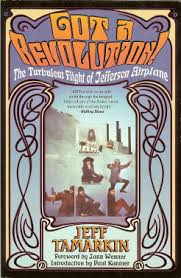
Jeff Airplane

“Got a Revolution! The Turbulent Flight of Jefferson Airplane” by Jeff Tamarkin (2003)

When a famous band has a long history together, it can be ripe material for both a look into the evolving life and times of their days together as well as pump-priming for what are likely to be gossipy interpersonal issues. Well, the Jefferson Airplane story has plenty to offer on both angles and Tamarkin’s enlightening band biography is wonderfully adept at both. It traces the story of San Francisco’s signature acid-rock group through its small-venue early days before the Summer of Love, to its heady heyday as romantic and revolutionary figureheads of the late 60s and its eventual metamorphosis into the more consumer-friendly Jefferson Starship in the 70s and beyond. Suffice to say there are lots of literal highs and lows along the way and Tamarkin also traces some interesting storylines through the book’s arc, like how the band’s lawsuit against its original manager (with whom they signed a contract when they were young and idealistic) carried on into the 1990s as a famous test case. As far as the dirt-dishing, the author can leave a lot of that up to the participants as Grace Slick, Paul Kanter, Marty Balin and most of the rest were interviewed and their colorful comments are sprinkled oral-history style throughout.

Hopefully by summer 2015 I’ll be “dancing about architecture” myself, when my next book “Rock Docs: A Fifty-Year Cinematic Journey” is due to be released.

Dubious Documentaries #8

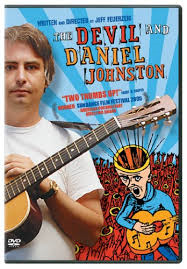
Devil and DJ

The Devil and Daniel Johnston
Directed by Jeff Feuerzeig—2006—110 minutes

Early on in this film, when Daniel Johnston is introduced at a 2001 gig as “the best singer-songwriter alive today”, those for whom this praiseful documentary was made will nod their heads while neutral observers may well start scratching theirs. His braying voice and incongruous philosophizing is guaranteed not to be to everyone’s fancy, but still director Jeff Feuerzeig lets stand numerous favorable comparisons that have Johnston right up there with Bob Dylan, the Beatles and even the greatest classical composers.

Johnston is a compulsive and reasonably talented musician, illustrator and audio diarist who is also a deeply troubled man with significant mental health issues that went largely unaddressed while growing up in a religiously conservative household in West Virginia. Soon after he moved to Texas, Johnston was adopted by Austin scenesters and his homemade cassettes became all the rage. Before long he shouldered his way into an MTV special and was befriended and/or championed by members of Sonic Youth, Nirvana and the Butthole Surfers among others. “The Devil and Daniel Johnston” may prove an uncomfortable experience for those not already converted. Johnston’s schizophrenia has led to violent and extremely reckless behavior that have endangered himself as well as friends and families. While his guileless music and lyrics sometimes hit peaks of uncommon grace, there is a nagging notion that people wouldn’t be half so enamored if it weren’t for his mental illness, which for years was dealt with willy-nilly. Feuerzeig doesn’t go anywhere near that issue, leaving his film looking like a vanity tribute to counter-intuitive hipsterdom.

Dubious Documentaries #7

Beyonce

Channel surfing one night, I chanced upon “Beyonce: Life is But a Dream”. My first inclination was to row row row my boat right past it, but since my latest project is a book on music documentaries I figured I must keep up on the very latest even if this is not my cup of tea. It’s not Beyonce’s brand of modern soul-pop that’s a problem for me—it’s entertaining enough even if the big-budget production and iron-grip image control makes me nostalgic for the comparable but more magnanimous talents of Evelyn Champagne King or Jody Watley in her Shalamar days. It’s not even that Ms. Knowles, as the producer, co-writer and co-director, is calling the shots here: the subject as vested partner in rock docs is nothing new and was the same for such films as “Don’t Look Back” and “The Song Remains the Same.”

But I couldn’t help but think that this movie was some sort of defining triumph for the entertainment-industrial complex. Yes, I understand how Beyonce had to overcome her childhood spent in a well-to-do neighborhood to claim her rightful place as a multi-million gazillion ultra-watt superstar. That takes a lot of hard work as well as natural talent. But she should learn to let her success take a day off once in a while. “Life is But a Dream” is stuffed to the gills with redundant and defensive declarations of self-esteem and empowerment, while the in-concert production numbers are choreographed to within an inch of their lives. The surrogate interviewer serves up cupcake questions like “When did you first realize that all you needed was yourself?” Some of her comments are more revealing than they at first appear. My antenna was full up on such observations as “I felt like I had been so commercially successful… it wasn’t enough” and “there’s something really stressful about having to keep up with it.” I guess that means if the public suddenly tired of the high-tech burlesque act she would have to return to the upper middle classes. The horror!

bey concert
After Beyonce pointed out a couple of people who only “kinda” liked her show, security escorted them from the arena to protect them from fans who don’t like “haters”.

It all makes me feel a little like the guy in the SNL sketch who was roundly chastised by his friends because he only moderately liked Beyonce’s latest single. Although I don’t think it would jibe with her actual politics, her success is the show-biz equivalent of Republican Party worship of the 1% “job creators” with any opposition cheaply written off as “jealously” or the work of “haters.” The pop music business has been gutted of its middle class or at least it feels that way. All that’s left is the semi-required worship of designated A-listers like Beyonce because that’s the American way. Aspiring singers who want a piece of the action can enjoy toiling in obscurity or maybe getting an assumed big break on something like “American Idol” or “The Voice” and be handpicked by other celebrities sitting in judgment. Otherwise, there’s no more room at the top.

(Interestingly, the unquestioning veneration of musical artists can be just as rigid on the opposite end of the pop’s socio-economic ladder. More on that in the next installment of Dubious Docs).

My next book, “Rock Docs: A Fifty-Year Cinematic Journey” will be published in 2015

Dubious Documentaries #6

visitors 2

Visitors
Directed by Godfrey Reggio—2013—87 minutes

Any of you who have read my book “Documentary 101” (don’t all speak up at once!) will know the conflicted feelings I have for director Godfrey Reggio and his “guided meditation” films. He first made his name back in 1982 with cult favorite “Koyaanisqatsi.” Right from the start, all the genre elements were in place: awe-inspiring large format cinematography, trippy special FX and hypnotic Philip Glass music. All were in the service of an un-narrated parade if images keyed into themes of nature, travelogue, ecology and implicit criticism of our rampant technological age.

It was a stunningly beautiful and dynamic film, but clearly wanted to be more than just eye candy for the stoned midnite-movie mavens. Reggio, whose background is in philosophy and social activism, was clearly in thrall of pre-Colombian landscapes and the wisdom of indigenous populations (Koyaanisqatsi is a Hopi word meaning “life out of balance”). Everyday people, on the other hand, are depicted as either rats in a maze or sardines in can, in repeated sped-up scenes of rush-hour train stations or clogged-up freeways. A non-verbal experience like the one Reggio was offering lets viewers provide their own context and what I saw as a blame-the-people tendency got acutely annoying for me when it was repeated in the sequels, “Powaqqatsi” (1998) and “Naqoyqatsi” (2002). The powers-that-be that play a major role in the environmental havoc that the director clearly abhors remain behind the closed doors of boardrooms and presidential palaces.

visitors 3
Who are you calling “dubious”??

To his credit, Reggio has switched gears for 2013’s “Visitors”, now available on DVD. Known in his earlier works for triple-time shots, here the pace has been slowed down to a crawl. The entire film, shot in B&W using pristine 4K ultra hi-def format, consists of only 74 shots lasting an average of 70 seconds each. It opens with an enigmatic stare down with a lowland gorilla (a highlight) before the staring contests continue with a diverse succession of humans. These are thankfully interspersed with richly pictorial (but static) scenes of mysterious abandoned buildings, a primordial bayou, a closed post-Katrina amusement park in Louisiana, etc.

vistors 4

Reggio has said that to be forced to gaze upon the supposedly familiar form of the human face until it becomes unfamiliar is a path to really seeing it for the first time. Maybe, but the best way to get to know people via cinematic means will always be through a strong narrative. “Visitors” was a film I found alternately enthralling and enervating, a bit of a seat-squirmer in theaters but one that may be helped on DVD by judicious use of the “next chapter” button on your remote. Honestly, this would have worked better as a multi-screen video installation in a contemporary art museum, or even as a coffee table book of stills.

My book “Documentary 101” is now on sale as both a paperback and e-book: http://booklocker.com/books/6965.html Also available from Amazon and other online book sellers.