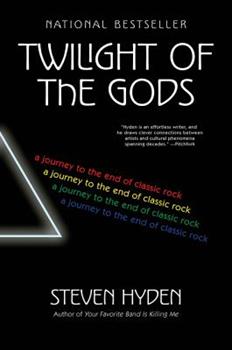
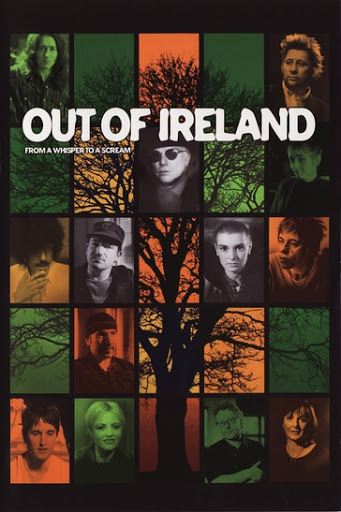
The daily posts I put up for my Facebook group Rock Docs (check it out if interested) generally fall into a few different categories: birthday tributes, trailers for upcoming music documentaries and seasonal-themed series (I recently had a weeklong string of posts about Irish bands centered around St. Patrick’s Day). Another frequent category that can’t be avoided: obituary posts. Any rock music fan of a certain age who is on social media knows these well. Whenever one of our beloved stars dies, the online tributes, often very heartfelt, come pouring in and last for days if not weeks. This phenomenon probably peaked in early 2016, when David Bowie and Prince passed away within a few months of each other.
Of course, a lot of this can’t be helped: rock ‘n’ roll is a youth-centric artform that is now about 65 years old. While many of the baby-boomer stars of its Golden Age are in their Golden Years, rock has ceded its primacy in the pop-music pyramid since at least the late Nineties. A book like Twilight of the Gods: A Journey to the End of Classic Rock was inevitable.
Freelance author and podcaster Steven Hyden has acquitted himself well on this subject. Twilight of the Gods is an accessible, witty and committed book. Part of its success may be that Hyden was born in 1977 and grew up in suburban Minnesota, a Gen X/Millennial bitten bad by the Classic Rock bug. He is no portentous, self-serious scribe a la Greil Marcus, but he gets it. By early middle school he was subsumed by rock “as an act of faith: albums as sacred texts, live concerts as quasi-religious rituals, and rock mythology as a means of self-discovery.” An avowed agnostic, Hyden admits that “if there is a God, I was sure I had found Him on side two of Abbey Road.”

Hope I die before I get old—or not. Roger Daltrey and Pete Townshend on the “Who Hits 50 Tour” in 2016
He first saw his favorite band (the Who) in 2002, so the timeline of his grand obsession was already leaning into advanced middle age. But by the end of the night, Hyden had found his musical Olympus as the Who rose to the occasion of past greatness. Or, more precisely, Pete Townshend and Roger Daltrey did that. Bassist John Entwistle had recently died (after a night of latter-day rock-star debauchery) and Keith Moon, the original wildman drummer, was already a quarter-century in the grave.
But to Hayden and countless other fans, what may matter above all is the (hoped for) immortality of the form itself. Bands like the Beatles, the Stones, Led Zeppelin and Pink Floyd not only have a considerable repertoire of recordings but are also steeped in rich mystique and all sorts of esoterica. Like many before him, Hyden enthusiastically partakes of both the canon of accepted masterwork albums and more obscure discoveries, reads the books and music mags and views all the important rock docs.
By 1988, when American TV viewers were treated to the legendary “Freedom Rock” commercial, the canonization of Sixties and Seventies youth music was in full swing.
The result of this deep-diving is an often quirky book where the author explores all sorts of different tributaries on this long and winding musical river. Hyden tells of his great appreciation of both the rebel spirit of Bruce Springsteen’s wilder early albums and the more reflective tone of his later work (both men had complicated father/son relationships). He talks of how fans can keep the classic-rock experience fresh by embracing once-avoided “good bad albums” like the Stones’ Black and Blue and Neil Young’s Trans. And of course, no book about rock history would be complete without foray’s into the subjects of the occult (there is an excellent dissection of the Ozzy Osbourne song “Mr. Crowley”) and the old stand-by discussion of how awful the Eagles are (“They were cool like the captain of the high-school baseball team is cool… the kind of guys who will tape your ass cheeks together if you dare pass out early at the party”).
Not every section of The Twilight of the Gods works equally well. The “dad rock” chapter, while entertaining enough, goes on too long with its Wilco vs. Pearl Jam showdown. But Hyden mostly stays on point, often keenly so. Through the real-life example of his own divorced mother, he discerns a generational class of women who by the Eighties had moved on from the randy sex anthems of Aerosmith et al. Instead, they welcomed the embrace of goopy power ballads like “Open Arms” by Journey and “Keep on Loving You” by REO Speedwagon. But for good reason. Here, wised-up sensitive men were also looking for something more lasting. “These power ballads are about damaged people trying to make a go of love despite trying circumstances” and Hyden has the stats to mark this as a growing demographic.
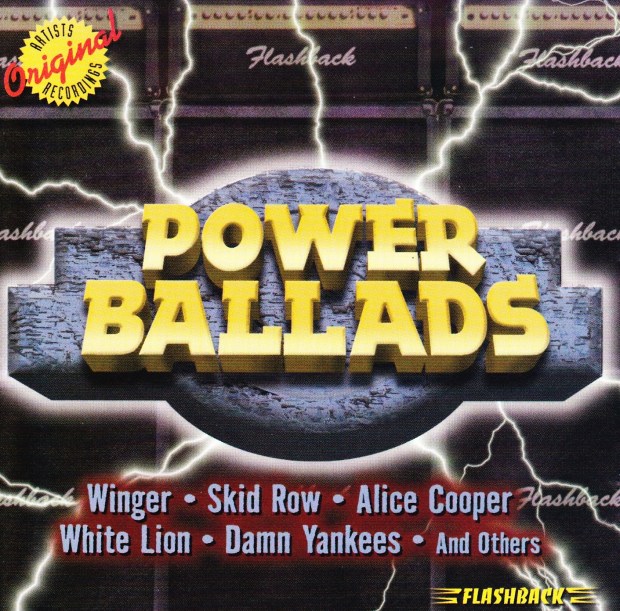
Divorce Rock? Singers of this song type were often (and improbably) culled from glam metal bands.
As the author observes, eventually “you’ll see there is no beginning or end to music, only grooves that you can lock into until you find another groove.” But there is an end to the mortal coil and early on in the book he makes note of the rock notables who passed on while he was working on it: Chuck Berry, Gregg Allman, Leonard Cohen etc. Each of these deaths is mourned personally (online) often in ways that are inter-generational. In the the closing pages he notes, “The exaggerated arc of rock stardom creates a framework for understanding our own lives. Now classic rock is helping us understand, and accept, the inevitability of death.” Not the most pleasant thought, but I’m glad that Steven Hyden has tackled this thorny subject with such insight and panache.
–Rick Ouellette
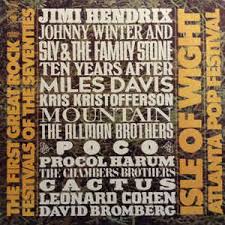
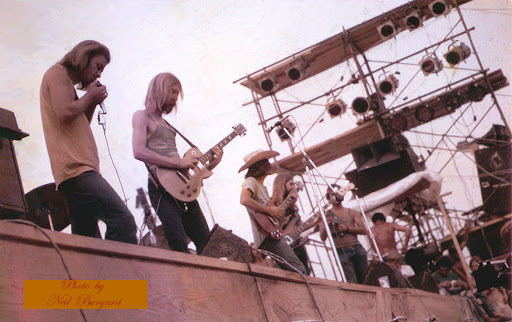
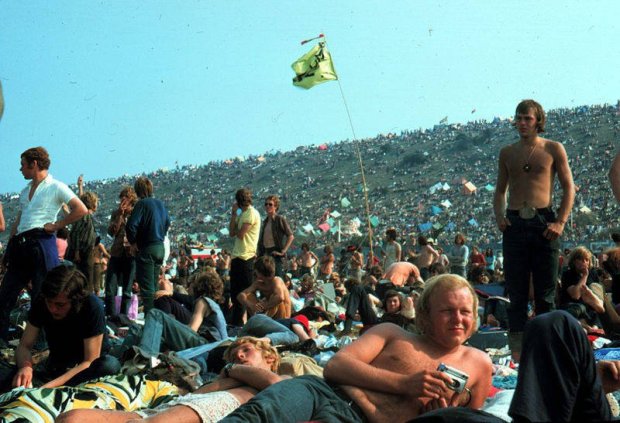








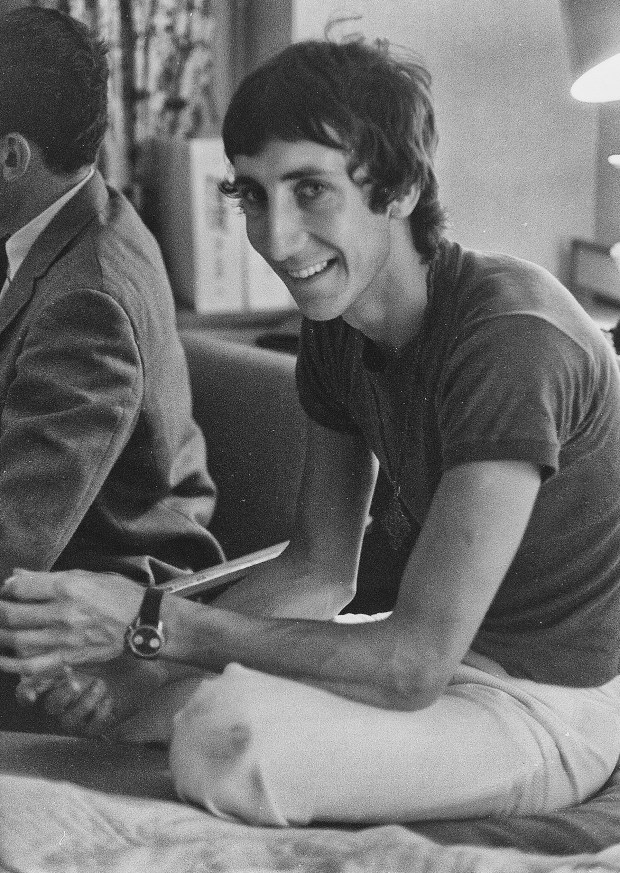 Pete Townshend in a D.C. hotel room, 1967 (Photo by Michael Klavans)
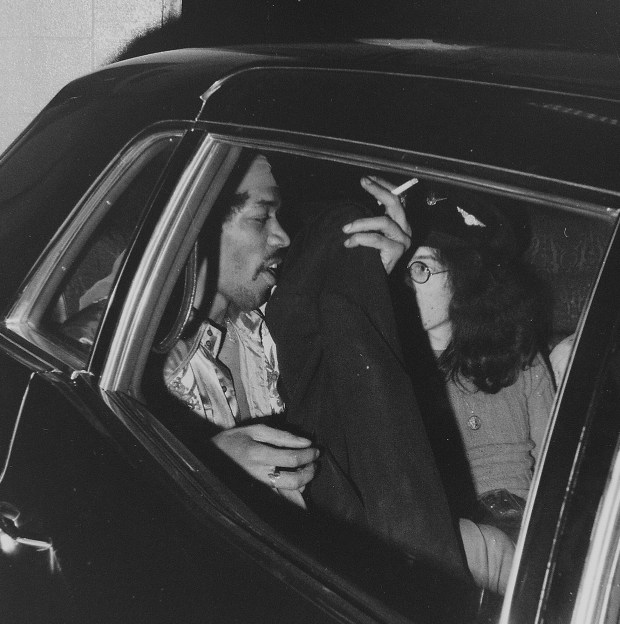 Jimi Hendrix outside the Baltimore Civic Center (Photo by Michael Klavans)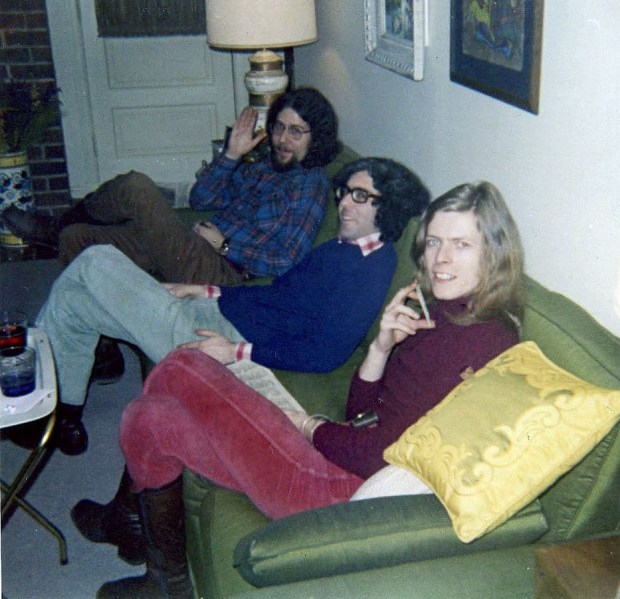

 But director Shah makes no mistake in pointing out that the National Front had made race prejudice an “acceptable point of view” in Britain at that time. This extended to some prominent old-guard rock stars. Included in this shameful category was David Bowie (who opined that the nation could “benefit from a fascist leader”) and Rod Stewart, who suggested (from the comfort of his new home in Los Angeles) that all of the UK’s immigrants “should be sent home.” Most egregious was Eric Clapton who, during an infamous 1976 concert in Birmingham, launched into a drunken racist tirade (“get the coons out”) while also asking minority fans in the audience to raise their hands and chanting the NF slogan “Keep Britain White.”
Of course, Saunders was all over this, bitterly criticizing Clapton (who built his career on the blues) of musical colonialism and suggesting that the guitar-god may be suffering from a touch of “brain damage.” True, punk did sometimes dabble in Nazi iconography, but you always got the feeling this was for shock value and not the sort of contemptible white privilege on display in the examples above.
An enjoyable aspect of White Riot is the emphasis on the inner workings of Temporary Hoardings and the current interviews with staffers like “Irate” Kate Webb, Syd Shelton and Lucy Whitman. The grassroots organizing, in an age before cell phones and the Internet, is inspiring as are the animated re-creations pf the newspaper’s cut-and-paste punk aesthetic.
But director Shah makes no mistake in pointing out that the National Front had made race prejudice an “acceptable point of view” in Britain at that time. This extended to some prominent old-guard rock stars. Included in this shameful category was David Bowie (who opined that the nation could “benefit from a fascist leader”) and Rod Stewart, who suggested (from the comfort of his new home in Los Angeles) that all of the UK’s immigrants “should be sent home.” Most egregious was Eric Clapton who, during an infamous 1976 concert in Birmingham, launched into a drunken racist tirade (“get the coons out”) while also asking minority fans in the audience to raise their hands and chanting the NF slogan “Keep Britain White.”
Of course, Saunders was all over this, bitterly criticizing Clapton (who built his career on the blues) of musical colonialism and suggesting that the guitar-god may be suffering from a touch of “brain damage.” True, punk did sometimes dabble in Nazi iconography, but you always got the feeling this was for shock value and not the sort of contemptible white privilege on display in the examples above.
An enjoyable aspect of White Riot is the emphasis on the inner workings of Temporary Hoardings and the current interviews with staffers like “Irate” Kate Webb, Syd Shelton and Lucy Whitman. The grassroots organizing, in an age before cell phones and the Internet, is inspiring as are the animated re-creations pf the newspaper’s cut-and-paste punk aesthetic.
 After months of rumbling with NF marchers and right-wing yobs, RAR had its moment in a bravura march from Trafalgar Square (see photo above) to Victoria Park, the ensuing demonstration and concert (headlined by the Clash) drawing close to 100,000 folks. The National Front fizzled at the polls in the ensuing general election (1.3%) but the vote also saw the election of Prime Minister Maggie Thatcher, who employed the dog whistle instead of the boot to exploit the cause of white grievance. Yet the celebration of cultural diversity promoted by Rock Against Racism has taken hold over the decades, even as populations seem intent on going backwards. So the struggle goes on, but Rubik Shah’s compelling work can act as a valued piece to show us again the way forward.
**************************************************
You can check out the excerpt of my book “Rock Docs: A fifty-Year Cinematic Jorney” at
After months of rumbling with NF marchers and right-wing yobs, RAR had its moment in a bravura march from Trafalgar Square (see photo above) to Victoria Park, the ensuing demonstration and concert (headlined by the Clash) drawing close to 100,000 folks. The National Front fizzled at the polls in the ensuing general election (1.3%) but the vote also saw the election of Prime Minister Maggie Thatcher, who employed the dog whistle instead of the boot to exploit the cause of white grievance. Yet the celebration of cultural diversity promoted by Rock Against Racism has taken hold over the decades, even as populations seem intent on going backwards. So the struggle goes on, but Rubik Shah’s compelling work can act as a valued piece to show us again the way forward.
**************************************************
You can check out the excerpt of my book “Rock Docs: A fifty-Year Cinematic Jorney” at 




 Reel and Rock