“Documentary 101: A Viewer’s Guide to Non-Fiction Film” is a first-of-its-kind anthology, covering the entire spectrum of non-fiction film from 1895 to the present day. There are 101 full-length reviews of documentaries chosen for their aesthetic prominence and/or historical significance, followed by briefer entries on related titles. There are 325 total reviews and an informational appendix in its 418 pages.
Below are four new excerpts from the book, accompanied by film stills only seen here. Click on images for a larger view.
“In the Year of the Pig” was the first major documentary in protest of American involvement in Vietnam and it’s admirable that director Emile de Antonio rejected the era’s fashionable agitprop to instead carefully delineate the war’s trajectory from a post-war French colonial issue, to a regional political struggle to a suddenly important outpost in the international fight against communism. A thought-provoking stew of vital interviews and ground-level footage, this is perhaps the first film of the radical left to ever receive an Oscar nomination in the documentary category.
(In the Year of the Pig, 1968)
***********************************
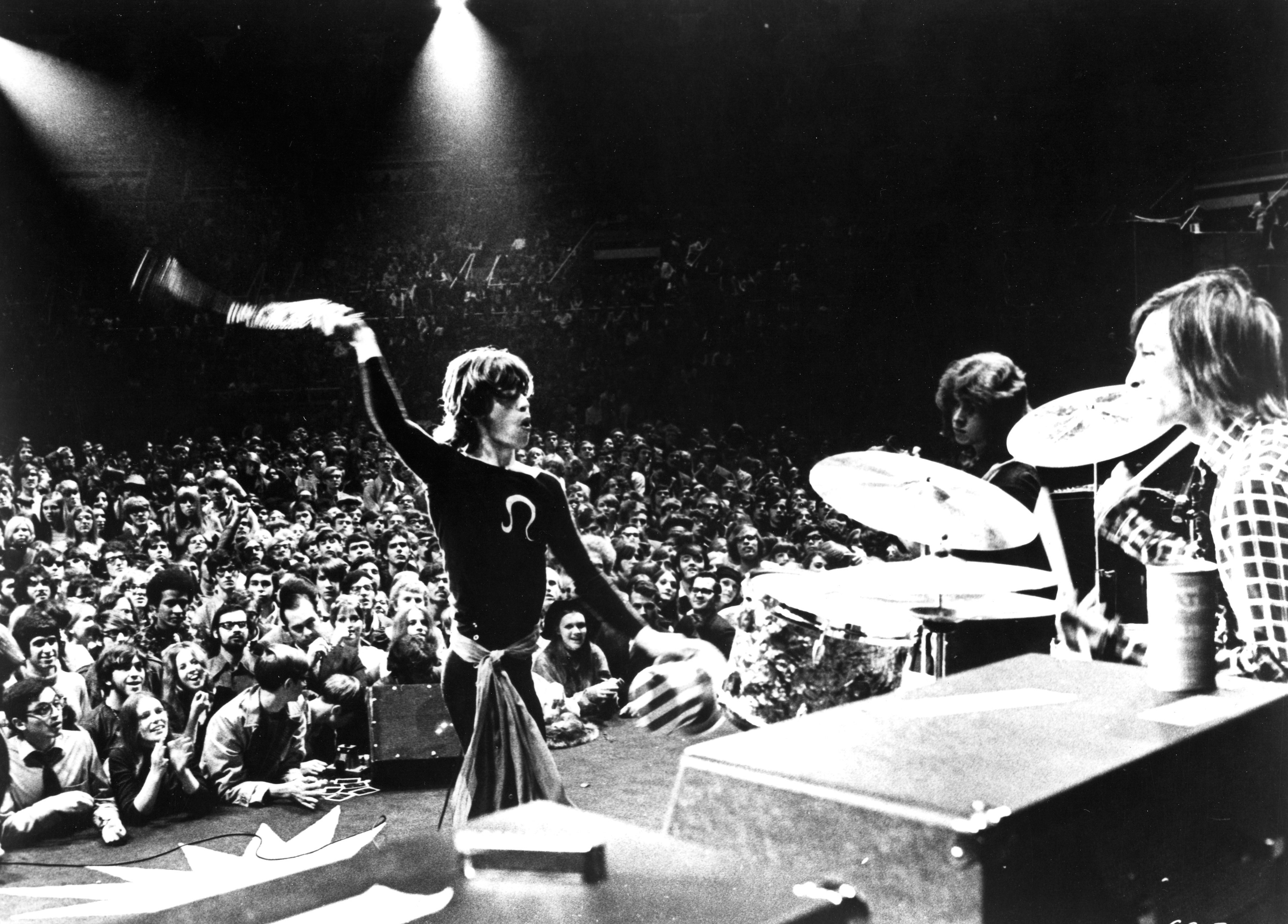
The Rolling Stones hired the Maysles brothers, along with their frequent collaborator Charlotte Zwerin, to document their 1969 American tour, the first where they were introduced as “the Greatest Rock and Roll Band in the World.” Right from the film’s first musical number, a turbo-charged version of “Satisfaction” from a Madison Square Garden show, the Stones do their best to live up to that hype. Times have changed since the Beatles invented the modern rock concert a half-decade earlier. Witness the communal hero-worship, the sophisticated sound system, the druggy ambience. Certainly, the sexually-charged appeal of singer Mick Jagger is a far cry from the schoolgirl crushes inspired by the Fab Four in the mid-6os. But the Stones had missed out on Woodstock, which had happened a few months before their arrival. They were already looking ahead to staging a one-day free festival in California at the end of the tour, hoping to create their own “microcosmic society,” a memorable decade-ending event. That it certainly was…
(Gimme Shelter, 1970)
************************************
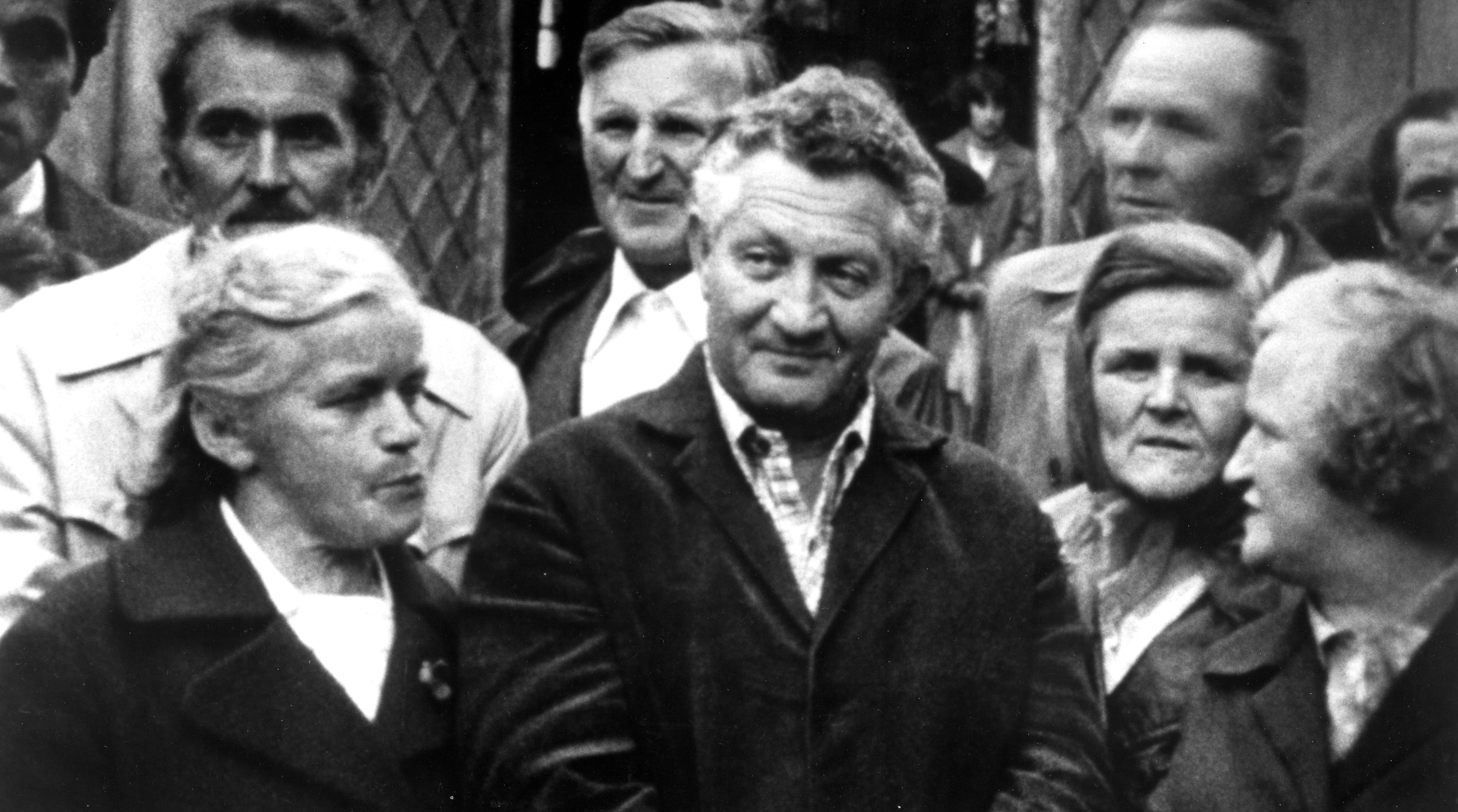
The film begins in Chelmno, Poland, where some of the earliest exterminations of prisoners first took place (starting in December 1941), and where hundreds of thousand were eventually put to death in its infamous gassing vans. By the end of the war, with Soviet forces closing in, the German guards set out to kill all those still alive. Fifteen-year-old Simon Srebnik was one of the less than five people to survive this desperate massacre. After recovering from his wounds (a bullet had grazed his head) he moved to Israel, but he is persuaded by Lanzmann to return to Chelmno thirty-four years later. After walking down a country road with a haunted look on his face—-as if he’s half-expecting to be apprehended—-Srebnik identifies the sight of the concentration camp where the foundation of the vast crematorium is still visible. “No one can re-create what happened here,” he says. “Impossible! And no one can understand it.”
(Shoah, 1985. Pictured is Simon Srebnik with residents of Chelmno, likely in the late 1970s)
****************************************
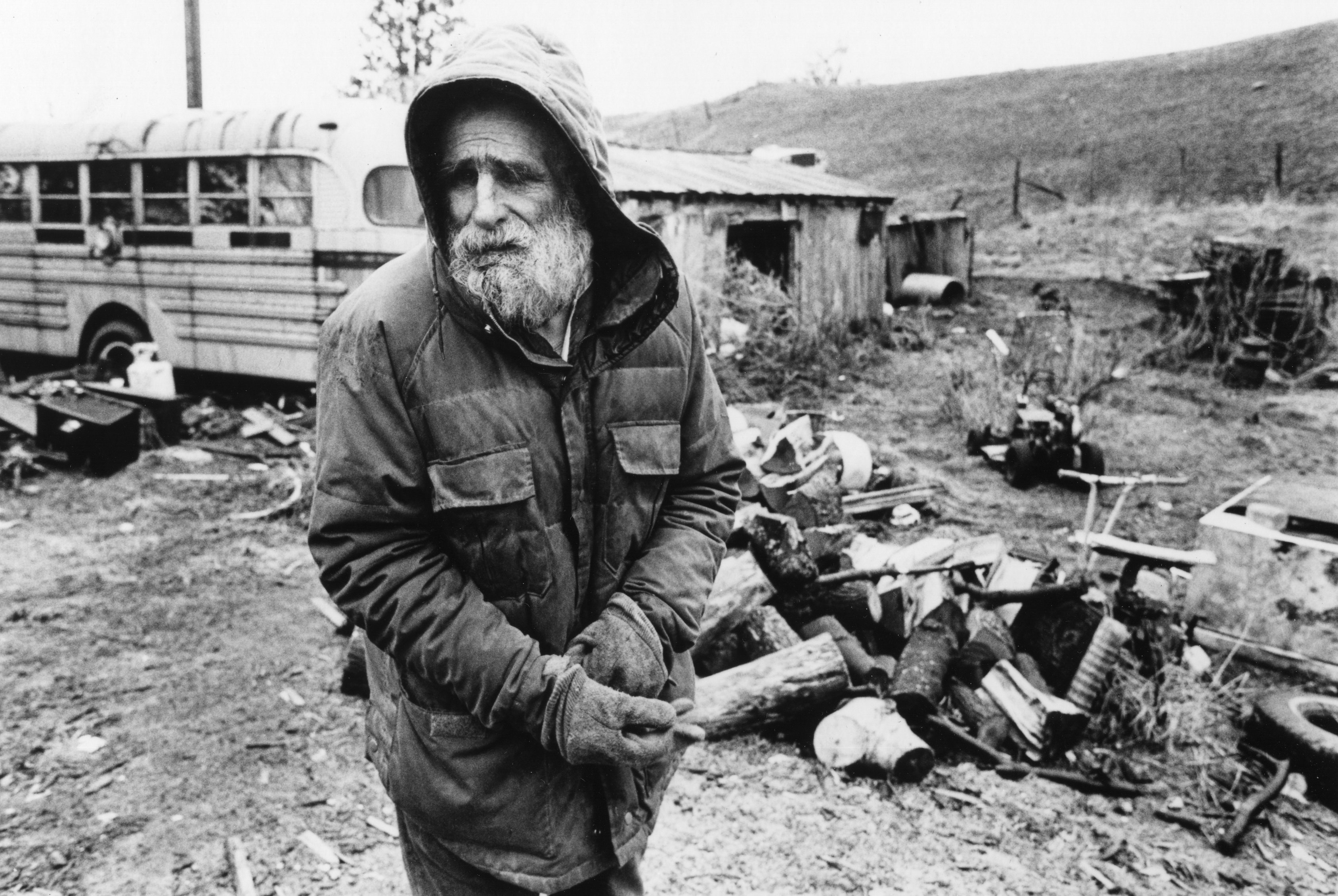
The subject of Joe Berlinger and Bruce Sinofsky’s first film are the “Ward boys,” four elderly bachelor brothers who run a small dairy farm in upstate New York. They lead a hermitlike existence centered around their squalid farmhouse; aside from daily trips to the market, they have very little to do with the outside world, and vice versa. Their quiet lives change drastically when one of the brothers dies in bed and another, Delbert, is charged with his murder. Soon after the arrest, the Wards learn they have a lot to both fear and appreciate from the society they have closed themselves off from. The state police and the district attorney show about as much concern for common decency as the brothers do for personal hygiene. The police manage to wrangle a confession out of an unrepresented Delbert Ward, a man of low IQ—-a “triumph” they and the DA’s office follow up with a series of ever-more-questionable tactics that culminate in a desperate attempt to turn the whole thing into an incestuous sex crime when their case seems to be faltering. The townspeople of Munnsville, on the other hand, rally around the Wards with a surprising show of support and affection.
(Brother’s Keeper, 1992)
“Documentary 101: A Viewer’s Guide to Non-Fiction Film” is a first-of-its-kind anthology, covering the entire spectrum of non-fiction film from 1895 to the present day. There are 101 full-length reviews of documentaries chosen for their aesthetic prominence and/or historical significance, followed by briefer entries on related titles. There are 325 total reviews and an informational appendix in its 418 pages.
Below are five more snippets from the book, accompanied by film stills only seen here.
During the Sixties, Berkeley, California became a boiling cauldron of activism and left-wing causes, the ingredients added one after the other (civil rights, free speech, Vietnam, feminism, the ecology) until it threatened to spill out of control. As to how this widespread culture of protest developed, director Mark Kitchell touches on the curious phenomenon that is the “oppression” of upper-middle-class white youth. It starts with parents who came of age in the Depression trying to give their children “everything” as they raised families in the expanding postwar economy. When this edged over into the materialism and conformity of the 1950s, it sowed the seeds of rebellion. Kitchell infers that these kids could only break through the status quo if they considered themselves not to be privileged in the conventional sense, but instead to have been raised in spiritual and intellectual poverty.
(Berkeley in the Sixties, 1990)
**********************************************
Michael Moore financed much of the film’s $160,000 budget himself and centered it on his own fumbling attempts to meet GM chairman Roger Smith and convince him to personally meet a few of the Flint area’s 30,000 newly unemployed… Toward the end of the film the camera is behind Moore’s shoulder as he finally tracks down Roger Smith at the GM Christmas party. The chairman has just given a speech where he somehow saw it fitting to quote Dickens’s famous monologue from “A Christmas Carol” (“I always thought of Christmas as a good time . . .”). Many viewers by this time would likely see Scrooge’s callous comments about the “surplus population” as the more fitting passage. At least Moore gets to speak to Smith amid a milling crowd; he’s just come from Flint “where we filmed a family [of a former GM worker] being evicted from their home on the day before Christmas Eve. Would you be willing to come with us to see?”
(Roger & Me, 1989)
**********************************************
With “The Thin Blue Line”, director Errol Morris would ultimately achieve what most documentaries can only strive for: affecting tangible change on the issue raised by the film. The publicity surrounding the film in 1988 helped to overturn the murder conviction of former death row inmate Randall Adams, who was released from prison the following year. Originally sentenced to be executed in the 1976 killing of a Dallas, Texas, police officer, the dubious case against Adams had already caused a reduction to life in prison when Morris caught wind of the case while researching in the Lone Star State for a possible documentary on a related subject. Morris helps to correct a travesty of justice without ever coming within a mile of a soapbox, building a case against the legal system despite his seeming impartiality. Even more impressive is that he does this while having the stylistic daring to hone a detail-obsessed, overtly cinematic form of nonfiction filmmaking that would greatly influence the genre through the 1990s and beyond.
(The Thin Blue Line, Errol Morris pictured in 1988)
**********************************************
Set against an economic paradigm shift and the anti-union bias of the Reagan presidency, director Barbara Kopple investigates the nationally publicized 1985 strike at a Hormel meatpacking plant in Austin, Minnesota. She contrasts an old company film touting founder Jay Hormel’s enlightened employee-friendly policies with the compulsive bottom-line mentality of modern management and shareholders. The union splits into two in over strategic differences, sometimes ripping apart families in the process. The protracted strike leaves Koppel with plenty of time to portray a beleaguered American working class, with millions hung out to dry as the once-proud industrial sector becomes inexorably replaced with an anemic retail and service sector economy.
(American Dream, 1990)
**********************************************
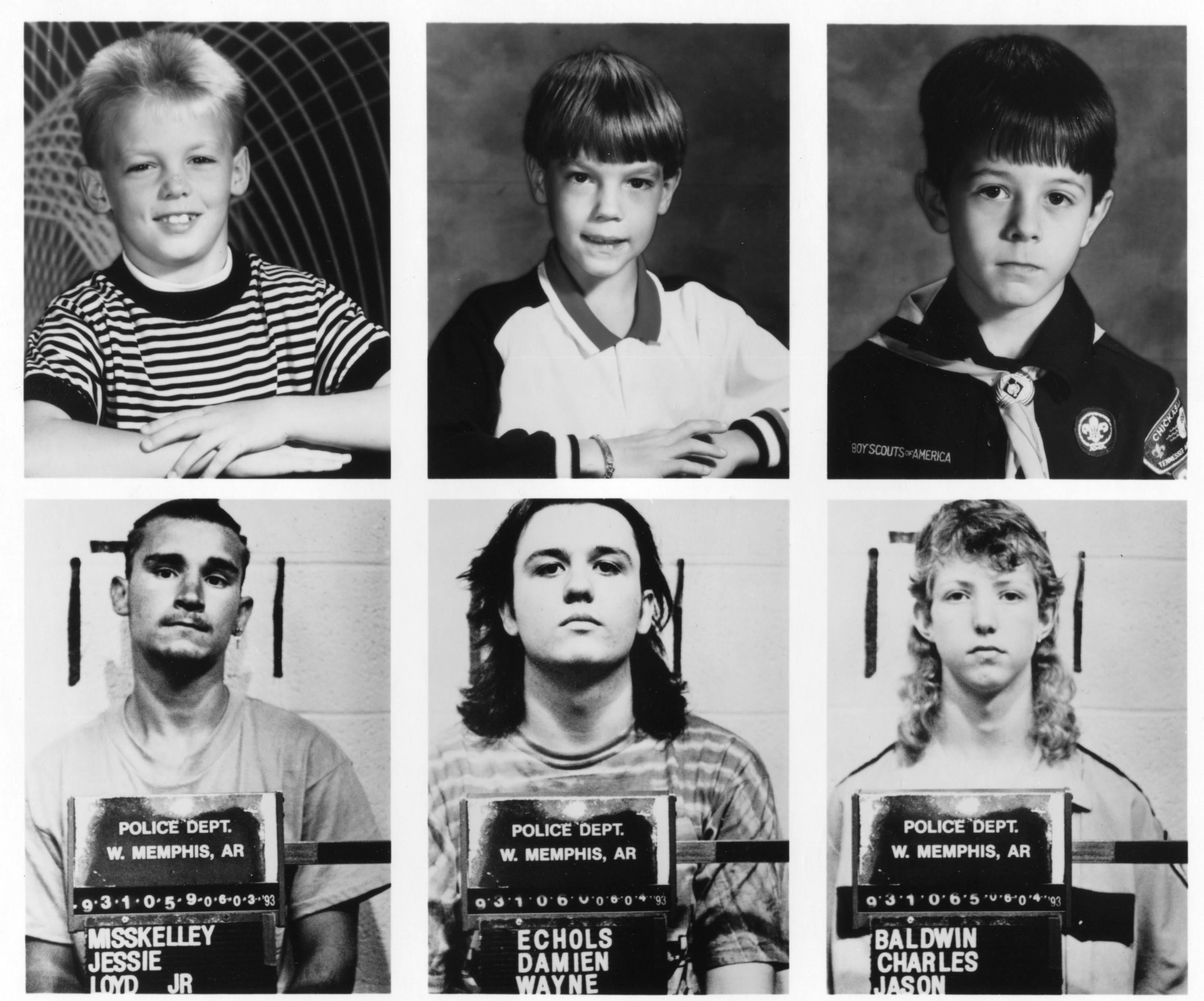
Modern-day America comes off looking more like a spruced-up version of the Dark Ages when three teenagers in Arkansas are arrested for the murder of three young boys and the only “evidence” against them seems to be that they dress in black, listen to heavy metal music, and have a high school-level interest in the black arts. This literal witch hunt forms the basic premise of Joe Berlinger and Bruce Sinofsky’s masterful but distressing documentary. The fate of the accused seems as preordained as that of the Negro defendant in “To Kill a Mockingbird” in an earlier film treatment of the American South.
(Paradise Lost:The Child Murders at Robin Hood Hills,1996)
(Watch for Part 3, coming up in early June, 2014!)
Last One Standing: The Met State Administration Building, August 2013
In Part One, I talked about growing up not far from the legendary Danvers State Hospital, the castle-like institution that loomed over U.S. Route One about twenty miles north of Boston. As kids we didn’t know much, if anything, about how idealistic new methods for treating the mentally ill devised in the late 19th century eventually yielded an abusive hellhole by the middle of the 20th underneath those baleful Victorian spires. What we did know was that it had a very creepy vibe and woe to them who should ever end up being admitted there. I was recently reminded by my sister Pam that my mother would warn us kids that she would “end up in the nuthouse” if we didn’t stop misbehaving, something that we would not want to have on our conscience. But that never erased Danvers State’s morbid fascination, and its strangely alluring infamy spread far and wide in later decades.
So was it coincidence or confluence when, fast-forwarding to 2001, I found myself living off of Trapelo Road in Waltham? Of course my wife and I bought the house for all the right reasons. Our son was born the previous fall and it was an affordable starter home only ten miles west of Boston. It also backed up to a huge tract of conservation land, accessible through a convenient hole in the chain link fence that acted as its border. I was well aware that the sprawling Metropolitan State Hospital, closed less than a decade before, lay in glorious ruin nearby. The conservation area’s trails and fire roads were a great place to mountain bike and a perfect backdoor portal to the grounds as a security trailer had been placed at the old official entrance. I was soon up there with my camera.
The sun sets on Met State, August 2001
Met State was a magnet for urban explorers braver than me (willing to go inside buildings and/or after dark) who came away with great photos and videos to be seen online. My favorite was the brilliant short film simply called “Met State”, made by Waltham-based Bryan Papciak, a tour de force of stop-motion effects and optical printing. (See it at vimeo.com/13646263). For me, it was more a place to criss-cross on my bike before dipping back down onto the wooded trails. But off the main section was an area that always freaked me out. It was a group of about ten long, uniform brick buildings (almost like an older-style housing project) that were connected and arranged around a grassy rectangle. I will have to dig up the video I once took (for part 3?), cycling around it with one hand on the bar and the other holding a camcorder. It took several minutes to circle these barracks that were called the CTG Unit. Despite its immense size it was reportedly so overcrowded with patients that some were housed in the hallways. It was overwhelming to try and think about the sum total of mental distress that these buildings once contained.
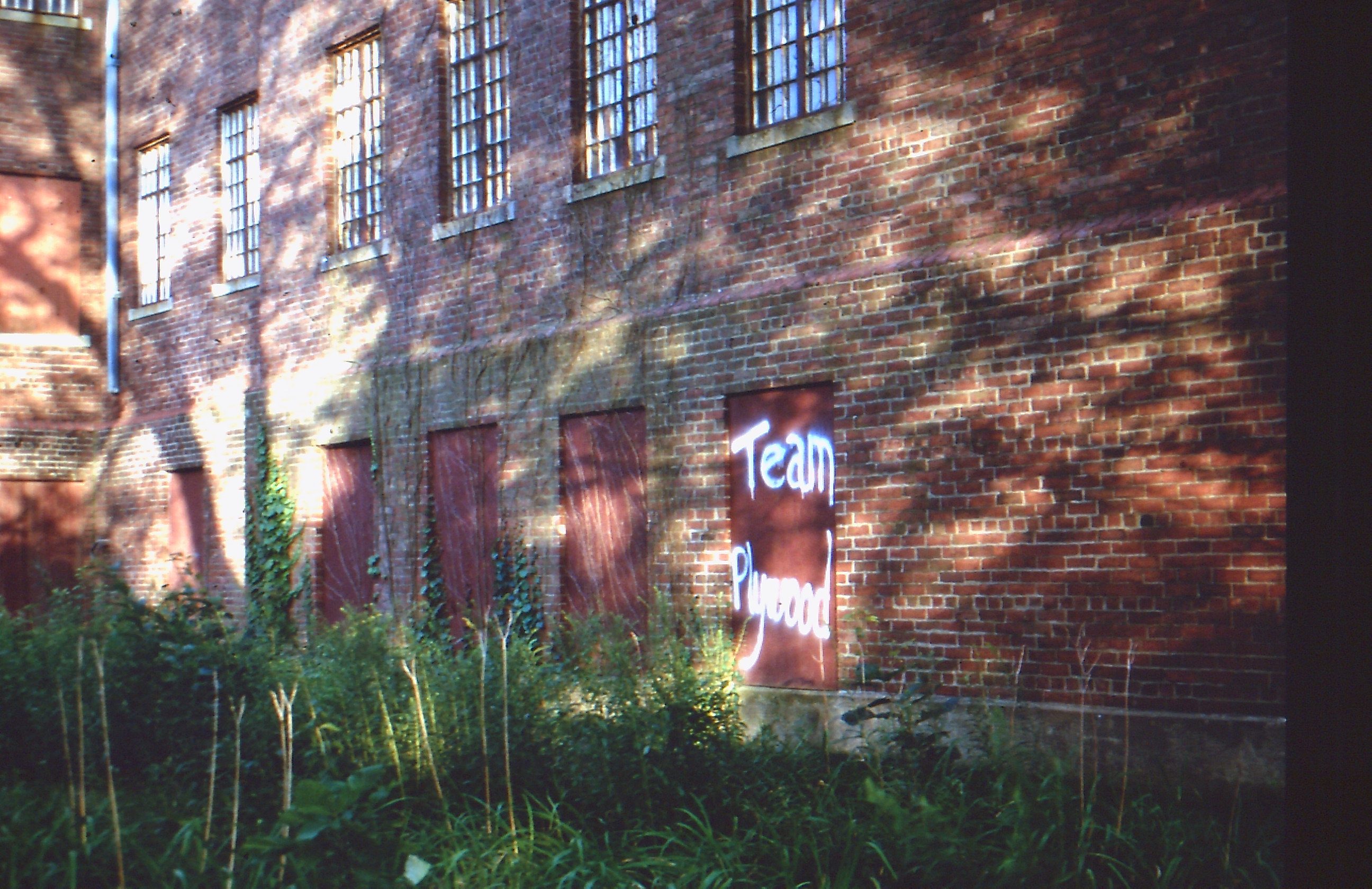
CTG Unit and graffiti, 2001
The northeast corner of Waltham was historically rural and eventually the farms gave way to several mostly state-run institutions. Met State was not alone there as a receptacle of human misery. Adjacent to it was the snake pit known as the Gaebler Children’s Center, closed since 1992 and the top floors of which could be seen from our back deck during leafless seasons. It was demolished a few years ago, its new role as a link in a regional greenbelt conflicting with the oft-ignored “No Trespassing” signs.
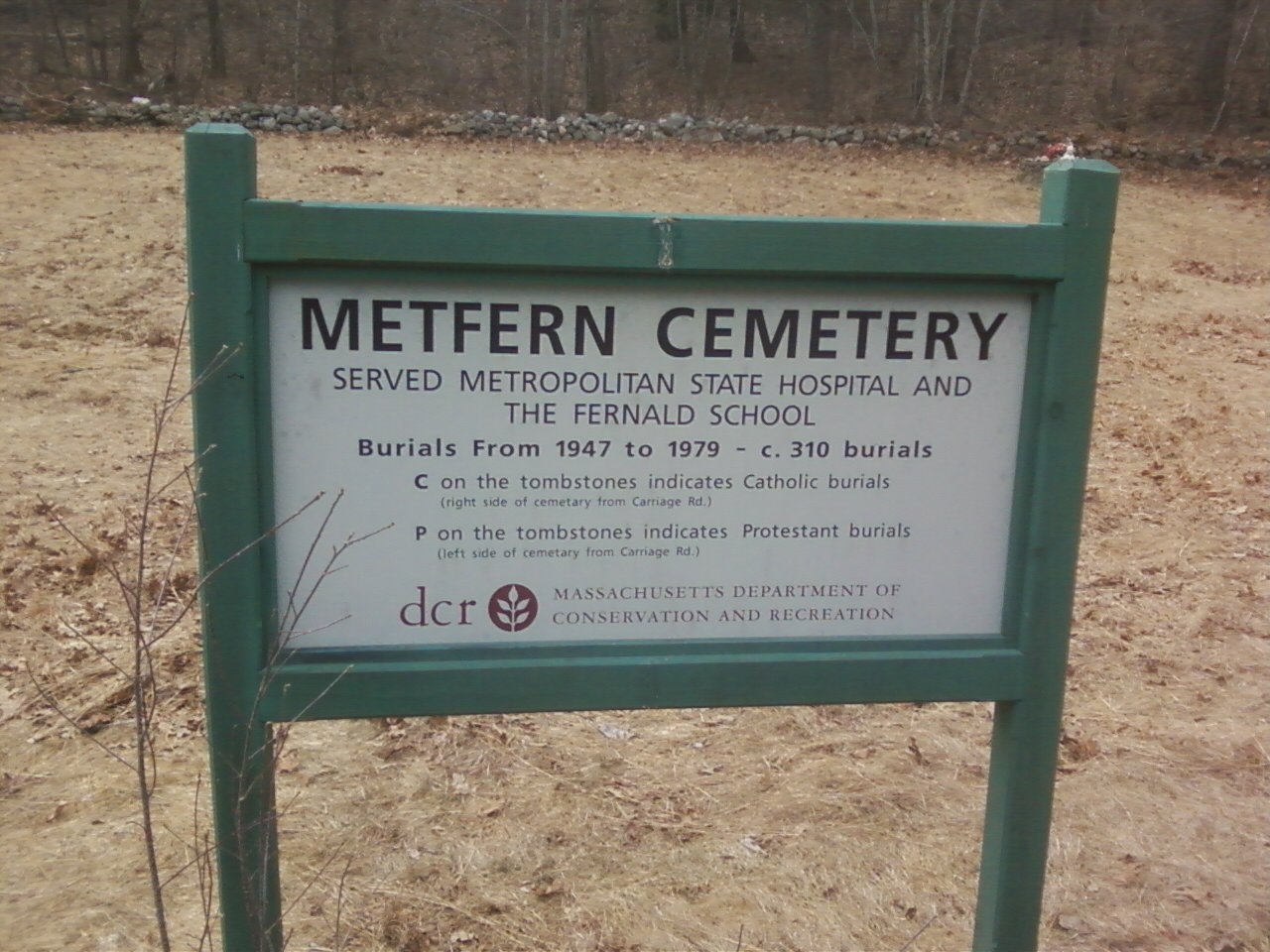
Like at Danvers State, pressure from relatives of deceased former patients have persuaded officials to at least place signage at anonymous gravesites.
Just across the town line in Belmont is the more upscale McLean Hospital, immortalized (though not named) in former patient James Taylor’s hit “Fire and Rain” as well as by the book and film “Girl, Interrupted.” Most prominent among this cluster of institutions (the “sadlands” as my wife called it) was the historic Fernald School and its sweeping 200-acre campus. Fernald was our first public institution for the mentally retarded and opened in 1848 back when its patients could still be called “idiots, morons and simpletons.” It was still open but in a much diminished capacity. I believe less than a dozen patients (considered the most severely disabled residents in the whole state) remain to this day as the state, the city and citizen’s groups wrestle with the ultimate fate of this valuable real estate.
Recently closed to public access, the campus is still easily entered over ground and I poked along the perimeter a few months ago on a suitably gray day. It may be the last time I set foot there before its likely transformation into something like the “apartment community” built by the Avalon Company at Met State, where the gloomy inner courtyard of the CTG Unit is now the family-friendly “Great Lawn.”
The grounds of Fernald were shady and reassuringly pleasant as was the recuperative ideal of the 19th century.
School’s out forever: Fernald grounds, April 2013
Still, many of the patients here were children and, judging from a documentary produced several years back by Boston’s PBS station, it’s amazing how easy it was—for the better part of a century—to have a vulnerable family member or ward of state committed here for an indefinite stay. Once admitted, they were often treated by medical researchers as “cheap and available test subjects”, some even being fed radioactive isotopes. Frederick Wiseman’s 1967 direct-cinema classic, “Titicut Follies”, shows similar travesties taking place at the Bay State’s most infamous such facility, Bridgewater State Hospital. A place that housed many of the most dangerous criminals (the Boston Strangler was housed there for a spell) it was also a dumping ground for unfortunate forgotten men caught up in unusual and suspect circumstances. One example, from the BSH Wikipedia entry, tells of a lowly street vendor in his late 20’s who first was sent there for painting a horse to look like a zebra to draw attention to his fruit stall. After being picked up a second time for drunkenness, he was sent back to Bridgwater and died there of old age. In “Titicut Follies”, Wiseman follows the story of one sane-looking man, likely put there on a vagrancy rap (and coerced into taking strong anti-psychotic drugs), desperate to get out and periodically confronting doctors in the exercise yard in the film’s only YouTube clip.
When this man gets before an unsympathetic panel, we see exactly how these unconscionable policies play out as his opposition to hospital policy is quickly written off as denial and justified fears of incarceration in a place that resembles a medieval dungeon is termed paranoid schizophrenia. God only knows what happened to him.
But I’m getting far afield into a subject I’m no expert on. Please see the full “Titicut Follies” if you ever get a chance (an expose labeled by a court as an invasion of patient privacy, it was long banned and only received a home video release in 2007) A little more readily available is Martin Scorcese’s recent pulp-fiction fantasia “Shutter Island” which features a haunted WWII vet turned Fed agent (Leonardo DiCaprio) investigating a missing patient/inmate at the titular asylum. I was a bit skeptical, if only because as a former location scout I scoffed at the computer-generated Alcatraz-on-steroids that is supposed to sit at the outer reaches of Boston Harbor. Granted, some real harbor locales were used as well, esp. the old Fort Andrews on Peddock’s Island. Although a bit too lurid for its own good (apparently to hold the attention of sensory-overloaded 21st century viewers) Scorcese does touch upon the insidious, Catch-22 methods of so long used by such institutions.
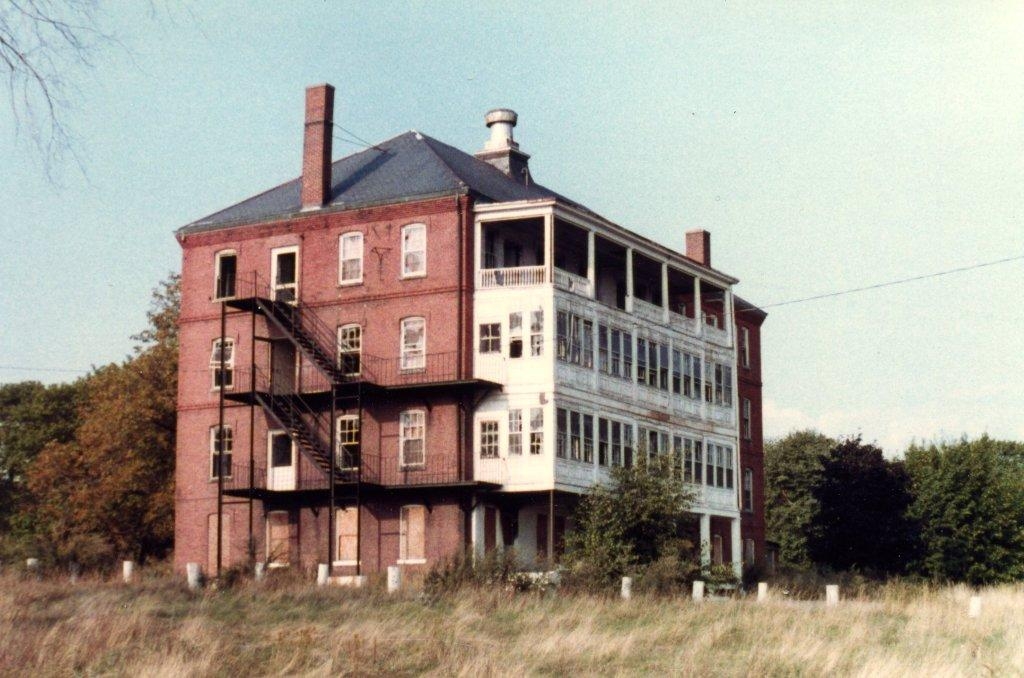
I wonder why these places always seem to be looming just over my shoulder. In my hometown of Salem, Mass. there were once shaded walks that led from the various institutions on the base of Salem Neck out to its point. For the last century it’s been the location of Willows Park, long loved by area residents for its eateries, arcades, kiddie rides and breezy outlooks to Beverly Harbor and the Atlantic. The name of the park suggests the former utility of the giant trees for shading convalescing patients on a stroll from the nearby facility. The first was the charmingly named Pest House for smallpox sufferers in the 1700s (way before the park and its famous chop suey sandwiches). Various almshouses also stood there over the long stretch of the 19th century. My father remembers the poor farm that was in the area when he was a kid. Later, only one building remained, one of the lesser-known works of architect Charles Bullfinch, designer of the Mass. State House and the U.S. Capitol expansion. It was known in its final incarnation as the Chronic Care and Rehabilitation Hospital. My father’s grandmother was a patient there in her last years and the place closed in 1970 and stood there at least until the mid-80s as the date stamp on the back of this photo I took was 1983.
When it came time to break ground for the inevitable condo development a few years later, a local resident protested to builders and city officials that they would disturb the pauper’s cemetery on the edge of the property. As recently described by this longtime Salem resident in an online town forum, the sad neglect of this graveyard meant it was known mostly to local kids who explored the vacated shoreline of the cove there. Met with denial by the authorities, the resident who posted this comment claims he was later vindicated when the excavator started digging up human bones!
But my childhood visit to see my great-grandmother was not the last time I set foot inside that building on the Pest House site. In 1977, an older friend in a clique I ran with at the time headed an obscure youth-services program out of a first floor office. The rest of the building was empty. As one of the few events this friend ever managed to pull together, she screened a movie against a sheet affixed to the back of the building. We sat probably a stone’s throw away from the cemetery that remained undetected in the pale beyond just behind us. The film was “Night Watch” a 1967 chiller starring Elizabeth Taylor as a woman who has seen a terrible crime that no one wants to hear about. The guy who wrote that post must know the feeling.
“Documentary 101” is a first-of-its-kind anthology, covering the entire spectrum of non-fiction film with entries on over three hundred titles from the years 1895 to 2012. There are 101 full-length reviews of documentaries chosen for their aesthetic prominence and/or historical significance, followed by briefer entries on related titles. There are 325 total reviews and an informational appendix in its 418 pages.
Below are five more snippets from the book, accompanied by film stills only seen here. Click on images for a larger view.
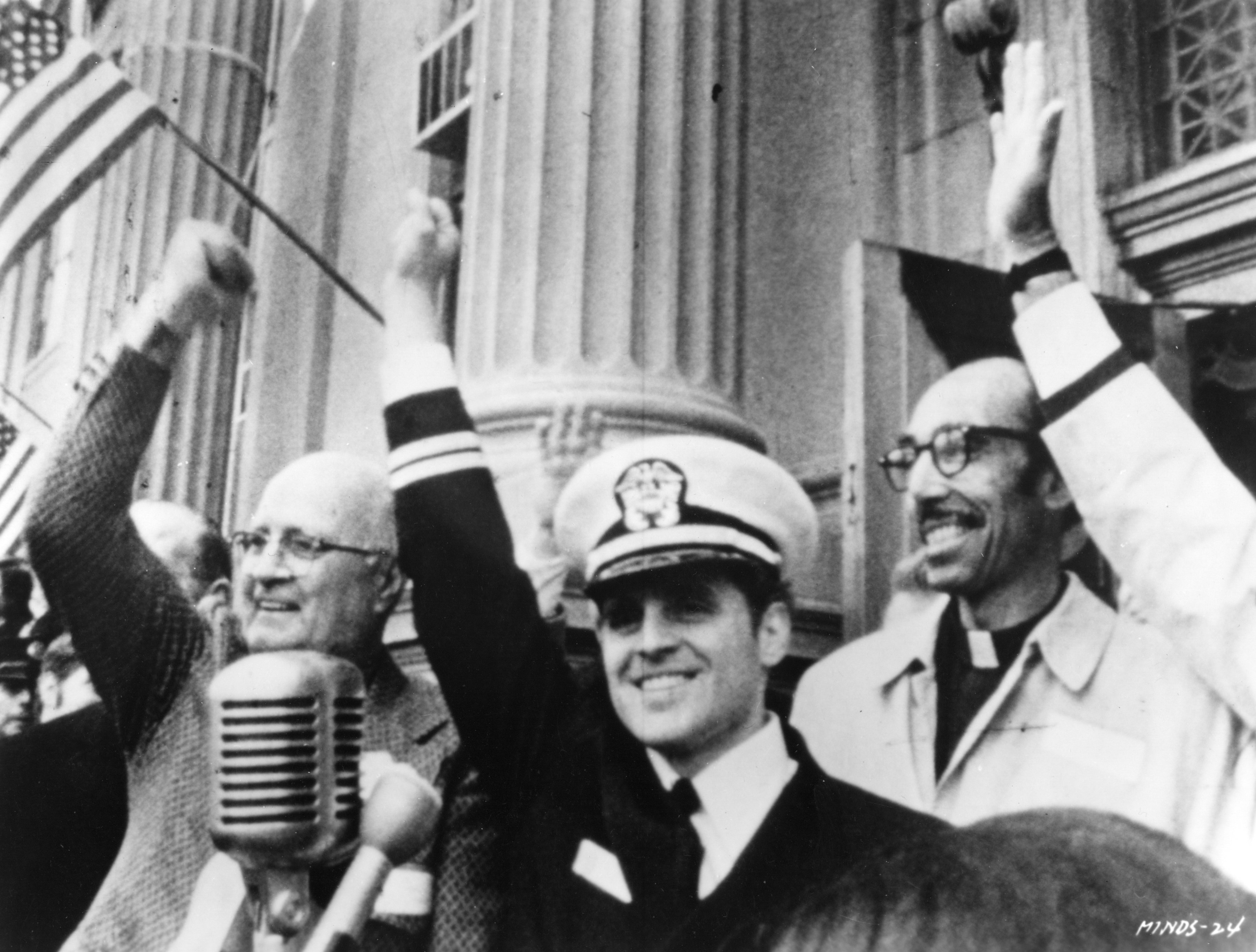
Lieutenant George Coker, was a POW for seven years who returns home with a worldview that remains as black-and-white as one of those old Westerns. No one nowadays would begrudge Coker his status as a homecoming hero in his hometown of Linden, New Jersey. He takes the stage in front of a group of local housewives, literally extolling the virtues of motherhood and apple pie, calling the enemies “gooks” and telling a cafeteria full of schoolchildren that the people of Vietnam are “backward and primitive.” The film seems to imply that Coker is the perfect surrogate for a shortsighted national policy, someone who bought into the system early on and can be relied on to help carry out any military agenda no matter how shaky its justification.
(“Hearts and Minds” 1974)
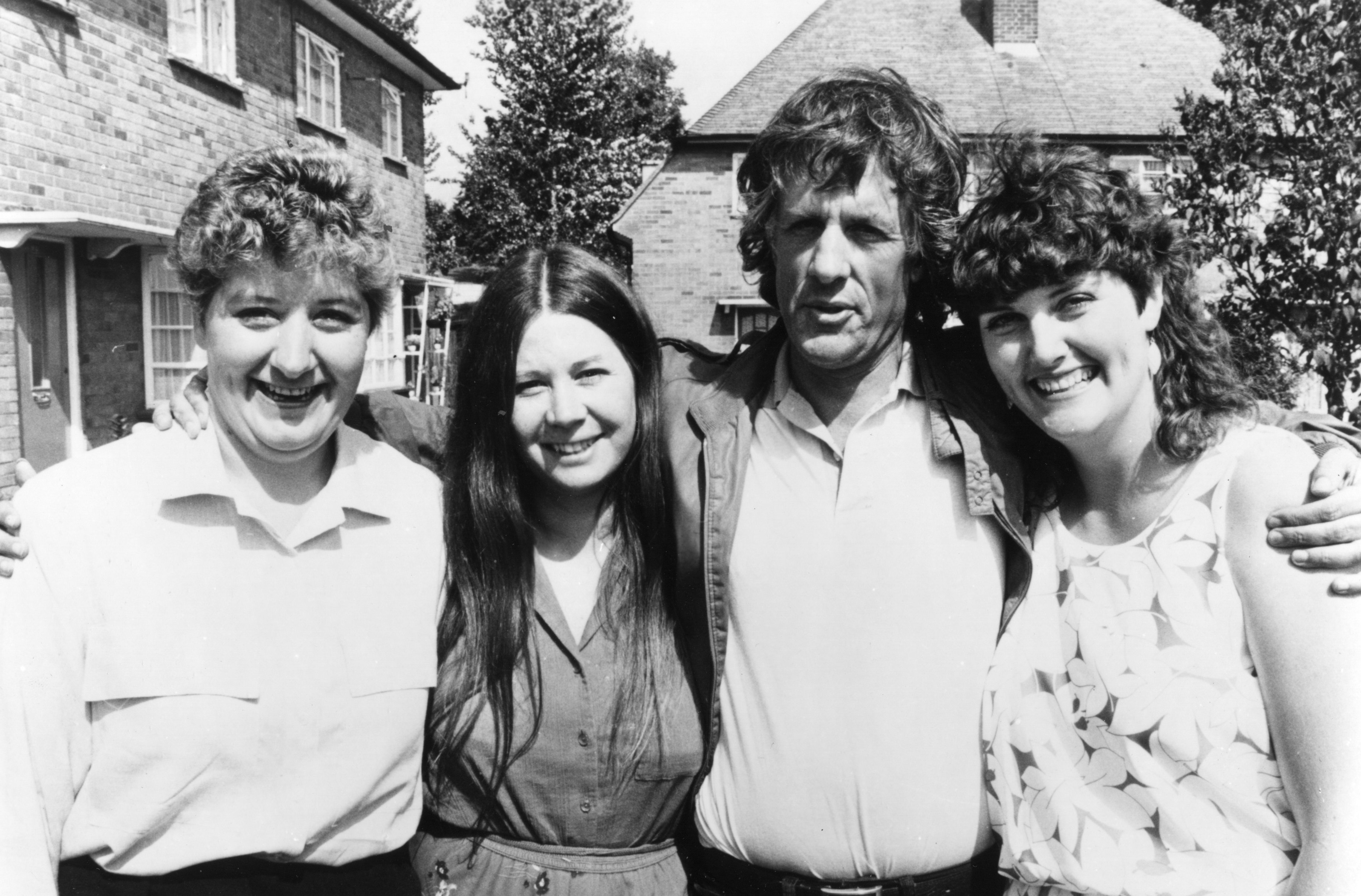
Jackie, Lynn, and Sue are former East End school chums who for several episodes were interviewed together and even sitting in the same order. In earlier times, director Michael Apted used subtle tactics to get them to react to what is perceived to be their station in life. But they are now hip to the director they have known for so long, pointing out that the rich kids in the Up group must have found it hard living up to the greater expectations. Besides, they only think about class “every seven years, when you come around.”
(Pictured with Apted during the filming of “28 UP”, these three subjects are part of a group profiled every seven years since they were seven. “56 Up” was released in 2013.)
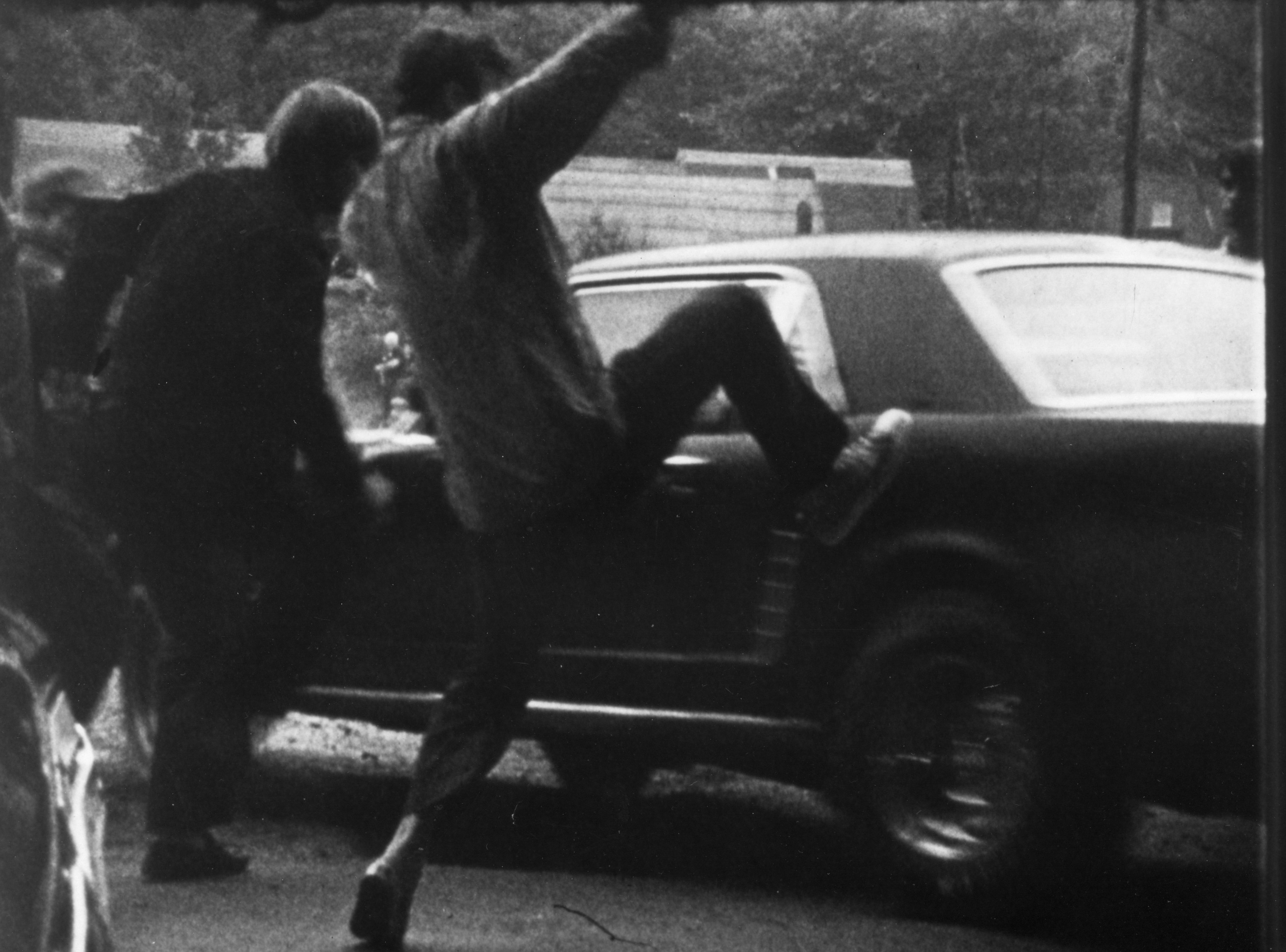
The miners only receive medical benefits after they have been diagnosed with black-lung disease and they are generally treated as little more than another piece of equipment, easily replaced when broken. When the thirteen-month strike begins, you may already find yourself convinced that things haven’t changed much since the early mining days when picketers were openly attacked by police or troops. Director Barbara Kopple is right in the eye of the hurricane during the increasingly hostile confrontations at the gate and she’s not seen as a neutral presence when the company strongmen up the ante with impulsive violence.
(“Harlan County USA” 1976)
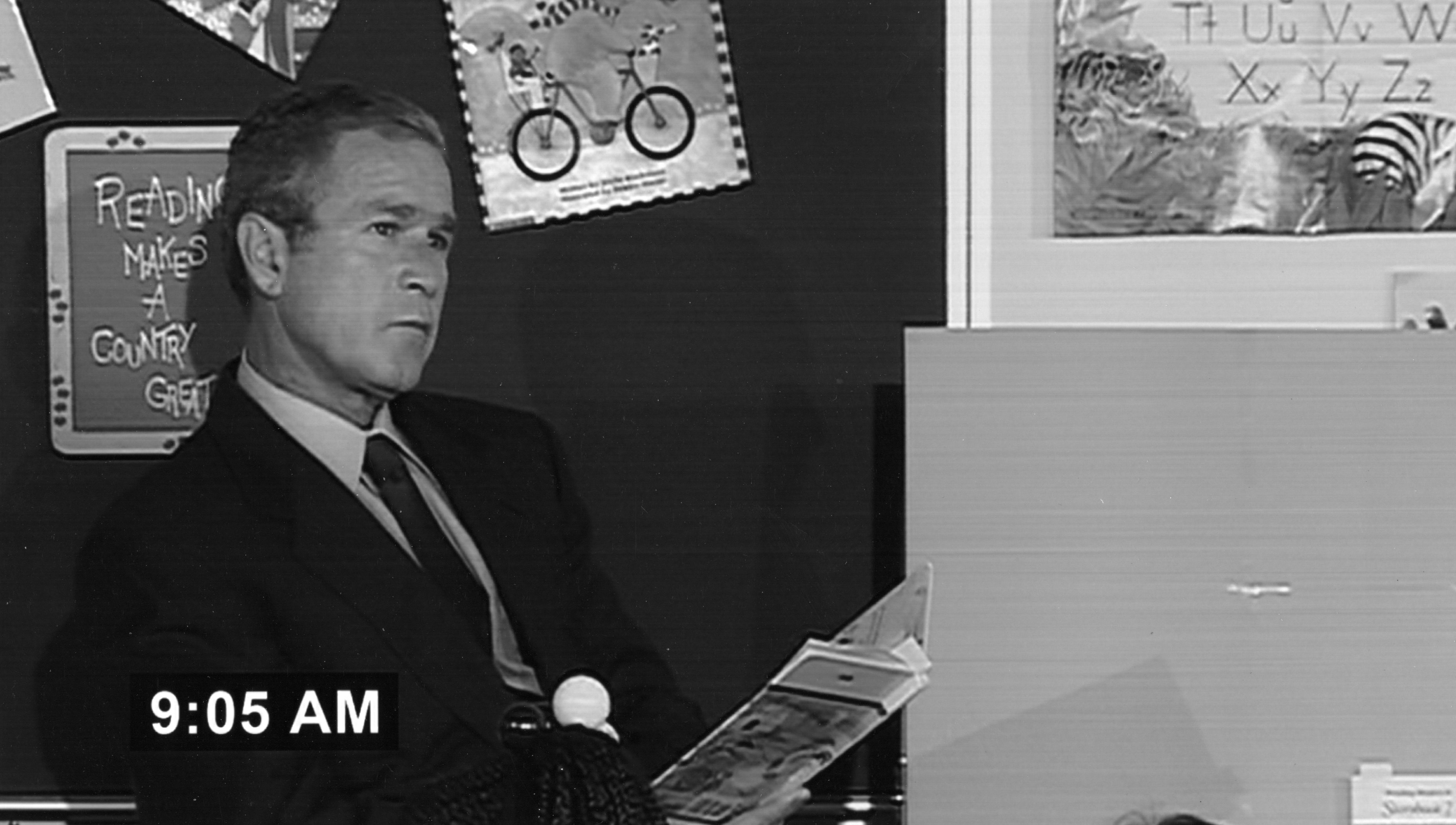
In one of the film’s more notorious scenes, President Bush is shown sitting at his Florida-classroom photo op, staring vacantly into space for seven full minutes after being informed the U.S. has just suffered the worst terrorist attack in history. Since Michael Moore can’t resist showing this sequence in nearly real time, he fills up the surreal normality of the moment with his own guess at the president’s train of thought as he continued to sit through the reading of “My Pet Goat.”
(“Fahrenheit 9/11” 2004)
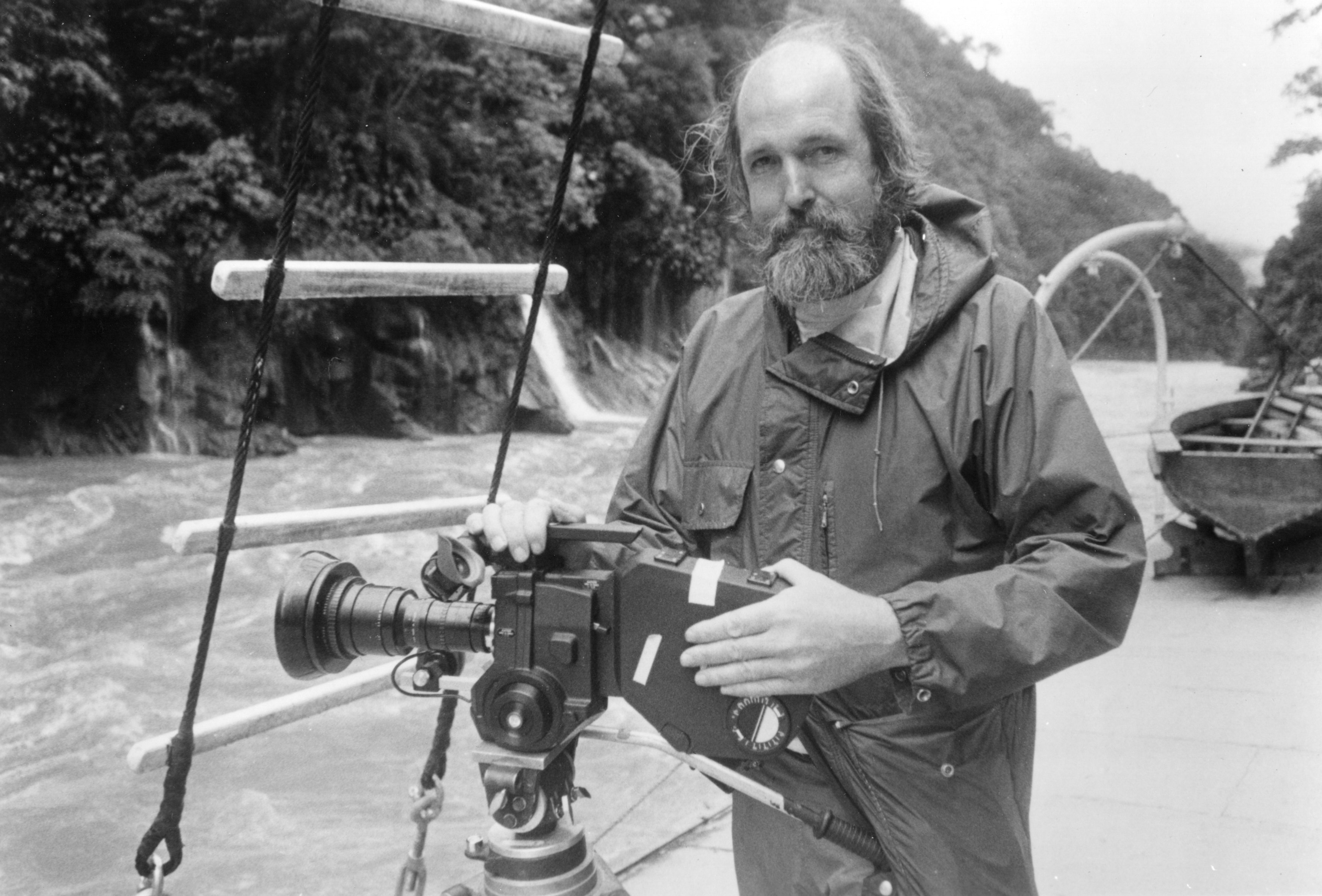
Stalwart indie documentarian Les Blank was invited to Peru by his friend Werner Herzog to record the production of the German director’s wildy ambitious film “Fitzcaraldo.” This tumultuous project inspired Blank’s most sweeping work. It’s an exceptional insider’s look at the cinematic process at it’s most chaotic. The films center on directors whose grandiose vision of a masterpiece gets knocked off course by formidable obstacles of a political, financial, meteorological, and psychological nature, all in a far-off tropical location.
(“Burden of Dreams” 1982)
Roger and Me. March of the Penguins. Man on Wire. Paradise Lost. Grizzly Man. Gates of Heaven. Taxi to the Dark Side. Super-Size Me. Spellbound.
In recent decades, titles like this have raised the profile of documentaries like never before. The appeal of films that rely on the testimony of real life have increased in the age of the “indie” and attracted a growing numbers of viewers looking for an alternative to a movie industry that too often seems fixated on the bottom line.
Documentary 101 is a first-of-its-kind anthology, covering the entire spectrum of non-fiction film with entries on over three hundred titles from the years 1895 to 2012. There are 101 full-length reviews of documentaries chosen for their aesthetic prominence and/or historical significance, followed by briefer entries on related titles. There are 325 total reviews and an informational appendix in its 418 pages.
Over the next several weeks I will be excerpting the book, using film stills I purchased that were not included for reasons of cost and the eternal differing opinions on what constitutes fair use.
The man director Robert Flaherty named Nanook (“The Bear”) was a prominent hunter for the Inuit tribes in the landmass to the east of uppermost Hudson Bay. He fashioned a “family” for Nanook and brought along on expeditions a handful of men known to him. They were all enthusiastic about the idea of the movie, which they called the “aggie” (big picture). From the start of film, Flaherty’s sympathies are clear: free of civilized neuroses, these are “the most cheerful people in all the world”, and the keen focus on daily survival skills affords them an inspirational aura. The affection Nanook and his screen wife show to the children and the children’s affection towards their puppy shrinks the vast distance between the subject and viewers. But the survival “lifestyle” is rugged stuff and the bulk of “Nanook of the North” is made up of a series of memorable hunting scenes. The 300 members of this tribe scrape out a living on a frozen range the size of England. The specter of starvation is always close at hand and Flaherty does not forget the crucial nature of this struggle—he hardly could have because he was part of the same knife’s edge existence during his sixteen months of filming. (“Nanook of the North” 1922)
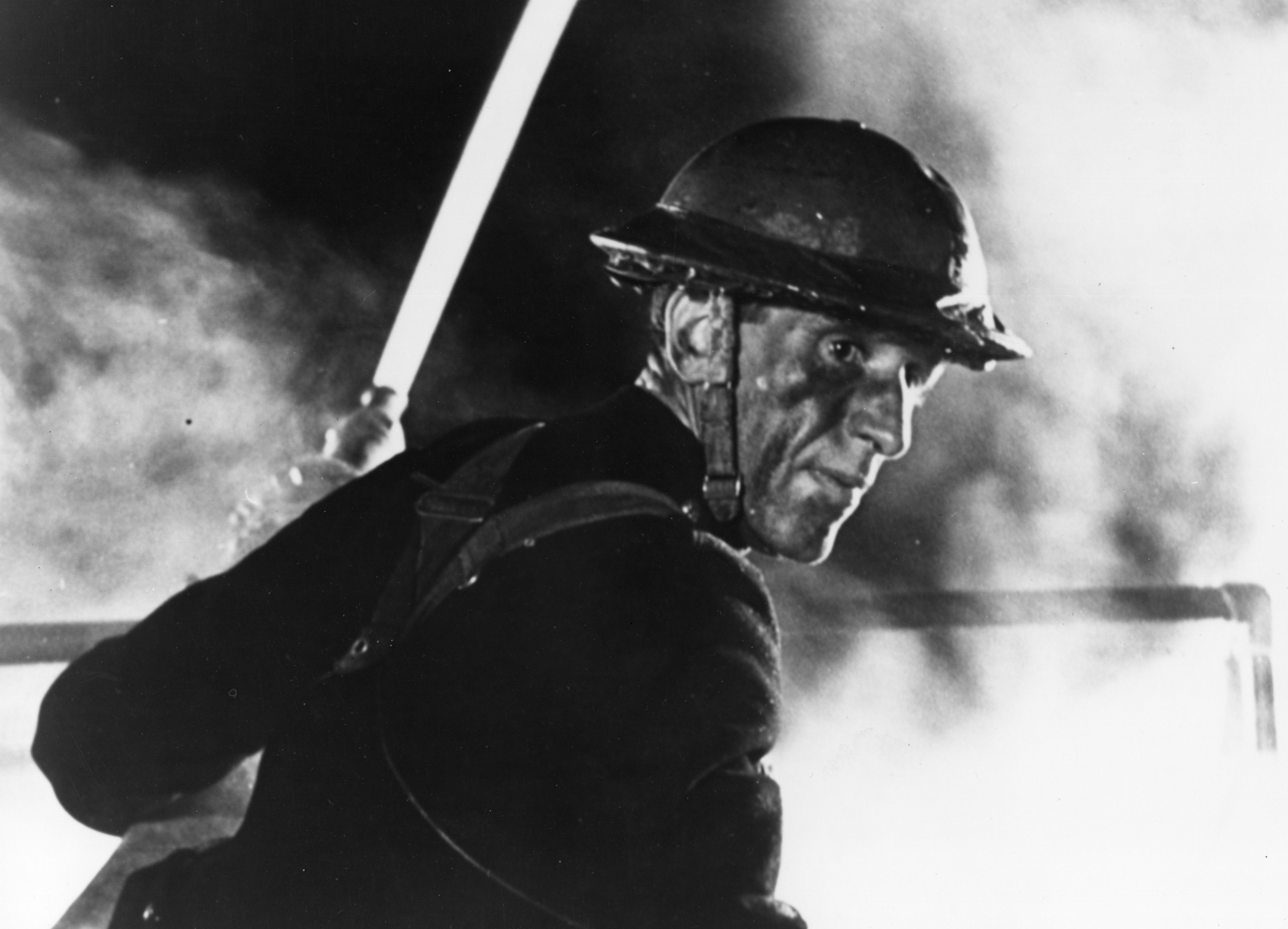
Humphrey Jennings’ tribute to (Britain’s) Auxiliary Fire Service was called “Fires Were Started” and may have seemed passive in comparison (to the war’s more pugnacious bugle-call films), despite now being the most critically lauded of his works. It is set up as a dramatic film, largely re-created by real brigade members since large-scale bombings had ceased in London by 1943. There is no mention of the Germans until the twenty-eight-minute mark, when the banshee wail of an air-raid siren pierces the night. The brigade is sent to tackle an inferno at a dock warehouse and keep it from spreading to munitions-carrying ships due to sail for the Continent.
(“London Can Take It” and other films by Humphrey Jennings, 1940-1951)
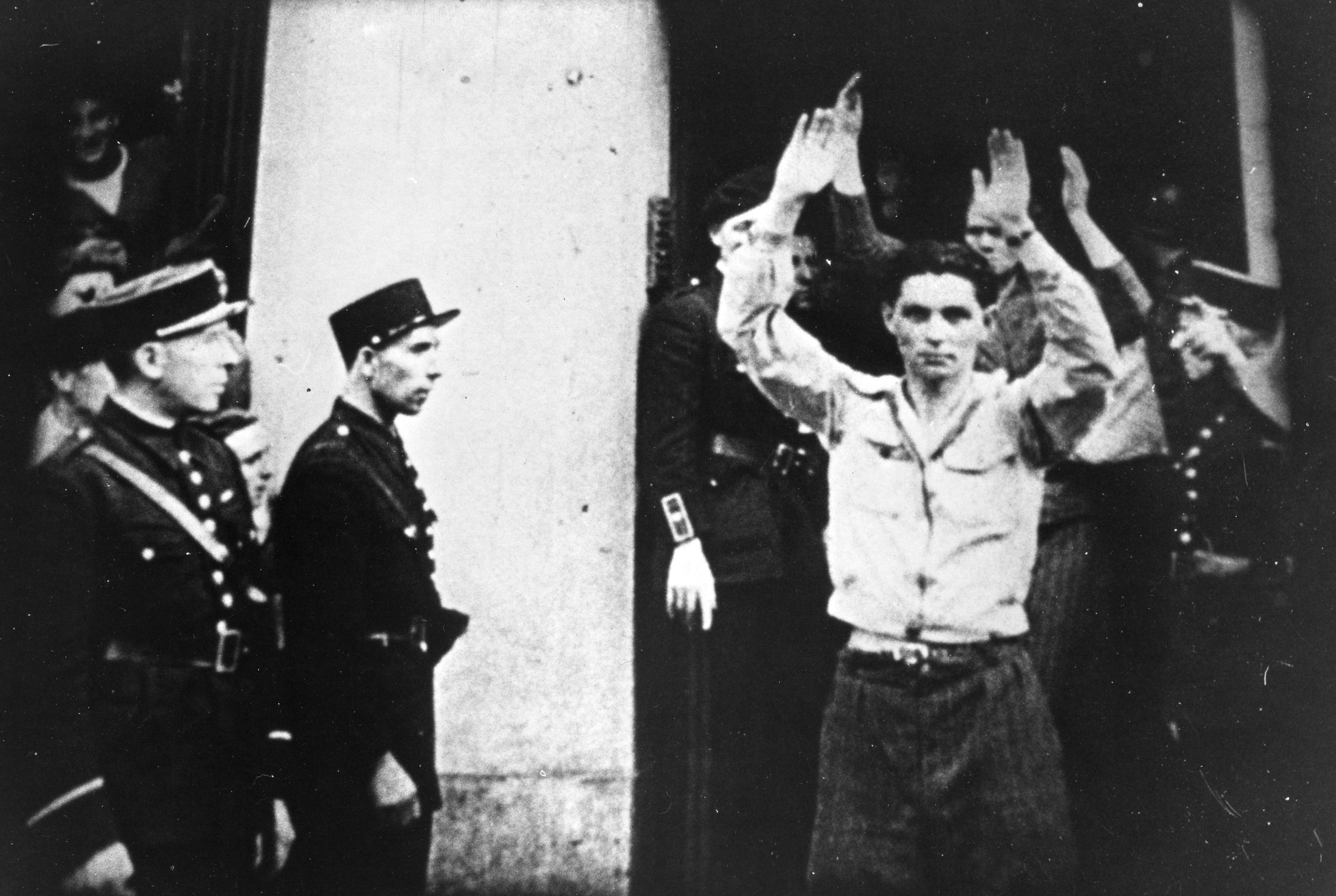
The popular legend that took hold in France after World War II, of a widespread resistance that fought Nazi occupation tooth-and-nail, comes under intense scrutiny in Marcel Ophuls’s epic work, one of the most critically acclaimed of all documentary films. Using the city of Clermont-Ferrand as a microcosm of the whole nation, Ophuls bravely makes the case that the forces of collaboration were much stronger and reduced France to a long-term accommodation with one of the most deplored regimes in history. “The Sorrow and the Pity” certainly struck a raw nerve with officialdom at the time of its release. It was banned from French TV for ten years.
(“The Sorrow and the Pity” 1971)
In the early minutes of the film there are some readymade Michael Moore moments like the well-known scene where he opens a savings account at a Midwest bank in order to receive the free shotgun that apparently has replaced the complimentary toaster of days gone by. But “Bowling for Columbine” works best when Moore is seen on camera talking matter-of-factly to a wide variety of Americans and trying to come to terms with the country’s high level of gun violence. This is not the easiest issue to suss out, especially when the murder rates of other industrialized countries barely rate as a fraction when compared to the United States. During a side trip into Canada, Moore finds that there are seven million guns in about ten million households nationwide, yet the folks there would barely know what a homicide looks like.
(“Bowling for Columbine” 2002)
In 1983 Life magazine hired acclaimed photojournalist Mary Ellen Mark to do a story on the growing problem of teenage runaways. Her central subject was Seattle’s skid row and within a year Mark returned there with her filmmaker husband, Martin Bell, to make this equally sympathetic and non-judgmental film. These kids, most in their early teens, eke out a living via panhandling, prostitution and dumpster diving, forming a makeshift society on the fringes of the “respectable” world.
(“Streetwise” 1985)
When I return from vacation in early August, the almost never-ending saga of getting my book into final (and publishable) form will be over. “Documentary 101: A Viewer’s Guide to Non-Fiction Film” will be available on Amazon, my indie publisher booklocker.com, barnesandnoble.com and other online outlets. If you’re interested and feeling particularly virtous, request it from a local bookshop.
The book is a first-of-its-kind comprehensive anthology of non-fiction film, featuring reviews of well over 300 documentaries. Excerpts, along with related film stills that I had bought but never used, will start appearing in weekly installments here starting in August.
With a little luck and free time, I should also be releasing Part Two of my series “The Pale Beyond” about abandoned state hospitals in Massachusetts. In the fall, I’ll be back to the film reviewing, with added emphasis on rock docs and other musical subjects.
Enjoy your summer, hopefully we are done with the mid and upper 90s!
Thanks for reading,
Rick
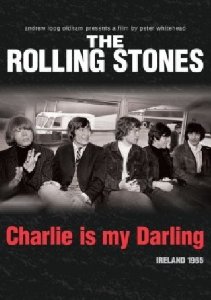
The Rolling Stones: Charlie is My Darling—Ireland 1965
Directed by Peter Whitehead—1966—64 minutes
The Rolling Stones certainly are no strangers to celluloid, at least from the late Sixties on. In roughly chronological order, we got their headlining appearance in “Rock and Roll Circus”; a Jean-Luc Goddard agitprop period piece framed around their recording of “Sympathy for the Devil”; the Maysles Brothers’ hippie-dystopia classic “Gimme Shelter”, and various concert films from the 1970s on, culminating in Martin Scorcese’s 2008 “Shine a Light.” This spirited record of a showcase gig at New York’s Beacon Theater established the Stones as leaders of a movement that can only be called geriatric rock, carrying the flag of a genius era into the Social Security age bracket.
Good footage of the early Stones has been harder to come by. Their ascent to fame in the days before mass media overkill has yielded little more than their “T.A.M.I. Show” set and some old Ed Sullivan clips. Until now. Produced by their manager Andrew Loog Oldham reportedly to get his rising stars used to the idea of film, “Charlie is My Darling” was the first documentary about the band. The director was Peter Whitehead who would go on to make 1967’s “Tonight Let’s All Make Love in London” when the music-driven youth movement was in full “swing.”
After a brief theatrical release, however, all prints of “Charlie” were reportedly stolen and the film receded from memory, only getting a proper re-release in conjunction with the band’s 50th anniversary tour. Now you can wind the clock back almost as many years to the screaming-teenager epoch of the mid-1960s, as the boys are whisked off to Ireland for a quickie tour hastily arranged to capitalize on the recent smash hit “Satisfaction.” It’s a bit of a revelation here to see the Stones in the first flush of their youthful success. The Beatles have “A Hard Day’s Night” and Bob Dylan the warts-and-all “Don’t Look Back.” Here the five Stones likewise struggle with whirlwind fame, each of them ambivalent and thoughtful when Whitehead interviews each in turn.
A brilliant montage set to “Heart of Stone” shows the band arriving in Dublin where the establishing street scenes recall the age of James Joyce a half-century previous. But even if the country was still largely in the parochial grip of the Catholic hierarchy, the kids quickly shake free of that once the Stones hit the stage. The clarity and immediacy of this restored footage is electrifying, the lean-and-mean band whip their fans into a frenzy straight out of the gate with “The Last Time”, not that the crowd needs much whipping up. The Stones were already well known for the riotous audiences they attracted and by the end of third number, the stage invasion is in full stride, easily captured by Whitehead’s in-the-wings camera.
A bit of this footage recently turned up in the recent “Crossfire Hurricane” doc but it’s good to get the full flavor of those days here. The interviews reveal five guys to whom fame is still new and a little intimidating. Mick Jagger, an exciting young performer but hardly the indomitable peacock of later years, admits “I don’t know who I am on stage.” Keith is already the sly one, Bill is practical and Charlie misses his wife. Most poignantly, Brian Jones frets about the Stones’ chances for sustained success and—four years before his death—says, “I’ve always been a little apprehensive about the future.”
Elsewhere, you get the expected shots of the band being chased in public places, vox populi with the teenybopper lasses and hotel scenes of the guys goofing around and (more interestingly) writing a new song, “Sitting on a Fence.” Back onstage in Belfast, the joyful abandon in their version of Chuck Berry’s “Around and Around” is visceral and the cathartic discontent of “Satisfaction” would probably never sound so real again—worldwide success was just around the bend. The druggy excesses and jet setting and artistic peaks were all to come and this guileless snapshot from a distant monochromatic past is the perfect antidote to today’s over-hyped media landscape.
(Currently only showing in Boston, LA and D.C., make a note to maybe check this out when it gets a wider release or is made available on DVD or to stream. A fine work by a couple of guys wo got started at Scout Productions, a place where I worked at in 2000-01)
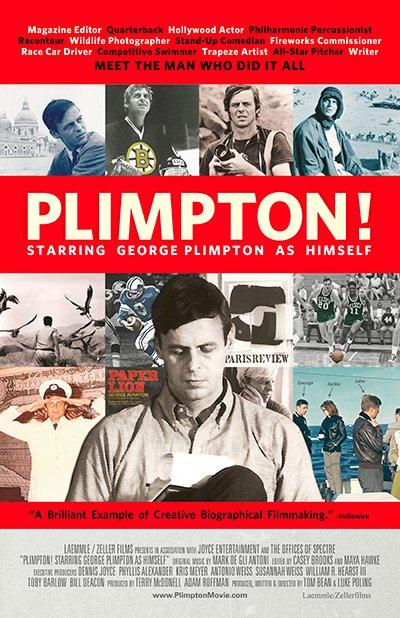
Plimpton! Starring George Plimpton as Himself
Directed by Tom Bean & Luke Polling—2013—86 minutes
Lately I’ve been thinking it is time to tweak that old saying by Andy Warhol. In the future, everyone and everything will be the subject of a documentary. This week it’s George Plimpton’s turn to shine in the non-fiction film firmament. In this appealing film bio, Bean and Polling uncover extra layers of documentary riches while focusing on the life of the lanky New Yorker who was the good-natured pioneer in the field of participatory journalism as well as co-founder and editor of the Paris Review.
From the 1950s through to his death in 2003, George Plimpton held his spot as a bon vivant of literary life and high-end celebrity culture, the latter nearly a forgotten art form. He will always be most remembered for his everyman-style excursions into pro sports, risking life and limb (or at least embarrassment) by boxing Archie Moore and Sugar Ray Robinson, playing exhibition games as a Detroit Lions quarterback and Boston Bruins goalie, pitching to Major League all-stars and other such misadventures. These experiences would be the raw material for articles in Sports Illustrated as well as full-length books, including the best-selling “Paper Lion” about his footballing follies.
Polling and Bean first met while working at Scout Productions around 2001, around the time the company was becoming known for releasing such singular middle-period Errol Morris films as “Fast, Cheap and Out of Control” and “Mr. Death.” Some of that resident quirkiness can be seen here in the succession of recovered film foibles (Plimpton also tried his hand at being a circus trapeze artist and symphony percussionist) and the bemused recollections of friends and family. Though the general tone is one of admiration, it is tempered with a dash of retroactive regret. “Serious” writers, like novelist James Salter, bemoan the fact that Plimpton was more of a dabbler and could not or would not raise his game to the level of the many authors who he published in the Paris Review and who regularly attended his famous cocktail parties. We see Arthur Miller, Norman Mailer, James Baldwin, Kurt Vonnegut, Philip Roth and the like, sometimes all in the same room together. Once taken under the wing of Hemingway, Plimpton seemed just as content to hang out with the Kennedys or appear in TV commercials for video games and garage door openers.
In the end, though, Plimpton’s knack for straddling both highbrow and pop culture, and making it seem all of a piece, is admirable and endearing. It is all part of our wider American culture and should be appreciated as such. But today a new George Plimpton would almost have to split himself in two trying to straddle the widening gap between mistrusted cultural “elites” and the easy-to-despise lowbrow media content that has puked up Kim Kardashian and Honey Boo-Boo. Another subject for another day, but like I said in the future someone will likely make a doc about that as well.
Chronicle of a Summer
Directed by Jean Rouch & Edgar Morin—1961—90 minutes
At the dawn of the 1960s, the development of more lightweight movie cameras with sync sound allowed for the intimate feeling of real life subjects with minimal intrusion. This would lead to the personalized and spontaneous documentary style that is more the norm nowadays. In America, a resulting style called Direct Cinema launched the careers of DA Pennebaker, Richard Leacock, the Maysle brothers and Robert Drew, whose 1960 film “Primary” was an unprecedented you-are-there look at a Wisconsin primary campaign between Senators Hubert Humphrey and John F. Kennedy. In France in the middle of that same year, ethnographic filmmaker Jean Rouch and sociologist Edgar Morin made the influential “Chronicle of a Summer”, recently restored and given the grand Criterion Collection treatment, with a booklet and a bevy of extras, including a 73-minute look-back piece that includes recent interviews with people involved in the original film, now a half-century older.
Unlike the practitioners of Direct Cinema, who were more strictly observational, Rouch and Morin’s style newly coined “cinema verite” used proactive strategies to get closer to the kind of “film-truth” they were striving for. Rouch, who previously made films on African subjects, developed this new form (dubbed by one scholar as “hometown anthropology”) by starting with the novel but now-familiar technique of ask-the-man-in-the-street. Using a shoulder-mounted 16mm camera and handheld microphone, he and Morin employ two personable female collaborators (Marceline and Nadine) to accost Parisian pedestrians with the simple (but loaded) question “are you happy?” Comical brush-offs soon yield to some touching responses from aged or struggling citizens, pointing up the fertile ground the filmmakers have broken. Soon, Rouch and Morin settle on a group of people for a more in-depth investigation into the human condition at that precise point in time.
Francophiles and film history buffs will certainly have a head start in appreciating the charms of a film like “Chronicle of a Summer.” The monochromatic allure of mid-century Paris, viewed through a persistent screen of Gitanes smoke, is the background for these earnest interviews, informal roundtable debates and day-in-the life vignettes. Issues like the ongoing Algerian War, which caused a divisive debate akin to what Americans would soon be experiencing over Vietnam, sharpen the edges of what at its core is an inward-looking concept.
So we get a thoughtful discussion between a Renault factory worker and an African exchange student, the earnest musings of an activist couple easing (perhaps uneasily) towards a middle-class lifestyle and the artsy, garret-dwelling couple who scoff at the nebulous idea of happiness (an “empty word”) or that gross material gain would bring it about (memorably noting that their rich friends “don’t have the books and records we do”). The on-camera near meltdown of a young Italian woman hints at the more voyeuristic bent that such film and TV techniques could slip towards in the future. The general self-consciousness of “Chronicle of a Summer” may not always agree with all viewers all the time. But the general impression, that you can pick someone off the street and, giving them a space in which to express themselves, use that testimony to illuminate our life and times better than any talking-head expert, comes through loud and clear.
(Just caught another view of this film as it is the newest entry on PBS’ “Independent Lens” series. Check your local listings as they say and see a postscript I just added below with other Detroit-related items. Rick)
Detropia
Directed by Heidi Ewing and Rachel Grady—2011—91 minutes (Docurama DVD)
The fastest growing city in the world circa 1930 is left with 100,000 abandoned houses or empty lots less than a century later. A pioneer of heavy industry and worker empowerment is relegated to being the poster child for a national trend that saw fifty thousand factories close in ten years, leaving behind a permanently insecure labor force. The home of Motown and a mighty civic infrastructure reduced to the outward appearance of a fallen civilization. Few places illustrate the diminished American Dream better than Detroit. The documentary filmmaking team of Heidi Ewing and Rachel Grady (who also made the excellent “Jesus Camp”) grapple with this weighty subject with a blend of citizen testimonials and impressionistic visuals, gleaning both the ground-level personal perspective and the dreamlike aura of an oversized ghost town.
Soon after the opening lament by video blogger Crystal Starr, as she gazes at the Motor City skyline from the upper story window of an abandoned apartment building, the film gets right down in the business. United Auto Workers official George McGregor regales the interviewer with stories of past glories while driving to a union hall meeting where most of the chairs remain stacked in the background of the shot. The nearly depleted rank-and-file membership listen in disbelief as McGregor reads out the latest proposal by American Axle, a company already threatening to move its production out of the country. Faced with either accepting a pay package that will leave them with slightly better than fast-food wages, or seeing the same jobs shipped overseas with impunity, it’s hard to leave the scene without understanding why the American middle class seems as gutted as the deserted buildings we see in so many of “Detropia’s” establishing shots.
Elsewhere, we see a nightclub owner trying to hang onto his business in the face of plant closures and fretting at an auto show when he sees the Chinese poised to corner the electric car market; briefly meet a performance-art couple attracted to the city’s low housing costs; and hang out with some enterprising metal scavengers, picking at the carcass of a once-great metropolis and selling the scrap to a country that can use it (China again). For Mayor Dave Bing, the options for improving conditions in this broke city are few. Left with half the town that once was, Bing (a former Detroit Pistons basketball star) proposes consolidating the thinly-spread population—down to 700,000 from a mid-century high of 1.8 million—into higher-density areas while “re-purposing” vacant land for large-scale urban farming. This idea is met with skepticism at a tumultuous community meeting and by a trio of amused front-porch philosophers. It’s these regular folks that make “Detropia” as appealing as it is, counteracting the directors’ tendency for a grab-bag approach that can cause contextual drift. So even amid the ghostly greens and reds of nocturnal street scenes, or snippets of barely-introduced subjects like the African-American opera singer, there will soon be some level-headed resident, with that Motor City mix of gallows humor and dogged perseverance, to keep things grounded.
In the end, several of the subjects sneak their way into the city’s gargantuan Michigan Central Station, the long-vacant Beaux Arts masterpiece that as much as any one edifice symbolizes this epic fall from grace. While the strategic bailout of the auto industry engineered by President Obama offers a modicum hope, the outlook remains bleak. The city went under state receivership in early 2013 and Dave Bing decided not to run for re-election. While there may be no foreseeable turnaround for the city’s endemic woes, to treat this as a matter apart from us is inadvisable in the extreme. “When you see your neighbor going down, you have to think about yourself,” the club owner warns us in the waning moments of “Detropia,” adding “a fire unchecked will only take you out as well.” It is another reminder of America’s abandonment of a production-based society in favor of an economy dependent on a distracted consumerism many can’t afford and lorded over by esurient Wall Street CEOs rewarded for cutting workforces. Ewing and Grady are to be commended for making their accessible and heartfelt film on this discouraging subject.
One thing I would have liked to seen a little more of in “Detropia” is the astonishing scale of both what was built there and the extent to which it has fallen to ruin. If you’re like me, then, check out the book “Detroit Disassembled”. I mean that literally. Check it out of the library if you can’t afford the hefty price tag, even if photographer Andrew Moore deserves every penny of it. This is one of the most extraordinary photo-essay coffee table books I’ve ever seen. Moore’s large-format camera peeks into every conceivable corner of what, through his lens, might as well be a lost ancient ruin. A melancholic paen to a faded nation of makers, the infrastructure and institutions that supported this industry-based system are now seen as losing a visceral battle to decay and the forces of nature. The dilapidation of catherdal-like assembly buildings, rococo theaters, technical schools, grand theaters and handsome apartment blocks may seem like an exaggerated and isolated example to some, but it leaves behind a sour taste nevertheless. It makes one think of the pipsqueak service economy we’re left with, 70% of which is dependent on consumer spending while at the same a huge percentage of workers are making the kind of wages that almost make indentured servitude an attractive alternative.
While I’m at it, I will also recommend the 4-minute film clip link below but don’t read the caption as it contains a spoiler alert, Documenatry Division.
Godfrey Reggio’s 2002 “Naqoyqasti”, the last of his trilogy that began with the trailblazing “Koyaanisqatsi” opens with that solemn tracking shot of the Michigan Central Station’s massive vaulted waiting room and once magisterial upper-floor offices, every window now smashed. Back on the ground, a close-up of the building’s mighty portico and entrance has a raging sea superimposed over it and the effect is of all of Western culture being pulled under.
















 Reel and Rock