In Petula Clark’s 1964 smash hit “Downtown,” she advises a down-in-the-dumps friend to head to the titular location and rejoin life’s rich pageant. Along with the suggested activities like people-watching, movie-going and bossa-nova dancing, Pet also recommends that her pal “linger on the sidewalk where the neon signs are pretty/How can you lose?”
How indeed? Not long after the invention of electricity, entrepreneurs realized the innate appeal of plus-sized illumination. Coney Island’s Luna Park—opened in 1903 when only about 6% of American homes had electricity—was lit up at night with no less than 250,000 light bulbs. In the decades that followed, many major cities developed entertainment districts marked by illuminated marquees and huge advertising signage done with a new and (literally) flexible commercial artform: neon tubing. Places like London’s Picadilly Circus, New York’s Times Square and Paris’ Pigalle (topped off with the Moulin Rouge windmill) became world famous.
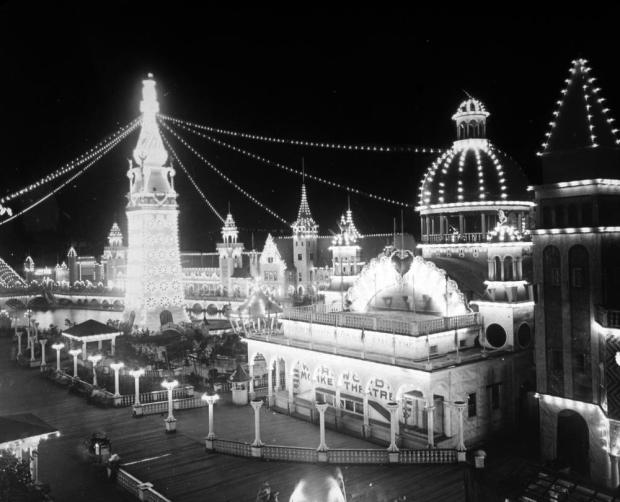
Luna Park in 1905
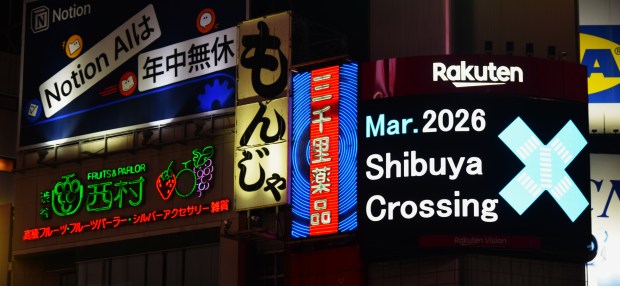
Japan’s capitol followed close behind. Firstly famous was the Ginza shopping corridor, where the closely packed-in business signage made for many archetypical zoom-in photos of Tokyo’s bustling and crowded metropolis. In the hypermodern Tokyo of today there are several such super-luminous areas. Perhaps none bigger than crazy-wonderful Shibuya. On my recent long-awaited first trip to Japan, we stayed at the elegant but not too expensive Hotel Indigo, where one of the draws is that it starts on the 14th floor, a good buffer from the district’s chaotic energy. On my first night, I finally got my chance to go boldly where all photographers have gone before and get this this telephoto image.
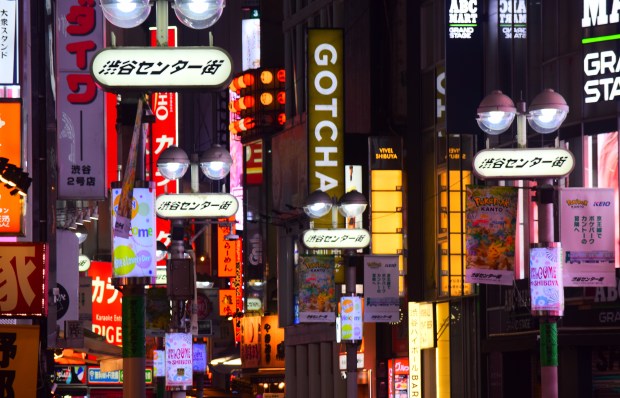
In Shibuya, as in similar Tokyo location like Shinjuku, Akihabara and Ueno, most of the lights looming over the countless restaurants, bars, shops, karaoke clubs and gaming parlors are not neon anymore. They have been replaced by more versatile and energy efficient LED displays. Back in Times Square—where I have seen the transformation more first-hand—LED has completely replaced what was once the area’s 200 miles of neon. In Japan, where fondness of tradition can cut across generational lines, a surprising amount of handcrafted neon remains.
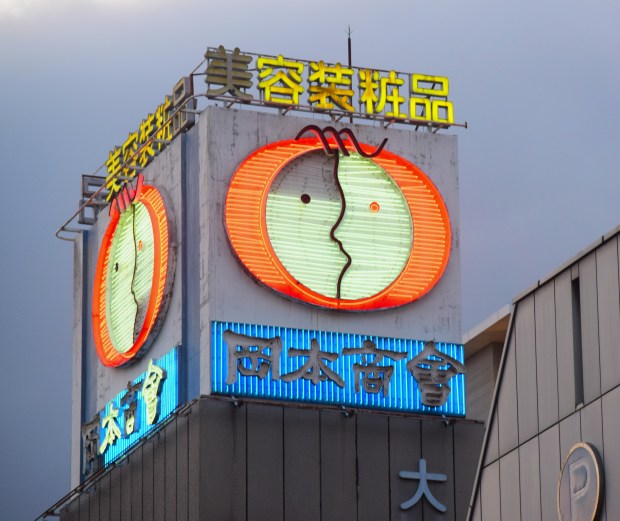
In the banner photo at top, an exquisitely detailed neon promotion for a classic “Fruits & Parlor” dessert cafe and pulsing logograms sit next to a Shibuya Crossing LED with the month and year helpfully included as a selfie background to show your friends and/or followers that you really were at the world’s wildest 5-way crosswalk. But my favorite old-school neon sign may have been in Osaka, where the cryptic display pictured below almost floated in the sky above that city’s busy Dotonbori district.
Dotonbori is home to maybe the most well-known of Japan’s lighted sign. It’s the Glico candy company sign, showing a runner triumphantly crossing the finish line (because their caramels allegedly give you enough energy to sprint 300 meters!). It has been there in some form since 1935 and now is an LED landmark where two facing walls of advertising radiance are split by a canal.
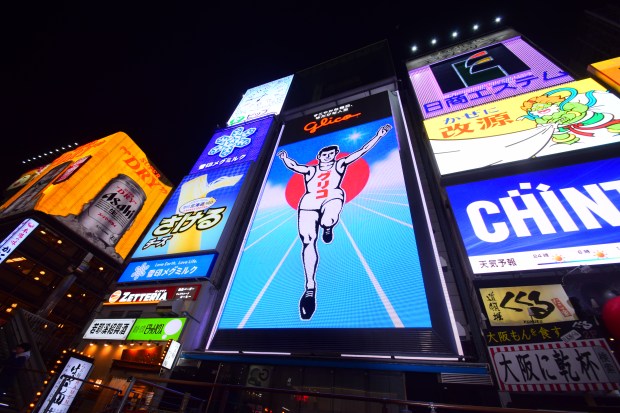
When we took 30-minute canal tour, the boat stopped so anyone who cared to could stand up and imitate the runner’s stance for the inevitable photo op. Back on shore, many people on the opposite bank or on a nearby bridge could do the same pose. Like, MANY people. I started to wonder: if you didn’t throw up you arms and bend a leg, would the sign have any reason to exist? I’m starting to wonder.
I have written before on the topic of overtourism, nowadays almost any popular/famous place in the world will have ton of people there. I don’t mind; I’m part of it myself (though I always make time for detours off the beaten path). Millions of people in developing nations have been lifted out of poverty in recent decades and they want to travel. This is a great thing and people all over the world have always taken snapshots of themselves on vacation. But little did I ever imagine it would be become a pathology. The Plague of the Selfie.
Japan is a perfect place for this unsettling social virus. It has lovely landscapes, majestic castles, inspirational shrines and an exotic pop culture that is second to none. Each place is ganged up on by tourists from every part of the world, blocking views and being a constant distraction for people who might have more of an interest in the actual place being visited and less of an interest in themselves.
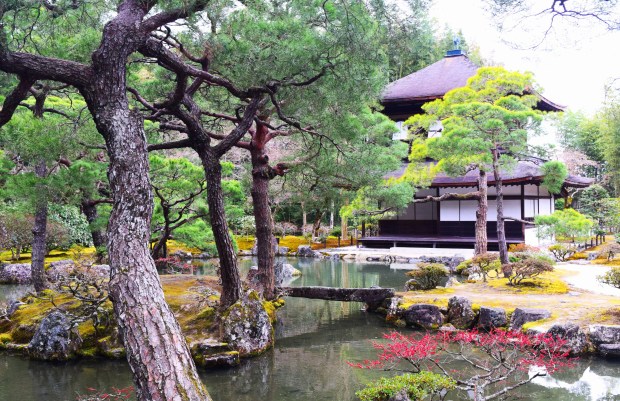
A beautiful Zen garden in Kyoto. I long ago learned to be patient and wait until people are gone so I can get my artsy photo.
We took maybe three standard group selfies in the 12 days we were there. For many others, three selfies would be one minute, not 12 days. Instagram and other social media platforms have brought about a regrettable commodification of experience. In one respect, I get it. Who wouldn’t want a picture of themselves with a 40-foot LED image of their favorite anime character? But the inability of many visitors to hold back on this witless narcissism makes you almost yearn for the days before digital photography, when a 36-exposure roll of film, along with the processing and prints, would set you back more than twenty dollars.
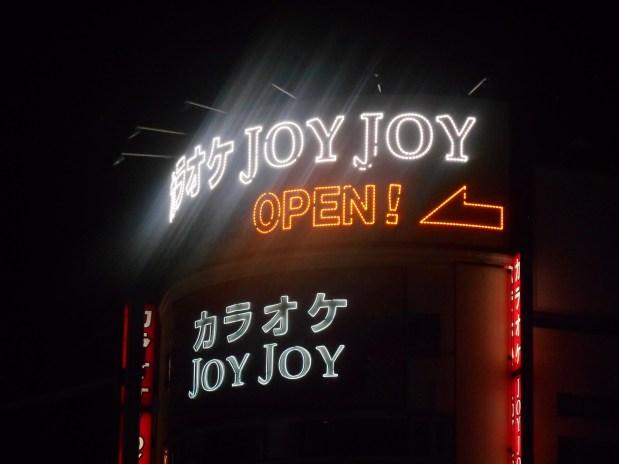
Yes, your curmudgeonly blogger would have more “Joy Joy” in his life if people would put down their so-called smartphones for even two minutes. (Photo is of karaoke center in Matsumoto).
This social trend is more than an annoyance. A full understanding of one’s surroundings, whether on an overseas trip or back in the hometown, goes a long way to making life more pleasurable and harmonious. In his 1990 book “The Experience of Place,” author Tony Hiss explains his concept of simultaneous perception, the idea that people can be “of the world” while also attending to their own affairs. He writes:
“With the help of this extra sense, the familiar hard-and-fast boundary between ourselves and our surroundings seems softened…and uncovering normally ignored patterns of relationships make us part of larger groups and events. It’s simultaneous perception that allows us a direct sense of continuing membership in our communities, and our regions, and the fellowship of all living creatures.”
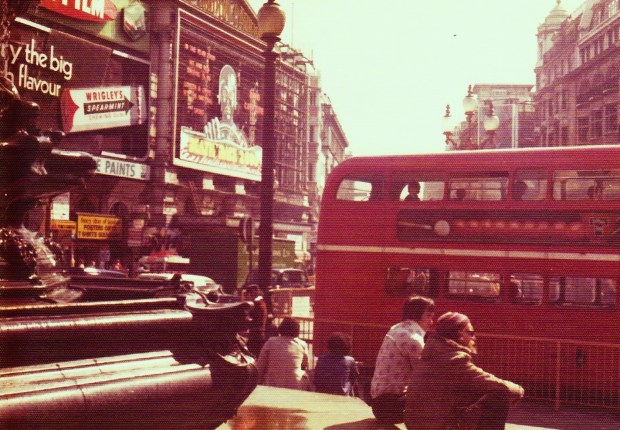
My photo from under the Eros statue in Picadilly Circus in 1976, my first solo trip abroad. My own “simultaneous perception” would notice a few things here: The post-hippies still clinging to this Sixties counterculture meeting place, the awesome billboard for “Death Race 2000” at the London Pavillion and the Wrigley’s Spearmint gum sign, which was up there forever.
Of course, this type of experience happens more often than one might think. It’s why hundreds of thousands of people can gather every New Year’s Eve in Times Square without major incident. It can happen with a smaller group’s shared pleasure at hearing a great street musician or watching a summer screening of “The Wizard of Oz” at the local town park. But it will definitely not happen often enough if we keep pointing a phone at ourselves with a landmark in the background that is nothing more than another notch-in-the-belt for social media posters and hot-girl travel influencers.
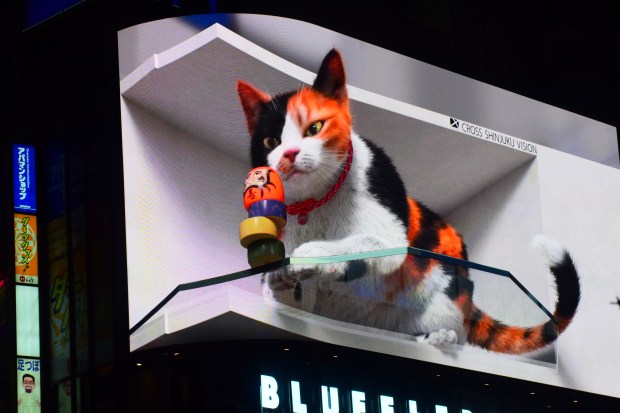
Shinjuku’s beloved 3-D cat shows how cutting-edge technology can coexist with the square’s traditional signage.
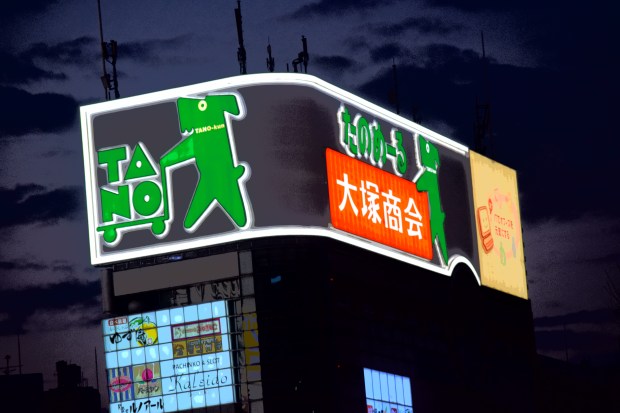
But let’s leave that voidosphere and get back to the neon. In a recent article, Japanese photographer and blogger Nakamura Osamu wrote about the sharp 10-15 year decline in the sales of crafted neon, which was made worse when the Covid-19 pandemic hit. But in its aftermath, he says, there has been an uptick in demand for smaller scale neon.. Younger owners of cafes and shops have opted in, moved by the “wistfulness of neon, utilizing its cozy, inviting light to beckon patrons to step inside.” In an observation that Tony Hiss would surely love, Osamu says, “I see the youthful embrace of neon as a (post-Covid) attempt to establish new spaces where people can interact and be themselves.” (For the full article, which features 20 of his eye-candy photos, go to http://www.nipon.com/en/images/i00060
“So maybe I’ll see you there,” Petula Clark concludes in “Downtown,” We can forget all our troubles, forget all our cares.” All of them? Probably not in this day and age, but you’re halfway there when under the bright light of the big city. As one New Yorker said to Hiss, “The switch that turns on the lights seems to turn on a light within.”
Text and photos (except Luna Park) by Rick Ouellette

