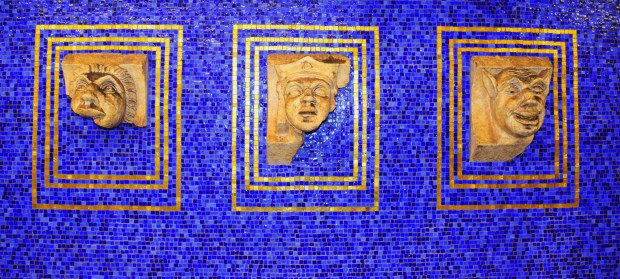
“Only the Dead Know Brooklyn” declared Thomas Wolfe in the title of his 1935 short story. In this brief dialectical encounter, a local man meets an odd stranger on a subway platform. The stranger has a curious determination to visit every last corner of the borough with the help of a map. But the narrator is doubtful:
“It’d take a guy a lifetime to know Brooklyn t’roo an’ t’roo. An’ even den, yuh wouldn’t know it all.”
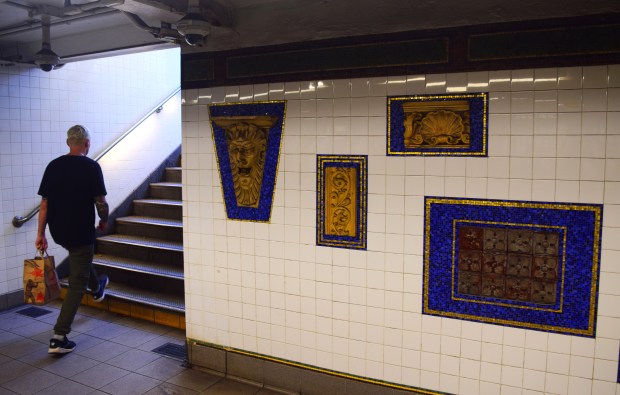
That’s true enough for Brooklyn, never mind for the immensity of New York City as a whole. But for residents and visitors alike there’s always an opportunity to get to know the metropolis better, and one of them is at the Eastern Parkway-Brooklyn Museum MTA stop. The museum, whose huge neo-classical façade is seen as soon as you reach the street, mounted nearly 80 ornamental building fragments from their collection onto the station walls. It is a unique experience to see these expertly crafted details (most over a century old) up close and at eye level.
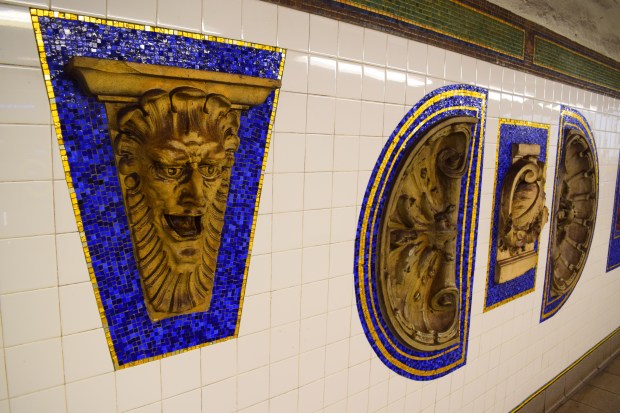
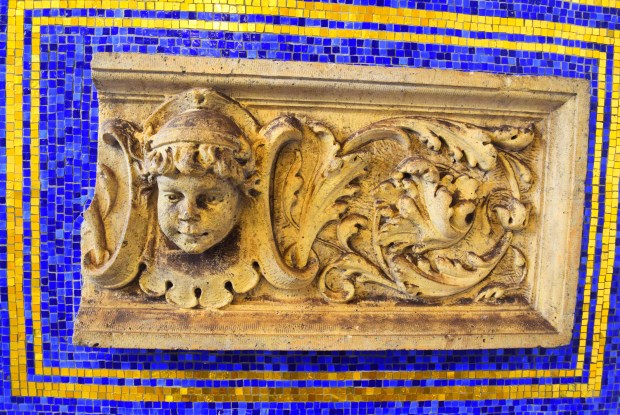
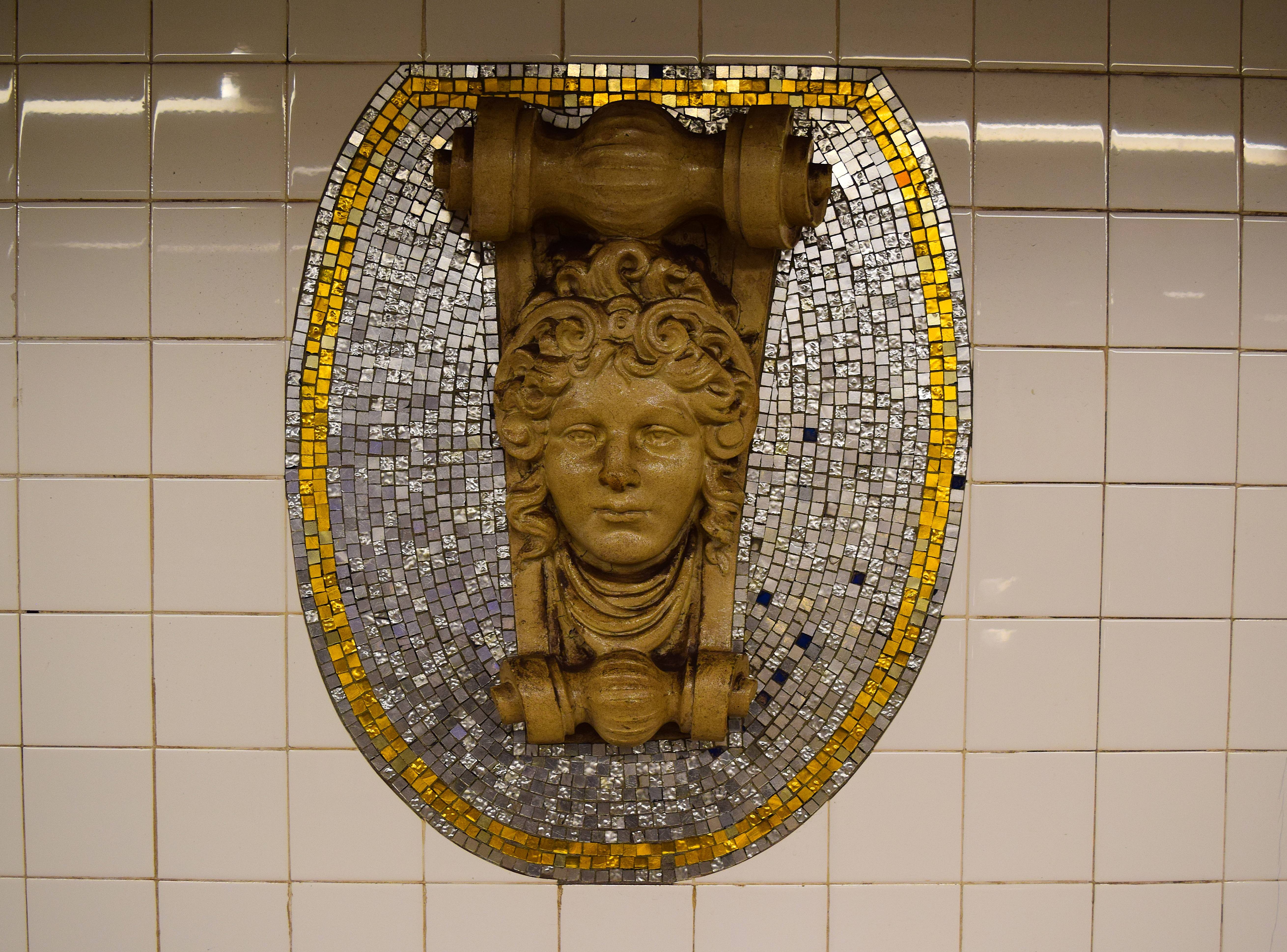
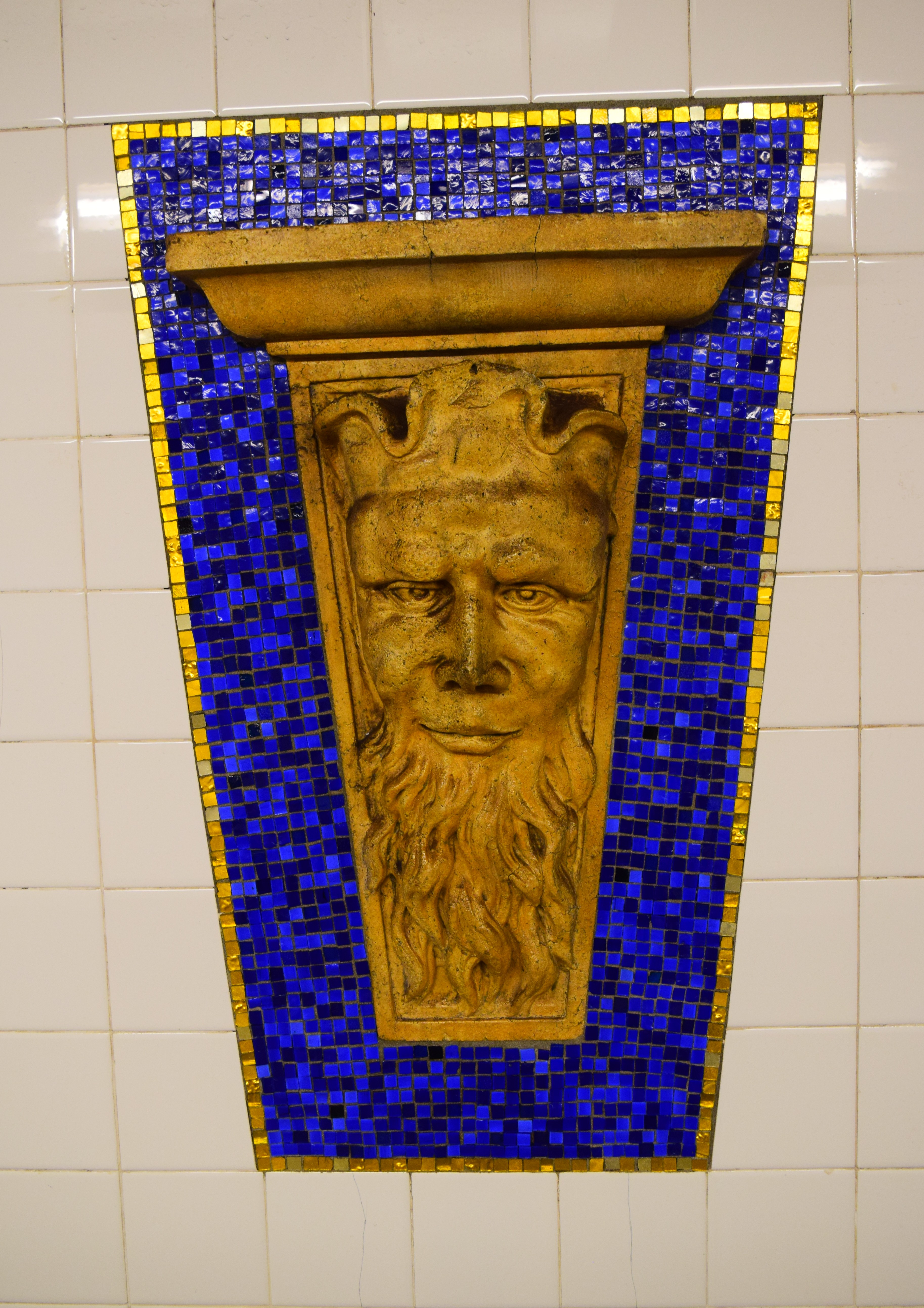
I first learned about the Eastern Parkway-Brooklyn Museum subway stop from the good folks at Untapped NY, the web magazine and tour company who are an invaluable resource for anyone interested in lesser-known aspects of the Big Apple’s history. From them I learned that the museum grew out of the former Brooklyn Apprentices’ Library, founded in 1824. This was a place meant to educate local tradesmen, who are the unsung heroes of Old New York’s architectural majesty. Appropriately enough, the museum became a repository of their handiwork, rescued from the rubble of demolished houses and civic buildings.
These pieces are lovingly framed with shiny gem-colored tiles, mainly sapphire blue and goldish yellow. They are an evocative reminder of an age when a certain ornate beauty was valued, even expected.
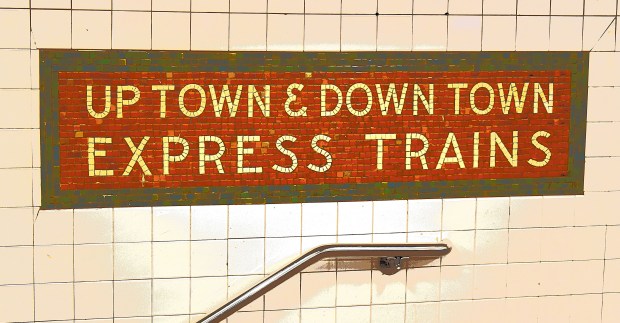
The attractive and painstaking use of tile framing and lettering is a famous part of the NYC subway system.
Yes, time marches on and that era has long ended. Modern architecture has long been known for its lack of ornamentation. Representation of human, animal and plant life forms have moved on to other disciplines—public murals for instance. But it is also telling in a way. In his excellent new book “What Architecture Is,” author Witold Rybczynski writes: “Architecture, especially public architecture, is an expression of our times. That is why it is sometimes referred to as a social art—not because it brings together but because it embodies their common aspirations.”
There is a tug-of-war going on between forces that play up to our better aspirations in this area and those that would trample on those aspirations without a second thought; think of arrogant supertall skyscrapers and behemoth data centers.
This will be a central topic to be explored in the rebranding of this blogsite as “On Second Sight,” fostering a wide-ranging appreciation of our common built heritage that can help lead to thoughtful historic preservation and the design of more livable cities through greater community awareness and involvement.
Text and photos by Rick Ouellette

