Jazz on film

“Miles Ahead” of Other Biopics?

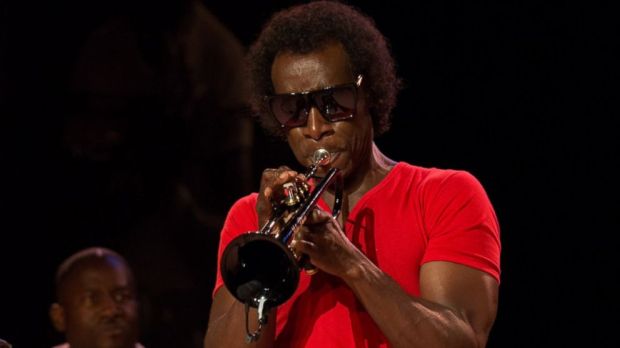
Don Cheadle as Mr. Davis in “Miles Ahead”

It’s safe to say that biopics of famous musicians is not everyone’s favorite film genre—esp. when it comes to iconic rock/pop superstars. High expectations can be easily shot down by a fan’s extensive knowledge of their favorites vs. the often formulaic storyline of difficult childhood-rise to fame-wilderness years-redemption.

With the subject or his/her estate often acting as executive producer, one can expect that the rough edges will get sanded down (the uninspired “Marley: One Love”) or omitted entirely: the new “Michael” blockbuster conveniently ends Mr. Jackson’s story in 1987, just before the first child-abuse allegations.

Other times these movies can fly off in the direction of Icarus-style myth (Oliver Stone’s fever dream “The Doors”) or just land with a quiet thud. This could be said of the earnest “Bruce Springsteen: Deliver Me From Nowhere,” where the recording of the Boss’ uncommercial “Nebraska” album, staves off his impending super-duper stardom while he comes to terms with his troubled father and a composite girlfriend. The same goes for Timothee Chalamet as Dylan in the underwhelming “A Complete Unknown.” Uncle Bob’s life is so extremely documented that it would be extraordinary to come up with a fresh angle: and that film didn’t.

Is there any way out of these common pitfalls? Well, you could just give up and commit to the more entertaining parody biopic. The 2007 howler “Walk Hard” (starring John C. Reilly as “Dewey Cox”) features the greatest of all difficult-childhood scenarios when young Dewey gets ostracized after accidentally cutting his brother in half with a machete.

But for films based on an actual person may I submit “Miles Ahead,” the 2016 joint directed by Don Cheadle and starring himself as the tempestuous jazz legend. Cheadle has the Miles Davis look and raspy voice down pat. The movie heads down the “wilderness years” path as the trumpeting icon contemplates and end to his 5-year layoff that began in 1975.

Well, “contemplate” may be too soft a word. Davis was famously contentious, imperious and volatile. Cheadle, instead of filing down the rough edges, doubles down on this reputation. And in a big way: there is so much cocaine and gunplay in “Miles Ahead” that it makes the notorious East Coast-West Coast rap wars look like a kindergarten recess.
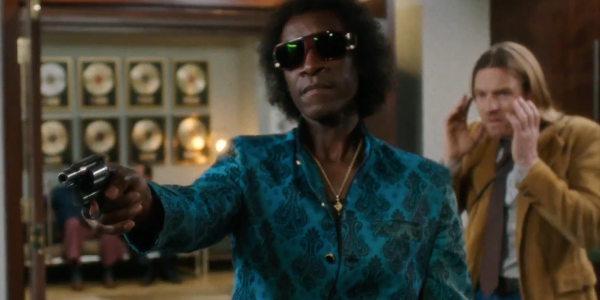
Don Cheadle’s Miles Davis shows Ewan McGregor’s reporter the most effective way to negotiate with the bigwigs at Columbia Records.

The apocryphal storyline concerns the theft of some coveted home-studio tapes that becomes a MacGuffin among various parties (including Columbia Records that wants Davis to deliver some product). The film co-stars the reliable Ewan McGregor as a dodgy (and fictional) Rolling Stone reporter named Dave Brill. He worms his way into Miles’ New York City lair in hopes of getting the comeback scoop—but not before getting punched in the face for his trouble. But eventually, Davis lets the “Irish prick” become his driver and drug buddy while opening up a bit about his life and music.

As hinted at in the trailer, Cheadle employs an impressionistic style that blends the late Seventies plot with glimpses of his popular late Fifties peak, with dynamic concert reconstructions and scenes of his troubled first marriage to dancer Frances Taylor (Emayatzy Corinealdi)

Then it’s straight back to the thug life. There’s an improbable (but really fun) car chase thru nighttime Manhattan with Dave as his reluctant accomplice, although before long the reporter is brandishing a firearm as well.

Sure, this is all a bit off-the-hook but delivered with an irreverence I found easy to like. Plus, Miles’ famously flinty personality makes for some great one-liners: when a fawning white fanboy insists on over-complimenting his idol, Davis can only reply, “Back up off of me, Hitler!”

Of course, the soundtrack here is a big selling point as well. Casual fans will enjoy the snatches from such well-known classics like “Kind of Blue” and “Sketches of Spain” while deep-diving connoisseurs will love the fact that the first sounds heard are from the cosmic cacophony of “Agharta,” the last LP he put out before his hiatus.

To top it off, “Miles Ahead” has a beautifully well-crafted ending. When Cheadle’s Davis wanders onto stage for his expected 1980 comeback and raises his trumpet, we are delighted to find that his band is made up of a couple of his old bandmates (saxophonist Wayne Shorter and pianist Herbie Hancock) as well as some torch-carrying younger players, such as bassist Esperranza Spalding and guitarist Gary Clark, Jr. It is a sweet way to go out and a reminder that maybe if you mix the sentimental vibe with a little irreverence along the way, you may be on your way to a better biopic.
Documentary Spotlight: Jazz on a Summer’s Day (1959)

This summer, bereft of the outdoor music concerts so beloved at this time of year, is the perfect time to catch up with the classic festival films. So what better time to begin at the beginning and discover (or rediscover) the one that started it all. Famed New York commercial/fashion photographer Bert Stern came to Newport in 1958, with a somewhat different project in mind. According to film critic in his Boston Sunday Globe documentary page, “Stern initially planned to have the festival serve as a backdrop for a fictional narrative.” Apparently, he found the 1958 edition of the Newport Jazz Fest was far more interesting as a primary subject. How could it not with a line-up that included Louis Armstrong Mahalia Jackson, Thelonious Monk, Gerry Mulligan, Dinah Washington, Chuck Berry and other greats?


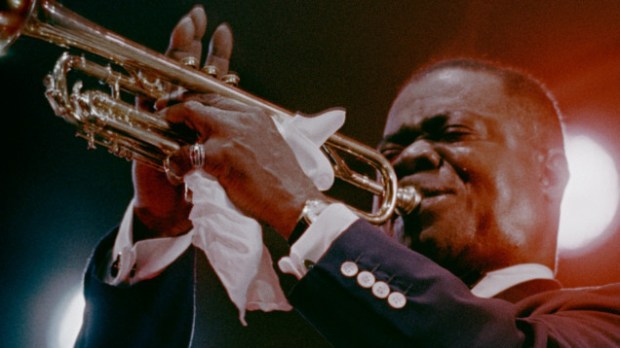
Louis Armstrong in full flight.

With its scene-establishing prologue, exciting close-up views of the performers and scanning shots of distinctive audience members, Stern’s film would be a table-setter for several notable rock festival documentaries to come: Woodstock, Monterrey Pop and Gimme Shelter being the most famous. It not only captures the giants of their genre in a live setting but also serve as sociological snapshots of their era. In the era that preceded those big rock music events, it was the annual Newport Jazz Festival that was the place to be for city hipsters and savvy suburbanites alike. While Jazz on a Summer’s Day doesn’t have the momentous vibe of those three rock films, Bert Stern’s work is a star-studded look back to a time when postwar jazz was at the height of its popularity and a partying youth culture was starting to butt up against the genteel high society of this Rhode Island resort.


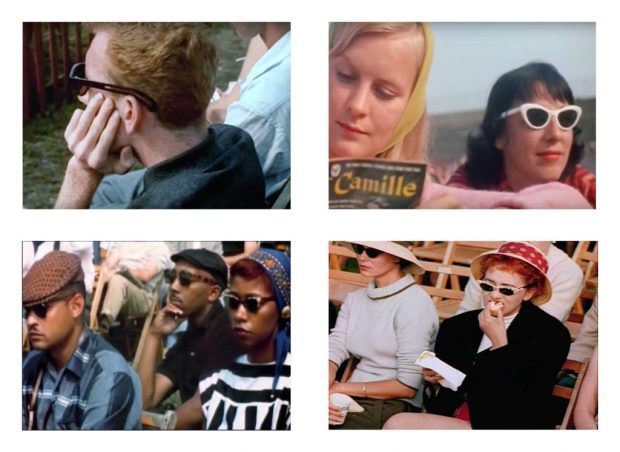
Shades of summer: Fans at Newport ’58

Stern quickly establishes the breezy carnival atmosphere of the 1958 edition of the festival as a moderately rebellious beatnik crowd blends into the gauzy, Eisenhower-era comfort zone with relative ease. There’s some wild carousing at an oceanfront rental and a recurring theme where a roving Dixieland combo promotes the festival by showing up all over town, blaring from the back of an antique car or serenading on a moonlit beach. (This may be leftover footage from the aborted feature-film idea). The actual concert footage starts with Anita O’Day entertaining an afternoon crowd of more-formally dressed folks with some wild scat singing during her elaborate deconstructions of “Sweet Georgia Brown” and “Tea for Two.” Be-bop, the preeminent branch of the jazz tree back then, is represented with fine segments featuring Sonny Stitt and Thelonious Monk. Unfortunately, the intercutting of yachting footage (that season’s America’s Cup trial runs were also taking place) proves to be a considerable distraction during Monk’s number.

Saxophonist Gerry Mulligan is on stage as the nighttime segment starts and things begin to loosen up with a younger and more integrated crowd taking over. A few of them even look like they’re on drugs (the very idea!). Bluesy belters Dinah Washington and Big Maybelle wow an audience that’s all about dancing and singing along, and the good vibes peak with a sublime medley from the immortal Louis Armstrong. He starts with a tender “Lazy River” and finishes with a rollicking “When the Saints Go Marching In,” and along the way there’s at least one of Pop’s stratospheric trumpet solos. The only miscue in the performance clips is Chuck Berry doing a rather lackluster version of “Sweet Little Sixteen.” It hints at a tendency the Newport promoters would later develop when tastes changed and non-jazz performers became less of an exception.

But all is set right as Saturday night passes into Sunday morning, when Mahalia Jackson closes the film with a rousing gospel set. The ritual of a cross-section of people enjoying music al-fresco on a summer’s weekend would become a lot more common in the decades to come, but here it still seems new, which makes Stern’s idea of filming the fans as intimately as he does the performers feel prophetic. It’s something we’re all missing now and for maybe some time to come. The audience here at Newport—-the ones in cat’s-eyes glasses and plaid pants mixing with those in berets and turtlenecks—-didn’t “change the world” like those at the ballyhooed rock mega-festivals a decade later. But they and the musicians fed off each other in a communal rapture of the type that may feel new all over again once we ever get back to it.

For more info on the virtual re-release of the digitally restored Jazz on a Summer’s Day go to kinomarquee.com

You can check out the excerpt of my book “Rock Docs: A fifty-Year Cinematic Jorney” at http://booklocker.com/books/8905.html or by clicking on the book cover image above. If interested in purchasing, you can also contact me directly for a special offer and free shipping! Thanks, Rick.
rick.ouellette@verizon.net