urban explorers

Placeology #8: Please Don’t Ruin the Ruins!

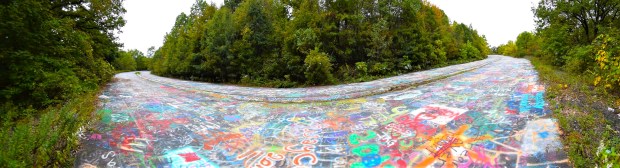
Graffiti Highway (parabolic), Centralia PA. All photos and text by Rick Ouellette except as noted.

In the late 1700s, towards the tail end of the Age of Enlightenment, the French painter Hubert Robert became well-known for his large-scale canvasses depicting ancient ruins of France and Italy. These romantic (and often semi-fictional) scenes spoke to an age where there was a strong interest in classical antiquity and preserving what remained of it. Hubert and the other artists who followed this trend were surely aware of the evocative power of decay when it came to lost societies.
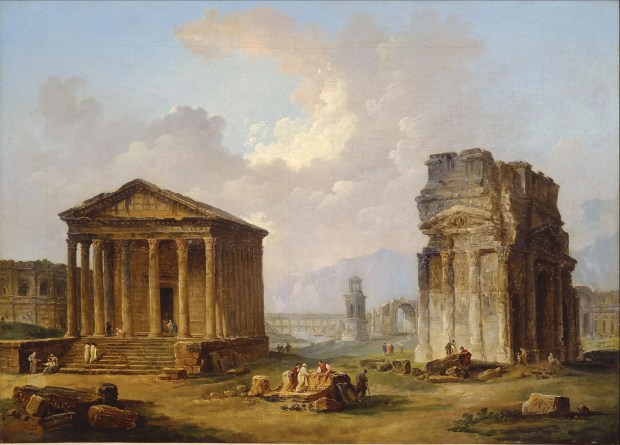
A typical Hubert Rubert joint.

Flash forward to the 21st century. We may well be deep into the Age of Un-Enlightenment, where hot-takes and online trolling has replaced the philosophical imperative. Yet the “picturesque” art style embodied by Hubert Robert has been carried on into the burgeoning field of ruins photography, the depiction of urban and industrial decay. Closely tied into the subculture of urban exploring, this field of photography has divided opinion. There are commendable practitioners like Matthew Christopher (in his two “Abandoned America” books) and Christopher Payne (the haunting and humane “Asylum: Inside the Closed World of State Mental Hospitals”) that have looked long and hard into the reasons and consequences of how  and why certain American institutions have been left to die on the vine.
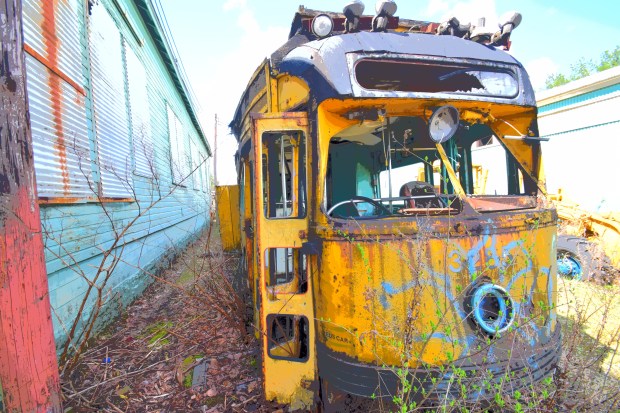
Trolley Graveyard #1, Photo by author.

Critics have pointedly taken aim at some aspects this “urbex” photography, namely the exploitation of people’s natural morbid fascination with the wreckage of off-limits locations, not to mention the implied insensitivity to a region’s economic decline. I have seen a lot of that online, where intrepid shutterbugs return from their trespassing adventures and post pics online to curiously adoring fans who practically gloat over the collapsed remains of defunct shopping malls and shuttered Rust Belt factories.
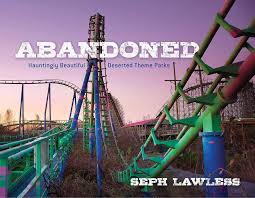
Which brings me to Seph Lawless. Curiously, he released two high-profile photo books in 2017 by two different publishers. “Abandoned: Hauntingly Beautiful Deserted Theme Parks” is exactly as it says, and he put in the big miles to significantly document a big urbex sub-category.
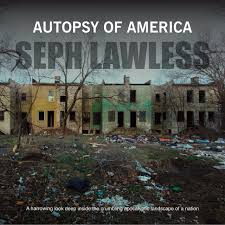
Then somewhere the same year was the boldly presented “Autopsy of America.” In case you don’t get it, you can turn to the back cover where we get in big letters, “Death of a Nation.” Really, the whole nation?? Published by a house called Carpet Bombing Culture (kind of a red flag in itself) the text for this book is so over-the-top that it can only work as self-parody.

“Is this just another recession? Or is this the beginning of the end?”

“America is a giant… mistake.”

“I want Americans to see what is happening to their country from the comfort of their suburban homes and smartphones.”

Oh gawd, spare me the edgelord/drama queen posturing! 😉. As usual, the photography is tremendous, though by this date we’ve all seen enough abandoned houses, darkened shopping centers and the odd isolated ghost town. (Lawless throws in several of his eye-catching theme park images for contrast). Yeah, there is serious income inequality. But it’s preposterous to pretend that cities like Pittsburgh and Cleveland (to name two I have personal evidence of) are hollowed-out landmarks of a country in its immediate death rattle.  Many of those cities have growing, transitional economies and don’t need this. But I get it. He’s Seph LAWLESS for heaven’s sake, and the hype (and apocalyptic rhetoric) often goes with this territory.
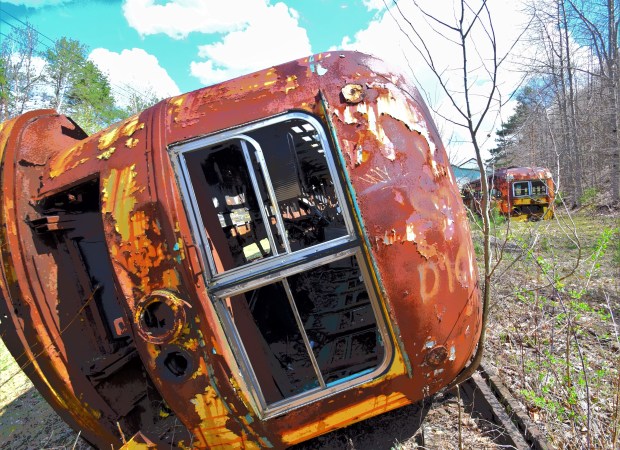
Graveyard Trolley #2, photo by author.

So while I may wince when Seph, like a supervillain in waiting, stands on a half-collapsed roof and gazes at a distant metropolis, you got to hand it to him. The logistics and craft it took to depict these places that so many want to know about. I’m just a part-time amateur at this game and have only been to one of the locations featured in “Autopsy of America.” I took a tour of the (now former) Trolley Graveyard outside of Johnstown, Pennsylvania with the aforementioned Matthew Christopher. He had photographed this huge collection of streetcars, owned by a super-hobbyist, many times before, including the pre-smartphone/GPS days. By the time I got around to committing to a tour, vandals had graffitied almost every car and smashed almost every window on them. It just got too easy in the Internet age to popularize and locate these spots, for good or ill.

But Rust Belt tourism is a thing and these cities often have a long-established culture in arts, cultural attractions and professional sports. As soon as we start realizing the value and vitality of such places, the better it will be for everyone, and we can all avoid the “Autopsy.”
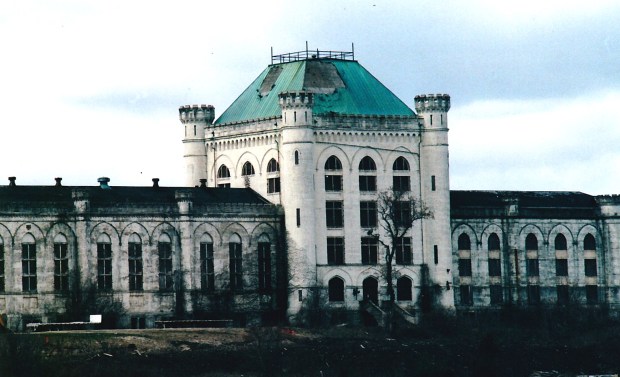
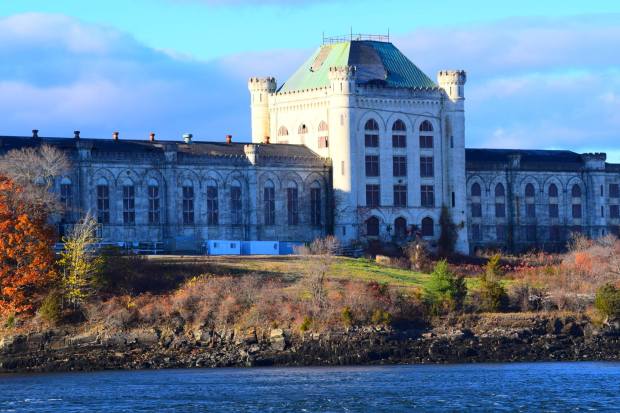
Placeology #3: The Alcatraz of the East

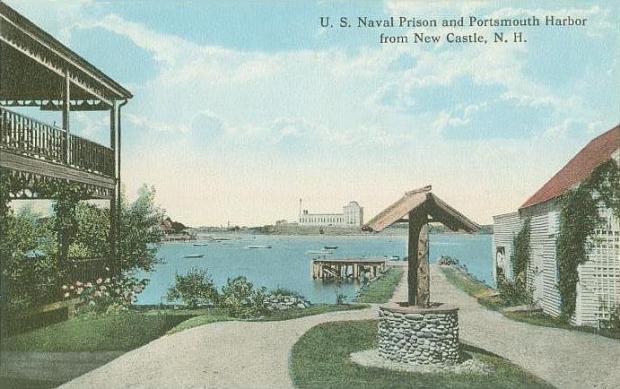
The Portsmouth Naval Prison is located on Seavey Island in New Hampshire. Dark, forebidding, isolated and pointedly medieval, it served as a max security jail for the U.S. Navy from 1905 to 1974. At its peak around World War II, the capacity of the prison (nicknamed “The Fortress”) was 3,008 inmates.

“Impregnable” would be another word for it. To escape this so-called “Alcatraz of the East” (assuming you made it out of building) you’d have to get past the guardhouse on the bridge to the mainland base or make an unlikely swim across the notoriously turbulent currents of the Piscataqua River just east of the cold Atlantic.

But perhaps more interesting is the question, why did the Navy need such an enormous prison? Turns out that around the time of max capacity in the Forties, as much as 40% of the inmates in this brig were in there for sodomy-related offenses. Yikes! This was enough for the top brass, even way back then, to reconsider their policy on homosexuality in the ranks. But it was still decades before even “Don’t Ask, Don’t Tell” and reform likely meant a discharge instead of a lengthy stay in this hellish jail.

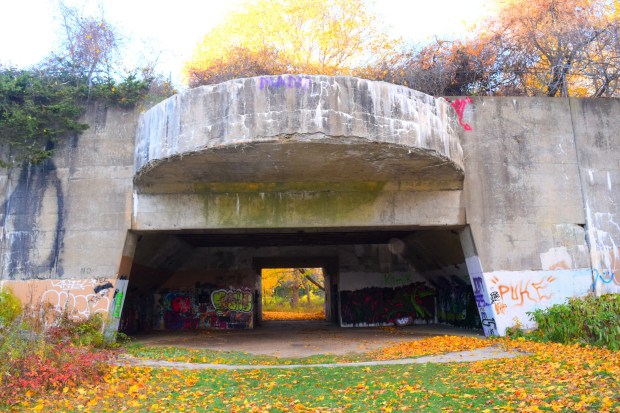
The Portsmouth Naval Prison has been closed now for fifty years, but you can’t visit it. Unlike the similarly decommissioned Alcatraz, sitting out there in the middle of San Francisco Bay, you’d have to pass thru the active Naval Shipyard to get there. Too bad, as it would probably be a great tourist attraction for historic and hip Portsmouth, just as the fascinating Eastern States Penitentiary has in central Philadelphia. Oh well. You can still get a good view of it from Route 1B going from Portsmouth to the seaside village of New Castle. Nearby is Fort Stark and Ordiorne State Park, both featuring the remains of giant gun batteries and other WW2 ruins. That could be another entry for this new series, where I will review many of the interesting places, famous or obscure, that I have photographed.

About “Placeology”

The places we walk through or drive past, the sites we visit or that simply fall into our frame of vision, all have a heritage and inner spirit of their own. Even in our familiar everyday world, we are often just steps away from some location rich in hidden history and forgotten associations. Through this “Placeology” photo series, I will strive to give fresh agency to locales both grand and humble, uplifting and foreboding. More coming soon!

Remains of World War 2 gun emplacement. Battery Seaman, Rye NH

All photos copyright Rick Ouellette

Happy Free Comic Book Day! Get one Here

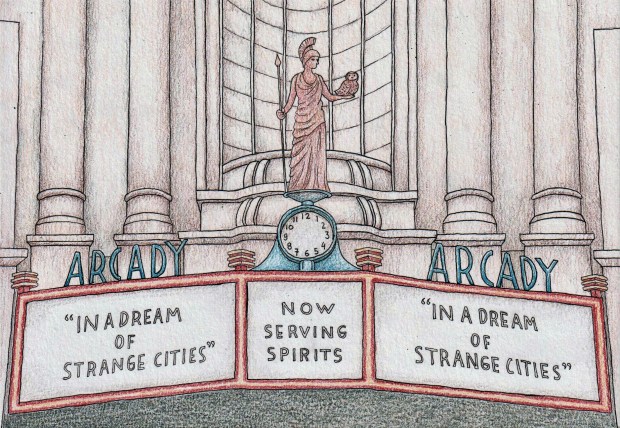
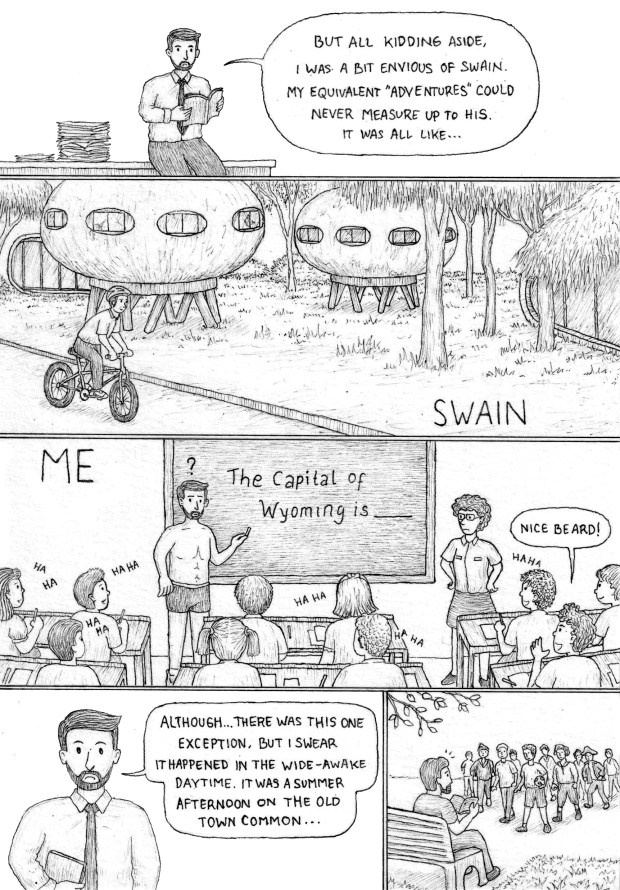
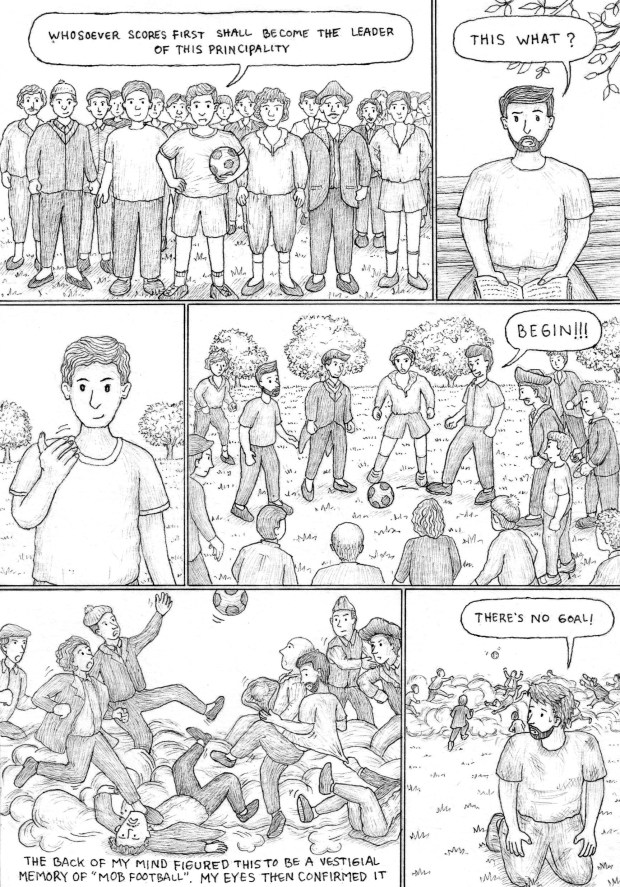
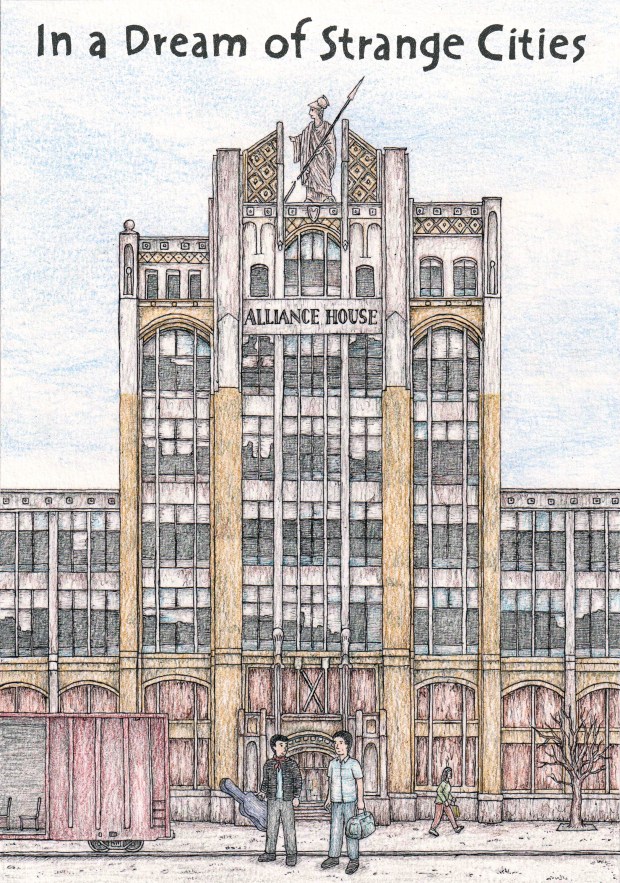
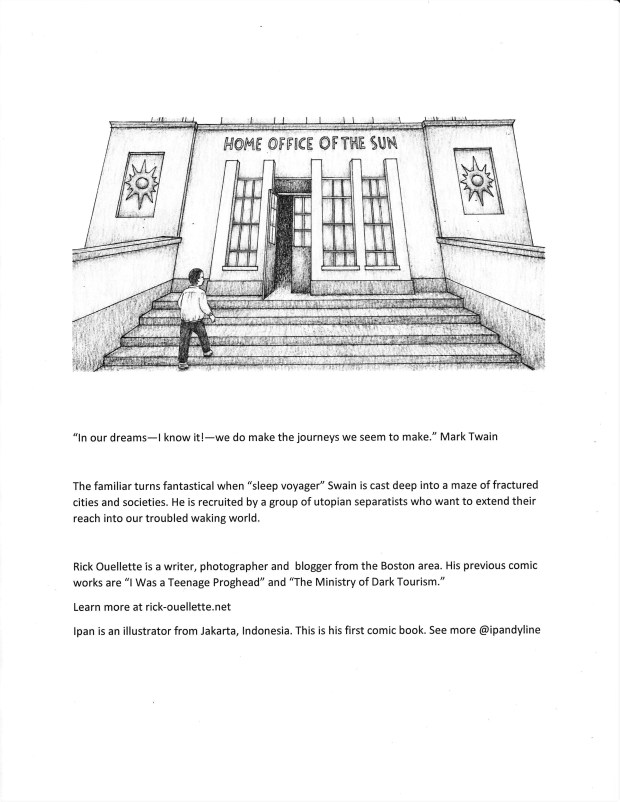
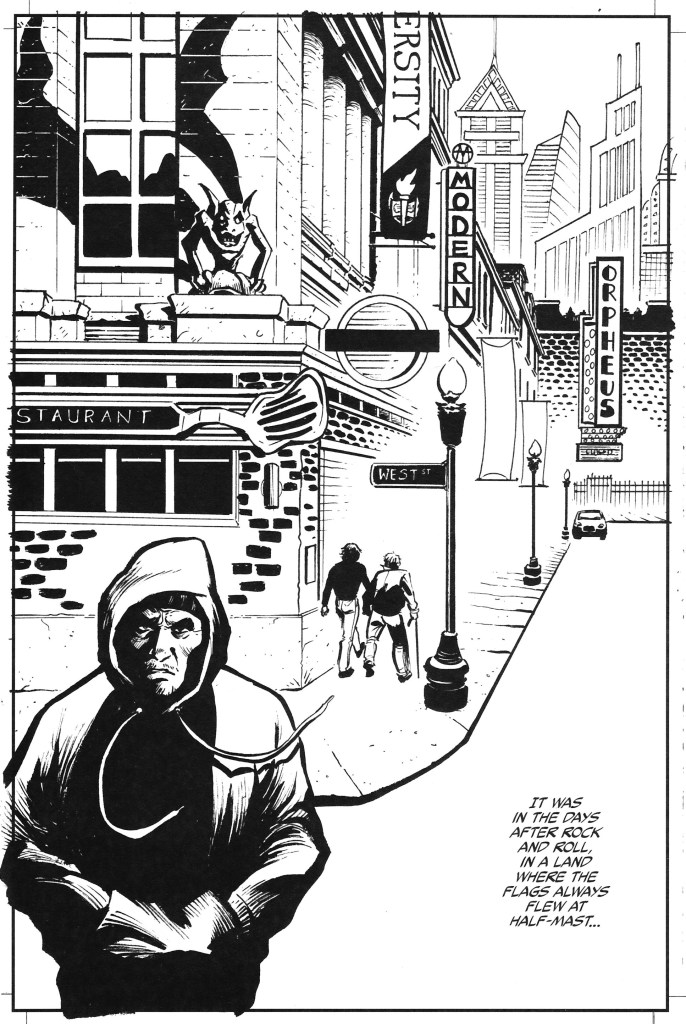
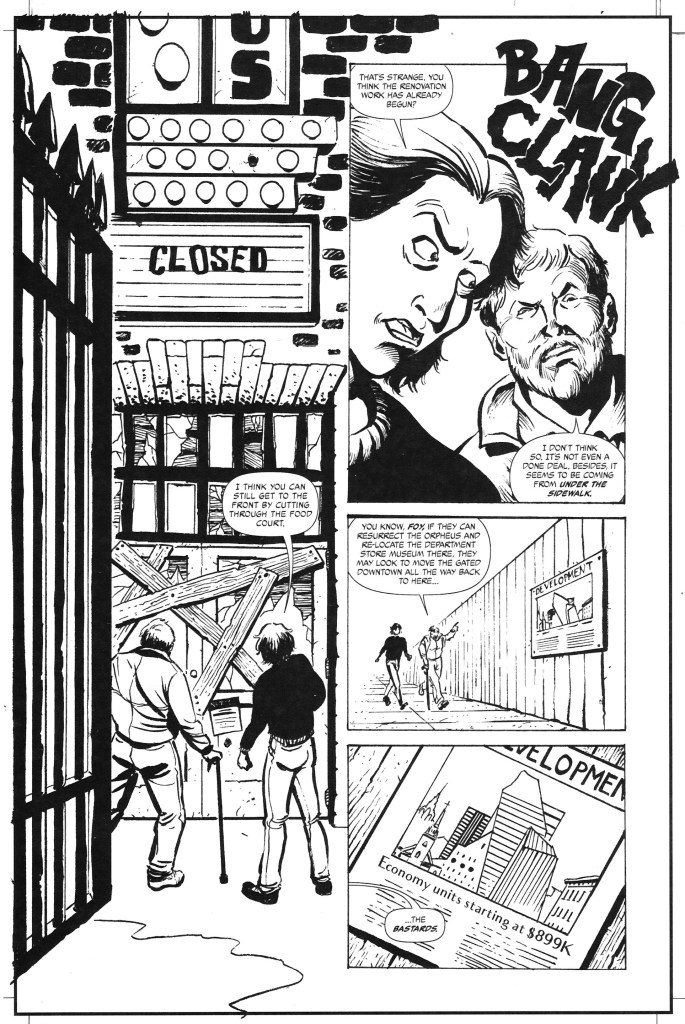
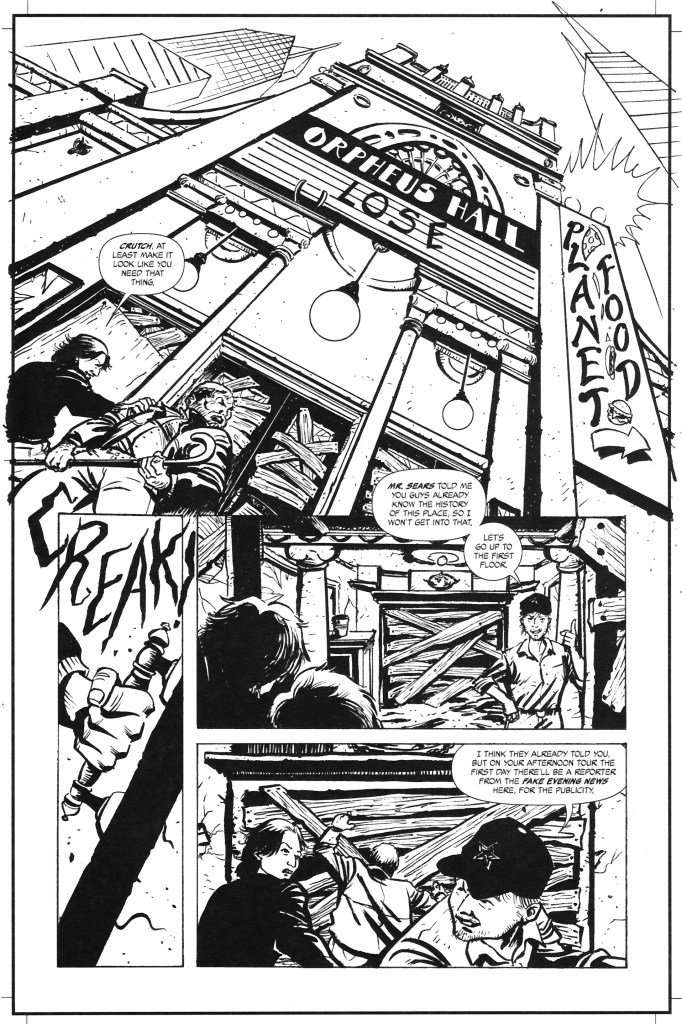
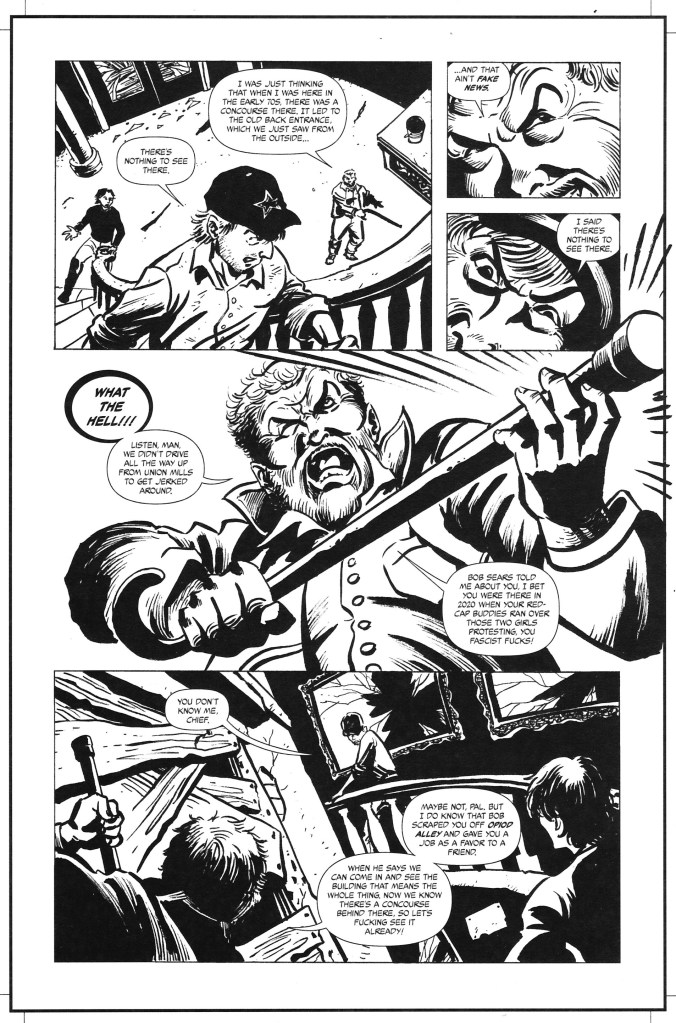
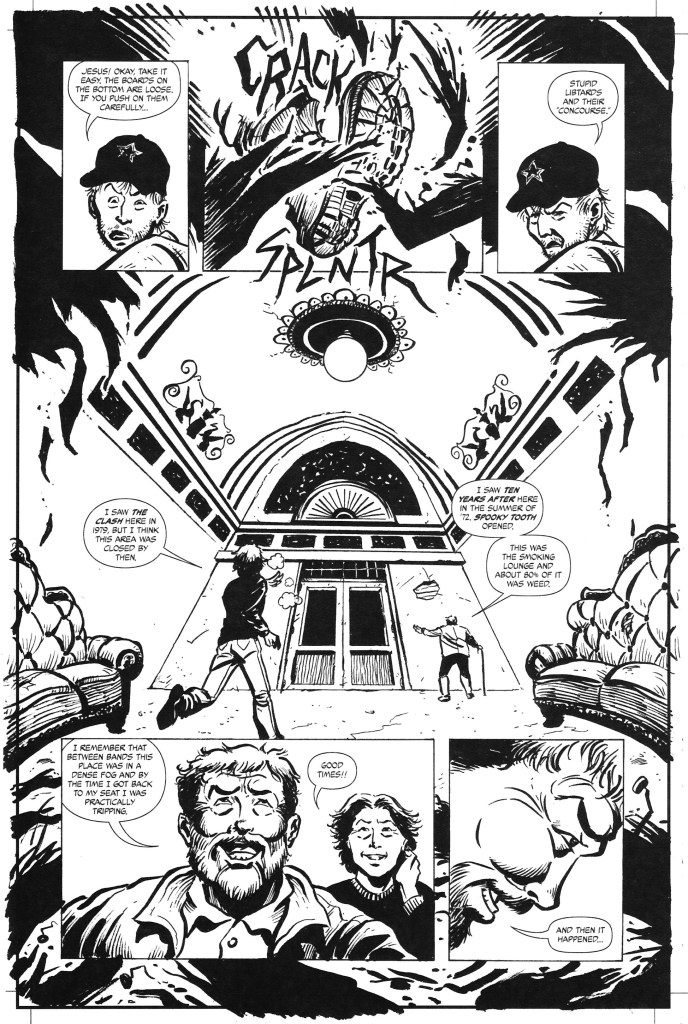
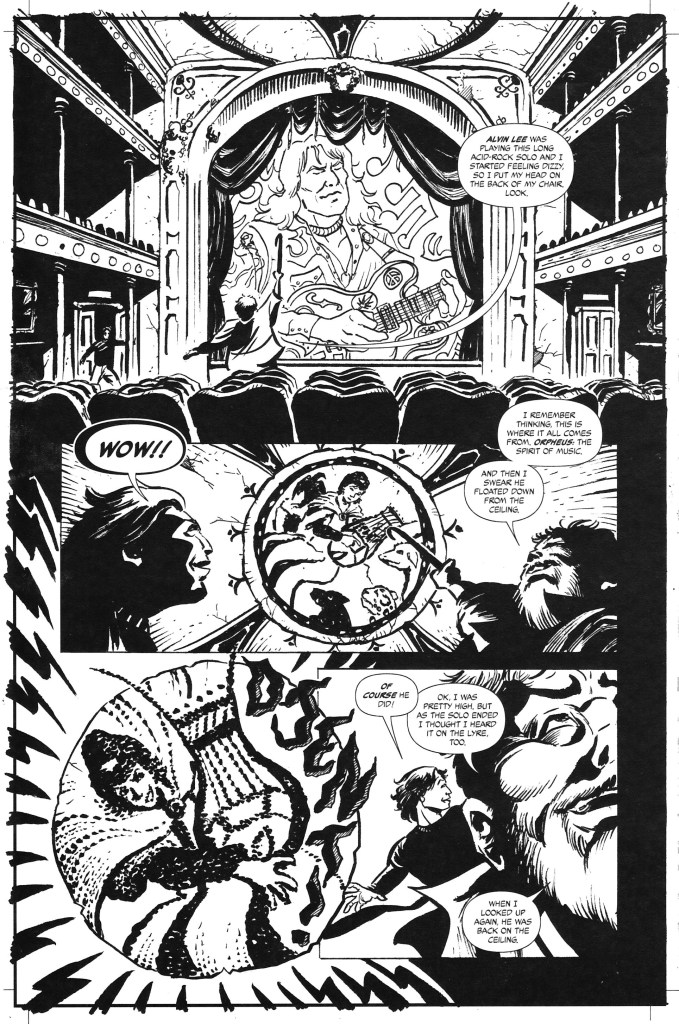
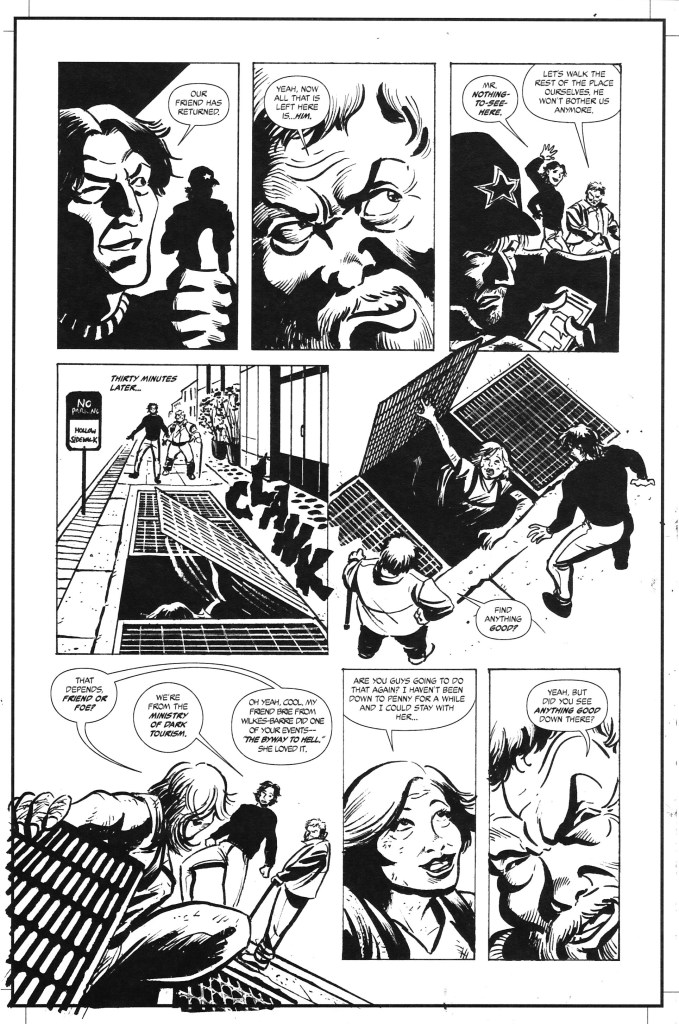
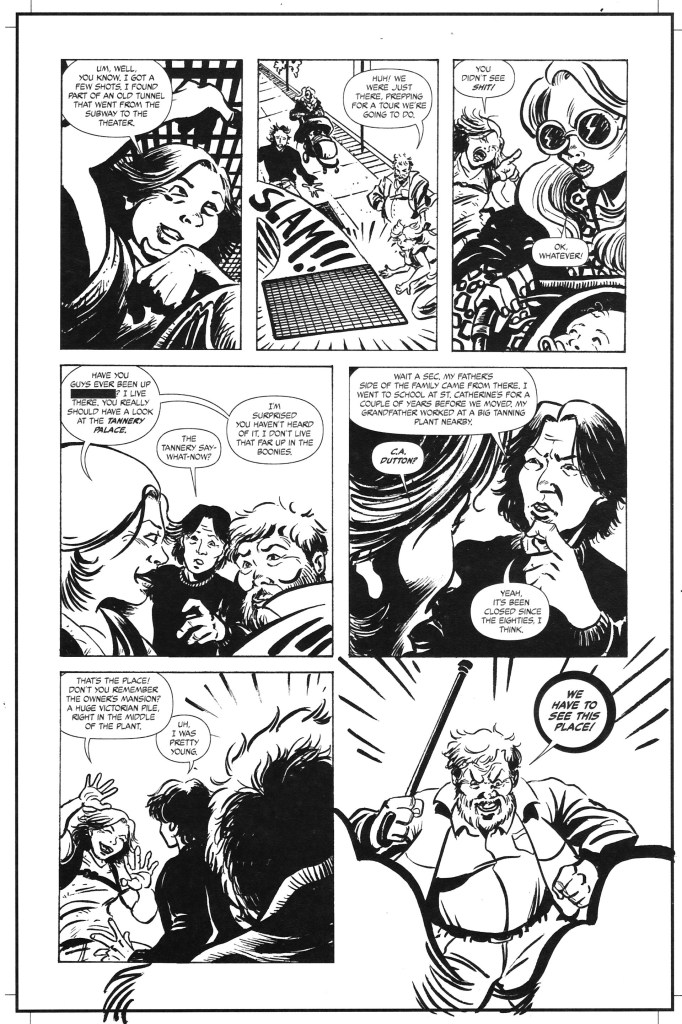
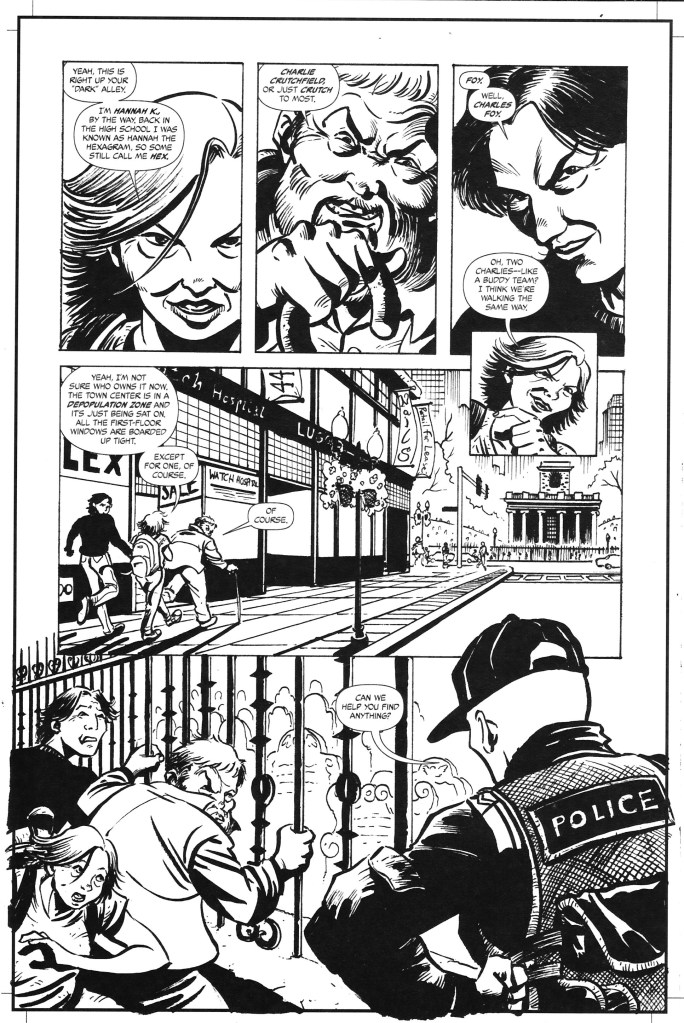
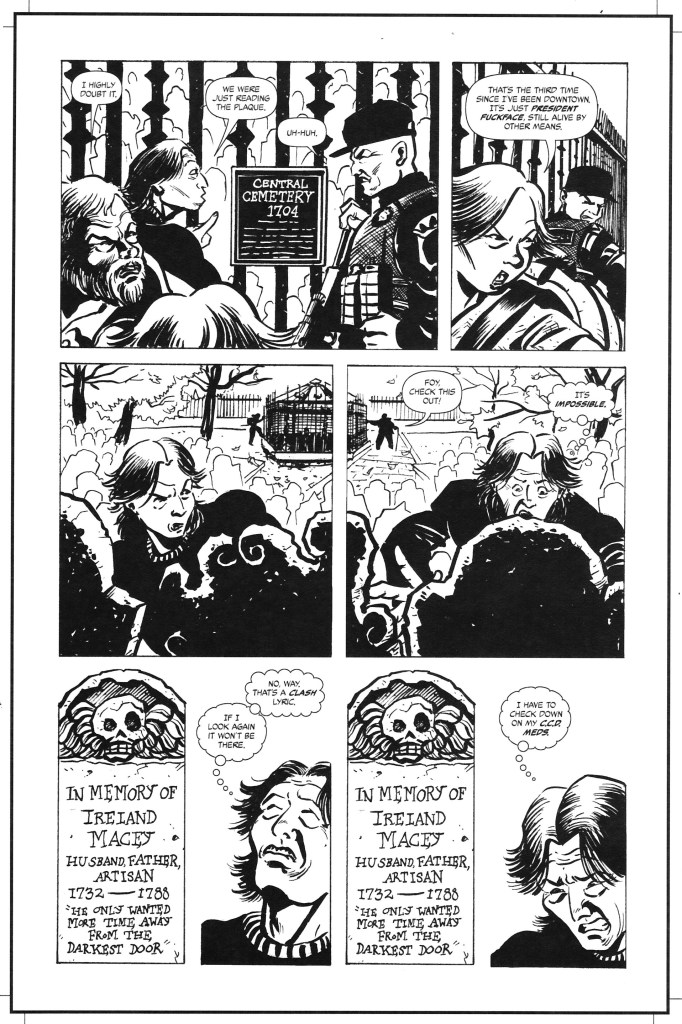
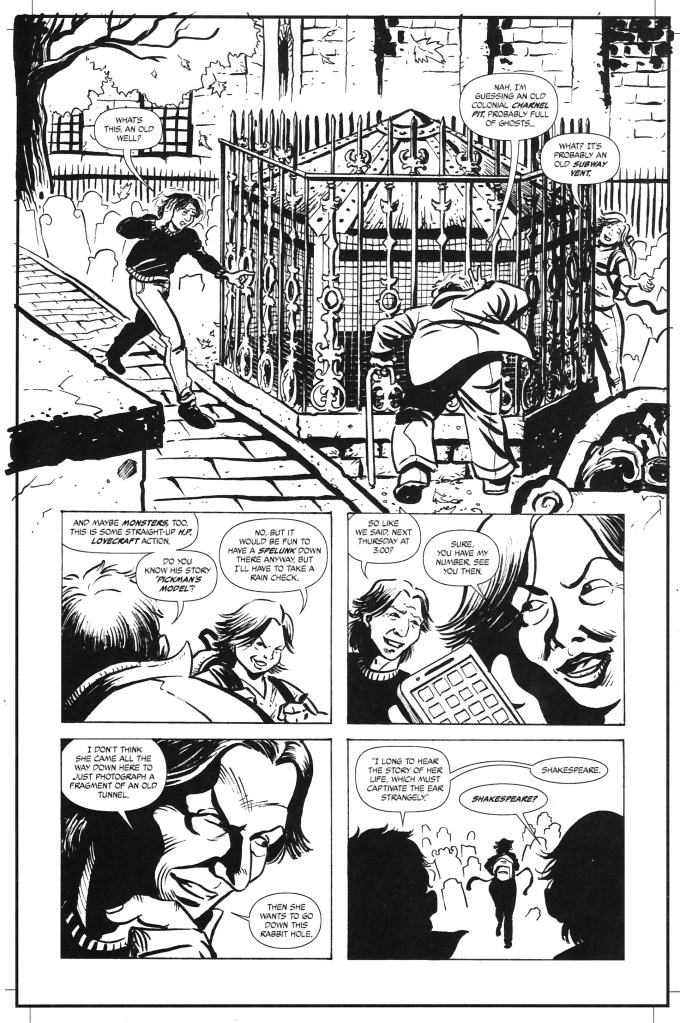
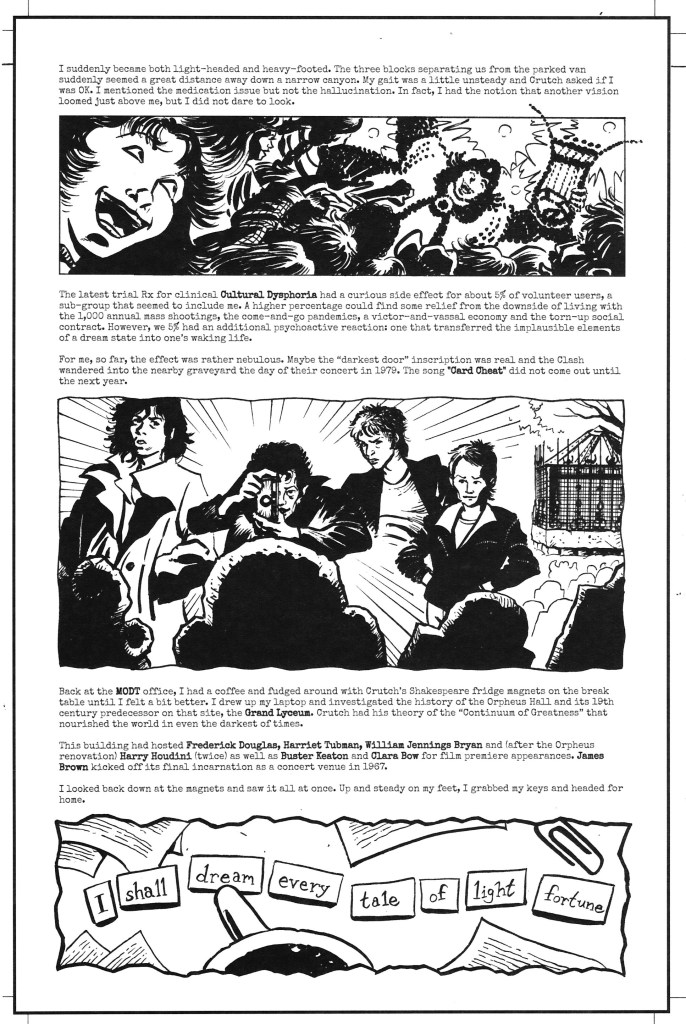
May 6th is Free Comic Book Day and I have a bunch of introductory 20-page mini-comics of my graphic novel-in-progress “In a Dream of Strange Cities” to give away. Here are some sample pages, if you are interested, please leave a message below and/or Like my Facebook page In a Dream of Strange Cities. Thanks! Rick Ouellette (writer) and Ipan (artist).

Front cover above, Back cover below.

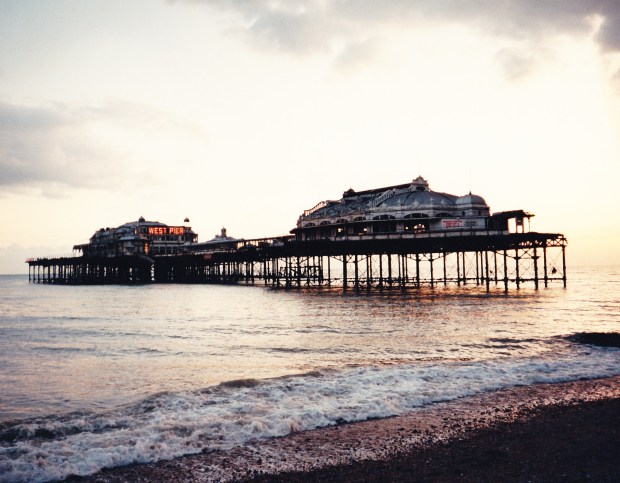
Candy Floss and Catastrophe: The Peculiar Case of West Pier

Text and above photo by Rick Ouellette

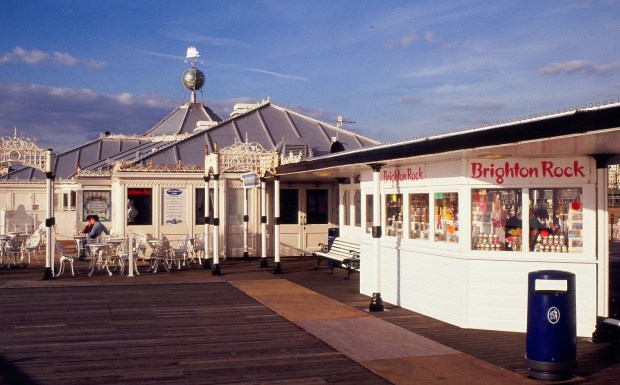
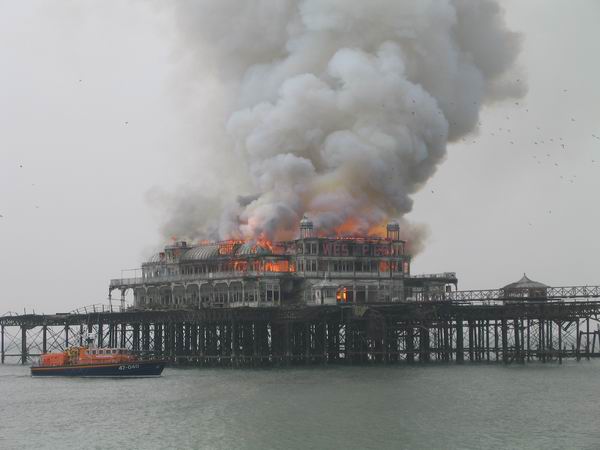
It was one of the most celebrated of the 85 pleasure piers built during England’s Victorian era. In 1870, a visiting Napoleon III called it “Britain’s finest structure.” It’s grand 1600-foot oriental profile could be regarded as the people’s answer to the nearby John Nash-designed Royal Pavilion, the exotic getaway built for the Prince Regent (the future King George IV) that had been completed about four decades earlier. In its 109 years of operation (1866-1975), Brighton, England’s West Pier was a topmost playground for everyday folk on their seaside holidays. It was one described as a “luxury liner that never left its mooring” and where the anyone could have first-class accommodations for a small entrance fee. Today, however, only a small portion of the pier’s steel superstructure rises above the chilly Channel waters off the beach. West Pier’s story is one of extremes in pleasure and and calamity.
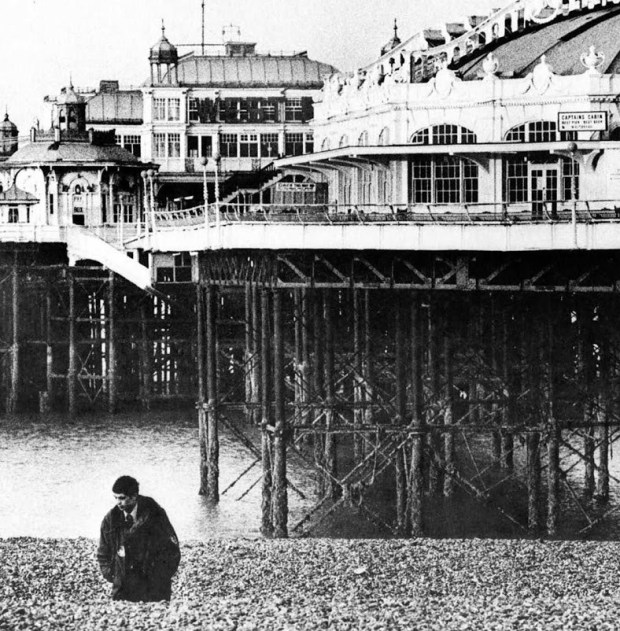
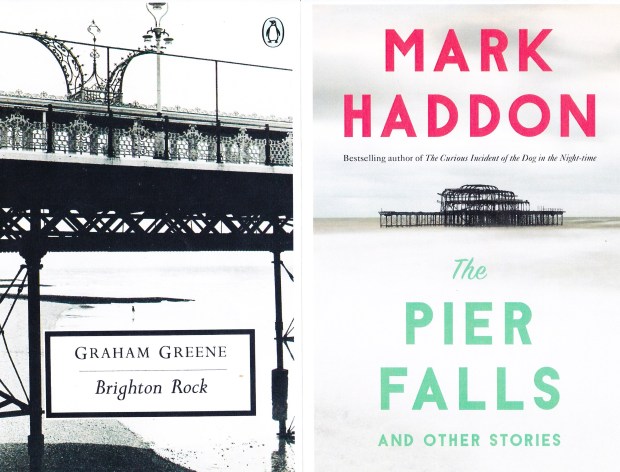
During its century-plus in operation, the pier variously featured a huge games pavilion and a concert venue with a house orchestra, amusement park rides, slot machines, ballrooms and tea rooms, pubs, and eateries. It was also known for the sale of candy floss (cotton candy) and its signature “Brighton Rock” crystal confection. Author Graham Greene used the locale and the Brighton Rock name for the title of his totemic 1938 novel of crime and Catholicism. West Pier also serves as a backdrop for the Who’s stormy 1973 rock opera “Quadrophenia.” (The band’s earlier hit “Pinball Wizard” is sung from the point of view of a lad who loses to Tommy despite knowing every machine “from Soho down to Brighton”).

Jimmy the Mod walks in front to West Pier in the photo booklet from the Who’s 1973 “Quadrophenia” album

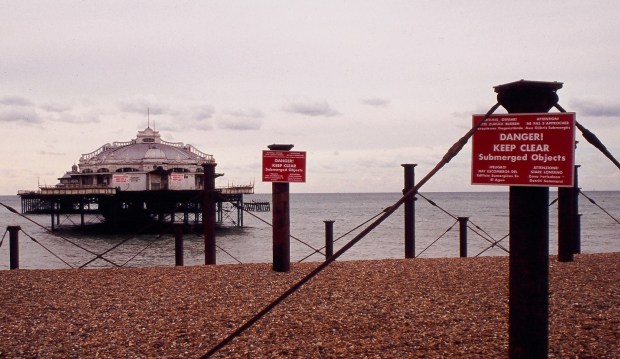
But in the end, West Pier was just as unlucky as it was celebrated. While the Brighton Pavilion and its sister promenade Palace Pier, remain popular local landmarks, the West Pier couldn’t sustain it’s boast of being “the best pier.” Much of its central decking was removed in 1944 to prevent enemy landings. Its popularity declined in the post-war era, and more downscale amusements superseded the grand concert hall and the fashionable boardwalk deck. Structural decay commenced with dis-investment and the pierhead was closed in 1970. Maintenance costs for such an ambitious structure scared away potential new owners and the whole place was off limits five years later.

In 1994, West Pier flounders while Palace Pier flourishes. Photos by author.

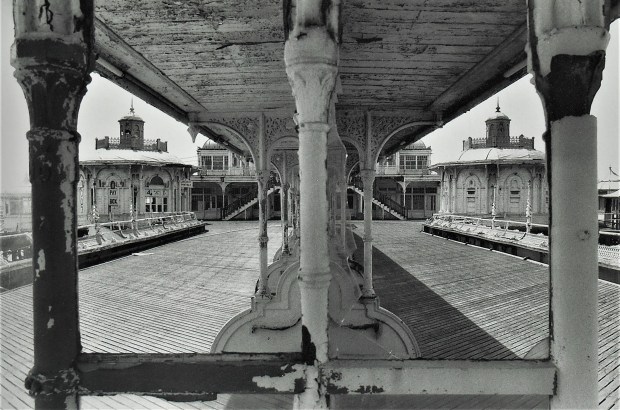
West Pier became a sort of plebeian version of the old romantic ruined castle. The 1982 book “Dead Tech: A Guide to the Archaeology of Tomorrow,” by photographer Manfred Hamm and writer Rolf Steinberg was in the vanguard of an aesthetic that would spur the urban exploration phenomenon. It featured several sad but alluring photos of West Pier, placing it in the same obsolescent class as a graveyard for old steam-powered trains and the abandoned launching pads of the Apollo space program. It attracted trespassers and vandals and by 1994, when I visited Brighton the foot of the pier had been cut off from the land in an attempt (ultimately unsuccessful) to stop further damage.

West Pier sun deck by “Dead Tech” photographer Manfred Hamm

This beached leviathan was destined for a series of indignities that would all but wipe it off the map while other English piers from Blackpool down to Southend-on-Sea would continue to thrive. The cyclonic Great Storm of 1987 caused a partial collapse. Another severe weather event in 2002 caused the concert hall to cave in. Two major fires delivered the knockout punch in 2003. Both were considered of suspicious origin; I would love to hear any story of how arsonists accomplished this wicked feat, considering the pier was cut off from land and only accessible from structurally unsound steel supports.

The first of the 2003 fires. Photo by Mark Harris

Even in the skeletal shell form it was reduced to, West Pier continues to fascinate. It’s been used for a giant laser light show and the 2003 fires are re-lived in singer Nick Cave’s novel “The Death of Bunny Munro.” Most notably for me, the fictional 1970 collapse of West Pier is the basis of writer Mark Haddon’s astonishing lead story in his 2016 collection “The Pier Falls.” In remarkably precise, present-tense detail, Haddon creates an immense, harrowing and heartbreaking disaster out of thin air, after four introductory paragraphs of a normal day out in Brighton. But why? Hasn’t it suffered enough? There must be an aura hanging over West Pier’s skeleton that makes it a subconscious marker of the mortality that awaits even the most powerful of persons or things. It’s that ineffable quality that makes our modern ruins so irresistible to ponder.

The cover of Mark Haddon’s book shows the pier as it looks today.
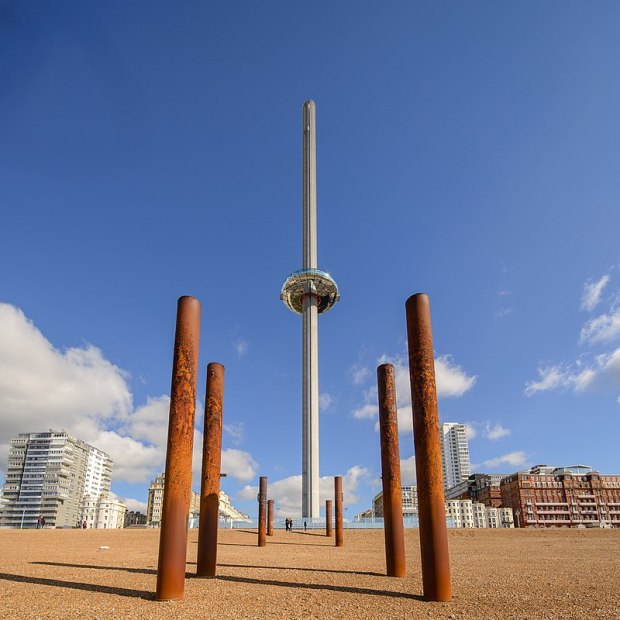
Today, the 530-foot i360 observation tower stands on the site of the old West Pier entrance. Photo by Arild Vagen

In a Dream of Strange Cities, Part 3: “Parabolica”

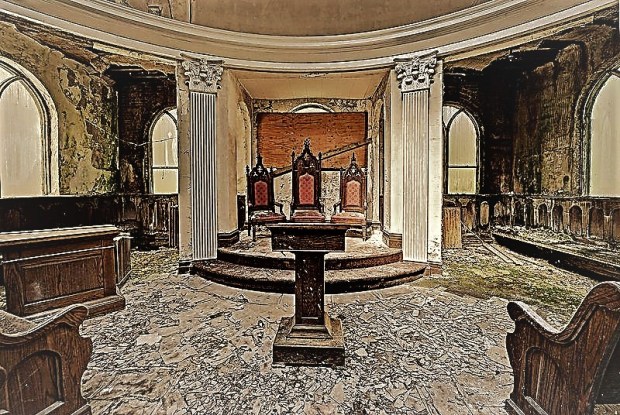
We all stood just inside the door of the long-closed sanctum. Lady Domine took a few steps forward from us. She wore a charcoal floral-print tunic, pale red leggings and stylish hiking shoes; she stood with a regally erect posture. But the way her hands cupped her sides with fingers spread, and the manner in which her right foot was set forward, suggested she was better prepared for a spirited game of hide-and-seek than the more serious matter at hand.

I remembered Crutch’s comment when he first told me about our company’s top benefactor. “She’s sort of stuck somewhere between a duchess and a tomboy.

“Well, one thing is for certain,” she said after a pause of a half-minute, “For this sort of undertaking, the old meeting room of a secret society really fits the bill.”

“Didn’t I tell you, it’s perfect!” Crutch spoke with an eagerness that was a bit out of character.

“Oh, don’t you worry, Charlie Crutchfield. At $90,000 we’re definitely going to buy it.”

I nudged Hannah with my left elbow and nodded. She replied with a discreet thumbs-up.

Domine turned to look at me. “Asbestos?”

“Well, there is some, mostly in the basement. But it’s not a very large building.”

Crutch piped in. “The Parabolic Society was never a large fraternity. More like a watering hole for utopian sky-watchers. Have you heard of them?”

She lifted a little crooked smile that lit up her still largely-unlined face. “Not at all. I always rely on you guys in the Ministry of Dark Tourism for my esoteric learning.”

“I doubt that, but thanks” Crutch said and they walked over towards the apse, with its formal arrangement of three chairs.

Hannah turned to me confidentially. “When she says ‘we’re’ going to buy it, should I take it literally to mean all of us? I don’t exactly have twenty-two grand lying around.”

“Don’t worry, that’s her way of being inclusive. She’ll probably take the $90,000 out of her petty cash drawer.”

Lady Domine approached the chairs and lightly patted the larger one in the middle. A light puff of dust rose up, but she took a seat anyway. Then it occurred to me: who would sit on either side, if anyone? The rough idea was a political rally under the guise of a MODT event featuring a re-creation of a 19th century mesmeric performance. I hoped that my late career switch didn’t turn out to be more than I had bargained for.

She leaned forward in the big chair. “Oh, Crutch, I don’t know. What are we supposed to be doing here? Advocating for the partition by having me do parlor tricks? This town is probably crawling with red-caps. It could even get dangerous.”

Crutch turned to look at us and nodded towards the back area. We stepped on bits of shattered tiles, past the apse and into a hallway. I peeked back and Domine had moved off the chair and was peering thru a cracked Palladian window down at the street. I paused with Hannah to look at some parabolic diagrams that remained on the wall. After a moment I suggested she should check out the old member’s lounge and kitchen. When she did, I lingered in the hall.

“the hopheads won’t bother us,” Crutch was saying. “We’ll put up a sign saying ‘Private Event’ and get Ike’s friend Jason to work the door. You remember Jason—about six-foot eight and two fifty, with fists like pile drivers?”

“That must be the gentleman who checked tickets at our ‘Satan’s Skyline’ fiasco last October,” Domine replied. “Let’s limit alcohol sales for this event.”

“Anyway, let’s have a soft opening. We’ll invite maybe 25 of our best customers for free and maybe a few college kids from the town. See how it goes.”

“Do you want to hear a bit of what I’ve been working on”

Hannah had just poked her head out of the kitchen, probably to show me the double dumbwaiter. Rookie enthusiasm. Instead, I motioned her towards me. Once Lady Domine sat back down in the big chair and started speaking, Crutch waved us back into the main room.

“Now let’s spin back down the years to the autumn of our discontent in 2016. When PFF came to power, it was like a little piece of me died. I’m sure many of you felt the same. And when he met his maker, that piece of me was not re-born, it stayed dead. I can only hope to replace it with a new inspirational spirit derived from a wholly new source…”

Her eyes were wide open and stared straight ahead as if into nothing and everything. The effect reminded of the “Glass-Eyed Goddess of Union Mills” whose visage had recently become the MODT emblem.

The good Lady continued. “There is a new righteous power that is forming behind the scenes of everyday life. Anyone with a good heart can tap into it. But we must be careful with it. The retrogressions of this century have been shocking—the vile and needless hatreds, the bloated ignorance, the flagrant racism and the emptiness of forfeited souls that have led to countless brutalities.

“I know the desire for retribution is great with some in this current political vacuum. But we should never resort to violence in any of its forms: physical, economic, mental or whatever else. Instead, we should smite our enemies with the three Ls: Logic, Learning and Love. And the smite shall feel like a kiss.”

Lady Domine leaned back in the chair and rolled her eyes as if to say “who me?” I realized I had just snapped out of a little trance of my own.

“Well, that’s sort of the end of it. I’ll build up to it.”

After a brief silence, Hannah practically slapped her cheek with her right hand. “Omigod, that was amazing! You’ve got to do it. I know I’m new and have no clout… but if we don’t do this event I’m going to die!”

Domine smiled at her, then turned back to Crutch. “I’m still not sure. Why wouldn’t I just start a pro-partition action fund?”

“Because that’s boring and would fizzle out quickly. We’ve already talked about this—sensational gambits and star power is the only thing that’s works now. We’ll hash out the details at the next staff meeting.”

“I’m not really a mesmerist, you know, but I could wing it and see what happens. Soft opening, yes. Or else I won’t do it. Don’t be putting me down for a definite “yes” just yet. No, I have to do it, just look at this country. Can we have drinks later?”

Hannah gave me a side look. “Huh?”
“Don’t worry. You get used to it after a while.”

Crutch took Lady Domine to see the other rooms, Hannah tagged along. I looked out the front window into the town center, where the light was failing. Down below was a stonework mass of once-proud mercantile buildings, their civic ideals mostly forgotten. Beyond that was the triangular common, with its’ patchy lawn and statue of a Union soldier, standing prematurely at ease. A few guys were gathered around a bench at its far side, next to an old pick-up truck with a flag mounted behind the cab. They had bagged drinks and a couple of them were shin-kicking a third, playfully at first but then not so much.

I exhaled uncomfortably. The place with the drinks was only three doors down so I kept quiet and let it pass. But I knew it couldn’t stay that way forever.

This is an excerpt from an in-progress illustrated or graphic novel called The Ministry of Dark Tourism. If interested, follow this blog to get updated or friend me in Facebook, Rick Ouellette.

In a Dream of Strange Cities #2: “Tannery Palace” prelude

As soon as we got over the shock of first seeing Tannery Palace, Crutch suggested I move the company van a few streets away. The factory/mansion complex was only a long stone’s throw from (redacted) Square and our local guide Hannah K— said she had seen a couple of army cops on patrol that morning.

Normally, I would have been miffed at having to do this while Crutch got to know our appealing new co-conspirator a little better. But the night before I let on that I had attended 4th and 5th grade at the St. Catherine Primary School around the way. I was curious to see this old haunt again, especially now after what I had just seen. How could it be that I had never, until today, seen or known about the outlandish Victorian owner’s residence that sat in the middle of the tannery—especially since my grandfather had worked there and I spent two years at a school that was only two blocks away?

The shuttered but otherwise well-preserved Tannery Palace was no place to park a van whose back-door logo promised adventures in “Dark Tourism.” I hopped in and drove over to the school and tucked it under an oak tree in a corner of the disused parking lot, close by the giant brick wall that formed the back of the Church of St. Catherine Laboure.

I wasn’t particularly old, just a man of a certain age, but it felt like an indiscernible black space separated those years from where I stood now. I looked over at the tall windows of my 4th grade classroom and got a blank stare in return. That did not stop some memories from leaking back. At recess, we used to throw an oversized Super Ball against this back wall. A pack of boys in white shirts and clip-on ties would scramble for the crazy bouncing rebound. A smaller number of girls in plaid skirts would work the perimeter away from the scrum, occasionally catching the more errant sideway bounces.

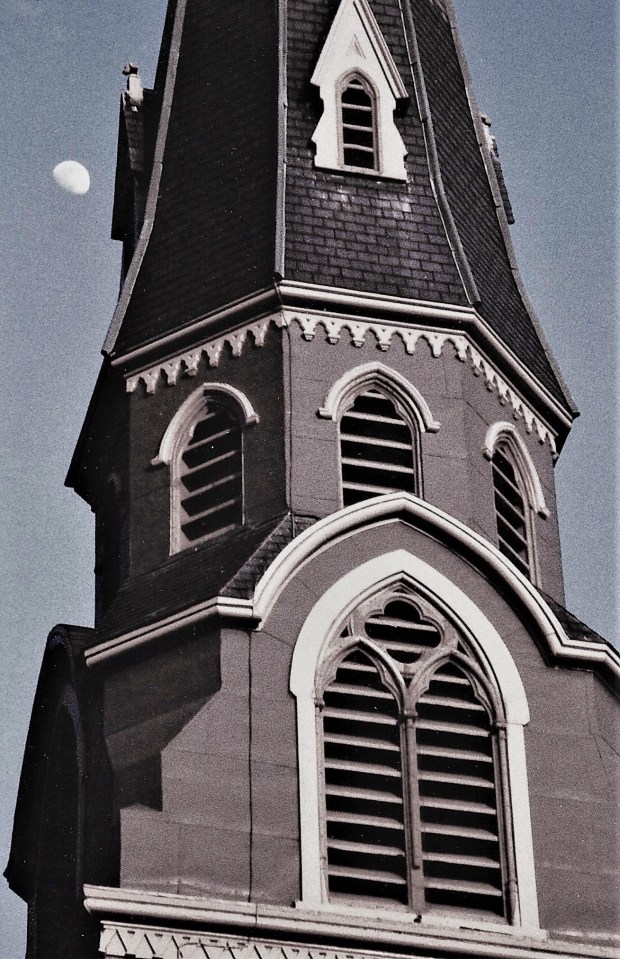
I started walking back, wondering how far along Hannah and Crutch were with prying away the weak-link plywood of the basement window that was to be our entry point to the mystery mansion. First though, I had to turn back to have a look at the church’s pointy steeple, an architectural detail that had popped up in my dreams at least a couple of times a year for decades. Many of the kids in my 5th grade class would compare the steeple to a witch’s hat, thus revealing the true nature of Catholicism. We were clever little buggers back then. For sport, we would discuss this theory just barely out of earshot of the nuns as they stood in groups of three or four in their white origami-type headgear.

Each sunny school day at the noon recess, at the signal which was the tannery’s blaring lunchtime horn, we would look up at the steeple to see “the witch’s eye.” This would be a glint of sunshine off the church bell seen through the slats of the tower. I stared one last time for a glimpse of this, but it was no use. It was late afternoon already; the moon was even rising. The church, the factory and a lot else around it was closed for good. There would be no supernatural eye to look down on this broken world that had cursed itself.

A prose sample from a work-in-progress, a (graphic?) novel called “The Ministry of Dark Tourism”

A “Pale Beyond” Postscript: The Haunting and Humane Photography of Christopher Payne

asylum cover

Asylum: Inside the Closed World of State Mental Hospitals
Photographs by Christopher Payne, Essay by Oliver Sacks (The MIT Press, 2009)

taunton
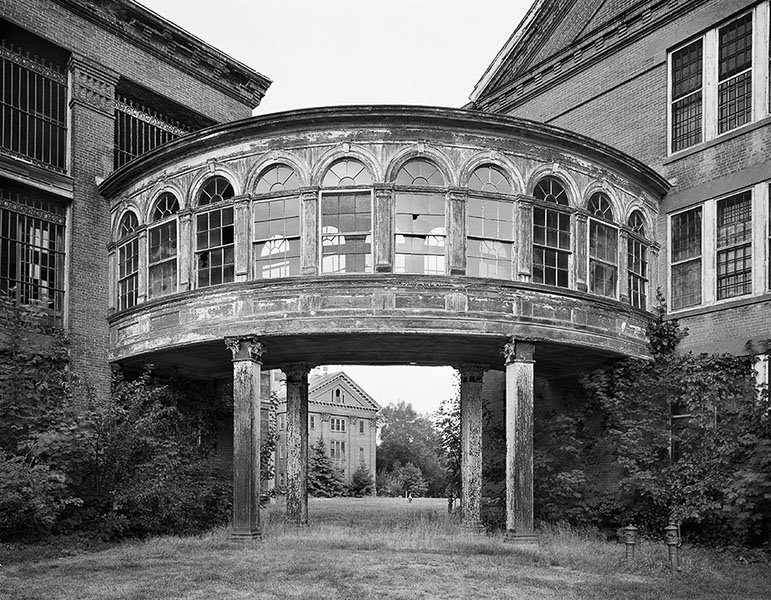
Breezeway, Taunton State Hospital, Mass.

(All photos in this post are copyright to Christopher Payne, used under “fair use” provisions)

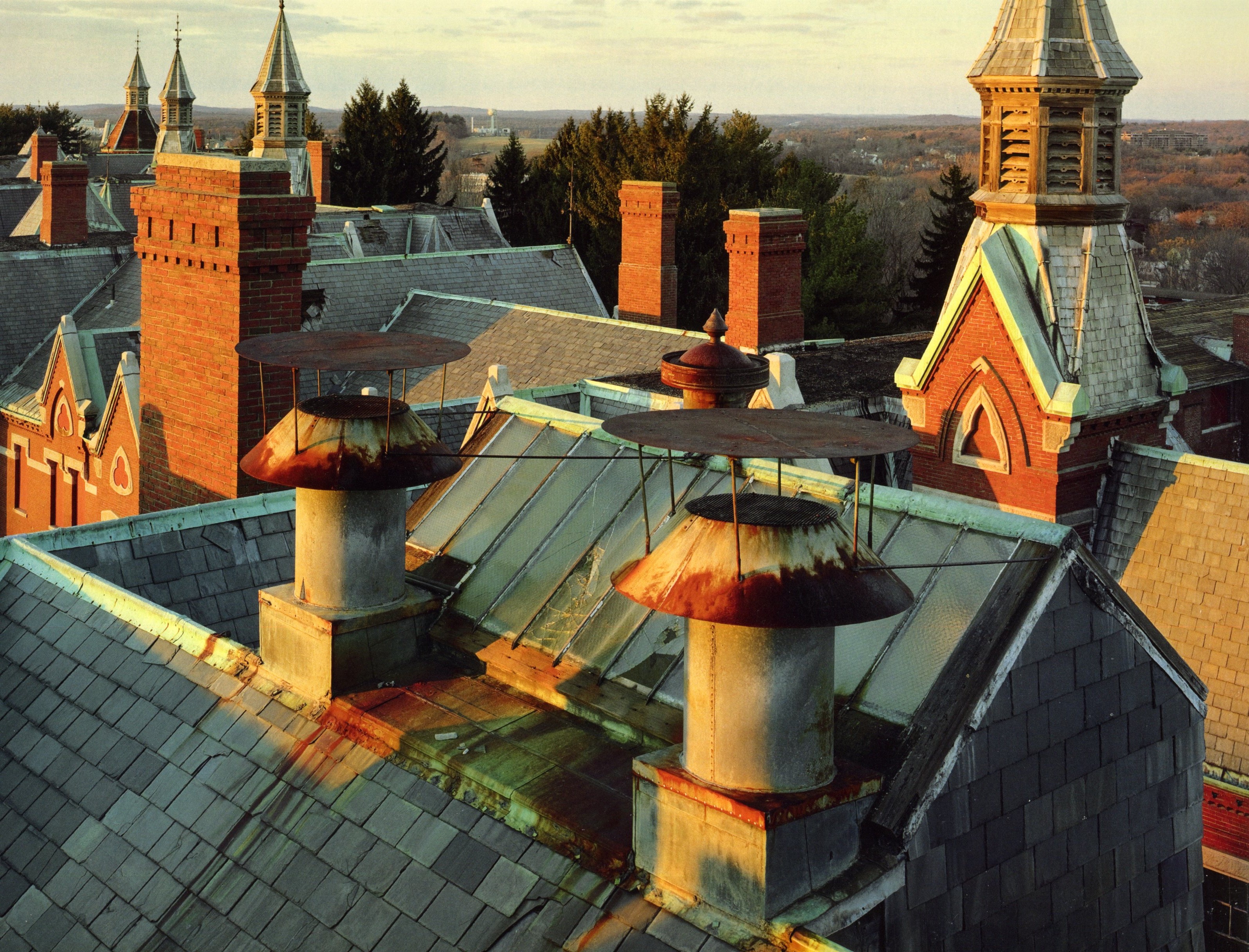
I felt very lucky to have had a chance last winter to see a nearby gallery show of the extraordinary work of New York-based Christopher Payne, maybe America’s foremost photographer of “disappearing histories” as the headline of a recent Payne interview called it. I was already familiar with his work via “Asylum”, since the coffee table book with its austere cover shot of a white straitjacket hanging on a pale blue wall caught my eye in Barnes & Noble a few years back. Payne shoots in traditional large-format film and makes digital C-prints from there. These sensitively-rendered images of eerily abandoned state hospitals are plenty impressive in the book but mind-blowing in a gallery, where some of the vertical prints were some four feet high.

Fascination with shuttered asylums, as well as the urban-explorer impulse with which it overlaps, has really taken off in the Internet Age, a phenomena I explored in my 3-part “The Pale Beyond” series (see it in the “Categories” section to the right or in “Related Posts” below). There are many different, and often excellent, websites featuring the work of people braver than myself who find their way into these abandoned buildings and come away with evocative photos that earn gushing praise from followers and lots of “oh-wow-that’s-creepy” reactions on the comments scroll.

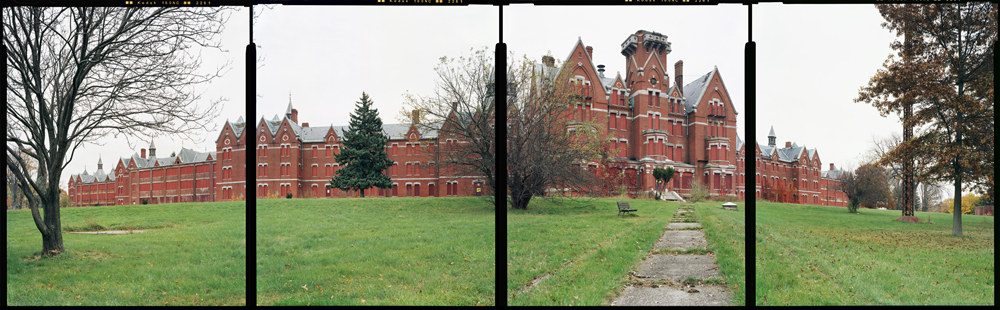
Danvers_Panorama
Danvers State Hospital in panorama

All that is fine. We’re a society in love with the macabre and the mysterious, and many of these buildings fit the bill. A lot of them were built in the Victorian era, with gothic spires that came to seem sinister once conditions there deteriorated. But Payne’s approach to this subject is different and refreshing. He was trained as an architect and had never visited a state hospital before 2002, when a friend who knew of his interest in industrial archaeology told him about Pilgrim State on Long Island, a 10,000-bed asylum on a 1,000-acre campus. By that date, Pilgrim was operating to a tiny fraction of its original capacity (while hundreds of others had fully closed). Payne in his foreword admits to being “dumbstruck” by the monumental scale and the landscaped setting; it was the start of a six-year project that would eventually lead him to dozens of these mammoth institutions.

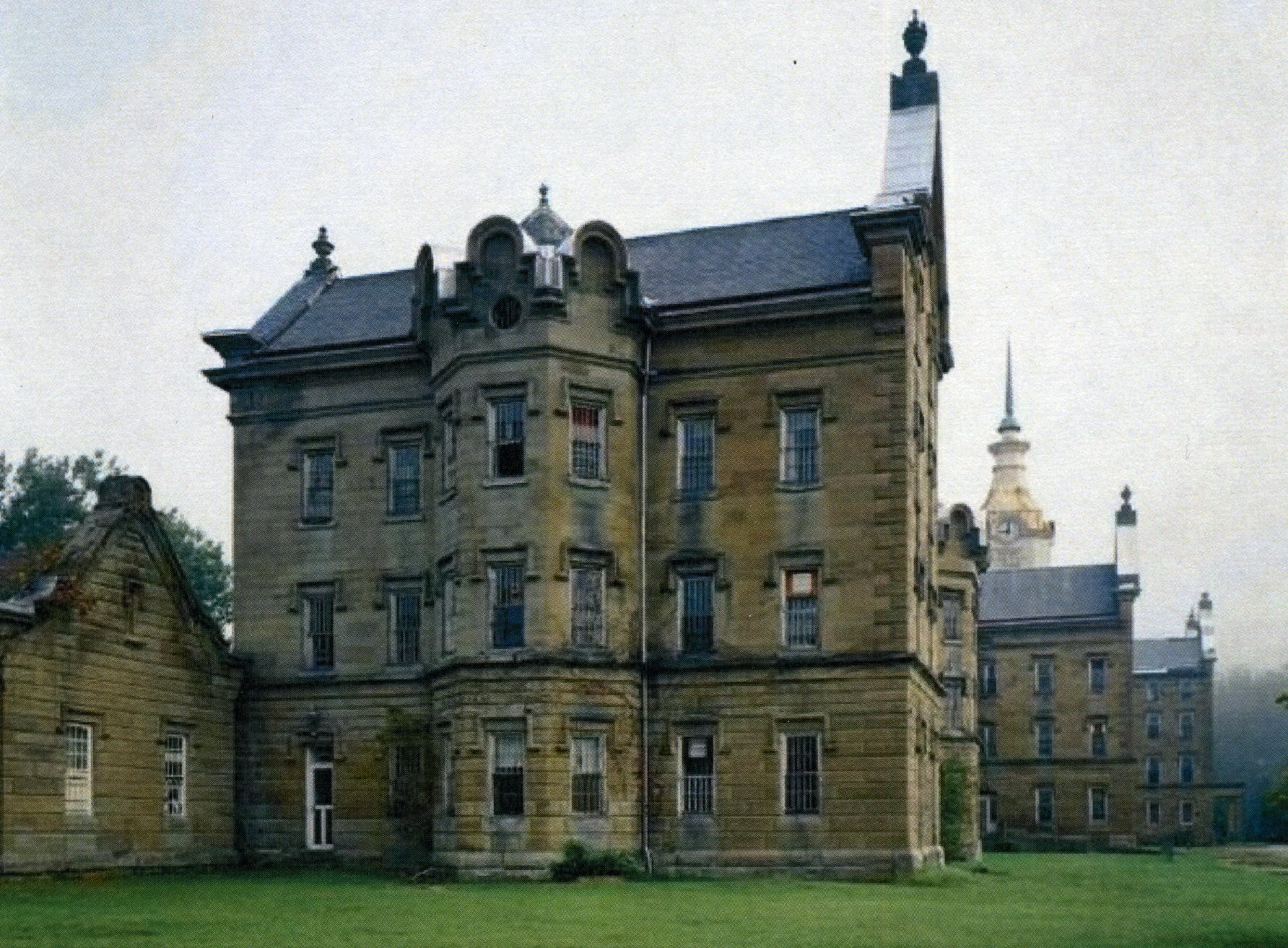
img335
Weston State Hospital, West Virginia. If it weren’t for the bars on the window, you could almost mistake it for Downton Abbey. Payne’s methods did not generally include trespassing. Instead, he went through official channels and found that once he showed a sincere interest in the architecture and history of these properties, he was usually granted full access.

But Payne saw beyond “the superstitions and third-hand horror stories” that these places inspire and using his trained eye noted their “outward similarity to great resort hotels of the era.” A verdant setting and dignified atmosphere, along with occupational therapy and the arts, figured prominently in the planning of the early hospitals built in the latter part of the 1800s. Such institutions were often proudly self-sustaining and Payne has numerous views of on-site farms, greenhouses, vocational workshops, a fish hatchery, etc. There’s even a shot of a kitchen in Pennsylvania’s Danville State with five enormous vats that were solely used for making sauerkraut. This original idea of the therapeutic value of work and culture, and its palliative effect on mental illness, later when out of fashion.

asylum-book-CVH-NobleHall
Noble Hall theater, Connecticut Valley State Hospital

Eventually psychotropic drugs came onto the scene, but as author/neurologist Oliver Sacks asserts in the book’s introduction, a well-intentioned notion of patient’s rights replaced the “normalizing” effect of the work that was now seen as exploitation and left them with little more to do than to watch television. The resulting warehouse effect left us with the “snakepit” image that most associate with state hospitals. Sacks’ essay, while certainly astute and filled with first-hand knowledge (he worked at Bronx State Hospital for 25 years), does seem a little rosy at time—for instance, there is no mention of the controversial (over)use of electroshock therapy. Still, the idea of these grand old asylums being a place where one could be both “mad and safe” is compelling considering the hasty deinstitutionalization that started in the 70s and 80s. The lack of sufficient transitional services—and medication that controlled the worst impulses of serious mental illness but left users unmotivated—burdened the U.S. with a large homeless population that later economic problems only exacerbated.

img330
The self-contained skyline of Danvers State at sundown: the day of wrecking ball was not far off.

The melancholy beauty of Payne’s photography, and his ability to sense the unlucky lives that played out there, are masterful from the first page to the poignant postscript of this amazing book. That closing section is a Payne-penned text and photographic record of the 2006 demolition of the iconic Danvers State Hospital, the model for H.P. Lovecraft’s Arkham Sanitarium and later the Arkham Asylum of the Batman universe. (Only the façade of the main administration building was saved for the subsequent condo complex). Readers of the previous installments know of my focus on DSH—I grew up three miles away—and it turns out that Payne has a personal connection as well. He grew up in Boston and had relatives in Danvers. Whenever visiting them, he saw its hilltop profile as an “ancient, far-away castle” from the window of the family car driving down I-95. (The parallel and closer U.S. Route One passed directly below the slope of the hospital’s perimeter farmland). Payne writes of his reluctance to speak regretfully of the demolition to workers but they were not unsympathetic: they realize they are knocking down a historic and unique structure, one to be succeeded by “a place, just like any other.” As Payne puts it, “How ironic it was that so much care and effort was put into a structure intended solely for society’s outcasts.” Even keeping in mind the mistakes that followed, I don’t think we’ll be seeing a return to that kind of commitment to the more unfortunate among us anytime soon, if ever.

*********************************************************************************
north brother cover

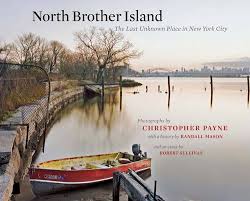
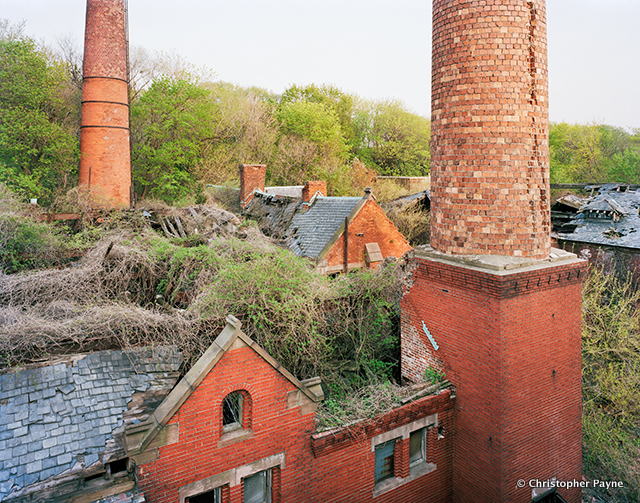
Also recommended by Christopher Payne is North Brother Island: The Last Unknown Place in New York City. Sitting amid strong East River cross-currents near Riker’s Island and Hell Gate, the island was long a site for hospitals and infirmaries (its most famous patient was Typhoid Mary)as well as the infamous 1904 General Slocum steamboat disaster, when a combination burning/sinking killed 1000 people. Payne’s vivid photographs of this long-uninhabited spit of land, depicts a sort of slow-motion battle between nature and the built environment.

North Brother Island

North Brother Island

The Pale Beyond, Part Three

tewksbury hosp

It’s been about ten months since part two of this series. In the long interval before this concluding entry, a long unfolding social problem has received more and more media coverage. A front-page headline last September in the Wall Street Journal summed it up rather neatly; “The New Asylums: Jails Swell with Mentally Ill.” The story tracked a pattern from the mass closings of outsized state hospitals in the 70s and 80s to the subsequent rise in the homeless population as many patients went from overcrowded (and sometimes abusive) facilities to no care at all. The ideal of a community-based middle way never really took hold and while advances in pharmaceuticals to treat psychological ailments have helped those with less severe cases, many others fell between the cracks during that process and in the years since. The situation just seems to get worse. Today, as I was getting set to put up this post, a major page-one report in the New York Times detailed the severe injuries suffered by 129 inmates at the hands of correctional staff at the huge Riker’s Island jail between the Bronx and Queens. A full 77 per cent of those inmates had been diagnosed with mental illness.

Obviously, this is a difficult problem and a tough one to get right. No one wants to go back to the warehousing asylums of old, where people could be committed for an indefinite stay on some flimsy pretense, like vagrancy or for being a troubled child that a parent could no longer deal with. But this downward spiral of insufficient mental health resources, underemployment, homelessness, drug abuse and petty crime invariably leading to incarceration is disheartening if not scandalous. Where’s the proper middle ground?

img894

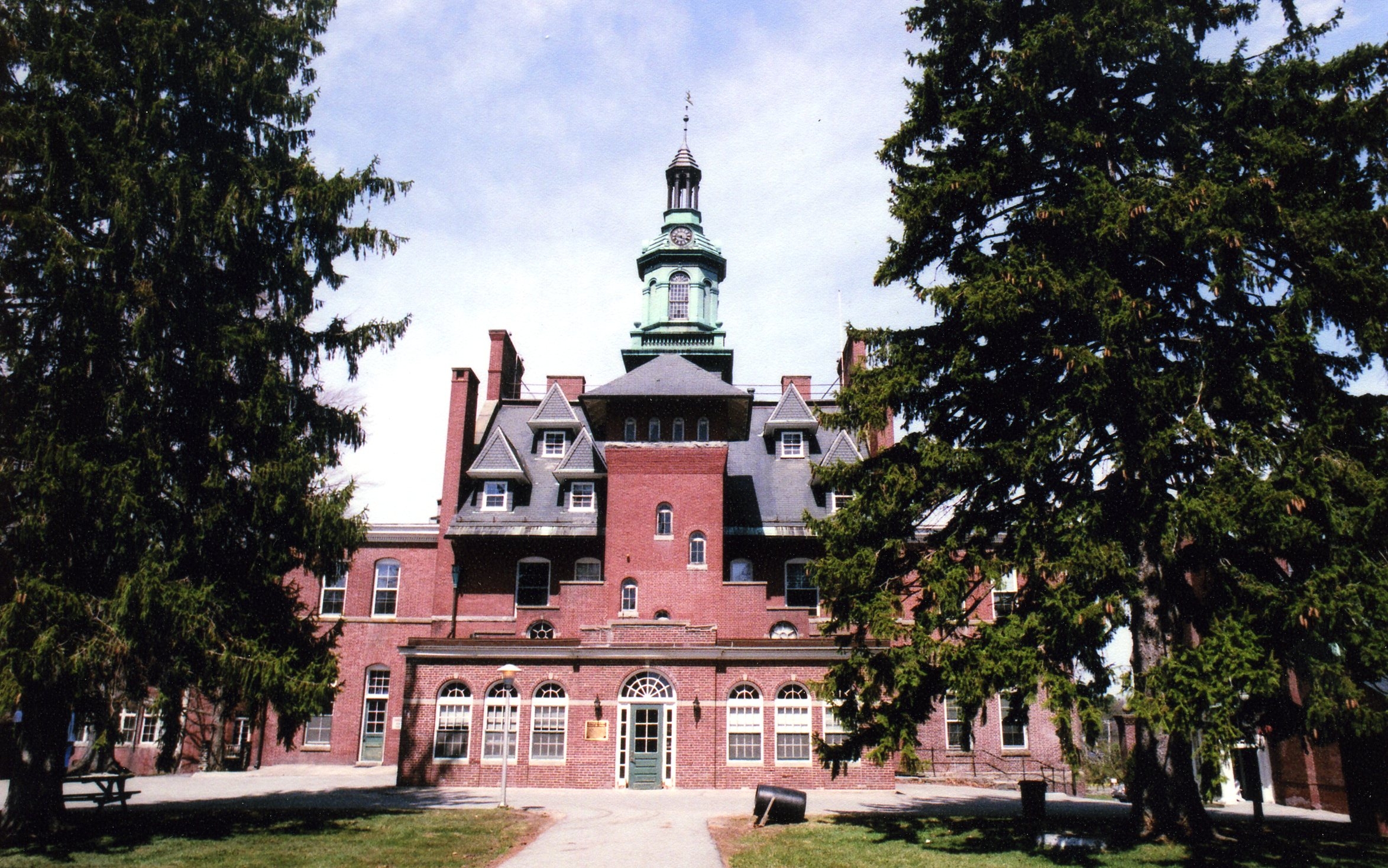
I recently made a couple of visits to historic Tewksbury Hospital, the prominent Old Administration Building of which, seen at the top, was built in 1894 in bewitching Queen Anne style. It’s been continuously in operation since 40 years before that, first as an almshouse (Anne Sullivan lived there before becoming Helen Keller’s tutor and friend) and then used for the treatment and containment of contagious diseases. Although it was operated by the Commonwealth of Massachusetts and mental health care did figure in the mix throughout its history, it was never a state hospital in the way we would come to think of it—the overcrowded and malignant institutions on large campuses that have in their closed state become havens for urban explorers. But when one of the more infamous such places (Danvers State Hospital, as discussed in previous installments of this series) closed in 1992, the Mass. Dept. of Mental Health moved from there to Tewksbury and—along with the Dept. of Public Health—established the Public Health Museum there two years later.

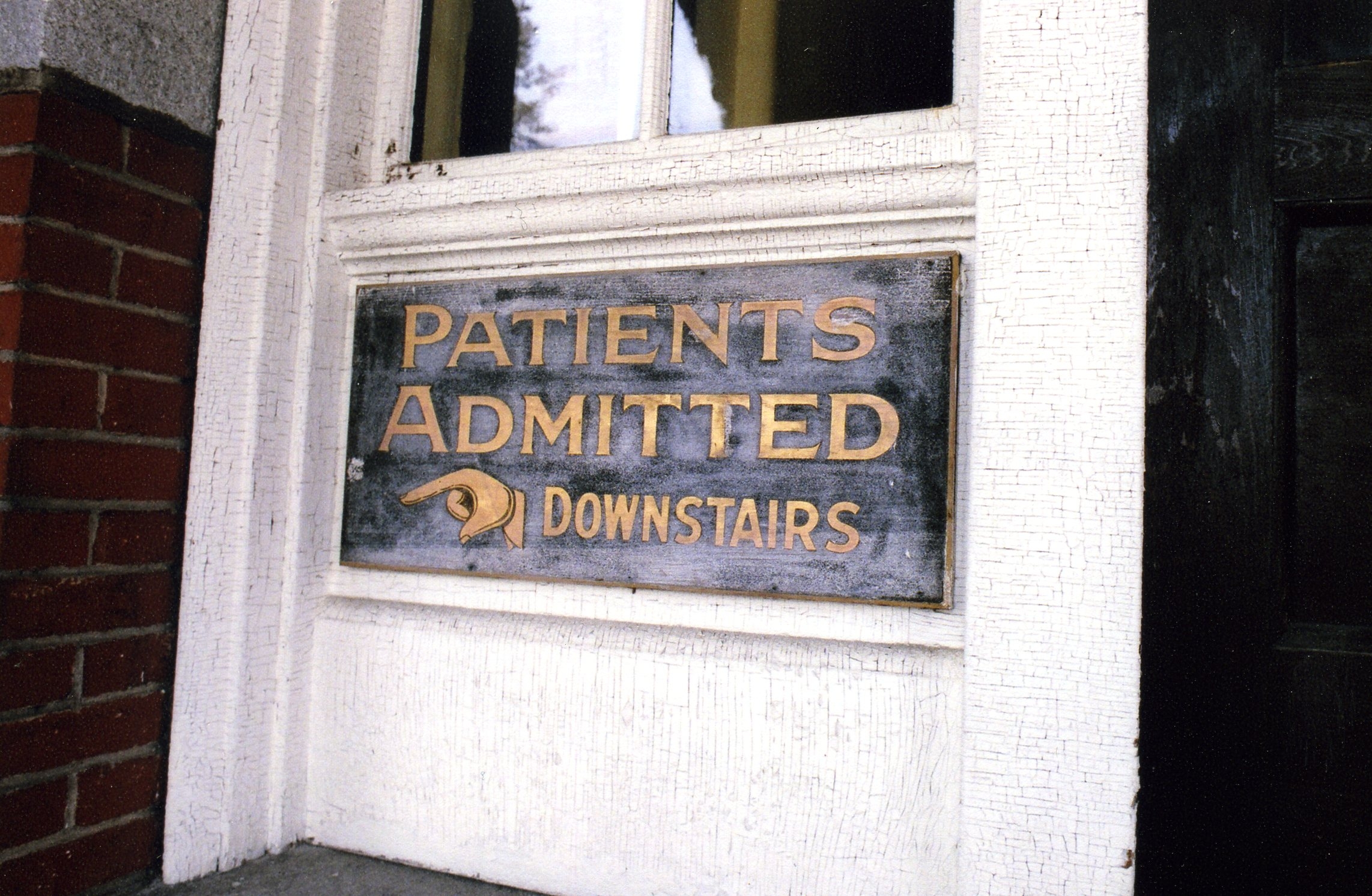
The museum is tucked into one section of the Old Administration Building’s first level. This ground floor is a beautifully restored wood-paneled interior that the unfortunate people being admitted here never got to see, if a preserved sign near the front entrance is any indication.

tewksbury sign

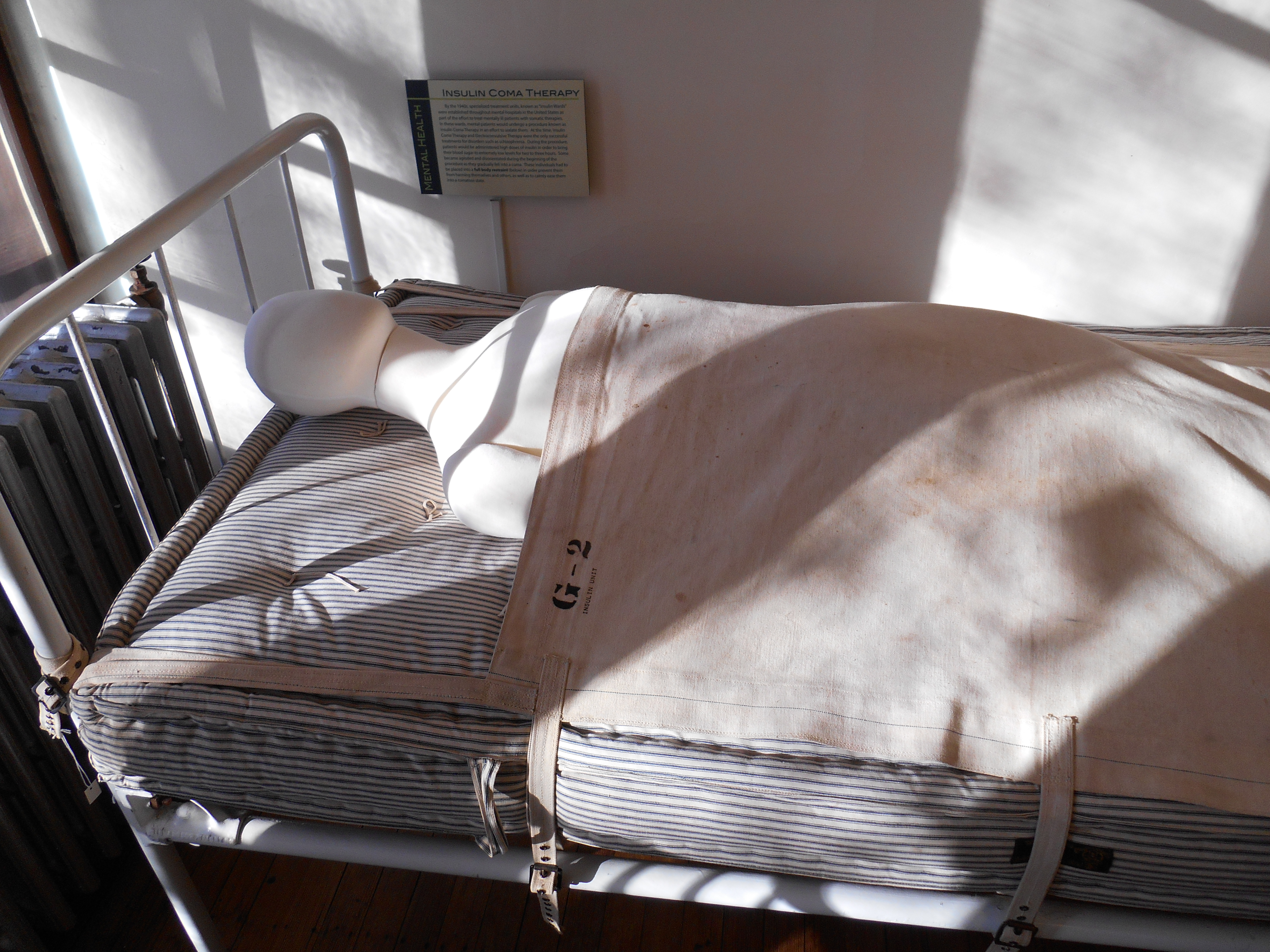
Much of the exhibit space is given over to showing the evolving history of methods for treatment of physical maladies, and you can see antique wheelchairs and an iron lung for real. But another room shows a similar backstory for mental health treatment. This will be the chilling highlight for many visitors. The curators, to their credit, do not shy away from showing patient treatments that nowadays would be considered barbaric or shocking. Otherwise, they wouldn’t have a mannequin strapped down to a bed to show any and all comers exactly what insulin-induced coma therapy looked like back in the day:

public health 005

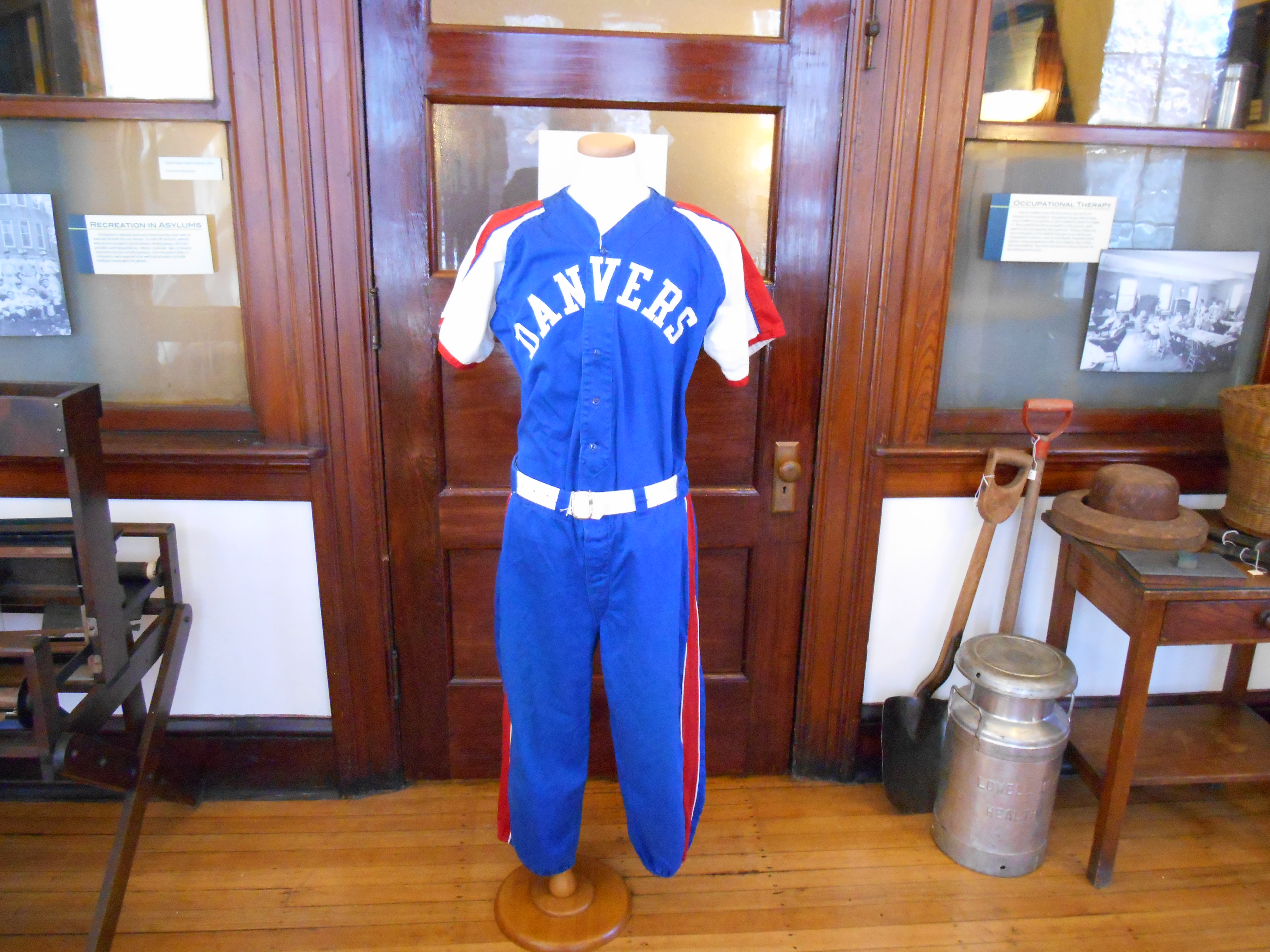
Another interesting factoid I learned there: Danvers State once had a baseball team.
public health 003

You’re free to stroll the grounds at Tewksbury, which has an old formal gateway and other buildings of architectural interest. But it’s still an everyday working hospital. People ‘round my neck of the woods who want to get a feel for one of the classic creepy institutions can head south of Boston, where the isolated ghost town-sized Medfield State Hospital has been opened for people who want to have a walkabout. This is one of the few places I know that have done this, maybe as a co-opting measure for the hundreds of people who have seen these places as targets for infiltration. Of course, rules state that going inside the boarded buildings is strictly verboten. Still, it’s a great way for us urban-explorer dabblers to daytrip without worrying about getting nicked for trespassing. Now made safe for family excursions, I took along Ryan as my urban-explorer-in-training and lens-changing assistant.

img878

img880

Although drastic methods like insulin or shock therapy may have been seen as necessary to control the worse-off patients, the power that comes with such authority still tempts abuse as we found out recently here in Massachusetts. Bridgewater State Hospital is site of Frederick’s Wiseman’s muckraking and groundbreaking 1967 documentary “Titicut Follies” (see Part 2 for more). It was reported in June that BSH was in danger of losing its national recognized hospital accreditation after it was found staff had significantly increased the use of isolation and strapping, even after the 2009 death of a patient during the application of restraints. Granted, Bridgewater is actually a medium-security prison that happens to house the most severely mentally-ill people in the state. But it also pointed out the thorny no-man’s land that exists between incarceration and the proper levels of mental health treatment. After a ban of “Titicut Follies” that lasted a quarter-century for “invading the privacy” of inmates (even though he had full clearances), Massachusetts courts finally allowed Wiseman to air his devastating expose of institutional abuse as long as he included a disclaimer at the end saying conditions have since approved at Bridgewater. The director’s one-sentence disclaimer, blankly using that very phrase, spoke volumes.

img881

Walking off the grounds at Medfield State, we caught view of the above. Who wrote this? Driving away, thoughts bounced around on different angles. Was it a mocking ex-inmate, a droll site worker, an urban explorer? There are certain people who get creeped out at the thought of these sites of suffering being converted into semi-affluent residential communities (possible sales blurb: “Nowadays, you would have to be crazy NOT to live here”) and the sign seemed to reflect that. That didn’t seem to affect folks who streamed into the old Danvers State property, re-purposed by Avalon Communities.

avalon Danvers
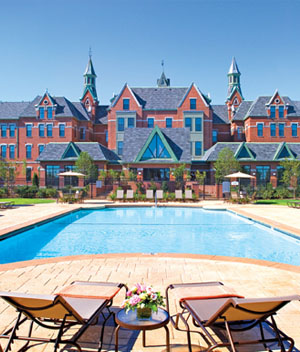
“And over there is where they invented the full frontal lobotomy. Care for a swim?”

This spring I snuck onto the perimeter of the now-closed Fernald State School in Waltham, Mass. (see part 2), to visit a geographical feature that had always intrigued me but that I’ve never been able to classify. It began just off to the side of the Fernald Volunteer Center, a veritable Boo Radley house that despite its disrepair, always seemed vaguely occupied. During the time we lived on a street just across the way, I’d often turn my bike into a mowed section of field that dipped down below the level of Trapelo Road and continued for several hundred yards. I would pedal along a meandering path behind the also-closed daycare place, and through a wooded section that then opened up into a boulevard-wide lawn that undulated in sunny seclusion before returning to the gloomy main grounds, where once thousands of unfortunate (and usually quite young) patients lived. Until recently, even when there was only a couple of dozen patients left on the vast campus, someone dutifully mowed this obscure stretch of land on a regular basis. Thinking of the shaded sanatorium walks of old, I wondered if this had been a place where patients were brought to for a “country” walk. It would have been a brief respite—if it ever even happened—for a cruelly exploited class of luckless people who were otherwise liable to be the subjects of unconsented experiments: the children who were fed radioactive isotopes or autistic kids given doses of LSD for months on end. Soon this place will cover itself up, unseen and all but forgotten but leaving a lot of questions in the air about what’s left to do after all the hell holes are abandoned in place.

197

Detropia (Doc of the Week #7)

Detropia

(Just caught another view of this film as it is the newest entry on PBS’ “Independent Lens” series. Check your local listings as they say and see a postscript I just added below with other Detroit-related items. Rick)

Detropia
Directed by Heidi Ewing and Rachel Grady—2011—91 minutes (Docurama DVD)

The fastest growing city in the world circa 1930 is left with 100,000 abandoned houses or empty lots less than a century later. A pioneer of heavy industry and worker empowerment is relegated to being the poster child for a national trend that saw fifty thousand factories close in ten years, leaving behind a permanently insecure labor force. The home of Motown and a mighty civic infrastructure reduced to the outward appearance of a fallen civilization. Few places illustrate the diminished American Dream better than Detroit. The documentary filmmaking team of Heidi Ewing and Rachel Grady (who also made the excellent “Jesus Camp”) grapple with this weighty subject with a blend of citizen testimonials and impressionistic visuals, gleaning both the ground-level personal perspective and the dreamlike aura of an oversized ghost town.

Soon after the opening lament by video blogger Crystal Starr, as she gazes at the Motor City skyline from the upper story window of an abandoned apartment building, the film gets right down in the business. United Auto Workers official George McGregor regales the interviewer with stories of past glories while driving to a union hall meeting where most of the chairs remain stacked in the background of the shot. The nearly depleted rank-and-file membership listen in disbelief as McGregor reads out the latest proposal by American Axle, a company already threatening to move its production out of the country. Faced with either accepting a pay package that will leave them with slightly better than fast-food wages, or seeing the same jobs shipped overseas with impunity, it’s hard to leave the scene without understanding why the American middle class seems as gutted as the deserted buildings we see in so many of “Detropia’s” establishing shots.

Elsewhere, we see a nightclub owner trying to hang onto his business in the face of plant closures and fretting at an auto show when he sees the Chinese poised to corner the electric car market; briefly meet a performance-art couple attracted to the city’s low housing costs; and hang out with some enterprising metal scavengers, picking at the carcass of a once-great metropolis and selling the scrap to a country that can use it (China again). For Mayor Dave Bing, the options for improving conditions in this broke city are few. Left with half the town that once was, Bing (a former Detroit Pistons basketball star) proposes consolidating the thinly-spread population—down to 700,000 from a mid-century high of 1.8 million—into higher-density areas while “re-purposing” vacant land for large-scale urban farming. This idea is met with skepticism at a tumultuous community meeting and by a trio of amused front-porch philosophers. It’s these regular folks that make “Detropia” as appealing as it is, counteracting the directors’ tendency for a grab-bag approach that can cause contextual drift. So even amid the ghostly greens and reds of nocturnal street scenes, or snippets of barely-introduced subjects like the African-American opera singer, there will soon be some level-headed resident, with that Motor City mix of gallows humor and dogged perseverance, to keep things grounded.

In the end, several of the subjects sneak their way into the city’s gargantuan Michigan Central Station, the long-vacant Beaux Arts masterpiece that as much as any one edifice symbolizes this epic fall from grace. While the strategic bailout of the auto industry engineered by President Obama offers a modicum hope, the outlook remains bleak. The city went under state receivership in early 2013 and Dave Bing decided not to run for re-election. While there may be no foreseeable turnaround for the city’s endemic woes, to treat this as a matter apart from us is inadvisable in the extreme. “When you see your neighbor going down, you have to think about yourself,” the club owner warns us in the waning moments of “Detropia,” adding “a fire unchecked will only take you out as well.” It is another reminder of America’s abandonment of a production-based society in favor of an economy dependent on a distracted consumerism many can’t afford and lorded over by esurient Wall Street CEOs rewarded for cutting workforces. Ewing and Grady are to be commended for making their accessible and heartfelt film on this discouraging subject.

Det Disassembled

One thing I would have liked to seen a little more of in “Detropia” is the astonishing scale of both what was built there and the extent to which it has fallen to ruin. If you’re like me, then, check out the book “Detroit Disassembled”. I mean that literally. Check it out of the library if you can’t afford the hefty price tag, even if photographer Andrew Moore deserves every penny of it. This is one of the most extraordinary photo-essay coffee table books I’ve ever seen. Moore’s large-format camera peeks into every conceivable corner of what, through his lens, might as well be a lost ancient ruin. A melancholic paen to a faded nation of makers, the infrastructure and institutions that supported this industry-based system are now seen as losing a visceral battle to decay and the forces of nature. The dilapidation of catherdal-like assembly buildings, rococo theaters, technical schools, grand theaters and handsome apartment blocks may seem like an exaggerated and isolated example to some, but it leaves behind a sour taste nevertheless. It makes one think of the pipsqueak service economy we’re left with, 70% of which is dependent on consumer spending while at the same a huge percentage of workers are making the kind of wages that almost make indentured servitude an attractive alternative.

While I’m at it, I will also recommend the 4-minute film clip link below but don’t read the caption as it contains a spoiler alert, Documenatry Division.

Godfrey Reggio’s 2002 “Naqoyqasti”, the last of his trilogy that began with the trailblazing “Koyaanisqatsi” opens with that solemn tracking shot of the Michigan Central Station’s massive vaulted waiting room and once magisterial upper-floor offices, every window now smashed. Back on the ground, a close-up of the building’s mighty portico and entrance has a raging sea superimposed over it and the effect is of all of Western culture being pulled under.